Project-1: Powertrain for aircraft in runways
SOLUTION 1)
|
Type |
MTOW [kg] |
MLW [tons] |
|
640,000 |
591.7 |
|
|
589,670 |
||
|
575,000 |
394 |
|
|
447,700 |
346.091 |
|
|
443,613 |
306.175 |
|
|
412,770 |
295.742 |
|
|
Antonov An-124-100M |
405,060 |
330 |
|
396,900 |
295.742 |
|
|
381,000 |
288.417 |
|
|
377,840 |
285.700 |
|
|
377,840 |
260.320 |
|
|
371,950 |
240 |
|
|
367,400 |
256 |
|
|
347,800 |
260.816 |
|
|
351,800 |
251.29 |
|
|
347,450 |
223.168 |
|
|
340,200 |
265.300 |
|
|
308,000 |
233.5 |
|
|
299,370 |
237.683 |
|
|
297,550 |
213.00 |
|
|
276,700 |
190 |
|
|
273,300 |
185 |
|
|
270,000 |
175 |
|
|
270,000 |
195.04 |
|
|
256,280 |
183 |
|
|
254,000 |
192.777 |
|
|
254,000 |
201.849 |
|
|
253,500 |
181 |
|
|
250,000 |
175 |
|
|
242,000 |
185 |
|
|
242,000 |
180 |
|
|
231,300 |
166.92 |
|
|
228,000 |
172.365 |
|
|
211,400 |
||
|
208,000 |
175 |
|
|
204,000 |
158.758 |
|
|
192,000 |
140 |
|
|
187,000 |
136.08 |
|
|
185,000 |
111.1 |
|
|
163,000 |
138 |
|
|
159,000 |
136.078 |
|
|
157,000 |
124 |
|
|
152,000 |
151.9 |
|
|
151,000 |
97.5 |
|
|
151,000 |
112.1 |
|
|
147,000 |
||
|
142,000 |
123 |
|
|
141,000 |
122 |
|
|
140,000 |
||
|
125,000 |
||
|
124,000 |
101.6 |
|
|
117,000 |
86.3 |
|
|
116,000 |
89.9 |
|
|
106,000 |
79.5 |
|
|
104,000 |
79.5 |
|
|
104,000 |
80 |
|
|
104,000 |
87.5 |
|
|
87,500 |
||
|
85,000 |
66.36 |
|
|
85,000 |
71.35 |
|
|
84,000 |
70.1 |
|
|
Airbus A321-100[17] |
83,000 |
77.8 |
|
79,000 |
65.32 |
|
|
78,000 |
68.1 |
|
|
73,000 |
63.28 |
|
|
72,500 |
62.4 |
|
|
72,500 |
62.4 |
|
|
71,000 |
64.41 |
|
|
70,700 |
||
|
70,000 |
58.06 |
|
|
Airbus A320-100[17] |
68,000 |
66 |
|
68,000 |
54.9 |
|
|
68,000 |
||
|
67,000 |
||
|
66,000 |
54.66 |
|
|
65,000 |
57.61 |
|
|
65,000 |
||
|
64,000 |
62.5 |
|
|
63,000 |
51.7 |
|
|
60,000 |
49.9 |
|
|
59,000 |
50.80 |
|
|
59,000 |
57.5 |
|
|
55,000 |
47.174 |
|
|
55,000 |
||
|
54,000 |
||
|
50,000 |
46.265 |
|
|
50,000 |
||
|
48,600 |
||
|
48,500 |
||
|
48,000 |
43 |
|
|
46,000 |
||
|
46,000 |
39.95 |
|
|
44,000 |
||
|
42,000 |
36.74 |
|
|
39,000 |
||
|
37,500 |
32.8 |
|
|
36,500 |
33.345 |
|
|
36,000 |
32.8 |
|
|
33,000 |
30.39 |
|
|
33,000 |
||
|
30,400 |
||
|
28,000 |
28.01 |
|
|
23,000 |
21.319 |
|
|
22,800 |
22.35 |
|
|
22,800 |
21.5 |
|
|
22,000 |
19.3 |
|
|
18,600 |
18.3 |
|
|
13,150 |
12.930 |
|
|
11,500 |
11.25 |
|
|
10,890 |
10.570 |
|
|
9,752 |
8.709 |
|
|
8,300 |
7.665 |
|
|
8,150 |
7.65 |
|
|
7,765 |
7.605 |
|
|
7,761 |
7.103 |
|
|
7,000 |
||
|
4,800 |
4.43 |
solution 2):
. airspeed is equal to the ground speed. But if the wind is blowing in the same direction that the aircraft is moving, the airspeed will be less than the ground speed.
. Airspeed is the vector difference between the ground speed and the wind speed.
. An aircraft's true airspeed tells us how fast it moves relative to the surrounding air, while the ground speed is its horizontal speed relative to the earth's surface.
| GROUND SPEED | AIR SPEED |
| 1. Ground speed is the speed of the aeroplane relative to the earth surface. |
1. Air speed is the speed of aeroplane relative to the air it is flying in. |
| 2. Ground speed determines how fast an aircraft will get to its destination. |
2. Air speed determines whether there is enough airflow around an aircraft to make it fly. |
| 3. Ground speed is the sum of air speed and wind speed. |
3. Air speed is independent of ground speed. |
solution 3)
For movement on the ground the aircraft uses it own engine power, which is called taxing.
Although many aircrafts are capable of moving in backward using reverse thrust, as result the jet blast or prop wash might cause damage to the terminal building or equipment. Engine close to ground may also blow sand and debris forward and then suck them into the engine, causing damage to the engine. Therefore there are pushback trucks in the airport. A pushback truck lifts the front weel of the aircraft, their role in most airports is to move the aircraft away from the parking spot on to the taxiways, which is called towing.
i) Effectively a loss of control can happen, especially during high power engine running. Damage can occur to the aircraft itself, other aircraft nearby or to airside structures.
ii) There is a risk of injury to ground support personnel who may be in relatively close proximity to the aircraft. iii) It is easier for truck driver to see the surroundings better than the pilot sitting in the cockpit with limited window. The pushback driver knows the airport better than the pilot.
iv) It also saves fuel. virgin Atlantic had proposed a new system in which pushback truck will move the aircraft all the way to runway to save fuel and reduce impact of environment.
v) The plane engines are very loud. When more than one plane will add up their sound, than it will not be pleasent for passangers and others near airport.
SOLUTION 4)
In the parking areas, where taxing the aircraft is not practical or is unsafe, such as moving aircraft in and out of mainteance hangars, or moving aircraft that are not under their own power or moving backward, then towing of aircraft is performed using the power of a specialized ground vehicle attached to or supporting the nose landing gear. The traditional method of allowing the ground vehicle to move an aircraft is to attach it to the aircraft nose landing gear by means of towbar.
TAXIING: Taxiing is the movement of an aircraft on the ground under its own power while on the suface. The aircraft always moves following the yellow lines, to avoid collision with the surrounding buildings, vehicle or other aircrafts. The taxiing motion has a speed limit. Before making turn the pilot reduces speed further to prevent tire skids just like other vehicles. The reason for taxing is to reach the vehicle into runway or from runway to terminal.
The takeoff speed required varies with air density, aircraft weight, and aircraft configuration (flap and/or slat position, as applicable). Air density is affected by factors such as field elevation and air temperature.
SOLUTION 5)
Take off power=>
Power Requirement to Keep a Jet Aircraft in the Air
The total energy of an aircraft flying in the atmosphere can be calculated using equation,
E = ½ m v2+ mgh
However, the engines mounted onto the wings of the plane are required to provide additional energy per time, power, in order to keep the aircraft flying at a constant altitude and speed. This extra power needed to overcome the drag acting on the airplane and is calculated using
P = (dh/dt) m g
where (dh/dt) is the decent speed required to keep the plane's speed constant if the engines fail.
Takeoff and Climb :
When ready for takeoff, and cleared by Air Trafic Control to proceed, the pilot or first officer of an aircraft releases the brakes and advances the throttle to increase engine power to accelerate down the runway.
Once aligned on the runway, steering the aircraft is normally accomplished by using foot pedals that manipulate the nose wheel until the speed is sufficient enough that wind rushing by the rudder on the aircraft tail makes nose wheel steering unnecessary.
As the aircraft gains speed, air passes faster and faster over its wings and lift is created. Instruments onboard the aircraft display this airspeed, which equals not only the speed of the plane relative to the ground, but also the speed of any wind that may be blowing toward the aircraft (aircraft normally take off headed into the wind). When the airspeed reaches a certain predetermined point known as rotation speed, the pilot manipulates panels on the tail of the aircraft to rotate the nose of the plane upward. This creates even stronger lift and the plane leaves the ground.
Rotation speed, abbreviated VR, is one of three important airspeed settings calculated before every flight.
Tyre design :=>
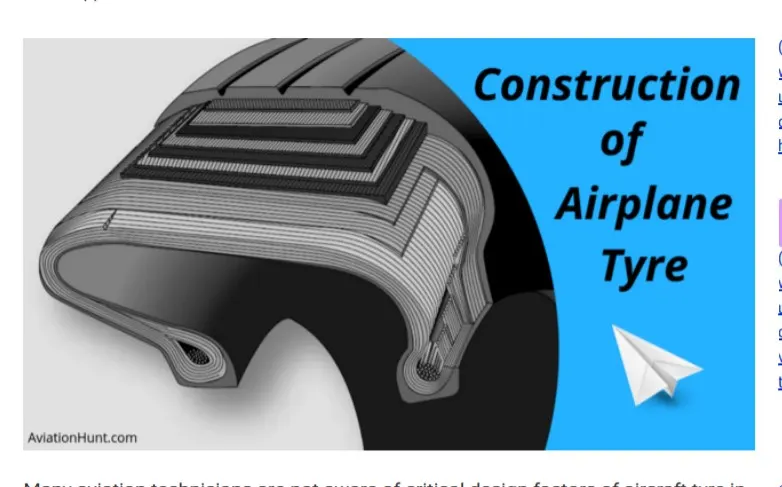
When it comes to safety tyres are one of the most important components of aircraft. They help to absorb the shock of landing and provide cushioning. It also provides the necessary traction for braking and stopping of an aircraft.
An aircraft tyre is designed to withstand extremely heavy loads while landing, take off, taxing and parking. The number of wheels required for aircraft increases with the weight of the aircraft, as the weight of the aeroplane needs to be distributed more evenly.
A Boeing 737NG & 737MAX uses 6 wheels, Boeing 787 uses 10 wheels, Boeing 777 uses 14 wheels and Airbus A380 uses 22 wheels. Aircraft tyres work under extreme conditions, carrying up to 340 tons and accelerating at over 250 km/hour at takeoff, in addition to enduring varied environmental stress when in flight and taxiing.
Design and Construction of Aircraft tyre
Carcass plies are used to form the tire. They are sometimes called casing plies. An aircraft tyre is constructed for the purpose it serves.
1. They support the weight of an aircraft while it is on the ground.
2. It also provides the necessary traction for braking and stopping of an aeroplane.
3. Tyre also helps to absorb the shock of landing and provide cushioning the roughness of takeoff, roll-out, and taxi operations.
Unlike an automobile or truck tyre, it does not have to carry a load for a long period of continuous operation. However, an aircraft tyre absorbs the high impact loads of landing and also it’s operating at high speeds for a short time when required.
SOLUTION 6):
Let us Assume:
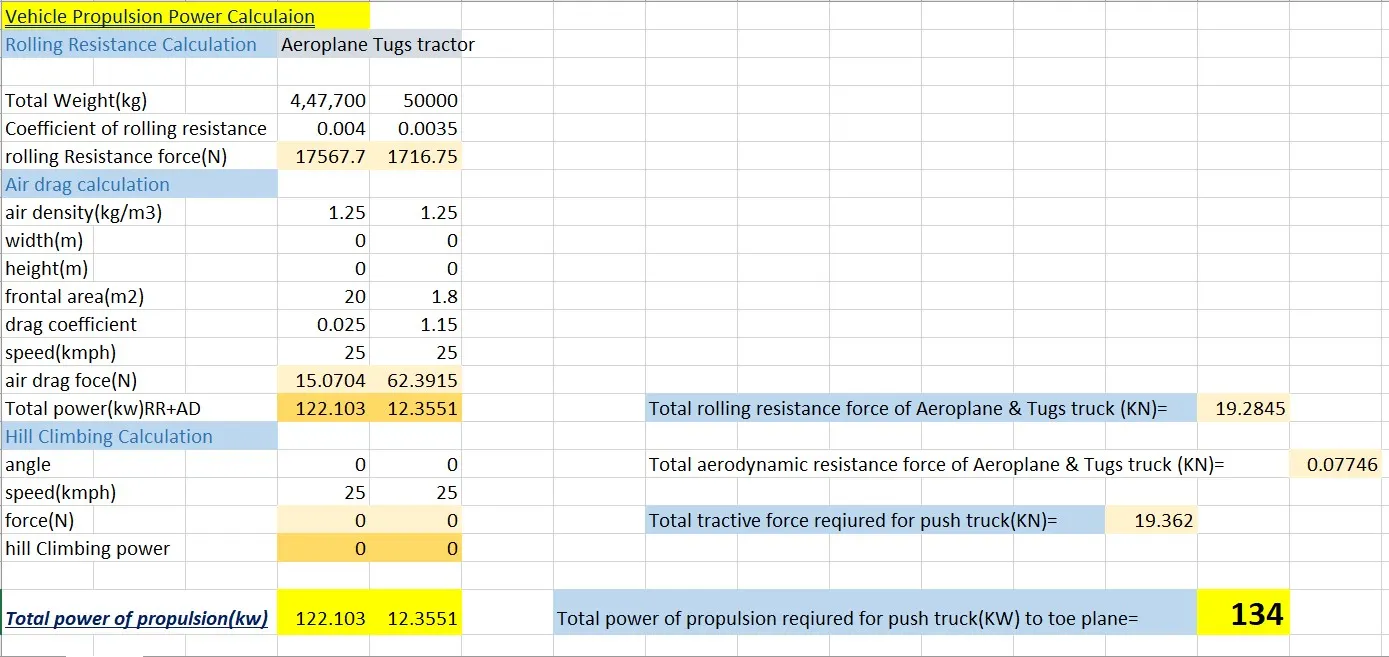
Weight of the Aircraft (Boeing 747-8) = 447,700kg
Rolling Resistance Coefficient of an aircraft tire = 0.004
Wight of the Tugs Tractor = 50000kg
Rolling Resistance Coefficient of Towing Vehicle = 0.0035
Then,
Rolling Resistance Force of Tugs Tractor =FRR = CRR x weight = .0035*50,000*9.81 =1,716.75 N
Rolling Resistance Force of aircraft =FRR = CRR x weight =.004*50,000*9.81 =17,567.748 N
Total Rolling Resistance Force = Rolling Resistance Force of aircraft + Tugs Tractor = 17.567+ 1.71675
Total Rolling Resistance Force = 19.28 KN
The Aerodynamic Drag is given by,
rho= Density of Air Medium
A = Frontal Area Of the Vehicle which strike the Air
V = Velocity with the vehicle moves
Cd= Coefficient of Dragwhich varies different shapes of the frontal area.
Calculation:
Let us assume
The Velocity of the Aircraft while Towing = 25 KMPH = 6.944 m/s
Density of Air medium = 1.25 kg/m3
The Frontal area of the Aircraft = 20 m2
The Frontal area of the Aircraft = 1.8 m2
The Coefficient of Drag of the Aircraft = 0.025
The Coefficient of Drag of the Tugs tractor = 1.15
Air drag force = 0.5*rho*A*V^2*Cd
The Air Drag Force of the Aircraft = .5*1.25*20*(6.944^2)*.025 = 15.07 N
The Air Drag Force of the Tugs Tractor = .5*1.25*1.8*(6.944^2)*1.15 = 62.38 N
Total Aerodynamic Drag Force = Air Drag Force of the Aircraft + Air Drag Force of the Tugs Tractor = 15.07 N + 62.38 N
Total Aerodynamic Drag Force = 77.45 N
Therefore the total force that the motor needs to overcome = Total Rolling Resistance Force + Total Aerodynamic Drag Force = 19.28 + .07745 (KN) = 19.362 KN
Thus Total Force that the Motor needs to overcome in order to push/pull the Aircraft = 19.362 KN
The Power Required-
The power required by the motor is given by the velocity with which the towing operation takes place.
The average speed of push/pull = 25 kmph = 6.9444 m/s
Power required by the motor = Total Force*Velocity = 19.362*6.9444
Power Required by The Motor = 134 KW