Project-1: Powertrain for aircraft in runways
OBJECTIVES
Part A:
1. Search and list out the total weight of various types of aircrafts.
2. Is there any difference between ground speed and air speed?
3. Why is it not recommended to use aircraft engine power to move it on the ground at Airport?
4. How an aircraft is pushed to runway when its ready to take off?
5. Learn about take-off power, tyre design, rolling resistance, tyre pressure, brake forces when landing.
Part B:
6. A. With necessary assumptions, calculate the force and power required to push / pull an aircraft by a towing vehicle.
B. Develop the model for the calculated force and power using Simulink.
7. A. Design an electric powertrain with type of motor, it’s power rating, and energy requirement to fulfill aircraft towing application in Simulink. Estimate the duty cycle range to control the aircraft speed from zero to highest. Make all required assumptions. Prepare a table of assumed parameters. Draw a block diagram of powertrain.
(Hint: DC7 Block)
B. Also, Design the parameters in excel sheet.
PART-A
1. Search and list out the total weight of various types of aircrafts
1.Aircraft:
An aircraft is a vehicle that is able to fly by gaining support from the air. It counters the force of gravity by using either static lift or by using the dynamic lift of an airfoil, or in a few cases the download thrust from jet engines. Common examples of aircraft include airplanes, helicopters, airships (including blimps), gliders, paramotors and hot air balloons.
The human activity that surrounds aircraft is called aviation. The science of aviation, including designing and building aircraft, is called aeronautics. Crewed aircraft are flown by an onboard pilot, but unmanned aerial vehicles may be remotely controlled or self-controlled by onboard computers. Aircraft may be classified by different criteria, such as lift type, aircraft propulsion, usage and others.
Types of aircrafts:
Aircraft are classified based on various parameters.
1.According to the basic design.
2.According to the propulsion through the air.
3.According to the design of the wings.
here are many factors that lead to efficient and safe operation of aircraft. Among these vital factors are proper weights and balance control.
The difference between the maximum taxi/ramp weight and the maximum take-off weight (maximum taxi fuel allowance) depends on the size of the aircraft, the number of engines, APU operation, and engines/APU fuel consumption, and is typically assumed for 10 to 15 minutes allowance of taxi and run-up operations.
Maximum design take-off weight (MDTOW OR MTOW):
The maximum design takeoff weight is the maximum certificated design weight for takeoff run as limited by aircraft strength and airworthiness requirements.
Maximum design landing weight (MDLW OR MLW):
The Maximum design landing weight is the maximum certificated design weight for landing limited by aircraft strength and airworthiness requirements. It generally depends on the landing gear strength or the landing impact loads on certain parts of the wing structure.
MDTW>MDTOW>MDLW
Air-Craft gross weight:
It is the total aircraft weight at any moment during the flight or ground operation. This decreases during flight due to fuel and oil consumption. The gross weight of the vehicle is gives in the maximum take-off weight of the vehicle. The total weight W of the aircraft is simply the sum of the weight of all of the individual components.
W = w(fuselage) + w(wing) + w(engines) + w(payload) + w (fuel)
Air-Craft gross weight:
It is the total aircraft weight at any moment during the flight or ground operation. This decreases during flight due to fuel and oil consumption. The gross weight of the vehicle is gives in the maximum take-off weight of the vehicle. The total weight W of the aircraft is simply the sum of the weight of all of the individual components.
W = w(fuselage) + w(wing) + w(engines) + w(payload) + w(fuel)
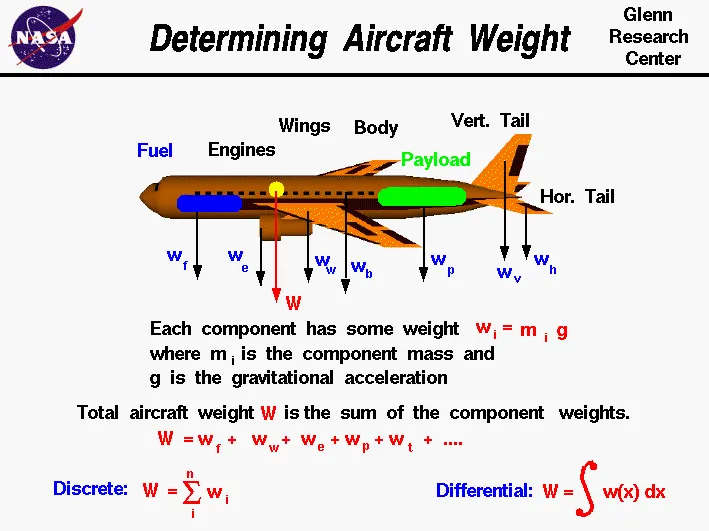
aircraft gross weight (also known as the all-up weight and abbreviated AUW) is the total aircraft weight at any moment during the flight or ground operation.
An aircraft's gross weight will decrease during a flight due to fuel and oil consumption. An aircraft's gross weight may also vary during a flight due to payload dropping.
At the moment of releasing its brakes, the gross weight of an aircraft is equal to its takeoff weight. During flight, an aircraft's gross weight is referred to as the en-route weight or in-flight weight.
Weight of Various Types of Aircraft Weight:
1.Glider
Glider is a fixed wing plane that is supported in flight by the dynamic reaction of the air against its lifting surfaces, and whose free weight does not depend on an engine. Most gliders do not have an engine, although motor glider have small engines for extending their flight when necessary, by sustaining the altitude (normally a sailplane is on a continuously descending slope) with some being powerful enough to take off self-launch.
Weight of Glider planes: 110 kg - 200 kg
2.Powered Lift
A powered lift aircraft takes off vertically under engine power but uses a fixed wing for horizontal flight. These aircraft do not need a long runway to take off and land, like helicopters, but they have a speed and performance similar to standard fixed wing aircraft in combat or other situations.
Weight: 160 kgs
3.Fighter Aircraft
A fighter aircraft, often referred to simply as a fighter, is a military fixed wing aircraft designed primarily for air-to-air combat against other aircraft. The key performance features of a fighter include not only its firepower but also its high speed and maneuverability relative to the target aircraft.
Weight: 13500 kgs
4.Transport Planes:
Military transport aircraft or military cargo aircraft are used to airlift troops, weapons and other military equipment to support military operations. Transport aircraft can be used for both strategic and tactical missions, and are often diverted to civil emergency relief missions.
Weight: 250,000 kgs
5.Aerobatic Planes
An aerobatic aircraft is an aerodyne (a heavier-than-air aircraft) used in aerobatics, both for flight exhibitions and aerobatic competitions
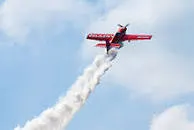
Weight: 771 kgs
There are a number of ways to identify aircraft by type. The primary distinction is between those that are lighter than air and those that are heavier than air.
lighter than air:
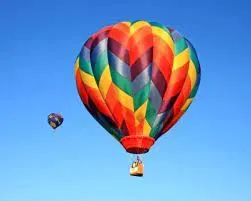
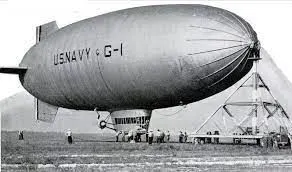
Aircraft such as balloons, nonrigid and dirigibles are designed to contain within their structure a sufficient volume that, when filled with a gas lighter than air (heated air, hydrogen, or helium), displaces the surrounding ambient air and floats, just as a cork does on the water. Balloons are not steerable and drift with the wind.
hot balloons are mostly around 70kg of weight without passengers.
Heavier than air:
This type of aircraft must have a power source to provide the thrust necessary to obtain lift. These are usually a flat-surfaced structure, often with a stabilizing “tail,” attached by a bridle to a string that is held in place on the ground. Lift is provided by the reaction of the string-restrained surface to the wind.
Heavier than air aircraft, or aerodynes, include autogyros, helicopters and gyrocopters, and conventional fixed-wing aircraft (aeroplanes).
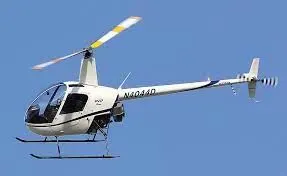
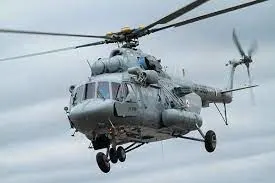
Helicopters can weigh from 600 lb/275 kg all the way up to 123,400 lb/56,000 kg.
Another type of unmanned aircraft is the unmanned aerial vehicle (UAV), commonly called drones or sometimes remotely piloted vehicles (RPVs). These aircraft are radio-controlled from the air or the ground and are used for scientific and military purposes.
Typically helicopters weights vary from 270kg to 50000 kgs.
Commonly used aircrafts and their weights
|
Aircrafts |
Length (m) |
Weight (empty) (kg) |
Weight (max) (kg) |
|
Cessna 172 |
8.2 |
660 |
1110 |
|
Citation Jet M2 |
13 |
3170 |
4855 |
|
Boeing 767-300 |
56 |
88450 |
181436 |
|
Boeing 787-800 |
56 |
119975 |
227930 |
|
Boeing 777-300 |
74 |
160571 |
299370 |
|
Boeing 747-400 |
70 |
184612 |
412769 |
|
Airbus A320 |
38 |
37194 |
77110 |
|
Airbus A330 |
64 |
124511 |
229971 |
| Aircraft | Empty Weight | Max Fuel Weight | Max Cargo Weight | Max Gross Takeoff Weight |
|---|---|---|---|---|
| Antanov AN-225 | 628,000 lbs 285,000 kg |
661,400 lbs 300,000 kg |
417,000 lbs 190,000 kg |
1,411,000 lbs 640,000 kg |
| Airbus A380-800 | 611,000 lbs 277,000 kg |
560,000 lbs 254,000 kg |
185,000 lbs 84,000 kg |
1,268,000 lbs 575,000 kg |
| Boeing 747-800 | 485,300 lbs 220,100 kg |
427,400 lbs 194,000 kg |
295,000 lbs 134,000 kg |
987,000 lbs 447,700 kg |
| Airbus A340-500 | 370,000 lbs 168,000 kg |
386,300 lbs 175,000 kg |
119,000 lbs 54,000 kg |
820,000 lbs 372,000 kg |
| Boeing 777-300ER | 370,000 lbs 168,000 kg | 320,800 lbs 145,500 kg | 148,000 lbs 67,100 kg |
776,000 lbs 352,000 kg |
| Boeing 787-10 | 299,000 lbs 135,500 kg | 223,500 lbs 101,500 kg |
126,300 lbs 57,300 kg | 560,000 lbs 254,000 kg |
| Boeing 737-900 | 98,500 lbs 44,700 kg |
53,100 lbs 24,000 kg |
44,600 lbs 20,200 kg |
187,000 lbs 85,000 kg |
| Airbus A320-100 | 93,900 lbs 42,600 kg |
48,700 lbs 22,100 kg |
44,000 lbs 20,000 kg |
150,000 lbs 68,000 kg |
| Embraer 190 | 63,500 lbs 28,800 kg |
28,600 lbs 13,000 kg |
28,800 lbs 13,100 kg |
106,000 lbs 48,000 kg |
| Gulfstream G650 | 54,000 lbs 24,500 kg | 48,200 lbs 21,900 kg | 6,500 lbs 3,000 kg |
100,000 lbs 45,200 kg |
| Bombardier CRJ900 | 48,160 lbs 21,850 kg | 19,600 lbs 8,900 kg | 6,075 lbs 2,760 kg | 80,500 lbs 36,500 kg |
| Bombardier Q400 | 39,300 lbs 17,800 kg |
11,700 lbs 5,300 kg |
18,700 lbs 8,500 kg |
62,000 lbs 28,000 kg |
| Learjet 75 | 13,900 lbs 6,300 kg | 6,060 lbs 2,750 kg |
2,900 lbs 1,300 kg |
21,500 lbs 9,700 kg |
| Cessna Citation CJ4 | 10,300 lbs 4,700 kg | 5,800 lbs 2,650 kg |
2,200 lbs 1,000 kg | 17,200 lbs 7,800 kg |
| Beechcraft King Air B100 | 7,100 lbs 3,200 kg | 3,200 lbs 1,450 kg |
4,150 lbs 1,900 kg |
12,000 lbs 5,400 kg |
| Diamond DA50 RG | 3,200 lbs 1,450 kg |
340 lbs 155 lbs |
1,250 lbs 560 kg |
4,400 lbs 2,000 kg |
| Beechcraft Bonanza G36 | 2,500 lbs 1,150 kg | 450 lbs 200 kg |
850 lbs 385 kg |
3,660 lbs 1,660 kg |
| Cessna 206H | 2,200 lbs 990 kg |
520 lbs 235 kg |
1,150 lbs 520 kg |
3,600 lbs 1,630 kg |
| Sirrus SR22 | 2,250 lbs 1,000 kg | 485 lbs 220 kg |
950 lbs 430 kg |
3,600 lbs 1,630 kg |
| Cessna 172R | 1,700 lbs 770 kg |
380 lbs 170 kg |
560 lbs 255 kg |
2,425 lbs 1,100 kg |
2. Is there any difference between ground speed and air speed?
*Ground speed:
-They are the airplane speed which is related to the ground.
-They are the speed which determines how fast the airplane will reach the destination.
-They are the calculated by summing up the airspeed and windspeed.
*Air speed:
-It refers to the speed which is relative to air it is flying in.
-They determine whether there is enough airflow around an aircraft to make it lift.
-They are independent of ground speed.
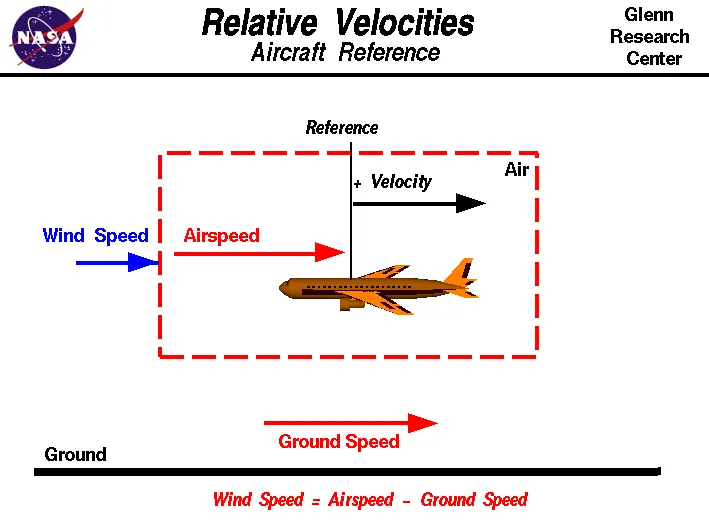
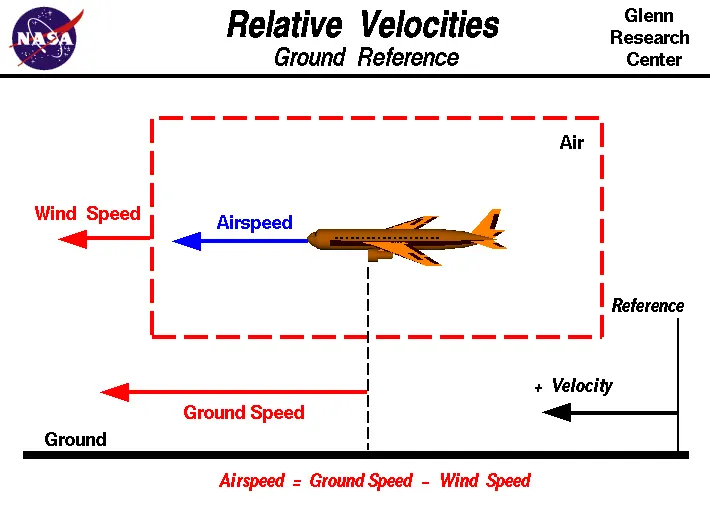
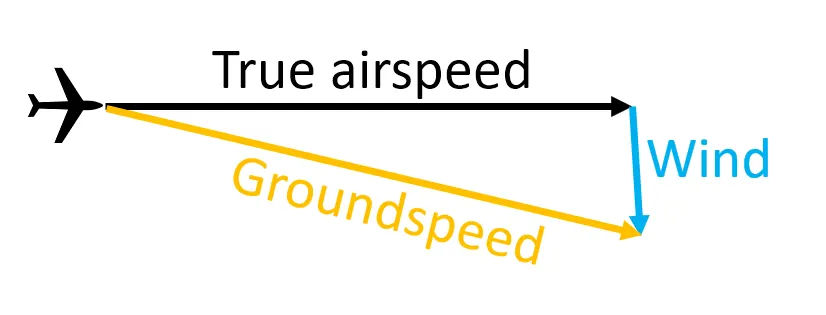
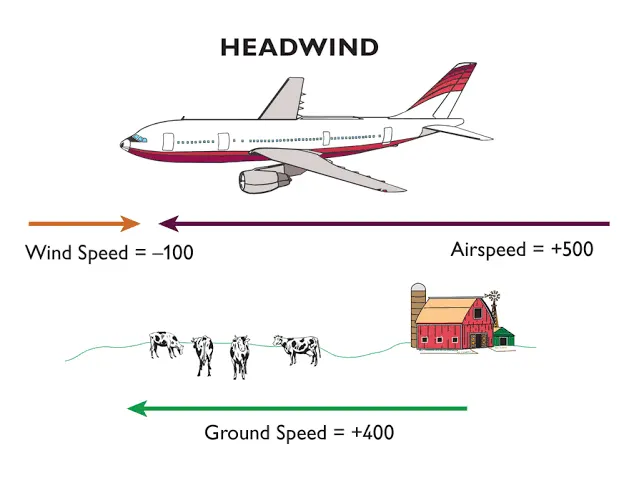
-The above two diagram relative velocity with respect to aircraft reference and ground reference.
-Here wind speed is the vector difference between ground and air speed. On a perfect still day the wind speed is zero and it is equal to the ground speed.
-If the measured air speed is greater than the observed ground speed the wind speed becomes positive.
Generally speaking, there are two different types of speed when talking about airplanes – ground speed and airspeed.
While ground speed is the airplane’s speed relative to the surface of the Earth, airspeed – at least true airspeed – is its speed relative to the air it is flying in.
As mentioned above, true airspeed is simply the speed at which an aircraft is moving relative to the air it is flying in. As such, it’s also the speed at which the air is flowing around the aircraft’s wings.
Ground speed, on the other hand, is the aircraft’s speed relative to the ground. One thing that should be noted here is that it’s its horizontal rather than vertical speed – an aircraft climbing completely vertically would have a ground speed of zero.
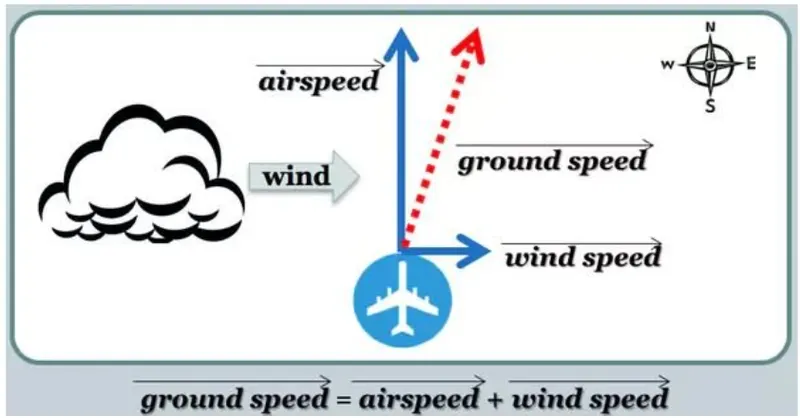
In other words, while airspeed is what determines whether there is enough airflow around an aircraft to make it fly, ground speed is what determines how fast an aircraft will get to its destination.
Towing is coupling two or more objects together so that they may be pulled by a designated power source or sources. The towing source may be a motorized land vehicle, vessel, animal, or human, and the load being anything that can be pulled
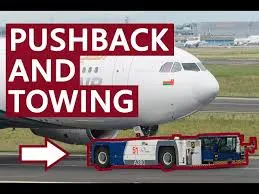
Although many aircraft are capable of moving themselves backwards on the ground using reverse thrust (a procedure referred to as a power back), the resulting jet prop might cause damage to the terminal building or equipment. Engines close to the ground may also blow sand and debris forward and then suck them into the engine, causing damage to the engine. A pushback is therefore the preferred method to move the aircraft away from the gate.
Although most aircraft are capable of moving themselves backwards on the ground using reverse thrust, a procedure called as a power back, it is not typically done due to the following reasons:
- The jet blast from the engines can damage the terminal building and nearby equipment. It can even throw away people standing nearby.
- Engines can blow sand and debris.
- Engines can suck in sand and debris which can cause serious damage to the engine.
- It is easier for the truck driver to see the surroundings better than the pilot sitting in the cockpit with limited windows.
- The pushback truck driver knows the airport better than the pilot.
- The plane engines are very loud. This noise can add up substantially when multiple planes are moving around the airport. It won't be a pleasant experience for people sitting inside the terminal, as most people don't even like the sound of powerful motor-bikes.
- It saves fuel. Virgin Atlantic had proposed a new system in which the pushback trucks will push the plane all the way to the runway to save fuel and reduce impact on nearby environment.
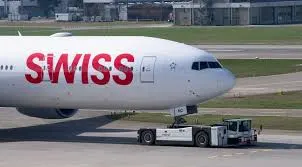
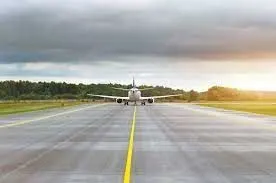
The power for taxiing comes from the engines itself. If it is a propeller powered aircraft, the propeller provides thrust and pulls the aircraft, like it would in air. If it is a jet engine, the exhaust air that comes out of the engine creates a forward force due to Newton's third law and moves the airplane.
Airliners have nose wheel steering, controlled by a cockpit control called a tiller. The tiller allows nose wheel to rotate at quite extreme angles making tighter turns possible. It also reduces the fuel consumption as you do not need much engine power during taxiing. If rudders were used, the power has to be increased to make sure sufficient air flows over the rudder surface to make it effective.
Once on the take-off roll and the airplane gains sufficient speed i.e. enough air flows over the rudders, pilots go back to using the rudder pedals to maintain the centre line.
Some large airplanes with multi wheel main gears have a tendency to scrub the tyres on the tarmac when nose wheel is steered. To counter this problem, an automatic main gear steering is inbuilt in the aircraft. This makes the main gears turn the opposite direction to that of the nose wheel, greatly decreasing the wear on the tyres.
Small general aviation aircraft uses the rudder for turns during taxi. They don't have a separate control for nose wheel. In such airplanes, to make tighter turns, you could use differential braking. That is, if you want to make a tight turn for example to the left, you would push the upper part of your left rudder pedal which would apply left braking. This allows the airplane to make a sharper turn to the left.
4. How an aircraft is pushed to runway when its ready to take off?
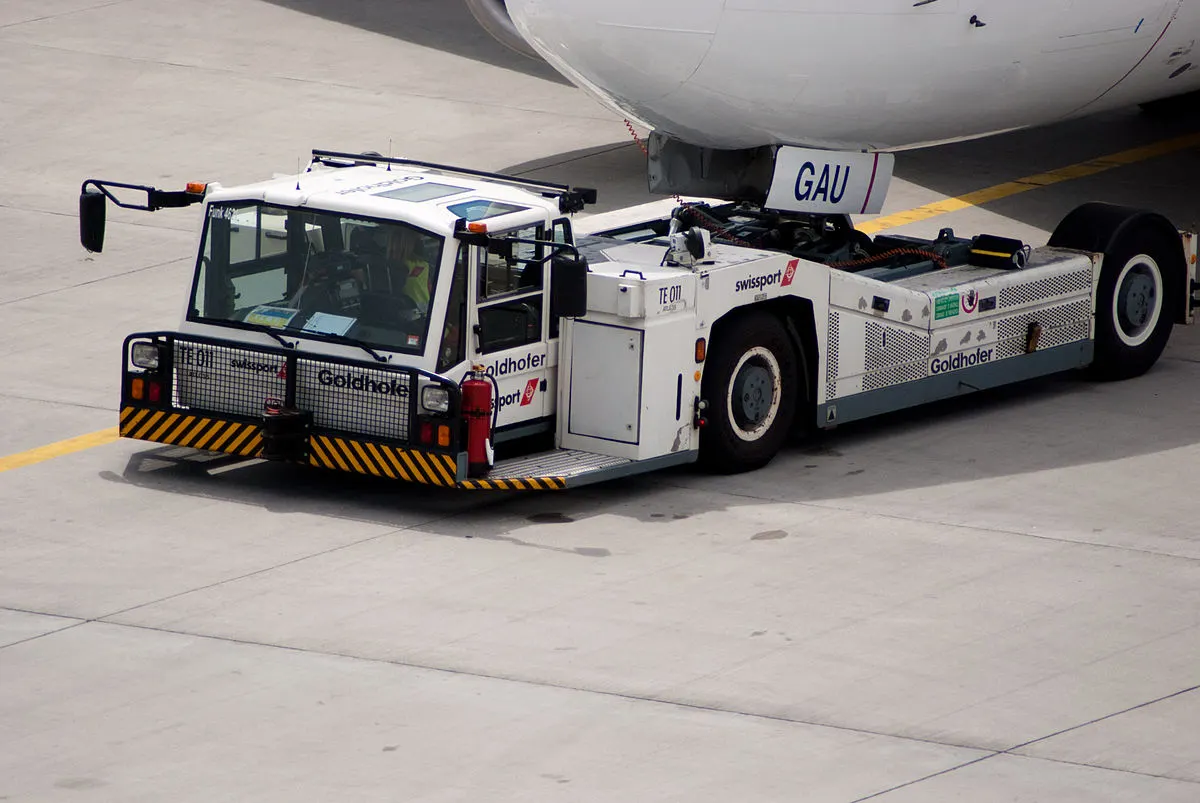
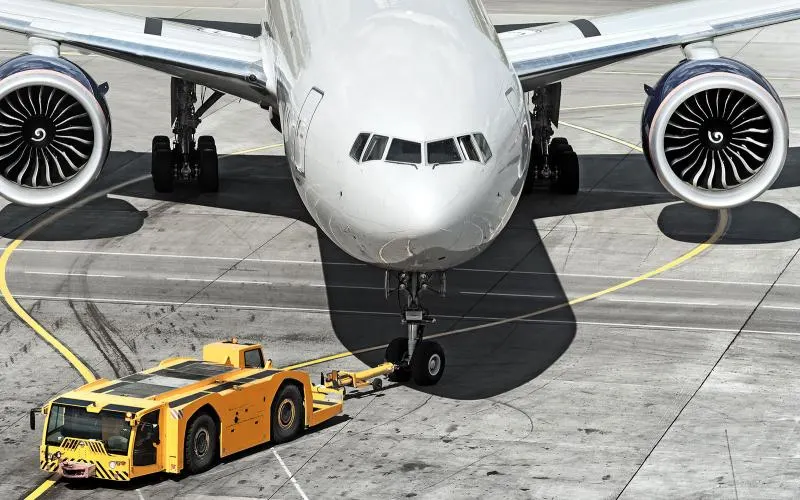
Towing:
In the parking areas, where taxing the aircraft is not practical or is unsafe, such as moving aircraft in and out of maintenance hangars, or moving aircraft that are not under their own power or moving backwards, then towing of aircraft is performed using the power of a specialized ground vehicle attached to or supporting the nose landing gear. The traditional method of allowing the ground vehicle to move an aircraft is to attach it to the aircraft nose landing gear by means of towbar.
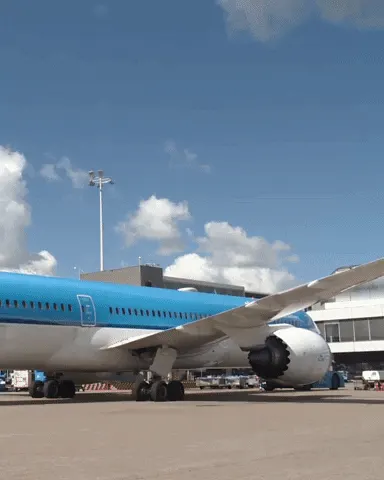
As a pilot can’t see what is behind the aircraft, steering is done by pushback tractor driver and depending on the aircraft type and airline procedure, a bypass pin may be temporarily installed into the nose gear to disconnect it from the aircraft’s normal steering mechanism. Once the towing is completed, the towbar is disconnected and the aircraft can taxi forward under its own power.
Taxiing:
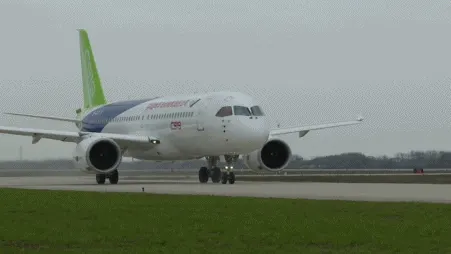
Taxiing is the movement of an aircraft on the ground under its own power while on the surface. The aircraft always moves following the yellow lines, to avoid collision with the surrounding buildings, vehicles or other aircrafts. The taxing motion has a speed limit. Before making a turn, the pilot reduces speed further to prevent the tires skids just like other vehicles. The reason for taxing is to reach the vehicle into the runway or from the runway to the terminal.
5. Learn about take off power, tyre design, rolling resistance, tyre pressure, brake forces when landing.
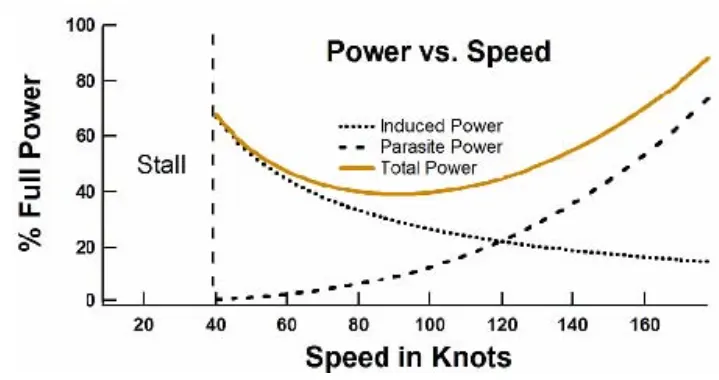
The amount of power that an engine is allowed to produce for a limited period of time for takeoff. The use of takeoff power is usually limited to 5 min for reciprocating engines and up to 2½ min for gas turbine engines. This may not always be the case. Specifically, with respect to reciprocating engines, it is the brake horsepower developed under standard, sea-level conditions and under the maximum conditions of the crankshaft rotational speed and the engine manifold pressure approved for the normal take-off. It is limited in continuous use to the period of time shown in the approved engine specifications. With respect to gas turbine engines, it is the thrust developed under static conditions at a specified altitude and atmospheric conditions of the rotor shaft rotational speed and gas temperature approved for the normal takeoff. It is limited in continuous use to the period of time shown in the approved engine specifications.
Tyre Design:
The tryes help to absorb the shock of landing and provide cushioning. It also provides the necessary traction for braking and stopping of an aircraft.
An aircraft tyre is designed to withstand extremely heavy loads while landing, take off, taxing, and parking. The number of wheels required for aircraft increases with the weight of the aircraft, as the weight of the aeroplane needs to be distributed more evenly.
Design:
Carcass plies are used to form the tire. They are sometimes called casing plies. An aircraft tyre is constructed for the purpose it serves.
- They support the weight of an aircraft while it is on the ground.
- It also provides the necessary traction for braking and stopping of an aeroplane.
- Tyre also helps to absorb the shock of landing and provide cushioning the roughness of takeoff, roll-out, and taxi operations.
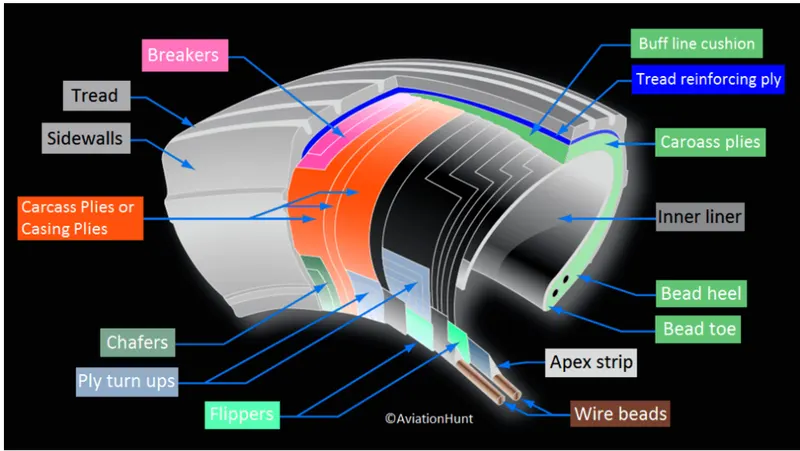
Unlike an automobile or truck tyre, it does not have to carry a load for a long period of continuous operation. However, an aircraft tyre absorbs the high impact loads of landing, and also it’s operating at high speeds for a short time when required.
Aircrafts tyres are manufactured with tread rubber with conducting compounds to permit earthing of static charges.
Rolling Resistance:
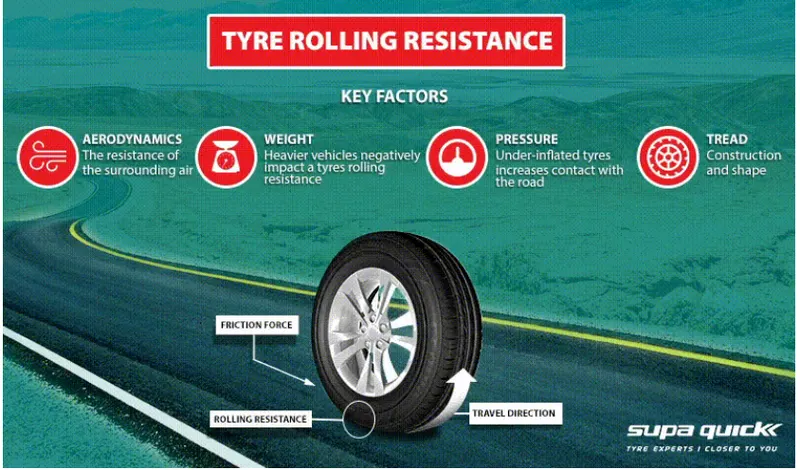
Rolling resistance, sometimes called rolling friction or rolling drag, is the force resisting the motion when a body rolls on a surface. It is mainly caused by non-elastic effects; that is, not all the energy needed for deformation of the wheel, roadbed, etc., is recovered when the pressure is removed. Two forms of this are hysteresis losses, and permanent (plastic) deformation of the object or the surface. Note that the slippage between the wheel and the surface also results in energy dissipation. Although some researchers have included this term in rolling resistance, some suggest that this dissipation term should be treated separately from rolling resistance because it is due to the applied torque to the wheel and the resultant slip between the wheel and ground, which is called slip loss or slip resistance.
Tyre Pressure:
Aircraft tires generally operate at high pressures, up to 200 psi (14 bar; 1,400 kPa) for airliners, and even higher for business jets. The main landing gear on the Concorde was typically inflated to 232 psi (16.0 bar), whilst its tail bumper gear tires were as high as 294 psi (20.3 bar).
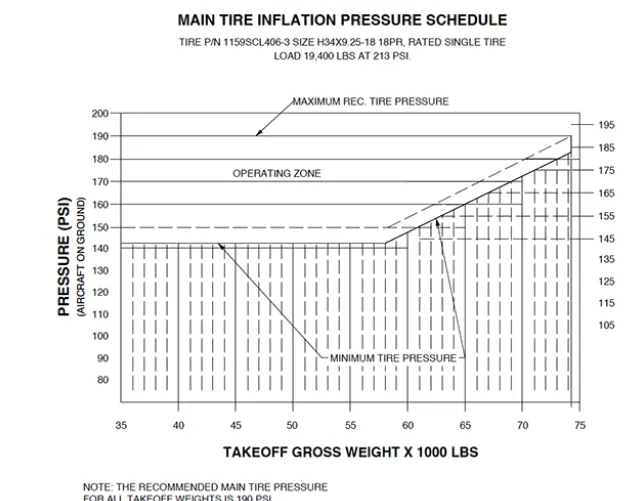
Aircraft tires are usually inflated with nitrogen to minimize expansion and contraction from extreme changes in ambient temperature and pressure experienced during flight. Dry nitrogen expands at the same rate as other dry atmospheric gases (normal air is about 80% nitrogen), but common compressed air sources may contain moisture, which increases the expansion rate with temperature.
Landing Brake Forces:
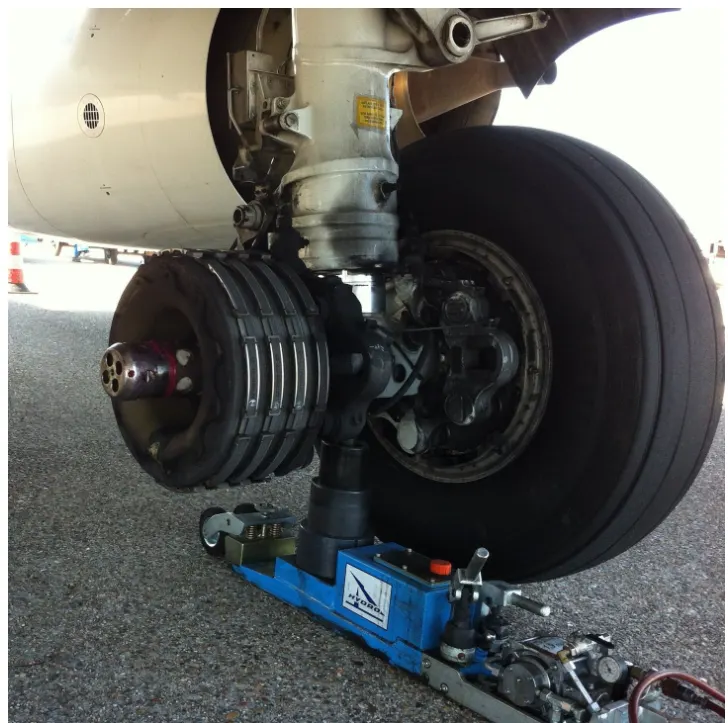
On other aircraft types, the brake units are powered by the hydraulics system. An electrical signal is sent from the flight deck to hydraulic actuators near the main landing gear. Here, hydraulic fluid at 3,000 pound per square inch is used to force the brake unit against the wheel, thus slowing it down.
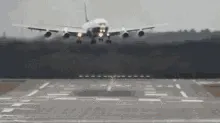
Aircraft braking systems include:
- Aircraft Disc Brake: In the landing gear it is used to brake the wheels while touching the ground.These brakes are operated hydraulically. In most modern aircraft they are activated by the top section of the rudder pedals (“toe brakes''). In some older aircrafts the bottom section is used instead (“hee brakes”). Levers are used in a few aircraft. Most aircraft are capable of differential braking.
- Thrust Reverse: that allows thrust from the engines to be used to slow the aircraft.
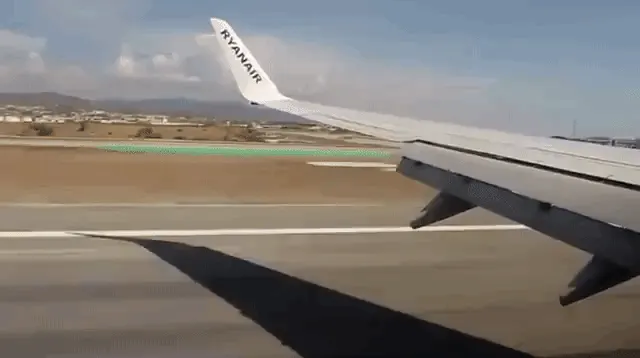
- Air Brake: It is a dedicated flight control surface that works by increasing drag.
- Drogue Parachute: It is used by several former and current military and civilian aircraft (examples include the American B-52 and the sovient Tu-134 & 144).
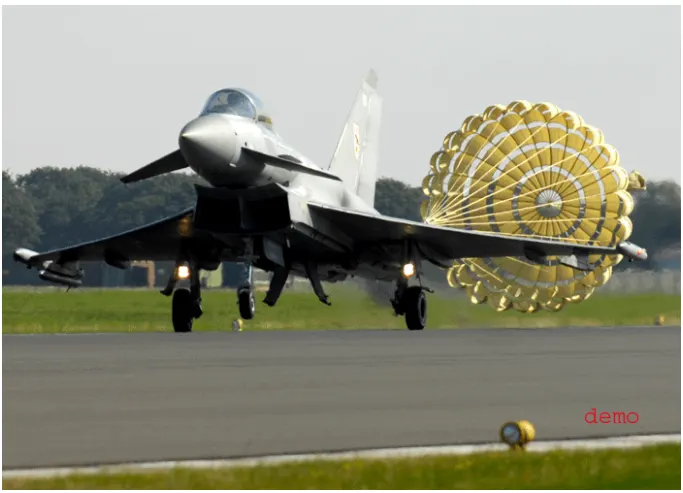
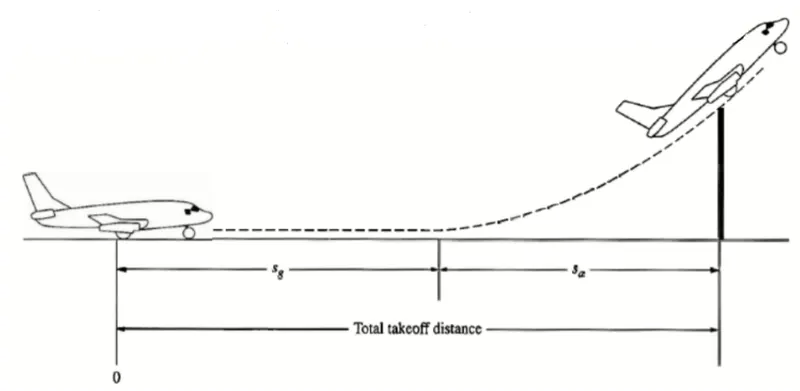
-Take off is the phase of the flight in which an aeroplane leaves ground and becomes airbone.For lighter aircraft full power is given during take off whereas on the other hand large cargo carriers aircraft make use of less power during take-off in order to increase the life span of engine, reduce maintenance cost, reduce engine heat and also for a smooth take off flight.
-The forces involved during take-off are the following:
T=Thrust force pushes the aircraft in forward directions on the runway.
D=Drag force resist the forward motion of the aircraft.
F=Rolling resistance force when wheel comes in contact with the ground during landing and take-off.
-During take-off on the runway the imbalance force will cause an acceleration along the runway and it is given by the formula:
dv/dt=T−D−Fm
-Now when the pilot is ready to take off the aircraft will accelerate to a speed which would be given by aircraft controlling department. Then after take-off the flight will be elevated to a certain angle and hieght.then it will be made to stabilise in an equilibrium manner.
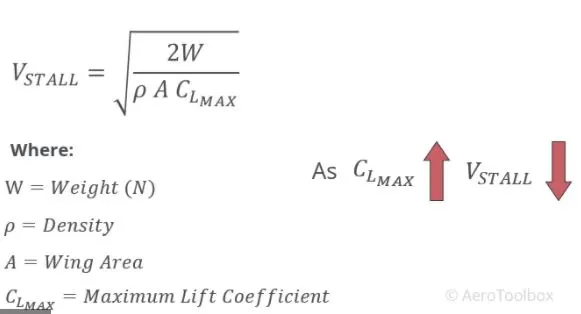
-Here safe speed or rotational speed is defined as Vr which act as a critical factor for determining take off performance. For safety reasons Vr is usually determined as 1.1*Vstall(lowest speed that aircraft can be flown before the air starts to separate from the wings when the angle of attract becomes too great.
-Vstall can be calculated by using a formula given:
*Tyre design of an aircraft:
-An aircraft tyre is designed to withstand extreme heavy loads by absorbing shocks during and there by providing cushioning effect.
-The number of tires required for an aircraft depends on the total weight of aircraft as the weight needs to be distributed evenly.
-Aircraft tyre is designed to facilitate stability in high crosswind condition, to channelize the water away for preventing skidding and helps to give a good braking effect.
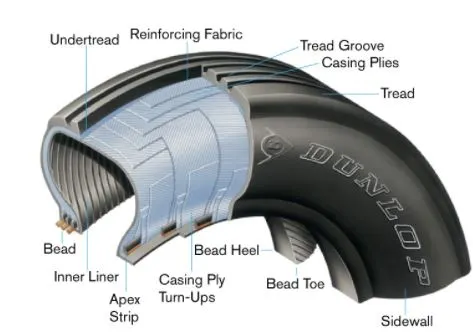
-Aircraft tires are usually inflated by nitrogen air in order to reduce expansion and contraction from extreme changes in ambient pressure and tempurature.This type of inert gases will eliminate the possibility of tire explosion.
-Aircraft tire design are set into an aircraft based on its application and also sufficient clearance with the ground for allowing tyre growth which happens when centrifugal force is at high speed.
*Rolling Resistance:
-Rolling resistance or rolling drag is the force resisting the motion when the body rolls on a surface and it is mainly caused by non-elasticity that is not all the energy needed for deformation of wheel is recovered when the pressure is removed.
-The rolling resistance equation can be defined by the following equation:
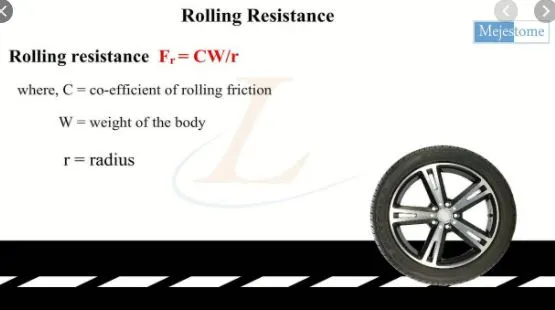
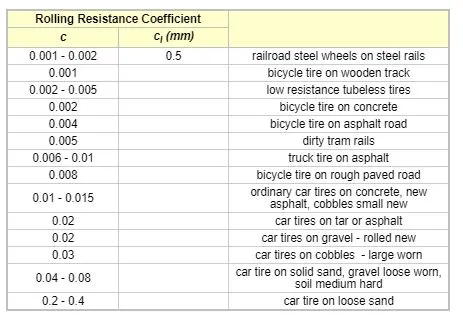
-Usually aircrafts have a very low rolling resistance coeffiecient of 0.06. Some other examples are as follows:
*Tyre Pressure:
-Aircraft tyres are designed to withstand heavy loads and shocks during landing and take-off and also needs to distribute weight evenly.
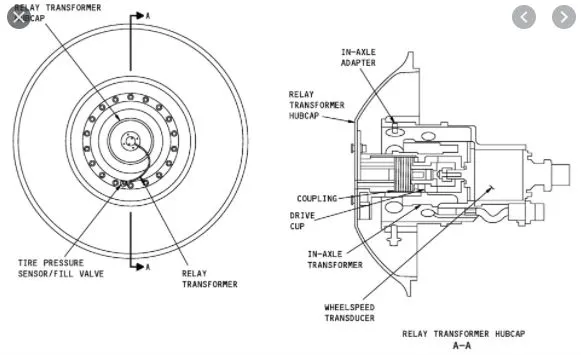
-As per research and testing it is found that aircraft tyres are able to sustain pressure up to 800 psi.Generally to note the tyre pressure of an aircraft a special type of sensors are used, its diagram is given below:
-There are 2 primary parameters which is hazardous to the aircraft tires:
I)Deflation:
Here the tire deflates in a controlled manner with minimum direct consequence to other system.
II)Explosive breakup:
In this case the tire deflates or bursts in an uncontrolled manner with a probability of causing damage to other secondary system, which further can cause a major crash-landing incident.
*Brake forces:
-Braking an aircraft is a challenging job for most of the pilots especially during landing in a rainy and cross wind environment.
-In order to encounter these kinds of problem pilots usually make use of spoilers and reverse thrust method in order to have a safe landing so that the energy required to apply brakes on tires can be reduced and henceforth they do not skid.
-Now there is method which determines the brake force for aircrafts and they are as follows:
k=12mv2, where m= mass of aircraft and v=velocity of aircraft. A typical commercial landing speed will range between 150 to 165 MPH. AND for passenger flight it is about 166 to 172mph.
The rolling resistance for the air plane can be calculated as :
Fr = c mr ag (1)
where
Fr = rolling resistance (N, lbf)
c = rolling resistance coefficient
mr = rolling mass (kg, lbm)
ag = acceleration of gravity (9.81 m/s2)
The friction force for the puller can be calculated to
Ff = μ W
= μ mf ag (2)
where
Ff = frictional force (N, lb)
μ = friction coefficient
W = weight (N, lbf)
mf = friction mass (kg)
The drag force acting on the tow will be :
The drag force D exerted on a body traveling though a fluid is given by
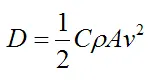
C is the drag coefficient, which can vary along with the speed of the body. But typical values range from 0.4 to 1.0 for different fluids (such as air and water)
ρ is the density of the fluid through which the body is moving
v is the speed of the body relative to the fluid
Now the tractive force or the pulling force required by the tow will be
Pulling force = Drag force + friction force + Rolling resistance force
Now let us consider aircrafts with the following specifications :
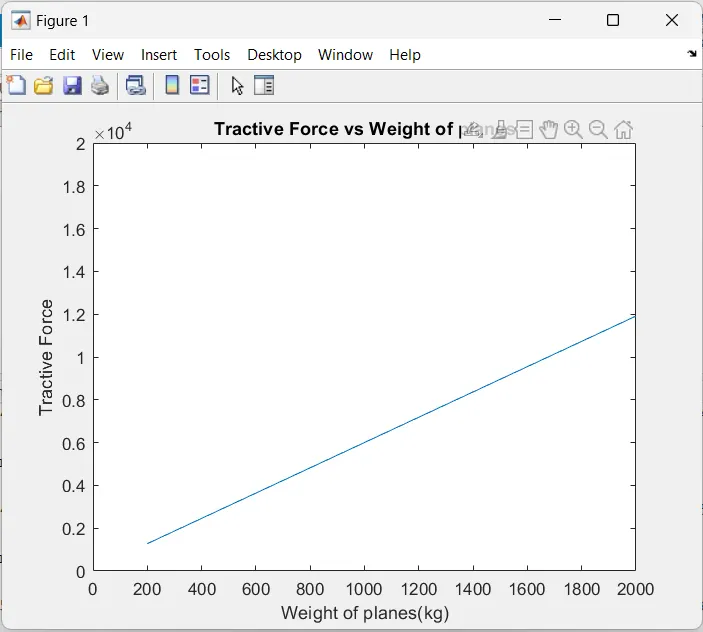
Now as we have seen that various kinds of planes have different weights ,the amount of pulling force also will be different .Therefore we will consider a range of weight :
Range of weight = 200 kgs - 250000 kgs '
The towing speed considered is 5 m/s
Area range : 50 - 100 m^2
Coefficient of rolling resistance : 0.02
Coefficient of friction : 0.01
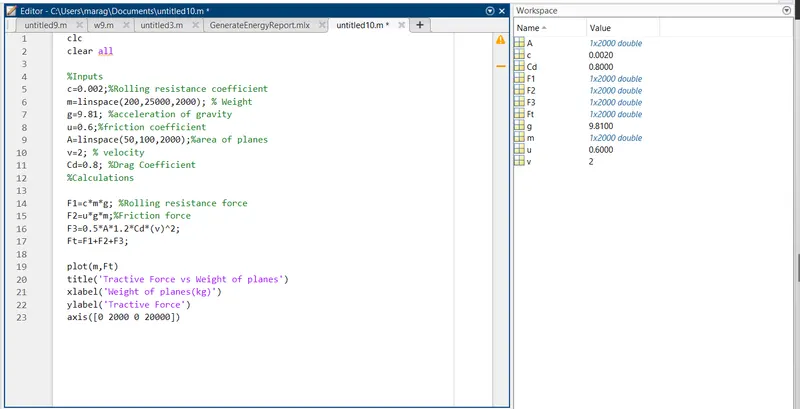
clc
clear all

%Inputs
c=0.002;%Rolling resistance coefficient
m=linspace(200,25000,2000); % Weight
g=9.81; %acceleration of gravity
u=0.6;%friction coefficient
A=linspace(50,100,2000);%area of planes
v=2; % velocity
Cd=0.8; %Drag Coefficient
%Calculations

F1=c*m*g; %Rolling resistance force
F2=u*g*m;%Friction force
F3=0.5*A*1.2*Cd*(v)^2;
Ft=F1+F2+F3;

plot(m,Ft)
title('Tractive Force vs Weight of planes')
xlabel('Weight of planes(kg)')
ylabel('Tractive Force')
axis([0 2000 0 20000])
Part B:
6. A. With necessary assumptions, calculate the force and power required to push / pull an aircraft by a towing vehicle
To propel any vehicle we need to overcome several opposite forces acting on the same vehicle .
The actual forces acting on the vehicle varies from place to place.
Let us consider the regular runway the opposite forces are acting to propel the vehicle are
Rolling resistance force (Frr)
and aerodynamic drag force. (Fad)
there is no grade so hill climbing force (Fhc)is neglected.
The sum these forces is actual or total force (Fte) to overcome to propel the vehicle.
Frr=m.g.μrr;
Fad=1/2*ρACdv^2;
where,
m-mass of the vehicle(kg)
g-gravitational constant. (kg/m^2)
μrr-rolling resistance
ρ-air density(kg/m^3)
A-frontal area(m^2)
Cd-aero drag coefficient
v-velocity of the vehicle(m/s)
Fte=Rolling resistance force (Frr)+aerodynamic drag force.(Fad)
Fte=mgμrr+1/2*ρACdv^2
assume any vehicle (aircraft):
some of the assumptions are:
mass of the aircraft (ma)=24500kg;
mass of the towing vehicle=10000kg;
gravitational constant(g)=9.81m/s^2;
rolling resistance(μrr)=0.05;
air density(ρ)=1.5kg/m^3;
frontal area (A)=10m^2;
aero drag coefficient (Cd)=0.4+0.2=0.6;
velocity(v)=21.6km/hr=6m/sec
Frr=mgμrr
=(24500+10000) *9.81*0.05
=16922.25N
Fad=1/2*ρACdv^2
=0.5*1.5*10*0.6*6^2
=162N
Fte=mgμrr+1/2*ρACdv^2
=16922.25N+162N
=17084.25N
force required to pull or push the vehicle Fte=7909.9488N
torque at the wheels =force *radius
=17084.25*0.2(tire radius=0.2m)
=3416.85Nm
power required to pull the vehicle;
we know;
power(p) =force *velocity
=Fte*v
=17084.25*6
=102505.5watts
=102.505kw
The power required to propel the vehicle is 102.505kw.
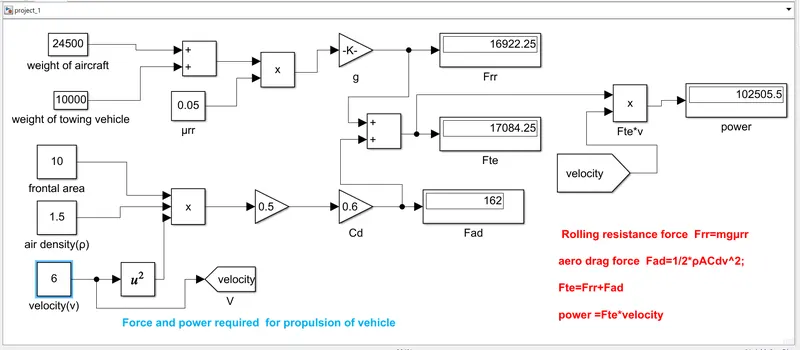
B. Develop the model for the calculated force and power using Simulink.
Frr=mgμrr;
Fad=1/2*ρACdv^2;
m-mass of the vehicle(kg)
μrr-rolling resistance
ρ-air density(kg/m^3)
A-frontal area(m^2)
v-velocity of the vehicle(m/s)
Gain block: This block is multiplying the input with the gain value.
This block is used for
g-gravitational constant. (kg/m^2)
Cd-aero drag coefficient
Display: which results the output of the equations ie, forces and power.
Tags: Used to tag the data between the blocks. (goto &from)
OUTPUT
THE LINK SHOWS THE OUTPUT https://drive.google.com/file/d/1vRX_NjLFjyQIqmYGrV0KblGDkvceyScQ/view?usp=sharing
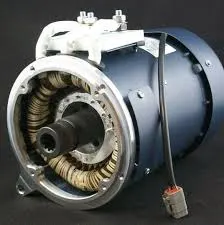
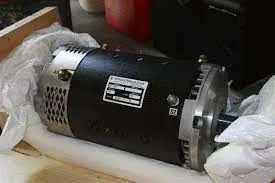
7. A. Design an electric powertrain with type of motor, it’s power rating, and energy requirement to fulfill aircraft towing application in Simulink. Estimate the duty cycle range to control the aircraft speed from zero to highest. Make all required assumptions. Prepare a table of assumed parameters. Draw a block diagram of powertrain.
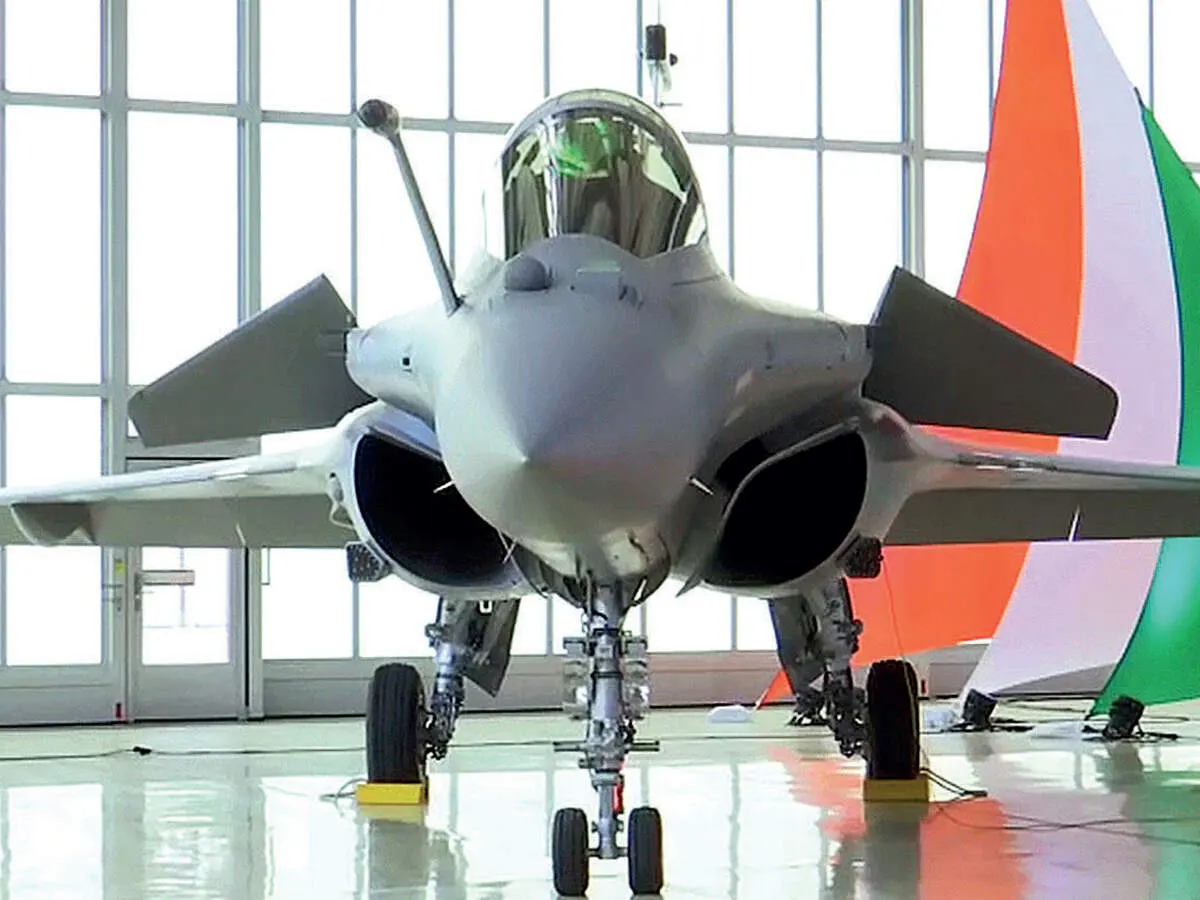
Rafale aircraft
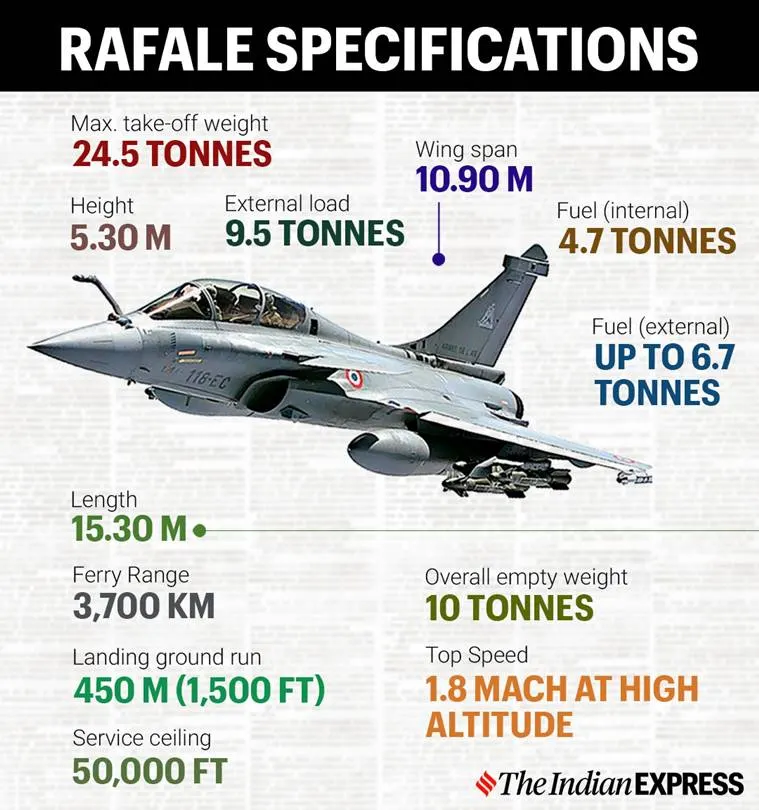
| parameter | assumption |
| mass of the aircraft (ma) | 24500kg |
| mass of the towing vehicle | 10000kg |
| rolling resistance(μrr) | 0.05 |
| air density(ρ) | 1.5kg/m^3 |
| frontal area (A) | 10m^2 |
| aero drag coefficient (Cd) | 0.6 |
| velocity(v) | 21.6km/hr=6m/sec |
| gravitational constant(g) | 9.81m/s^2 |
Power train model designed in Simulink:
The below model represents the simple powertrain model for aircraft on the run way. In general the power train consists of the battery (source), motor, motor controller ,
This model consists of battery, four quadrant chopper dc drive (DC) The main purpose of the dc drive is it consists the controller also.
The dc 7 model is reference for the powertrain for the for aircraft on runway
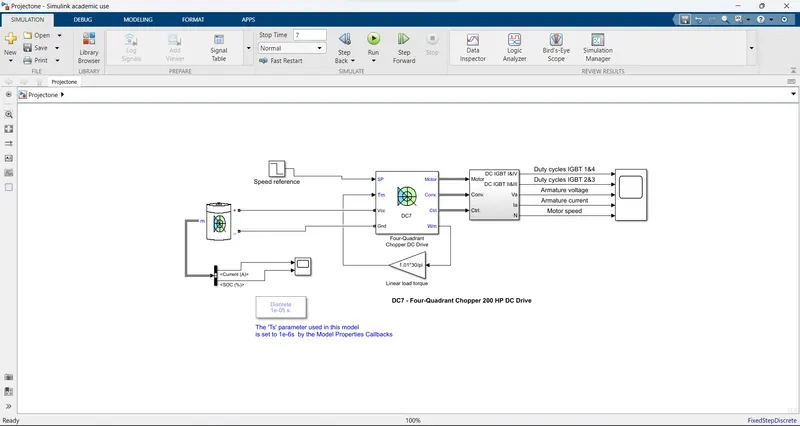
THE LINK SHOWS THE SIMULINK MODEL https://drive.google.com/file/d/1LkCXtWl9zDohER_ZobgxWczZSqt8vgQ2/view?usp=sharing
These are the plots for above powertrain:
The plot consists of the duty cycles of the controller igbt switches,
Armature voltage of the motor
armature current of motor
motor speed .and torque.
OUTPUT
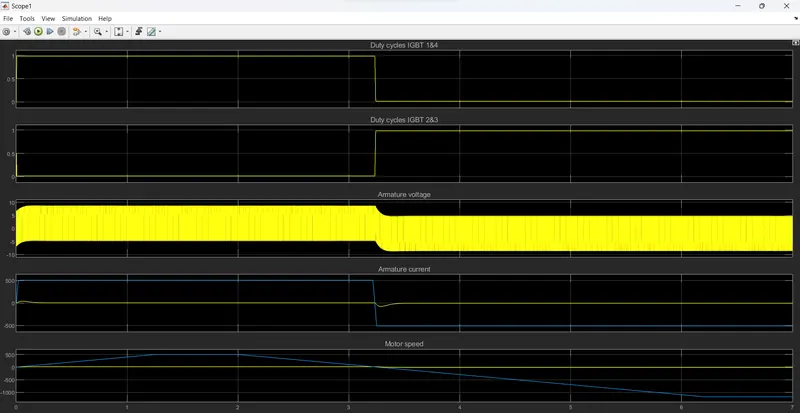
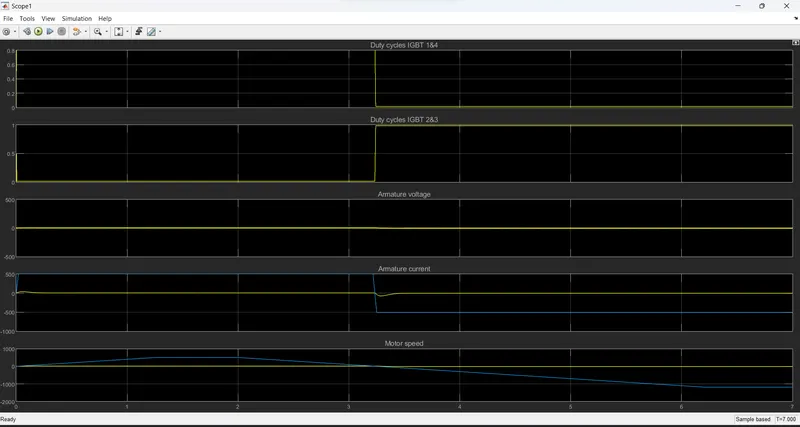
THE LINK SHOWS THE OUTPUT https://drive.google.com/file/d/1Sm5jyZZ03aIxDDATIbU5yye58p3Rll-7/view?usp=sharing
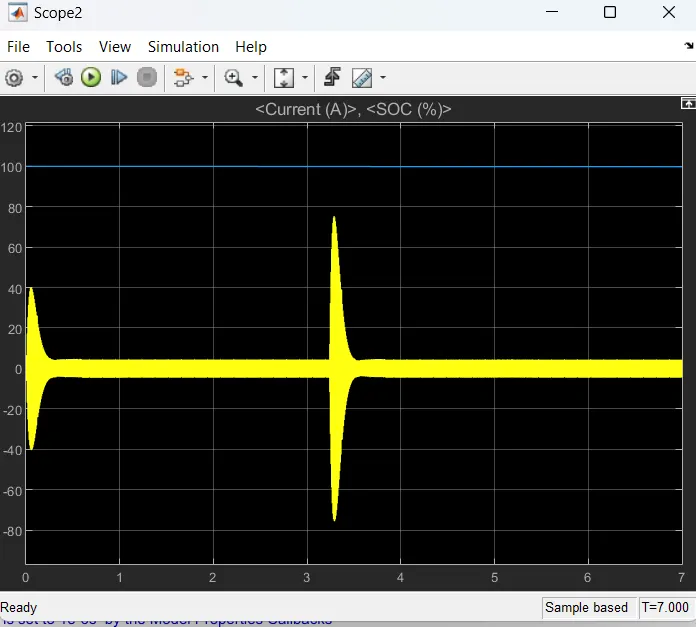
THE LINKS SHOWS THE OUPUT https://drive.google.com/file/d/1aJfPJ6_mkuJWrDomhu6JMJYFwZJ5YhCS/view?usp=sharing
BLOCK DIAGRAM OF TOWING VEHICLE
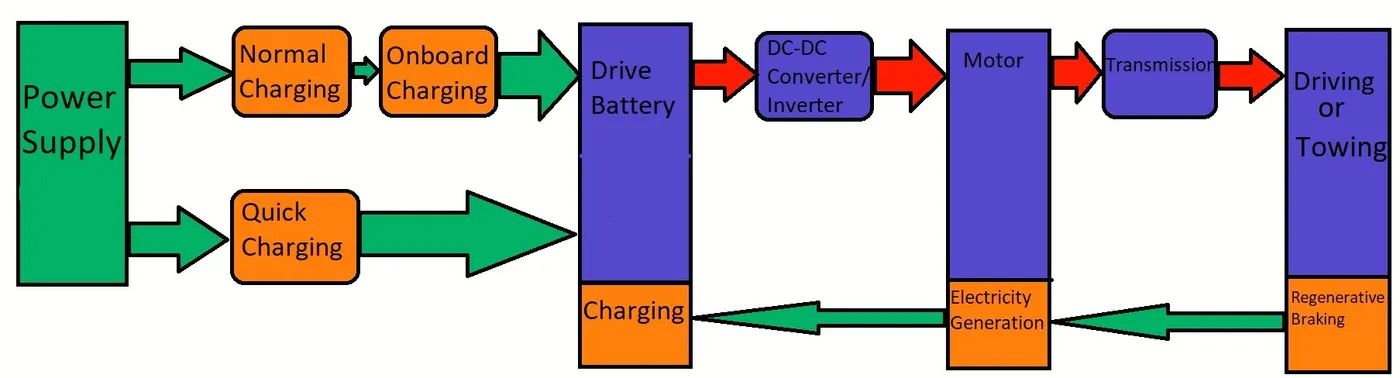
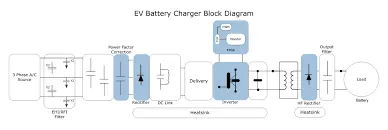
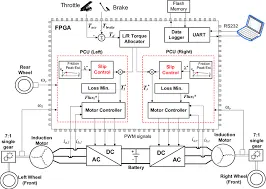
Electric Vehicles, consist of a battery, connected to an electric motor (either ac or DC) via an inverter and a motor controller. As automotive batteries generally operate on DC current, while the gird operates AC, a converter is needed to transfer power to the battery. One of the key advantages of an EV is its much higher levels of energy efficiency.
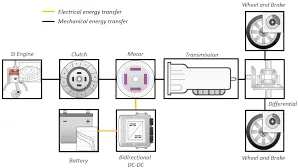
The Power Train Block Diagram for the entire Towing application starting from the Aircraft to the Towing Vehicle is given below:
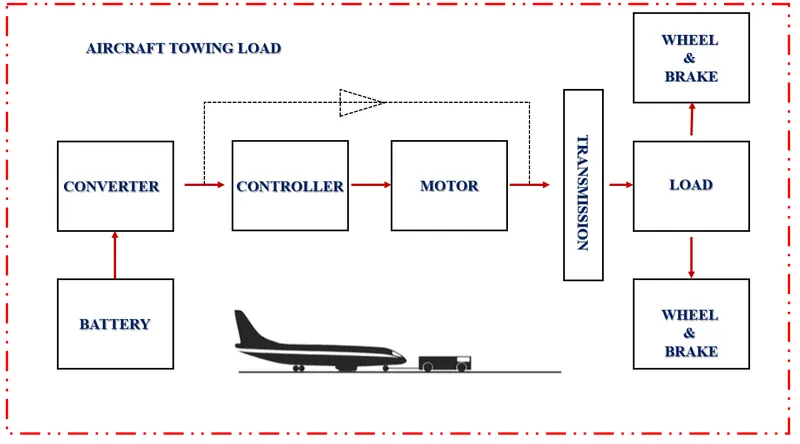
From the diagram we can see that the Battery is supplying the power to the Motor and that is controlled by the Controller unit which is nothing but the Inverter Circuitry. As automotive batteries generally operate on DC while the grid operates on AC, so a converter is needed to transfer power to the battery. Because of this capability of EV vehicle, the efficiency of them is much more (80-60%) than the conventional IC engine type of vehicle (25-30%). This motor is then responsible for controlling the wheels and the brakes through the Transmission and the Gear System.
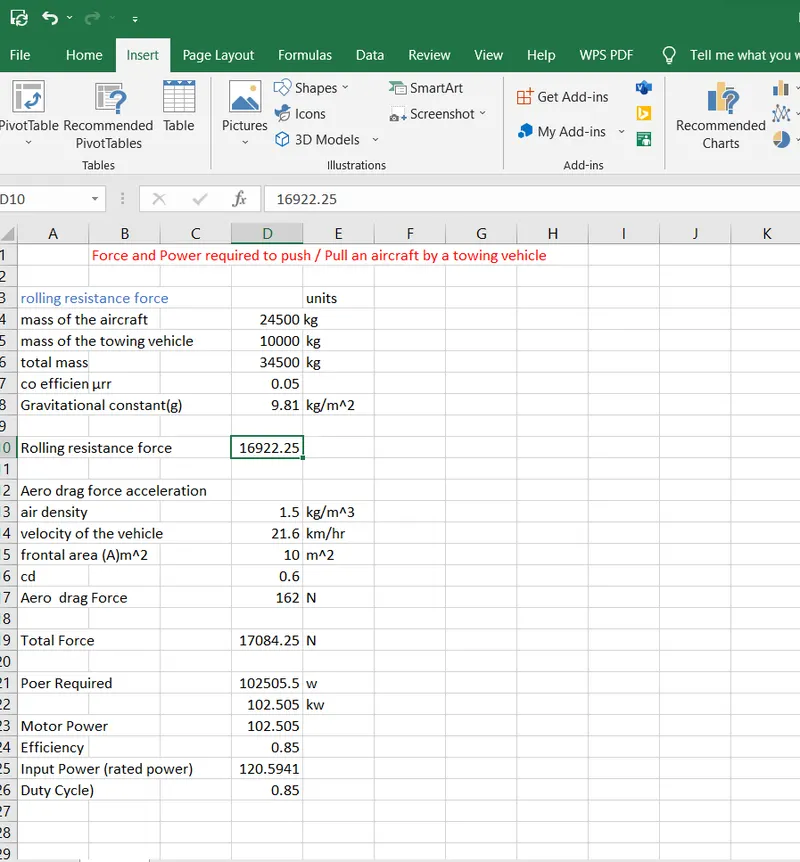
B. Also, Design the parameters in excel sheet.
THE GOOGLE DRIVE INK SHOWS THE EXCEL SHEET https://docs.google.com/spreadsheets/d/16PaR2zWVkfDPgotRa1BH-ZhON-CAbDUc/edit?usp=sharing&ouid=101482956916689432206&rtpof=true&sd=true
CONCLUSION
With necessary assumptions, calculated the force and power required to push / pull an aircraft by a towing vehicle. Develop the model for the calculated force and power using Simulink. Designed an electric powertrain with type of motor, it’s power rating, and energy requirement to fulfill aircraft towing application in Simulink. Estimated the duty cycle range to control the aircraft speed from zero to highest. plotted necessary required graphs.