Project-1: Powertrain for aircraft in runways
1. Search and list out the total weight of various types of aircrafts.
Introduction:
There are many factors that lead to efficient and safe operation of aircraft. Among these vital factors are proper weights and balance control. The maximum allowable weight for an aircraft is determined by design considerations. The manufacturer provides the aircraft operator with the empty weight of the aircraft and the location of its empty weight center of gravity (EWCG) at the time the certified aircraft leaves the factory.
However, the maximum operational weight may be less than the maximum allowable weight due to such considerations as high-density altitude or high-drag field conditions caused by wet grass or water on the runway. The maximum operational weight may also be limited by the departure or arrival airport’s runway length.
How Much Does an Aeroplane Weight:
An average airplane weighs around 90,000 pounds (41,000 kilos) empty weight, which means the weight of the airplane when its fuel tanks are empty and there are no people or luggage on board. This example is for a B-737-800 aircraft (which I flew all over the world) which is considered a medium-sized commercial jet airliner. You can expect to add 84,000 pounds (38,000 kilos) of fuel, passengers, and baggage to that number to get a maximum takeoff weight of 174,000lbs (79,000 kilos).
1.Cessna 172 – Used by many as initial training aircraft (27 feet long) – 1450lbs empty weight, 2450lbs max weight
2.Citation Jet M2 – (42 feet long) – 6990lbs empty weight, 10,700lbs max weight
3.Boeing 767-300 – (185 feet long) – 195,000lbs empty weight, 400,000 max weight
4.Boeing 787-800 – (186 feet long) – 264,500lbs empty weight, 502,500lbs max weight
5.Boeing 777-300 – (242 feet long) – 354,000lbs empty weight, 660,000lbs max weight
6.Boeing 747-400 – (232 feet long) – 407,000lbs empty weight, 910,000lbs max weight
7.Airbus A320 – (123 feet long) – 82,000lbs empty weight, 170,000lbs max weight
8.Airbus A330 – (210 feet long) – 274,500lbs empty weight, 507,000lbs max weight
9. Antonov AN-225 - 640,000 Kgs - 591.7 tons.
10. McDonnell Douglas DC-10 - 256,280 Kgs - 183 tons.
11.Boeing 777-200ER - 297,550 kgs - 213 tons
12.Lockheed L-1011-500 - 213,300 kgs - 166.92 tons.
2. Is there any difference between ground speed and air speed?
Air Speed Vs Ground Speed:
True airspeed is simply the speed at which an aircraft is moving relative to the air it is flying in. As such, it’s also the speed at which the air is flowing around the aircraft’s wings.
Ground speed, on the other hand, is the aircraft’s speed relative to the ground. One thing that should be noted here is that it’s its horizontal rather than vertical speed – an aircraft climbing completely vertically would have a ground speed of zero.
In other words, while airspeed is what determines whether there is enough airflow around an aircraft to make it fly, ground speed is what determines how fast an aircraft will get to its destination.
Winds Effect on Ground Speed:
The relationship between airspeed and ground speed is fairly simple. Ground speed is simply the sum of airspeed and wind speed.
If the aircraft is flying in the same direction as the wind is blowing, the aircraft experiences tailwind, and its ground speed is higher than its airspeed. On the other hand, if the wind is blowing against the direction the aircraft is traveling in, the aircraft experiences headwind, and its ground speed is lower than its airspeed.
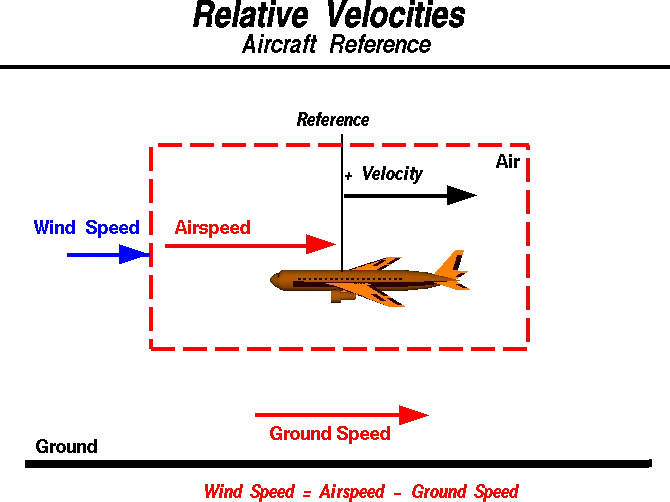
To give you an actual example, imagine an aircraft that cruises at an airspeed of 500 miles per hour that has to cover a ground distance of 2,000 miles. If there is no wind at all, then both the aircraft’s airspeed and ground speed would be the same 500 miles per hour, and the aircraft would reach its destination in four hours. If there was a 100 miles per hour headwind – wind blowing against the aircraft’s direction of travel – the aircraft would still be traveling at an airspeed of 500 miles per hour. However, its ground speed would be just 400 miles per hour (100 miles per hour slower than its airspeed). And as such, it would take the aircraft five hours to reach its destinations.
Finally, if there was a 100 miles per hour tailwind – wind blowing in the same direction as the aircraft’s travel – the aircraft would still be traveling at an airspeed of 500 miles per hour, but its ground speed would be 100 miles faster. And, at 600 miles an hour, the aircraft would reach its destination in just three hours and twenty minutes.
Three Types of Air Speed:
Indicated airspeed is an airspeed that is calculated directly off an aircraft’s pitot-static system. It’s the calculated off the aircraft’s dynamic pressure – the difference between its total pressure and static pressure.
The dynamic pressure depends not only on the aircraft’s speed, but also on the density of the air it is flying in. As such, the higher the aircraft flies – and the lower the air density as a result – the bigger the difference between indicated and true airspeed is.
Calibrated airspeed is indicated airspeed adjusted for a variety of errors.
Just as an example, one of the things it’s adjusted for is the flap position. The reason for that is that at different flap positions, air flows differently around the pitot-static system and affects the indicated airspeed readings.
True airspeed is, as has been mentioned numerous times in this article, the actual speed at which an aircraft is moving relative to the air it is traveling in. It’s calibrated airspeed adjusted for the the exact conditions (altitude, air temperature, etc.) that the aircraft is flying in.
This is the difference between Air speed and Ground speed.
3.Why is it not recommended to use aircraft engine power to move it on the ground at Airport?
The power an aircraft uses when parked at the airport stand. Normally the aircraft generates it own power, but when parked with the engines switched off power provided by the airport would be connected to the plane. This connected power is typically 115 V at 400 Hz and is called ground power.
Taxiways and Runways:
Taxiways, too, can vary in width and load-bearing strength depending on the airfield. Depending on these factors, they are categorized so that pilots know which taxiways they are able to use for their aircraft type. The taxiways at some airports can be particularly tight, especially for bigger aircraft. With a wingspan of more than 60 meters, pilots on the 787 Dreamliner always have to be mindful of their wingtips. Parking stands can also vary in width and length, depending on the aircraft type they are to accommodate. It is on these stands where aircraft park and are unloaded and loaded between flights. They have to provide electrical power for the aircraft whilst the engines are shut down and also enough area around the aircraft to give the multitude of servicing vehicles space to access the aircraft. At some big airports, when not in use by a bigger aircraft, one stand can be used by two smaller aircraft.
Most Aircraft Can’t Reverse
When you arrive at the gate for your flight, more often than not you’ll get a great view of the nose of the aircraft through the terminal window. If you look closely, you’ll be able to see us pilots preparing the aircraft for departure. Funny enough, we can see you peering out at us too, so if we wave, don’t be embarrassed to wave back. However, the obvious problem with parking facing the terminal is that in order to get to the runway, we need to move backward off the stand first. If this was on your drive at home, you’d just pop your car into reverse, back out onto the street and off you go. Unfortunately, aircraft are unable to do this as they don’t have a reverse gear. In order to get round this problem, we use the assistance of a pushback tug.
Pushback Tugs: The Little Engines That Could
For smaller aircraft, the pushback tug doesn’t require a massive amount of power. They utilize the weight of the tug, sometimes up to 60 tons, to ensure that the wheels don’t just spin on the tarmac. “The small ones have enough power to push and tow an aircraft up to a 757,” says Airside MUC, a pushback driver at Munich International Airport. “The functionality is pretty simple. We connect a tow-bar at the aircraft first, then at the tug.”
It takes skill to push an aircraft back using these types of tug. “You have two steering axis here at the nose gear and at the tug where the tow-bar is connected,” he said. “So when you steer right, the nose of the aircraft goes opposite.”
However, with bigger aircraft, tug designers ran into a problem. Even with a 60-ton tug, there isn’t enough weight to stop the tug wheels spinning. To get round this problem, they needed something to weigh the tug down. Something like the weight of a 560-ton A380.
Engines Provide the Thrust
Once the tug has disconnected and the engines are running, the pilots call ATC for their clearance to taxi to the departure runway. They will then be issued with a series of taxiways, which will eventually take them to the departure point. At smaller airports, this may just be one taxiway. At larger airfields it could be a number of taxiways, broken up into segments to give way to other aircraft. It’s worth noting that aircraft don’t ‘taxi down the runway’. They taxi on taxiways, hence the name, taxiway. (Sometimes aircraft do have to taxi on the runway, but this is relatively infrequent. So, for the case of this article, I decided to keep it simple.) If this was your car, you’d put the gear into drive or first gear and press the accelerator. This would inject fuel into the engine and provide power to turn the wheels and off you’d go. However, aircraft wheels aren’t connected to the engines in any way. When the pilots squeeze the thrust levers forwards, the thrust generated from the engines pushes the aircraft forwards. The wheels merely turn under this forward power allowing the aircraft to move.
4. How an aircraft is pushed to runway when its ready to take off?
A pushback truck reverses the aircraft into taxiing position, pushing it with a towbar attached to the nose-wheel strut. Or, in the most modern versions, by actually lifting the wheel. That speeds up coupling and decoupling. The aircraft taxis to the runway to depart at the agreed time.
Large aircraft cannot be moved by hand and must have a tractor or tug. Pushback tractors use a low profile design to fit under the aircraft nose. For sufficient traction the tractor must be heavy, and most models can have extra ballast added. A typical tractor for large aircraft weighs up to 54 tonnes (59.5 short tons; 53.1 long tons; 119,000 pounds) and has a drawbar pull of 334 kN (75,000 lbf). Often the driver's cabin can be raised for increased visibility when reversing and lowered to fit under aircraft. There are two types of pushback tractors: conventional and towbarless (TBL).
Conventional tugs use a tow bar to connect the tug to the nose landing gear of the aircraft. The tow bar is fixed laterally at the nose landing gear, but may move slightly vertically for height adjustment. At the end that attaches to the tug, the tow bar may pivot freely laterally and vertically. In this manner the tow bar acts as a large lever to rotate the nose landing gear. Each aircraft type has a unique tow fitting so the towbar also acts as an adapter between the standard-sized tow pin on the tug and the type-specific fitting on the aircraft's landing gear. The tow bar must be long enough to place the tug far away enough to avoid hitting the aircraft and to provide sufficient leverage to facilitate turns. On heavy tow bars for large aircraft the towbar rides on its own wheels when not connected to an aircraft. The wheels are attached to a hydraulic jacking mechanism which can lift the towbar to the correct height to mate to both the airplane and the tug, and once this is accomplished the same mechanism is used in reverse to raise the tow bar wheels from the ground during the pushback process. The tow bar can be connected at the front or the rear of the tractor, depending on whether the aircraft will be pushed or pulled. The towbar has a shear pin which prevents the aircraft from being mishandled by the tug; when overstressed the shear pin will snap, disconnecting the bar from the nose gear to prevent damage to the aircraft and tug. Manufacturers of electric TBL tugs offer models capable of moving any aircraft from the smallest single-engine type to narrow-body airliners, military cargo and airline-sized business jets. Just as specialized towbars are required for a wide range of aircraft, many TBL tugs use adapters which enable the movement of many unique aircraft. The majority of aircraft do not require adapters and can be moved without any special adjustments to the tug. This is in contrast to conventional tugs which often use so-called "universal" towbars which must be adjustable to suit many aircraft types.
5. Learn about take off power, tyre design, rolling resistance, tyre pressure, brake forces when landing.
Aircraft Take-off Power:
For light aircraft, usually full power is used during takeoff. Large transport categery aircraft may use a reduced power for takeoff, where less than full power is applied in order to prolong engine life, reduce maintenance costs and reduce noise emissions. In some emergency cases, the power used can then be increased to increase the aircraft's performance. Before takeoff, the engines, particularly piston engines, are routinely run up at high power to check for engine-related problems. The aircraft is permitted to accelerate to rotation speed (often referred to as Vr). The term rotation is used because the aircraft pivots around the axis of its main landing gear while still on the ground, usually because of gentle manipulation of the flight controls to make or facilitate this change in aircraft attitude(once proper air displacement occurs under / over the wings, an aircraft will lift off on its own; controls are to ease that in). The nose is raised to a nominal 5–15° nose up pitch attitude to increase lift from the wings and effect liftoff. For most aircraft, attempting a takeoff without a pitch-up would require cruise speeds while still on the runway. Fixed-wing aircraft designed for high-speed operation (such as commercial jet aircrafts) have difficulty generating enough lift at the low speeds encountered during takeoff. These are therefore fitted with high-lift devices, often including slats and usually flaps, which increase the camber and often area of the wing, making it more effective at low speed, thus creating more lift. These are deployed from the wing before takeoff, and retracted during the climb. They can also be deployed at other times, such as before landing.
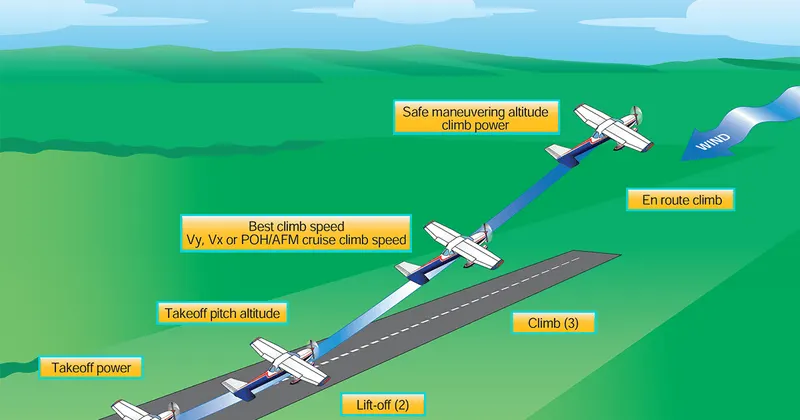
The speeds needed for takeoff are relative to the motion of the air (indicated speed). A headwind will reduce the ground speed needed for takeoff, as there is a greater flow of air over the wings.
Tyre Design:
An aircraft tyre is designed to withstand extremely heavy loads while landing, take off, taxing, and parking. The number of wheels required for aircraft increases with the weight of the aircraft, as the weight of the aeroplane needs to be distributed more evenly.
An aircraft tyre is constructed for the purpose it serves.
1.They support the weight of an aircraft while it is on the ground.
2.It also provides the necessary traction for braking and stopping of an aeroplane.
3.Tyre also helps to absorb the shock of landing and provide cushioning the roughness of takeoff, roll-out, and taxi operations.
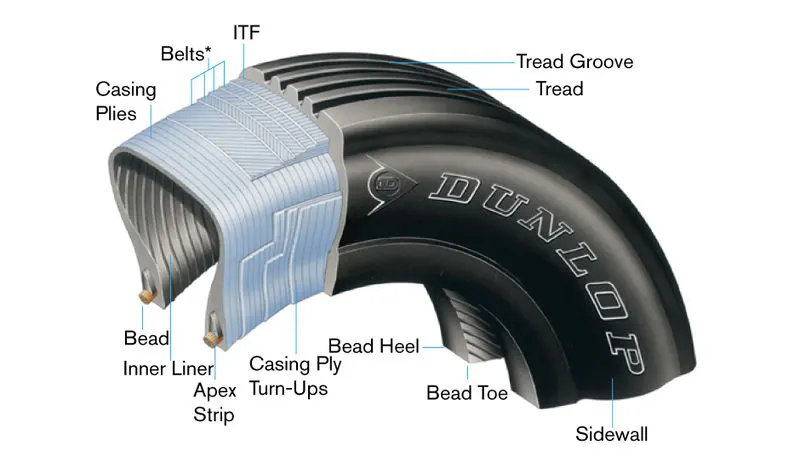
Unlike an automobile or truck tyre, it does not have to carry a load for a long period of continuous operation. However, an aircraft tyre absorbs the high impact loads of landing, and also it’s operating at high speeds for a short time when required.
Retreading – Retreading is methods of restoring a worn tyre by renewing the tread area or by renewing the tread area plus one or both sidewalls. Repairs are included in the tyre retreading process.
Load Rating – Load rating is the maximum permissible load at a specified inflation pressure.
Speed Rating – The speed rating is the maximum takeoff speed to which the tyre has been tested.
Aircraft tyres may be Tube-Type or Tubeless:
Tubeless tyres are more advantageous over tube-type. There is no longer the use of tube-type tyre in recent aviation. Nowadays all airliners are using tubeless tyres. Tubeless that are meant to be used without a tube has the word TUBELESS on the sidewall of the tyre.
Radial or Bias:
Almost all airliners are using Radial tyre. Bias is an older design, and it’s mainly used for road vehicles. Radial tyres have the word RADIAL on the sidewall. Radial tires are more expensive than bias-ply tyres. Radial tires are in demand because of their lower life cycle cost and long term value.
A radial tyre has the fibre strands of the ply fabric oriented with and at 90° to the direction of rotation and the tyre sidewall. This restricts flexibility bidirectionally and the flexibility of the sidewall while it strengthens the tyre to carry heavy loads.
A bias-ply tyre has the fabric bias oriented with and across the direction of rotation and the sidewall. Since fabric can stretch on the bias, the tyre is flexible and can absorb loads. Tyre strength is obtained by adding plies.
Aircraft Rolling resistance:
The Slush, standing water and snow on the runway will generate a rolling resistance that increases the total resistance on the aircraft during the ground-run.
The friction between aircraft and runway will be proportional to be normal force exerted by the aircraft on the runway.
F = u (w - L)
Where, W = weight of the aircraft, u = Friction coefficient, L = lift, will be typically of a magnitude of 0.02 for a standard runway.
Tyre Pressure:
Each of the twelve Boeing 777-300ER main tires is inflated to 220 psi (15 bar; 1,500 kPa), weighs 120 kg (260 lb), has a diameter of 134 cm (53 in) and is changed every 300 cycles while the brakes are changed every 2000 cycles. Each tire is worth about $5,000. Aircraft tires generally operate at high pressures, up to 200 psi (14 bar; 1,400 kpal) for airliners, and even higher for business jets. The main landing gear on the concrode was typically inflated to 232 psi (16.0 bar), whilst its tail bumper gear tires were as high as 294 psi (20.3 bar). The high pressure and weight load on the Concorde tyres were a significant factor in the loss of Air france flight 4590. Tests of airliner aircraft tires have shown that they are able to sustain pressures of maximum 800 psi (55 bar; 5,500 kPa) before bursting. During the tests the tires have to be filled with water, to prevent the test room being blown apart by the energy that would be released by a gas when the tire bursts.Aircraft tires are usually inflated with nitrogen to minimize expansion and contraction from extreme changes in ambient temperature and pressure experienced during flight. Dry nitrogen expands at the same rate as other dry atmospheric gases (normal air is about 80% nitrogen), but common compressed air sources may contain moisture, which increases the expansion rate with temperature.
Brake Forces:
The brake system pressure (P) produced is P=F/A where F is the force applied to the brake master cylinder piston, and A is the area of the master cylinder piston. Most modern aircraft use a master cylinder piston with a diameter of 5/8”. When a force (F) on the master cylinder of 150 lbs is applied, an adequate pressure of approximately 500 psi will result.
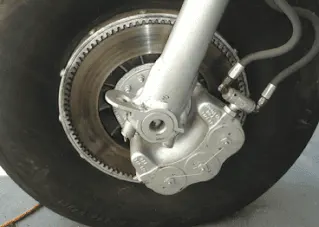 |
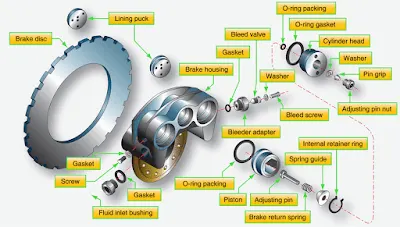
The brake disc is keyed to the wheel. It is free to move laterally in the key slots. This is known as a floating disk. When the brakes are applied, the pistons move out from the outboard cylinders and their pucks contact the disc. The disc slides slightly in the key slots until the inboard stationary pucks also contact the disc. The result is a fairly even amount of friction applied to each side of the disc and thus, the rotating motion is slowed.
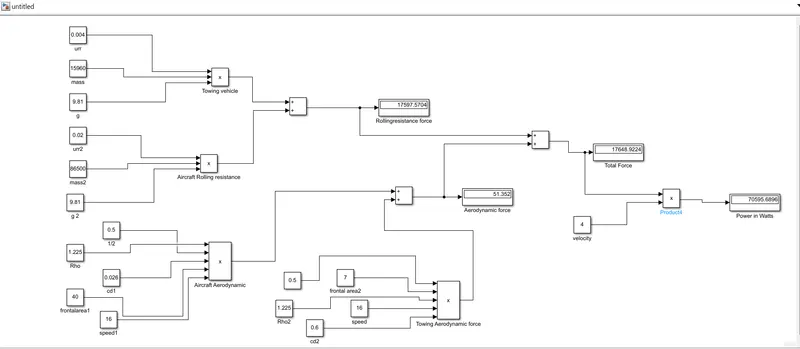
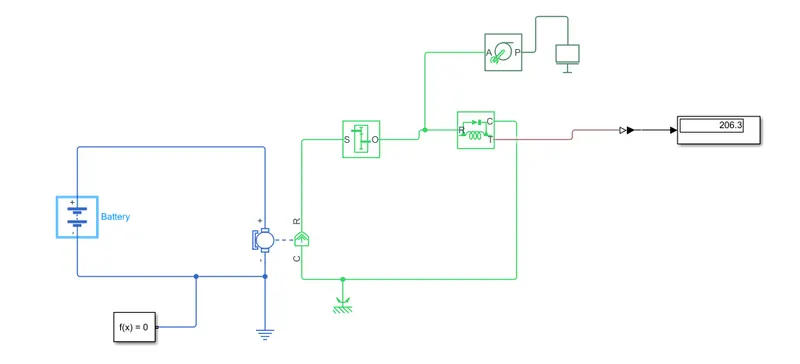
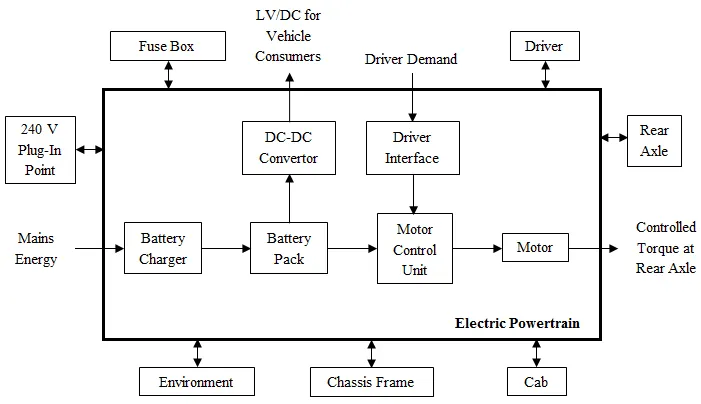
B. Also, Design the parameters in excel sheet.
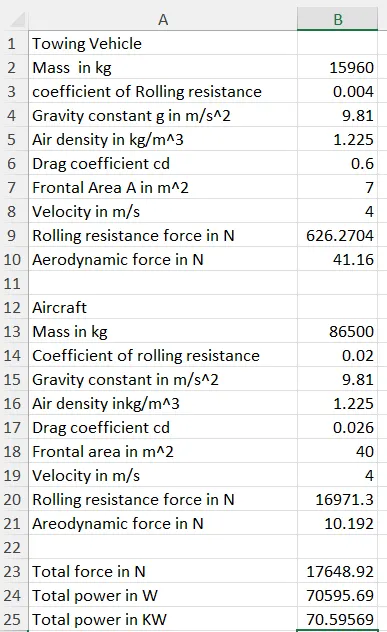
This is the Excel sheet of assumed parameters.