Project-1: Powertrain for aircraft in runways
- Project-1: Powertrain for aircraft in runways
Part A:
AIM:-Design the Aircraft Towing as well as the aircraft design
Types of forces acting on towing vehical.
1. Search and list out the total weight of various types of aircrafts.
A brief description about these is below:
Manufacturer's empty weight (MEW)
Also called Manufacturer's Weight Empty (MWE) or Licensed Empty Weight
It is the weight of the aircraft "as built" and includes the weight of the structure, power plant, furnishings, installations, systems and other equipment that are considered an integral part of an aircraft.
This excludes any baggage, passengers, or usable fuel2.
Zero-fuel weight (ZFW)
This is the total weight of the airplane and all its contents (including unusable fuel), but excluding the total weight of the usable fuel on board.
As a flight progresses and fuel is consumed, the total weight of the airplane reduces, but the ZFW remains constant.
Maximum zero fuel weight (MZFW) is the maximum weight allowed before usable fuel and other specified usable agents (engine injection fluid, and other consumable propulsion agents) are loaded.
Operating empty weight (OEW) (Roughly equivalent to basic empty weight on light aircraft)
It is the basic weight of an aircraft including the crew, all fluids necessary for operation such as engine oil, engine coolant, water, unusable fuel and all operator items and equipment required for flight but excluding usable fuel and the payload.
It is the carrying capacity of an aircraft. It includes cargo, people, extra fuel. In the case of a commercial airliner, it may refer only to revenue-generating cargo or paying passengers.
Maximum takeoff weight (MTOW)
This is the maximum weight at which the pilot of the aircraft is allowed to attempt to take off3.
Regulated takeoff weight (RTOW)
Depending on different factors (e.g. flap setting, altitude, air temperature, length of runway), RTOW or maximum permissible takeoff weight varies for each takeoff. It can never be higher than MTOW. More information is on this answer.
Maximum landing weight (MLW)
This maximum weight at which an aircraft is permitted to land3.
The following image depicts takeoff weight components.
Maximum ramp weight (MRW)
also called maximum taxi weight (MTW)
It is the maximum weight authorized for maneuvering (taxiing or towing) an aircraft on the ground.
It is the total aircraft weight at any moment during the flight or ground operation. This decreases during flight due to fuel and oil consumption.
Airplanes with their diffrent types of weights
MTOW = Maximum take-off weight, MLW = Maximum landing weight, TOR = Take-off run (SL, ISA+15°, MTOW), LR = Landing run (SL, ISA+15°, MLW)
| Type | MTOW [kg] | MLW [tonnes] | TOR [m] | LR [m] | ICAO category | FAA category |
|---|---|---|---|---|---|---|
| Airbus A220-100 | 59,000 | 50.80 | 1463 | 1356 | Medium | Large |
| Airbus A220-300 | 65,000 | 57.61 | 1890 | 1494 | Medium | Large |
| Airbus A300-600[14] | 163,000 | 138 | 2324 | 1536 | Heavy | Heavy |
| Airbus A300-600R[14] | 192,000 | 140 | 2385 | 1555 | Heavy | Heavy |
| Airbus A310-200[14] | 142,000 | 123 | 1860 | 1480 | Heavy | Heavy |
| Airbus A310-300[14] | 157,000 | 124 | 2290 | 1490 | Heavy | Heavy |
| Airbus A318[18] | 59,000 | 57.5 | 1375 | 1340 | Medium | Large |
| Airbus A319[18] | 64,000 | 62.5 | 1850 | 1470 | Medium | Large |
| Airbus A320-100[18] | 68,000 | 66 | 1955 | 1490 | Medium | Large |
| Airbus A321-100[18] | 83,000 | 77.8 | 2200 | 1540 | Medium | Large |
| Airbus A330-200[12][13] | 242,000 | 180 | 2220 | 1750 | Heavy | Heavy |
| Airbus A330-300[12][13] | 242,000 | 185 | 2500 | 1750 | Heavy | Heavy |
| Airbus A330-900 | 251,000 | 191 | 3100 | Heavy | Heavy | |
| Airbus A340-200[8][11] | 253,500 | 181 | 2990 | Heavy | Heavy | |
| Airbus A340-300[8][9] | 276,700 | 190 | 3000 | 1926 | Heavy | Heavy |
| Airbus A340-500[8] | 371,950 | 240 | 3050 | 2010 | Heavy | Heavy |
| Airbus A340-600[8] | 367,400 | 256 | 3100 | 2100 | Heavy | Heavy |
| Airbus A350-900 | 270,000 | 175 | 2670 | 1860 | Heavy | Heavy |
| Airbus A350-1000 | 308,000 | 233.5 | Heavy | Heavy | ||
| Airbus A380-800[1][2][3] | 575,000 | 394 | 3100 | 1930 | Heavy | Super |
| Airbus A400M | 141,000 | 122 | 980 | 770 | Heavy | Heavy |
| Antonov An-124-100M | 405,060 | 330 | 2520 | 900 | Heavy | Heavy |
| Antonov An-225 | 640,000 | 591.7 | 3500 | Heavy | Super | |
| ATR 42-500 | 18,600 | 18.3 | 1165 | 1126 | Medium | Small |
| ATR 72-600 | 22,800 | 22.35 | 1333 | 914 | Medium | Large |
| Avro RJ-85 | 42,000 | 36.74 | Medium | Large | ||
| BAe Jetstream 41 | 10,890 | 10.570 | 1493 | 826 | Medium | Small |
| Beechcraft 1900D | 7,765 | 7.605 | 1036 | 853 | Medium | Small |
| Boeing 377 | 67,000 | Medium | Large | |||
| Boeing 707-120B[15] | 117,000 | 86.3 | Medium | Large | ||
| Boeing 707-320B[15] | 151,000 | 97.5 | Heavy | Heavy | ||
| Boeing 707-320C[15] | 151,000 | 112.1 | Heavy | Heavy | ||
| Boeing 717-200BGW | 50,000 | 46.265 | 1950 | Medium | Large | |
| Boeing 717-200HGW | 55,000 | 47.174 | 1950 | Medium | Large | |
| Boeing 720[16] | 104,000 | 79.5 | Medium | Large | ||
| Boeing 720B[16] | 106,000 | 79.5 | Medium | Large | ||
| Boeing 727-100[17] | 72,500 | 62.4 | Medium | Large | ||
| Boeing 727-100C[17] | 72,500 | 62.4 | Medium | Large | ||
| Boeing 727-200[17] | 78,000 | 68.1 | Medium | Large | ||
| Boeing 727-200 Advanced[17] | 84,000 | 70.1 | Medium | Large | ||
| Boeing 737-300 | 63,000 | 51.7 | 1939 | 1396 | Medium | Large |
| Boeing 737-400 | 68,000 | 54.9 | 2540 | 1540 | Medium | Large |
| Boeing 737-500 | 60,000 | 49.9 | 1832 | 1360 | Medium | Large |
| Boeing 737-600 | 66,000 | 54.66 | 1796 | 1340 | Medium | Large |
| Boeing 737-700 | 70,000 | 58.06 | 1921 | 1415 | Medium | Large |
| Boeing 737-800 | 79,000 | 65.32 | 2308 | 1634 | Medium | Large |
| Boeing 737-900 | 85,000 | 66.36 | 2500 | 1704 | Medium | Large |
| Boeing 737-900ER | 85,000 | 71.35 | 2804 | 1829 | Medium | Large |
| Boeing 747-8 | 443,613 | 306.175 | 3100 | Heavy | Heavy | |
| Boeing 747-8F | 447,700 | 346.091 | 3100 | 1800 | Heavy | Heavy |
| Boeing 747-100[7] | 340,200 | 265.300 | Heavy | Heavy | ||
| Boeing 747-200[7] | 377,840 | 285.700 | 3338 | 2109 | Heavy | Heavy |
| Boeing 747-300[7] | 377,840 | 260.320 | 3222 | 1905 | Heavy | Heavy |
| Boeing 747-400 | 396,900 | 295.742 | 3018 | 2179 | Heavy | Heavy |
| Boeing 747-400ER | 412,770 | 295.742 | 3090 | Heavy | Heavy | |
| Boeing 757-200 | 116,000 | 89.9 | 2347 | 1555 | Medium | Large |
| Boeing 757-300 | 124,000 | 101.6 | 2550 | 1750 | Medium | Large |
| Boeing 767-300 | 159,000 | 136.078 | 2713 | 1676 | Heavy | Heavy |
| Boeing 767-300ER | 187,000 | 136.08 | 2713 | 1676 | Heavy | Heavy |
| Boeing 767-400ER | 204,000 | 158.758 | 3414 | Heavy | Heavy | |
| Boeing 777-200ER | 297,550 | 213.00 | 3380 | 1550 | Heavy | Heavy |
| Boeing 777-200LR | 347,450 | 223.168 | 3000 | Heavy | Heavy | |
| Boeing 777-300 | 299,370 | 237.683 | 3380 | Heavy | Heavy | |
| Boeing 777-300ER | 351,800 | 251.29 | 3100 | Heavy | Heavy | |
| Boeing 777F | 347,800 | 260.816 | 2830 | Heavy | Heavy | |
| Boeing 787-8[10] | 228,000 | 172.365 | 3300 | 1695 | Heavy | Heavy |
| Boeing 787-9[10] | 254,000 | 192.777 | 2900 | Heavy | Heavy | |
| Boeing 787-10[10] | 254,000 | 201.849 | Heavy | Heavy | ||
| Bombardier CRJ200 | 23,000 | 21.319 | 1918 | 1479 | Medium | Large |
| Bombardier CRJ700 | 33,000 | 30.39 | 1564 | 1478 | Medium | Large |
| Bombardier CRJ900[21] | 36,500 | 33.345 | 1778 | 1596 | Medium | Large |
| Bombardier Q400 | 28,000 | 28.01 | 1219 | 1295 | Medium | Large |
| Caravelle III | 46,000 | Medium | Large | |||
| Cessna Citation CJ4[26] | 7,761 | 7.103 | 1039 | 896 | Medium | Small |
| Concorde | 185,000 | 111.1 | 3440 | 2220 | Heavy | Heavy |
| Convair 880 | 87,500 | Medium | Large | |||
| de Havilland Comet 1 | 50,000 | Medium | Large | |||
| de Havilland Comet 2 | 54,000 | Medium | Large | |||
| de Havilland Comet 3 | 68,000 | Medium | Large | |||
| de Havilland Comet 4 | 70,700 | Medium | Large | |||
| de Havilland Hercules | 7,000 | Medium | Small | |||
| Douglas DC-4 | 33,000 | Medium | Large | |||
| Douglas DC-6 | 44,000 | Medium | Large | |||
| Douglas DC-6A | 48,600 | Medium | Large | |||
| Douglas DC-6B | 48,500 | Medium | Large | |||
| Douglas DC-7 | 55,000 | Medium | Large | |||
| Douglas DC-8-32 | 140,000 | Heavy | Heavy | |||
| Douglas DC-8-51 | 125,000 | Medium | Large | |||
| Douglas DC-8-61 | 147,000 | Heavy | Heavy | |||
| Embraer 120 Brasilia | 11,500 | 11.25 | 1560 | 1380 | Medium | Small |
| Embraer 170[22] | 36,000 | 32.8 | 1644 | 1274 | Medium | Large |
| Embraer 175[20] | 37,500 | 32.8 | 2244 | 1304 | Medium | Large |
| Embraer 190[19] | 48,000 | 43 | 2056 | 1323 | Medium | Large |
| Embraer ERJ 145 | 22,000 | 19.3 | 2270 | 1380 | Medium | Large |
| Embraer Phenom 100 | 4,800 | 4.43 | 975 | 741 | Light | Small |
| Embraer Phenom 300[25] | 8,150 | 7.65 | 956 | 677 | Medium | Small |
| Fokker 100 | 46,000 | 39.95 | 1621 | 1350 | Medium | Large |
| Handley Page Hermes | 39,000 | Medium | Large | |||
| Hawker Siddeley Trident 2E | 65,000 | Medium | Large | |||
| Ilyushin IL-86 | 208,000 | 175 | Heavy | Heavy | ||
| Ilyushin IL-96-300 | 250,000 | 175 | 2600 | 1980 | Heavy | Heavy |
| Ilyushin Il-96M | 270,000 | 195.04 | 3115 | 2118 | Heavy | Heavy |
| Learjet 75[23] | 9,752 | 8.709 | 1353 | 811 | Medium | Small |
| Lockheed C-5 Galaxy[4][5][6] | 381,000 | 288.417 | 2530 | 1494 | Heavy | Heavy |
| Lockheed L-1011-200 | 211,400 | Heavy | Heavy | |||
| Lockheed L-1011-500 | 231,300 | 166.92 | 2636 | Heavy | Heavy | |
| McDonnell Douglas DC-10 | 256,280 | 183 | 2990 | 1890 | Heavy | Heavy |
| McDonnell Douglas MD-11 | 273,300 | 185 | 2990 | 1890 | Heavy | Heavy |
| McDonnell-Douglas MD-83 | 73,000 | 63.28 | Medium | Large | ||
| McDonnell-Douglas MD-90-30 | 71,000 | 64.41 | 2165 | 1520 | Medium | Large |
| Pilatus PC-24[24] | 8,300 | 7.665 | 893 | 724 | Medium | Small |
| Saab 340 | 13,150 | 12.930 | 1300 | 1030 | Medium | Small |
| Saab 2000 | 22,800 | 21.5 | 1300 | Medium | Large | |
| Scaled Composites Model 351 Stratolaunch | 589,670 | 3660 | Heavy | Super | ||
| Tupolev Tu-154M | 104,000 | 80 | Medium | Large | ||
| Tupolev Tu-204SM | 104,000 | 87.5 | 2250 | Medium | Large | |
| Vickers VC10 | 152,000 | 151.9 | Heavy | Heavy | ||
| Vickers Viscount 800 | 30,400 | Medium | Large |
2 Is there any difference between ground speed and air speed?
basically ground speed is nothing but during an the landing or the vehicle drive on runway is the speed ,and the actual running of the aircraft in air is the air speed.
airspeed is what determines whether there is enough airflow around an aircraft to make it fly, ground speed is what determines how fast an aircraft will get to its destination
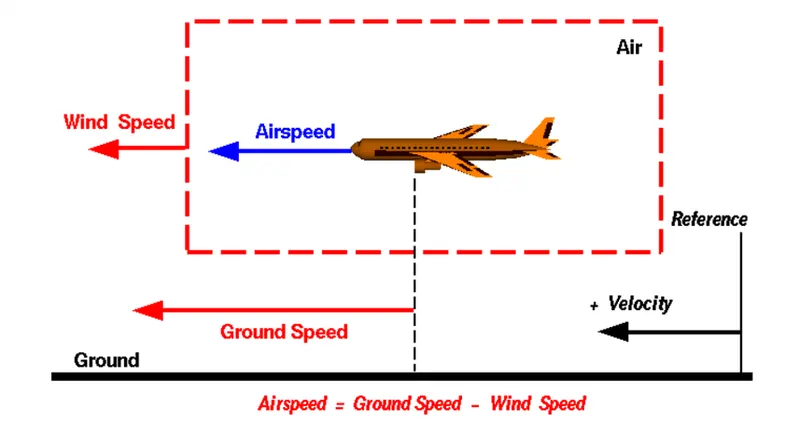
The relationship between airspeed and ground speed is fairly simple. Ground speed is simply the sum of airspeed and wind speed.
If the aircraft is flying in the same direction as the wind is blowing, the aircraft experiences tailwind, and its ground speed is higher than its airspeed. On the other hand, if the wind is blowing against the direction the aircraft is traveling in, the aircraft experiences headwind, and its ground speed is lower than its airspeed.
Q3.Why is it not recommended to use aircraft engine power to move it on the ground at Airport?
1.All large aircraft are pushed back , they could use there power to do it but due to the noise and fumes plus they burn a lot of fuel. Sometimes they are towed into a spot due to it being a small parking space for safty.
2.There are a number of general reasons: it’s more expensive, not every ground crew is certified to start or taxi the aircraft. A tow vehicle is safer, easy to certify ground crews to hook up and tow and the unstarted engine is safer.
3.Unless the aircraft is in a location where it is unwise to taxi under aircraft power and necessitating a tow by a large tractor, the aircraft’s engine(s) is how the craft moves. Obviously, it is prudent to use only the amount of power to get the airplane moving and then reduce the power for taxiing to avoid high volumes of air spreading debris or damaging other aircraft or ground vehicles.Whether jets or prop airplanes, we use the aircraft’s (engine) power to move on the airfield.
4.Another reason you might see or experience being towed is when your aircraft has to be towed from the taxiway to the gate. This will be due to the tight confines of the terminal gates and the restricted view the pilots have may require a tow to conduct the arrival safely. As airplanes become larger and airports get busier you may see this quite often.
5.Even though pilots follow taxi centerlines, airplanes with very large wingspans could create tight spots and any contact made between two aircraft can cause significant damage, lost time, and potentially huge costs, so a simple tow helps prevent this.
Q4. How an aircraft is pushed to runway when its ready to take off?
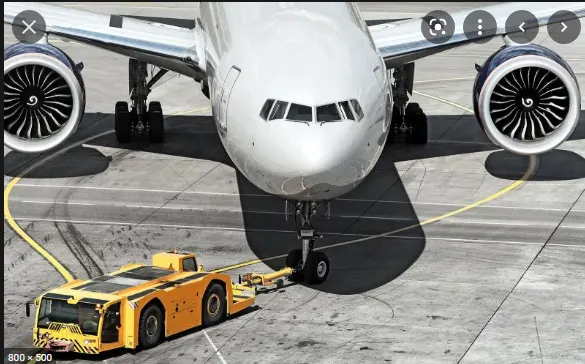
Large jetliner passenger aircraft are pushed away from the passenger loading gate by a tug. This is a machine with wheels, some form of power such as an internal combustion engine, or a battery. When the large aircraft is being pushed backwards, there is someone on each wing tip. They are looking out to make sure nothing will touch the aircraft. The whole idea is to avoid expensive crunching noises.
I hold mechanic certificate, trust me, when you hear a crunching sound and a modern airliner is involved, it will be expensive beyond your wildest imagination.
An airliner might be pushed backwards off the ramp, and onto a taxi way. Then the engines can start, the aircraft can proceed forward under its own power. A twin engine jet might not start the second engine until it is close to takeoff runway, clearance is certain.
A piston engine can run at idle power using only a small percentage of the fuel consumption used at operating power level. Turbine engines such as modern airliner turbo fan engine burn a lot of fuel once they are started. So, there is a lot of incentive to not run them until it is time to fly.
How to get off the gate? Three thugs, a tug, and a tow bar! No disrespect to ramp guys, they have a hard job, low pay, they are in the weather and the noise.Airplanes have engines, and they can use them to move forward along the ground. So they push themselves to the runway.
It is true that most of the time, a small vehicle is needed to push the larger commercial airplanes backwards away from the terminal building, because even if a plane can reverse it’s thrust, it’s not always safe to hit the buildings with that reverse thrust. So the little trucks push the bigger planes back away from the buildings, but after that, the planes can apply a small amount of engine power to roll forward just as all airplanes can.Aircraft push themselves to the runway.
- The apron handler removes the chocks. A so-called pushback truck reverses the aircraft into taxiing position, pushing it with a towbar attached to the nose-wheel strut. Or, in the most modern versions, by actually lifting the wheel. That speeds up coupling and decoupling.
- The aircraft taxis to the runway to depart at the agreed time.
- The pilot waits for permission to take off from air-traffic control. This is possible once the departure route is clear. As soon as the go-ahead is received, the plane takes to the air at full power
- Learn about take off power, tyre design, rolling resistance, tyre pressure, brake forces when landing
Takeoff is the phase of flight in which an aerospace vehicle leaves the ground and becomes airborne. For aircraft traveling vertically, this is known as liftoff.or light aircraft, usually full power is used during takeoff. Large transport category (airliner) aircraft may use a reduced power for takeoff, where less than full power is applied in order to prolong engine life, reduce maintenance costs and reduce noise emissions. In some emergency cases, the power used can then be increased to increase the aircraft's performance. Before takeoff, the engines, particularly piston engines, are routinely run up at high power to check for engine-related problems. The aircraft is permitted to accelerate to rotation speed (often referred to as Vr). The term rotation is used because the aircraft pivots around the axis of its main landing gear while still on the ground, usually because of gentle manipulation of the flight controls to make or facilitate this change in aircraft attitude (once proper air displacement occurs under / over the wings, an aircraft will lift off on its own; controls are to ease that in). The nose is raised to a nominal 5°–15° nose up pitch attitude to increase lift from the wings and effect liftoff. For most aircraft, attempting a takeoff without a pitch-up would require cruise speeds while still on the runway.
Three airliners taking off simultaneously (note similar pitch attitudes)
Fixed-wing aircraft designed for high-speed operation (such as commercial jet aircraft) have difficulty generating enough lift at the low speeds encountered during takeoff. These are therefore fitted with high-lift devices, often including slats and usually flaps, which increase the camber and often area of the wing, making it more effective at low speed, thus creating more lift. These are deployed from the wing before takeoff, and retracted during the climb. They can also be deployed at other times, such as before landing.
The speeds needed for takeoff are relative to the motion of the air (indicated airspeed). A headwind will reduce the ground speed needed for takeoff, as there is a greater flow of air over the wings. Typical takeoff air speeds for jetliners are in the range of 240–285 km/h (130–154 kn; 149–177 mph). Light aircraft, such as a Cessna 150, take off at around 100 km/h (54 kn; 62 mph). Ultralights have even lower takeoff speeds. For a given aircraft, the takeoff speed is usually dependent on the aircraft weight; the heavier the weight, the greater the speed needed.[1] Some aircraft are specifically designed for short takeoff and landing (STOL), which they achieve by becoming airborne at very low speeds.
Why are tyres important in Aircraft?
When it comes to safety, tyres are one of the most important components of aircraft. They help to absorb the shock of landing and provide cushioning. It also provides the necessary traction for braking and stopping of an aircraft.
An aircraft tyre is designed to withstand extremely heavy loads while landing, take off, taxing, and parking. The number of wheels required for aircraft increases with the weight of the aircraft, as the weight of the aeroplane needs to be distributed more evenly.
A Boeing 737NG & 737MAX uses 6 wheels, Boeing 787 uses 10 wheels, Boeing 777 uses 14 wheels and Airbus A380 uses 22 wheels. Aircraft tyres work under extreme conditions, carrying up to 340 tons and accelerating at over 250 km/hour at takeoff, in addition to enduring varied environmental stress when in flight and taxiing.
Design and Construction of Aircraft tyre
Carcass plies are used to form the tire. They are sometimes called casing plies. An aircraft tyre is constructed for the purpose it serves.
- They support the weight of an aircraft while it is on the ground.
- It also provides the necessary traction for braking and stopping of an aeroplane.
- Tyre also helps to absorb the shock of landing and provide cushioning the roughness of takeoff, roll-out, and taxi operations.
Unlike an automobile or truck tyre, it does not have to carry a load for a long period of continuous operation. However, an aircraft tyre absorbs the high impact loads of landing, and also it’s operating at high speeds for a short time when required.
Let’s go throu
Ply Rating – Ply Rating is used to identify the maximum recommended load rating and inflation pressure for a specified tyre. It is an index of tyre strength.
Speed Rating – The speed rating is the maximum takeoff speed to which the tyre has been tested.
Skid Depth – Skid depth is the distance between the tread surface and the deepest groove as measured in the mould.
Aircraft tyres must have an approved speed and load rating and have sufficient clearance when retracted through landing gear to allow for tyre growth. Tyre growth is the increase in the size of the tyre due to centrifugal forces at high speed.
Aircraft tyres may be Tube-type or Tubeless
Tubeless tyres are more advantageous over tube-type. There is no longer the use of tube-type tyre in recent aviation. Nowadays all airliners are using tubeless tyres. Tubeless that are meant to be used without a tube has the word TUBELESS on the sidewall of the tyre.
Aircraft tyres may be Radial or Bias
Almost all airliners are using Radial tyre. Bias is an older design, and it’s mainly used for road vehicles. Radial tyres have the word RADIAL on the sidewall. Radial tires are more expensive than bias-ply tyres. Radial tires are in demand because of their lower life cycle cost and long term value.
Further Read: Aircraft Radial vs Bias Tyre
Are aviation tyres are conductive?
Yes, Today’s tyres are conductive. Aircraft tyres are manufactured with tread rubber with conducting compounds to permit earthing of static charges.
In early days when tyres were not sufficiently conductive, aircraft used to have a conductive strip hanging down from the axle of the landing gear. Upon landing, this strip would be the first part of the aircraft to touch the earth. This discharges any static electricity accumulated on the outer surfaces of the aircraft. Now you don’t see them anymore.
What is the purpose of Chines in aviation tyre
Chines are also called deflectors. Chine tyre used on the nose wheel of aircraft, specially fuselage-mounted jet engines. It diverts runway water away from the engine inlets.
Chines are circumferential protrusions that are moulded into the sidewall of nose tyres that deflect water sideways to help reduce excess water ingestion into the engines. Tyres may have chines on one or both sides, depending on the number of nose tyres on the aircraft.
Aircraft Tyre Standards
Each tyre manufacturer produces their own designs of the tyre with different tread patterns, wear patterns, wear limits etc, and in some cases, different names for the same part of the tyre. But all tyres must meet the approved standards before being accepted by the FAA or CAA.
All commercial aircraft tyres approved under FAA Requirement Technical Standard Order (TSO) C62. A TSO is a minimum performance standard for specified materials, parts, and appliances used on civil aircraft.
Aircraft tires can easily be taken for granted. Their simplistic appearance may lead some to a false feeling of complacency. Many technicians are not aware of the critical design factors that go into every aircraft tire in use today. Seemingly minor flaws can lead to disastrous results, and inadequate maintenance practices can cause shortened tire life and even cause unsafe operating conditions.
When one considers the forces that aircraft tires endure, it seems amazing that engineers were ever able to develop these special products. Some tires are subjected to speeds as fast as a race car while at the same time supporting more weight than the largest land moving machines. They go through cyclic exposure to varying temperatures and pressures. These factors make aircraft tire design a critical process and tire maintenance an ever important step in safe aircraft operation.
Tire Design
Designing aircraft tires is a very intense undertaking. Once an aircraft manufacturer goes to the tire manufacturer with the size and weight requirements, the tire manufacturer begins the process of designing a tire that meets the needs of the aircraft manufacturer as well as all regulatory requirements — including foreign regulations in many cases.
Engineers are challenged with designing tires with cool running, heat-resistant materials while simultaneously exceeding tire service requirements. Tire prototypes are put through rigorous tests that simulate cycles of landings, take-offs, and taxi operations. It is only after the tires pass all mandatory tests and meet the requirements of the aircraft manufacturer and airworthiness authorities that the tires are put into production.
Two types of tires are used in aircraft applications — bias-ply tires and radial tires. Although both types of tires share some similarities in design, there are differences that need to be noted.
Bias-ply tire construction
A cutaway of a typical bias-ply tire is shown in Figure 1. Bias-ply tires are popular choices for aircraft tires because of their durability and retreadability. The tire construction consists of the following components:
Tread: The tread is made of rubber mixed with other additives to obtain the desired level of toughness, durability, and resistance to wear. The tread pattern is designed to aircraft operational requirements, with the ribbed tread design used widely due to its good traction under varying runway conditions.
Sidewall: The sidewall is a protective layer of rubber that covers the outer casing ply. It extends from the tread edge to the bead area.
Tread Reinforcing Ply: One or more layers of fabric that strengthens and stabilizes the tread area for high-speed operation. It also serves as a reference for the buffing process when tires are retreaded.
Buff Line Cushion: The buff line cushion is made of rubber compound to enhance the adhesion between the tread reinforcing ply and the breakers or casing plies. It is of sufficient thickness to allow for the removal of the old tread when the tire is retreaded.
Breakers: Breakers are reinforcing plies of rubber-coated fabric placed under the buff line cushion to protect casing plies and strengthen and stabilize the tread area. They are considered an integral part of the casing construction.
Casing Plies: Alternate layers of rubber-coated fabric (running at opposite angles to one another) provide the strength of the tire.
Wire Beads: Hoops of high tensile strength steel wire that anchor the casing plies and provide a firm mounting surface on the wheel. The outer edge of the bead that fits against the wheel flange is called the bead heel. The inner bead edge is called the bead toe.
Apex Strip: A wedge of rubber affixed to the top of the bead bundle.
Flippers: Layers of rubberized fabric that help anchor the bead wires to the casing and improve the durability of the tire.
Ply Turnups: The casing plies are anchored by wrapping them around the wire beads, thus forming the ply turnups.
Chafer: A protective layer of rubber and/or fabric located between the casing plies and wheel to minimize chafing.
Liner: In tubeless tires, the liner is a layer of low permeability rubber that acts as a built-in tube and restricts gas from diffusing into the casing plies. In tube-type tires, a thinner liner is used to prevent tube chafing against the inside ply.
Radial-ply tire construction
A typical radial tire is illustrated in Figure 2. With their rigid belt, they provide increased landings and reduced rolling resistance. They have fewer components in their construction and are lighter than similarly sized bias ply tires. Components that differ from bias-ply construction as follows:
Overlay: A layer of reinforcing rubber coated fabric placed on top of the belts to aid in high speed operation.
Belt Plies: A composite structure that stiffens the tread area for increased landings. The belt plies increase the tire strength in the tread area.
Casing Plies: As in bias-ply tires, the casing plies are layers of rubber-coated fabric. However, unlike those in bias plies that run at opposite angles to one another, radial plies run radially from bead to bead.
Chippers: The chippers are layers of rubber-coated fabric applied at diagonal angles that improve the durability of the tire in the bead area.
Tire inspection
In order to ensure safety and increase tire life, systematic inspections of mounted tires should be performed. A word of warning — Never probe cracks, cuts, or embedded foreign objects while the tire is inflated! Serious injuries could result. In addition, defects such as cuts, cracks, and bulges should be marked with a crayon or chalk prior to deflation since the defects may disappear when the tire is deflated. The following should be checked:
Tread wear: Treads should be visually inspected for wear. The tire should be replaced when tread has worn to the base of any groove at any spot or to a minimum depth specified in the aircraft maintenance manual. Tread wear can also be an indication of improper tire inflation. Refer to Figure 3 for tread wear indications.
Tread cuts: The tire should be inspected for cuts and other foreign damage. Follow the criteria from the applicable aircraft maintenance manual. If no specific criteria is outlined in the manual, the following can be used for guidance in determining tread cuts:
A-Normal
Even tread wear on this tire indicates that it has been properly maintained and run at correct inflation pressure.
B-Excessive
Worn to the breaker/casing plies, the tire should not be left in service or retreaded.
C-Overinflation
Continuous overinflation accelerates center tread wear. It reduces traction while making tread more susceptible to cutting.
D-Underinflation
Excessive tread shoulder wear results from chronic underinflation. It increases the chance of damaging shoulders and sidewalls which shortens tire life because of excessive flex heating.
- Any cut that extends into the casing plies on bias tires.
• Any cut into the belt on radial tires.
• Any cut that extends across one or more rubber tread ribs to the fabric.
• Rib undercutting at the base of any
cut or tread splice warrants replacement.
Sidewall damage:Tires should be replaced if weatherchecking, cracking, cuts, or snags extend down to the casing ply in the sidewall and bead areas.
Bulges:Bulges in any part of the tire tread, sidewall, or bead area are indicative of a separation or damaged tire. The area should be marked and the tire should be removed from service immediately.
Fabric fraying/groove cracking: Tires should be removed from service if groove cracking exposes any fabric or if cracking undercuts the tread ribs.
Flat spots: Flat spots can be caused by braking during touchdown or hydroplaning skids. Tires with flat spots don’t necessarily need to be removed from service unless fabric is exposed. However, if there is an objectionable unbalance issue, the tire assembly can be re-balanced or removed from service.
Radial tire sidewall indentation: Remove tire from service with 3mm or greater sidewall indentation.
Beads: The tire bead areas should be inspected next to the wheel flanges for heat-induced damage, especially if brake drag or severe braking was experienced.
Tire clearance: The tires should be inspected for marks that might indicate rubbing the wheel area due to inadequate clearance.
Wheel assemblies: The wheel assemblies should be inspected for damage. Wheels that are cracked or damaged should be taken out of service for repair or replacement.
Tire inflation
Tire inflation is the most critical issue when inspecting installed tires. Although overinflation can damage the tires by causing uneven tread wear, reduced traction, increased susceptibility to cutting, and increased stress on the wheel assemblies, underinflation is by far more damaging. Underinflation produces uneven tread wear and shortens tire life due to excessive flex heating. The bead area of an underinflated tire can be 50 percent hotter than that of a properly inflated one. Heat is damaging to tire rubber compounds and fabrics. It contributes to tread and carcass separations and bead failures.
Ideally, tire pressure should be checked with a calibrated gauge prior to each flight. At a minimum, they should be checked daily. Do not make the mistake of relying on your "calibrated eye" to determine tire inflation. Tire inflation is difficult to determine visually, especially in tandem configurations. Always use a gauge to check inflation. If servicing is required, dry nitrogen should be used due to its inability to sustain combustion. Also, degradation of the casing plies and liner due to oxidation occurs if regular shop air is used. Nitrogen also helps to deter corrosion on the wheel assembly.
It is a good practice to establish a method of recording tire servicing actions. This aids in identifying chronic leakage problems.
Temperature changes
Another thing to remember pertaining to tire inflation is the change in pressure with temperature changes. For every five degrees Fahrenheit change in temperature, there is approximately a one-percent pressure change in the same direction. This should be taken into consideration if the aircraft is going to be subjected to extreme ground temperature changes. In that case, the tires should be inflated to ensure the minimum required pressure is maintained for the cooler climate. Remember to always check tire pressures when they are at ambient temperature. Checking pressures on hot tires could mask an underinflation condition.
One thing that needs to be noted on newly installed tires is that the tire pressure will drop initially due to tire expansion. The tire pressure should be checked closely until it stabilizes — usually after about 12 hours at rated inflation. If it still exhibits a significant pressure drop after that, the tire should be inspected for possible leaks and corrective action taken.
Protecting tires
Tires should be kept clean and free from oil, hydraulic fluids, grease, tar, and solvents. All of these chemicals have a deteriorating effect on the rubber in the tires. Any contaminant should be wiped off with denatured alcohol followed by a soap and water wash.
Aircraft tires are affected by sunlight and weather extremes. Installation of protective covers can help protect tires on aircraft that are tied down outside.
Operational considerations
Whenever taxiing or towing aircraft, the aircraft manufacturer’s recommended operational procedures should always be followed. It is always prudent to use large radius turns and low speeds to prevent shoulder damage, tread scrubbing, and overheating. Care should also be taken to avoid running over hazardous areas. Tire damage can result from potholes, cracks in the pavement, or stepoffs from pavement to ground.
The areas where the aircraft will be operated should be kept free from debris. In addition to the damage potential FOD (Foreign Object Debris) poses to engines, it can cause considerable damage to tires if it becomes embedded in the tire tread.
This article has briefly discussed some basics on tire composition as well as some inspection and preventive maintenance techniques. Always refer to the applicable aircraft maintenance manual when working with aircraft tires. In addition, the FAA requires tire manufacturers to provide a care and maintenance manual for their products. This is an additional resource that is available to assist in tire maintenance and inspection procedures. With proper attention during inspection and good preventive maintenance practices, your aircraft tires should provide trouble-free service for many landings.
Part B:
- A. With necessary assumptions, calculate the force and power required to push / pull an aircraft by a towing vehicle.
assumptions:-
General characteristics
- Crew: 6
- Capacity: 253.820 tonnes (559,580 lb)[12]
- Length: 84 m (275 ft 7 in)
- Wingspan: 88.4 m (290 ft 0 in)
- Height: 18.1 m (59 ft 5 in)
- Wing area: 905 m2 (9,740 sq ft)
- Aspect ratio: 8.6
- Empty weight: 285,000 kg (628,317 lb)
- Max takeoff weight: 640,000 kg (1,410,958 lb)
- Fuel capacity: more than 300,000 kilograms (660,000 lb)[75]
- Cargo hold: volume 1,300 m3 (46,000 cu ft), 43.35 m (142.2 ft) long × 6.4 m (21 ft) wide × 4.4 m (14 ft) tall
- Powerplant: 6 × Progress D-18T turbofans, 229.5 kN (51,600 lbf) thrust each
Performance
- Maximum speed: 850 km/h (530 mph, 460 kn)
- Cruise speed: 800 km/h (500 mph, 430 kn)
- Range: 15,400 km (9,600 mi, 8,300 nmi) with maximum fuel; range with 200 tonnes payload: 4,000 km (2,500 mi)
- Service ceiling: 11,000 m (36,000 ft)
- Wing loading: 662.9 kg/m2 (135.8 lb/sq ft)
- Thrust/weight: 0.230
ASSUMPTIONS
TRACTOR KERB WEIGHT= 50000KG
AN-255 EMPTY WEIGHT= 285,000 kg
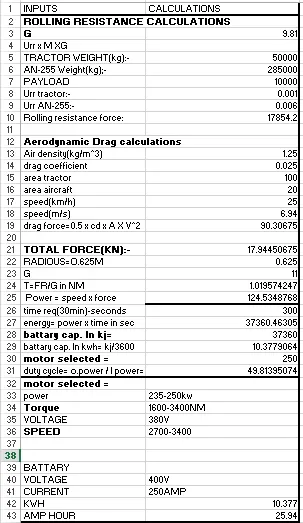
all are the calculations are attached as above excel sheets
6. A. With necessary assumptions, calculate the force and power required to push / pull an aircraft by a towing vehicle.
so as per the sheet of excel we know the actual force as rolling and drag force,
so
Force= mass*acceleration
but in our condition force= Rolling force+aerodynamic force
assumption:-
tractor weight =50000kg
tractor rolling resistance=0.001
aircraft weight=295000
area=120
drag coefficient = 0.025
velocity=6.94
radious=0.625
Rolling force= Urr x m x g
=(0.001 x 50000 x 9.81)+( 0.006 x 295000 x 9.81)
=17854N
Aerod. drag force= 0.5(Cd)x(A)x(v^2)
=0.5 x 0.025 x 120 x(6.94^2)
=72.24n
total force=17854+ 72.24
17.926KN
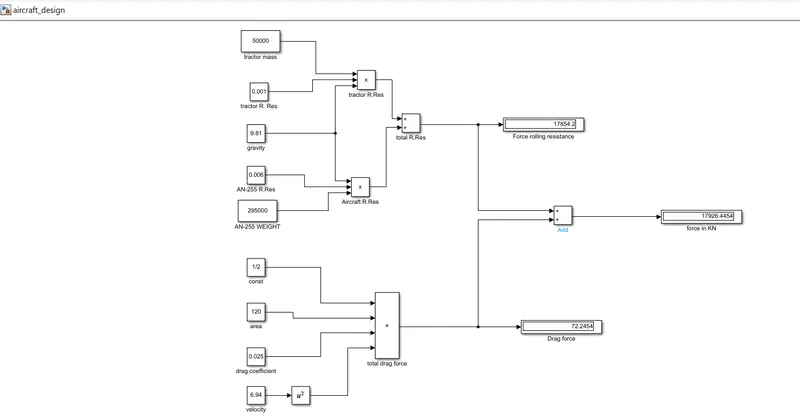
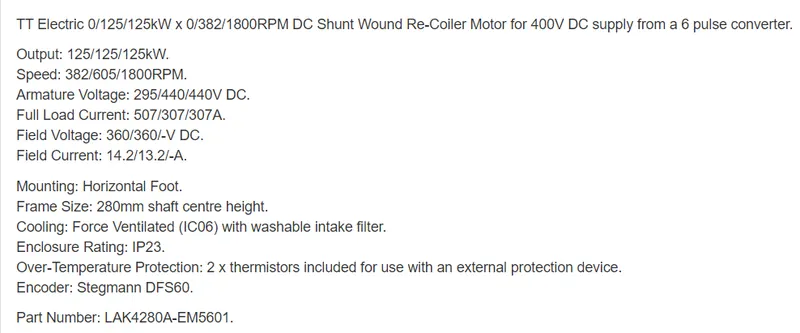
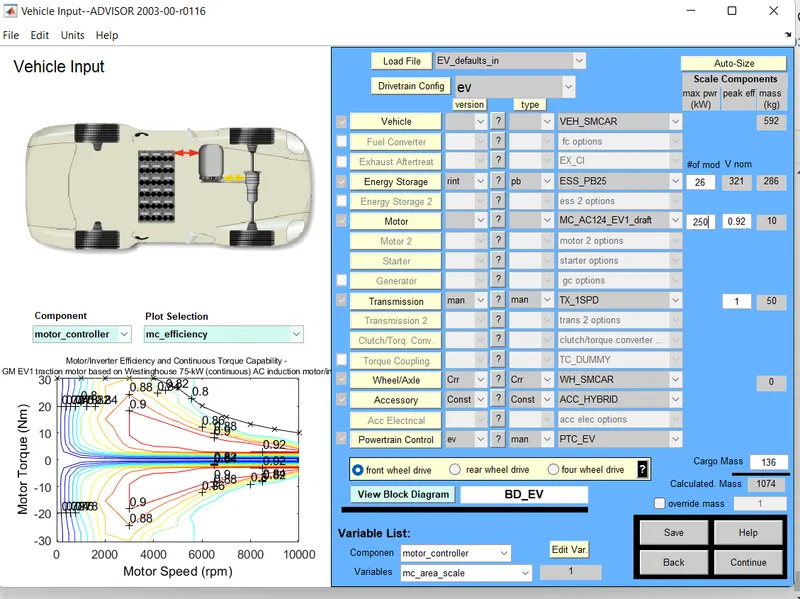
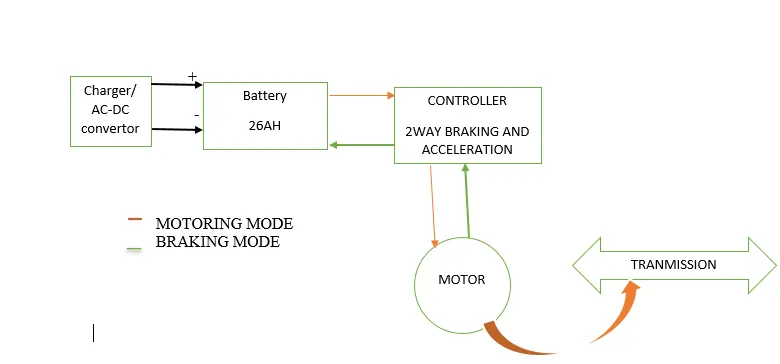
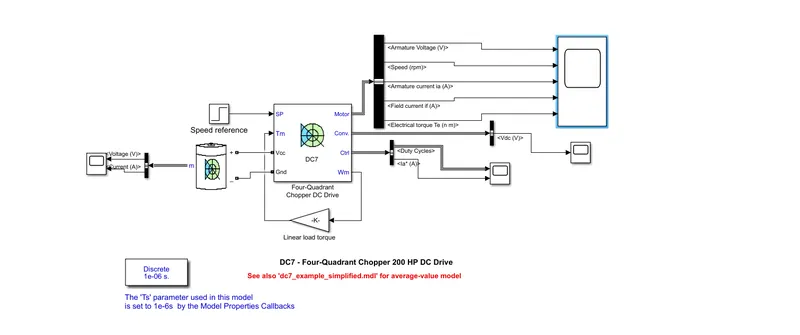
7. A. Design an electric powertrain with type of motor, it’s power rating, and energy requirement to fulfill aircraft towing application in Simulink. Estimate the duty cycle range to control the aircraft speed from zero to highest. Make all required assumptions. Prepare a table of assumed parameters. Draw a block diagram of powertrain.
electric powertrain parameters:-
1.tractor weight =50000kg
2.tractor rolling resistance=0.001
3.aircraft weight=295000
4.area=120
4.drag coefficient = 0.025
5.velocity=6.94
6.radious of tractor =0.625
7.power required= 124kwh
8.assuming energy as the vehicle run for an 30 min is 62.03kwh
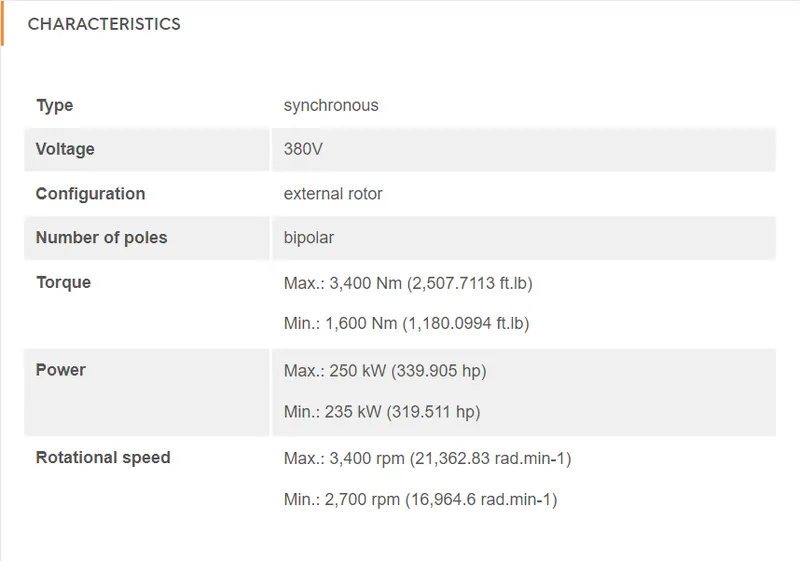
from the above we get an the motor as 250kw,as we required only near to 3.4knm torque