Project-1: Powertrain for aircraft in runways
Project-1: Powertrain for aircraft in runways
Part A:
Question 1. Search and list out the total weight of various types of aircrafts.
Types Of Air Crafts (Based On Weight of Aircraft )
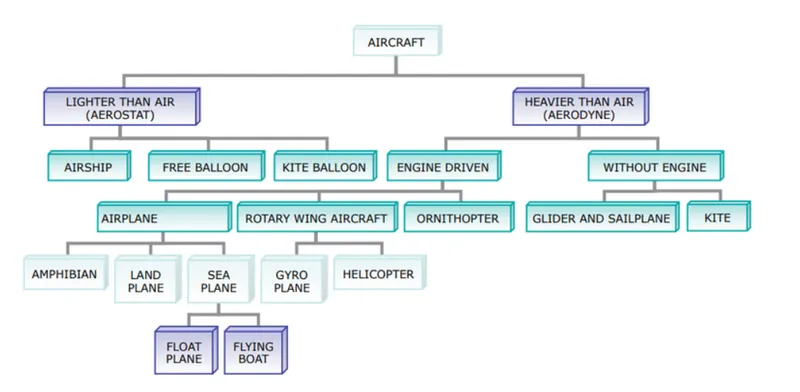
1. Lighter Than Air (Aerostat) :
a) Airship :
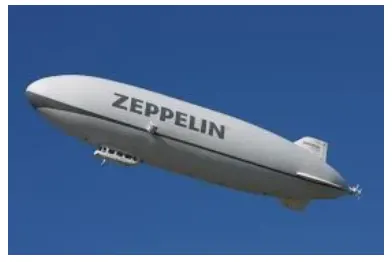
An airship or dirigible balloon is a type of aerostat or lighter-than-air aircraft that can navigate through the air under its own power. Aerostats gain their lift from a lifting gas that is less dense than the surrounding air. Once inflated with Helium and after accounting for fuel, payload and ballast ,it usally weights in at 45-90 Kg.
b) Free Balloon :-
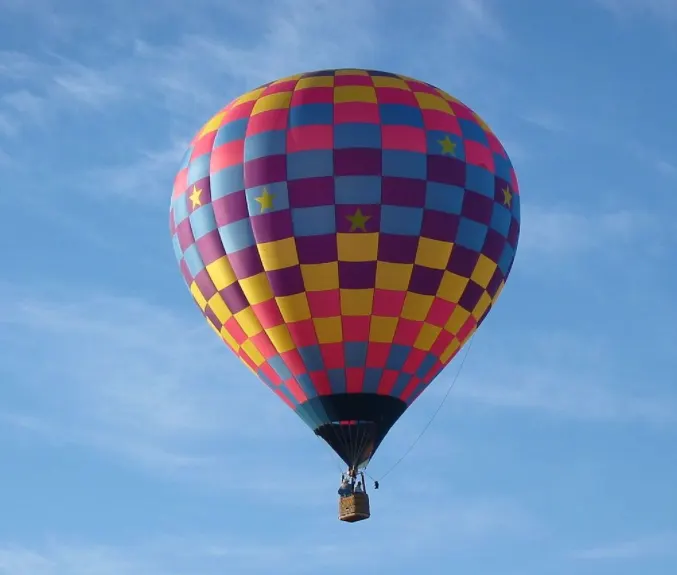
A Balloon is Diiferent fron an airship. An airship is a floating aircraft that has an engine and can change its direction of Movement . a balloon has no engine and has no way to change its direction of movement. a balloon travels by moving with the wind. the bottom of the balloon is called the "Basket" where people can sit or stand. the top of a balloon is a big cloth bag called the "envelope". in the air the complete system , including the air inside the envelope , will weigh about 2500 kg.
c) Kite Balloons :-
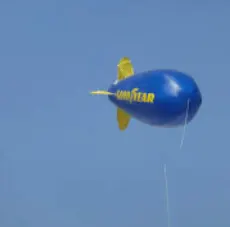
A kite balloon is a tethered balloon which is shaped to help make it stable in low and moderate winds and to increase its lift. It typically comprises a streamlined envelope with stabilising features and a harness or yoke connecting it to the main tether and a second harness connected to an observer's basket.
Kite balloons are able to fly in higher winds than ordinary round balloons which tended to bob and spin in windy conditions. They were extensively used for military observation during World War I and similar designs were used for anti-aircraft barriers, as barrage balloons both world wars.
2. Heavier Than Air :-
a) Amphibian :-
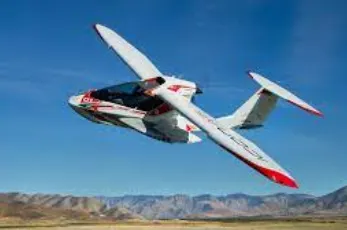
An amphibious aircraft or amphibian is an aircraft that can take off and land on both solid ground and water. fixed wing amphibious aircraft are seaplanes (flying boats and floatplanes ) that are equipped with retractables wheels at the expense of extra weight and complexity, plus diminished range and fuel economy compared to planes designed for land or water only. Some amphibians are fitted with reinforced keels which act as skis, allowing them to land on snow or ice with their wheels up.
b) Land Plane :-
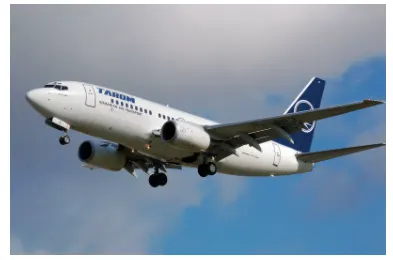
An airplane or aeroplane is a fixed-wing aircraft that is propelled forward by thrust from a jet engine, propeller, or rocket engine. Airplanes come in a variety of sizes, shapes, and wing configuration. The broad spectrum of uses for airplanes includes transportation of goods and people, military, and research. Worldwide, commercial aviation transports more than four billion passengers annually on aieliners and transports more than 200 billion tonne-kilometers of cargo annually, which is less than 1% of the world's cargo movement. Most airplanes are flown by a pilot on board the aircraft, but some are designed to be remotely or computer-controlled such as drones. Weight of Landplane aircraft is dependent on size of aircraft and uses of aircraft. Antanov AN-225 model aircraft maximum gross takeoff weight is 640000 Kg.
3) Seaplane:
a) Float Plane:
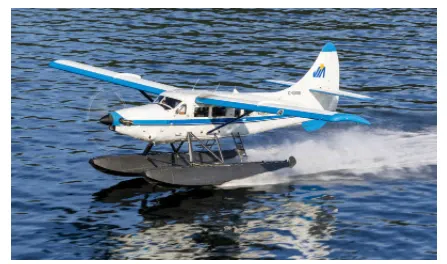
A floatplane is a type of seaplane with one or more slender floats mounted under the fuselage to provide buoyancy. By contrast, a flying boat uses its fuselage for buoyancy. Either type of seaplane may also have landing gear suitable for land, making the vehicle an amphibious aircarft. Maximum weight of Floatplane is 1008 Kg.
b) Flying Boat:
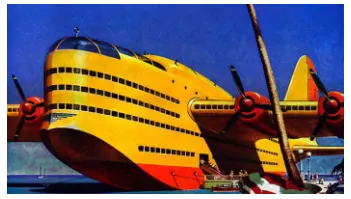
A flying boat is a fixed-winged seaplane with a hull, allowing it to land on water, that usually has no type of landing gear to allow operation on land. It differs from a floatplane as it uses a purpose-designed fuselage which can float, granting the aircraft buoyancy. Flying boats may be stabilized by under-wing floats or by wing-like projections from the fuselage. The maximum weight of a flying boat is 762 Kg.
4) Rotary Wing Aircraft:
a) GyroPlane:
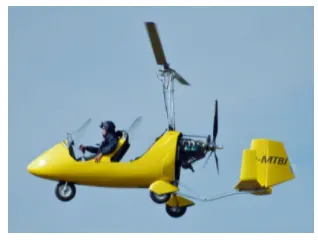
A gyroplane also known as an autogyro or gyrocopter, is a type of rotorcraft that uses an unpowered rotor in free autorotationto develop lift. Forward thrust is provided independently, by an engine-driven propeller. While similar to a helicopter rotor in appearance, the autogyro's rotor must have air flowing across the rotor disc to generate rotation, and the air flows upwards through the rotor disc rather than down. Maximum gross weight of a gyroplane is 560 Kg.
b) Helicopter :-
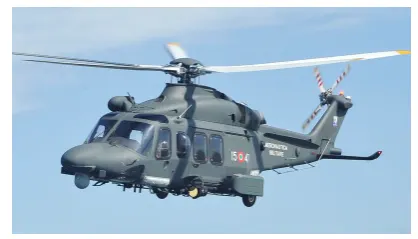
A helicopter is a type of rotorcraftin which lift and thrust are supplied by horizontally-spinning rotors. This allows the helicopter to take off and land vertically, to hover, and to fly forward, backward and laterally. These attributes allow helicopters to be used in congested or isolated areas where fixed-wing aircraft and many forms of VTOL (Vertical TakeOff and Landing) aircraft cannot perform. The maximum gross weight of a helicopter is 11200 Kg.
c) Ornithopter:-
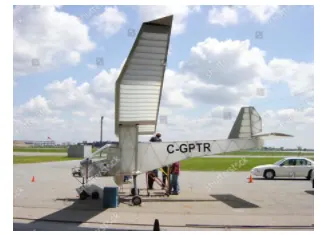
An omnithopter is an aircraft that files flapping its wings. Designers seek to imitate the flapping-wing flight of birds, bats, and insects Though machines may differ in form, they are usually built on the same scale as these flying creatures. Manned ornithopters have also been built, and some have been successful. The machines are of two general types: those with engines, and those powered by the muscles of the pilot.
5) Without Engine:
a) Glider (sailplane):-
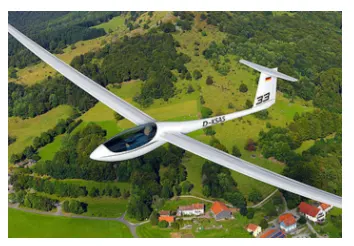
A glider or sailplane is a type of glider aircraft used in the leisure activity and sport of gliding (also called soaring). This unpowered aircraft can use naturally occurring currents of rising air in the atmosphere to gain altitude. Sailplanes are aerodynamically streamlined and so can fly a significant distance forward for a small decrease in altitude. Gliders can range from an empty weight of 60 Kg, to a maximum weight of almost 907 Kg.
b) Kite or Unpowered Aircraft :-
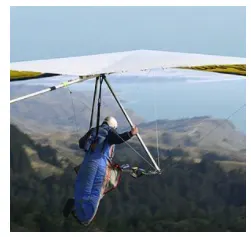
Kite or Unpowered aircraft can remain airborne for a significant period of time without onboard propulsion. They can be classified as fixed wing glider, lighter-than-air balloon and tethered kites. This requires a trajectory that is not merely a vertical descent such as a parachute. Wright brother unpowered aircraft weighted about 23 Kg without the pilot, and 90 Kg with the pilot.
Question 2. Is there any difference between ground speed and air speed?
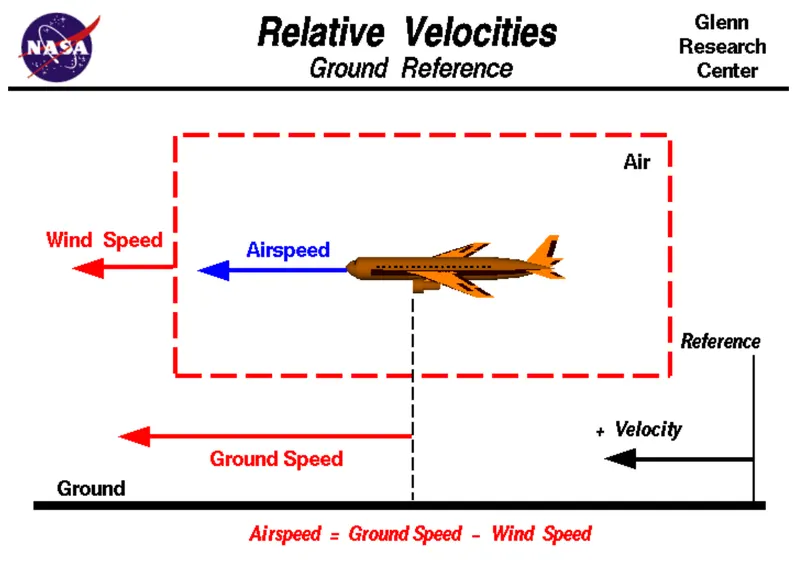
Ground Speed Air speed
1. Ground speed is the airplane's speed relative to the surface of the Earth. 1. Airspeed is the speed relative to the air it is the flying in.
2. Ground speed is what determines how fast an aircraft will get to its destination. 2. Airspeed is what determines whether there is enough airflow around an aircraft to make it fly.
3. Ground speed is simply the sum of airspeed and wind speed. 3. It is independent of ground speed.
Question 3. Why is it not recommended to use aircraft engine power to move it on the ground at Airport?
Aircraft towing is a frequent and vital operation around any airport. Towing may be needed for the movement of active or disabled aircraft on airport ramps or in moving aircraft in and out of hangers for maintenance procedures or for storage.
Towing aircraft can be dangerous and damage to the aircraft, other objects, or injuries to towing team members is possible if the proper procedures are not followed. Most towing accidents are preventable by the proper handling of the aircraft, maintaining situational awareness, and practicing patience. Towing accidents cannot only result in aircraft damage but can also delay or cancel flights or lead to other airport disruptions.
Movement of moving most aircraft around the airport and hangars is usually accomplished by towing with a towing vehicle or ‘tug’. The aircraft is attached it to the tow vehicle by the use of a towbar or other specialized methods that connect to or raise the nose or landing gear off the ground.
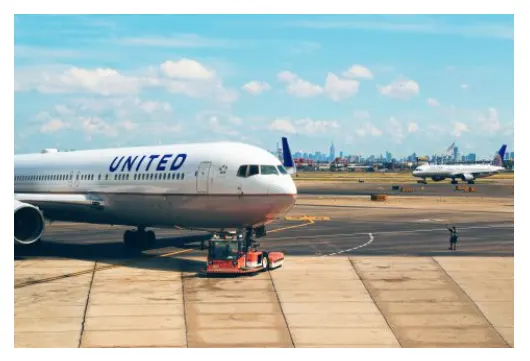
The main responsibility of the towing team members is to ensure that no part of the aircraft structure will come into contact with any other aircraft or any other object during the aircraft movement. A safe towing operation requires a coordinated team effort from all towing personnel. Every team member should be aware of their exact roles before starting a towing procedure and any member has the authority to stop a towing operation at any time if they anticipate a hazardous situation or lose sight of any other team member.
Communication should be established between all towing team members during the duration of the aircraft movement. Depending on where the aircraft movement is located, ATC clearance may be required before moving the aircraft, such as movement across runways or taxiways, so communications with ATC may also need to be established
The towing team members should aware of and follow the below guidelines before towing any aircraft.
- Communication among the towing team members is the most important function to prevent accidents.
- Team members must follow and adhere to all operational and safety procedures during the towing.
- The team members must maintain overall situational awareness of the location and movement of the towed aircraft and of other traffic in that vicinity of the airport.
- The team members must have specific knowledge of the aircraft dimensions, proper towing speed and aircraft turning arcs before towing.
- The towed aircraft must remain within the appropriate designated areas or taxiway lines approved by ATC or as otherwise dictated by airport policy.
Question 4. How an aircraft is pushed to runway when its ready to take off?
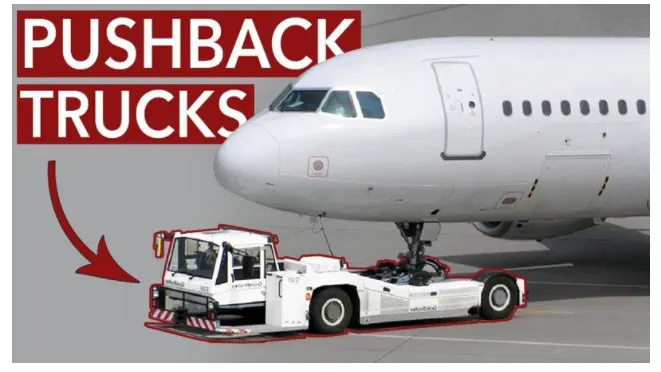
Aiplanes have engines , and they can use them to move forward along the ground. So they push themsleves to the runway. in some cause a small vehicles is needed to push the airplanes backwards away from the terminal building. becauseeven if a plane can reverse its thrust. it's not always safe to hit the building with a jet blast. so the title trucks push the jets back away from the buildings is called a pushback. and old aircraft can not reverse themsleves that times they use pushback tracors. after pushback aircraft move itself in taxiways to reach the runways is called taxxing.
pushback is when an aircraft is pushed backwards away from the airport gate by vehicles called tugs or tractors.
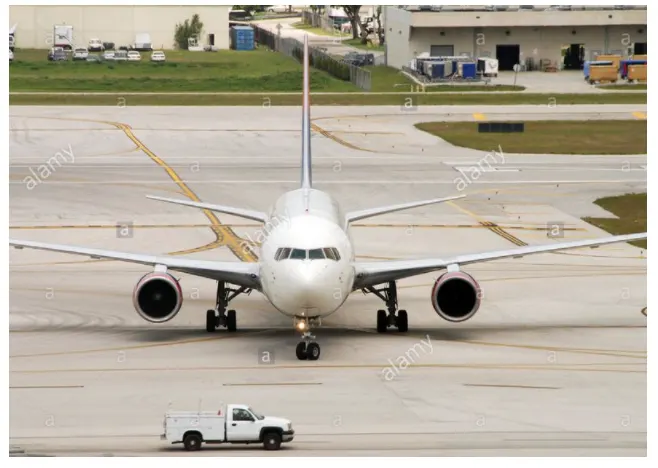
Taxxing is movement of an aircraft on the grounf under its own power. an airplane uses taxiways to taxi from one place in an airport to another, for example when moving from an aircraft hanger to the runway.
Question 5. Learn about take off power, tyre design, rolling resistance, tyre pressure, brake forces when landing.
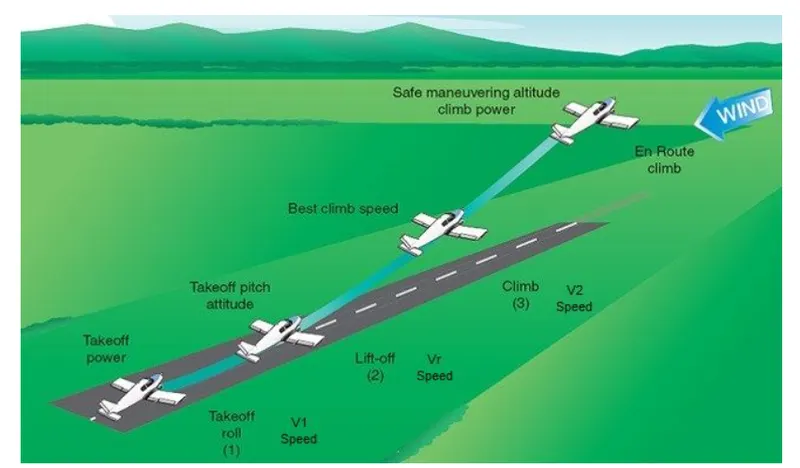
On take-off, in order to position the aircraft to a safe height away from terrain and obstacles (i.e. a flight path of maximum height and minimum ground distance desired), the engine thrust is set to a high 'take-off power' setting (although this is not necessarily full power) and the aircraft attitude is pitched up to maintain a specific speed (usually in the region of V2+28 Kmph). Once the safe height' is reached the engine thrust can therefore be reduced to a more appropriate (i.e. efficient) setting and the aircraft flight path can be changed to a more appropriate (i.e. efficient) flight path
In order to achieve that described above and also to provide minimum noise disturbance to the area surrounding the airport, regulatory procedures require aircraft to fly one of the two profiles given below during every departure. The aerodrome briefing pages will state which one of the two profiles is to be flown at each particular airport:
- At 1,500ft aal reduces thrust to climb power and accelerate the aircraft towards 463 Kmph, retracting flaps and slats.
- At 1,500ft aal reduces thrust to climb power maintaining V2+28 Kmph. At 3,000ft accelerate the aircraft.
Tire Design:
When it comes to safety, tyres are one of the most important components of aircraft. They help to absorb the shock of landing and provide cushioning. It also provides the necessary traction for braking and stopping of an aircraft.
An aircraft tyre is designed to withstand extremely heavy loads while landing, take off, taxing, and parking. The number of wheels required for aircraft increases with the weight of the aircraft, as the weight of the aeroplane needs to be distributed more evenly.
Designing aircraft tires is a very intense undertaking. Once an aircraft manufacturer goes to the tire manufacturer with the size and weight requirements, the tire manufacturer begins the process of designing a tire that meets the needs of the aircraft manufacturer as well as all regulatory requirements - including foreign regulations in many cases.
Engineers are challenged with designing tires with cool running, heat-resistant materials while simultaneously exceeding tire service requirements. Tire prototypes are put through rigorous tests that simulate cycles of landings, take-offs, and taxi operations. It is only after the tires pass all mandatory tests and meet the requirements of the aircraft manufacturer and airworthiness authorities that the tires are put into production.
Types of Tire:
1. Blas-ply tire construction:
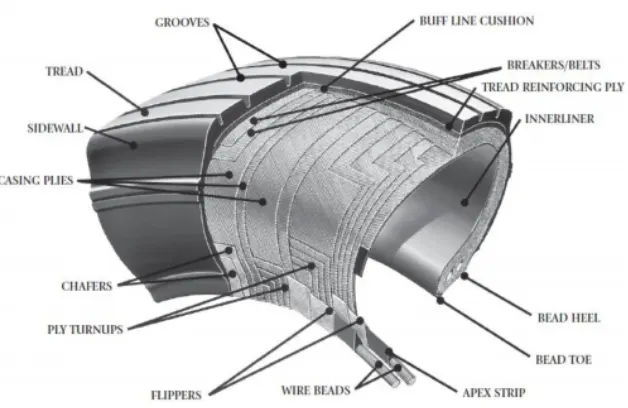
Bias-ply tires are popular choices for aircraft tires because of their durability and retreadability. The tire construction consists of the following components:
Tread: The tread is made of rubber mixed with other additives to obtain the desired level of toughness, durability, and resistance to wear. The tread pattern is designed to aircraft operational requirements, with the ribbed tread design used widely due to its good traction under varying runway conditions.
Sidewall: The sidewall is a protective layer of rubber that covers the outer casing ply. It extends from the tread edge to the bead area.
Tread Reinforcing Ply: One or more layers of fabric that strengthens and stabilizes the tread area for high-speed operation. It also serves as a reference for the buffing process when tires are retreaded.
Buff Line Cushion: The buff line cushion is made of rubber compound to enhance the adhesion between the tread reinforcing ply and the breakers or casing plies. It is of sufficient thickness to allow for the removal of the old tread when the tire is retreaded.
Breakers: Breakers are reinforcing plies of rubber-coated fabric placed under the buff line cushion to protect casing plies and strengthen and stabilize the tread area. They are considered an integral part of the casing construction.
Casing Plies: Alternate layers of rubber-coated fabric (running at opposite angles to one another) provide the strength of the tire.
Wire Beads: Hoops of high tensile strength steel wire that anchor the casing plies and provide a firm mounting surface on the wheel. The outer edge of the bead that fits against the wheel flange is called the bead heel. The inner bead edge is called the bead toe.
Apex Strip: A wedge of rubber affixed to the top of the bead bundle.
Flippers: Layers of rubberized fabric that help anchor the bead wires to the casing and improve the durability of the tire.
Ply Tumups: The casing plies are anchored by wrapping them around the wire beads, thus forming the ply turnups.
Chafer: A protective layer of rubber and/or fabric located between the casing plies and wheel to minimize chafing.
Liner: In tubeless tires, the liner is a layer of low permeability rubber that acts as a built-in tube and restricts gas from diffusing into the casing plies. In tube-type tires, a thinner liner is used to prevent tube chafing against the inside ply.
2. Radial-ply tire construction:
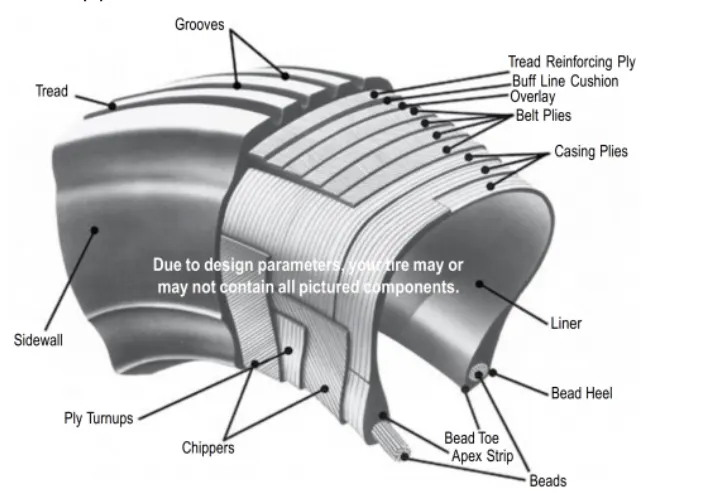
A typical radial tire is illustrated in Figure shows With their rigid belt, they provide increased landings and reduced rolling resistance. They have fewer components in their construction and are lighter than similarly sized bias ply tires. Components that differ from bias-ply construction as follows:
Overlay: A layer of reinforcing rubber coated fabric placed on top of the belts to aid in high speed operation.
Belt Plies: A composite structure that stiffens the tread area for increased landings. The belt plies increase the tire strength in the tread area.
Casing Plies: As in bias-ply tires, the casing plies are layers of rubber-coated fabric. However, unlike those in bias plies that run at opposite angles to one another, radial plies run radially from bead to bead.
Chippers: The chippers are layers of rubber-coated fabric applied at diagonal angles that improve the durability of the tire in the bead area.
Rolling Resistance:
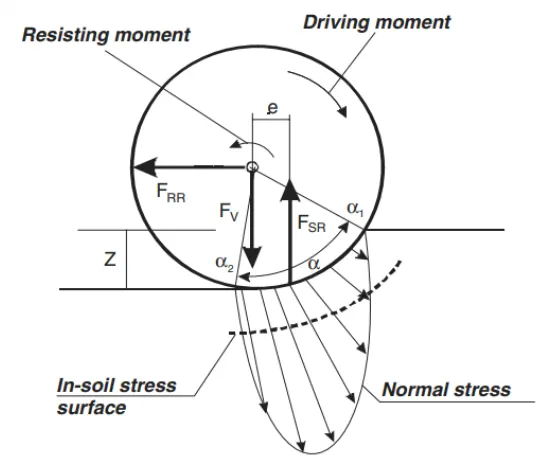
1. Flight-Test Method:
This method can be used for identification of rolling resistance coefficients at a full range of speeds during a takeoff run. In this method, an instrumented aircraft was test flown on an unsurfaced airfield to gather experimental data needed for further calculations of rolling resistance.
2. Soil Stress and Deformation Method:
Rolling resistance due to deformation of the airfield surface at low speed has to be determined with respect to soil response to the applied wheel load. A method proposed by the author is to determine soil stress and deformation under aircraft wheel loads and then to determine the coefficients of resistance based on the obtained experimental data.
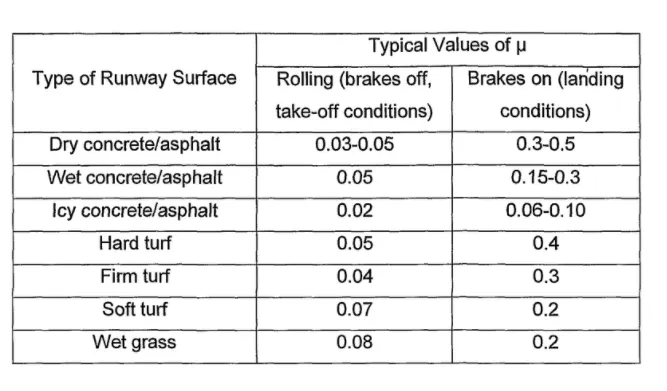
Below figure shows some runway surfaces and its rolling resistance coefficient.
Tire Pressure :
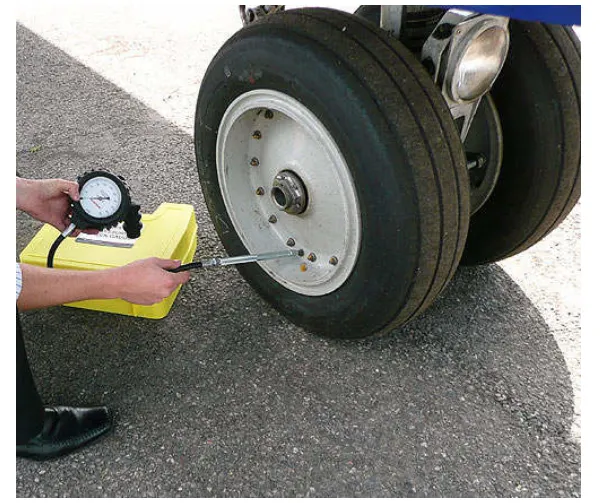
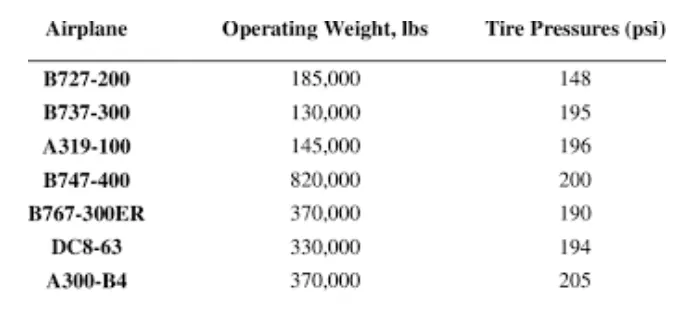
An aircraft tire or tyre is designed to withstand extremely heavy loads for short durations. The number of tires required for aircraft increases with the weight of the aircraft, as the weight of the airplane needs to be distributed more evenly.
The high-flying rubber is typically inflated to 200 psi, roughly six times what you put in an automobile tire, and the tires on an F-16 fighter are pumped to 320 psi. "It's really pressurized air that's so strong
Brake Force When Landing :
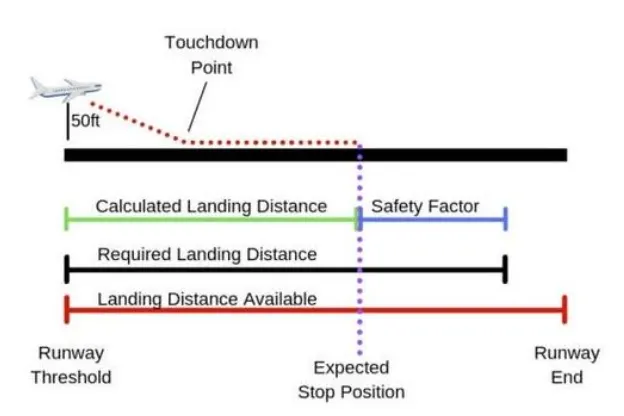
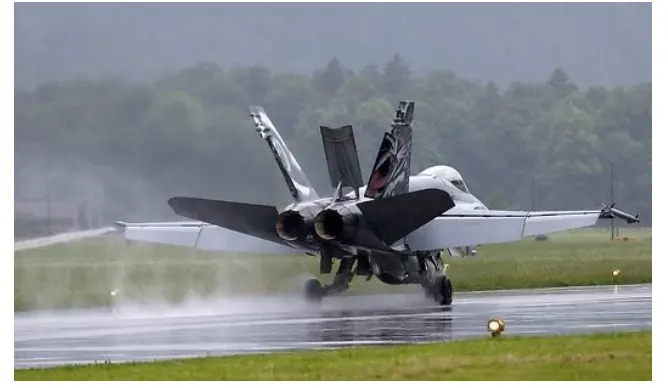
Bringing aircraft down to the runway from 37.000 feet is only part of the challenge. It's not over until the aircraft is safely parked at its gate. In order to do this, pilots have a number of systems available to slow the aircraft down
Stopping a 200-tonne aircraft landing at 180 mph requires a lot of braking force. To do this, the 787 has one brake unit on each of the eight wheels on the main gear assembly. On other aircraft types, the brake units are powered by the hydraulics or electric system. An electrical signal is sent from the flight deck to hydraulic or electric actuators near the main landing gear. Here, a hydraulic fluid or electric brake controller at 3,000 pound per square inch is used to force the brake unit against the wheel, thus slowing it down.
There are other braking systems also available for helping to slow down the aircraft when landing like spoiler, reverse thrust. Similarly there is another system also available to enhance the braking system safety like Anti-skid protection, parking brake, Auto brake and Brake temperature indication.
Part B:
Question6. A. With necessary assumptions, calculate the force and power required to push / pull an aircraft by a towing vehicle.
Considering:
Total mass of ther aircraft (including payload) for airbus a380-575,000kg,
Mass of the push back: 1000kg (assumed)
Rolling Resistance (Frr):
Coefficient of rolling resistance (Crr) = 0.002 (on tarmac)
Rolling resistance force is given by `Frr = Crr.m.g`
For the aircraft:
`Frr = 0.002. 575000 . 9.81 implies Frr = 11281.5 N implies Frr = 11.2815kN`
For the Towing Vehicle: `Frrt =0.002cdot1000 cdot 9.81 implies Frrt = 19.62N`
As the towing vehicle resistance is so less compared to the Aircraft because this is a heavy aircraft these can be neglected
Aerodynamic resistnace (Far):
Drag coeffcient(Cd): 0.025
Air Density (`rho`) 1.125kg/m^3
Frontal Area (A): 150m^2.
Velocity (v)=14.5kmph or 4m/s
`Far= 1 / 2 cdot Cd cdot rho cdot A cdot v²`
`Far = 1/2 cdot 0.025 cdot 1.125 cdot150 cdot 4^2 implies33.75N`
As the vehicle and Plane is moving at very low speed Aerodynamic resistance can be neglected
Hill Climb Resistnace:
Runways are constructed flat so Gradient resistance/ hill climb force is neglected.
Total Resistance:
`Ft = 11.2815 kN`
Power Required :
`P = Ft . v implies P = 11.2815.4 implies 45.26 KW`
The Power Required by the tow Vehicle is 45.26 kw to taxi a heavey air craft at 4 m/s.
Question6. B. Develop the model for the calculated force and power using Simulink.
Simulink Model :-
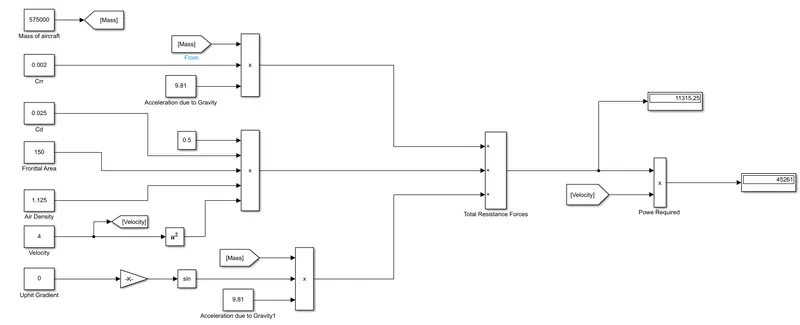
- We can see that the above figure shows the model of power and force calculation of aircraft towing vehicle. In this model I used a constant block and some math function block and created a model.
- In this model I used a constant block for variable parameters. We can change the variable parameters and determine power and force as per our towing vehicle and aircraft.
- Attach the model file for reference.
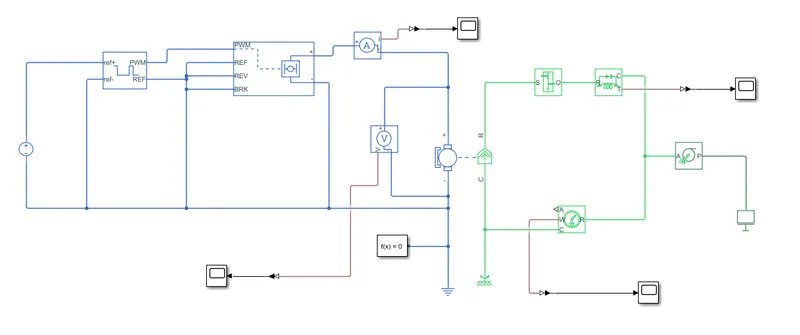
Question 7. A. Design an electric powertrain with type of motor, it’s power rating, and energy requirement to fulfill aircraft towing application in Simulink. Estimate the duty cycle range to control the aircraft speed from zero to highest. Make all required assumptions. Prepare a table of assumed parameters. Draw a block diagram of powertrain.
Assumption:
Parameters Value
Maximum Vehicle speed 2.78 m/sec
Motor Type Permanent Magnet DC Motor
Motor Output Power 850 KW
Motor Rated Voltage 500 V
Rated Speed (at rated load) 220 rpm
No Load Speed 300 rpm
Rotor Inertia 0.0002 kg*m^2
Wheel Radius 0.5 m
Mass (Towing Vehicle + Aircraft) 593144 Kg
Gear ratio 4
Supply Input Voltage (DC Voltage) 500 V
Required Power 809 KW
Peak Required Power 993 KW
Maximum Speed Requirement 53 rpm
Maximum Torque Requirement 178.479 KNm
Simulink Model: -
Result :-
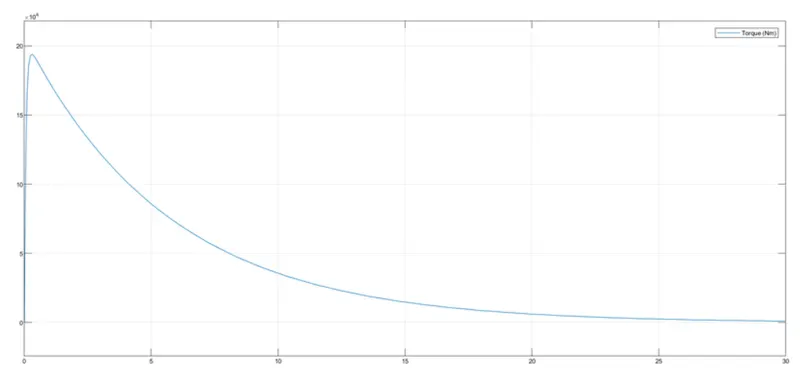
The Following Graph shows the Torque.
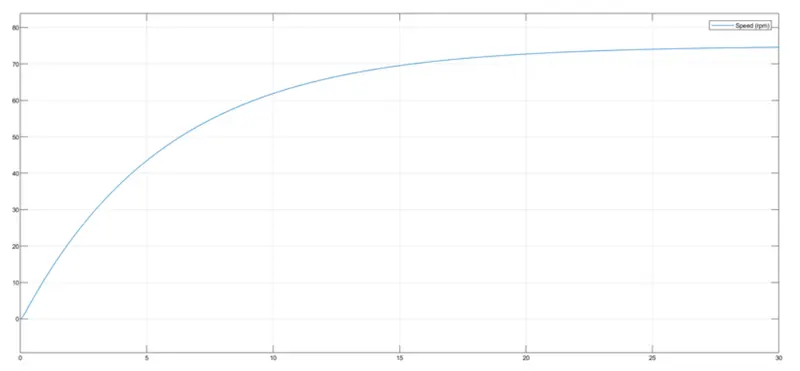
The Following Graph shows the Speed.