Project-1: Powertrain for aircraft in runways
Ans(1).
search and list out the total weigt of various types of aircraft. the answer for this question is prepared in the presentation format. the image snippets are placed for your referance. below is the general classification of thw aircraft.
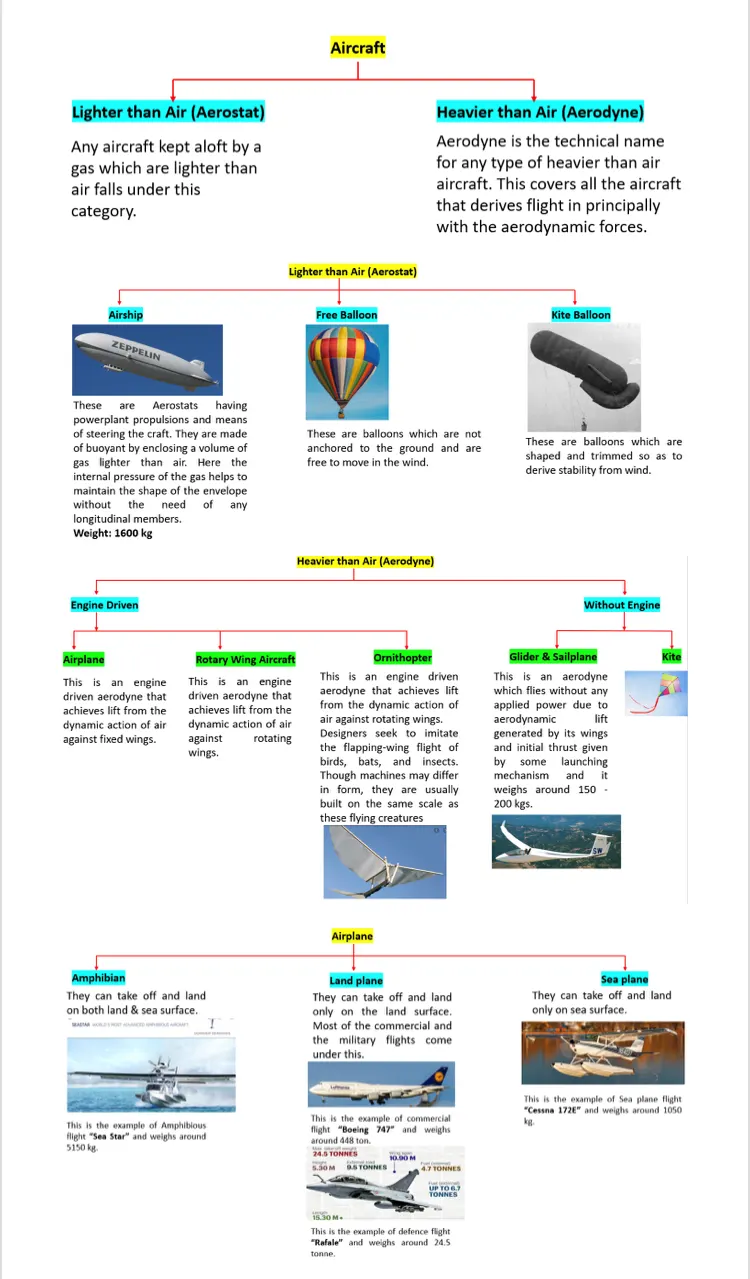
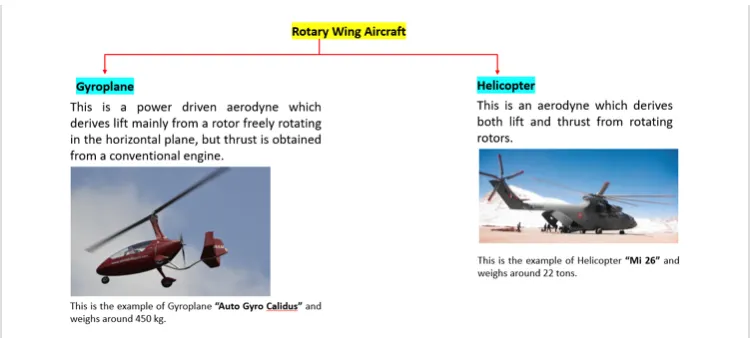
this is overview of the different tyes of aircraft. the list is not exhaustive, as the aircraft still can be classification in to many categories based on the types of engines ( type, number), number of wings, much number range, range, payload of power and the list gas on.
Ans(2).
There is a different between the ground and the air speed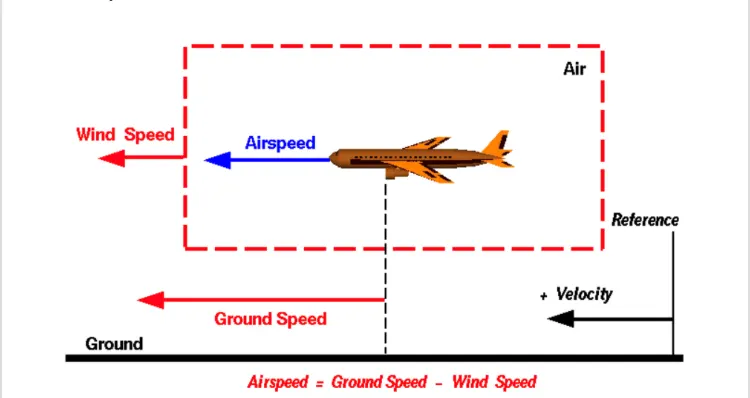
I'm going to the differenatiate the ground speed and the airspeed.
Ground speed:- the aircraft speed relative to the ground that it explain how speed can aircraft travel in the ground. it is not dependent on the airspeed.
Airspeed is the reletive motion between the object and the air. this is also an important parameter foe aerodynamics lift generation. this air speed of the object cannot be measured directly from the ground and the wind speed, in fact it is the vector difference between the ground and wind speed.
On a perfacetly still day, the airspeed is equal to the ground speed. but if the wind is blowing in the same direcetly that the aircraft is moving, the airspeed will be less than the ground speed.
Ans(3).
Taxiing :- refers to the aircraft movement while on the ground under its own power. this term excludes the acceleration run before takes_off and the decelerating run after landing.
the jet engine used is generally not preferred as the primary thrust for taxiing because a large amount of fuel is wasted while the aircraft is still on the ground which could have been used for flying. since the cost of fuel is one off the biggest expenses in the airline business. many companies are planning to switch to electric taxiing to save fuel and reduce emissions.
Two important reasons,
1. if the higestmounted engines are powered there is a huge risk of the jet blast switch may affect the surrounding building and the environment.
2. In case of low mounted engines are turned on there is a higher possibility of any gravel or other impurities lying in the ground may inter the engine and damage it.
pushback trucks & electric taxiing systems :- electric motor fitted inside the wheels of the aircraft landing gear. electric power is supplied to these motors by an on-board auxiliary power unit(APU). this innovative new approach enables airplances to moveback and forward solely undre ele ctric power. this way , aircraft can avoid reliance on main engines for traversing the airport taxiways while burning fuel unnecessarily.
Ans(4).
As explained in the previous "taxiing" refers to the aircraft movement while on the ground under its own power. this term excludes the acceleration run before takes-off and the decelerating run after landing.
the repercussions that might occurs when the engine is used on the runway. so pushback seemed to be a widely popular option for rolling the aircraft on the runway.
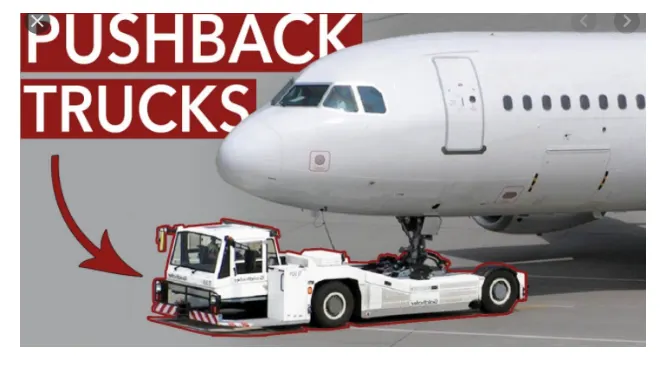
pusback mean the movement of an aircraft from nose_in parking stand using the power of a specialized ground vehicle attached to or supporting the nose landing gear. conventionally a tow bar is a link used between the aircraft and pushback tug.
THe pilot have limited vision from the cockpit what lines behind and side of the aircraft, most of the steering will be done by the driver in pushback.
Ans(5).
takes-off power:- it is the phase where the flight leaves the ground and because airborne.
take off performance can be predicate using a simple measure of the acceleration of the aircraft along the runway based on force equilibrium.
T- thurst propulsion system pushing aircraft along runway.
D- Aerodynamics drag of vehicle resisting the aircraft motion.
T- rolling resistance friction due to the contact of wheel or skids on the ground.
drring tak-off run the imbalance in these force will produce an acceleration along the runway.
Dv/dt = T-D-F/m
Dv/dt = acceleration along the runways and
m = mass of vehicle
rolling resistance
the friction between aircraft and runway will be proportional to the normal force exerted by the aircraft on the runway.
F = mew(W-L)
the noraml forcewill be the the difference weight of aircraft and lift, the friction coefficient will be typically of a magnitude of 0.02 for a standard tarmac runway.
tyre design:-
when it come to safty , tyres one of teh most imporatant component of aircraft. they helf to absorb the shock of landing and provide cushioning it also provide the necessary traction for braking and stopping of an aircraft. an aircraft tyres is design to withstand extremely heave loads while loading take off, taxing, and parking. the number of wheel required for aircraft increase as the weight of the aeroplane needs to be distributed more evenly.
carcass plies are used to from the tire. they are sometimes called causing plies. aircraft tyre is constructed for the purpose it serves.
1. they support the weight of an aircraft while it is on the ground.
2. it is also provide the necessary traction for braking and stopping of an aeroplane.
3. tyre also helps to absorbe the shock of landing and provide cushioning the roughness of takeoff, roll-out and taxi opertion.
unlike automobile or trucks tyre, it does not have to carry a load for a long period of continue operation. an aircraft tyre absorbe the high impact load of loading , and also it's operation at high speeds for a shorts time when required.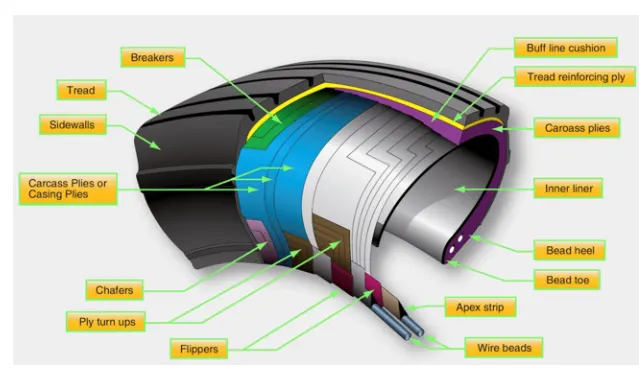
Bead:-
the tyre beasd is an imporatnt part of an aircraft tire. it anchors the tire carcass and provides a dimensioned, from mounting surface for the tire on the wheel rim. tire beads are strong. they are typically made from high-strength carbon steel wire bundles encasedin rubber. one, two,or three bead bundles may be found on each side of the tire depondent on it's size and the load and its design to handle. radial tire have a single bead bundle on each side of the tire. the bead transfers the impact load and deflection force to the whel rim.
carcass plies:-
carcass plies, or casing plies as they are somethings called are used to from the tire. each consist of fabric, usually nylon , the plies are applied in layer to given the tire strength and from thr carcass body of the tire. the ends of each ply are anchored by wrapping them around the baed on both side of the tire to from the ply turn - ups as mentioned, the angle of the fiber in the ply is manipulated to create a bias tire or radial tire as desired.
Tread:-
The tread is the crown area of the tire design to come in contact with the ground. it is rubber compound formulated to resist wear, abrasion, cutting, and cracking. it also made to resist heat buil-up. most modern aircraft tire treads is formed with circumferential grooves that create tire rubber.
sidewall:-
the sidewall of an aircraft tire is a layer of rubber design to perfect the carcass piles it may contain compounds design to resist the area where information about the tire contained. the tire sidewall impact little strength to the cord bpdy.
tire pressure:-
the pressure usually operates at higher pressure up to 200psi for domestic and as well international flights which are usually heavier .
Brake force landing;- there are three types of braking forces
1. engine power:-the most important action to achive deceleration from a speed at which the engines are still producing forward motion is to selected all thruth/power leavers to the ground idle position promptly, and continue the action through to the selected of reverse thrust ir reverse propeller pitch are most effective at high speed
2. wheel braking:-to be effective, braking action at any speed depends upon sufficient friction existing between the tire and the runway surface achive through freely rotating wheels.
3. mechanical spoilers:-the mechanical deflection of parts of the wing uppers surafce and moving and tail cone assembly can assist decleeration in two ways.
. directly. by increasing aerodynamics drag on the moving aircraft. this can be achiveed by raising upper wing surafce panels called ground spoilers or by operation of a tail cone 'clamshell' types air brake.
. indirectly by incrasing the effective downward load on loading gears and therby incrasing the efficiency of wheel braking.
Ans(6).
The pushback trucks experience two kinds of force acting on them try to push/pull the aircraft.
1. Rolling resistance force
2. aerodynamices drag force
Rolling resistance force- the formula used for the rolling resistnace force Frr = u*m*g
first consisdering the aircraft,u = 0.02m, m= 40,000kg
Frr = 0.02*40000*9.81 = 7848n
the tolal resistance will be the sum of the aircraft & pushback truck roling rsistance = 7848+883 = 8731N
aerodynamics force- the aerodynamics force to moves an airplane on an absolute flat runway with no wind at constan low speed is usually very negligible.
Fd = 1/2.row.A.cd.v*2
the ai density kg/m^3 , A the front area m^2, Cd is the drag coefficient, V is the velocity in m/s
the net force acting on the pushback trucks during the push/pull of an aircraft, fnet = frr(pushback truck)+Frr(aircraft)=8731N
p = F*v v=velocity, pulls the aircraft
p = 8731*9.72 = 84.86kw
Ans(7).
An aerodyanmic pushback vehicle is required to move aeroplane away from airport terminals. powertarin is a system which covers the all the train component which propels the vehicle in the load.
all wheel drive Ev push back vehicle is considered
wheel motor in each wheel vehicle better wheel propulsion can be achived. ensuried increase of efficiency and better power saving of the wheel system. this approch adds to controllability of each individul wheel and decesring weight to achive a better accerelation, torque control and regenerative braking implementation of antilock braking system (ABS), collision avoidance system (CAS), wring steering and better overall dyanics stability control are much simpler using four inwheel motor.
high top speed to travel quickly between pushback operation (30 kph unloaded)
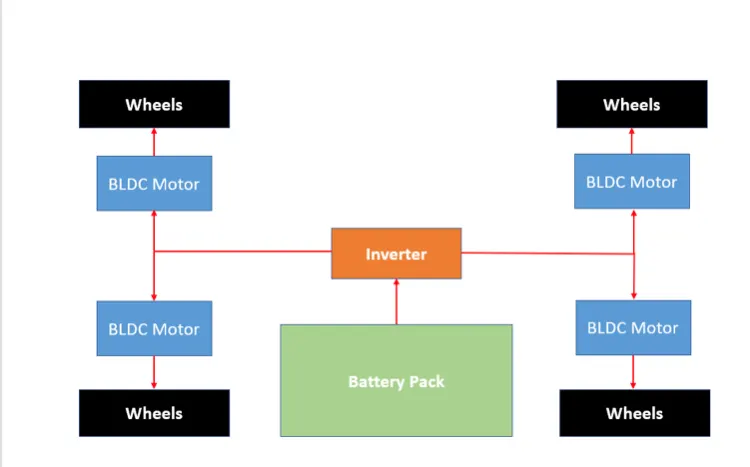
two and maintanence the motor required high torque and low speed and foe carrying the solo motor required low rorque and high speed.
battery :- the Ev to be truly comparable to the ICE counterpart, the SOC of the battery pack should be full at the end of the duty cycle
Traction motor:- the pushback vehicle would not be conversional passenger vehicle development critia 0-60mph acceleration time.
Duty cycle of an pushback vehicle:-
An aerodynamics pushback vehicle is required to move aerodyanics away from airport termionals and occasionally tow them across an airline termional.
maximum traction force = rolling resistance force+aerodyanmics force + braking force
total force = 313920+53.1+800 = 3,14,773
power = force*velocity = 1259kw
maximum torque on wheels = 0.575*3,14,773 = 180kNm