Project-1: Powertrain for aircraft in runways
Part A:
1. Search and list out the total weight of various types of aircrafts.
2. Is there any difference between ground speed and air speed?
3. Why is it not recommended to use aircraft engine power to move it on the ground at Airport?
4. How an aircraft is pushed to runway when its ready to take off?
5. Learn about take off power, tyre design, rolling resistance, tyre pressure, brake forces when landing.
Part B:
6. A. With necessary assumptions, calculate the force and power required to push / pull an aircraft by a towing vehicle.
B. Develop the model for the calculated force and power using Simulink.
7. A. Design an electric powertrain with type of motor, it’s power rating, and energy requirement to fulfill aircraft towing application in Simulink. Estimate the duty cycle range to control the aircraft speed from zero to highest. Make all required assumptions. Prepare a table of assumed parameters. Draw a block diagram of powertrain.
(Hint :DC7 Block)
B. Also, Design the parameters in excel sheet.
1)List out the total weight of various types of Aircraft:
Datum:
Arm:The arm is the horizontal distance that a part of the aircraft or a piece of equipment is located from the datum. The arm’s distance is always given or measured in inches, and, except for a location which might be exactly on the datum, it is preceded by the algebraic sign for positive (+) or negative (−). The positive sign indicates an item is located aft of the datum and the negative sign indicates an item is located forward of the datum. If the manufacturer chooses a datum that is at the most forward location on an aircraft (or some distance forward of the aircraft), all the arms will be positive numbers. Location of the datum at any other point on the aircraft will result in some arms being positive numbers, or aft of the datum, and some arms being negative numbers, or forward of the datum. the below figure shows an aircraft where the datum is the leading edge of the wing. For this aircraft, any item (fuel, seat, radio, and so forth) located forward of the wing leading edge will have a negative arm, and any item located aft of the wing leading edge will have a positive arm. If an item was located exactly at the wing leading edge, its arm would be zero, and mathematically it would not matter whether its arm was considered to be positive or negative.
The arm of each item is usually included in parentheses immediately after the item’s name or weight in the Aircraft Specifications, Type Certificate Data Sheet, or equipment list for the aircraft. In a Type Certificate Data Sheet, for example, the fuel quantity might be identified as 150 gallons (gal) (+138) and the nose baggage limit as 200 pounds (lb) (−55). These numbers indicate that the fuel is located 138″ aft of the datum and the nose baggage is located 55″ forward of the datum. If the arm for a particular piece of equipment is not known, its exact location must be accurately measured. When the arm for a piece of equipment is being determined, the measurement is taken from the datum to the piece of equipment’s own center of gravity.
Moment:A moment is the product of a weight multiplied by its arm. The moment for a piece of equipment is in fact a torque value, measured in units of inch-pounds (in-lb). To obtain the moment of an item with respect to the datum, multiply the weight of the item by its horizontal distance from the datum. Likewise, the moment of an item with respect to the center of gravity (CG) of an aircraft can be computed by multiplying its weight by the horizontal distance from the CG.
A 5 lb radio located 80″ from the datum would have a moment of 400 inch-pounds (in-lb) (5 lb × 8″). Whether the value of 400 in-lb is preceded by a positive (+) or negative (−) sign depends on whether the moment is the result of a weight being removed or added and its location in relation to the datum. This situation in the above figure where the moment ends up being a positive number because the weight and arm are both positive. The algebraic sign of the moment, based on the datum location and whether weight is being installed or removed, would be as follows:
- Weight being added aft of the datum produces a positive moment (+ weight, + arm).
- Weight being added forward of the datum produces a negative moment (+ weight, − arm).
- Weight being removed aft of the datum produces a negative moment (− weight, + arm).
- Weight being removed forward of the datum produces a positive moment (− weight, − arm)
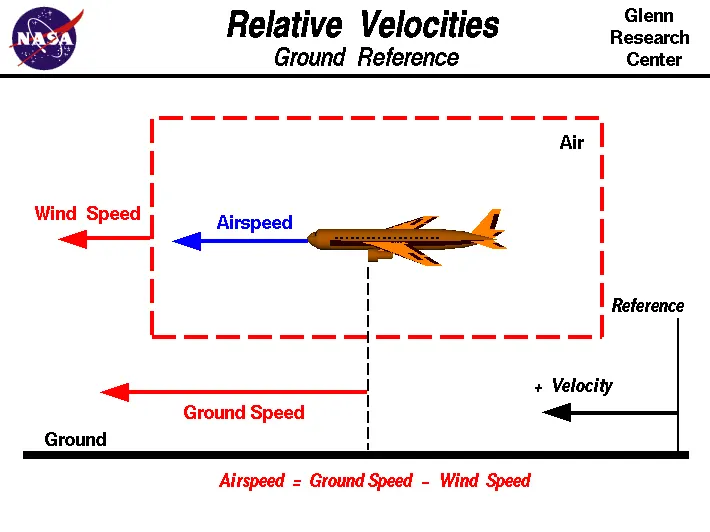
2. Is there any difference between ground speed and air speed?
Ground speed:
- Ground speed is the airplane's speed relative to the surface of the earth.
- Ground speed is what determines how fast an aircraft will get to its destination.
- Ground speed is simply the sum of airspeed and windspeed.
Air speed:
- Airspeed is the speed relative to the air it is flying in.
- Airspeed is what determines whether there is enough airflow around an aircraft to make it fly.
- it is independent of ground speed.
3. Why is it not recommended to use aircraft engine power to move it on the ground at Airport?
Towing is coupling two or more objects together so that they may be pulled by a designated power source.The towing source may be amotorized land vehicle,vessel,animal or human and the load being anything that can be pulled.
Although many aircraft are capable of moving themselves backwards on the ground using reverse thrust (a procedure referred to as a powerback),the resulting jet propulsion might cause damage to the terminal building or equipmnet. Engines close to the ground may also blow sand and debris forward and then suck them into the engine,causing damage to the engine .A pushback is therefore the preferred method to move the aircraft away from the gate.
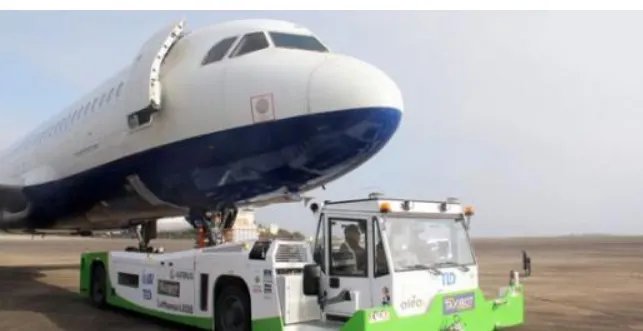
Although many aircraft are capable of moving themselves backwards on the ground using reverse thrust (a procedure referred to as a powerback) it is not done typically due to the following reasons:
- The jet blast from the engine can damage the terminal building and nearby equipment.It can even throw away people standing nearby.
- Engine can blow sand and debris.
- Engines can suck in sand and debris which can cause serious damage to the engine.
- It is easier for the truck driver to see the surroundings better than the pilot sitting in the cockpit with limited windows.
- the pushback truck driver knows the airport better than the pilot.
- The plane engines are very loud.This noise can add up substantially when multiple planes are moving around the airport.It wont be a pleasant experience for people sitting inside the terminal,as most people dont even like the sound of powerful motor bikes.
- It save fuel virgin Atlantic had proposed a new system in which the pushback trucks will push the plane all the way to the runway to save fuel and reduce impact on nearby enviroment.
Taxiing is the movement of an aircraft on the ground, under its own power, in contrast to towing or pushback where the aircraft is moved by a tug. The aircraft usually moves on wheels, but the term also includes aircraft with skis or floats (for water-based travel).
The power for taxing comes from the engine itself.If it is propellar powered aircraft, the propellar provides thrust and pulls the aircraft,like it would in air.If it is a jet engine,the exhaust air that comes out of the engine creates a forward force due to Newtons third law and moves the airplane.
Airliner have nose wheel steering controlled by a cockpit control called a tiller.The tiller allows nose wheel to rotate at quite extreme angles making tighter turns possible.It also reduces the fuel consumption as you do not need much engine power during taxing.If rudders were used, the power has to be increased to make sure sufficient airflow over the rudder surface to make it effective.
Once on the take off roll and the airplane gains sufficient speed i.e enough air flows over the ruddders,pilot go back to using the rudder pedals to maintain the centre line.
some large airplanes with multi wheel main gears have a tendancy to scrub the tyres on the tarmac whose nose wheel is steered.To counter this problem,an automatic main gear steering is inbuilt in the aircraft .This makes the main gears turn the opposite direction to that of the nose wheel,greatly decreasing the wear on the tyres.
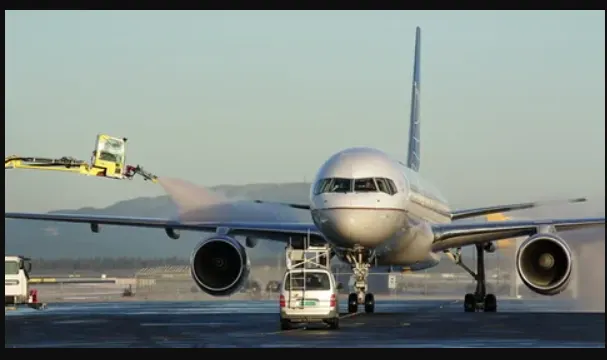
Small general aviation aircraft uses the rudder for turns during taxi.They dont have a seperate control for nose wheel.In such airplanes, to make a tighter turns, you could use differential braking.That is,if you want to make a tighter turn for example to the left,you would push the upper of your left rudder pedal which would apply left braking.This allows the airplane to make a sharper turn to the left
4. How an aircraft is pushed to runway when its ready to take off?
pushback:
In aviation, pushback is an airport procedure during which an aircraft is pushed backwards away from its parking position, usually at an airport gate by external power.Pushbacks are carried out by special, low-profile vehicles called pushback tractors or tugs.
Although many aircraft are capable of moving themselves backwards on the ground using reverse thrust (a procedure referred to as a powerback), the resulting jet blast or prop wash would cause increased noise, damage to the terminal building or equipment, and hurt airport staff due to high-speed debris. This debris would also be sucked into the engine, as it is in normal use, and cause excessive wear - a major cause of wear on aircraft engines is during ground use.A pushback is therefore the preferred method when ground-handling aircraft.
Taxing:
It is the movement of an aircraft on the ground ,under its own power ,in contrast to towing or push_back where the aircraft is moved by a tug.The aircraft usually moves on wheels,but the team also includes aircraft with skies or floats for water_based travel.An airplane uses taxiways to taxi from one place on an airport to another, for ex when moving from hangar to the runway.The term taxiing is not used for the accelerating run along a runway prior to take off, or the decelerating run immediately after landing,which is called the take_off roll and landing roll_out respectively.When taxing aircraft travel slowly .This ensures that they can stop quickly and do not risk wheel damage on larger aircraft if they accidentally turn off the paved surface.Taxi speeds are typically 30 to 35 km/h.
5. Learn about take off power, tyre design, rolling resistance, tyre pressure, brake forces when landing.
1.Take off power:The power required by the aircraft engines to use to lift them into a horizontal takeoff is known as takeoff power.Usually this term is also known as takeoff thrust .Pilot use less amount of thrust at takeoff to decrease engine wear at takeoff Reduced power at dreated takeoff are normal and frequently used.The performance is carefully calculated prior to each takeoff ,ensure that the proper speed,power setting and flapes are used for the weight of the takeoff on the runway intended and at the proper temperature.When using the method during takeoff it is always possible to increase to full power if the situation requires.
2. Aircraft Tyre _Design and Construction:When it comes to safety,tyres are one of the most important component of aircraft.They help to absorb the shock of landing and provide cushioning.It also provides the necessary traction for braking and stopping of an aircraft.
An aircraft tyre is designed to withstand extremely heavy loads while landing,take off,taxing and parking.The number of wheels required for aircraft increases with the weight of the aircraft,as the weight of the aeroplane needs to be distributed more evenly.carcass plies are used to form the tire.They are sometime called casing plies.An aircraft tyre is constructed for the purpose it serves.
- They support weight of an aircraft while it is on the ground.
- It also provides the necessary traction for braking and stopping of an aeroplane.
- Tyre also helps to absorb the shock of landing and provide cushioning the roughness of takeoff ,rollout and taxi operations.
Unlike an automobile or truck tyre,it does not have to carry a load for a long period of continous operation.However,an aircraft tyre absorb the high impact loads of landing and also its operation at high speeds for a shorter time when required.
Technical aspects of the tyre:
- Retreading -Retreading is a method of restoring a worn tyre by renewing the tread area or by renewing the tread area plus one or both sidewalls.Repairs are included in the tyre retreading process.
- Load rating - Load rating is the maximum permissible load at a specified inflation pressure.
- Ply rating - ply rating is used to identify the maximum recommended load rating and inflation pressure for a specified tyre.It is an index of tyre strength.
- Speed rating-The speed rating is the maximum takeoff speed to which the tyre has been tested.
- Skid depth - Skid depth is the distance between the tread surface and the deepest groove as measured in the mould.
Aircraft tyre must have an approved speed and load rating and have sufficient clearance when retracted through landing gear to allow for tyre growth.Tyre growth is the increase in the size of the tyre due to centrifugal forces at high speed.
Aircraft tyres may be tubel-type of tubeless:
Tubeless tyre are more advantageous over tube-type.There is no longer the use of tube-type tyre in recent aviation.Nowadays all airliners are using tubeless tyres.Tubeless that are meant to be used without a tube has the word TUBELESS on the sidewall of the tyre.
3.Rolling resistance:It is the resistance that the tires offer against motion while on ground, in case of aircraft rolling resistance can be experienced while take off and while landing.The rolling resistance is given by the following expression-
Frr= urr x m. g
m = mass of aircraft
urr = coefficient of rolling resistance.
4.Tyre pressue:Aircraft tires are usually inflated with nitrogen to minimize expansion and contraction from extreme changes in ambient temperature and pressure experienced during flight.Dry nitrogen expands at the same rate as other dry atmospheric gases(normal air is about 80% nitrogen),but common compressed air source may contain moisture,which increases the expansion rate with temperature.
The requirement that an inert gas such as nitrogen be used instead of air for inflation of tires on certain transport category airplanes was prompted by atleast three cases in which the oxygen in air-filled tires combined with volatile gases given off by a severely overheated tyre and exploded upon reaching autoignition temperature.The use of an inert gas for tire inflation will eliminate the posibility of a tire explosion.
Aircraft tires generally operate at high pressures up to 200psi(14 bar) for airliners and even higher for business jets.
5.Brake force when landing:All the commercial aircraft have automatic brake system.Just like a car,these systems also have anti lock braking system (ABS)that prevents the tires from sliding down a wet runway.The advantage of the automatic brake system is that the aircraft brakes comfortably at a constant deceleration.Passengers experience a constant force that presses them into their seats.The brake system automatically applies the wheel brakes just enough to create a constant deceleration independent of the air resistance,spoilers and reversers.It is only in the last phase of brakes by pressing on both brake pedals.This deactivates the automatic brake system immediately after landing the aircraft is still moving fast enough that aerodynamic devices are much more efficient than the brakes.
The brake units are powered by the hydraulic system.An electrical signal is sent from the flight deck to hydraulic actuators near the main landing gear.Here, hydraulic fluid at 3000 pound per square inch is used to force the brake unit against the wheel thus slowing it down.
6. A. With necessary assumptions, calculate the force and power required to push / pull an aircraft by a towing vehicle.
B. Develop the model for the calculated force and power using Simulink.
A.To push or pull an aircraft by a towing vehicle three types of forces will act on that vehicle.
They are:
Rolling Resistance force.
Aerodynamic Drag force.
Hill climbing Force.
Push/pull power calculation of towing vehicle:
lets assume
Towing vehicle mass = 50000kg
Aircraft mass = 183700kg
Total mass of the vehicle = (50000+183700)= 233700kg
speed of the vehicle(v) = 10km/hr =2.77m/s
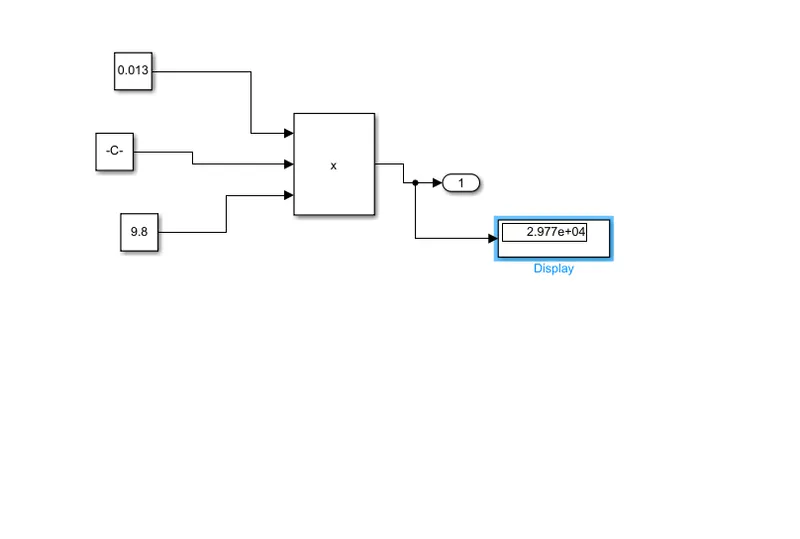
The rolling resistance for the airplane can be calculated as
Frr = urr.m.g
where,
Frr = rolling resistance (N,lbf)
urr = rolling resistance coefficient
M= rolling mass(kg,lbm)
g = acceleration due to gravity(9.81m/s^2)
Example-Force required to pull an airplane at constant low speed on Tarmac.
If the mass of a plane is 50000kg and the rolling coefficient between the aircraft wheel and the tarmac is 0.013
The force required to overcome the rolling resistance can be calculated as:
Frr = 0.013(50000kg)(9.81m/s^2)
= 29,773.38N
This force can be delivered by a pulling truck.Enough weight of truck is required to create friction forces against the tarmac that equals the plane rolling resistance.
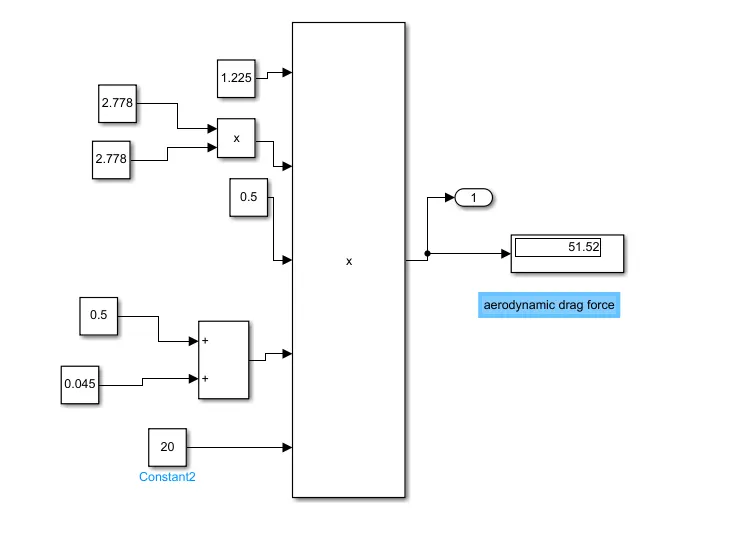
Aerodynamic drag force:
Fad = (1/2).p.A.(cd+cda)
= (1/2).1.225.(2.778)^3 x 20 x (0.5+0.045)
= 51.514N
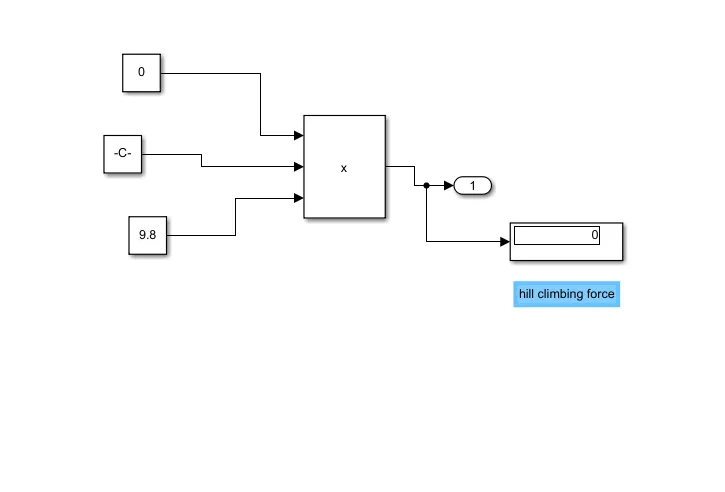
Hill climbing Force:
Fhc = m.g.`sinphi`
= 233700 x 9.81 x sin0
= 0N
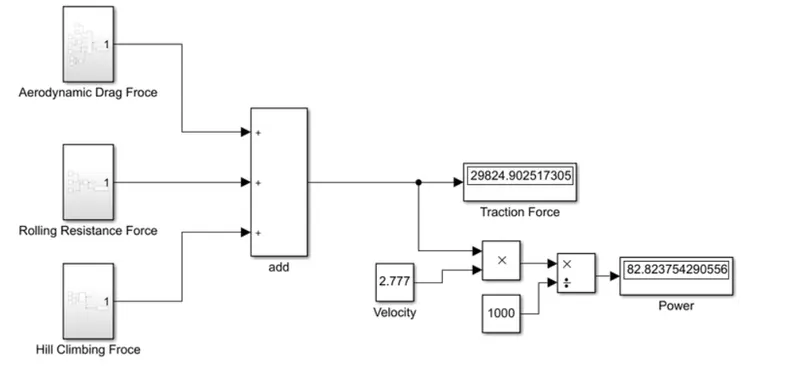
Total traction force:
Fte= Frr +Fad +Fhc
= 29773.38+51.514+0
= 29824.894N
Total power = Fte.V/1000
=82.84 KW
B. Develop the model for the calculated force and power using Simulink.
Rolling Resistance:
Hill climbing Force:
Aerodynamic force:
Main model:
7. A. Design an electric powertrain with type of motor, it’s power rating, and energy requirement to fulfill aircraft towing application in Simulink. Estimate the duty cycle range to control the aircraft speed from zero to highest. Make all required assumptions. Prepare a table of assumed parameters. Draw a block diagram of powertrain.
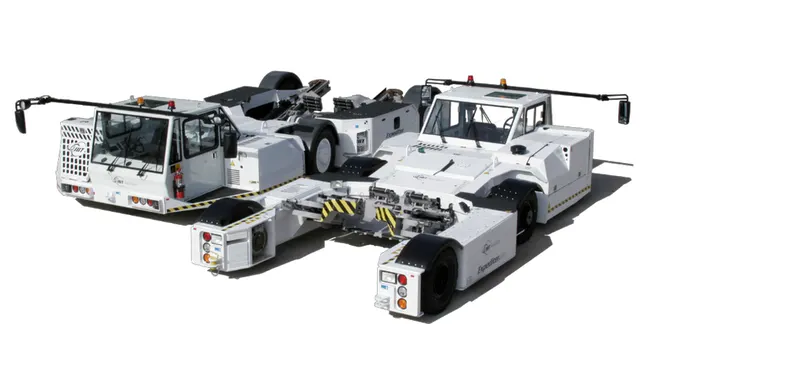
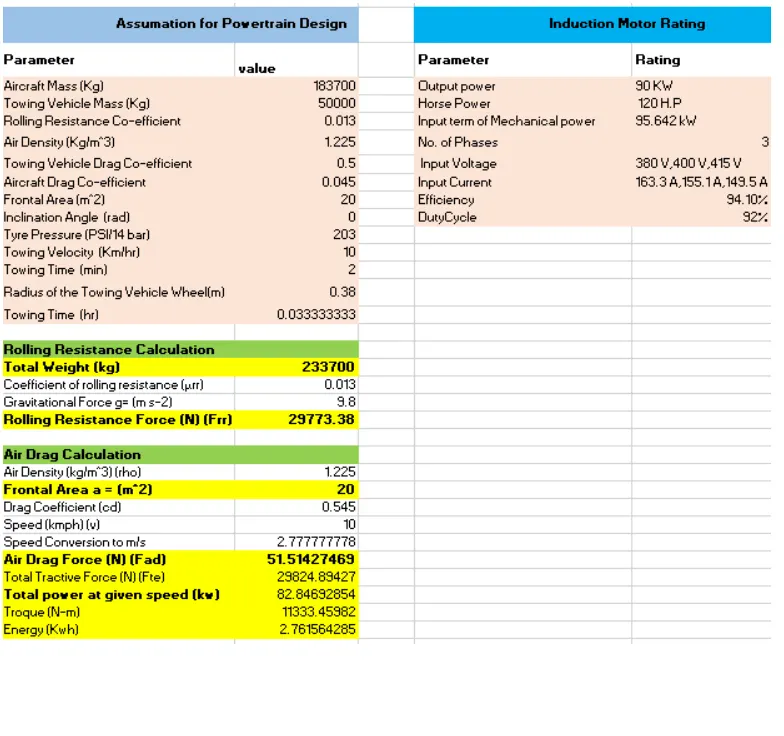
Assumption for powertrain design:
parameter Value
Aircraft mass 183700kg
Towing vehicle mass 50000kg
Rolling resistance co efficent 0.013
Air density 1.225 kg/m^3
Towing vehicle drag co efficient 0.5
Aircraft drag co efficient 0.045
Frontal Area 20m^2
Inclination angle 0 rad
Tyre pressure 203 psi/14bar
Towing velocity(v) 10km/hr = 2.778 m/sec
Towing time(t) 2min
Radius of the towing vehicle wheel 0.38
Therefore from the above model,we have calculated the traction force = 29824.8927N
power= Force*Velocity
=29824.8927 * 2.778
p = 82.84KW
As we know Torque(T) = force (F)*wheel radius(r)
T = 29824.9025 . 0.38
T= 11333.45N-m
Required energy(E) for towing application based on the assumed time,that is E=P*t
E= 82.82.(120/3600)
E= 2.760 KWh
For this application an induction motor or a BLDC can be used with a proper gear system.
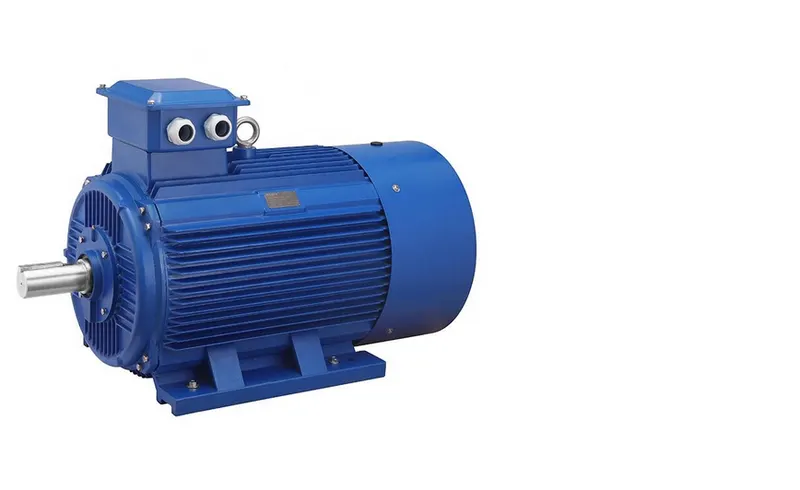
Induction motor rating
Parameter Rating:
Output power
90KW
Horse power
120H.P
Input term of mechanical power
96.642KW
NO.of phases
3
Input Voltage
380V, 400V,415V
Input current
163.3A,155.1A,149.5A
Efficiency
94.10%
The motor output power is the input power of the towing vehicle so to obtain maximum speed ,the duty cycle needed is calculated as below:
Duty cycle = output power/input power
82.82/90*100
=92%
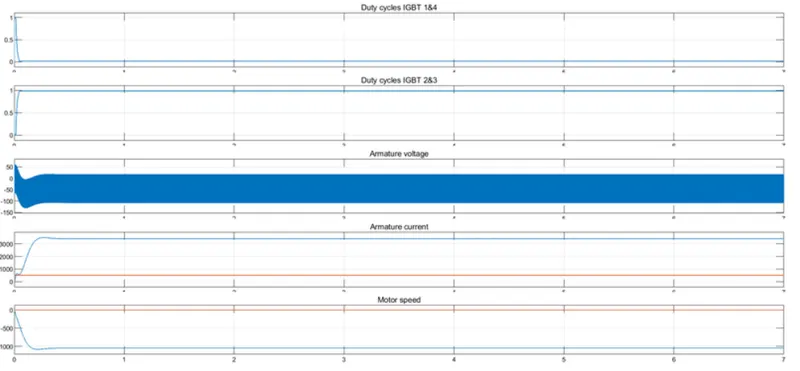
The duty cycle range to control the aircraft speed from zero to highest is from 0 to 92%
Main model:
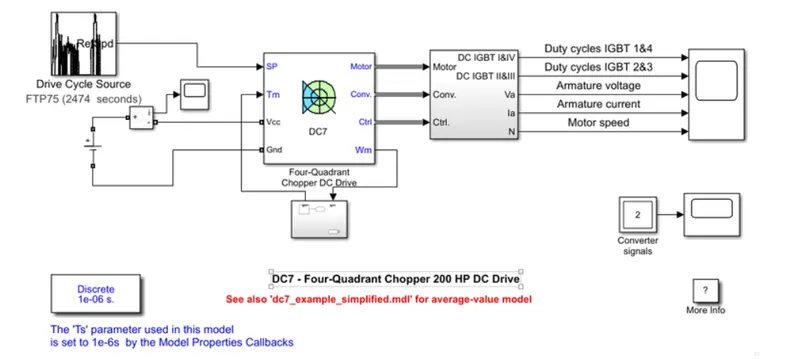
Result:
Blockdiagram of powertrain for towing vehicle:
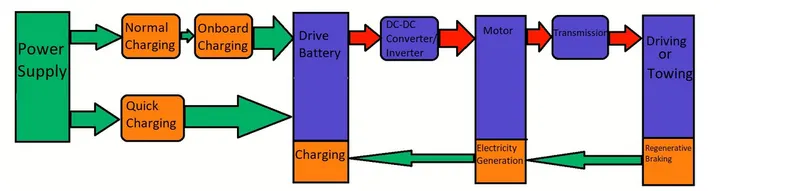
Electric vehicles consist of a battery connected to an electric motor(either AC or Dc)Via an inverter and a motor controller.As automotive batteries generally operate on DC current,while grid operated AC, a converter is needed to transfer power to the battery.One of the key advantagesof an EV is its much higher level of energy efficiency.
B. Design the parameters in excel sheet.