Project-1: Powertrain for aircraft in runways
AIM:To design a Powertrain for runway in aircraft
Objective:
- Search and list out the total weight of various types of aircrafts.
- Explain the difference between ground speed and air speed.
- Is it not recommended to use aircraft engine power to move it on the ground at Airport.
- To describe how an aircraft is pushed to runway when its ready to take off.
- Learn about take off power, tyre design, rolling resistance, tyre pressure, brake forces when landing.
- With necessary assumptions, calculate the force and power required to push / pull an aircraft by a towing vehicle.
- Design an electric powertrain with type of motor, it’s power rating, and energy requirement to fulfill aircraft towing application. Estimate the duty cycle range to control the aircraft speed from zero to highest. Make all required assumptions. Prepare a table of assumed parameters. Draw a block diagram of powertrain.
INTRODUCTION:
An aircraft is a vehicle that is able to fly by gaining support from the air.It counters the force of gravity by using static lift or dynamic lift of an airfoil or in a few cases the downward thrust from jet engine. eg.helicopter,airballons,airships,airplanes.
There are two types of classification in aircraft are
- Aerostats (lighter than air)
- Aerodynes (heavier than air)
Aerostats
Aerostats aircraft are very more lightweight in weight.These types of aircraft are generally used in buoyancy like ships which helps them to float in air.Low density gases such as hydrogen,helium or air ballons which are lighter than air are used to fill the aircraft.The most commomnly known this type of aerostats are hot air balloons,sky lanters.

Fig 1: Hot air ballons
Aerodynes
Aerodynes aircraft are much higher in size and weight.They push the gas downwards which reaction helps to makes the aircraft upwards.They are dynamic through the air.The dynamic lift through the air are caused by some mechanism.The aerodynes are classified into types based on mechanism.They are fixed wing aircraft and rotor aircraft
- The fixed wing aircraft are just like planes.The entire mechanism is relied upon forward speed to create airflow all over wings.
- The rotor craft uses the spinning rotor just like wings.The most commonly known aircraft under this classification is helicopter.
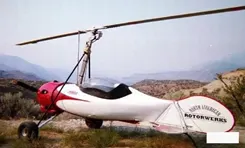
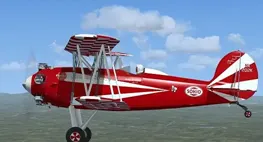
Fig 2:Gyropter comes under rotor craft Fig 3: Biplanes comes under fixed wing aircraft
STUDY 1:
The aircraft gross weight is the total aircraft weight during at any moment during the flight or ground operation.An aircraft’s gross weight will decreases during flight due to oil and fuel consumption. An aircraft gross weight may also vary during flight due to payload dropping or in-flight refuelling.
The weight are classified as
Maximum taxi weight (MTW)
- The maximum taxi weight is also kown as maximum ramp weight is the maximum weight authorized for maneuvering an aircraft on the ground as limited by aircraft strength and airworthiness requirement.
- It includes the weight of the taxi ,run-up for fuel for engines and APU(Auxillary Power Unit).
- It depends upon the size of the aircraft,number of engines,APU operation and engine or fuel consumption.
Maximum take off weight (MTOW)
- The maximum take off weight is the maximum weight at which the pilot of the aircraft are allowed to attempted to take off.
- It is less than maximum taxi weight due to fuel that will be burned during taxi and run up operation.
- In operation the maximum weight for takeoff is limited to values less than maximum taxioff weight due to aircraft performance,environmental condition,airfield characteristics(takeoff field length,attitude),maximum tire speed and brake energy,obstacle clearance and landing weight requirement characteristics.
Maximum landing weight (MLW)
- The maximum weight authorised for the normal landing of the aircraft. It generally depends on the landing gear strength or the landing impact loads on certain parts of the wing structure.
- The MLW must not exceed the MTOW.
- The maximum landing weight is typically designed for 10 feet per second (600 feet per minute) sink rate at touch down with no structural damage.
- If the flight has been of short duration then fuel may have to drop to reduce the landing weight.
- Overweight landings require a structural inspection or evaluation of the touch-down loads before the next aircraft operation.
Maximum zero fuel weight (MZFW)
- Maximum zero fuel weight (MZFW) is the maximum weight allowed before usable fuel and other specified usable agents (engine injection fluid, and other consumable propulsion agents) are loaded.
- It is limited by strength and airworthiness requirement.
- At this weight the subsequent addition of fuel will not exceed the aircraft design strength.
Operating empty weight (OEM)
It is the basic weight of an aircraft including the crew, all fluids necessary for operation such as engine oil, engine coolant, water, unusable fuel and all operator items and equipment required for flight but excluding usable fuel and the payload.
PAYLOAD
It is the carrying capacity of the aircraft which includes cargo, passengers,extra fuel. In case of commercial aircraft it refers to revenue generating cargo or paying passenger.
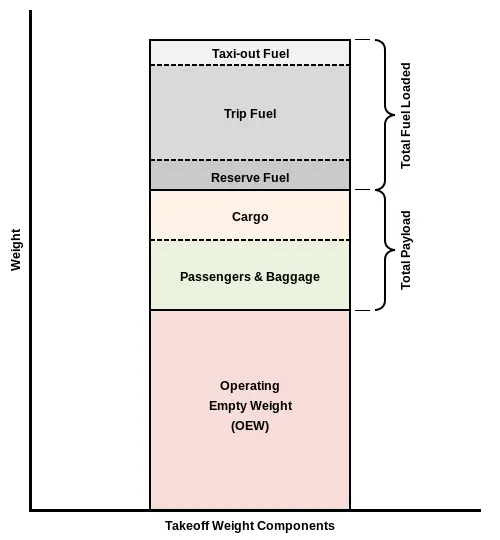
The various weight of aircraft are listed below:
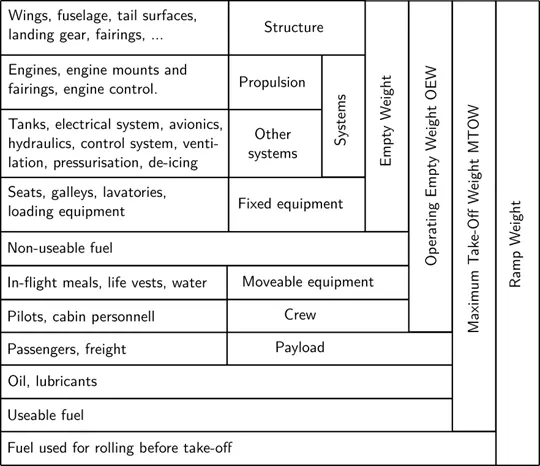
The aircraft weight are shown in simplified form
- Basic Empty Weight (BEW)is the weight of the aircraft "as built" and includes the weight of the structure, power plant, furnishings, installations, systems and other equipment that are considered an integral part of an aircraft before additional operator items are added for operation.
- Dry Operating Wieght (DOW)BEW + Weight of Crew (Pilot + Cabin including their bags) + Pantry
- Operating Weight (OW)DOW + Takeoff fuel (i.e. Ramp Fuel - Taxi fuel)
- Maximum Zero Fuel Weight (MZFW)DOW + Payload (anything put on the aircraft that generates revenue to the company, e.g. passenger, baggage, cargo, mail and fret)
- Maximum Taxi Weight (MTW)MZFW + Ramp fuel
- Maximum Takeoff Weight (MTOW)MZFW + Takeoff fuel, or MTW - Taxi fuel
- Maximum Landing Weight (MLW)MTOW - Trip Fuel
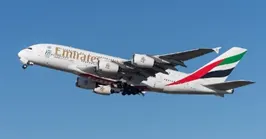
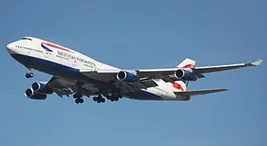
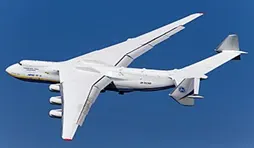
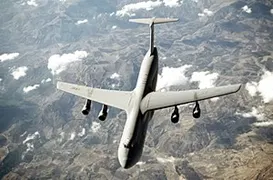
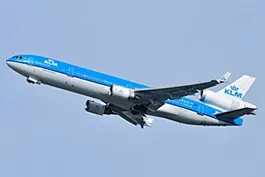
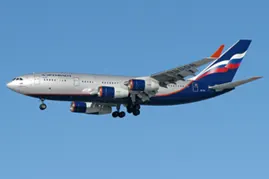
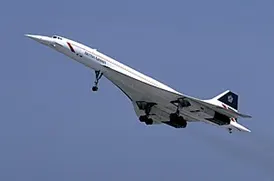
| Type | MTOW [kg] | MLW[tonnes] | AIRCRAFT MODEL |
| Airbus A380 | 575,000 | 394 |
|
| Boeing 747-400 | 412,770 | 295.742 |
|
| Antonov An-225 | 640,000 | 591.7 |
|
| Lockheed C-5 Galaxy | 381,000 | 288.417 |
|
|
McDonnell Douglas MD-11 |
273,300 | 185 |
|
| Ilyushin Il-96M | 270,000 | 195.04 |
|
| Concorde | 185,000 | 111.1 |
|
| Vickers VC 10 | 152,000 | 151.9 | |
| Tupolev Tu -154 | 104,000 | 80 |
RESULT:
Thus the total weight of various types of aircraft are explained clearly.
STUDY 2:
The difference between air speed and ground speed is shown below.
|
AIR SPEED |
GROUND SPEED |
|
The speed at which the aircraft is moving relative to the air it is flying. |
The horizontal speed of an aircraft relative to the Earth’s surface. |
|
It determines whether there is enough airflow around an aircraft to fly. |
It determines how fast the aircraft will reach destination. |
|
Air speed = Ground speed – Wind speed |
Ground speed = Air speed + Wind speed |
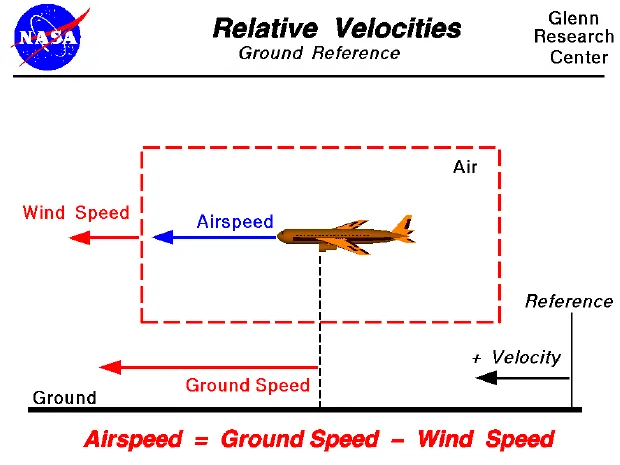
In calculation with air speed and ground speed , the wind speed plays a vital role.Depending upon the magnitude and direction of wind speed the air speed and ground speed can be calculated.
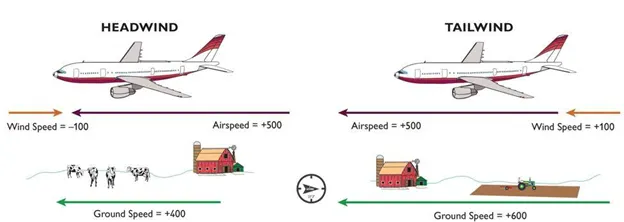
If the aircraft is moving in the opposite to the direction of the wind blowing,the aircraft experiences a headwind which results in airspeed greater than wind speed.
If the aircraft is moving in the same direction as the wind blowing,the aircraft experiences a tailwind which results in ground speed greater than air speed.
RESULT:
Thus the difference between air speed and ground speed are clearly explained.
STUDY 3:
The aircraft movement in the ground under its own power is called Taxiing
- Huge amount of fuel is required to run the aircraft on ground so taxiing fuel can be saved for aircraft flying.
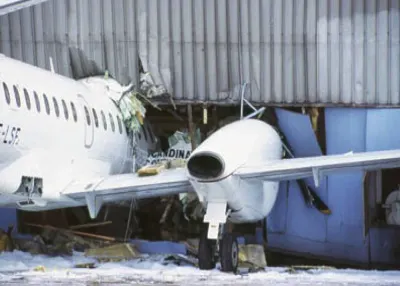
- The aircraft engine produce huge noise which affects the passenger comfort and surrounding of the airport.
- Effective loss of control takes place which result in severe damage to aircraft or nearby airside structure.
- There is a risk of injury to ground support personnel who may be in close proximity to the aircraft.
- When the engine power is used, the propeller blades start rotating which pulls the dust and other particles on the ground into it and cause damage to propeller blades.
- The propeller will causes a lot of wind disturbance which will create a problem to nearby building and other aircraft.
RESULT:
Thus the above reason tells about the harmful effect of using engine power to move on the ground in airport.
STUDY 4:
Pushback
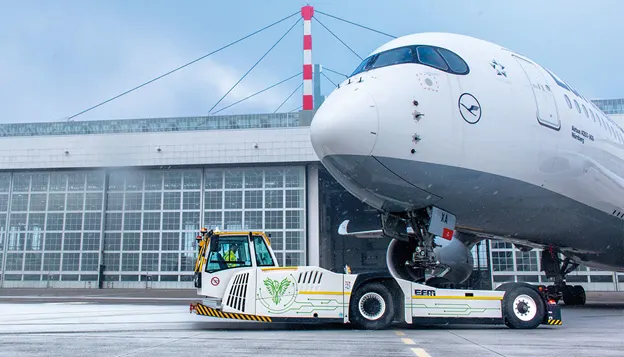
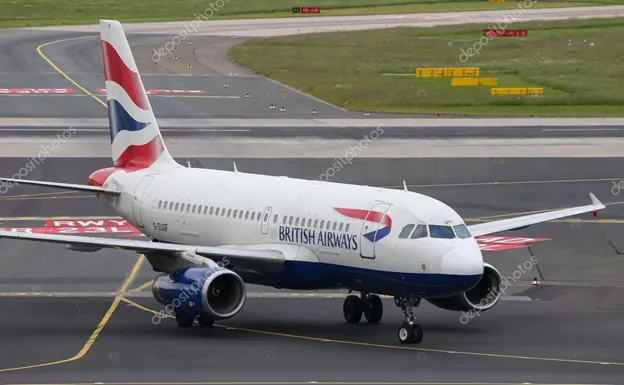
- Pushback is when an aircraft is pushed backward away from airport gate by vehicles called tugs or tractors
- Close to departure,an aircraft tug will park in the front of the nose wheel.
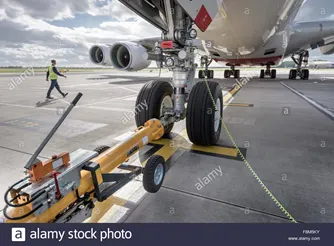
- The tug might be directly attached to the plane’s nose gear with a tow bar or could be wheel -lift tug.
- These tug cradle the nose gear,then lift it up before moving the plane which gives the control over the plane’s direction during pushback.
- New technologies are appearing like pilot controlled tugs and electric motors mounted to the landing gear.
Towing of Aircraft
Movement of large aircraft about the airport, flight line, and hangar is usually accomplished by towing with a tow tractor (sometimes called a “tug”).In the case of small aircraft, some moving is accomplished by hand pushing on the correct areas of the aircraft.Aircraft may also be taxied about the flight line but usually only by certain qualified personnel.
Towing aircraft can be a hazardous operation, causing damage to the aircraft and injury to personnel, if done recklessly or carelessly.However, specific instructions for each model of aircraft are detailed in the manufacturer’s maintenance instructions and are to be followed in all instances.
Taxing
- Taxing is controlled by movement of the airplane under its own power while on the surface.In contrast with towing and pushback an aircraft is moved with the tug.
- An aeroplane uses taxi ways to taxi from one place on an airport to another.
- The term taxing is not used for accelerating run along a runway prior to takeoff,or the decelerating run immediately after the landing which are called takeoff roll or landoff roll respectively.
RESULT:
Thus the various methods used to push the aircraft to runway when it is ready totake off are explained.
STUDY 5:
Takeoff is the phase of flight in which an aerospace vehicle leaves the ground and becomes airborne. For light aircraft, usually full power is used during takeoff. Large transport category (airliner) aircraft may use a reduced power for takeoff, where less than full power is applied in order to prolong engine life, reduce maintenance costs and reduce noise emissions. In some emergency cases, the power used can then be increased to increase the aircraft's performance. Before takeoff, the engines, particularly piston engines, are routinely run up at high power to check for engine-related problems.
Fixed-wing aircraft are designed for high-speed operation (such as commercial jet aircraft) have difficulty generating enough lift at the low speeds encountered during takeoff. These are therefore fitted with high-lift devices, often including slats and usually flaps, which increase the camber and often area of the wing, making it more effective at low speed, thus creating more lift. These are deployed from the wing before takeoff, and retracted during the climb. They can also be deployed at other times, such as before landing.
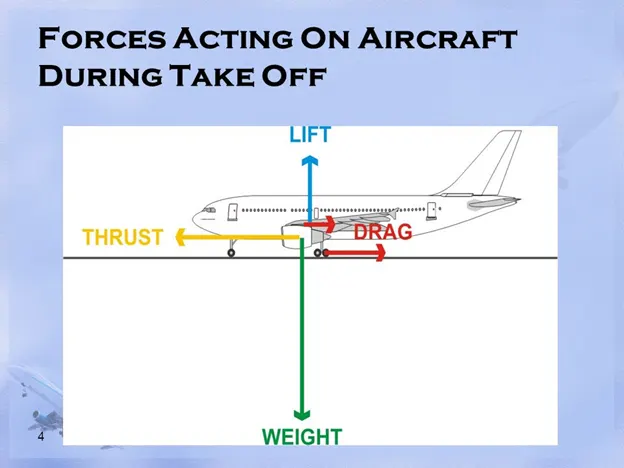
The force required during takeoff are
Thrust:It is the main force that provides positive direction.It is related to engine power.To maintain level flight at constant speed,constant thrust is required.To climb or descend the aircraft while maintaining at constant speed thrust must be increased or decreased.
Drag: The force which opposes the relative motion of object through air.It always opposes the motion of object.The force that act opposite to the thrust is called drag.
Lift: It is the force that goes up, it starts as soon as the plane speed increases. It varies between zero at the time of break released and it is equal to the weight at the moment the wheels start to leave the ground.
Weight: It is the force that act due to center of gravity.It includes the total weight of aircraft.
Design and Construction of Aircraft tyre
Carcass plies are used to form the tire. They are also called casing plies. An aircraft tyre is constructed for the purpose it serves.
- They support the weight of an aircraft while it is on the ground.
- It also provides the necessary traction for braking and stopping of an aeroplane.
- Tyre also helps to absorb the shock of landing and provide cushioning the roughness of takeoff, roll-out, and taxi operations.
Aircraft tyre does not want to carry a load for long period of continuous operation.However it absorbs the high impact loads on landing and also operates at a high speed when required.
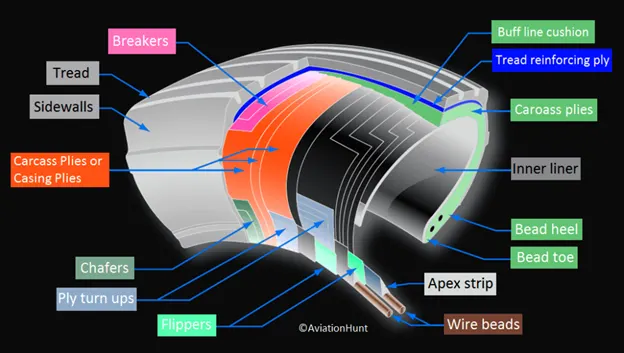
The technical aspects of the tyre are listed below
Retreading – Retreading is methods of restoring a worn tyre by renewing the tread area or by renewing the tread area plus one or both sidewalls. Repairs are included in the tyre retreading process.
Load Rating – Load rating is the maximum permissible load at a specified inflation pressure.
Ply Rating – Ply Rating is used to identify the maximum recommended load rating and inflation pressure for a specified tyre. It is an index of tyre strength.
Speed Rating – The speed rating is the maximum takeoff speed to which the tyre has been tested.
Skid Depth – Skid depth is the distance between the tread surface and the deepest groove as measured in the mould.
Aircraft tyres must have an approved speed and load rating and have sufficient clearance when retracted through landing gear to allow for tyre growth. Tyre growth is the increase in the size of the tyre due to centrifugal forces at high speed.
Tubless or tube?
Tubeless tyres are more advantageous over tube-type. There is no longer the use of tube-type tyre in recent aviation. Nowadays all airliners are using tubeless tyres. Tubeless that are meant to be used without a tube has the word TUBELESS on the sidewall of the tyre.
Radial or bias?
Almost all airliners are using Radial tyre. Bias is an older design, and it’s mainly used for road vehicles. Radial tyres have the word RADIAL on the sidewall. Radial tires are more expensive than bias-ply tyres. Radial tires are in demand because of their lower life cycle cost and long term value.
Conductive:aircraft are made conductive to dissipate(ground) any static charge that may have developed on aircraft.
Rolling resistance
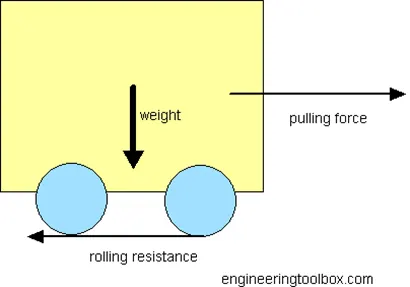
The force that resist the motion of body rolling on surface is called rolling resistance.It is mainly caused by non elastic effects i.e not all energy required movement for deformation of the wheel,roadbed .etc is recovered when the pressure is removed.It also caused by lying in slippage between the wheel and surface which dissipates energy.
The rolling resistance coefficient is calculated as
F = Crr*N
where F = rolling resistance force
Crr = dimensionless rolling resistance coefficient or coefficient of rolling friction
N = Normal force,the force perpendicular to the surface on which the wheel is rolling
Some of the rolling resistance coefficient values are listed below
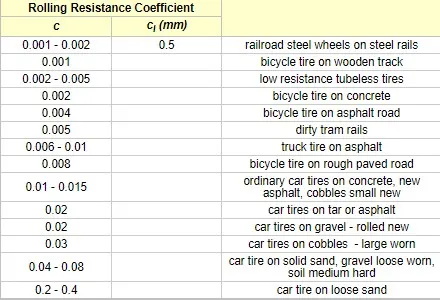
Tyre pressure:
Tyre pressure is measured by calculating the amount of air that has been pumped into the inner linning of your tyre in pounds per square inch (PSI) or Bar pressure.
Aircraft tries generally operate at high pressure upto 200 psi(14 bar) for airlines and even better for business jet. The main landing gear on the Concorde was typically inflated to 232 psi (16.0 bar), while its tail bumper gear tires were as high as 294 psi (20.3 bar). The high pressure and weight load on the Concorde tyres were a significant factor in the loss of Air France Flight 4590.
The percentage of tyre pressure determines the condition of tire condition are shown below.
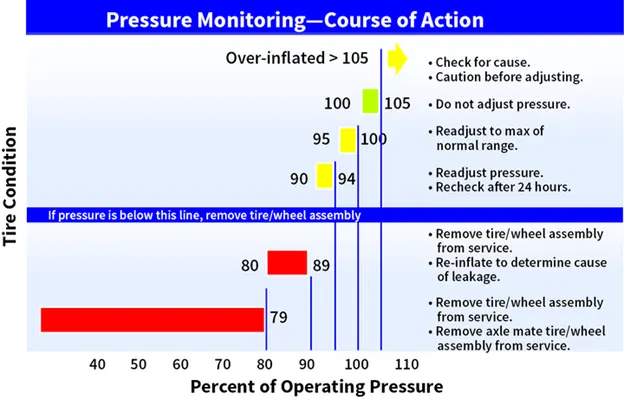
Brake force when landing
Aircraft brakes stop moving an aircraft by converting its kinetic energy to heat energy by means of friction between rotating and stationary discs located in brake assemblies in the wheels.Brakes provide this critical stopping function during landing to enable airplane to stop within the length of the runway.They also stop aircraft during rejected takeoff events,in which an attempted takeoff is cancelled as the airplane is rolling down the runway before it lifts off from the ground due to engine failure,tire blowout,other system failure or direction from air traffic control.
Aircraft brakes also prevent motion of the aircraft when it is parked,limit its speed during taxiing and can even help steer the aircraft on the ground by applying different levels of braking force to the left and right side brakes.
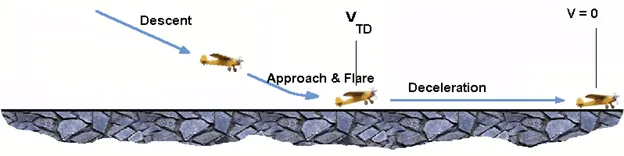
The touch down velocity should be approximately the stall speed of the aircraft in landing configuration. This will be achieved by increase drag an decelerate the aircraft to minimum flying speed.
The deceleration on the landing roll from VTD to V0 will be accomplished by braking and reverse thrust.
dv/dt = -T-D-F/m
where T=thrust force
D=aerodynamic drag force
F= rolling resistance force
M = mass of the aircraft
-dv/dt is deceleration
So braking force will be mass *deceleration.
RESULT:
Thus the takeoff power,rolling resistance,tyre design,tyre pressure,break froce when landing are clearly explained.
STUDY 6:
Let us take a Boeing 747-400 aircraft
Weight of the aircraft = 1,83,500 kg
Weight of the towing vehicle = 40,000kg
Coefficient of rolling resistance = 0.004
Coefficient of friction = 0.002
Gravitational constant(G) = 9.81
Height = 19.4m
Width(Wingspan) = 64.4m
Frontal area = Width *Height
= 64.4*19.4
= 1249.36 m^2
Speed = 5 m/s
Drag coefficient(Cd) = 0.45
Air density(ρ) = 1.25
The rolling resistance force of an aircraft is
Frr = µrr *m*g
Where m = mass of aircraft
µrr = coefficient of rolling resistance
g = gravitational constant
Frr = 0.004*183500*9.81
= 7201 N
The rolling resistance force of towing vehicle is
Ftr = µrr*m*g
= 0.002*40000*9.81
= 1569.6
= 1570N
The drag force is
Fdr = ½*ρ*A*Cd*v^2
= 0.5*1.25*1249.36*0.45*(5)^2
= 0.5*1.25*1249.36*0.45*25
= 8784.5
= 8785
The total force = Rolling resistance force + Rolling resistance with towing vehicle + Drag force
= 7201+1570+8785
= 17556 N
Power calculation
Power = F*v
= 17556*5
= 87.78 KW
Torque calculation
Tyre radius(r) =0.5
Torque = F*r
= 17556*0.5
= 8.778 KNm
RESULT:
The force or power required to pull the aircraft is 87.78 KW.The torque required to pull the aircraft is 8.778 KNm
STUDY 7:
The parameters assumed for design of electric powertrain are shown below.
|
Parameters |
Value |
|
Mass of aircraft(Boeing 747-400) |
183500kg |
|
Rolling resistance |
0.004 |
|
Height |
19.4m |
|
Width |
64.4m |
|
Frontal area |
1249.36m3 |
|
Drag coefficient |
0.45 |
|
Speed/velocity |
5m/s |
|
Air density |
1.25kg/m3 |
|
Gravitational constant |
9.8m2 |
|
Mass of towing vehicle |
40000kg |
|
Coefficient of frictional resistance |
0.002 |
|
Drag coefficient of towing vehicle |
0.35 |
|
Radius of tyre |
0.5 |
|
Time for towing |
15min |
Calculation of Energy
E = P*t
where E = Energy (J)
P = Power (W)
t = time (t)
From the study 6 we obtained power required to pull aircraft by towing vehicle.
P = 87.78 KW
Let us consider the operating time to be 15min(900sec).From this we can calculate the energy required to push an aircraft by towing vehicle.
E = P*t
= 87780*900
= 79002 KJ
To convert the KJ to Kwh divide by 3600
E = 79002000/3600
= 21.945 kwh
The battery must be able to store 21.945 kwh and should deliever throughout the run time inorder to produce torque of 8.778 KN-m.
Motor Rating
In this model we use three phase induction motor.The specifications are given below
|
1. Motor rating in kw |
110 |
|
2. Horse power |
150 |
|
3. No.of phases |
3 |
|
4. Frequency(Hz) |
50 |
|
5. Efficiency |
94.5% |
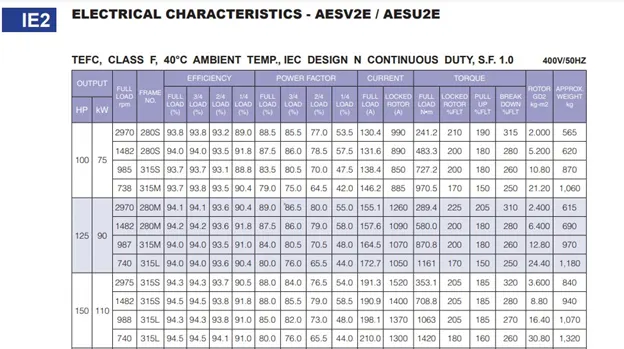
Duty cycle:
The duty cycle is the ratio of output power by input power.The input power is 110kw.
Duty cycle = Output power/Input power
= 87.78/110
= 0.79
Thus the duty cycle range to control the aircraft speed from zero to highest 0 to 79%.
BLOCK DIAGRAM:
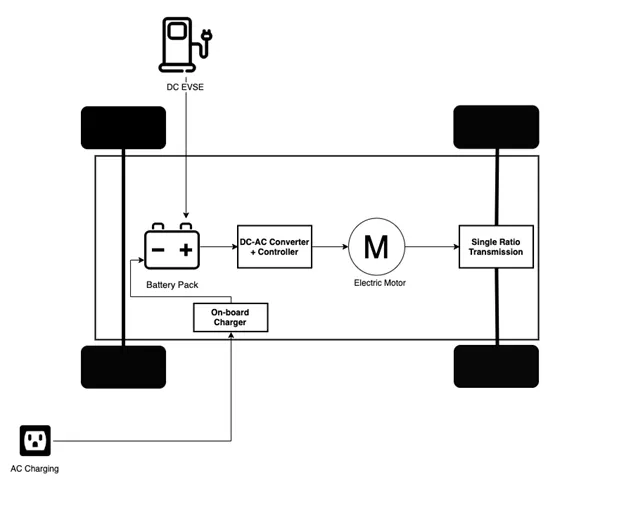
RESULT:
Thus the design of electric powertrain is done successfully.