Project-1: Modelling an electric Car with Li-ion battery
Project :
Create a MATLAB model of electric car which uses lithium ion battery and suitable motor. Choose suitable blocks from Simscape or Powertrain block set. Implement the vehicle speed control using PI controller and generate brake and accelerator commands. Avoid using readymade driver block for speed control.
Aim of the Project
To build a simulink model for Electric car using Lithium ion battery and suitable motor using PI controller.
Introduction
And electric vehicle is a vehicle that uses electric motors for propulsion. This type of vehicles use electricity instead of fuels. Because of this, electrical vehicles do not produce any exhaust gases or pollution.
System level configuration
1.Drive cycle
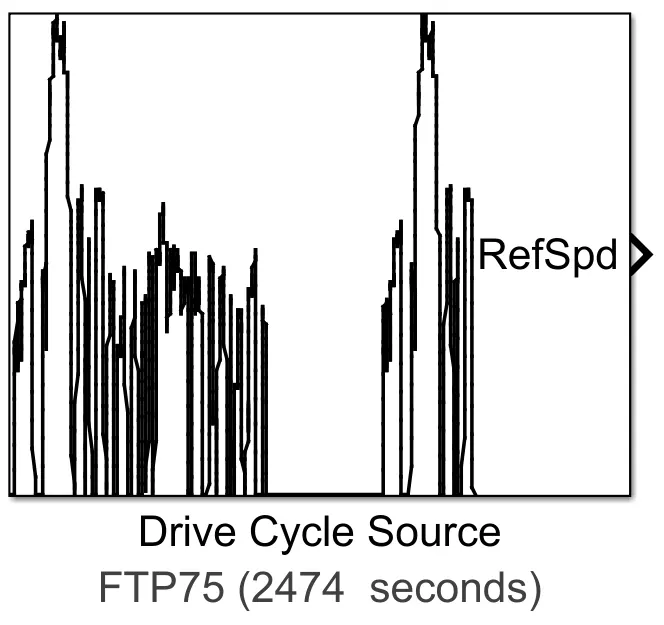
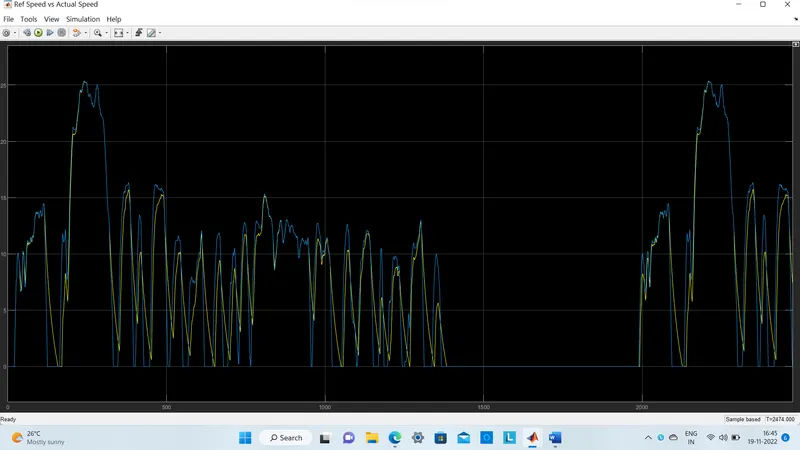
I considered a FTP 75 drive cycle as a reference velocity in which the test duration would be 2464 seconds.
2. PI controller sub system
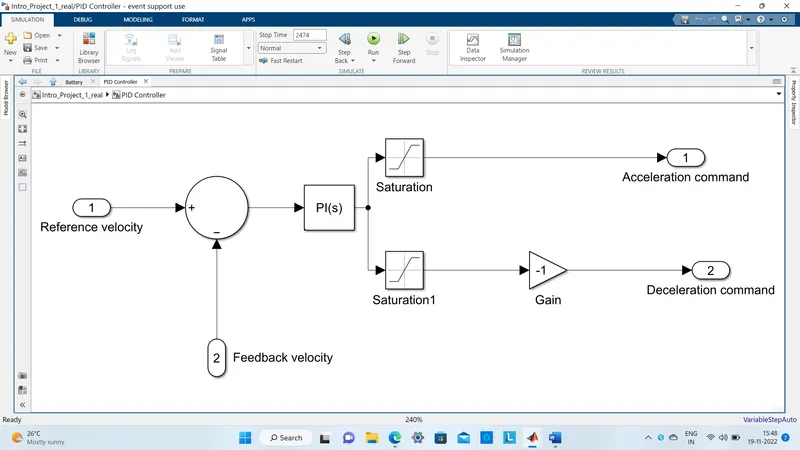
Sum block
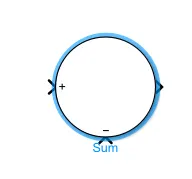
This block is used to subtract feedback velocity from reference velocity. And this output is given to PI to generate acceleration and deceleration commands.
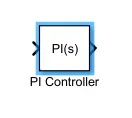
PI controller
Parameters
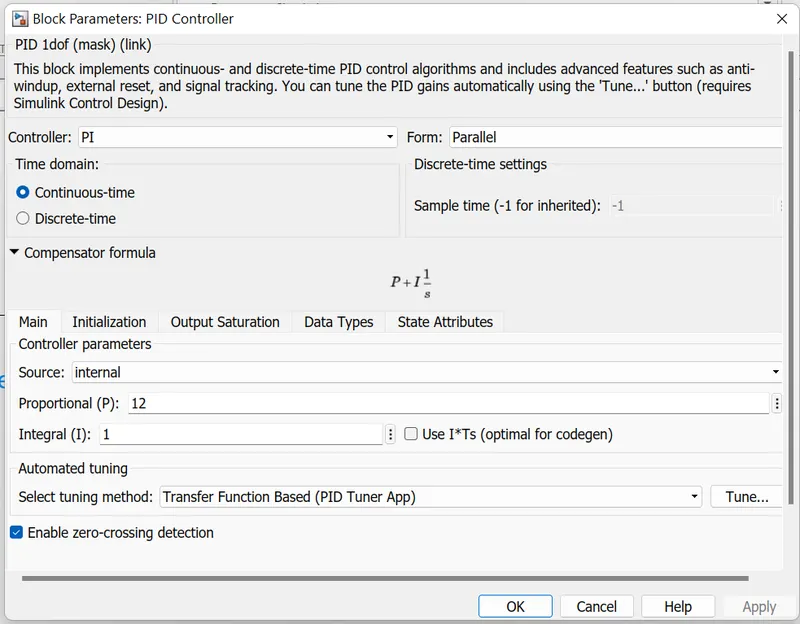
Based on the output generated by the sum block this PI controllers generates acceleration and deceleration commands
Saturation block
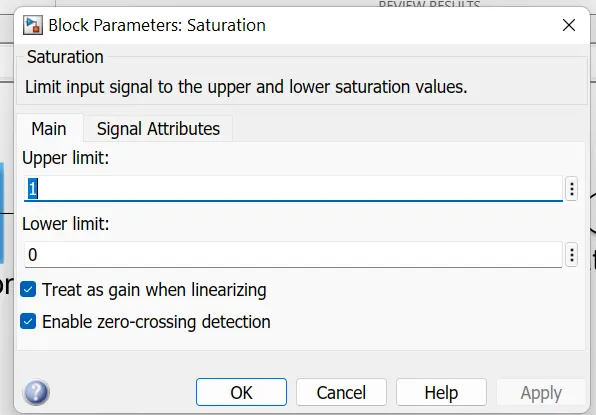
parameters of saturation block used for acceleration
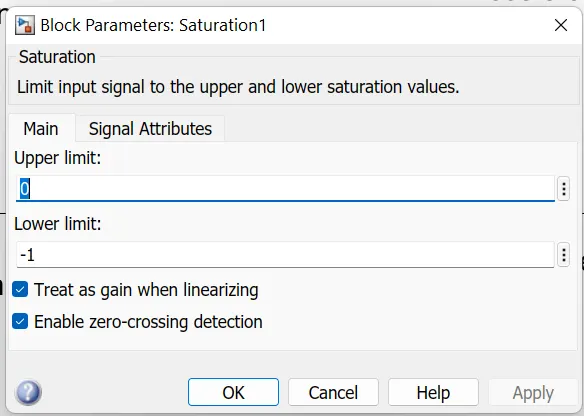
parameters of saturation block used for deceleration
These blocks helps to separates acceleration and deceleration values and is given to the motor controller.
Motor controller subsystem
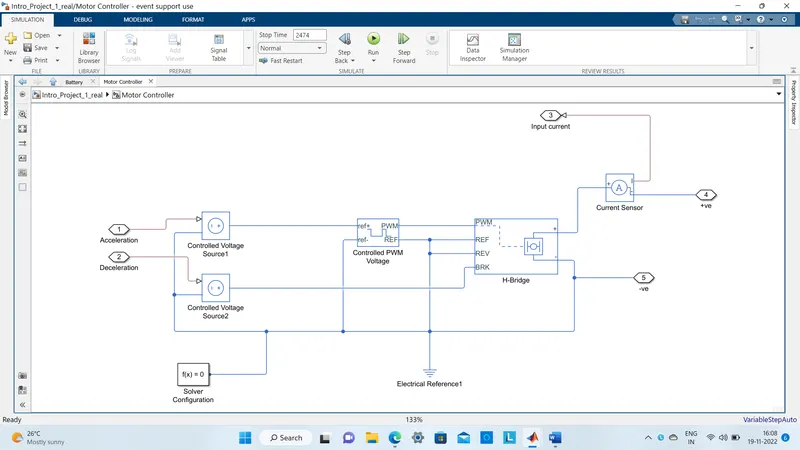
H bridge block along with inbuilt PWM block, together considered as a motor controller
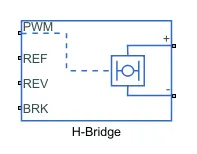
H – bridge
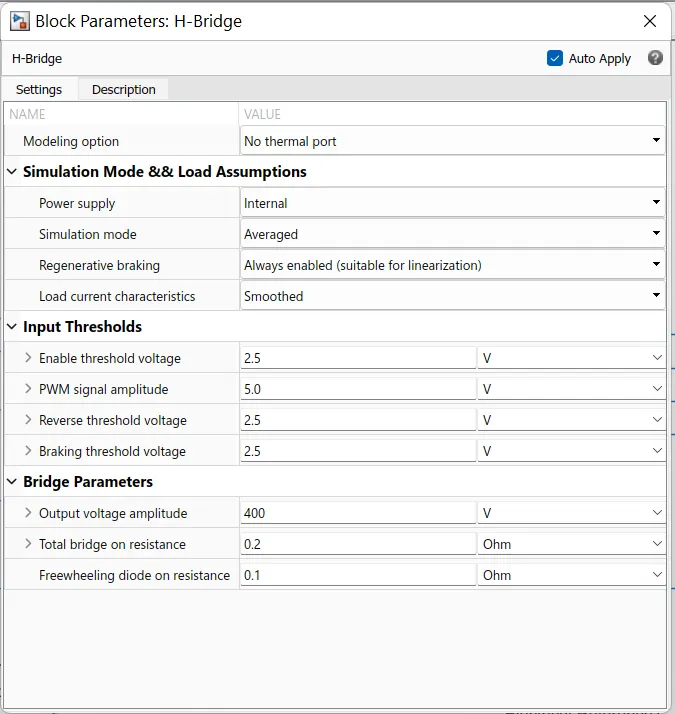
Parameters of H bridge
This block represents an H Bridge motor drive. The block can be driven by controlled PWM voltage block in PWM or averaged mode.
In PWM mode, the motor is powered if the PWM port voltage is above the enabled threshold voltage.
In averaged mode, the PWM port voltage divided by PWM signal amplitude parameter defines the ratio of the on time to the PWM period.
Here PWM is connected to the PWM block (pulse input).
REF is for the reference input. This is combined with PWM reference. Here references input is connected to the electrical reference.
REV corresponds to the reverse motion of the vehicle. This port is connected to the electrical reference.
BRK is for the braking of the vehicle.
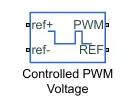
PWM block
Parameters of PWM block
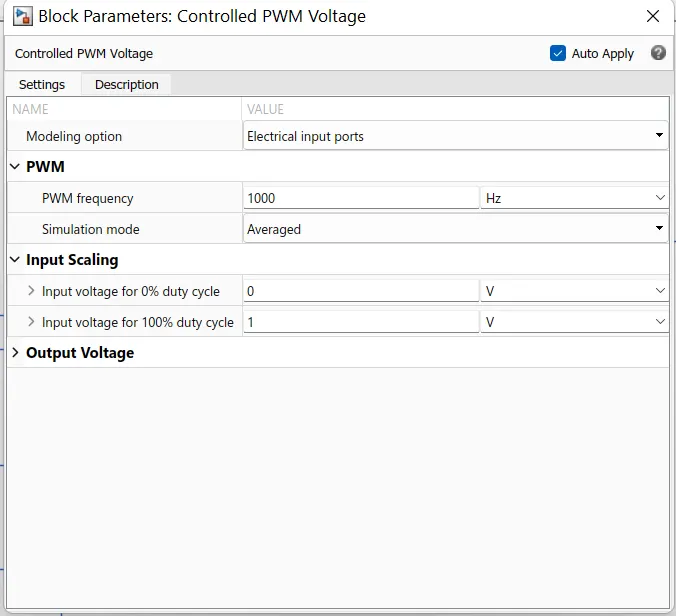
This block is used for providing the proper pulse input to the H bridge circuit.
Pwm and REF connections are for the corresponding ports on the H Bridge circuit.
The 2 reference inputs correspond to the throttle input given by the driver. The block generates corresponding pulse width as per the acceleration and brakes applied by the driver himself.
Controlled voltage source
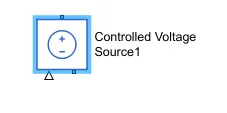
This block is used to maintain specified voltage regardless of current.
Current sensor
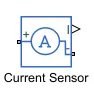
This block is used to measure the flow of current.
DC Motor
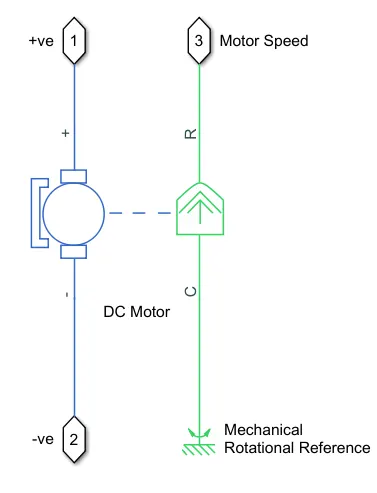
This is the DC motor which would give the rotational power to the wheels. The DC motor terminals are connected as
+ve to the +ve electrical signal
-ve to the -ve electrical signal
R port is the rotational output of the motor
C is the casing of motor and is connected to the mechanical rotational reference
Battery subsystem
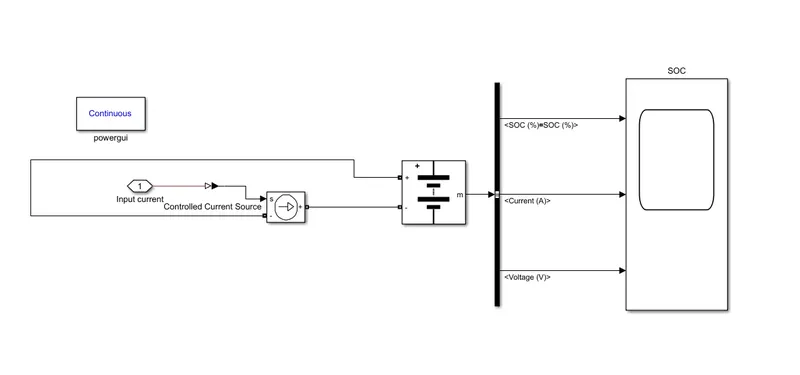
Controlled current source
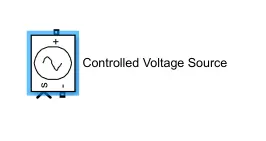
This block is used to convert simulink input signal to equivalent current source.
Li ion Battery
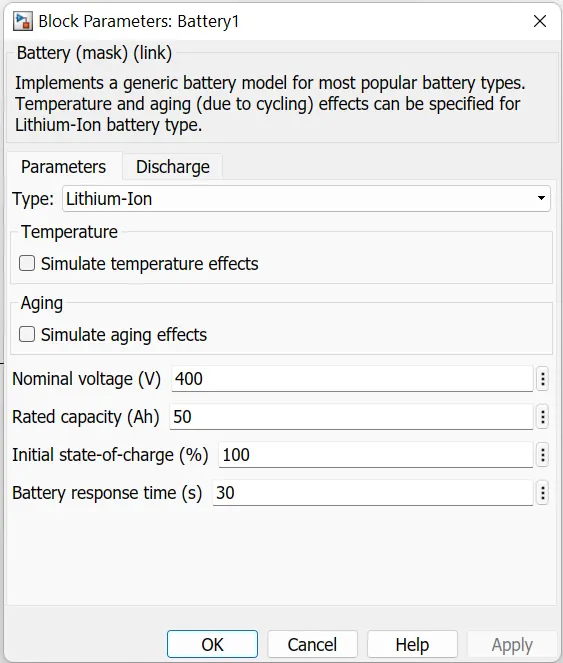
Parameters of the battery block
This block represents lithium ion rechargable battery.
The battery charge capacity is finite. Nominal voltage is taken as 400. Ampere hour rating is assumed to be 50. All the remaining parameters are default.
SOC is also indicated by this battery only. To see the discharge of battery polarity is changed and then connected to scope.
Vehicle body subsystem
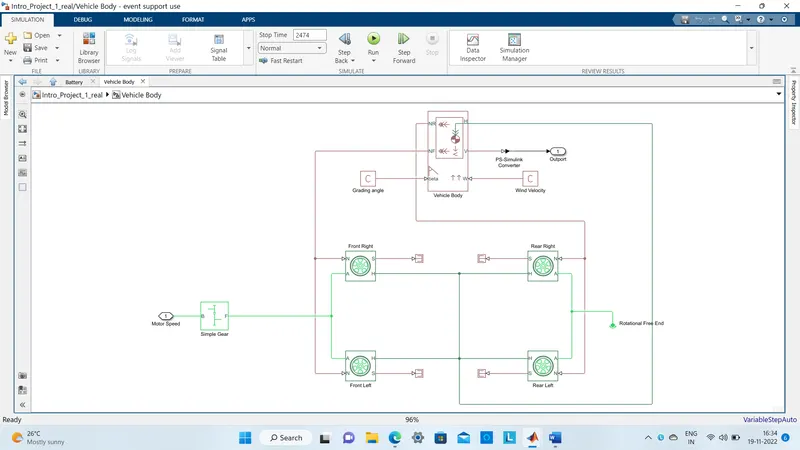
Vehicle body
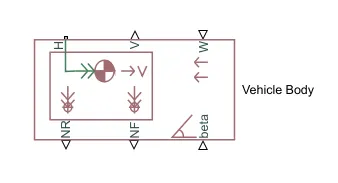
This represents a 2 axle vehicle body in motion. This accounts for body mass, aerodynamic drag grade and centre of gravity of the vehicle body.
Input ports
W – wind velocity
Beta – grade angle
Output ports
V – velocity in m/s
NF - Normal force on front axle
NR – Normal force on rear axle
Vehicle body parameters
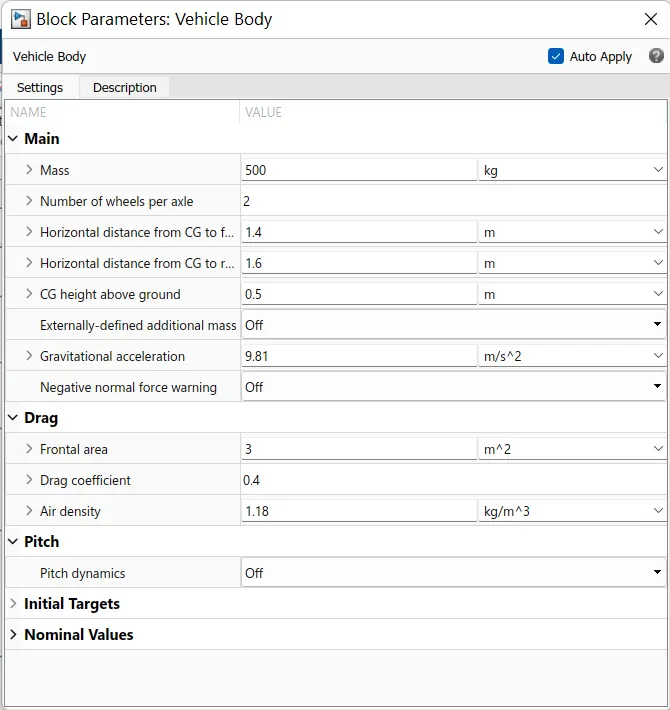
Tires
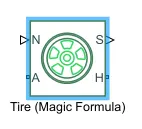
Input ports
N – Normal force acting on tire
Output ports
S – Slip related to tire and contact surface
Conserving ports
H – Represents wheel hub
A – Represents alxe
Gear
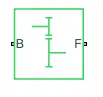
Conserving ports
S – Port associated with input shaft
O – Port associated with output shaft
This block is used to rotate with a fixed ratio which is specified.
Results
Reference velocity vs Actual vehicle velocity
Distance travelled
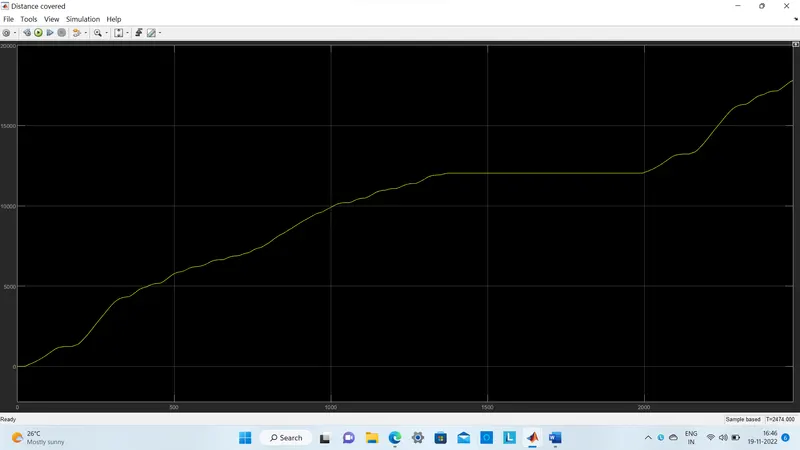
Total distance travelled by the vehicle is 17.8 km
SOC (%)
