Project 1 Mechanical design of battery pack
Prepare a detailed battery pack drawing along with its enclosure. State your assumptions.
Understanding the Battery Pack:
Cell:
A cell refers to a single anode and cathode separated by electrolyte used to produce a voltage and current. A battery can be made up of one or more cells.
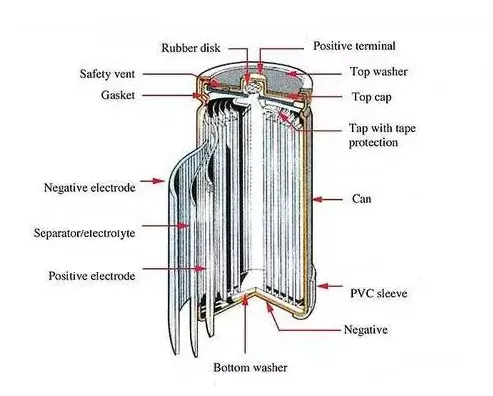
Battery:
A battery is a collection of similar cells grouped to perform a function. The cells convert chemical energy to electrical energy. The type of elements contained within a battery and the chemical reactions during discharging and charging events make the chemistry of a battery. The battery cell consists of five major components: Electrodes (anode and cathode), separators, Terminals, electrolytes, case, or enclosure.
Battery Pack:
A battery pack is a set of any number of identical batteries or individual battery cells. They may be configured in a series, parallel, or a mixture of both to deliver the desired voltage, capacity, or power density. The term battery pack is often used for cordless tools, radio-controlled toys, and battery electric vehicles. Each battery within the pack will have interconnections internally as well as external ones. The material used for these connections will be based on whether the battery pack will be designed to provide high power or low power for the application.
Considerations for Mechanical Design of Battery Pack:
Reliability and safety are two major considerations for large battery packs. Apart from these two, we need to follow some criteria to reduce the failure rate in the battery. The mechanical vibration should be decreased. High impact force should be controlled. The Thermal runaway should be better. The pack should be recyclable and it should provide good serviceability.
Battery Pack Assembly Components:
- Cells:
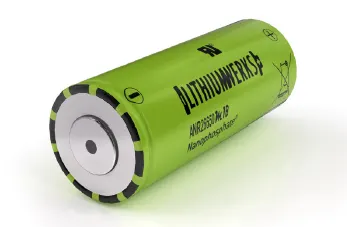
The cells used here are of type ANR26650M1-B. It is a lithium-iron-phosphate0 chemistry cell. These cells are safe over a wide range of temperatures and conditions. This cell offers a Nano-phosphate battery technology and has stable chemistry, faster charging, consistent output, excellent cycle life, and superior cost performance. It provides the foundation for safe systems while meeting the most demanding customer requirements.
Applications:
- Energy storage
- Uninterrupted Power Supplies
- Communication technologies
- Aerospace
- Electrified mobility devices
- Industrial equipment
- Medical devices
- Toys
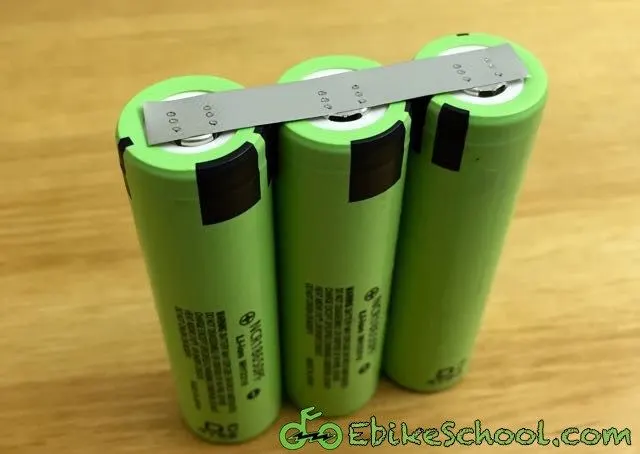
- Nickel Strips:
Nickel Strips are used for low-power cells. These are welded onto the cell terminals to make the internal interconnections while the external circuits will have gold-plated contacts. Nickel strip is generally used in battery building. It’s due to its efficiency of usage in spot welding and soldering as well as its high corrosion resistance over time. It has good properties and excellent resistance to many corrosive environments. The pure nickel will never get rust after it is applied to battery packs. It won’t affect the current transfer between batteries.

- PVC Heat Sink film:
PVC heat shrink tube is designed by polyvinyl chloride, through continuous expansion. It is widely used in batteries and packages.
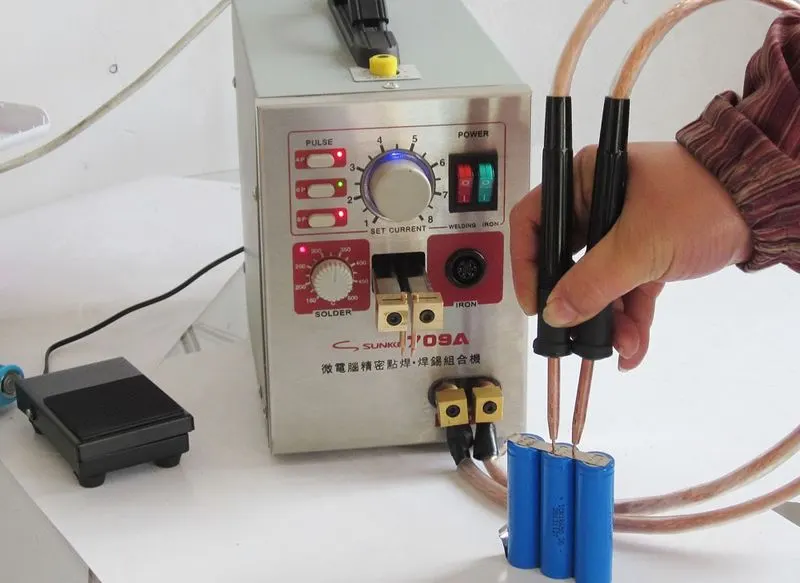
- Spot Welder:
Spot welder is used to weld the nickel strip to the cell terminologies
- Wire Connectors:
Wire Connectors are used to connect the cells to the module and the module to the battery pack.
Design Order:
- First, the battery cells are selected as per the requirement and cost. After the cells are selected, the basic cell calculations are done such that the cells meet the required energy to move the vehicle.
- The next step is to design the mechanical structure of the cell as per the calculations done and making sure that the numbers of cells in series and parallel types of connections are properly fixed.
- Next is to design the cell protection parts to reduce the heat dissipated and to protect the electrical wires and circuitry.
- A Control system should be required to control the charging and discharging of a battery and also to regulate the current flow to the vehicle. This gives the peak performance of the vehicle.

- It can summarize as the Configuration of Cell >> Structure of Pack >> Protection of pack >> Controlling the pack using BMS >> Using the pack in real-time conditions.

Battery Calculation:
Energy (required) = 18KWH
Nominal Voltage = 3.3V
Nominal Cell Capacity =2.5Ah
If the current is higher, the diameter of the high voltage wires is bigger and the thermal losses are higher. For this reason, the current should be limited to a maximum and the nominal power obtained by having a higher voltage. Let us consider a voltage of 300 V.
Battery Current Capacity,
`I= "Energy"/"Voltage"=18000/300=60Ah`
Battery Pack Architecture:
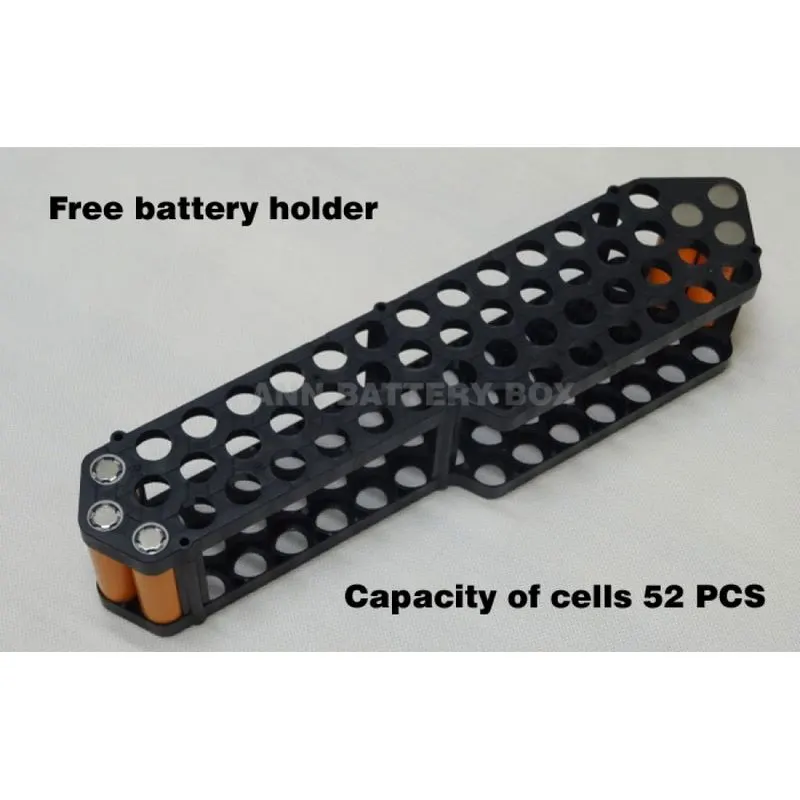
Individual battery cells may be grouped in parallel or/and series as modules. Further, battery modules can be connected in parallel and/or series to create a battery pack. Depending on the battery parameters, there may be several levels of modularity.
Series Connection:
The total battery pack voltage is determined by the number of cells in series.
Now to calculate the Number of Cell in series,
`N_s=("Battery Voltage Rating")/("Nominal Voltage Rating")=300/3.3=90.9≅93`
We took it as 93 cells because the cell size will increase and reduce it the cells are created into modules and then modules are connected and constructing the battery pack.
Here, since we’ve taken 93 cells, we can convert them into 3 modules of 31 cells each.
Parallel Connection:
To increase the current capability of the battery capacity, more cells have to be connected in parallel.
Calculating the Number of Cells in Parallel,
`N_p=("Battery Capacity")/("Nominal Capacity")=60/2.5=24`
The number of parallel cells attached is 24.
Total Number of Cells:
Total Cells = `N_s×N_p=93×24=2232`
The total number of cells in a battery to attain the 18KWH power is 2232 cells.
Cylindrical Design:
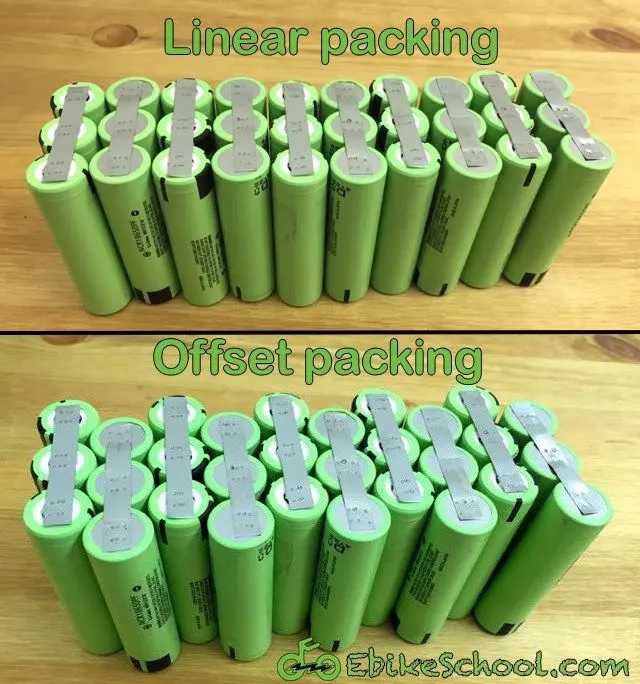
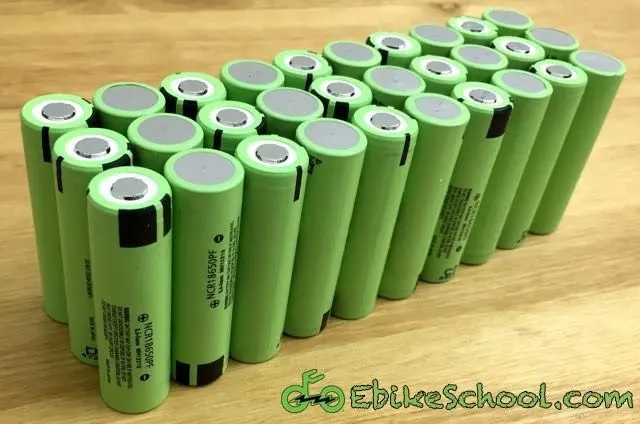
Cylindrical cells are cylindrical in shape and use up more space. They are the most commonly used cell type due to their lower cost. These are often used in laptop batteries and even EVs.
Cylindrical cells can provide a better automation process and techniques that increase consistency and can handle high internal pressures without deforming. They can be produced at a much faster rate and are cheaper. They also have better temperature control. Their main downfall is that they use up more space.
The battery has a diameter of 26mm and the length is 65mm.
D = 26 mm
L = 65 mm
To determine the Battery pack casing, we need to determine the battery size.
Length:
For the length of the casing,
`"Length" = "number of cells in series"xx"(Diameter of Cell" + "Tolerance {for the margins at the corners of the cell})" + "Clearance at the edges (module)"`
Let the tolerance be 2mm and the clearance at edges be 30 mm
`"Length" = [93 xx (26+2)] + 30 = 2604 + 30 = 2634 mm`
The length of the Battery pack case is 2634 mm.
Breadth:
For the breadth of the casing,
`"Breadth" = "number of cells in parallel" xx ("Diameter of Cell" + "Tolerance {for the margins at the corners of the cell}") + "Clearance at the edges"`
`"Breadth" = [24 xx(26+2)] + 30 = 672+30=702 mm`
Height:
For the Height of the Casing,
Let the case height be 30mm
`"Height" = "Height of the battery" + "case height along with clearance"`
`"Height" = 65 + 30 = 95 mm`
Weight:
For the weight of Battery pack,
Cell weight = 76g
Weight of accessories = 5.0Kg = 5000g
`"Battery pack weight" = "cell weight" xx "number of cells" + "weight of accessories"`
`"Weight" = 76 xx 2232 + 5000 = 169632 + 5000 = 174.632 Kg`
Volume of Each cell (`m^3`):
`V= (πD^2)/4×L`
`V= (π×26^2)/4×65`
`V = 34510.39 mm^3 "or " 3.451039e-5 m^3`
Battery Cell Energy:
`E= "Battery Cell Capacity"×"Battery Cell Voltage"`
`E= 2.5×3.3`
`E= 8.25 Wh`
Volumetric Energy Density (`(Wh)/m^3`):
`v= ("Battery Cell Energy")/("Volume of each cell")`
`v= 8.25/(3.451039e-5)`
`v = 244.853 (Wh)/m^3`
Range:
We need to calculate the distance the vehicle travels for the given energy until the battery is completely discharged. For this, we need to assume the powertrain energy consumption as 100Wh/km.
`"Range"= ("Battery Capacity")/("Powertrain Energy Consumed per Km")`
`"Range"= 18000/100`
`"Range" = 180 km`
Therefore, the vehicle travels 180kms on a single charge.
Note:
All the images are just for reference purposes.
References: