Project 1 Mechanical design of battery pack
Objective: - Mechanical Designing of Battery Pack
Battery Pack Design Component Required
|
S.No |
Components |
|
1 |
Cells (ANR26650M1B) |
|
2 |
Cells Holders |
|
3 |
Connectors Strips (Nickel /Copper ) |
|
4 |
BMS |
|
5 |
Enclosure (Aluminum / Stainless steel) |
|
6 |
Power Cables and Glands |
|
7 |
Insulation taps and Insulation material |
1-Cell data sheet
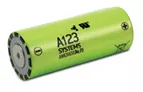
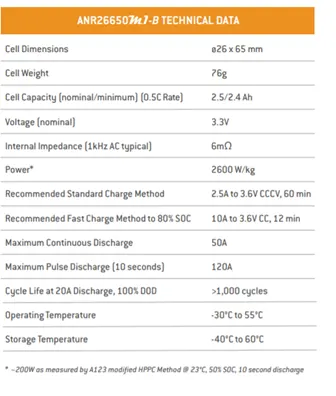
2-Cell Holders: - Provide a support for cell connection in series and parallel combination

3-Connectors:-Metallic strips used for battery connections using spot welding are made up of variety of material



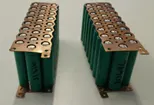
Nickel are generally used for spot welding as it is easily weld the cell but current carrying capacity is low as compare to copper .Copper can carry a large amount of current thus a combination of copper bus plate and small nickel tab can be used .
4-BMS :-
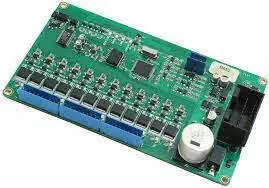
Battery Management System is very import component in a battery pack
Function:-
- Monitors battery Voltage, Current, SOC and Temperature to keep the pack in safe operating area.
5-Enclosure ,Power Cables and Gland : - Outer casing is the final covering of pack to protect it inner cells and electronics from vibration, shocks and water ingress.
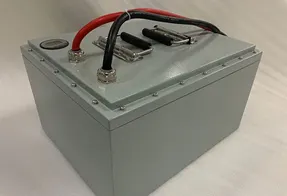
Mostly used enclosure materials are Aluminum, Stainless Steel and Mild Steel.
6-Insulation Taps and Insulation material:-

Insulation taps are commonly used as wire and cable wrap as well as protect the electrical component during soldering.
Mechanical Design of Battery Pack:-
Requirement:-18kWh battery pack using A123 26650M1B Cell
Calculation:-
- Wh =V*Ah
- Ah =Wh/V
- Number of cells in series Ns=System Voltage /Cell Nominal Voltage
- Number of cells in parallel Np=Battery Pack Capacity/Cell Capacity
- Total Number of Cell=Number of Series Cell*Number of Parallel Cell
- Battery Weight =Total Cell *Cell Weight
- Inner Pack Length =Number of cells in series *diameter of cell
- Inner Pack Width =Number of cells in parallel*diameter of cell
- Inner Pack Height =Cell Height
- Energy Density =Wh/Kg
- Volume m3 =Battery Pack length *Battery pack width *Battery pack height
- Volumetric Density =Wh/L
Note
- Wh=kWh*1000
- 1m3=1000L (L=m3/1000)
Consider 300V system
- Wh =V*Ah
- Ah =18*1000/300 =60Ah
- Number of cells in series Ns =300 /3.3 =90.9 cells ~ 91 S
- Number of cells in parallel Np=60/2.5 = 24 P
- Total Number of Cell=91*24=2184 Cells
- Battery Weight kg =2184 *0.076=165.98 ~ 166 Kg
- Inner Pack Length mm =91*26=2366 mm
- Inner Pack Width mm=24*26=624 mm
- Inner Pack Height mm=65 mm
- Energy Density (Wh/kg )=18*1000/166= 108.44 Wh/Kg
- Volume L =2366 *624 *65/1000=95.965 L
- Volumetric Density (Wh/L) =18*1000/95.965 (Wh/L)
Battery Back design options
|
Option |
KWh |
System Voltage (V) |
Capacity (Ah) |
Ns |
Np |
Total Cell |
Battery weight (Kg) |
Pack Length (mm) |
Pack Width (mm) |
Pack Height (mm) |
Energy density (Wh/Kg ) |
Volume of pack (L) |
Volumetric Density (Wh/L) |
|
91S24P |
18 |
300 |
60 |
91 |
24 |
2184 |
166 |
2366 |
624 |
65 |
108.444 |
95.965 |
187.568462 |
|
122S18P |
18 |
400 |
45 |
122 |
18 |
2196 |
167 |
3172 |
468 |
65 |
107.852 |
96.492 |
186.543498 |
|
Option |
KWh |
System Voltage (V) |
Capacity (Ah) |
Ns |
Np |
Total Cell |
Total Cost $ |
Total Cost Rs |
|
91S24P |
18 |
300 |
60 |
91 |
24 |
2184 |
14305.2 |
1062876.36 |
|
122S18P |
18 |
400 |
45 |
122 |
18 |
2196 |
14383.8 |
1068716.34 |
Observation
Based on Dimension and Weight
Both 122S18P and 91S24P both are approximately same with respect to its weight but with respect to dimension and space 91S24P is better
Based on Cost
We can save 8k to 10k cost with 91S24P configuration
Final Pack Design is 91S24P :-18kWh (60Ah/300V)