Project 1 Mechanical design of battery pack
AIM:
To design a battery pack for an electric vehicle.
THEORY:
A123’s high-performance Nanophosphate lithium iron phosphate (LiFePO4) battery technology delivers high power and energy density combined with excellent safety performance and extensive life cycling in a lighter weight, more compact package. Our cells have low capacity loss and impedance growth over time as well as high usable energy over a wide state of charge (SOC) range, allowing our systems to meet end-of-life power and energy requirements with minimal pack oversizing.
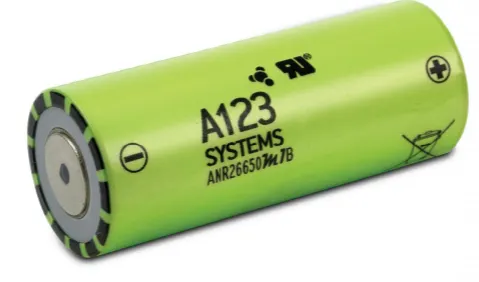
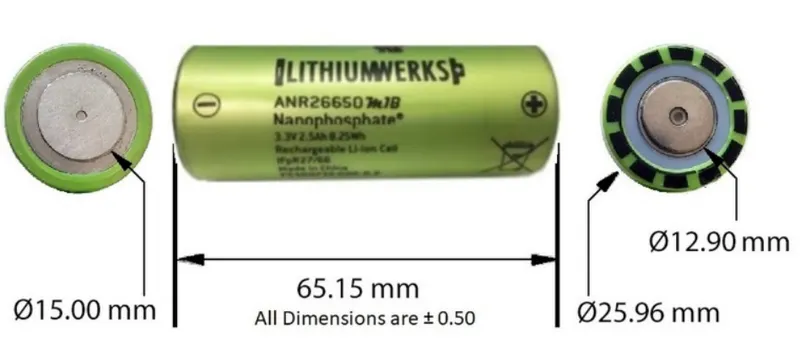
SPECIFICATIONS OF ANR26650M1-B CELL:
data sheet of ANR26650M1-B cell is shown below,
https://www.batteryspace.com/prod-specs/6610.pdf
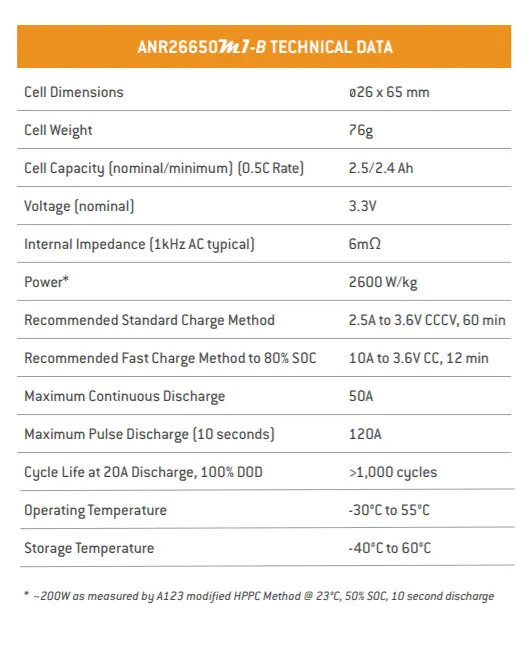
LithiumWerks ANR26650M1-B Specifications
Voltage: 3.3 Volts
Capacity: 2.5Ah
Dimensions
Diameter: 25.96 +/- 0.5 mm
Length: 65.15 +/- 0.5 mm
Mass: 76 g +/- 1.0 g
Features
The ANR26650M1-B is the next generation of A123 Systems’ pioneering 26650 cylindrical cell, now with greater power and energy density and lower impedance. This versatile lithium ion cell is suitable for a wide variety of applications and system designs. Proven performance in the toughest conditions, combining durability, reliability, and safety, the ANR26650 cell offers an excellent combination of price-performance.
Cylindrical Cell Primary Applications
- Portable high power devices
- Stationary battery backup systems
- Grid stabilization energy storage systems
- Commercial truck and bus hybrid electric vehicles (HEVs)
Nanophosphate® LiFePO4 Benefits
- Cycle Life at 1C/1C, 100% DOD, > 4000 cycles
- Safety: Excellent abuse tolerance and environmentally friendly
- Life: Excellent calendar life, 10X cycle life vs. conventional lithium ion
CALCULATION OF NUMBER OF CELLS REQUIRED:
the capacity of battery pack given is 18 Kwh.
the electric vehicle can operate between 300 V to 800 V
Let us assume , the electric vehicle operates at 300 V.
the cell ANR26650M1-B have voltage rating of 3.3 volt and 2.5Ah capacity.
1)thus total number of cells =18000/(3.3*2.5)=2182 cells
2)now number of cells in series= total voltage/ voltage of each cell
thus total number of cells in series=300/3.3=90.90 cells=91 cells
3)number of cells in parallel=2182/91= 23.97 cells =24 cells
thus for getting 18 Kwh capacity , we will require 91 series cell and 24 parallel cells.
STEP BY STEP PROCEDURE FOR DESIGNING OF BATTERY PACK
1)
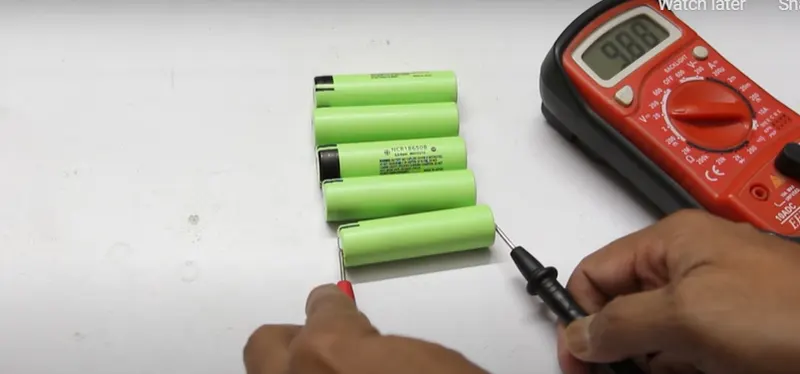
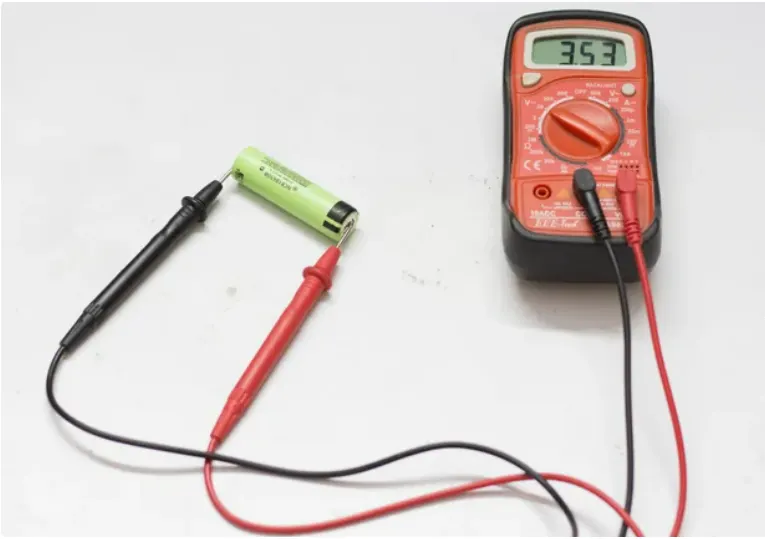
Before connecting the cells in parallel, first, check the individual cell voltages. For paralleling the cells, the voltage of each cell should be near to each other, otherwise, a high amount of current will flow from the cell with a higher voltage to the cell with a lower voltage. This can damage the cells and even result in fire on rare occasions.
If you are using brand new cells, the cell voltage is near 3.3 V to 3.5 V, you can join them together without worrying much. otherwise, charge the cells to the same voltage level by using a good Li-Ion Battery Charger.
2)
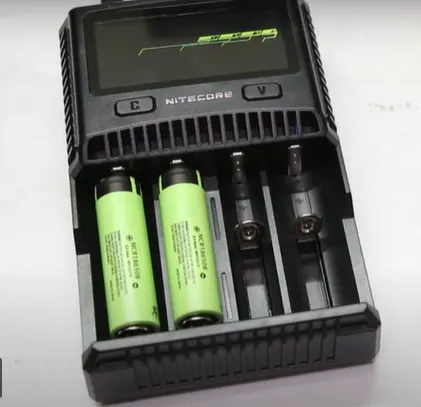
the cell which have low voltage is to be charged by battery charger shown above.
3)
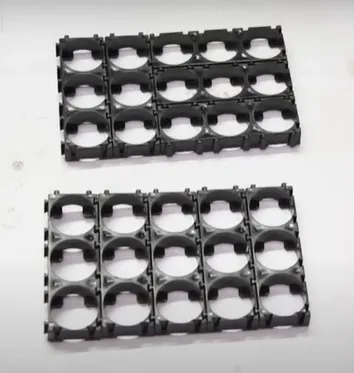
take battery holder and assemble the cells into it.
The main advantages of using these cell holders are
1. You can make a custom pack of any size according to your requirement.It's like solving a puzzle.
2. It provides space between the cells, which allow fresh air to pass and the battery gets cooled easily.
3. It makes your battery pack solid and reliable.
4. It provides safety anti-vibration to your battery pack
4)
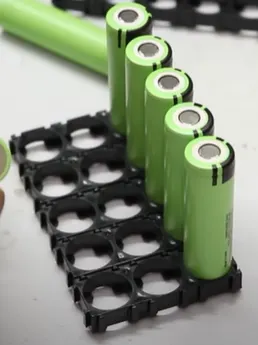
insert cells with positive terminal upward
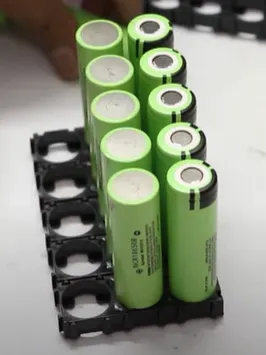
then in next row , insert cell with negative terminal upward.
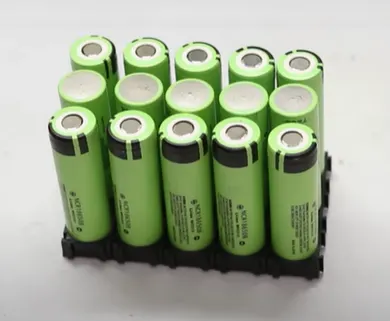
again in next row ,insert cells with positive terminal upward
5)
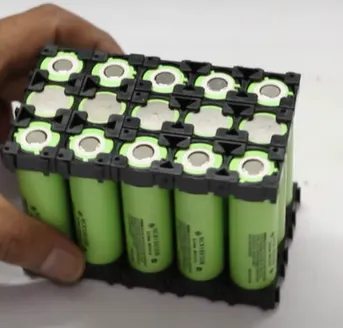
allign the battery holder and secure it.
6)
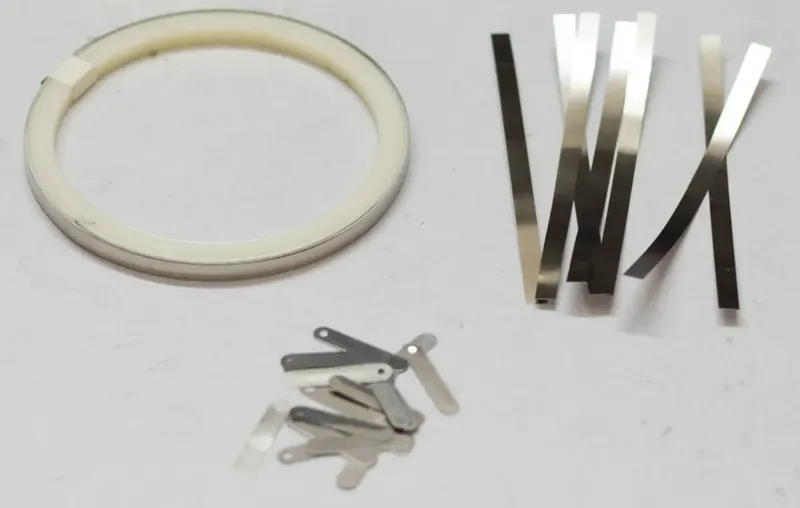
To make the battery pack, you have to connect the ANR26650M1-B cells together by means of Nickel strips or thick wire. Generally, Nickel strips are widely used for this. In general two types of nickel, strips are available in the market: nickel-plated steel strips and pure nickel strips. usually pure nickel strip ar used. It is a little bit costlier than nickel-plated steel, but it has much lower resistance. Low resistance means, less heat generation during the charging and discharging, which leads to longer useful battery life.
Nickel strips come with different dimensions and lengths. Choose the strips according to the current rating.
7)
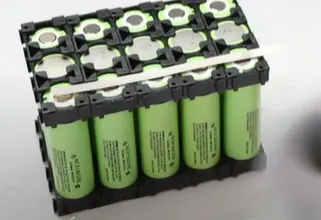
place a nickel strip on the first row,
8)
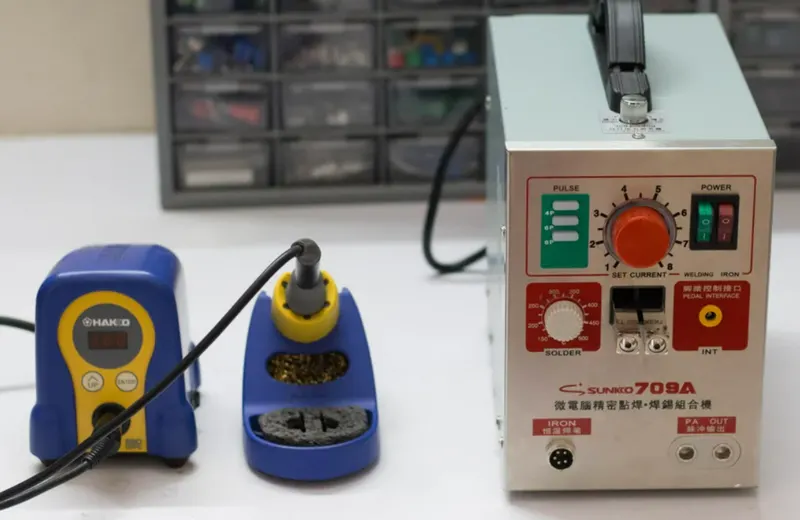
You have two options two connect the 18650 cells together: 1. Soldering 2. Spot Welding
The best choice is always Spot welding, but Spot Welder is much costlier than a good quality Soldering Iron.
Soldering :
You should know why Spot welding is preferred over soldering, the problem with soldering is that you apply a lot of heat to the cell and it doesn’t dissipate very quickly. This enhances the chemical reaction in the cell which damages the cell's performance. Ultimately you will lose some capacity and life the cells.
But if you are not interested to buy a costly Spot Welder, you can solder the nickel tabs to the cell by following some precaution and tricks :
1. To minimize the contact time of your soldering iron on the cell, make sure the surface is scuffed up sufficiently and you use plenty of flux to allow for fast solder flow.
2. It is better to have a good quality high wattage ( min 80W ) iron with good thermal capacity so it can deliver the heat to the joint quickly so you don't have to hold the iron to the battery for ages and let the heat seep into it, causing damage to the battery.
Spot Welding :
The reason we spot weld because it securely joins the cells together without adding much heat to them.
9)
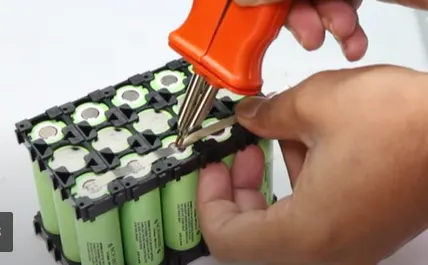
by using spot welding, spot the nickel strip on each cell of first row.
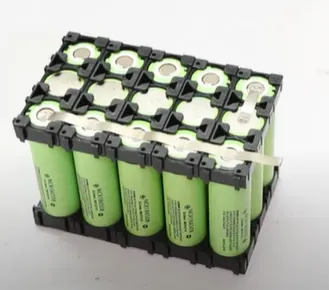
then spot the nickel strip on 2nd row negative terminal and last row positive terminal as shown.
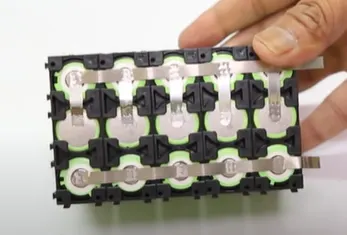
similarly spot weld long nickel strip to last row positive terminals of cells
and repeat same procedure on bottom side.
10)
take Battery management system.
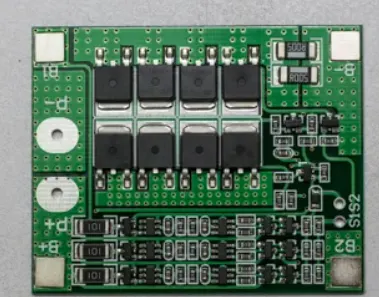
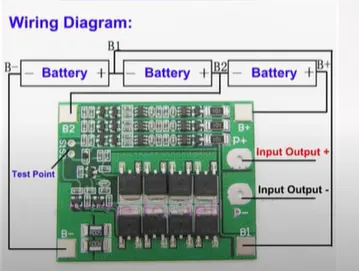
Connect the BMS as shown in the wiring diagram. The BMS has four soldering pads: B-, B1, B2, and B+. we have to connect the first parallel group negative terminal bus to the B- and positive terminal bus to the B1. Similarly the third parallel group negative terminal bus to the B2 and positive terminal bus to the B+.
we can spot weld the nickel strips to the BMS or solder it to the PCB pad. we prefer to solder the nickel strips to the PCB for a sturdy connection. First, apply soldering flux to the PCB pads and end of the nickel strips. After that tin all the pads by applying a little amount of solder and then solder them together.
11)
place the BMS on battery pack and connect BMS to battery pack as shown in wiring diagram.
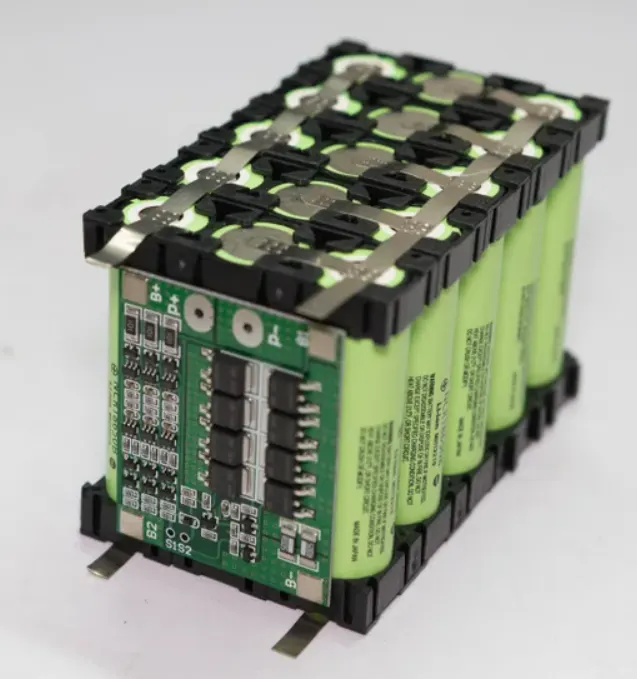
12)
now take a casing and place that battery pack inside that casing.

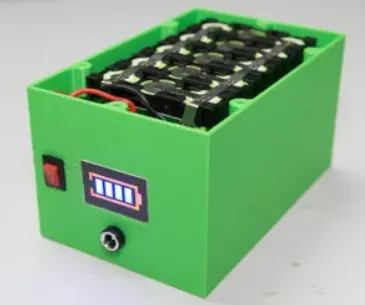
TO CALCULATE DEMENSION OF BATTERY PACK:
we got 91 series and 24 parallel cell.
length of battery pack =(no of cells in series*cell diameter)+(no of cells in series-1)*4mm+10mm
length of battery pack =(91*25.96)+(91-1)*4+10=2732mm
breadth of battery pack =(no of cells in parallel*cell diameter)+(no of cells in parallel-1)*4mm+10mm
breadth of battery pack=(24*25.96)+(24-1)*4+10=725.04 mm
height of pack=height of cell+2mm*1mm of bus plate+space for ventilation
height of pack=65.15+2*1+2.85=70mm
design options available are
1) aluminium , 10 mm base plate
2) stainless steel , 5mm base plate
3)stainless steel, 4 mm base plate.
to calculate outer demension of battery pack:
1)aluminium , 10 mm base plate
length=2732+20=2752mm
breadth=725.04+20=745.04mm
height=70+20=90mm
volume=final volume-initial volume
volume=(2752*745.04*90)-(2732*725.04*70)=45874857.6mm^3
density=0.0027g/mm^3
thus mass=volume*density=45874857.6*0.0027=123862 grams=123 kg
2) stainless steel , 5mm base plate
length=2732+10=2742mm
breadth=725.04+10=735.04mm
height=70+10=80mm
volume=final volume-initial volume
volume=(2742*735.04*80)-(2732*725.04*70)=22581724.8 mm^3
density=0.008g/mm^3
thus mass=volume*density=22581724.8 *0.008=180653 grams=180.6 kg
3) stainless steel, 4 mm base plate.
length=2732+8=2740mm
breadth=725.04+8=733.04mm
height=70+8=78mm
volume=final volume-initial volume
volume=(2740*733.04*78)-(2732*725.04*70)=18008659 mm^3
density=0.008g/mm^3
thus mass=volume*density= 18008659*0.008=144069.2 grams=144 kg
The battery pack design with stainless steel, 4 mm base plate is most suitable because though its weight is more than aluminium , 10 mm base plate but the stainless steel, 4 mm base plate design saves a lot of space than aluminium , 10 mm base plate design.
RESULTS:
for , Battery pack capacity: 18 kWh
and Cell: ANR26650M1-B
we require 91 series connected cell and 24 parallel connected cell.
battery pack demension:
inner demension= 2732mm * 725.04mm * 70mm
outer demension= 2740mm * 733.04mm * 78mm
the pack material is stainless steel, 4 mm base plate.
REFERENCES: