Project 1 Mechanical design of battery pack
ans-
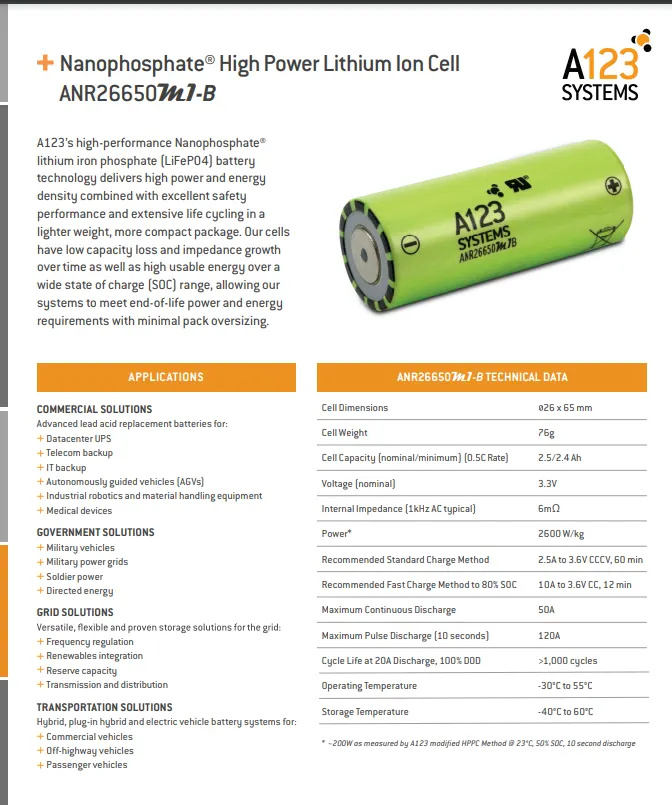
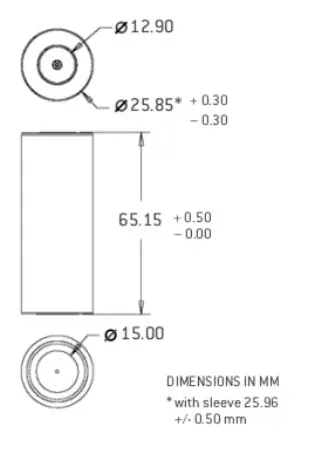
datasheet
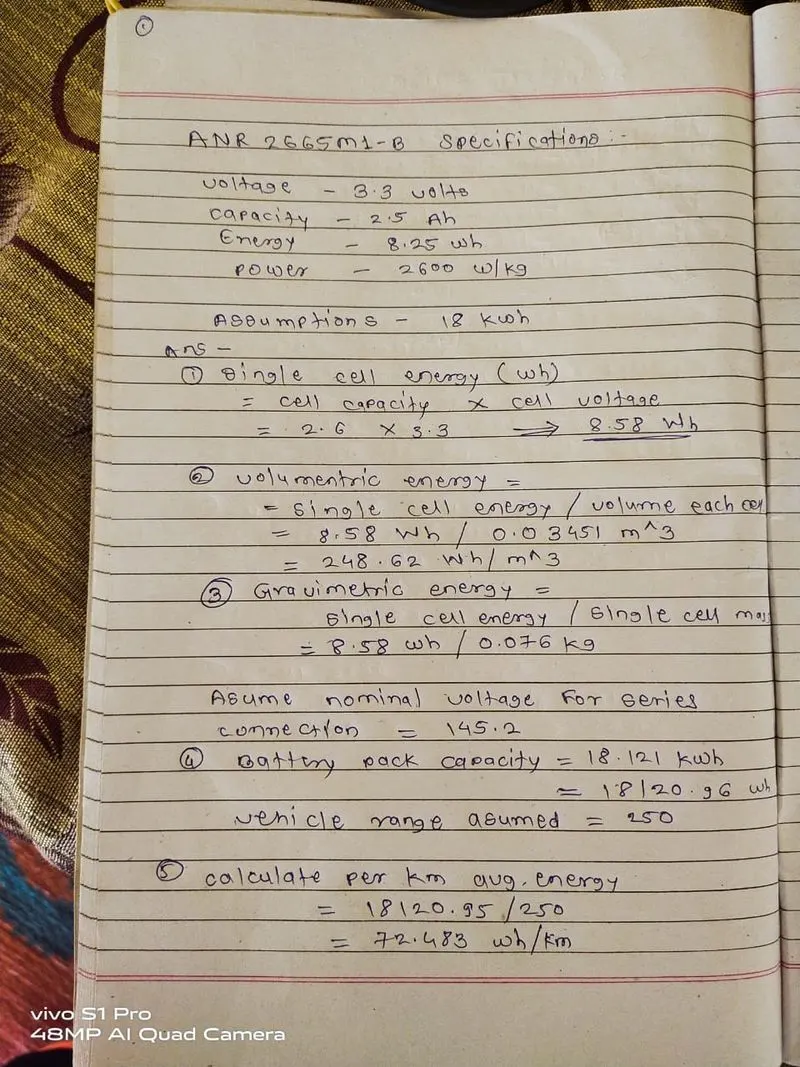
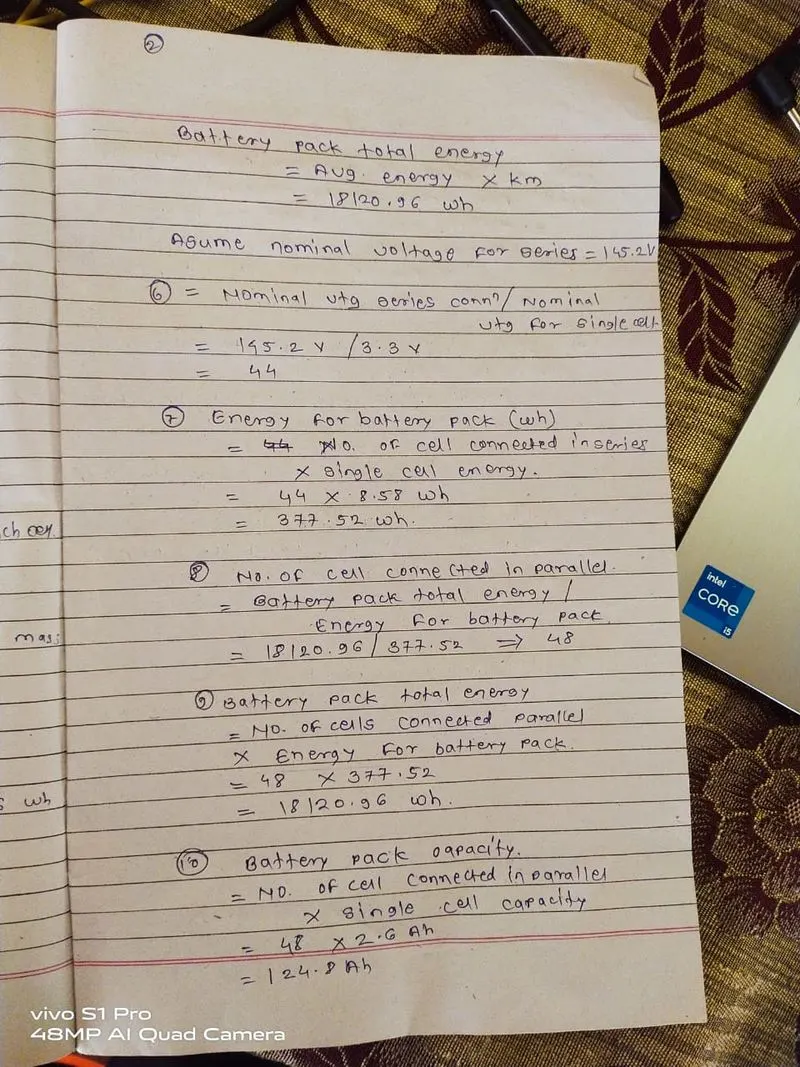
calculations-
detailed battery pack drawing along with its enclosure.
1)NEED OF BMS-
Each battery cell and chemistry has voltage, temperature, and current range within which it can safely operate. When a cell drops below or exceeds these ranges, it can be detected and controlled by the BMS. For instance, lithium is a highly reactive substance; thus the BMS should monitor each lithium cell to ensure that it remains operating within predefined limits. This keeps the battery safe and preserves it in the long run.
Another important safety feature of a BMS is cell balancing. Individual cells within a battery pack do not operate equally. One cell may be weaker or stronger than the other, charging or discharging faster than others within the chain. Without proper compensation, this could degrade the health of the overall pack. If one cell short circuits or fails, this affects the stability of the whole pack. Cell balancing equalizes the charge between individual cells based on each cell’s capability. The BMS helps to monitor and control the charge demanded from each cell in the chain, ensuring that SoC remains evenly distributed.
2)PARALLEL CONNECTIONS-
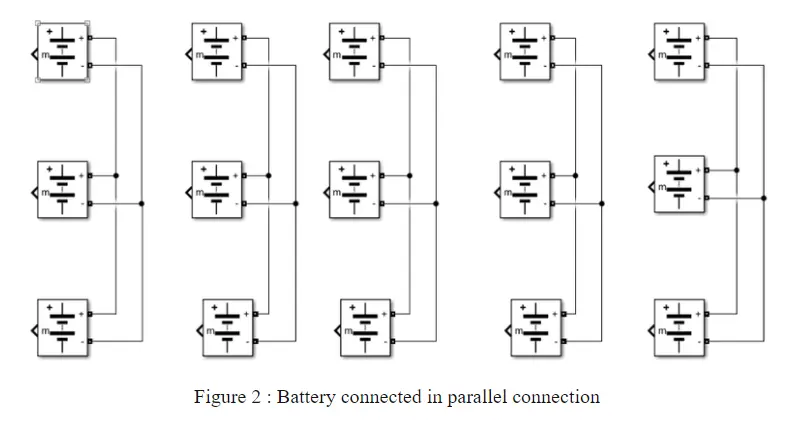
The battery connected in parallel,for parallel connection battery connected from terminal same to terminal of another battery that is + of one battery connected to terminal of another battery + terminal and - of one battery terminal connected to - terminal of another battery.
3)SERIES CONNECTION-
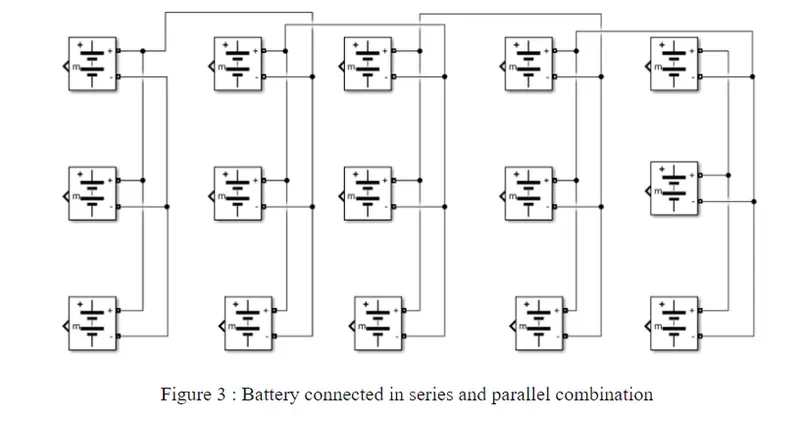
here battery connected series parallel connection,here + terminal of one battery connected - terminal of another battery and - terminal of one battery conneted to + terminal of another battery.
DIFFERENCE BETWEEN SERIES PARALLEL CONNECTIONS-
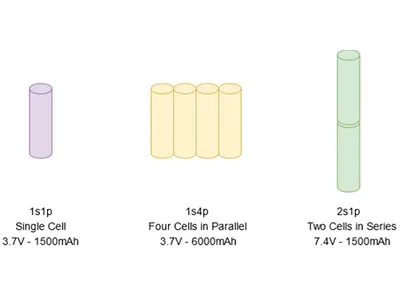
The main difference in wiring batteries in series vs parallel is impact on output voltage and capacity of battery system.Batteries weired in series will have there voltages added togheter .batteries weired in parallel will have there capacities added toghether.
4)PROTECTION VENTING-
Batteries for electric vehicles (EVs) need protection from harsh external conditions. Generally located on the underside of the vehicle, EV battery enclosures protect the cells from exposure to water, dust, debris, and other elements. Like other enclosures, EV battery enclosures also undergo temperature and pressure changes that can lead to problems without proper venting. But EV batteries present unique venting challenges including potentially dangerous thermal runaway conditions. Considering these challenges, integration of design, manufacturing, installation, and testing are crucial to optimal EV battery venting performance.
Numerous components in an EV require venting. Lighting, horns, electronics, powertrain, and other components all experience temperature changes resulting from weather conditions, moisture, or heat from electronic circuits. These temperature fluctuations produce pressure changes inside the components. Changes in altitude can also trigger pressure changes.
With much more energy stored inside a high-voltage battery pack, the higher amount of energy released during thermal cell or pack failures can lead to more severe consequences, e.g. battery fires. As a consequence, the need to implement safety features to prevent thermal runaways and resulting battery fires is essential to protect drivers and passengers from any harm, and to build customer trust and confidence in this technology. But it will never be completely possible to rule out the risk of thermal runaways completely
Nickel Strips
Nickel strip is generally used in battery building. Its due to its efficiency of usage in spot welding and soldering as well its high corrosion resistance over time. It has good properties and excellent resistance to many corrosive environments. The pure nickel will never get rust after it applied to battery packs. It won’t affect the current transfer between batteries.
Pure nickel strips are the material you want, but many vendors swap out it for nickel-plated steel strips, which are poorer and have greater resistance – not suitable for most battery projects.
100% pure nickel strip. verify all of our strips to assure that you are getting the high-quality pure nickel. It also solder incredibly quickly, so you can weld them onto your existing busbar connections to raise the supply of current you can pull through the busbars. The benefits are nearly limitless!

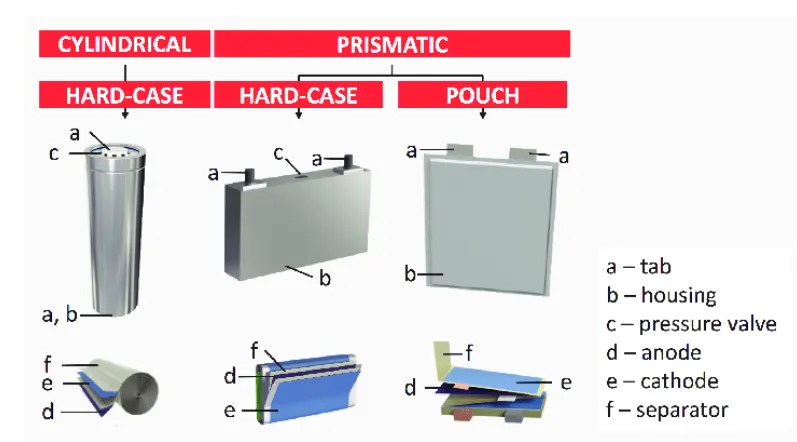
as we know now
Power (p)= Voltage (v) * Current (i) kw
3.3 *2.5 =8.25 kw
To get 18kwh ,we are assuming 48s 48p
i.e; 48*48 =2304 cells
series connection gives 48*3.3 =158.4 v
parallel connection gives 48* 2.5 =120 A
from this we can get
158.4* 120 =19.008 kwh energy or capacity.
we design battery pack for 48s and 48p cell along wth battery spacers to hold cells and for their connection nickel strip is used
when cells are connected by nickel strip spot welding should be used so that cell not get damage.
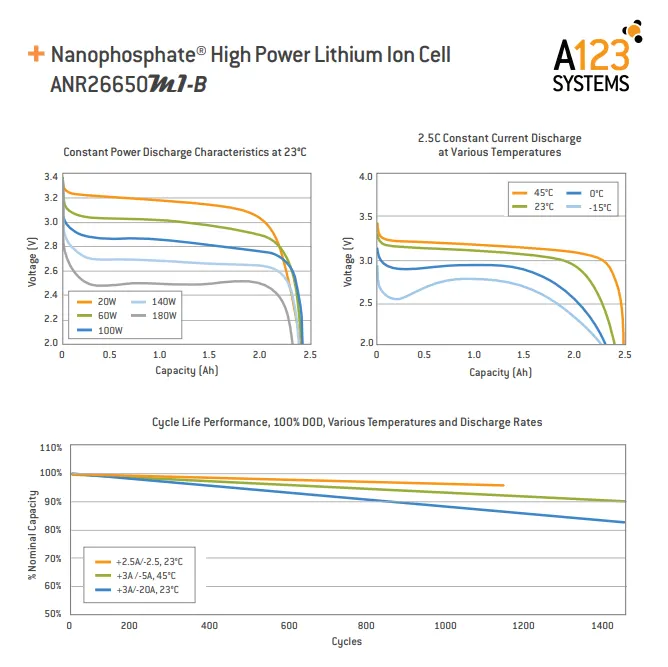
GRAPH DESCUSSION-
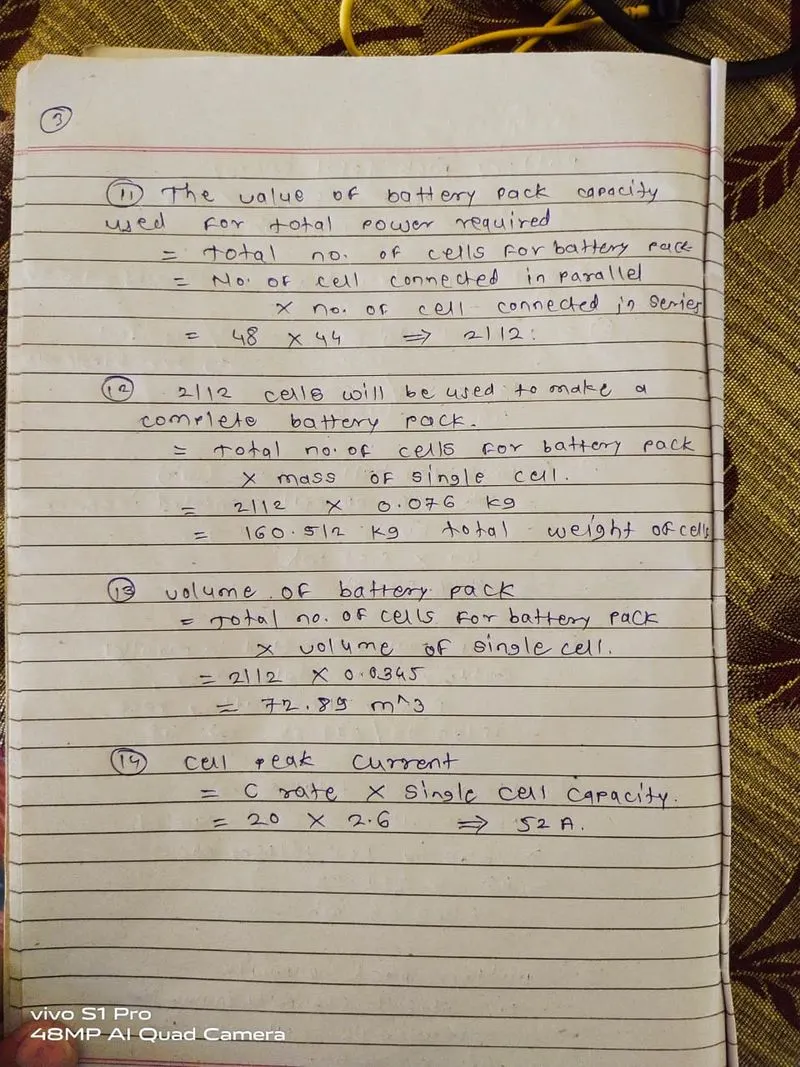
From above all parameters we will calculate further parameters which are used for battery pack construction.
Cycle Life Performance, 100% DOD, Various Temperatures and Discharge Rates of cell:
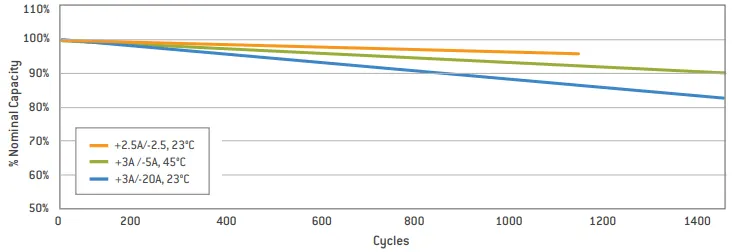
Constant Power Discharge Characteristics at 23°C of cell:
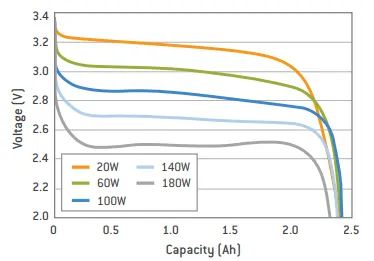
2.5C Constant Current Discharge at Various Temperatures:
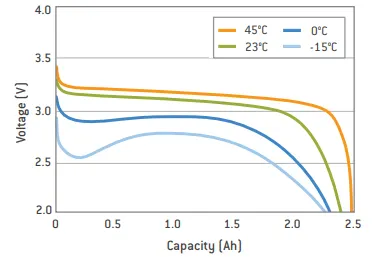
A123’s high-performance Nanophosphate lithium iron phosphate (LiFePO4) battery technology delivers high power and energy density combined with excellent safety performance and extensive life cycling in a lighter weight, more compact package. Our cells have a low capacity loss and impedance growth over time as well as high usable energy over a wide state of charge (SOC) range, allowing our systems to meet end-of-life power and energy requirements with minimal pack oversizing.