Project 1 Mechanical design of battery pack
PROJECT 1. Mechanical design of battery pack
Aim:-
Battery pack capacity: 18 kWh
Cell: ANR26650M1-B
Prepare a detailed battery pack drawing along with its enclosure. State your assumptions.
Introduction:-
An electric battery is defined as a device that makes use of either one or an assembly of electrochemical cells that convert the stored chemical energy within them into electrical energy. Each cell has a positive terminal, a cathode, and a negative terminal, an anode. The individual cells are connected in various combinations of series and parallel connections to get a battery of desirable characteristics.
What is a Cell?
The basic cell of a battery uses two pieces of a different metal – known as the cathode (positive) and the anode (negative). Internally, they are kept separate, but both are in contact with the same electrolyte where chemical reactions take place which creates the electrical charge.
The metals used vary depending on the battery type. The clue is sometimes in the name – Lead acid batteries do indeed use lead plates with an active paste of sponge lead applied to the negative anode plates and lead dioxide plates to the positive cathode. The electrolyte is acid. At other times the name is misleading. There is no lithium, for example, in a lithium-ion battery.
The electrolyte can vary greatly from a completely liquid acid to a moist paste to a dry powder, but it is here that the chemical reaction takes place which produces electricity when the cathode and anode are connected to each other via an external appliance such as a light bulb.
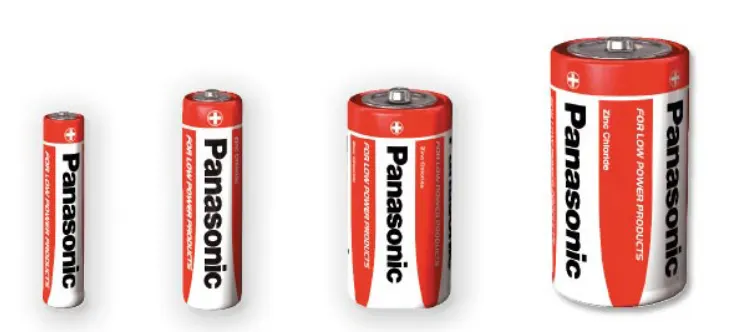
What is Battery?
Cells on their own don’t offer much power. Nickel Metal-Hydride cells are 1.2 volts, while even the latest lithium cells reach only 3.5 volts. For many smaller applications such as LED flashlights, either chemistry is fine. When it comes to doing something harder, like starting an engine, a single cell won’t manage.
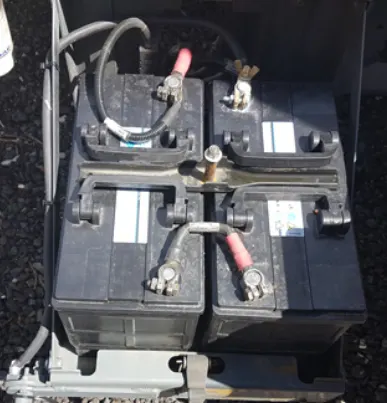
As such, creating a single product containing multiple cells connected together was the obvious solution. The starter battery for a car engine is usually 6 lead acid cells, each with a voltage of 2, connected in series to create a 12-volt battery. In reality, each cell is actually usually 2.1 volts and the battery is 12.7 volts, but for commercial simplicity, they are referred to as 12-volt batteries.
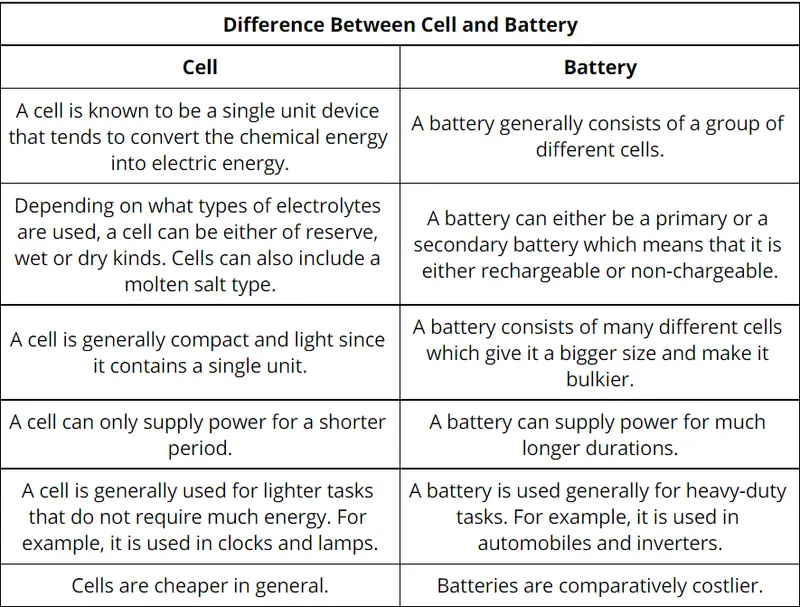
Cell Vs Battery
Battery pack capacity: 18 kWh
Cell:- ANR26650M1-B
The ANR26650M1-B is the next generation of A123 Systems’ pioneering 26650 cylindrical cells, now with greater power and energy density and lower impedance. This versatile lithium-ion cell is suitable for a wide variety of applications and system designs. Proven performance in the toughest conditions, combining durability, reliability, and safety, the ANR26650 cell offers an excellent combination of price performance.
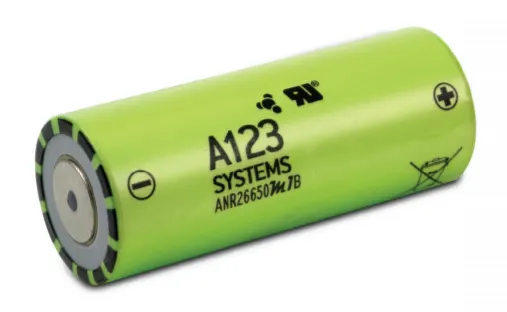
The calculation for Cell: ANR26650M1-B
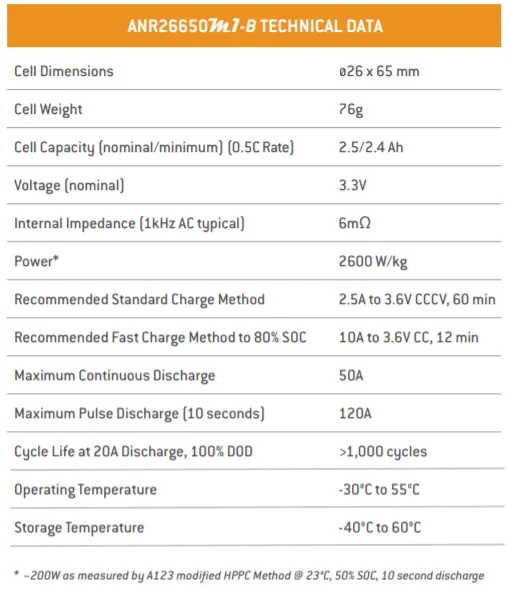
Energy or capacity calculated :
Formula :-Power (p)* Time(t) kwh
Power (p)= Voltage (v) * Current (i) kw
3.3 *2.5 =8.25 kw
To get 18kwh, we are assuming 48s 48p
i.e; 48*48 =2304 cells
series connection gives 48*3.3 = 158.4 v
parallel connection gives 48* 2.5 =120 A
from this, we can get
158.4* 120= 19.008 kWh energy or capacity.
Applications:-
COMMERCIAL SOLUTIONS
Advanced lead-acid replacement batteries for:
- Datacenter UPS
- Telecom backup
- IT backup
- Autonomously guided vehicles (AGVs)Industrial robotics and material handling equipment
GOVERNMENT SOLUTIONS
- Military vehicles
- Military power grids
- Soldier power
- Directed energy
GRID SOLUTIONS
- Frequency regulation
- Renewables integration
- Reserve capacity
- Transmission and distribution
TRANSPORTATION SOLUTIONS
Hybrid, plug-in hybrid, and electric vehicle battery systems for:
- Commercial vehicles
- Off-highway vehicles
- Passenger vehicles