Project 1 Mechanical design of battery pack
AIM :-
To prepare a detailed battery pack drawing along with its enclosure of the cell ANR26650M1-B .
ANR26650M1-B
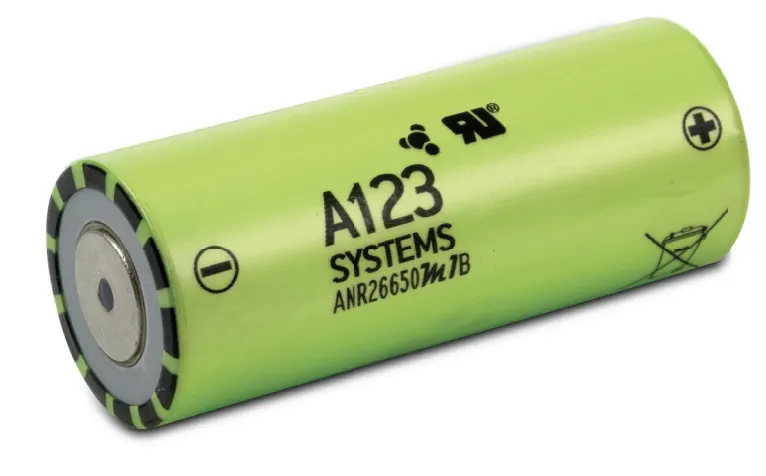
A123’s high-performance Nanophosphate® lithium iron phosphate (LiFePO4) battery technology delivers high power and energy density combined with excellent safety performance and extensive life cycling in a lighter weight, more compact package. Our cells have low capacity loss and impedance growth over time as well as high usable energy over a wide state of charge (SOC) range, allowing our systems to meet end-of-life power and energy requirements with minimal pack oversizing.
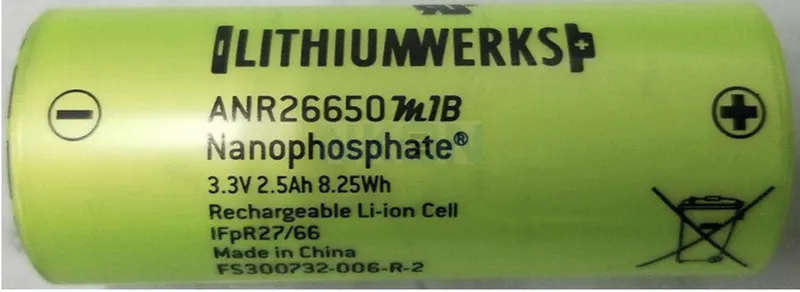
ANR26650M1B cells now are being manufactured and sold under Lithium Werks brand. In March 2018 Lithium Werks acquired A123 Systems' industrial business and manufacturing plants located in Changzhou, China. These plants were the first to introduce the revolutionary NanoPhosphate technology in the form of cylindrical cells.
APPLICATION :-
COMMERCIAL SOLUTIONS
Advanced lead acid replacement batteries for:
* Datacenter UPS
* Telecom backup
* IT backup
* Autonomously guided vehicles (AGVs)
* Industrial robotics and material handling equipment
GOVERNMENT SOLUTIONS
* Military vehicles
* Military power grids
* Soldier power
* Directed energy
GRID SOLUTIONS
* Frequency regulation
* Renewables integration
* Reserve capacity
* Transmission and distribution
TRANSPORTATION SOLUTIONS
Hybrid, plug-in hybrid and electric vehicle battery systems for:
* Commercial vehicles
* Off-highway vehicles
* Passenger vehicles
ANR26650M1-B Technical data:
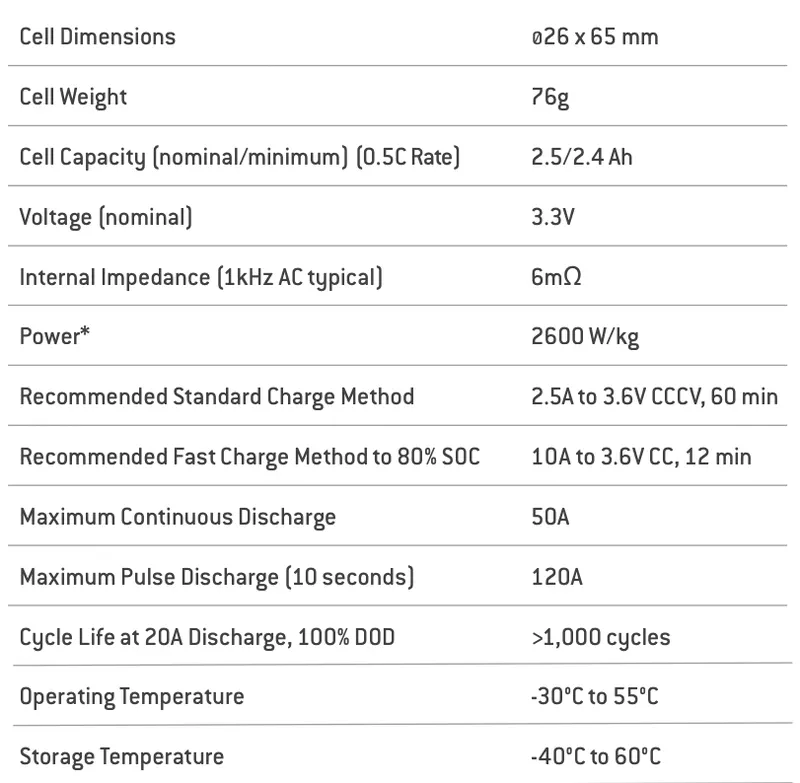
If we observe the characteristics of the ANR26650M1-B by different conditions like constant power discharge characteristics, constant current discharge at various temperatures, and some other as shown below.
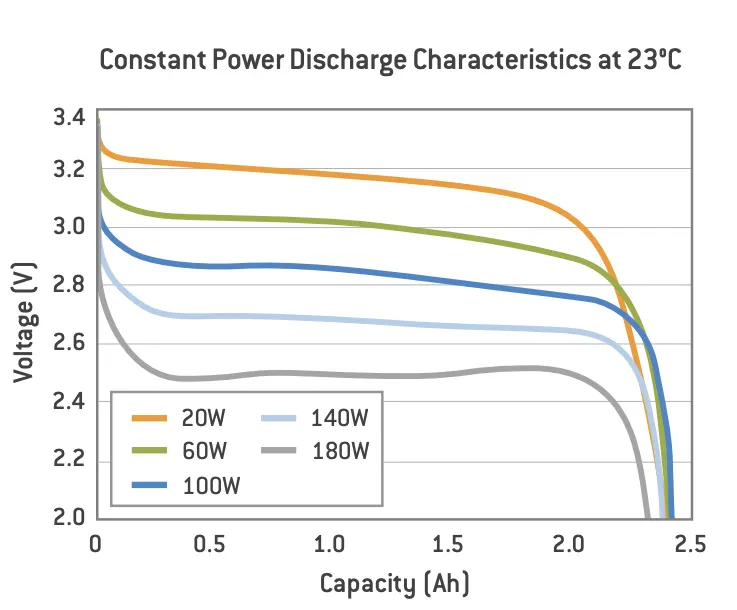
If we observe here that by changing the power that is by increasing the power at constant temperature it decreases the voltage respectively.
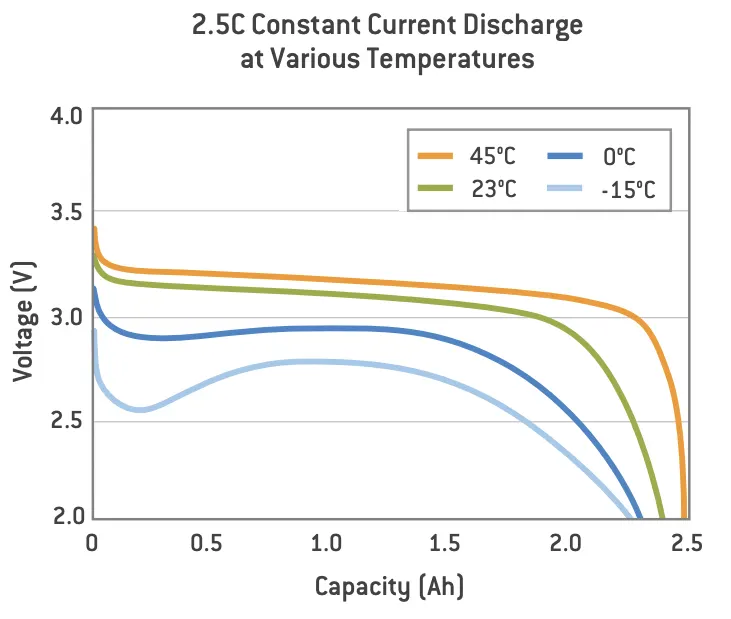
If we observe here by changing the temperature from 45 degrees to – 15 degrees it reduce respectively as shown above.
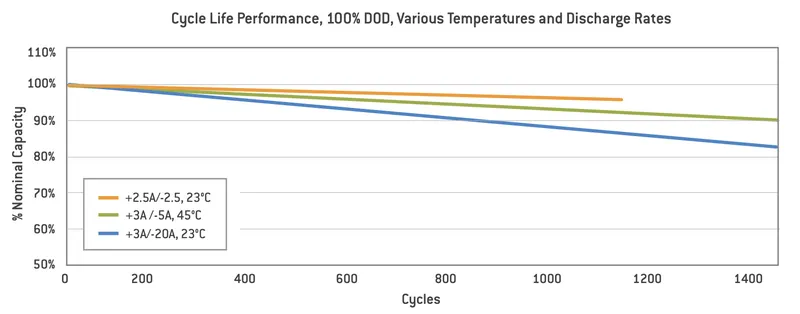
In this as we can see that by changing the charging and discharging cases as shown its performance characteristics changed.
OVER VIEW OF CELL AND IT'S DIAMENSION :-
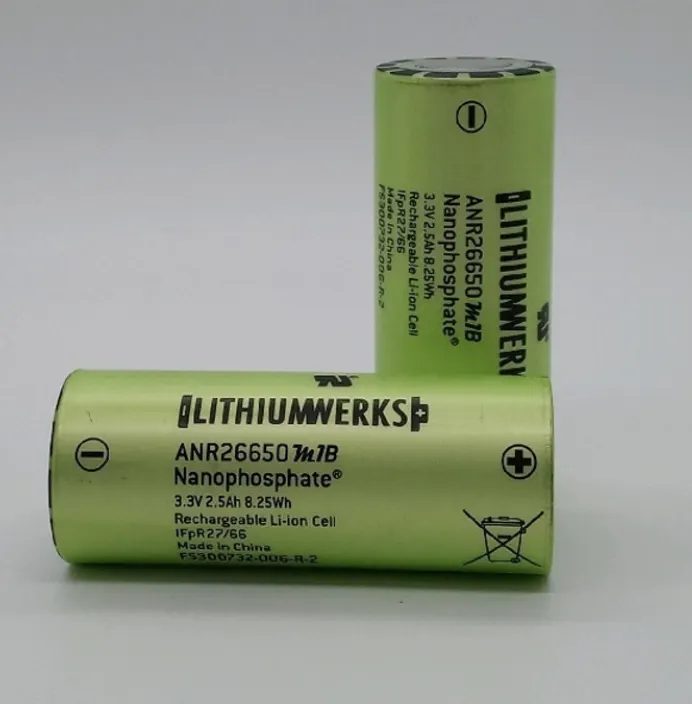
The Lithiumwerks ANR26650M1-B is the next generation of A123 systems pioneering 26650 cylindrical cells, now with greater power and energy density and lower impedance. This versatile lithium-ion cell is suitable for a wide variety of applications and system designs.
As we know that the safety, designing, sizing and some other things are more important to any of the object they play the key role for the transport, manufacturing etc. if we see these aspects in the lithium-ion cell batteries it is difficult to transport the battery because of the vibrations, exposure of high impact of the forces and thermal run away. To avoid all these to small the robust mechanical designs are necessary. Here the mechanical designs are play a major role before using in the vehicles or some others machines because if any problem occur in the designing time it leads to damage the battery or creates a major problem in the circuit. In the designing battery packing provide a greater degree of protection against so many of these.
ANR26650M1-B Specifications
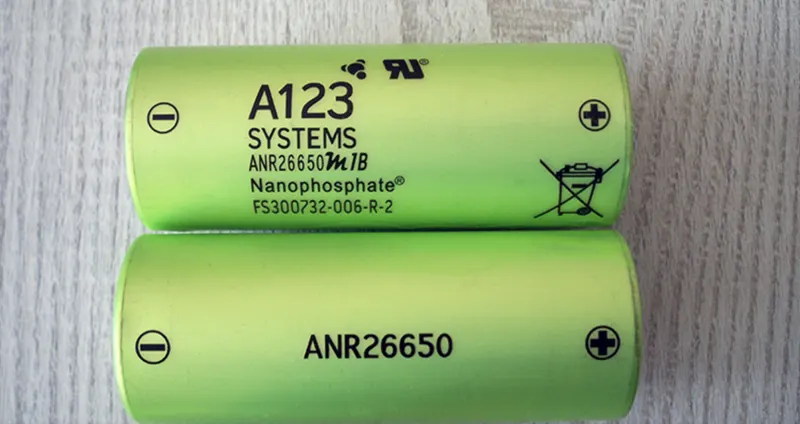
Nominal Ratings
Voltage: 3.3 Volts
Capacity: 2.5 Ah
Energy: 8.25 Wh
Specific Power: 2600 W/kg
Impedance (1KHz AC Typical) 6 mΩ
Cycle Life at 1C/1C, 100% DOD: > 4000 cycles
Cell Type: 26650 Lithium Ion Power Cylindrical Cell
Discharging
Max Continuous Discharage: 50 A
Max Pulse Discharge Current >50% SOC (10s): 120 A
Minimum Voltage: 2 Volts
Temperature: -30ºC to 55ºC
Charging
Recommended Standard Charge: 2.5 Amps
Max Charge Rate: 10 Amps
Max Pulse Charge Current <50% SOC (10s): 25 A
Float Voltage: 3.45 Volts
Recommended charge V & Cut-off Current: 3.6 Volts, taper to 125mA
Temperature
(reduce charging current to 250mA when under 0ºC): 0ºC to 55ºC
Mechanical
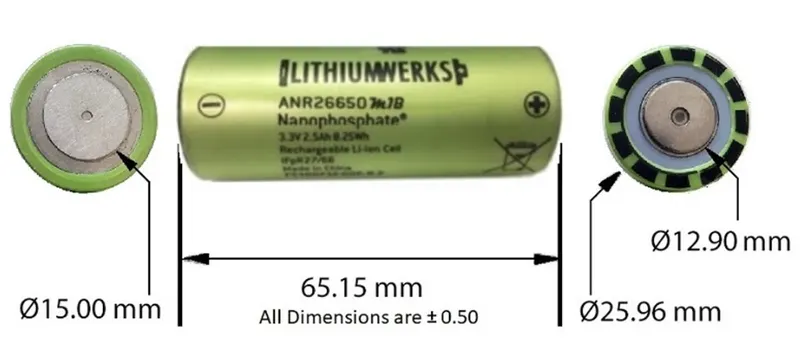
Diameter: Ø25.96 +/- 0.5 mm (1.0")
Length: 65.15 +/- 0.5 mm (2.6")
Mass: 76 g
BATTERY MODULE :-
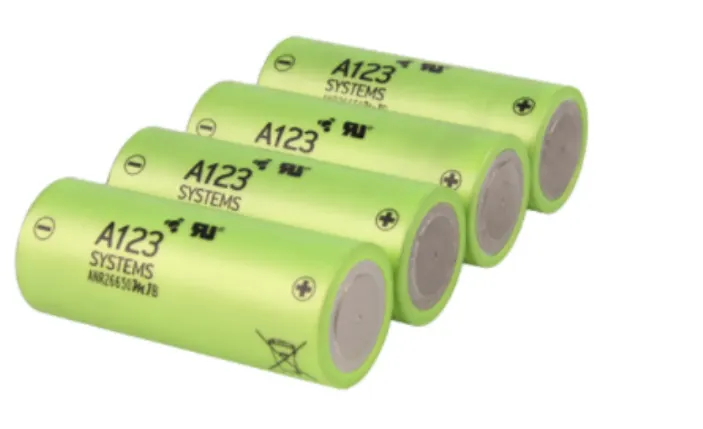
A battery management system (BMS) is any electronic system that manages a rechargeable battery (cell or battery pack), such as by protecting the battery from operating outside its safe operating area, monitoring its state, calculating secondary data, reporting that data, controlling its environment.
BATTERY PACK :-
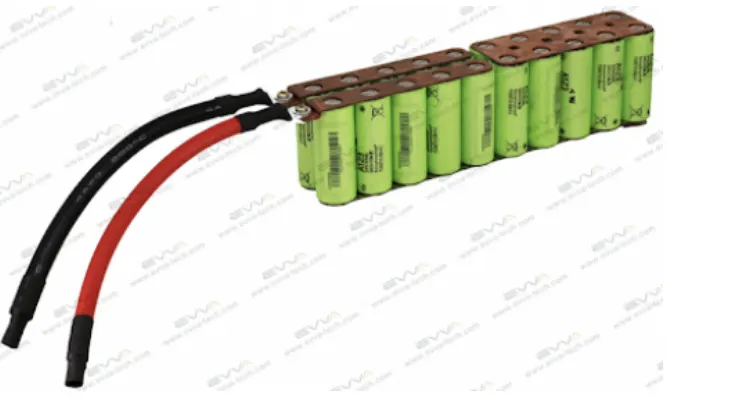
A battery pack is a set of any number of (preferably) identical batteries or individual battery cells. They may be configured in a series, parallel or a mixture of both to deliver the desired voltage, capacity, or power density.
Mechanical Design of battery pack:
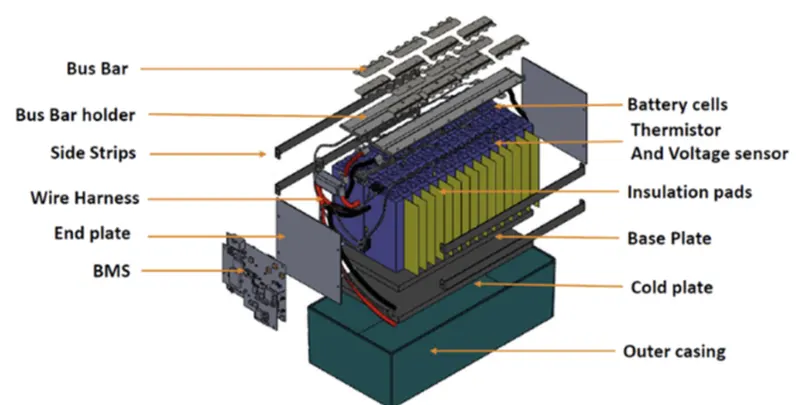
A battery has a set of modules which is be in certain design with set of cells connected. The modules and batteries are connected or configured in a series, parallel or in both based in the requirement by this the outlook of the battery pack is decide. By changing the same cells with different design changes the voltage and capacity values but the power remains same in the circuit. The battery pack consist both hardware and software components which is cell and BMS respectively.
The high voltage battery it is one of the most important component of a battery electric vehicle (BEV). The battery parameters have a significant influence on other components and attributes of the vehicle, like:
- maximum traction motor torque
- maximum regeneration brake torque
- vehicle range
- vehicle total weight
- vehicle price
Pretty much all major aspects of a pure electric vehicle (EV) depend on the parameters of the high voltage battery.
For our electric vehicle battery design we are going to start from 4 core input parameters:
- chemistry
- voltage
- average energy consumption of the vehicle on a driving cycle
- vehicle range
- A battery consists of one or more electrochemical cells (battery cells) which are converting chemical energy into electrical energy (during discharging) and electrical energy into chemical energy (during charging). The type of elements contained within a battery and the chemical reactions during discharging-charging events define the chemistry of a battery.
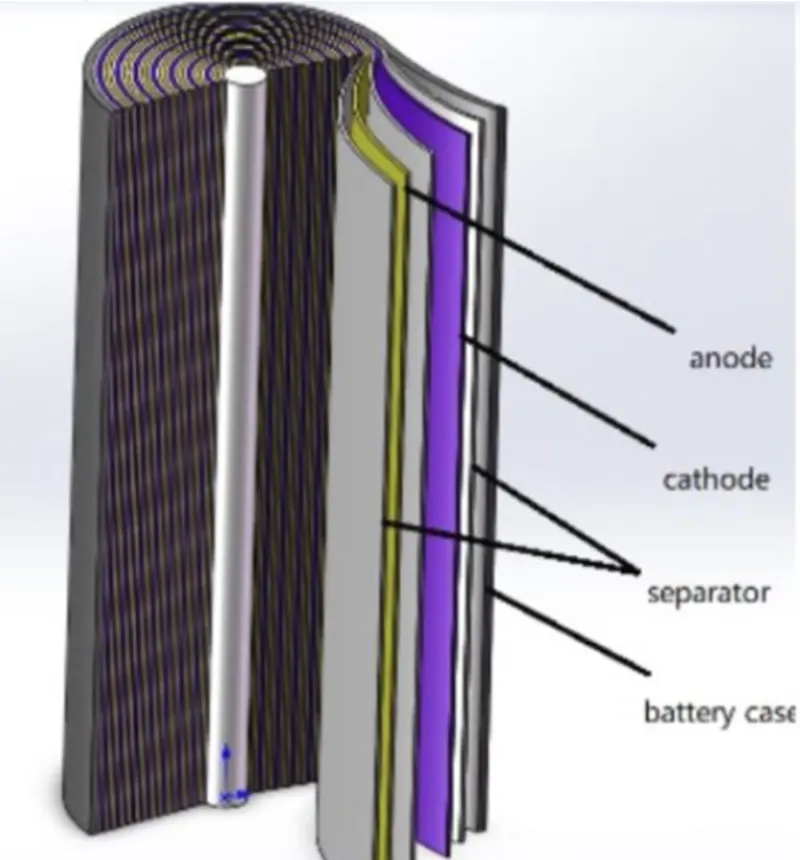
The major parts off the battery cell are five those are, anode, cathode, separators, electrolyte and terminals. A battery consists of one or more electro chemical cells (battery cells) which are converting chemical energy into electrical energy at the time of discharging and electrical energy to chemical at the time of charging. The chemical reaction occurs at the time of charging and discharging is called chemistry of the battery. There are so any types of cells in use like cylindrical, flat, pouch etc.
MODULAR ARRANGEMENT :-
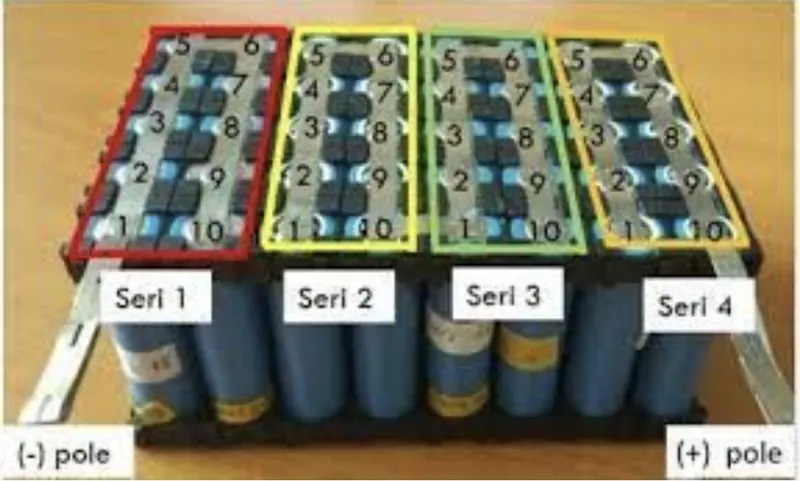
BATTERY CALCULATION :-
1. Energy = 18 kWh
2. Number of cells (N) = energy / (nominal voltage * capacity)
N = 18000 / (3.3*2.5)
N = 2182
We need minimum 2182 cells to get 18 kWh energy, now based on that, we need to decide configuration – series and parallel
- In series configuration capacity remains the same and voltage will be the sum of individual cell voltage.
- In parallel configuration, the voltage remains the same and capacity accumulates.
And we assume 400 Volts are need to run the vehicle.
The nominal voltage of one cell is 3.3 V
Number of series cells required to produce 400 V (Ns) = voltage required / nominal voltage of one cell
Ns = 400 / 3.3
Ns = 121.21 = 122
122 cells are connected in series will generate 400 voltage and the capacity of the whole module will be 2.5 Ah
Now we need to find the number of cells which will be connected in a parallel configuration
Np (cell in parallel = Total cell / Ns
Np = 2182 / 122
Np = 17.8 = 18
Hence, we take 18 cells for each parallel row, although it is exceeding the required capacity, that is negligible.
Cell architecture = 122 series and 18 parallel = 122S18P
3. Battery Capacity.
We know parallel configured cell multiplies individual cell capacity so,
Capacity = parallel cell row * individual cell capacity
Capacity = 18 * 2.5
Capacity = 45 Ah
4.Current Supplied by The Battery
We have already calculated battery capacity which is 45 Ah means it is going to supply 45 A current per hour which can be considered as C-rate.
5.Range
Powertrain energy consumption = 100 Wh/km at 70% powertrain efficiency
Range = Capacity / energy consumed per kilometer
Range = 18000/100
Range = 180 km
6.Internal Resistance of Battery:
The entire resistance encountered by a current as if it flows through a battery from the negative terminal to the positive terminal is known as internal resistance of a battery.
7.Battery Dimensions
ANR26650 cell has 26mm diameter and 65 mm height. On the basis of that we need to decide battery size of battery casing.
Length pf casing (L) = number of cells at series * (cell diameter (26) + margin at both side of cell (4) + clearance at side (diameter of edged cell + margin)
L =122*30 + 60
L = 3720mm
Breadth of casing (B) = number of cells at parallel * (cell diameter (26) + margin at both side of cell (4) + clearance at side (diameter of edged cell) + margin)
B = 18*30 +60
B = 600mm
Height of casing (H) = 65 +35 (height of cell + margin for wing, cell holder and metal strips)
H = 100mm
8. Weight of Battery Pack
Cell weight = 76 g
Number of cells = 2182
Battery Pack weight (W) = cell weight * number of cells + weight of accessories
W = 76 * 2182 + 165.8 + 4.5
W = 170.3 kg
Detailed production of battery pack :-
The main parts of the battery system are, cells, modules, BMS, wires, strips, case, separators, insulators, sensors.
From the below figure we can understand the how the battery is manufactured.
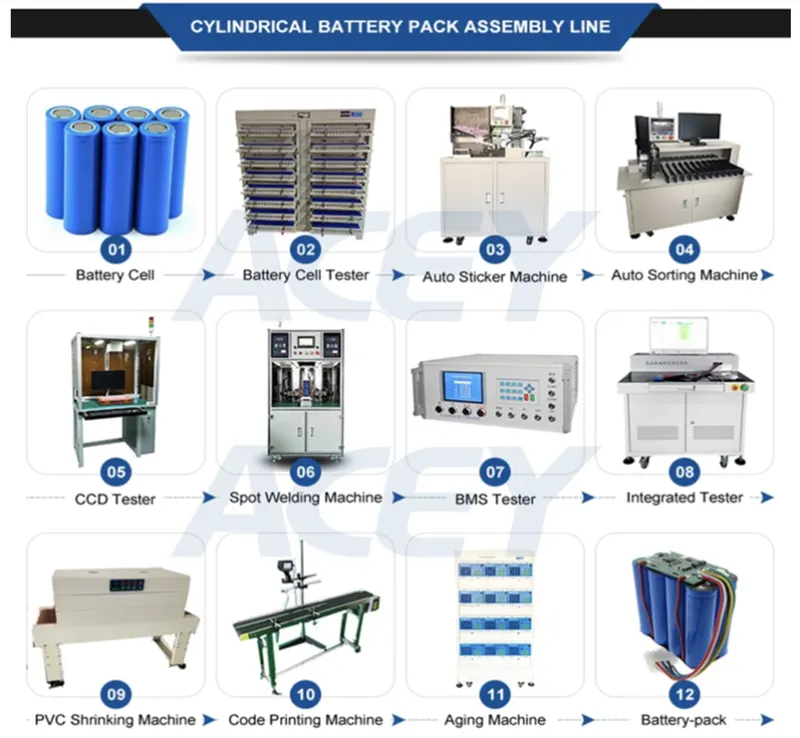
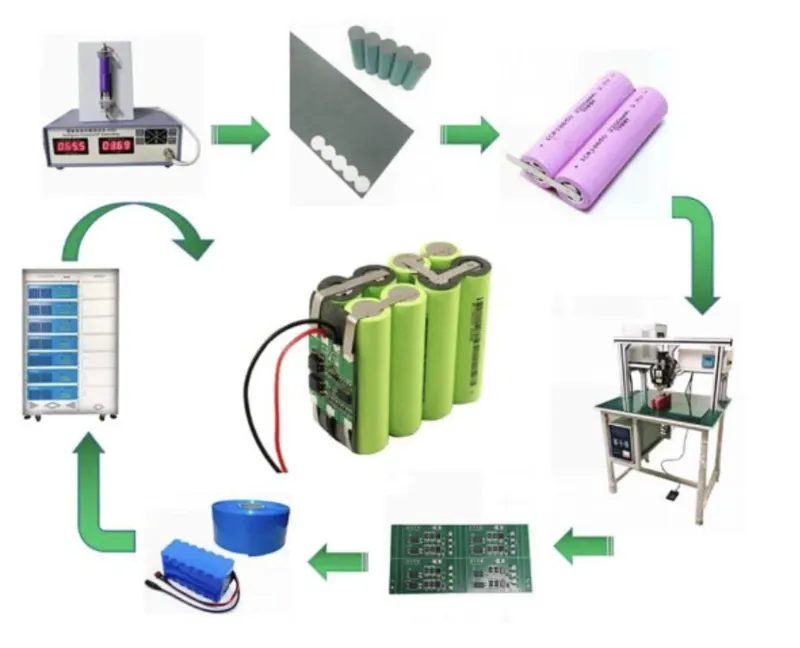
These are the equipment’s that is used to complete the total battery pack through the machines.
The machines that we used for the battery packing are:-
Auto sticker machine, auto sorting machine, spot welding machine, shrinking machine, code printing machine, and aging machine.
Auto sticker machine is used to stickering the names that is labelling to the cells based on the given values its condition and some other parameters basses.
The sorting machine can execute the sorting test based on the voltage and internal resistance tests before assembly. the battery sorter machine has 8 channels for OK battery cells and 1 for NG battery cells, which greatly promote the sorting efficiency and ensure the normalization of cells sorting.
To build the battery pack the cell parameters its working and mechanical design are very important. The battery calculations are used to build the pack with specific idea based on our requirement. By this we can find the exact size, its location, necessary of the cooling system etc can be find.
ABUSE TEST :-
* Short circuit :-
Test the ability of the ESS to limit the output energy in the case of an accidental short circuit on its terminals. This testing also includes short-circuiting individual elements within the ESS, such as modules, groups of modules,cells and cell groups
* Overcharge :-
Test the ability of the ESS to prevent any one of its cells from being overcharged as a result of excessive voltage being applied to the terminals of the ESS
* Crush :-
Understand what happens when the ESS is crushed in a calibrated manner
* Drop :-
Observe the effects of the ESS being dropped from a specified height
* Shock :-
Observe the effects of the ESS being subjected to a large shock in three axes
* Immersion :-
Test the ability of the ESS to seal out liquid water when completely immersed.
OVERCHARGE PROTECTION:
Using individual series cell voltage monitoring, the BMS can employ a means to protect any cell from being overcharged. Some of these means include opening an input contactor, FET, or another switch in series with the battery terminals, or by communicating a smart external charger to adjust its output appropriately. Because overvoltage is a sure way to ruin the cells, a best practice technique is to make sure there are redundant methods for monitoring and controlling the cell voltage. For example, if a microprocessor is involved in the decision-making process, employ an analog circuit to watchdog the processor or cell voltages. If an analog circuit is the only method to watch the circuit, use two for redundancy.
PERFORMANCE TESTING:
ESS performance testing validates that the ESS performs basic application functionality in the application’s intended environment. These tests include discharge, recharge, cycling, open circuit, thermal, and environmental testing. Applications for each ESS can vary significantly, so the key to these tests is to frame the test conditions around the conditions of the expected application.
HANDLING OF CELL AND BATTERY :-
A123 Systems’ cells are highly stable and abuse tolerant; however, handling a battery pack remains potentially dangerous to personnel and property, and should only be attempted with a complete understanding of all aspects of proper battery pack construction. The dangers involved in building a battery pack include those described in the following sections.
Thermal events :-
Proper battery pack design is essential to allow the safety features of A123 Systems’ cells to function as designed.As a safety feature, overheating A123 cells vent gases to relieve dangerous pressure buildup to disperse into the environment. However, an improperly designed battery pack can prevent the gases from safely dispersing, or prevent the cells from venting altogether.
Short circuit :-
Because A123 cells offer relatively high-power potential, an improperly designed battery pack may allow short circuits with dangerous levels of current.
Arc flashes :-
A poor battery pack design may increase the chances of an arc flash. An arc flash caused by a short circuit involving both high voltage and high current, emits extremely high intensity visible and ultra violet light with the potential to damage property while causing blindness and burns to personnel.
High voltage :-
Assembling a battery pack involves combining cells in serial or parallel to achieve higher voltages and currents, respectively. As the voltage and current involved increase, so does the danger to personnel assembling the battery pack. Without the proper training, experience, tools and personal protective equipment (PPE), handling high voltage battery packs may result in personnel injury or death.
CONCLUTION :-
Lithium Ion and Lithium-Ion Polymer batteries are power source for some application but they require preventive protection during discharging and charging.
REFERENCE :-
https://www.buya123products.com/uploads/vipcase/c9dec23d34292dd9e30058723737edee.pdf
https://www.batteryspace.com/prod-specs/6610.pdf
https://www.master-instruments.com.au/products/62294/ANR26650M1B.html