Project 1 Mechanical design of battery pack
Question:
Prepare a detailed battery pack drawing along with its enclosure. State your assumptions.
Answer:
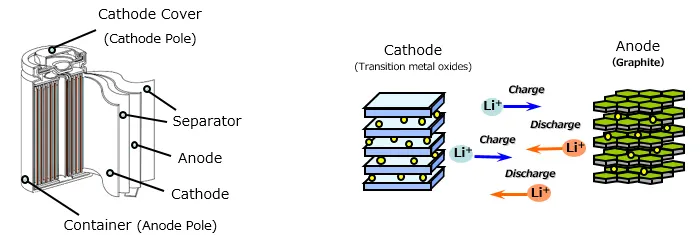
An electric-vehicle battery (EVB) (also known as a traction battery) is a battery used to power the electric motors of a battery electric vehicle (BEV) or hybrid electric vehicle (HEV). These batteries are usually rechargeable (secondary) batteries, and are typically lithium-ion batteries. These batteries are specifically designed for a high ampere-hour (or kilowatt-hour) capacity.
Electric-vehicle batteries differ from starting, lighting, and ignition (SLI) batteries as they are designed to give power over sustained periods of time and are deep-cycle batteries. Batteries for electric vehicles are characterized by their relatively high power-to-weight ratio, specific energy and energy density; smaller, lighter batteries are desirable because they reduce the weight of the vehicle and therefore improve its performance. Compared to liquid fuels, most current battery technologies have much lower specific energy, and this often impacts the maximum all-electric range of the vehicles.
The most common battery type in modern electric vehicles are lithium-ion and lithium polymer, because of their high energy density compared to their weight. Other types of rechargeable batteries used in electric vehicles include lead–acid ("flooded", deep-cycle, and valve regulated lead acid), nickel-cadmium, nickel–metal hydride, and, less commonly, zinc–air, and sodium nickel chloride ("zebra") batteries. The amount of electricity (i.e. electric charge) stored in batteries is measured in ampere hours or in coulombs, with the total energy often measured in kilowatt-hours.
Since the late 1990s, advances in lithium-ion battery technology have been driven by demands from portable electronics, laptop computers, mobile phones, and power tools. The BEV and HEV marketplace has reaped the benefits of these advances both in performance and energy density. Unlike earlier battery chemistries, notably nickel-cadmium, lithium-ion batteries can be discharged and recharged daily and at any state of charge.
The battery pack makes up a significant cost of a BEV or a HEV. As of December 2019, the cost of electric-vehicle batteries has fallen 87% since 2010 on a per kilowatt-hour basis. As of 2018, vehicles with over 250 mi (400 km) of all-electric range, such as the Tesla Model S, have been commercialized and are now available in numerous vehicle segments.
In terms of operating costs, the price of electricity to run a BEV is a small fraction of the cost of fuel for equivalent internal combustion engines, reflecting higher energy efficiency.
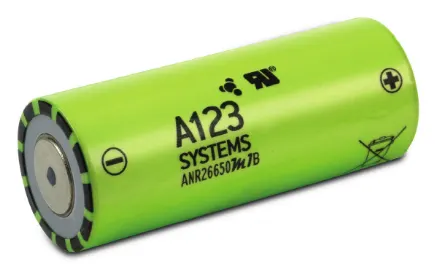
Cell:ANR26650M1-B
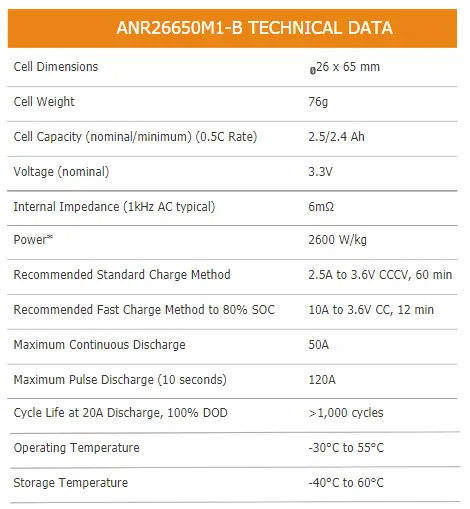
ANR26650M1-B Specifications
Nominal Ratings
Voltage: 3.3 Volts
Capacity: 2.5 Ah
Energy: 8.25 Wh
Specific Power: 2600 W/kg
Impedance (1KHz AC Typical) 6 mΩ
Cycle Life at 1C/1C, 100% DOD: > 4000 cycles
Cell Type: 26650 Lithium Ion Power Cylindrical Cell
Discharging
Max Continuous Discharage: 50 A
Max Pulse Discharge Current >50% SOC (10s): 120 A
Minimum Voltage: 2 Volts
Temperature: -30ºC to 55ºC
Charging
Recommended Standard Charge: 2.5 Amps
Max Charge Rate: 10 Amps
Max Pulse Charge Current <50% SOC (10s): 25 A
Float Voltage: 3.45 Volts
Recommended charge V & Cut-off Current: 3.6 Volts, taper to 125mA
Temperature
(reduce charging current to 250mA when under 0ºC): 0ºC to 55ºC
Mechanical
Diameter: Ø25.96 +/- 0.5 mm (1.0")
Length: 65.15 +/- 0.5 mm (2.6")
Mass: 76 g
he LithiumWerks ANR26650M1-B is the next generation of A123 Systems’ pioneering 26650 cylindrical cell, now with greater power and energy density and lower impedance. This versatile lithium ion cell is suitable for a wide variety of applications and system designs. Proven performance in the toughest conditions, combining durability, reliability, and safety, the ANR26650 cell offers an excellent combination of price-performance.
Cylindrical Cell Primary Applications:
- Portable high power devices
- Stationary battery backup systems
- Grid stabilization energy storage systems
- Commercial truck and bus hybrid electric vehicles (HEVs)
Lithium Ion Cell Benefits:
- Power: Over 2,600 W/kg and 5,800 W/L
- Safety: Excellent abuse tolerance and environmentally friendly
- Life: Excellent calendar life, 10X cycle life vs. conventional lithium ion
Nominal voltage : 3.3V
Nominal Capacity : 2.5 Ah
Battery capacity : 18kWh
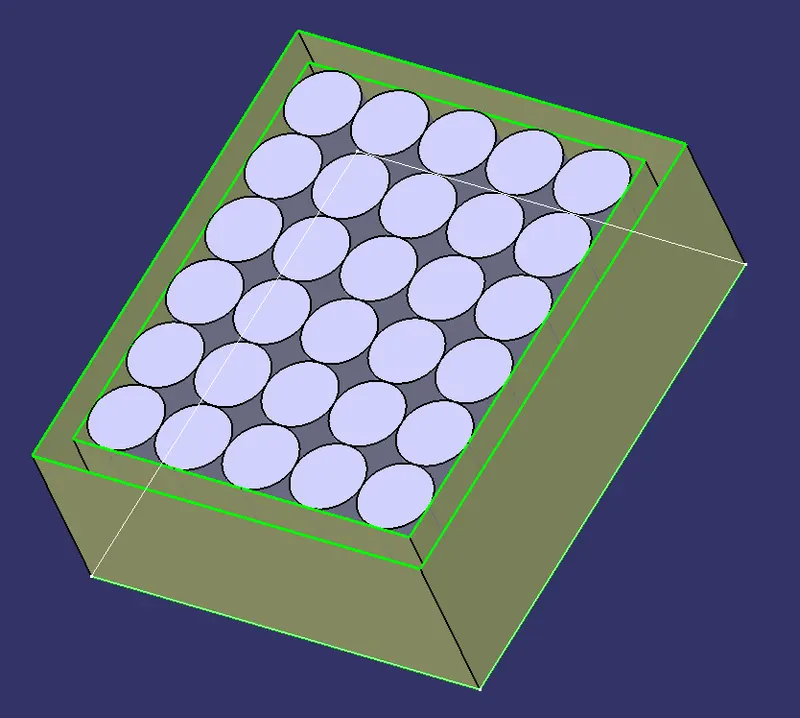
Lets have a module of 5 series and 6 parallel.
Multiply number of series with the nominal voltage and multiply number of parallel with nominal capacity to find the voltage and capacity of the module.
Voltage=3.3*5
=16.5
Capacity =2.5*6
=15
Lets assume the voltage of the battery is 48V
To get the series in the module divide the battery voltage with the voltage of the capacity
series=48/16.5
=2.9`~=`3
To get the parallel numbers in series divide the battery capacity with the battery capacity first and then divide the answer with the capacity of the module.
parallel=18000/48
=375
divide it with the capacity value,
=375/15
Parallel=25
Therefore there will be 3 series and 25 parallel of modules for a 18kWh capacity with a 5 series and 6 parallel cells in a single module.
To have a confirmation ,multiply the total capacity value, voltage value and the number os feries and parallel.
Total=(3*25)(15*16.5)=18562.5`~=`180000