Project 1 Mechanical design of battery pack
Battery pack capacity: 18 kWh
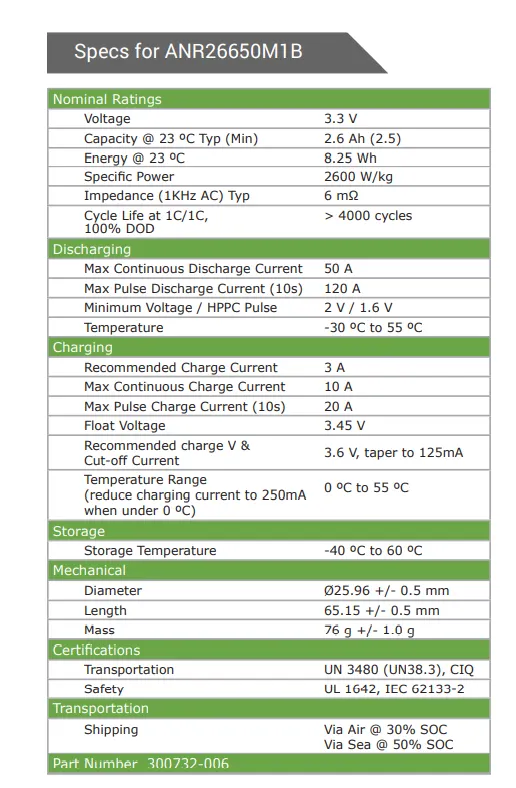
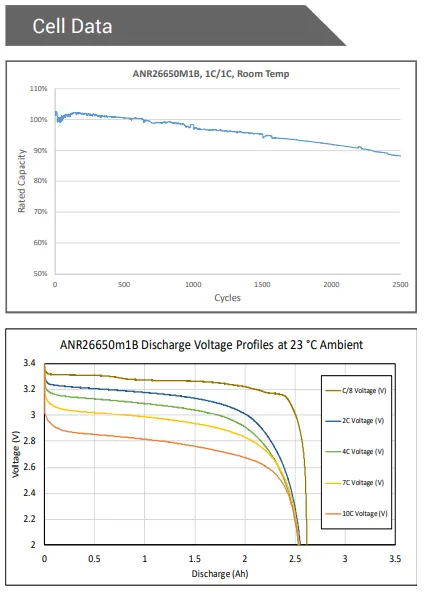
Cell: ANR26650M1-B
The ANR26650M1-B is the next generation of A123 Systems’ pioneering 26650 cylindrical cell, now with greater power and energy density and lower impedance.
This versatile lithium ion cell is suitable for a wide variety of applications and system designs.
- Battery Cell: The battery cell is the smallest unit of the power battery, and is also the energy storage unit.
- it must have a higher energy density to store as much energy as possible, so that the e-scooter and electric vehicle has a longer range.
- In addition, the life of the cell is also the most critical factor, any one of the cell damage, will lead to the whole battery pack damage.
- Battery cell is the basic and soul of whole battery pack.
- Smartpropel select the Top A Electric Vehicle level battery cell, with well know brand.
- like: Bak,CATL,Sumsung, Pansonic, Sanyo,etc.
Capacity calculation:
Formula = power (p) * Time(t) kwh
Power(p) = Voltage (v) * Current (i) kw
= 3.3 * 2.5 = 8.25 Wh
- In lithium ion battery we know single cell voltage may not be high 4v.
- for Ev application we required high volatge and capacity.
- so we used series combination of cell for high voltage .
- we used parallel combination of cell for high capacity.
- for 18 kwh capacity design is depend on the many parameters like performance, energy etc.
To get 18 kwh , lets say system designer design are assuming 400v motor system requirement .
also kepp in mind after the calculation always take 10% above capacity of the battery be.
Calculation for series capacity:
Series connection gives = 400/3.6 ~= 96
Ns = 158.4 v
Capacity = Energy / Volt
= 18000/400
= 45 Ah
sigal Cell capacity is = 2.6 Ah
Parallel connection gives = 45/2.6
Np ~=18A
by above parameters we can calculate :
18kwh = 96s * 18p= 1728 cells.
- Because of this, all lithium batteries require a protection circuit.
- The circuit does the work of effectively monitoring the battery during the charging and discharging process.
- During the charging and discharging process and some side effects occur that the circuit turns off the charging or discharging to prevent any damage from happening to the battery.
Cell layer protection:
Battery protection packs can be divided into two categories.
The first category is the Protection Circuit Module (PCM) it is also known as Protection Circuit Board or (PCB), And the other type is the Battery Management System (BMS).
In the lithium battery, the battery management system is an essential part of it.
- The battery protection circuit board, commonly known as the PCB, is the battery management system usually for small batteries.
- They typically are used for digital batteries. To understand PCBs well, you need to know about battery management systems or BMS.
- Battery packs, especially the big ones, have power batteries that protect the battery packs from overcharging, discharging, over current, cell balancing functions, and short circuits during battery charging.
- Some of these batteries need to communicate data with input and output options.
- The PCB is a management system that works for digital batteries.
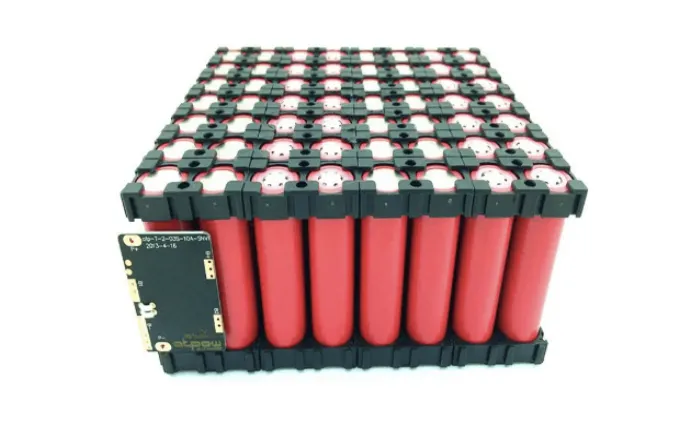
Examples of these small battery packs include the mobile phone battery, GPS batteries, Music player batteries, camera battery, to mention but a few. The voltage of these batteries varies from 7.4V or 3.7V., and the functions of the PCB play the same functions that BMS plays. It ensures that the batteries do not overcharge, over-discharge, over current, short circuit, and some batteries may need PTC and NTC.
- Charges in a battery go through the anode and the cathode.
- When looking at the lithium battery PCB, the electrons of Lithium go to both the anode and cathode of the battery during the charging and discharging process.
- To avoid overcharging, the battery charging PCB does not allow the cell’s voltage to go higher than 4.25V.
- When the battery overcharge, the anode structure may collapse, it can cause a short circuit. Hard crystals may appear. The temperature will rise, and it may lead to a fire.
- It shows that protection from overcharging.
When dealing with over current and short circuits, it is easy to understand.
The battery’s temperature will be higher and higher, which can cause a fire in the battery.
Over discharging should also be avoided since the battery can lose its capacity.
It can change from a large ratio to a low level. The voltage is 2.7V and higher for Lithium-Ion battery cells, but over-discharging can cause it to have a lower voltage.
So, for the PCB/PCM of small batteries, these small protections are essential.
PROTECTION CIRCUIT MODULES
For every lithium battery PCB, the protection against overheating is critical. But this also does not mean other measures are not required to ensure that operations are safe when dealing with electronics with lithium batteries.
Primary Safety circuits
The primary safety circuits’ primary functions include undervoltage, overvoltage, over-temperature, under-temperature, and overcurrent. Some other safety circuits are world-class and contain a secondary safety circuit. This second circuit protects the cell in case the first safety fails.
Protection circuits
The PCM contains protection circuits. When considering choosing a PCM, each application has a unique set of parameters to ensure that recommended requirements are met. The PCM is contained as part of the BMS PCB. It monitors and manages the state of rechargeable battery packs being charged. It ensures that the data is monitored and reported. It also balances the cells and controls the environment while protecting the battery.
An integrated circuit usually operates the protection circuits for applications that are more demanding. The Integrated Circuit (IC) detects when the upper current limit is being reached and interrupts the circuit to protect the battery from over-current protection.
Fail-Safe environments
When choosing a module, you need to know that it was designed in a fail-safe environment. Modules created in a fail-safe environment are not resettable when looking into purchasing a PCM work with a design that can be transferred into another application.
Size of the battery:
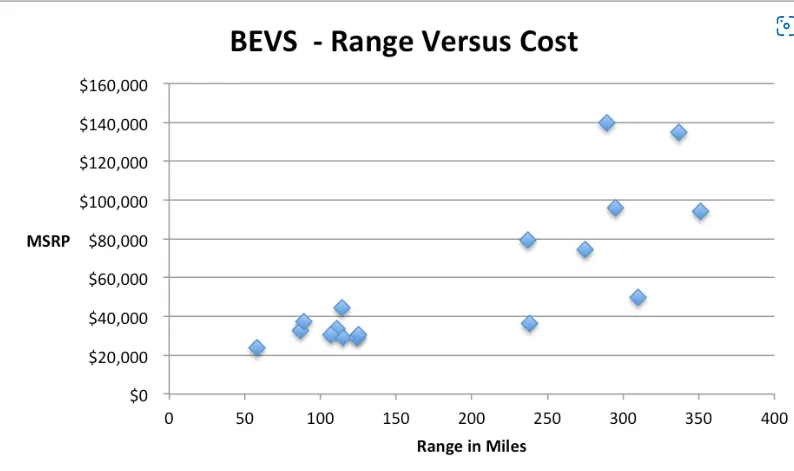
- Currently, the average size of an Electric Car Battery ranges from 80 to 100kWh.
- The Porsche Taycan and the Jaguar I-Pace have the biggest battery packs of 90 kWh.
- Other EVs with big batteries include the Hyundai Kona and Chevy Bolt, both with 64kWh packs.
The average size of an electric car battery continues to increase year after year.
Refrence :
https://ventilengineers.com/about-lithium-ion-battery/
https://www.raypcb.com/battery-pcb/