Project 1 Mechanical design of battery pack
Aim:Prepare a detailed battery pack drawing along with its enclosure. State your assumptions.
Battery pack capacity: 18 kWh
Cell: ANR26650M1-B
Batteries and cells are an important invention that has made many of our daily tasks easier. They are used in almost every modern portable electronic device. In addition, we can say that a world without batteries and cells is unthinkable. This reaction sends electrons to the circuit and returns to the cathode, where they undergo other chemical reactions. The battery cannot produce power when the cathode or anode material has been consumed or is no longer in response.
One or more cells form a battery. A single cell battery is commonly referred to as a 'single cell battery.' When there are many cells, they are connected by series internally, but usually appear as a single object from the outside (one positive and negative terminal). When it comes to batteries, a cell contains one metallic cathode (positive), one metallic (negative) anode, and electrolyte in the most basic form. The metals used in the cathode and anode, as well as liquids or electrolyte components, vary because a number of compounds have been discovered over the past two centuries, each with its own set of strengths and limitations.
The ANR266650M1-B is more powerful because it uses different battery technologies. Cells are primarily safe against a wide range of temperatures and locations due to their chemical composition of lithium iron phosphate (LiFePO4). Lithium Werks 26650 cells are suitable for wide range of power, pulse, and standby applications, whether the application requires high cycle life or reliable floating reliability.
Chemical stable temperature, fast charging, constant discharge, reduced power loss over time, and total cost of ownership are all advantages of nanophosphate battery technology (TCO).
It lays the foundation for secure systems while meeting the most demanding client needs. Compared to metal oxide lithium-ion chemicals, many protective layers are applied at the chemical, cell, and system level to produce a energy-saving solution with greater safety and tolerance to aggression.
Applications-
Commercial solutions-
- UPS datacentre
- Telecom backup
- IT backup
- Autonomously guided vehicle
- Industrial robotics
- Medical appliances
Government solutions-
- Military automotive
- Military power grids
- Directed energy
Transportation solutions
- Plug in hybrid,hybrid electric vehicle battery systems
From the data sheet of the ANR26650M1-B we have the specification table-
|
Nominal Voltage |
3.3V |
|
Cell Capacity |
2.5Ah |
|
Internal Impedance |
6mΩ |
|
Maximum Continuous Discharge |
50A |
|
Recommended Standard Charge Method |
2.5A to 3.6V CCCV, 60 min |
|
Cycle Life at 20A Discharge, 100% DOD |
>1,000 cycles |
|
Operating Temperature |
-30°C to 55°C |
|
Storage Temperature |
-40°C to 60°C |
|
Cell Dimensions |
26 x 65 mm |
|
Cell Weight |
76g |
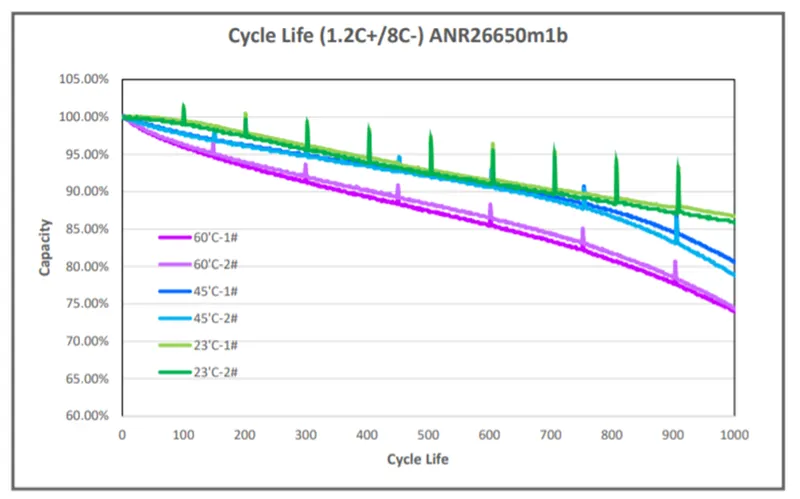
Cylce life characteristics
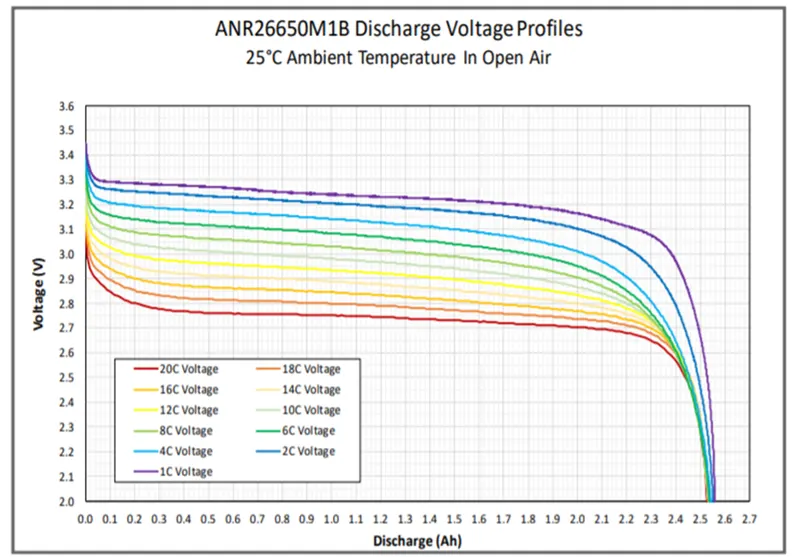
Discharge voltage profiles
Mechanical design of a battery pack-
Large-scale electrification in the road transport sector faces two major challenges: safety and reliability. Due to features such as continuous mechanical vibration transmission, exposure to strong impact forces, and heat dissipation, current Li-ion battery packs often fail. All of this can be minimized by using more sophisticated mechanical design and battery packing.
We are using the LiFePO4 chemical cell for this project (Lithium iron phosphate). As a result, the characteristics of LiFePO4 are very different from those of other cell chemicals.
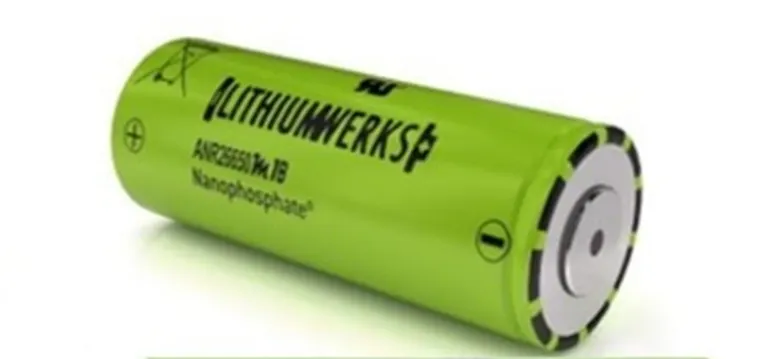
The cathode of lithium iron phosphate is an iron phosphate, and the anode is graphite. It has a power of 3.20V or 3.30V and a specific power of 90/120 watt-hours per kilogram. Lithium iron phosphate has a charging ratio of 1C and an output rate of 1-25C.
Statistics-
battery power = 18kWh
Normally the capacity of an electric car ranges from 200 to 800V
Here we take the voltage as 450V.
So,
Total battery power = 18kWh
Number of cells = Total battery power / nominal voltage * Cell capacity)
N = 18000 / (3.3 * 2.5)
= 2182
So we have to have 2182 cells to get a packet capacity of 18kWh, so the chain and the corresponding combination of cells should be set relative to the capacity.
By the same combination the volume will increase and the voltage will have the same value,
But in the case of a series the voltage will rise according to no. cells and volume will have a constant value,
In the cell we took a 3.3V cell voltage, and we took the battery pack voltage as 450V,
Number of cells in series required for 450V = Required Voltge / Low cell volume
Ns = 450 / 3.3
Numbers = 136.36 = 137
Series configuration must have 137 cells that can produce 400V and packet capacity is 2.5Ah,
Therefore the parllel configuration cell number must also be found,
Number of cells in parellel (Np) = Total number. of cells / No. of cells in a series
Np = 2182/137
= 16
So the same configuration is 16 no. of cells, the complete package configuration will be a series of 136 and 16 parallel series,
The cell suspension will be 136S16P
Battery capacity should also be calculated,
Power = No. of Matching cells * cell volume
= 16 * 2.5
Power = 40 Ah
The current supply is 40Ah which means that in one hour 40A current will be provided.
Now let's calculate the efficiency of the battery pack,
Considering power consumption = 150Wh / km with 60% efficiency
Ev = distance Battery / Power consumption per kilometer
Width = 18000/150
Distance = 180 km
So the car distance will be 120km, and may vary depending on driving conditions,
Battery dimensions-
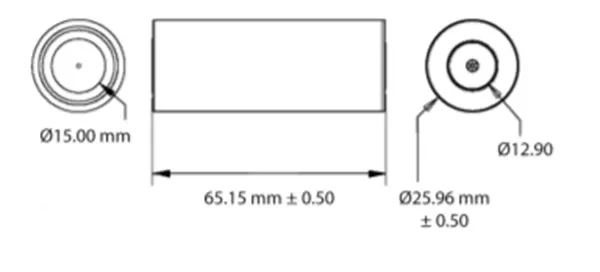
ANR26650M1-B cell has a dimension of 26mm diameter and height of 65mm,According to these dimensions the battery sixe is determined.
Length of casing(L)=number of cells at series*(diameter of cell + cell margin length)+clearance length(edge cell diameter+margin)
L=136*30+60
L=4140mm
Breadth of the casing=Number of cells in parallel*(diameter of cell + cell margin length)+clearance length(edge cell diameter+margin)
B=16*30+60
breadth=540mm
Battery case height(H)=65+35(Cell height+wiring margin,cell holder and metal strip space)
H=100mm
Now the weight of the battery pack should be calculated,
Weight of individual cell=76g
Total no. of cells=2182
Weight of the battery pack=Weight of individual cell*cell number+Weight of accessories
W=2182*76+5=165.8+4.5=170.3kg
We can look into the design aspects of the battery pack
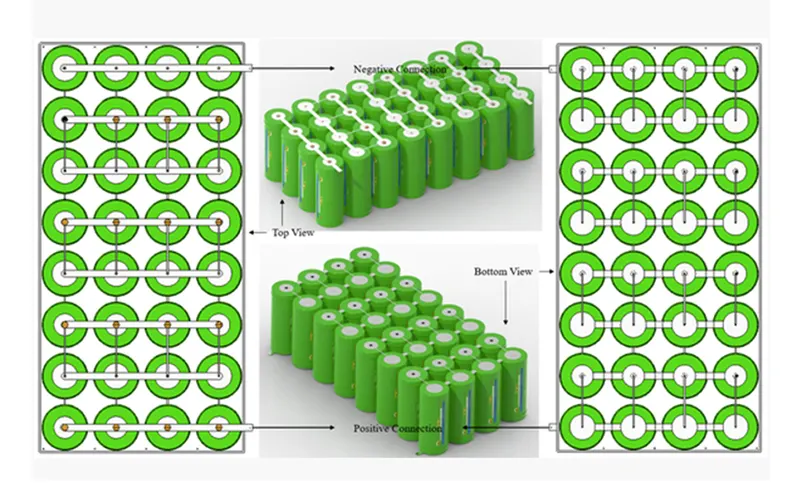
Machine connectors should be built to prevent short-term unintended circuits. Both the maximum time and ambient temperature at which the pack is expected to operate, we designed these utility connectors to carry the maximum estimated current capacity.
Cell connectors-Cell connectors should be measured at the expected maximum carrying capacity. Incompatible tabs can burn, resulting in even greater resistance. A123 Systems recommends clean nickel tabs or nickel-coated copper tabs for reliable welding of terminals. Some alloys, on the other hand, provide heat, strength, and low resistance, all of which are desirable attributes for an effective connection. End caps should not be sold, and cell connections (tabs) should not be associated with high temperatures. Tabs should be represented or laser-treated at both ends of the cells, according to A123 Systems.
With a prominent feature on the weld tab, resistance welding produces continuous current for a specified time. In order to have a constant high quality temperature at all times, these parameters can be established and controlled.
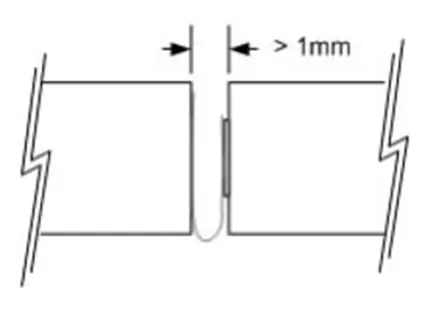
Spacing between each cell - Any mechanical mechanism should not be used to block a cell hole, located on the end of the cell's end (s) (POSITIVE side of the cell). The cell vent is blocked, and the cell is suppressed enough to create pressure on the cell, preventing the cell from leaking out properly. To allow air to open between error situations, ESS intended for cell insertion eventually requires at least 1 mm gap between cells.
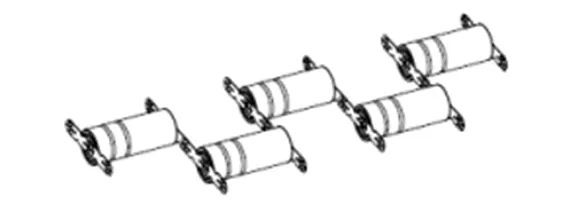
Series string connection
By connecting a single positive cell terminal to the next negative cell terminal, series cells can obtain high operating voltages. Using the tabs of their current collection, connect the unit to the series cells in the same way as shown in Figure.
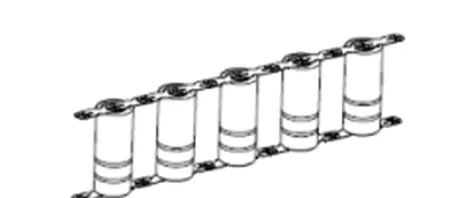
Parallel string connection-
By connecting the like-polarity terminals of nearby cells, cells in parallel strings can reach larger operational capabilities. Connect strings of parallel cells using their current collection tabs in the same way that Figure shows.
The most popular type of cell used today is cylindrical cells. This structure enables additional processes and methods, which improve flexibility while reducing costs.
Cylindrical cells can be formed much faster than prismatic cells, allowing the production of KWh per cell per day, resulting in a decrease of $ per KWh. In a cylindrical cell, the electrodes are tightly attached and contained in a metal casing to prevent the electrode material from cracking due to mechanical vibrations, hot cycling of charging and discharge, and mechanical expansion of current conductors internally due to hot cycling. In order to increase electrical energy and power, several cells are connected in series and in tandem.
Use of nickel strips -
Nickel strip is widely used in batteries. It is due to its efficiency in staining and staining, as well as its long-term resistance to corrosion. It has good features and withstands harmful environments in a variety of ways. After spraying on battery packs, pure nickel will never rust. The current transmission between the batteries will not be affected.
What you want is pure nickel filters, but many retailers are replacing nickel-plated steel fibers, which are low and high resistance, making them unsuitable for most battery projects.
Reference-
- https://lithiumwerksbatteries.com/
- https://www.batteryspace.com/prod-specs/6610.pdf