Project 1 Mechanical design of battery pack
Battery pack capacity: 18 kWh
Cell: ANR26650M1-B
Prepare a detailed battery pack drawing along with its enclosure. State your assumptions.
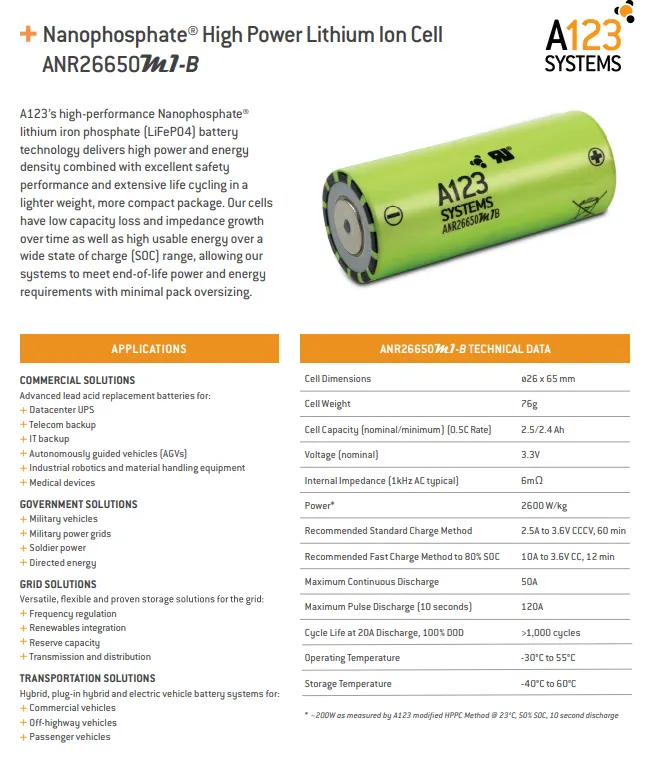
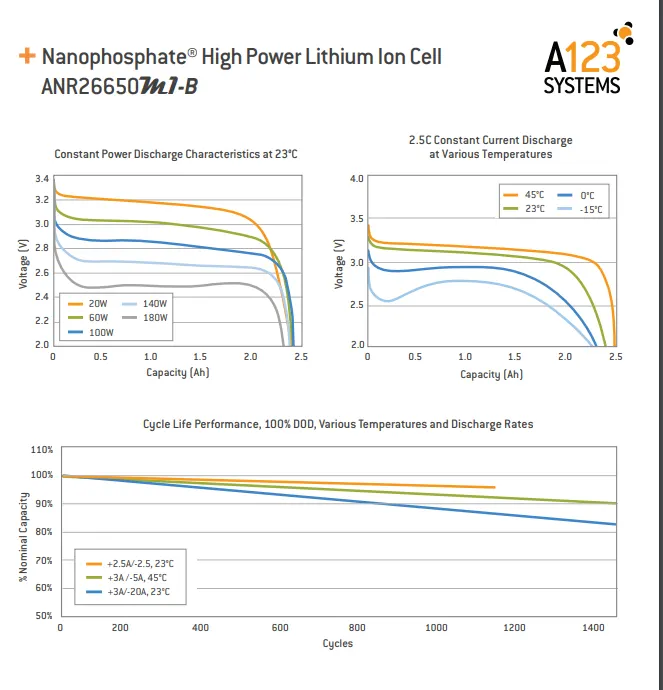
ANR26650M1-B Specifications
Nominal Ratings
Voltage: 3.3 Volts
Capacity: 2.5 Ah
Energy: 8.25 Wh
Specific Power: 2600 W/kg
Impedance (1KHz AC Typical) 6 mΩ
Cycle Life at 1C/1C, 100% DOD: > 4000 cycles
Cell Type: 26650 Lithium Ion Power Cylindrical Cell
Discharging
Max Continuous Discharage: 50 A
Max Pulse Discharge Current >50% SOC (10s): 120 A
Minimum Voltage: 2 Volts
Temperature: -30ºC to 55ºC
Charging
Recommended Standard Charge: 2.5 Amps
Max Charge Rate: 10 Amps
Max Pulse Charge Current <50% SOC (10s): 25 A
Float Voltage: 3.45 Volts
Recommended charge V & Cut-off Current: 3.6 Volts, taper to 125mA
Temperature
(reduce charging current to 250mA when under 0ºC): 0ºC to 55ºC
Mechanical
Diameter: Ø25.96 +/- 0.5 mm (1.0")
Length: 65.15 +/- 0.5 mm (2.6")
Mass: 76 g
Calculation as per the assumptions:18kWh Battery pack
For designing of designing 18kWh is required to achieve the vechicle its proper range.It is depending on the Voltage and Capacity(Ah)-Amphere
Here in this Project going to design a battery pack with the value of 18kWh of the Electric Vechicle to achieve range upto 220km.For this project i assume the nominal Voltage value of 145.2V a nominal Voltage of series connection.
The value of the single cell's volume is also use to find out the value of total volume of the battery pack
The total volume of battery pack = Cell Voltage (Ah) x Cell Voltage
=2.5 x 3.3
=8.25Wh
Cell Volume=π *r*r*h
=3.14*0.013*0.13*0.065
=0.0344929 m^3
8.25 x 0.0344929Watt per volume we have to calculate:
Cell Energy Density=Cell Energy /Cell Volume
=8.25 /0.0344929^3
=239.17 wh/m^3
Now we have to assume that for 18kWh capacity to design 30 cells in series and parallel to obtain the battery pack in order too obtain the requried capacity of about 18kWh.
Let us assume 58 cells connected in series and 38 cells connected in parallel
Total number of cells connected are 58 x 38 = 2204 Cells
Voltage of the pack =Nominal Voltage x Cells connected in series
=3.3 x 58
=191.4 V
Current capacity of the pack =Rated Capacity x cells connected in parallel
=2.5Ah x 38
=95 Ah
Total energy of the battery pack =191.4 x 95
=18.184 kW
Now we know the total number of cells connected in the battery pack,we have to calculate the Energy Density,Volume, and weight of the battery pack
=Cell Volume x Total number of cells connected
=0.0344929 x 2204
=76.022 m^3
Total weight of the battery = Total number of cells x Weight of each cell
=2204 x 76
=167.505 Kg is the total weight of the battery
Now we know the total Weight of the battery and Volume battery pack of 18kW
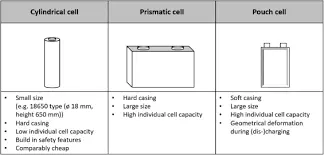
Battery Pack Construction Details:
A battery pack consists of one or more battery cells converts chemical energy into electrical energy when the discharging process takes place and electrical energy will be converted to chemical energy while charging process takes place
Components which are designed inside the battery are Electrode,anode.Cathode,Seperators,Terminals,Electrolyte and a case or enclosure.
Individual battery cells together into a single mechanical and electrical unit called batterymodule
- The modules are electrically connected to form a battery pack.
- There are several types of batteries (chemistry) used in hybrid and electric vehicle propulsion systems but we are going to consider only Lithium-ion cells. The main reason is that Li-ion batteries have higher specific energy [Wh/kg] and specific power [W/kg] compared with other types.
- The individual battery cells are grouped together into single
- Individual battery cells are grouped together into a single mechanical and electrical unit called a battery module.
- The modules are electrically connected to form a battery pack.
- There are several types of batteries (chemistry) used in hybrid and electric vehicle propulsion systems but we are going to consider only Lithium-ion cells. The main reason is that Li-ion batteries have higher specific energy [Wh/kg] and specific power [W/kg] compared with other types.
- The modules are electrically connected to form the battery pack
- There are several types of batteries (chemistry) used in hybrid and electric vehicle propulsion systems but we are going to consider only Lithium-ion cells. The main reason is that Li-ion batteries have higher specific energy [Wh/kg] and specific power [W/kg] compared with other types.
Battery Pack construction:
There are 3 steps for the construction of the battery pack.
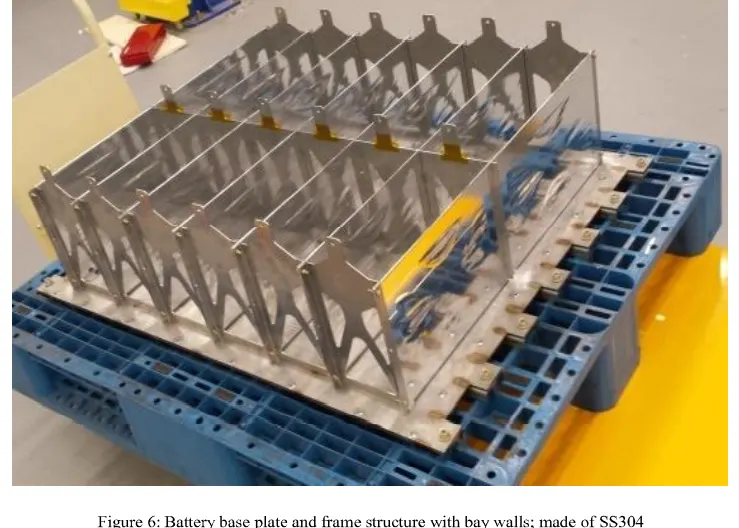
1)Battery holding and providing the spacing between the battries.
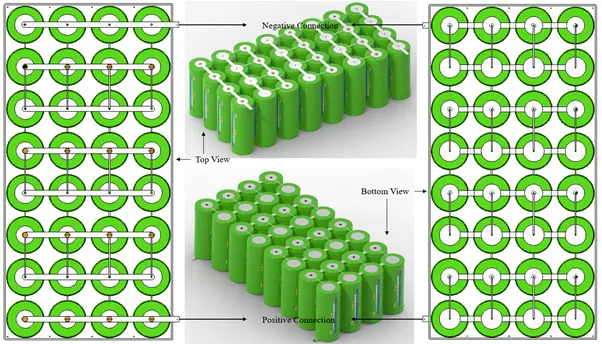
2)Connecting the battries with the strips (Series or Parallel)
3)making and manifacturing the battery enclosure housing with the thermal managment system and BMS
1)Holding and spacing:
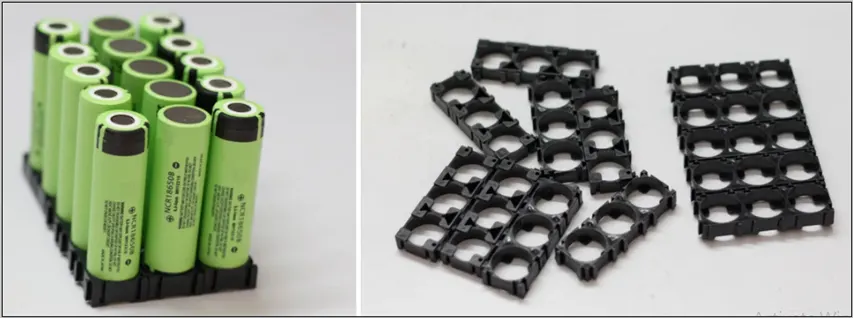
- Each of the cells are now need to be connected so that it could form a big battery module.
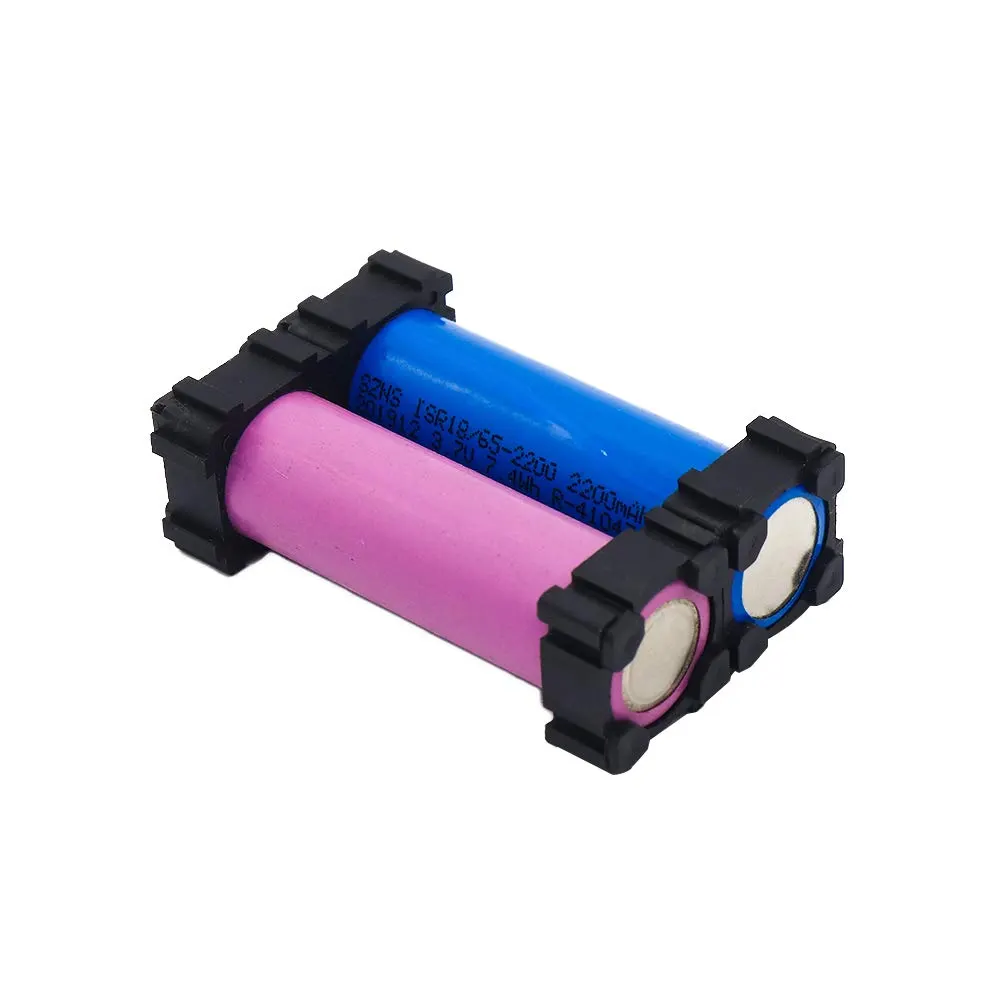
- So this holdes are very importatnt to provide the gapping between the battery and holding the battries in the correct manner.
- The cells has a vent at the end cap of the cell.and should not be covered by any mechinical means.Blocking the cell vent and then sufficiently abusing the cell so as to built the pressure in cell.There must be minimum of 1mm spacing between each cells to allow the vent to open under the fault condition.Holders will make it easy to palce the contact plate between the cells.
2) Connecting the cells:
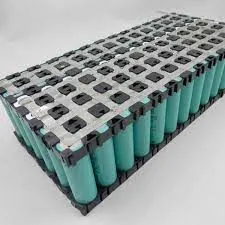
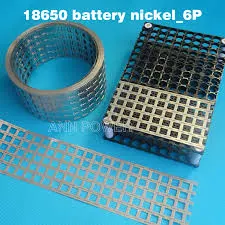
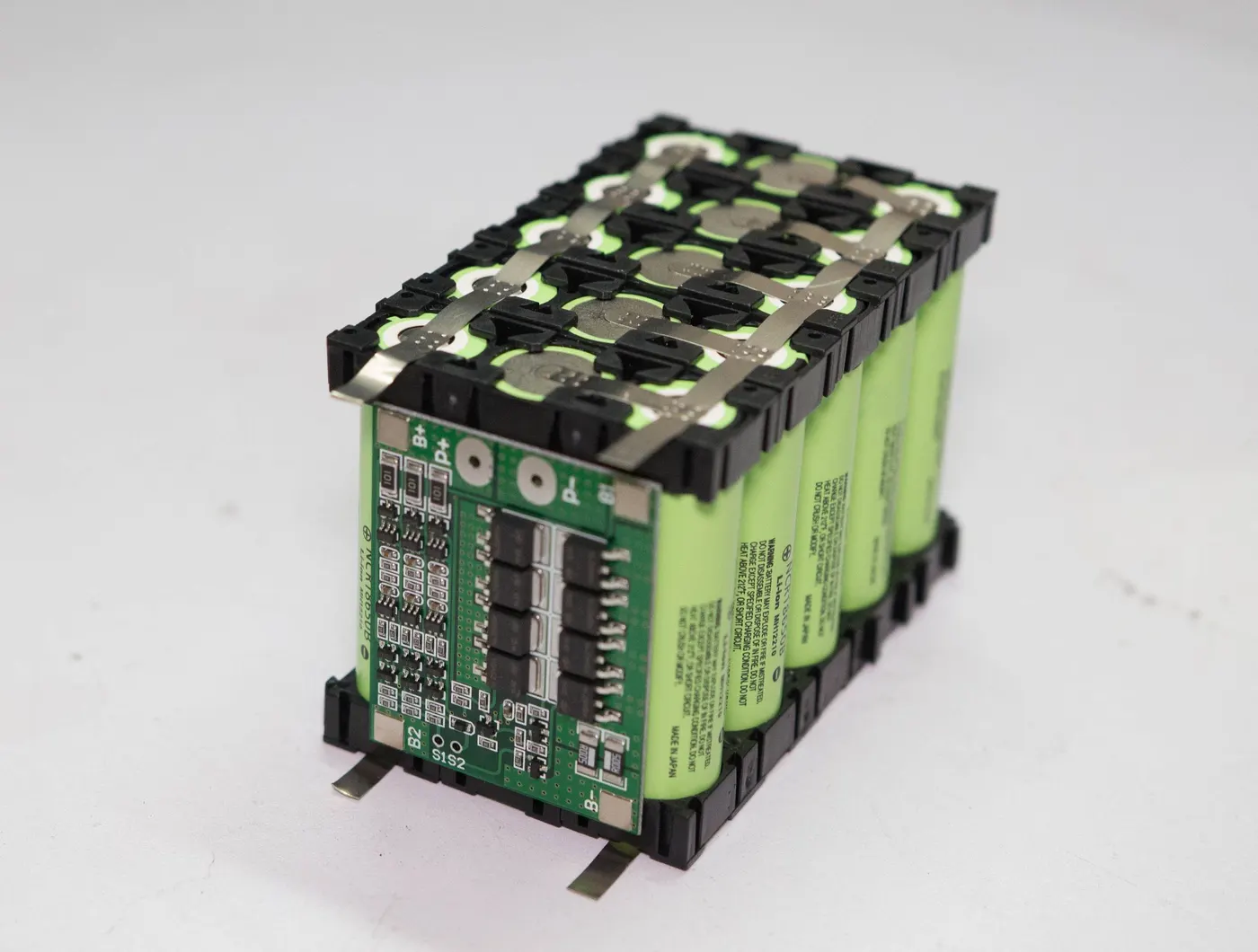
- When the cells are plalced in the holders ,then the cells need to be connect in the proper manner in series or parallel to get the desired results.Ususally a nickle strip is used between the cells to make the conatct
- .

- Nickel strip is generally used in battery building.
- Its due to its efficiency of usage in spot welding and soldering as well its high corrosion resistance over time.
- It has good properties and excellent resistance to many corrosive environments.
- The pure nickel will never get rust after it applied to battery packs.
- It won’t affect the current transfer between batteries.Pure nickel strips are the material you want, but many vendors swap out it for nickel-plated steel strips, which are poorer and have greater resistance – not suitable for most battery projects. 100% pure nickel strip.
- verify all of our strips to assure that you are getting the high-quality pure nickel. It also solder incredibly quickly, so you can weld them onto your existing busbar connections to raise the supply of current you can pull through the busbars. The benefits are nearly limitless!
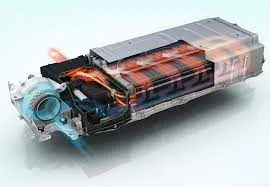
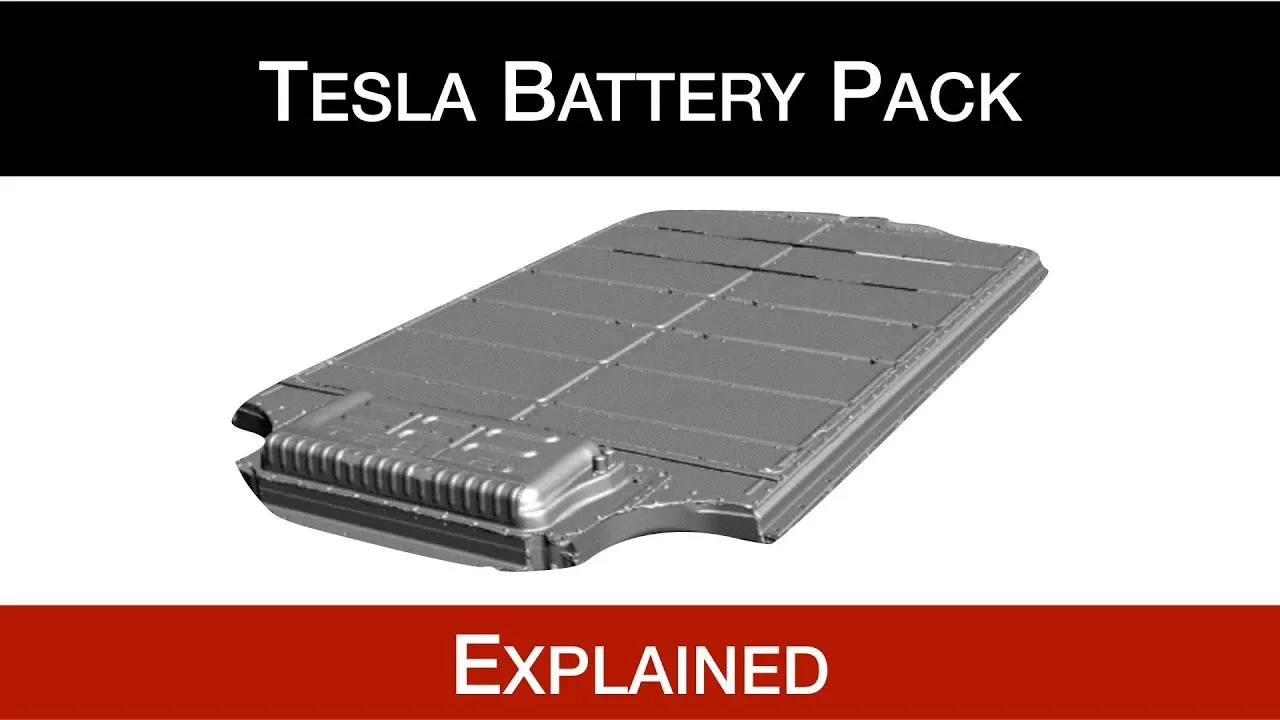
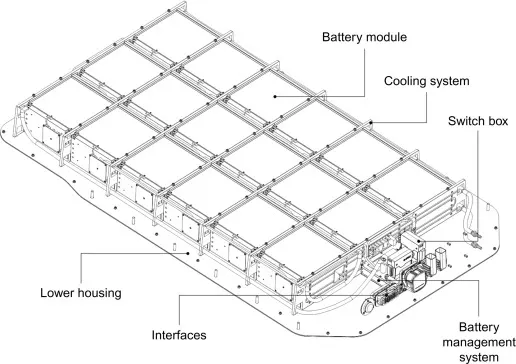
- 3)Battery enclosure and thermal managment of battery and BMS
- The battery encolsure is the final protection of the battery.
- So the battery enclose must be very strong and light in weight.
- In the case of any accident the batteries has the tendentcy of catch fire if it get leaked during the car crash,so the battery modle is enclose in a very strong encolsure due to the safety.
- The weight should be less so we can get the best pssible range.
- In this metal housing there is a temperature managment system provided to cool and heat the battries when there is a need to get the best performace of the battries.
- There a several numbers of models connected in series and parallel to build a entire battry pack.
-
BMS:
A battery management system (BMS) is an electronic system that manages a lithium battery pack and the main functionalities are
1. Monitors all of the parallel groups in the battery pack and disconnect it from the input power source when fully charged
2. Balance all the cells voltage equally
3. Doesn't allow the pack from over-discharged
- Conclusion:Thus we have studied how to model a battery pack for 18kw battery.