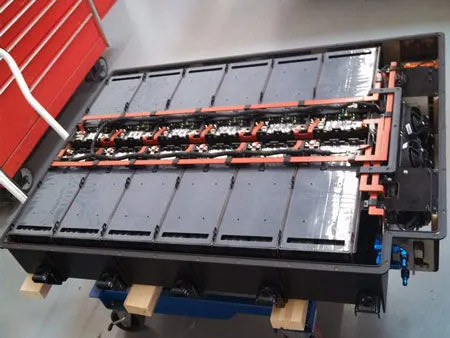
Project 1 Mechanical design of battery pack
STUDENT OF ONLINE EV BATCH 16
ANS :
Battery pack capacity: 18 kWh
Cell: ANR26650M1-B
Prepare a detailed battery pack drawing along with its enclosure. State your assumptions.
Cell: ANR26650M1-B
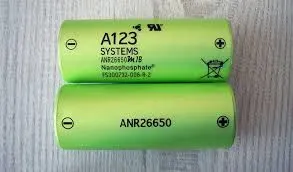
- Lithium Werks ' 26650 cells are capable of delivering very high power due to its use of patented Nanophosphate ® battery technology.
- Based on lithium iron phosphate chemistry (LiFePO4), the cells are inherently safe over a wide range of temperatures and conditions.
- Whether the application requires outstanding cycle life or stable float reliability, the Lithium Werks’ 26650 cells are suitable for a wide variety of power, pulse, or stand-by applications.
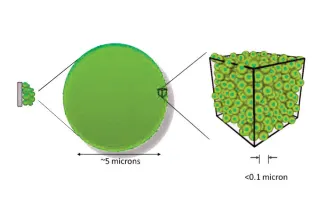
- Nanophosphate® Technology 26650 Lithium Ion Power Cell Nanophosphate® battery technology offers stable chemistry, faster charging, consistent output, excellent cycle life and superior cost performance.
- It provides the foundation for safe systems while meeting the most demanding customer requirements.
- Multiple layers of protection are employed at the chemistry, cell and system level to achieve an energy storage solution with superior safety and abuse tolerance compared to metal oxide lithium-ion chemistries.
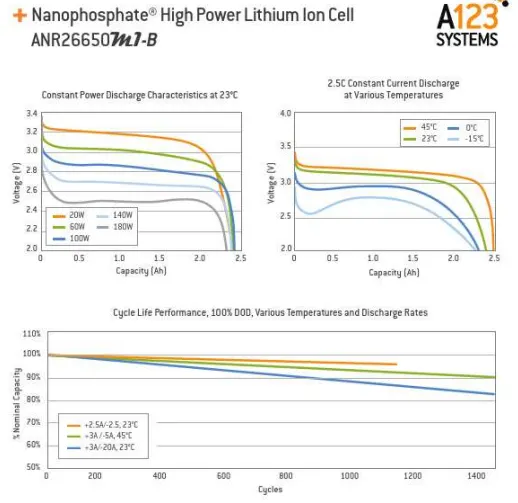
Applications
• Energy storage
• Uninterruptible Power Supplies
• Communication technologies
• Aerospace
• Electrified mobility devices
• Industrial equipment
• Medical devices
• Toys
DATA HAS BEEN COPIED JUST FOR CALCULATION AND DESIGN PURPOSE.
ANR26650M1-B Specifications
Nominal Ratings
Voltage: 3.3 Volts
Capacity: 2.5 Ah
Energy: 8.25 Wh
Specific Power: 2600 W/kg
Impedance (1KHz AC Typical) 6 mΩ
Cycle Life at 1C/1C, 100% DOD: > 4000 cycles
Cell Type: 26650 Lithium Ion Power Cylindrical Cell
Discharging
Max Continuous Discharage: 50 A
Max Pulse Discharge Current >50% SOC (10s): 120 A
Minimum Voltage: 2 Volts
Temperature: -30ºC to 55ºC
Charging
Recommended Standard Charge: 2.5 Amps
Max Charge Rate: 10 Amps
Max Pulse Charge Current <50% SOC (10s): 25 A
Float Voltage: 3.45 Volts
Recommended charge V & Cut-off Current: 3.6 Volts, taper to 125mA
Temperature
(reduce charging current to 250mA when under 0ºC): 0ºC to 55ºC
Mechanical Dimensions
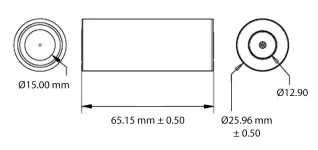
Diameter: Ø25.96 +/- 0.5 mm (1.0")
Length: 65.15 +/- 0.5 mm (2.6")
Mass: 76 g
Now, calculation is needed to form a Battery pack capacity: 18 kWh
From here, it is clear that the required amoun of energy is 18 kWh, So to achieve this , I consider 145.2 V nominal voltage voltage for series connection.
Total volume of the battery pack is fromed by the value of the volume of the cell used.
Since, Single Cell Energy (Wh) = Cell Capacity(Ah)*Cell Voltage(V) ;
= 2.6*3.3 ;
= 8.58 Wh ;
This value is used to calculate the total energy of the battery pack required.
Since, Volumetric Energy (Wh/m^3)= Single Cell Energy/Volume of each cell ;
= 8.58/0.03451 ;
= 248.62 Wh/m^3 ;
now, Gravimetric energy (Wh/kg) = Single Cell Energy/Single Cell Mass (kg) ;
= 8.58/0.076 ;
= 112.89 Wh/kg ;
High Voltage Battery Pack calculation , For this, I consider, distance of 250 km with 18 kWh battery pack. and also 145.2 V nominal voltage for series connection.
Hence, Vehicle Range = 250 Km;
Battery pack capacity = 18.121 kWh
Now, Per km average energy = 18.121/250 ;
= 72.483 Wh/km ;
So, Battery pack energy = Average energy*km ;
= 72.483*250
= 18.121 kWh ;
Let's consider Nominal Voltage for series connection is 145.2 V, Since, this depends upon the motor power, so as per motor we can decide it as :
Number of cells connected in series = Nominal voltage of series connection/Nominal voltage of single cell;
= 145.2/3.3 ;
= 44 ;
So, 44 cells to be connected in series to provide the proper voltage.
Hence, Energy for battery pack (Wh) = No. of cells in series*Single cell energy;
= 44*8.58 ;
= 377.52 Wh ;
Now, Number of cells connected in parallel = Battery pack energy (KWh)/Energy for battery pack (Wh) ;
= 18.121/377.52 ;
= 48 ;
So, 48 cells to be connected in parallel to provide a proper capacity.
Hence, Battery Pack Energy = No of cells in parallel*Energy for Battery pack ;
= 48 *377.52 ;
= 18.121 kWh ;
So, Battery Pack Capacity = No. of cells connected in parallel * Single cell capacity (Ah) ;
= 48*2.6 ;
= 124.8 Ah ;
This value of battery pack capacity is used for the total power required by the vehicle.
Hence, Total no of cells for battery pack = No of cells in series* No of cells in parallel ;
= 44*48 ;
= 2112 ;
Therefore, 2112 cells are responsible for formation of a complete battery pack.
Mass of Battery pack = Total no of cells for batery pack * Mass of single cell (kg) ;
= 2112 * 0.076 ;
= 160.512 Kg ;
This is the total weight of cells connected in series and parallel.
Now, Total volume of battery pack =Total no of cells for battery pack * Volume of single cell ;
= 2112 * 0.0345 ;
= 72.89 m^3 ;
This is the volume of complete battery pack.
Now, Cell peak current = C rate (Max Pulse Charge Current)*Single cell capacity
= 20*2.6 ;
= 52 A
Now, Battery pack peak current = Cell peak current* NO of cells in parallel ;
= 52*48 ;
= 2496 A ;
In this way, Vehicle will decide how much power is required to move .
Battery pack peak power = Battery pack peak current*Voltage of series connection ;
= 2496*145.2 ;
= 3624192 W or 362.42 kW ;
Now, Cell continous current = C rate (Max continous charge current)*Single cell capacity ;
= 10*2.6 ;
= 26 A ;
Now, Battery Pack continuous current(A) = Cell continuous current* NO of cells connected in parallel ;
= 26*48 ;
= 1248 ;
This is the power which is used to continue supply to whole battery pack system.
Now, Battery pack continuous power (W) = Battery pack continuous current* Voltage of series connection ;
= 1248*145.2 ;
= 18120.96 or 18.120 kW
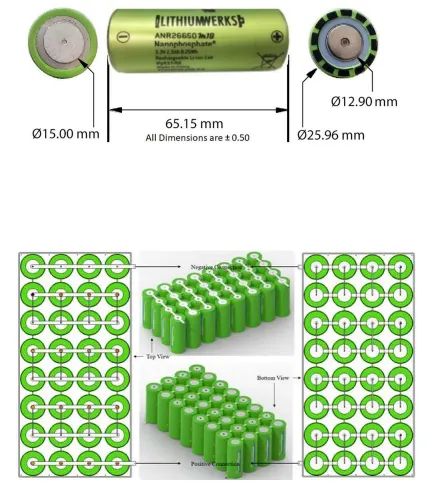
Drawing of Battery Pack :
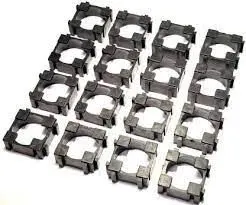
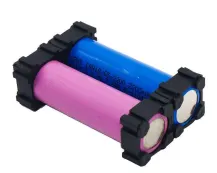
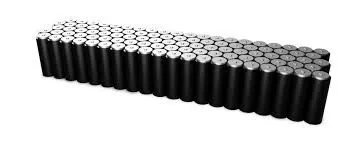
BATTERY SPACERS :
- A size-conversion spacer for AA rechargeable batteries is an extra casing which can temporarily convert your AA batteries to C or D size.
- More specifically, you insert an AA size battery into a C or D size type of spacer and temporarily use it for appliances operating on C or D size batteries
NICKEL STRIPS :
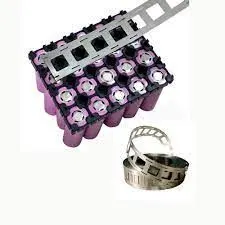
- Nickel strip is generally used in battery building.
- Its due to its efficiency of usage in spot welding and soldering as well its high corrosion resistance over time.
- It has good properties and excellent resistance to many corrosive environments. The pure nickel will never get rust after it applied to battery packs.

BATTERY ENCLOSURE :
- The growth of electrification brings many new challenges, one of which is to design and manufacture a robust battery box or housing.
- An efficient battery housing has many attributes that aid passenger and battery safety, assist in thermal management, while protecting the battery from the harsh environment under the vehicle and in an accident.
- The system must be produced within the financial and weight constraints of the vehicle.
- The battery box consists of four primary structural pieces: top cover, bottom cover, internal structure, and side impact crash protection structure.
- In the image below, the primary load-bearing structural components are identified as the crash structure and the battery frame:
Size and Weight
- The battery system 2m x 1.4m is enormous in size and weight, as much as 700 kg and 22-27% of total vehicle weight.
- At a minimum, this mass needs to remain stable during vehicle performance.
- In the best designs, the battery and enclosure greatly enhances vehicle structure and ability to absorb crash energy.
- To perform under these requirements, it is imperative to select the best materials and manufacturing processes for the housing and structure, which comprises as much as 20% of the cost and the weight of the battery system.
- The long length battery boxes contain constant cross section side rails and cross members, both of which are ideal for extrusions.
The Porsche Taycan EV credits the use of aluminum extrusions to carry the structural load, and to absorb crash energy to keep the passengers safe. Porsche engineers say that the battery and pack represent about 10% of the vehicle body stiffness:
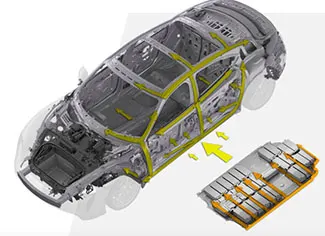
”Without the battery, the car isn’t crash safe.”
- Porsche Taycan EV body design lead
More evidence of extrusions on the Taycan are the “truss design battery frame,” and the “0.6-inch extruded aluminum honeycomb structures running the length of the rocker panels.”
Crash Management
“Load path distribution in the structure of extruded profiles”…which makes up 47% of the sophisticated crash structure of the Audi e-Tron[2].
Audi e-Tron Battery Box Showing Extrusions
In crash, including the side pole crash test, extrusions offer significant protection to the battery system due to the strength and energy absorption, with minimal weight. By nature, extrusions can be produced in a single section, providing load-carrying capability, and this same volume doubles circuit to transport liquid cooling fluid.
FINAL FORM :