Project 1 Mechanical design of battery pack
Q: Battery pack capacity: 18 kWh
Cell: ANR26650M1-B
Prepare a detailed battery pack drawing along with its enclosure. State your assumptions.
A: ANR26650M1-B
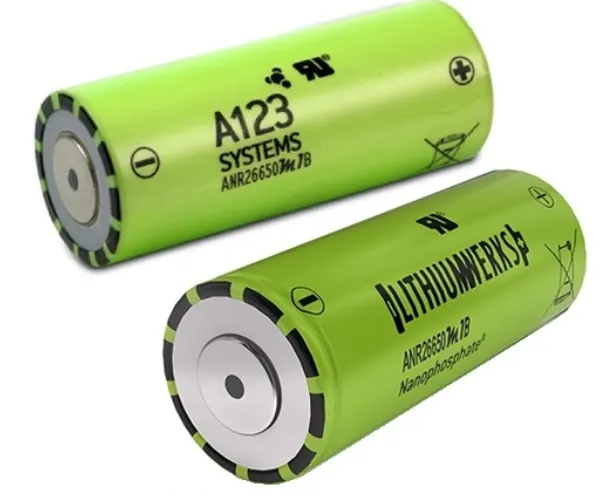
A123’s high-performance Nanophosphate® lithium iron phosphate (LiFePO4) battery technology delivers high power and energy density combined with excellent safety performance and extensive life cycling in a lighter weight, more compact package. These cells have low capacity loss and impedance growth over time as well as high usable energy over a wide state of charge (SOC) range, allowing the systems to meet end-of-life power and energy requirements with minimal pack oversizing.
COMMERCIAL SOLUTIONS :
- Advanced lead acid replacement batteries for:
-Datacenter UPS
-Telecom backup
-IT backup
-Autonomously guided vehicles (AGVs)
-Industrial robotics and material handling equipment - GOVERNMENT SOLUTIONS
-Military vehicles
-Military power grids
-Soldier power
-Directed energy - GRID SOLUTIONS
-Frequency regulation
-Renewables integration
-Reserve capacity
-Transmission and distribution - TRANSPORTATION SOLUTIONS -Hybrid, plug-in hybrid and electric vehicle battery systems for:
-Commercial vehicles
-Off-highway vehicles
-Passenger vehicles
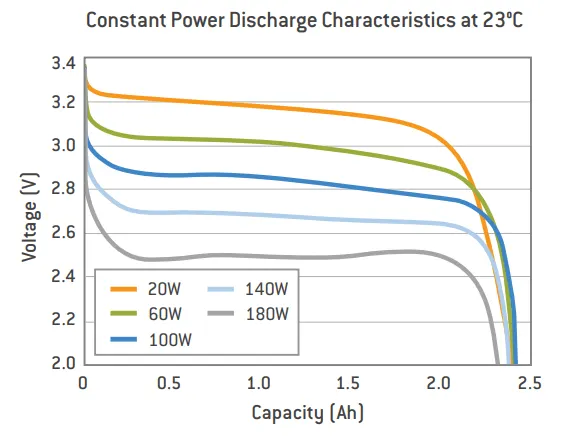
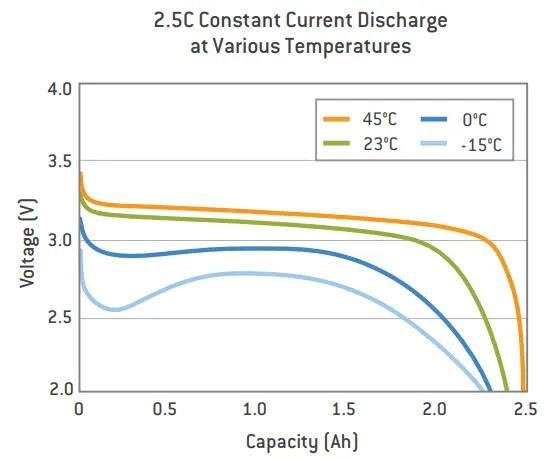
Features
The ANR26650M1-B is the next generation of A123 Systems pioneering 26650 cylindrical cell, now with greater power and energy density and lower impedance. This versatile lithium ion cell is suitable for a wide variety of applications and system designs. Proven performance in the toughest conditions, combining durability, reliability, and safety, the ANR26650 cell offers an excellent combination of price-performance.
Cylindrical Cell Primary Applications
- Portable high power devices
- Stationary battery backup systems
- Grid stabilization energy storage systems
- Commercial truck and bus hybrid electric vehicles (HEVs)
Nanophosphate® LiFePO4 Benefits
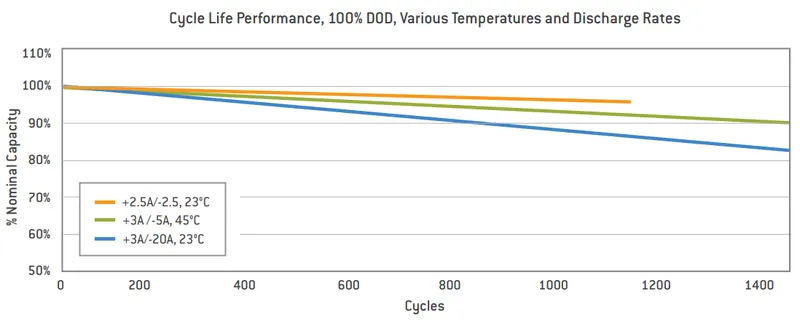
- Cycle Life at 1C/1C, 100% DOD, > 4000 cycles
- Safety: Excellent abuse tolerance and environmentally friendly
- Life: Excellent calendar life, 10X cycle life vs. conventional lithium ion
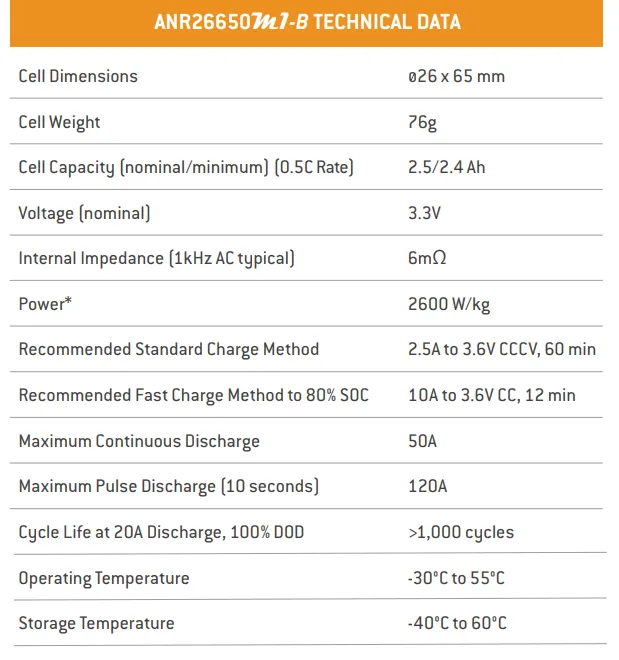
LithiumWerks ANR26650M1-B SpecificationsVoltage: 3.3 Volts
- Voltage: 3.3 Volts
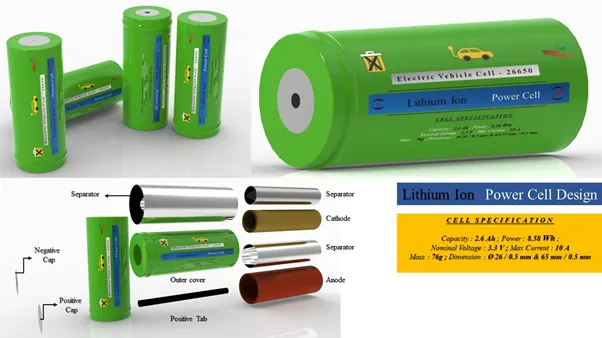
- Capacity: 2.5Ah
Dimensions
- Diameter: 25.96 +/- 0.5 mm
- Length: 65.15 +/- 0.5 mm
- Mass: 76 g +/- 1.0 g
EV Battery pack:
- Single cell cant meet vehicle power/energy demand.
- There are cells with high capacity (>100Ah) but not above 4V.
- Series connection is compulsary.
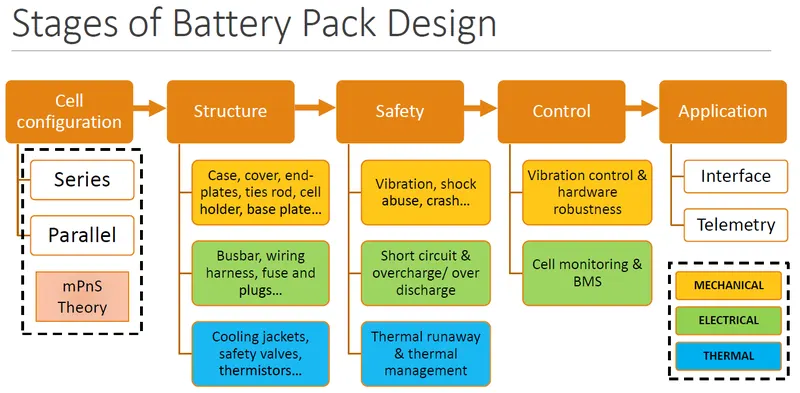
- Most of the battery packs are combination of series and parallel.
- Larger battery packs have multiple modules
- Cells---> Modules---> Pack
Energy or capacity calculated = Power * Time (kwh)
Power = Voltage * Current (kw)
= 3.3 * 2.5
= 8.25 kw
To get 18kwh, we are assuming 44s48p cell configuration so that total number of cells are;
44*48 = 2112 cells
Series connection gives 44*3.3 = 145.2 V
Parallel connection gives 48*2.6 = 124.8 Ah
So that 145.2*124.8= 18.120 kwh energy or capacity.
Number of cells = Rated motor voltage / Nominal cell voltage (for series)
Number of cells = Continuous motor current / Nominal cell capacity (for parallel)
Mechanical design of cell:
The battery parameters have a significant influence on other components and attributes of vehicle like;
- maximum traction motor torque
- maximum regeneration brake torque
- vehicle range
- vehicle total weight
- vehicle price
Input parameters that electric vehicle battery system depends are;
- Chemistry
- Voltage
- Average energy consumption of vehicle
- Vehicle range
Mechanical designing of cells should consider factors like safe structure for extreme conditions, cost, productivity, reliability, ease of assembly and service, aesthetics, compactness and light weight.
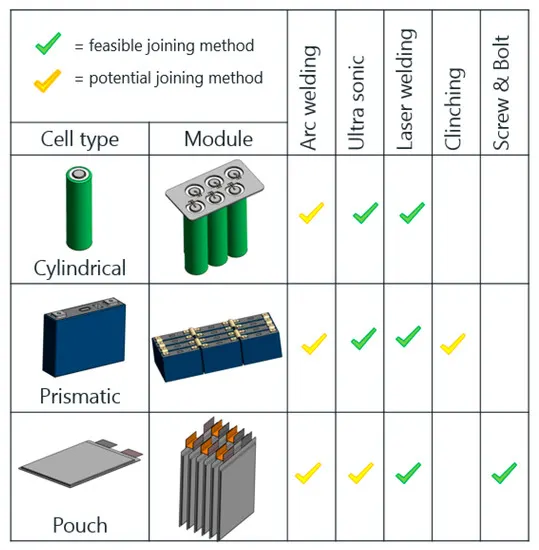
Cylindrical cells are cylindrical in shape and use up more space. They are the most commonly used cell type due to their lower cost. Cylindrical lithium battery electrodes are easier to weld when compared with lithium polymer pouch cells or prismatic cells. These are often used in laptop batteries and even EVs.
Prismatic cells are designed are thin and light. Prismatic pouch cells are sensitive to deformation in high-pressure environments, whereas cylindrical cells handle high internal pressures much better and without deforming.
Pouch cell is a kind of prismatic battery that has a layer of aluminum plastic film on the outer bread of liquid or semi-solid lithium-ion, it is not a metal hard case. So, compared with ordinary square batteries, the weight can be lighter, and it can be easily made into different sizes and shapes.
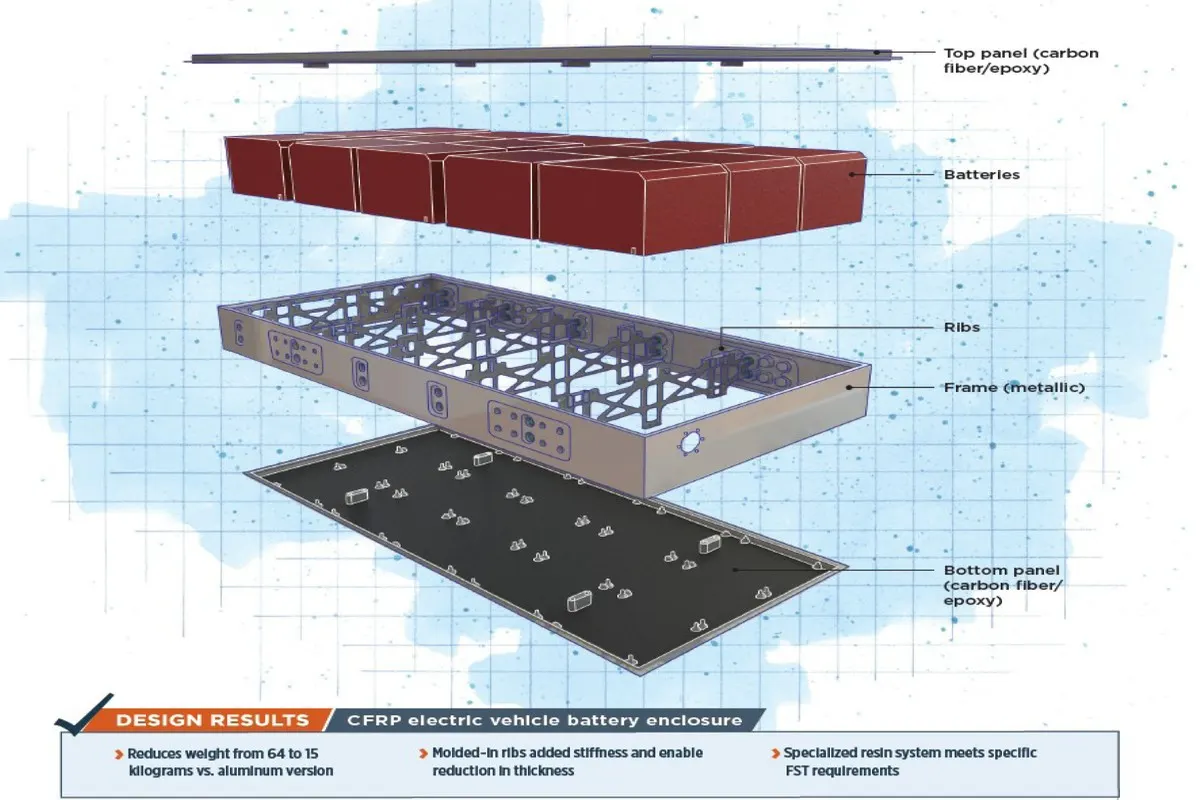
Enclosure of battery:
The cell temperature, current sensors, thermal management, enclosure sizing and isolation are the major factors that should be considered for the mechanical construction of battery pack.
BMS Topology:
- Centralised: Single controller connected to battery.
- Master and slave: Slaves connect datas from battery packs and give it to microcontroller unit. MCU act as master and controls the analog front end (AFE) which is the slave.
- Modular: All AFE has seperate MCU connected to it.
- Distributed: Used in smaller battery packs, has sensor equipped with the architecture.
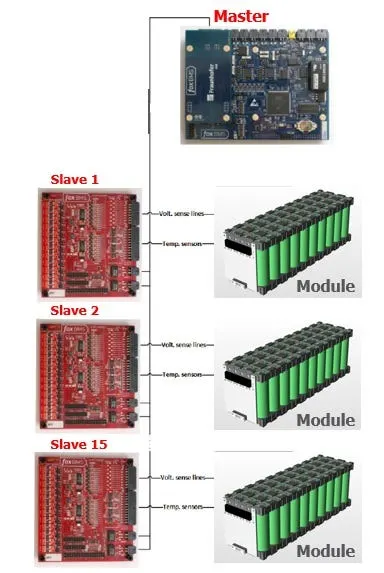
Cell balancing: Used to balance cells to maintain SOC level. There is passive cell balancing and active cell balancing.
SOC estimation methods:
Coulomb counting: Coulomb counting is a technique used to track the State of Charge of a battery pack. It works by integrating the active flowing current (measured in amps) over time to derive the total sum of energy entering or leaving the battery pack. This produces a capacity that is typically measured in Amp-hours.
Kalman filter: The first Kalman filter is chosen to estimate time- varying parameters. The second is used to estimate the SOC in the presence of sensor errors, using the parameter values estimated by the first sensor. Since the proposed method uses a cascaded combination of two Kalman filters, it is called “Series Kalman Filters.”