Project 1 Mechanical design of battery pack
THEORY
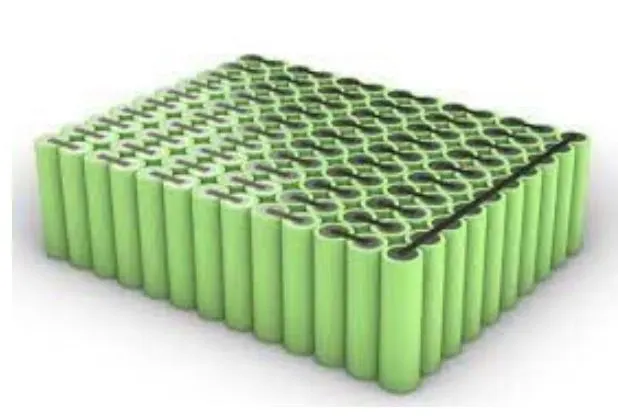
A battery pack is a st of any number of (preferabley) identical batteries or individul battery cells. they may be configured in a series, parrels or a mixtrure of both to deliver the desired voltage, capacity or power density. the term battery pack is often used in reference to cordelss tolls, radio-controlled hobby toys, and battery electric vehicle.
Component of battery pack include the individual batteries or cells, and the interconnects which provide electrical conducitivity between them. rechargeable battery packs often contain a temperature sensor, which the battery charger uses to defect the end of charging interconnected are also found in batteries as they are the part which connect each cells, through batteries are most often only arranged in seroes strings.
When we pack contain group of cell in parellel there are differing wiring confriguration which take into consideration the electricel balance of the circuit. battery regulator are somethings used to keep the voltage of each indivudal cell below its maximum value during charging as a to allow the worker battery to because full charge bringing the whole pack back into balancer devices which can shuttle energy from strong cell to weaker ones in real time for better balance. A well-balanced pack lasts longer and delivers better performance.
for on inline packege, cell are selected and stacked with solder in between them. the cell are passed together and a current pulse generates heat to solder them toghether and to weld all connections internal to the cell.
GOVERING EQUATIONS:-
We will use following formula and equation to design the battery pack.
1. total battery pack voltage = nominal voltage of a cell*number of cell in series
2. Total battery pack capacity = Nominal cell capacity*number of cell in parallel
3. total battery pack energy = (total battery pack voltage)*(total battery pack capacity)
4. Battery pack volume = cell volume*total number of cells
5. energy density of battery pack = total number of cell*each cell weight
6. Total weight of the battery pack = Total no of cell*ecah cell weight
7. cell volume=pi * radius of the cell*height if the cell
8. Cell energy = cell voltage * cell capacity
9. cell energy density = cell energy/cell volume
OBJECTIVE;
To design a battery pack which has 18kwh, using ANR26650m1-B cell module.
SOLUTION:
First let us look what are the space and battery chemistry of ANR26650M-B)M1-B cell.
Datasheet:
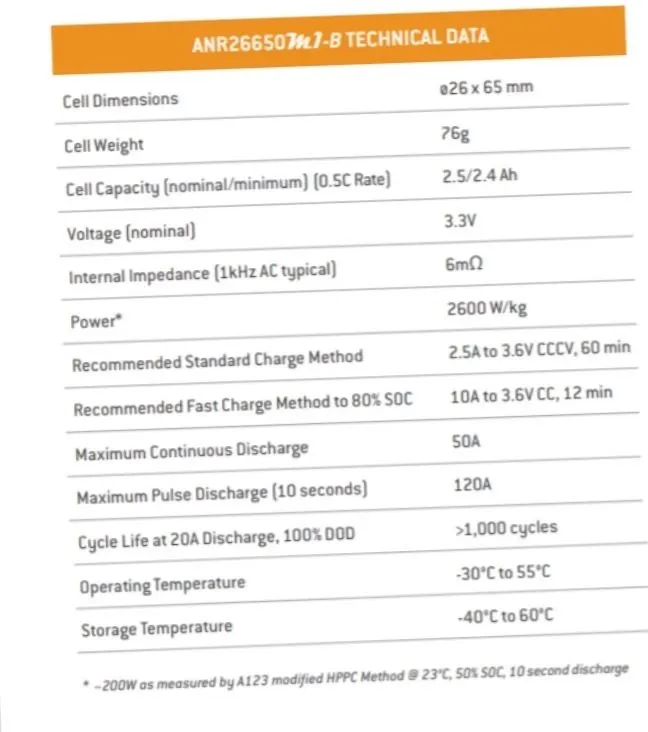
figure
The above datasheet gives the technical specifications of the cell. here the manufacturing name is a123 SYSTEMS.
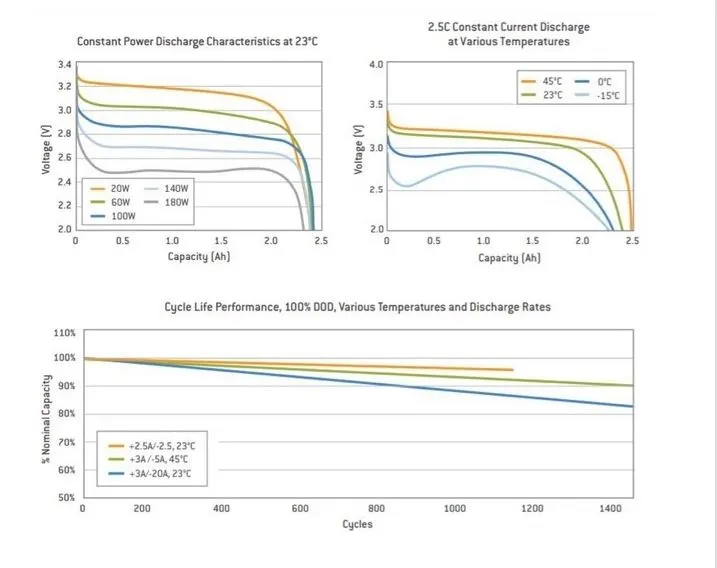
There are the graphs related to the cell regarding the performance of the battery.
This high-performance lithium iron phosphate (liFePO4) battery technology delivers high power and energy density combined with excellent safety perfromance and extensive life cycleing in a lighter weight, more compact package. our cell have low capacity loss and impedence growth over time as well as usable energy over a wide state of charge (SOC) range, allowing oue system to meet end-of-life power and energy requirement with minimnal pack oversizing.
cell chemistry.
the lithium iron phosphate battery (LiFePO4) or LEP battery (lithium ferrophosphate), is a type of lithium ion battery using lithium iron phosphate (liFepo4) as the cathode material, and a graphitic carbon electrode with a metallic backing as the anode. the energy density of lifepo4 is lower than of lithium cobalt oxide (licoO2), na dalso has lower operating voltage. the main drawback of LiFePo4 is its lower electrical conducitivity. there for all the Lifepo4 cathodes under consideration are actually lifepo4/c (composite made with carbon). stability, etc lifepo4 is finding a number of role in vehicle use, utility scale stationary applications, and backup power. LEP batteries are cobalt free.
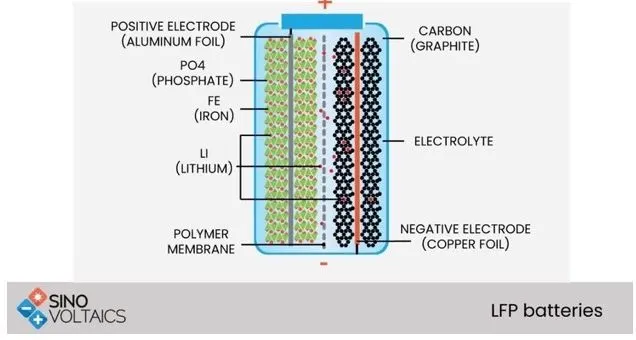
figure.4
APPLICATION OF ANR26650M1-B cell:
Commercial solutions -
1. advanced lead acid replacement batteries for.
2. Datacenter UPS
3. Telecom backup
4. It backup
5. Autonomously guided vehicles (AGVs)
6. industrial robotics and material handling equipment
7. Medical devices
GOVERNMENT SOLUTION
1. Military vehicle
Military power grids
3. Soldier power
4. directed energy
GRID SOLUTION_
1. frequency regulation
2. Renewables integration
3. Reserve capacity
4. transmission and Distribution
TRANSPORTATION SOLUTION-
Hybrid, plug-in hybrid electric vehicle battery system for:
1. Commerical vehicles
2. Off-highway vehicles
3. Passenger vehicles
BATTERY PACK DESIGN;-
The purpose of a battery pack is to provide a convenient integrated power source for portable applications. the advantages of using custom desigh are outlined in the section on benefits of custom packs. the pack may fulfil several functions:
1. it enables higher voltage or higher capacity with the associted from low voltage, low capacity cellss
2. It houses a cell or a bank of cells together with the associated interconnection in a single convenient pack.
3. it accommodates any necessary monitoring and electronic protection devices or circuit within the pack
4. It can accommodates additional circuit such as indicator lights, heaters, cooling ducts and solar panels.
5. it matches and meshes with the cavity in the product which the battery is intended to power providing both electrical and mechanical interfaces.
6. It can unique electrical and mechanical interface to ensure compatibility both of the battery with the intened product
following factor are considred while we design a bettery pack.
a). capacity and voltage;
with a simple series chain of ce;lls the battery capacity in Amphours is the same as the capacity of the individual cells since the current flows equals through all the cell in the chain.
high battery voltage are achived adding more cell in a series chain. the voltage of the battery is the voltage of a single cell multaiple by the number of the cell in the chain this does not in the chain increase the watthour capacity, or the total stroed energy in proportion to the number of cell in the chain.
battery capacity can increse through adding more parallel cells. this increase the amphour capacity as well as the watthour capacity without increase the battery voltage. for the batteries with parallel chains the capacity of the battery of the indiidual chain mautiple by the number of paralllel cchain.
Whereas cell voltage is fixed by the cell chemistry, cell capacity depends on the surface area of the electrodes and the volume of the electrolyte that is the physical size of the cell. if the all posible the number of cell in a pack should be minimized to simplify the design and to minizes potential reliability problems. fewer chains requres fewer support electronics. thus, parallel chain should be avoided by specifying the highest capacity cells available.
NOTE: cells with different capacities or cell chemistry should not be mixed in a single battery pack.
A). capacity and voltage:-
with a simple series chain of cells. the battery capacity in amphours is the same as the capacity of the individul cells since the current flows equal through all the cell in the chain.
high battery voltage are achieved by adding more cell in a series chain. the voltage of the battery is the voltage of a single cell multiplied by the number of cell in the chain. this does not increse the AmpHours capacity of the battery, but it increase the WattHour capacity, or the total stored energy, in proportion to the number of cells in the chain.
b). Cell configuration:-
The ultimate shape and dimension of the battery pack are mostly governed by the cavity which is planned to house it within the intended application. this in turn dictates the possible cell size and layouts which can be used.
C). Battery Electronics:-
Besides the cell many battery packs now incorporate associated electronics circuit. thses may be protection device and circuits, monitoring circuit, charge controller, fuel gauges, and indicator lights.electronic for high power-cell pack also including cell balancing and communication function.
D). software:-
software is a major component of liyhium battery particularly for automotive applications. control system are required to keep the cells with their specified operating range and to protect them from abuse, fuel gauging needs complex algorithms to estimate the state of charge SOC. communication with other vehicle system are needed for monitoring the battery status and controlling energy flows.
e). Internal interconnections:-
Low power cell are usually connected together using nickel strip which ar4re welded to the terminal or the case soldering is not recommenedesince the soldering process is apt to apply large, uncontrolled amount of heat to the battery component which may damage the separators or the vents whicg are normally made of plastic. modern computer controlled resistance weldersprocess.
F). External connections-
the types of terminals or connection to the external circuit depend on, the current to be carried, the frequency with we the battery may be connect and disconnected anf the high design of the cricuit to which the battery will be connected. for low power circuits, gold plated contacts are the terminals of choice for connector which are subject to frequency insertions. flying lead with spade terminals or snap on studs are also used for low power applications. metal tabs are also used on pouch cells.
G). thermal design:-
Thermal management is a major issue in high power design particularly for automotive applications. see detail in the thermal management section. as part of the battery system, it may be necessary to provide air - or water - cooling ducts, pumps or fans for operating in low temperature enviroments the layout of the cell should be conductive to managing heat flows within the pack.
H). battery packaging;-
the battery casing has to provide the mechanical and electrical interfaces to the product it is designed to power as well as to contain all the component outlined above.
the simple and least expensive packaging for small batteries is shribk wrap or vacuum fromed palstic. these solution are only possible if the battery is intended to be completely enclosed by the finished product.
Injecttion modulded plastic are used to provide more precision packs. for enclose packs design using a miniumum of material are baesd around which a plastic frame holds the components in place thus minimising tha cast the weight and the size of the packing the overall product cost can be further reduce by using insert modulding in which the interconnection trips and the terminal are moulded inyo the plastic parts to eliminate both material and assemble costs. over mouldeding may also be used to encapsulate and protect small components or sub-assemblies.
I). other considerations:-
thermal effects need to be takes into account and, tolerances must allow for potential swelling of the cells. some lithium pouch cells may wsell as much as 10% or more over the lifetime of the cell. for this reason, potting is not recommended. in low power design group of pouch cells may be frame may be used both to provide physical protection of the cells as well as to allow for swelling.Tolernace should also allow for the use of alternative cells from other manufacturing. while the cells may be ''standard'' sizes, there could still be differences between cells from different vendors.
High power batteries amy need special ventilation or channels between the cells to permit forced air or liquid cooling.
J). identification:-
The pack design must incorporate some the cell of identification to indicate the manufacturer's name the cell chemistry, the voltage and the capacity as well as the country of manufacture. must manufactures will also include a date stamps and or series number to assist traceability in case of problems. this information is usually provided on a label but it may also be prited dirctly on to be battery causing.
FINALLY< OUR BATTERY PACK DESIGN:_
above data sheet of the cell,
cell radius = 0.013 m
cell height = 0.065 m
cell capacity = 2.5/2.4 Ah
weight of cell = 76 g
Nominal voltage = 3.3 v
power = 2600 w/kg
Therefore,
cell volume =
pi * cell radius * cell height
= 3.14 * 0.013*0.065
Cell volume =
cell energy = cell voltage * cell capacity = 3.3*2.5
cell energy = 8.25kw
Now for the battery pack we have benn given that the capacity should be 18kwh,
so.
Total battery pack energy = 18000 wh
Now let's consider,
Total battery pack voltage = 150 v
therefore,
Total battery pack capacity = (total battery pack energy)/(total battery pack voltage) = 18000/150
Total battery pack capacity = 120Ah
so, we need a pack that has 120Ah battry capacity.
Now the no. of cells needed to produce this amount to energy are as follows:
No. of cells in parallel = (toltal battery pack capacity)/(nominal cell capacity) = 120/2.5
No. of cells in parallel = 48 cells
No. of cells series = (total battery pack capacity)/(nominal cell capacity) = 150/3.3 = 45.45
No. of cell in series = 46 cells
so, our battery pack will a combination of 46s 48p cells.
Therfore,
total number of cells = 48*46 = 2208 cells
Total number of cells = 2208 cells
Therefore, our battery pack will contain total of 2208 ANR26650m1-B cells which will produce 18000wh of energy.
Now to calculate dimensions of the battery pack;
length of the battery pack = (no.of cell in parallel) * (cell diameter) =48*0.026 = 1.248 m
Width of the battery pack = 1.248 m
height of the battery pack = height of the cell = 0.065 m
Height of battery pack = 0.065 m
Therefore,
Area of the battery pack = (Length of battery pack) * (width of the battery pack) = 1.196 * 1.248
Area of battery pack = 1.5
m*2
volume of batery pack = (area of battery pack) * (height of battery pack) = 1.5*0.065
Volume of battery pack = 0.0975
m*2
total weight of the battery pack = (total no. of cells) * (each cell weight) = 2208*0.076
Total weight of the battery pack = 167.808 kg
So, using the above dime3nsion we will build a case for the battery pack.
cost of each cell = $6
cost of battery pack = (total no. of cells) * (costs of each cell) = 2208 *6
Cost of batter pack = $13,248
so, our battery pack that produces 18kwh costs $13,248.
Thus, we have designed our battery pack considering above calculation and assumptions.
CONCLUSION:
thus, we have design a battery pack successfully which has 18kwh capacity and consists of ANR26650m1-B cells.