Project 1 Mechanical design of battery pack
AIM:
To calculate the given challenge..
OBJECTIVE:
To Prepare a detailed battery pack drawing along with its enclosure.
THEORY:
LITHIUM IRON PHOSPHATE CELL:
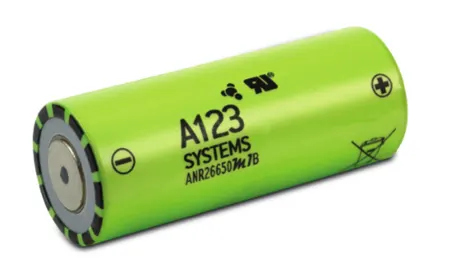
A cell refers to a single anode and cathode seperated by electrolyte used to produce a voltage and current. A battery can be made up of one or more cells. Lithium iron phosphate has the battery technology deleivers high power and energy density combined with excellent saftey performance and extensive life cycling in a lighter weight more compact package.
BATTERY:
A battery is a source of electric power consisting of one or more electochemical cells with external connections for powering electrical devices such as flashlights, mobile phones and electric cars.
BATTERY PACK:
A battery pack is a set of number of identical batteries. They may be configured in a series, parallel or a mixture of both to deliver the desired voltage, capacity or power density. The term battery pack is often used in reference to cordless tools, radio controlled hobby toys and battery electric vehicles.
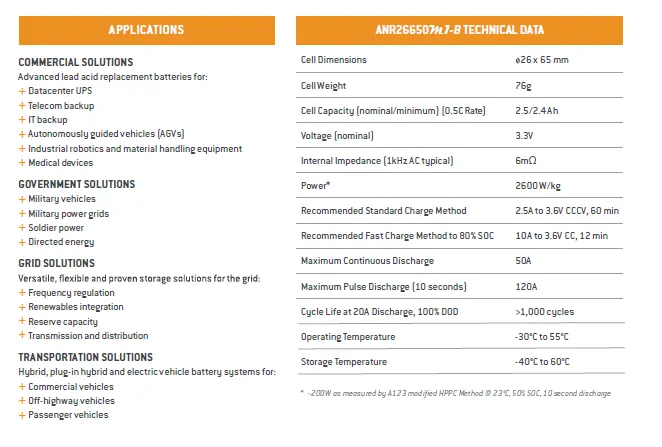
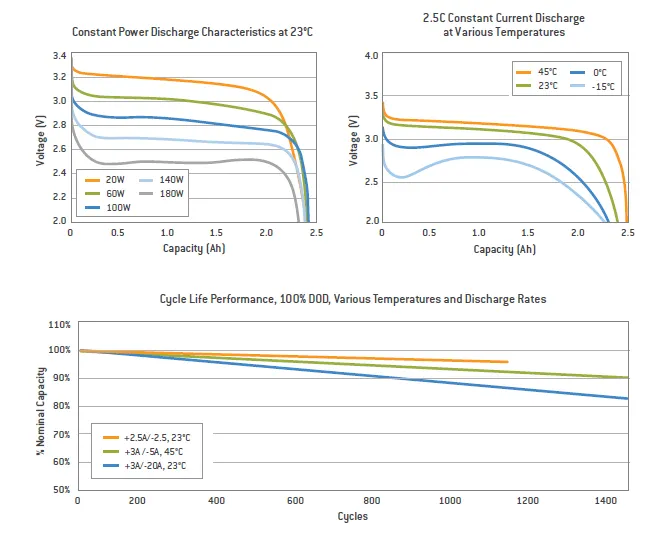
SPECIFICATIONS OF CELL ANR26650M1-B :
CALCULATION:
As per assumption 18kWh batter pack, 18kWh is energy require to achieve the vehicle its proper range. It is depending upon the voltage(V) parameter and ampere hour. Here we design a high voltage battery pack for an electric vehicle to achieve its rang upto 220km. For this calculation I assumed 145.2V a nominal voltage for series connection.
Single Cell Energy = Cell capacity(Ah) * Cell Voltage(V)
= 2.6 * 3.3
= 8.58 Wh.
The value of a single cell is used to calculate the total energy of the battery pack.
Single Cell Energy Density:
Volumetric energy(Wh/m^3) = Single Cell Energy / Volume of Each Cell
= 8.58Wh / 0.03451m^3
= 248.62 Wh/m^3.
Gravimetric energy(Wh/kg) = Single Cell Energy / Single Cell Mass
= 8.58 Wh / 0.076kg
= 112.89 Wh/kg.
Vehicle range = 250KM (assumed)
Battery Pack Capacity = 18.121 kWh.
Now we will calculate per km average energy = 18120.96 / 250
= 72.483 Wh/km
Battery Pack Total Energy = Average Energy * km
= 72.483 * 250
= 18120.96 Wh.
Number of Cells connected in series = Nominal Voltage of series connection / Nominal voltage of a single cell
= 145.2 V / 3.3 V
= 44
Hence, 44 Cells will be connected in a series connection to provide a proper voltage.
Energy for battery pack (wh) = No. of cells connected in series * Single cell energy
= 44 * 8.58 Wh
= 377.52 wh.
No. of cells connected in parallel = Battery pack total energy(wh) / Energy for battery pack(wh)
= 18120.96 / 377.52
= 48
Hence, 48 Cells will be connected in parallel to provide a proper capacity power.
Total no. of cells for battery pack = No. of cells connected in parallel * No. of cells connected in sereis
= 48 * 44
= 2112.
Hence, 2112 Cells will be used to make a complete battery pack.
Mass of the battery pack = Total no. of cells for battery pack * Mass of single cell
= 2112 * 0.076kg
= 160.512 kg is the total weight of cells connected in parallel and series.
Total volume of the battery pack = Total no. of cells for battery pack * Volume of single cell
= 2112 * 0.0345
= 72.89 m^3.
Cell peak current (A) = C rate * single cell capacity
= 20 * 2.6
= 52A.
Battery pack peak current(A) = Cell peak current * No.of cells connected in parallel
= 52 * 48
= 2496 A.
BAttery pack peak power(W) = Battery pack peak current * Voltage of series connection
= 2496A * 145.2
= 362.42W.
Cell continuous current(A) = Cell continuous current * No. of cells connected in parallel
= 26 * 48
= 1248A.
Battery pack continuous power(W) = Battery pack contiunous current * Voltages of series connection
= 1248 * 145.2
= 18.120 Kwh.
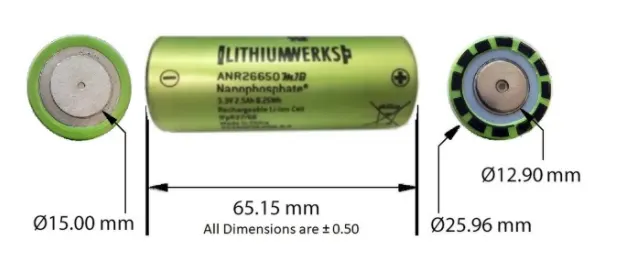
DIMENSIONS:
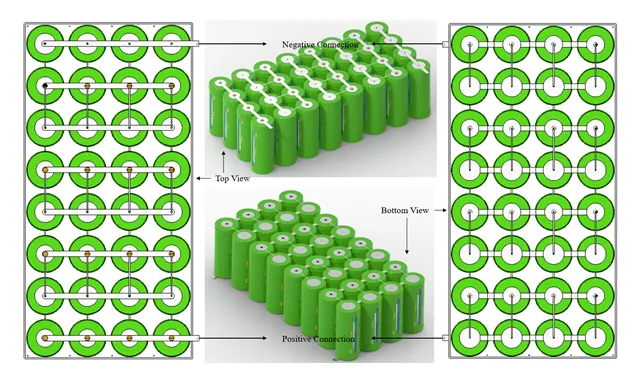
CELL CONFIGURATION:
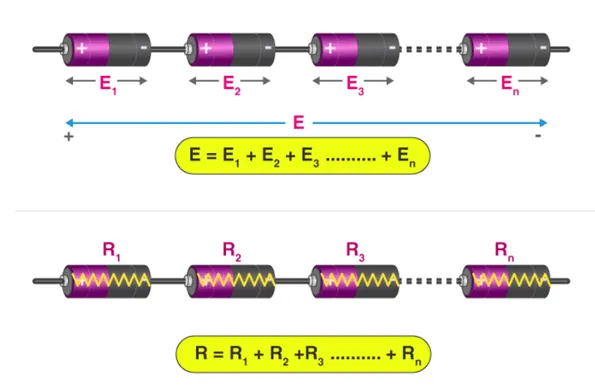
SERIES CELL CONFIGURATION:
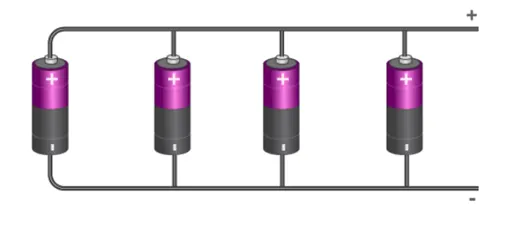
PARALLEL CELL CONFIGURATION:
NICKEL STRIPS:
Nickel strips is generally used in battery building. Its due to its efficiency of usage in spot welding and solderig as well its hgih corrosion resistance over time.
It has good properties and excellent resistance to many corossive environments. The pure nickel will never getts rust after it applied to battery packs. It won't affects the current transfer between batteries.

ELECTRIC DESIGN:
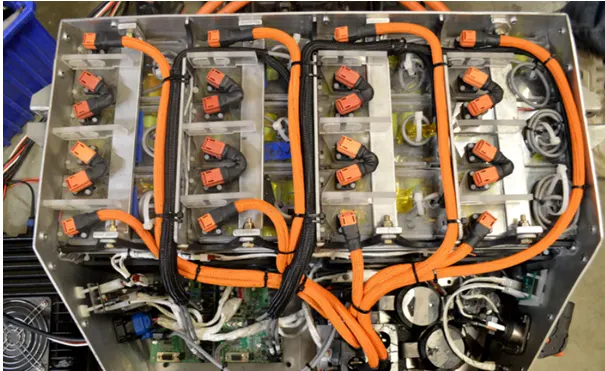
This is a electric design of the battery pack. It prevents against to the short circuit. And its delivered the efficient power and its prevent short circuit also.
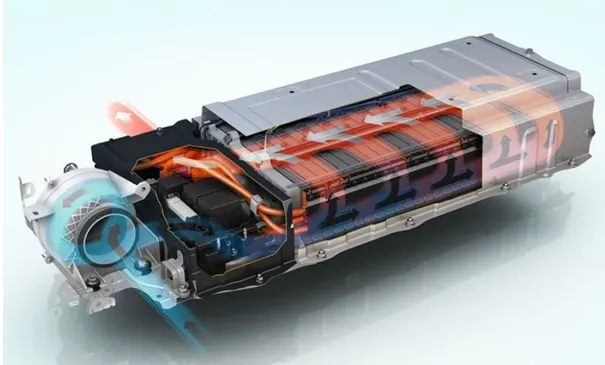
THERMAL DESIGN:
This kind of design improved the pack effieciency. We can avoid thermal accidents.
ASSEMBLY OF A BATTERY PACK:
STEP-1:
STEP-2:
STEP-3:
STEP-4:
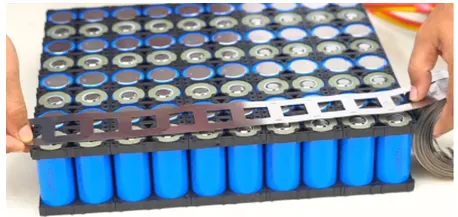
STEP-5:
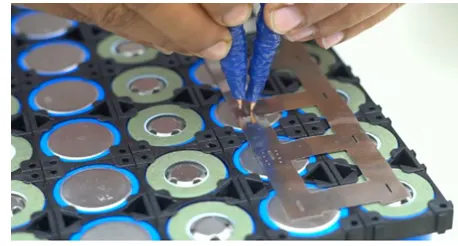
STEP-6:
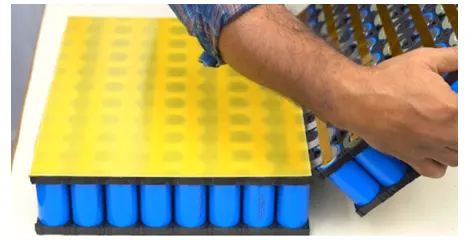
STEP-7:
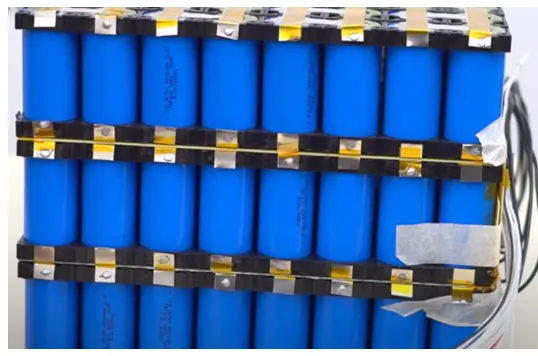
OBJECTIVE:
Thus the detailed battery pack drawing along with its enclosure is prepared sucessfully.
RESULT:
Thus the given challenge is calculated sucessfully.