Project 1 - Design and Develop an IOT-based Wireless Wearable Health Monitoring System
Design and Develop an IOT-based Wireless Wearable Health Monitoring System to monitor the physiological parameters of ECG, Heart Rate, Pulse Oximetry, Cuffless Blood Pressure and Body Temperature.
Give an appropriate or innovative name for the product which you are designing and developing
Brilliance Health Monitoring Bot
I will be using carbon nanotube fibers (i.e., textiles integrated with dry electrodes) as vest for conduction and alignment of wearable device and does not disrupt user comfort
CNTs with excellent electrical and mechanical properties can be easily assembled into a macroscopic one-dimensional fiber by various methods. The developed CNT fibers exhibit high electrical conductivity, tensile strength, and flexibility, and together represent an ideal candidate as a fiber electrode for wearable electronics.
https://www.sciencedirect.com/science/article/pii/B9780323414814000125
https://breathe.ersjournals.com/content/13/2/e27
Here for the health monitoring system I prefer to use ARDUINO for its less complexcity and easy accessbility for software installation
Sensors used for ECG … I do prefer 3 lead ECG (because my prototype majorly focused on small kids and younger adults)
My product will be focusing on targeted audience and can create awareness on how mandate was wearable health monitoring system
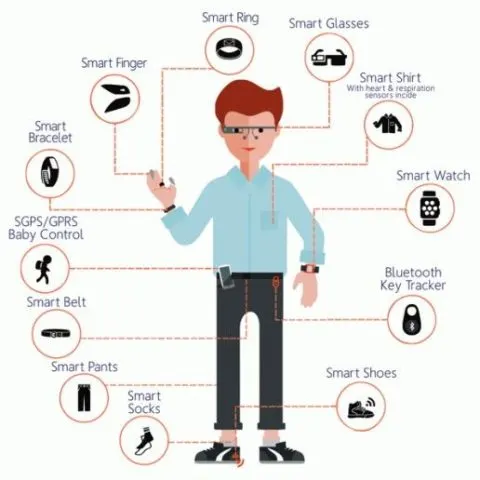
Sensors ---- Sensor node ---- Sink node ---- Gateway/Mobile ---- Cloud/Fog computing ---- Event storage/Analysis --- Alert
AD8232 ECG sensor was 3 lead signal monitor (For ECG)
PhaseDuration Amplitude P Wave 0.06-0.11 <0.25 PR Interval 0.12-0.20 - PR Segment 0.08 - QRS Complex <0.12 0.8-1.2 ST Segment 0.12 - QT Interval 0.36-0.44 - T Wave 0.16 <0.5
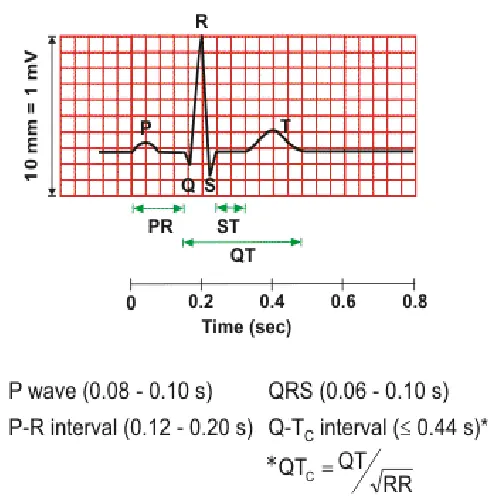
https://www.researchgate.net/figure/ECG-signal-and-its-related-parameters_fig2_224111985
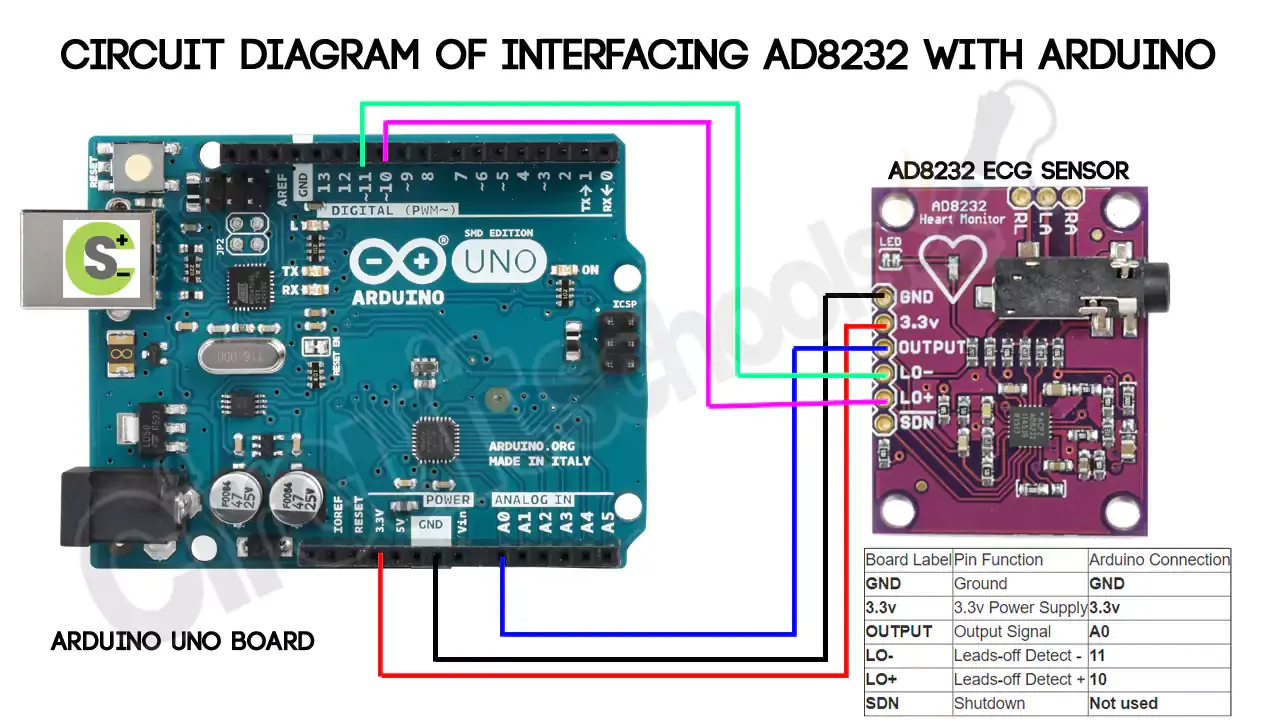
https://www.circuitschools.com/ecg-monitoring-system-using-ad8232-with-arduino-or-esp32-iot-based/
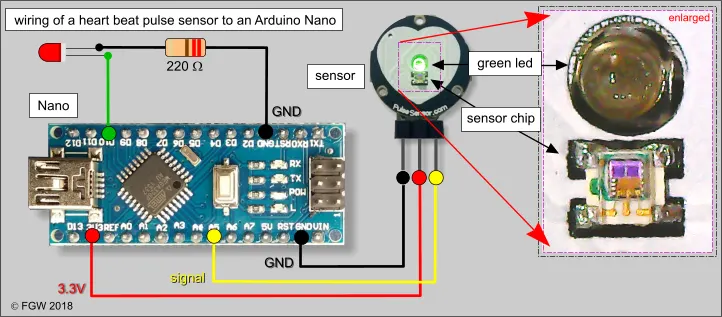
Pulse sensor is used for heart rate monitoring
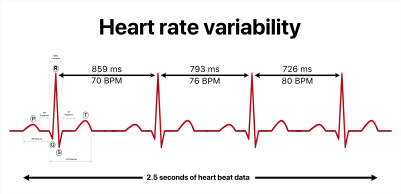
Here is the circuit model for pulse sensor used to monitor heart rate variability
https://thesolaruniverse.wordpress.com/2018/05/10/514/
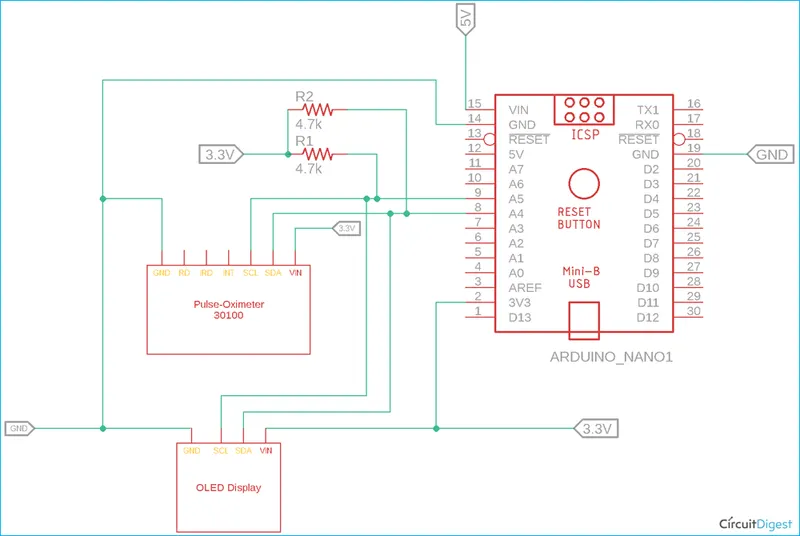
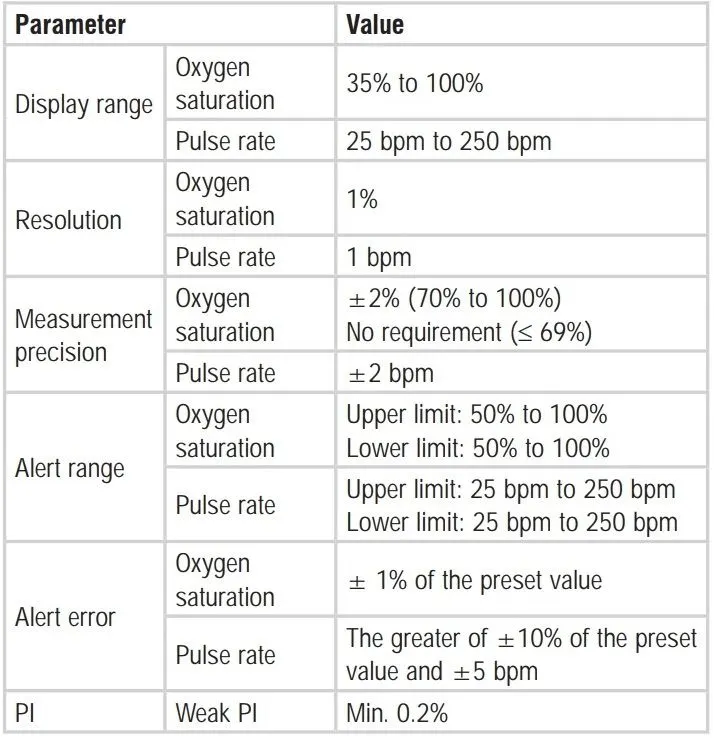
MAX30100 sensor is used for pulse oximeter with I2C based OLED display. It has a 128x64 Resolution with a controlling chip of SSD1306.
https://www.betterbasics.com/guide/MP-OX250
GND sensor is used to monitor blood pressure. The blood pressure sensor provides output in 8 bit ASCII format which ranges from 000 to 255. The three parameters viz. systolic, diastolic and pulse rate are separated by comma and space. The last byte of packet is always 0x0A in hex and 10 in decimal so one can view each reading from sensor on new line. The serial communication speed is set initially to 9600 bps.
https://www.heart.org/en/health-topics/high-blood-pressure/understanding-blood-pressure-readings
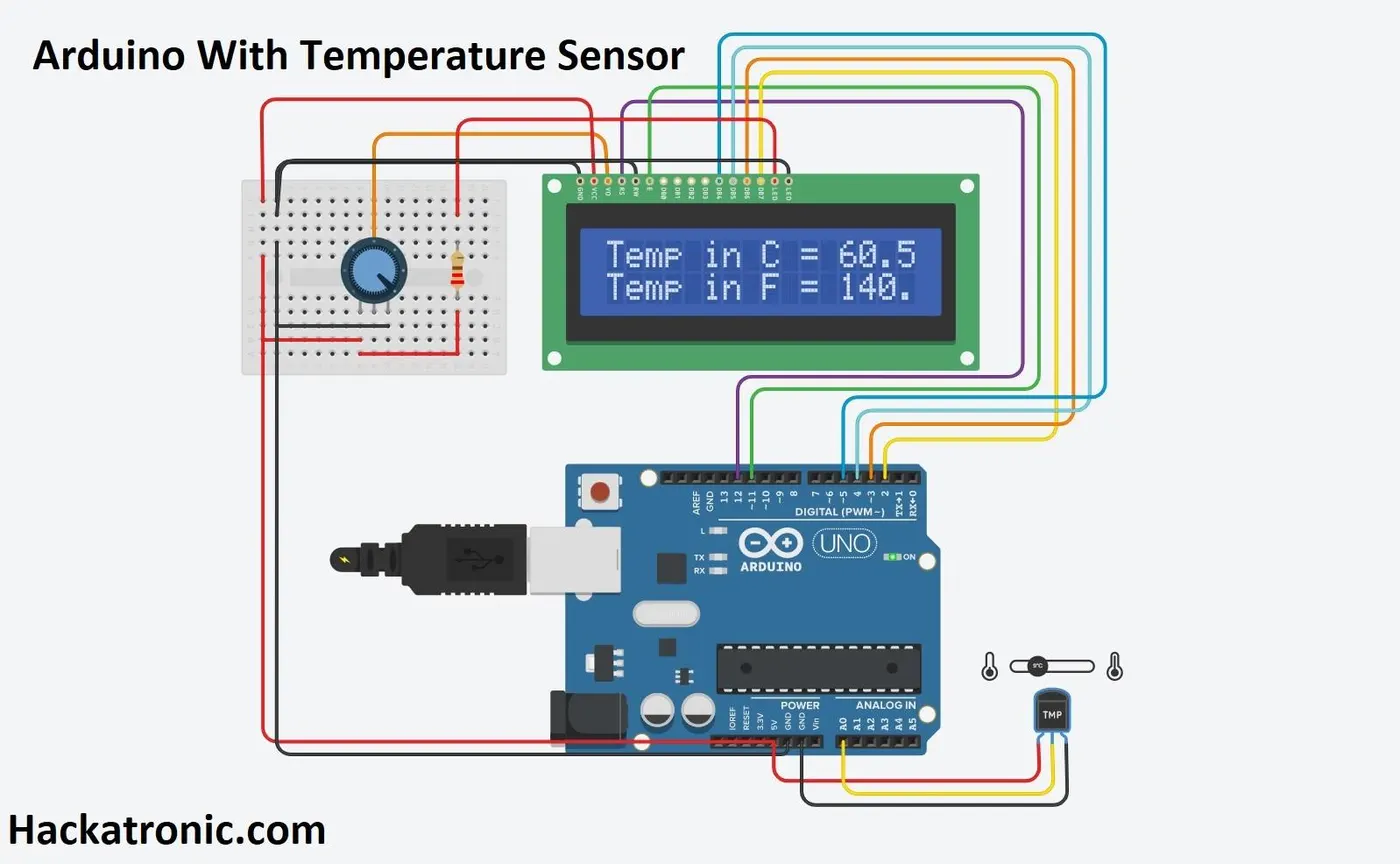
DHT11 is a basic, ultra low-cost digital temperature and humidity sensor. It uses a capacitive humidity sensor and a thermistor to measure the surrounding air, and spits out a digital signal on the data pin (no analog input pins needed).
https://www.hackatronic.com/arduino-with-temperature-sensor-interfacing-lcd-and-lm35/
https://www.researchgate.net/figure/Main-parameters-of-temperature-sensors_tbl1_332163376
Data acquisition and wireless transmission is represented in a flowchart
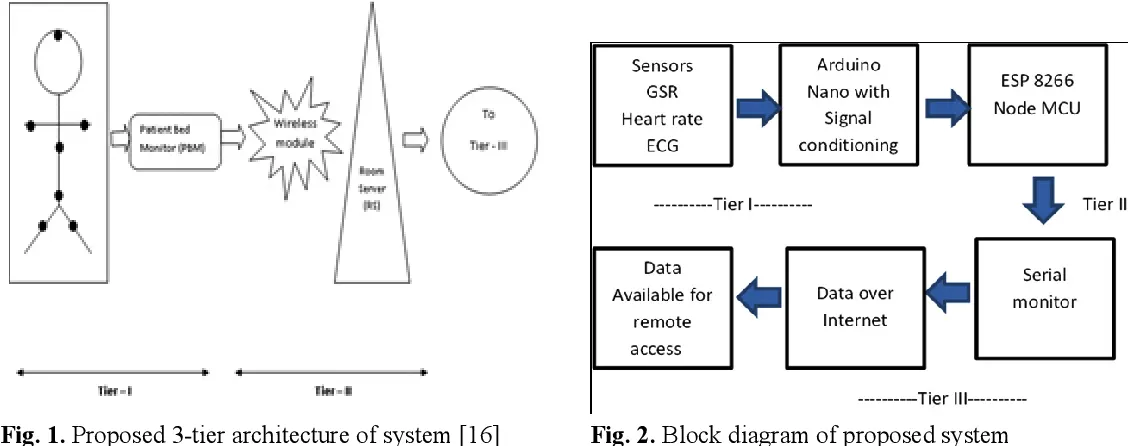
Amplitude of waves is low having lot of noise, Base line wandering so that internal processers are used for filtering of noises
Cloud computing methods for data analysis
Connected devices around the world are increasing by billions every year. The Arduino IoT Cloud is a platform that allows anyone to create IoT projects, with a user friendly interface, and an all in one solution for configuration, writing code, uploading and visualization.
To use the Arduino IoT Cloud, a cloud compatible board is required. You can choose between using an official Arduino board, or a board based on the ESP32 / ESP8266 microcontroller. The Arduino IoT Cloud currently supports connection via Wi-Fi, LoRaWAN® (via The Things Network) and mobile networks.
The Arduino IoT Cloud supports connection via Ethernet on a number of devices. The options to connect via Ethernet are the following:
- Connect with the Portenta H7 in combination with an Ethernet compatible carrier/shield.
- Connect with the Opta.
- The Opta is scheduled to be released soon, along with documentation how to use it.
- To connect with the Portenta H7 board, you will need one of the following shields/carriers: Portenta Vision Shield Ethernet Portenta Machine Control To enable communication via Ethernet with the Portenta H7, while configuring your device, you need to select the "Ethernet" option.
- If your device is already configured as a Wi-Fi device, you need to remove it before configuring it to Ethernet communication.
https://docs.arduino.cc/arduino-cloud/getting-started/iot-cloud-getting-sta
Centralized data storage and retrieval
Database Management Systems (DBMS) are software systems used to store, retrieve, and run queries on data. A DBMS serves as an interface between an end-user and a database, allowing users to create, read, update, and delete data in the database.
Centralized storage solutions include AWS, Google Cloud Platform (GCP), and Microsoft Azure
https://www.mdpi.com/1424-8220/14/12/23742
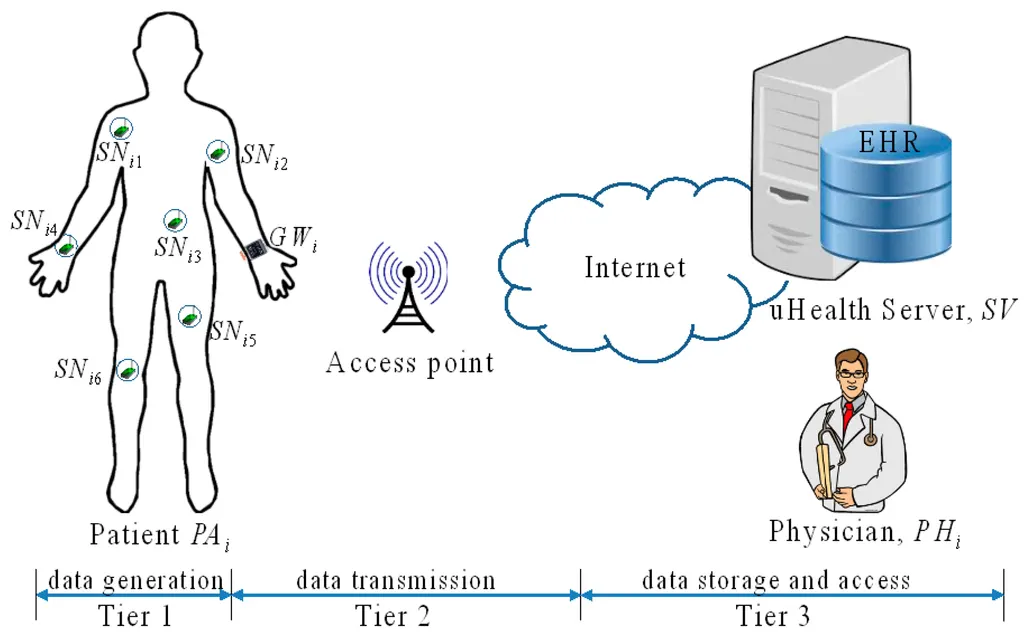
WHMS Configuration and Threat Model
Tier 1 [SNi]: This is for sensor nodes, which are wearable or implantable devices placed on the patient's body. This is responsible for the sensing and transmitting of the PHI to the back-end u-Health server.
Tier 2 [GWi]: This is the gateway, which is the personal server, and this computer software that could be installed on a personal smart phone or smart watch. It is responsible for the collection of the PHI, as well as pretreatment and communication with the u-Health server SV or the attending physicians PHi.
Tier 3 [SV, PHi]: This is the back-end server, i.e., u-Health server, which has the role of private key generator (PKG) and has the EHR database located in the medical institution. It is mainly responsible for key setup, key management, data analysis, data management and data processing. It also includes attending physicians PHi, because PHi has a critical role for the patients in the WHMS via SV or EHR. The EHR is a database of medical data objects and health-related data managed by health professionals. The EHR is a subset of the electronic medical record maintained by each WHMS and is created and owned by the patient PAi.
Algorithms for automatic detection of abnormal conditions in the parameters and generation of alarms
https://www.mdpi.com/2079-9292/9/7/1140
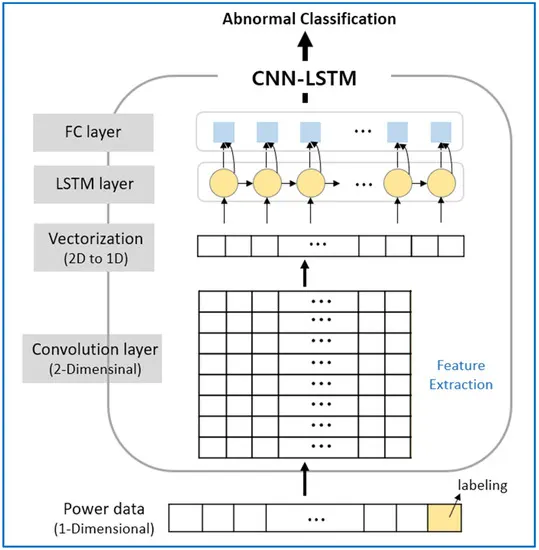
Pattern Detection Model Using a Deep Learning Algorithm for Power Data Analysis in Abnormal Conditions
The real-time monitoring and fault diagnosis of bearings are of great significance in terms of improving production safety, preventing major accidents, and reducing production costs.
Stacked Residual Dilated Convolutional Neural Network (SRDCNN)-based Intelligent Fault Diagnosis Method, and reported that the proposed SRDCNN model had superior denoising ability and a better workload adaptability
Data encryption and Security method for the IoT
Freshness-Preserving Non-Interactive Hierarchical Key Agreement Protocol (FNKAP) is used data safety and security in WHMS
Human vital signs were detected, processed and transfered through gateway and analysed the parameters through cloud computing and protecting the data through hierarchical method. Events were centrally stroed and monitored. All this is possible in real time through wearable health monitoring system
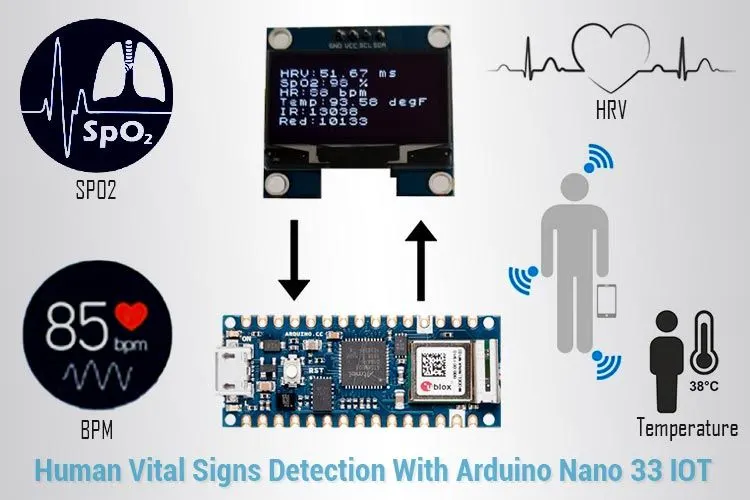
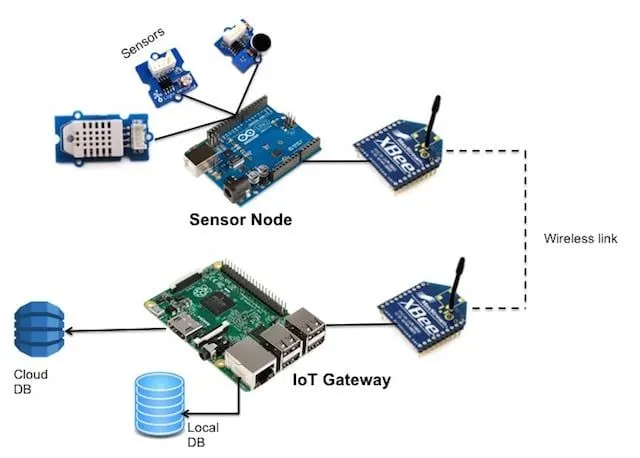
XBee modules make it easy to create a wireless point-to-point or mesh network. They are configured with the standard AT commands. With built-in error correction, XBee modules offer a reliable wireless link. They come in multiple flavors, with support for protocols like ZigBee, Bluetooth, and even Wi-Fi. The XBee modules can be configured to operate either in a transparent data mode or in application programming interface (API) mode.
Device certification plan
In order to enhance patient safety, provide enhanced consumer protection, eliminate trading of sub-standard products or devices of doubtful origins, independent third party voluntary certification system to assure quality of medical devices manufactured in the country has been rolled out
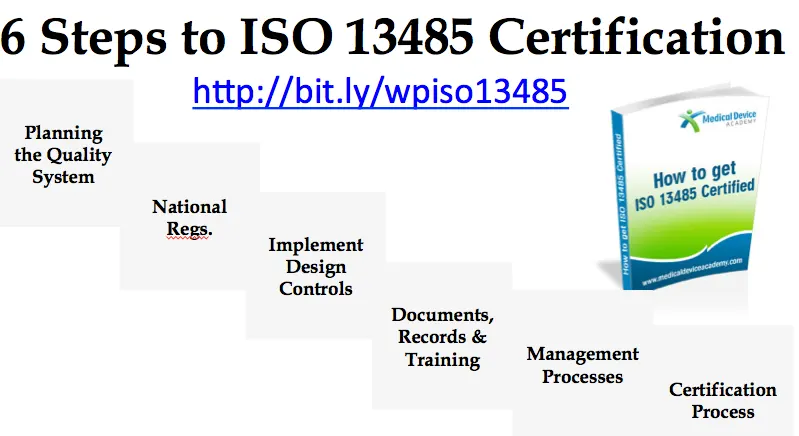
https://medicaldeviceacademy.com/6-steps-iso-13485-certification/
https://clin-r.com/managing-design-of-a-medical-device/
Design Verifications, Validations or other methods that demonstrate conformity to GSPRs Clinical Evaluation Report (CER) Clinical Investigations, as applicable SSCP (Class III and Implantable only)
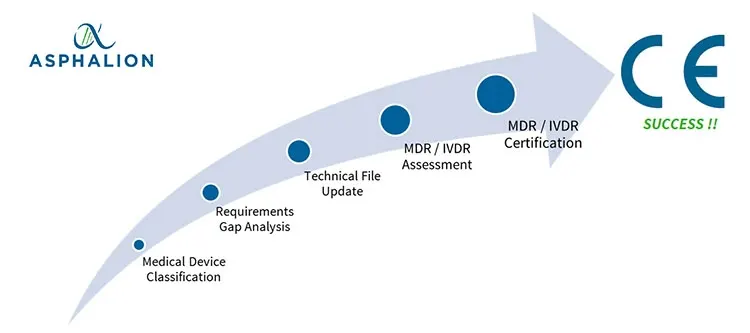
https://www.asphalion.com/news/new-medical-devices-regulations-implementation-plan/