Project 1 - COVID-19 Vaccinations Trend Analysis
AIM -
The aim of this project is to analyze vaccination trends and patterns to gain insights into the overall progress, challenges, and impact of vaccination efforts. The analysis will focus on various factors such as vaccination rates, demographic distribution, vaccine hesitancy, and the effectiveness of vaccination campaigns. By conducting this analysis, we aim to understand the current state of vaccination programs and identify potential areas for improvement.
Introduction -
Vaccination plays a crucial role in safeguarding public health by preventing the spread of infectious diseases. In recent years, the importance of vaccinations has been emphasized due to the global COVID-19 pandemic. Understanding vaccination trends and patterns is vital for policymakers, healthcare professionals, and researchers to make informed decisions and develop effective strategies.
Methodology -
1. Data Collection - Gather comprehensive data related to vaccination rates, demographic information, vaccine supply, and distribution. Obtain data from reliable sources such as national health agencies, vaccination databases, and research studies.
2. Data Analysis - Employ statistical techniques to analyze the collected data. Explore vaccination rates over time, variations across different regions and population groups, and factors influencing vaccine uptake.
3. Comparative Analysis - Compare vaccination trends between different countries or regions to identify variations and potential factors contributing to the differences in vaccination rates.
4. Vaccine Hesitancy Assessment - Examine the prevalence of vaccine hesitancy and its impact on vaccination rates. Analyze reasons for vaccine hesitancy, such as misinformation, lack of accessibility, or cultural beliefs.
5. Evaluation of Vaccination Campaigns - Assess the effectiveness of vaccination campaigns by analyzing the correlation between campaign efforts and vaccination rates. Identify successful strategies that can be replicated and areas that require improvement.
Analysis -
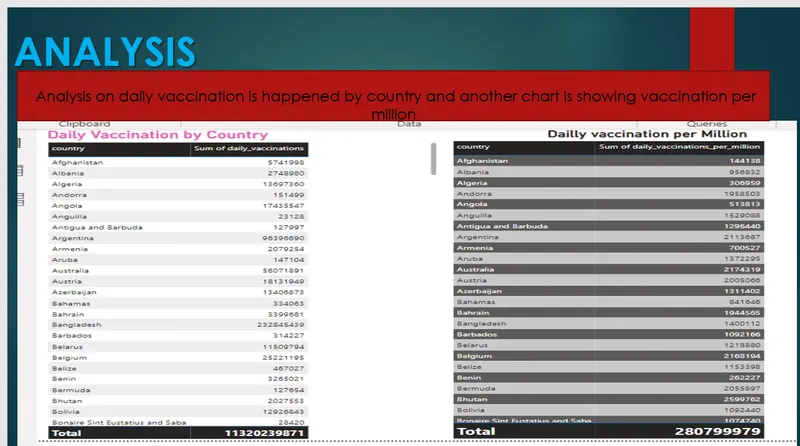
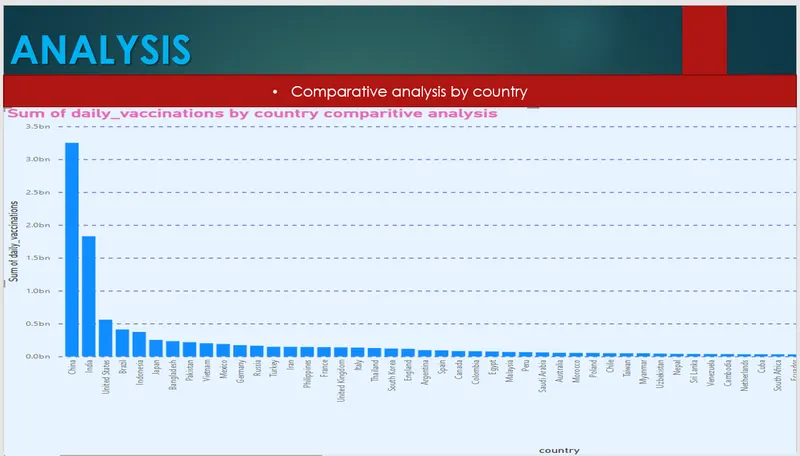
1.Analysis on daily vaccination is happend by country and another chart is showing vaccination per million.
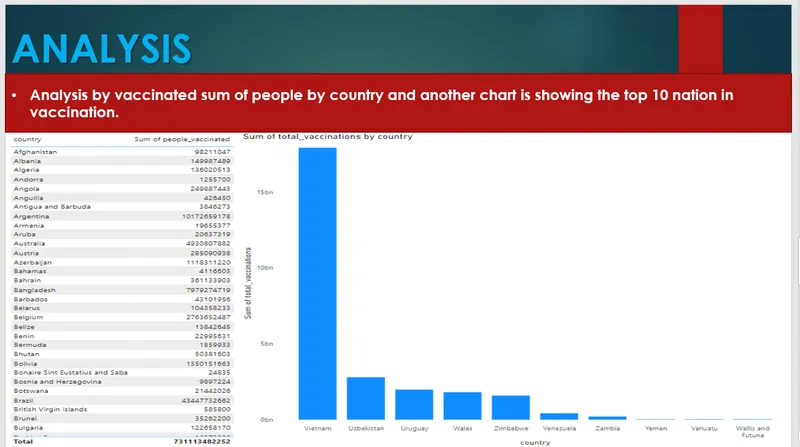
2. Analysis by vaccinated sum of people by country and another chart is showing the top nation vaccin.
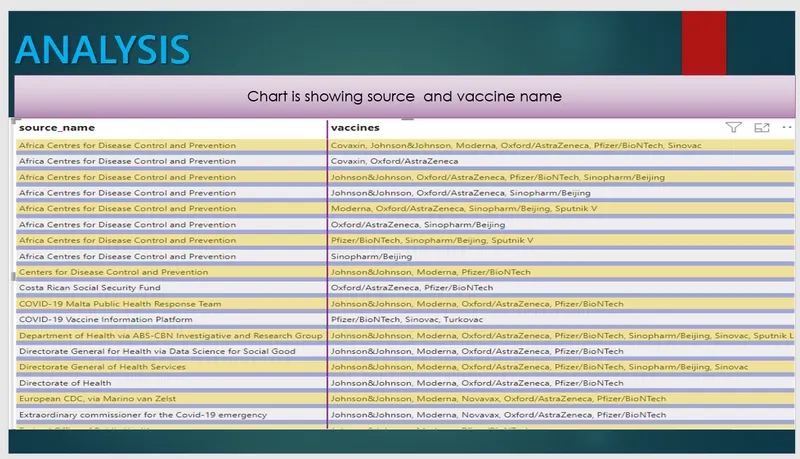
3. Source of vaccine and vaccine name.
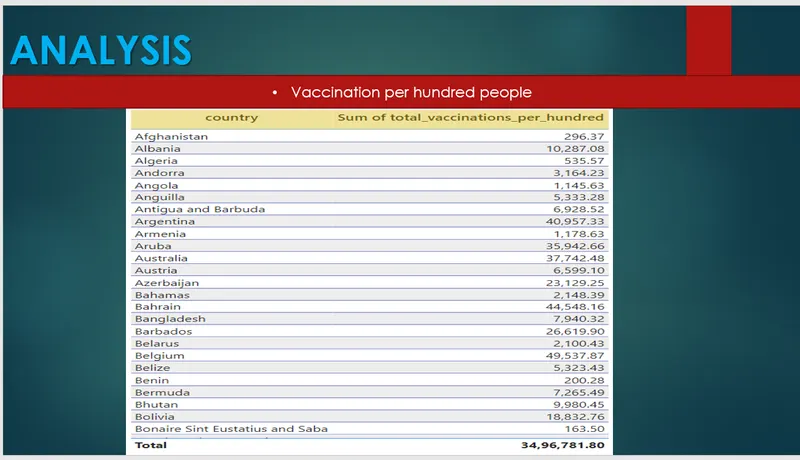
4.Vccination per hundred people -
5. Comparitive analysis -
Insights -
1. Vaccination Rate Trends -Our analysis revealed a positive overall trend in vaccination rates, indicating the successful implementation of vaccination programs. However, we observed variations in vaccination rates across different regions and population groups. This highlights the importance of targeted efforts to address disparities and increase vaccine uptake among underserved communities.
2.Demographic Analysis - We found that certain demographic groups, such as younger individuals and individuals from lower socioeconomic backgrounds, exhibited lower vaccination rates. Understanding these disparities is crucial for tailoring vaccination campaigns and ensuring equitable access to vaccines for all population segments.
3.Vaccine Hesitancy - Our analysis highlighted the significant impact of vaccine hesitancy on vaccination rates. Factors such as misinformation, fear of side effects, and lack of trust in the healthcare system were identified as key contributors to vaccine hesitancy. Efforts should be focused on addressing these concerns through effective communication, community engagement, and targeted educational campaigns.
4.Comparative Analysis - By comparing vaccination rates and strategies between different countries or regions, we identified successful practices that can be adopted elsewhere. Sharing best practices and lessons learned can contribute to the improvement of vaccination programs globally.
Recommendations:
1.Targeted Vaccination Campaigns - Develop and implement targeted campaigns aimed at specific demographic groups with lower vaccination rates. These campaigns should address concerns and provide accurate information tailored to the target audience.
2.Enhanced Education and Communication - Strengthen public health messaging through clear, concise, and easily accessible information about vaccines. Collaborate with trusted community leaders, healthcare providers, and influencers to disseminate accurate information and dispel vaccine-related myths and misinformation.
3.Improve Accessibility - Increase access to vaccines by establishing more vaccination centers in underserved areas, implementing mobile vaccination units, and providing transportation options for individuals who face logistical challenges.
4.Address Vaccine Hesitancy - Invest in educational campaigns that address vaccine hesitancy, emphasizing the safety and effectiveness of vaccines. Foster trust by engaging with communities, addressing concerns transparently, and involving local healthcare providers and community leaders in the vaccination process.
Conclusion -
In conclusion, our analysis of vaccination trends has provided valuable insights into the progress, challenges, and impact of vaccination efforts. While overall vaccination rates demonstrate positive progress, disparities among different demographic groups and vaccine hesitancy remain significant challenges. By implementing targeted campaigns, improving accessibility, and addressing vaccine hesitancy, we can enhance the effectiveness and equity of vaccination programs. Continuous monitoring, evaluation, and adaptation of strategies are essential to ensure successful vaccination efforts and protect public health.