Project 1_Comparative study of different storey buildings for Seismic forces
AIM : Comparative study of different storey buildings for Seismic forces
INTRODUCTION :
There are 10 project of different story building (A, B, C, D, E, F, G, H, J, K).
-
Material Properties assigned as :
- Grade of Concrete : M30
- Grade of Steel Reinforcement Bars : Fe 415
-
Loading
- Dead Load on beams from infill wall - 10 kN/m
- Live load on floor : 3 KN/m2 for building A,B,C,D,E,F,G,H
3.3KN/m2 for building J
3.6KN/m2 for building K
-
Buildings are pinned at the base
-
Building is located on Soil type-II and in Zone-III.
-
For analysis of the structure IS 1893 : 2016 code is followed
Below table represents column sizes of different buildings
| Building | Description | No.of storeys | No. of bays in X direction | No. of bays in Y direction | Column Dimension (mm) |
| A | 2 storey building | 2 | 4 | 3 | 400x400 |
| B | Benchmark 5 storey building | 5 | 4 | 3 | 400x400 |
| C | Benchmark building with rectangular columns oriented along X direction | 5 | 4 | 3 | 550x300 |
| D | Benchmark building with rectangular columns oriented along Y direction | 5 | 4 | 3 | 300x550 |
| E | 10 Storey building with varying column size along building height | 10 | 4 | 3 |
Upper storey 400 x 400 Bottom storey 600 x 600 |
| F | 10 storey building | 10 | 4 | 3 | 600 x 600 |
| G | 25 storey building with varying column size along building height | 25 | 4 | 3 |
Upper 5 storey 400 x 400 Middle 10 storey 600 x 600 Bottom 10 storey 800 x 800 |
| H | 25 storey building | 25 | 4 | 3 | 800 x 800 |
| J | 25 storey building with imposed mass 10% larger than building H | 25 | 4 | 3 | 800 x 800 |
| K | 25 storey building with imposed mass 10% larger than building H | 25 | 4 | 3 | 800 x 800 |
- All beams in the building have same size of 300x400mm
- All slabs in the building have same thickness 150mm
PROCEDURE :
- Open Etabs
- Enter units and select steel design (IS 800) and concrete design(IS456)
- Create grids of 4 bays in X direction and 3 bays in Y direction at 4m distance each
- Create story's according to the type of building in which each story height is 3m and plinth level is at 1.5m.
Define Material Properties
- Click on Define tab and select Define material.
- Choose concrete M30 and rebar of HYSD415.
Section Properties
- Click on Define Tab and select Section Properties.
- Define Beam, Column, Slab sections based on the given data.
Draw Columns and Beams
- Now draw beams, columns and slabs using Draw Tool.
Jionts at the bottom
- Assign pinned connection at the bottom
Define Load Pattern
- Add new Load as Dead load, Live Load and Wall Load (Super Dead), seismic load as (EX, EX+, EX-, EY, EY+, EY-)
- Define load patterns and modify seismic load by defining zone, soil type, timeperiod.
Load Combination
- Add Default Design Combos From Load Combination Tab.
Mass Source
- Define mass source from Define tab.
- Modify mass source Live=0.25, Dead=1,Wall=1
Assign Diagphrams
- Select all Floors and go to Assign Tab and then Shell tab.
- Assign Diaphragm (D1) on all the floors.
Assign Loads
- Select all the Beams and go to Assign Tab and then Frame load tab.
- Assign Distributed load of 10kn/m^2 on all the beams.
- Assign Loads on the floors by selecting all the floors.
- Go to shell Loads and give load as 3kn/m^2 as live.
Finally Check the Models and Analyze.
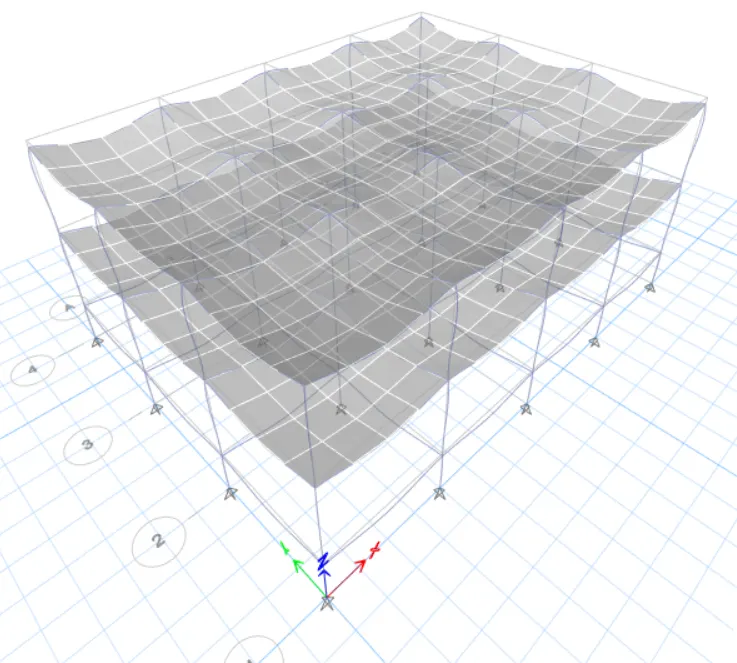
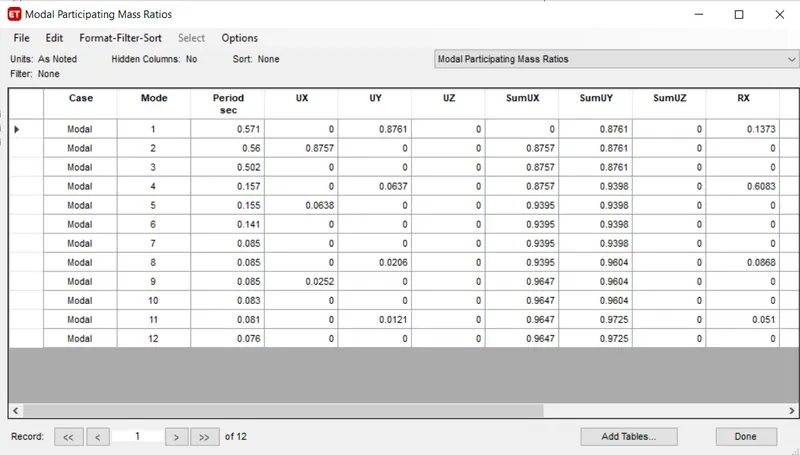
Building A:
- Two-story building
- Beam : 300mm x 400 mm
- Column : 400mm X 400 mm
- Slab : 150mm
- Grade M30, Fe 415,
- Brick wall load = 10 Kn/m
- Live load 3 KN/m^2
Building B:
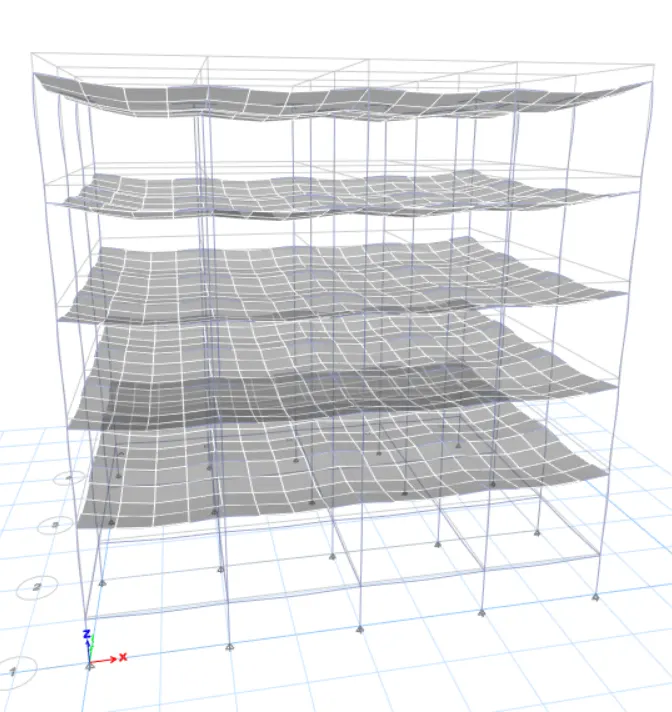
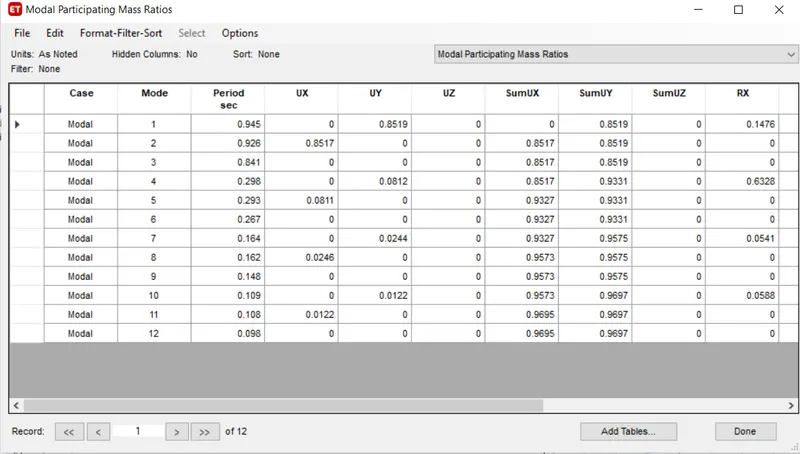
- 5 -story building
- Beam : 300mm x 400 mm
- Column : 400mm X 400 mm
- Slab : 150mm
- Grade M30, Fe 415,
- Brick wall load = 10 Kn/m
- Live load 3 KN/m^2
Building C :
- 5 -story building
- Beam : 300mm x 400 mm
- Column : 550mm X 300 mm
- Slab : 150mm
- Grade M30, Fe 415,
- Brick wall load = 10 Kn/m
- Live load 3 KN/m^2
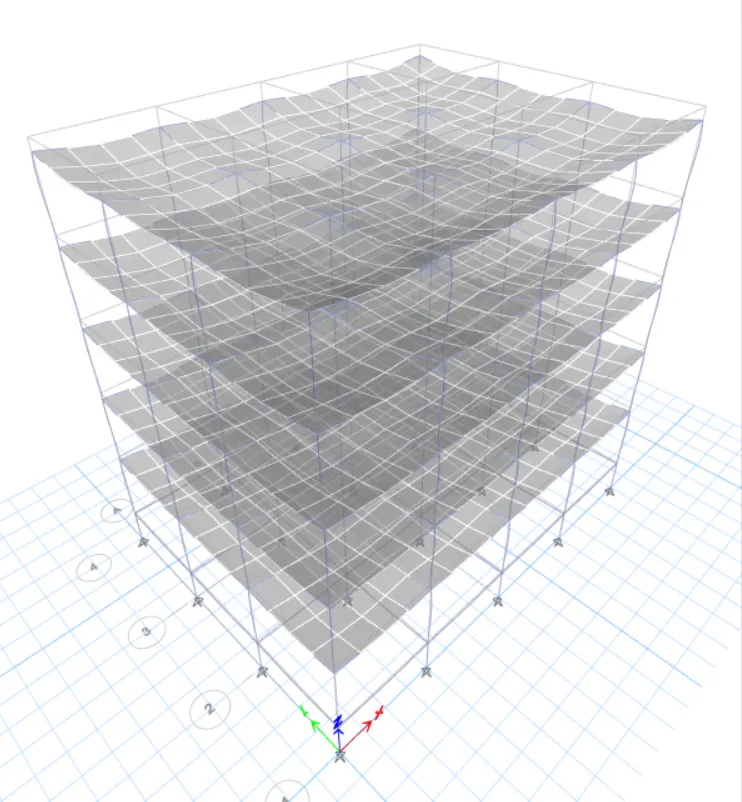
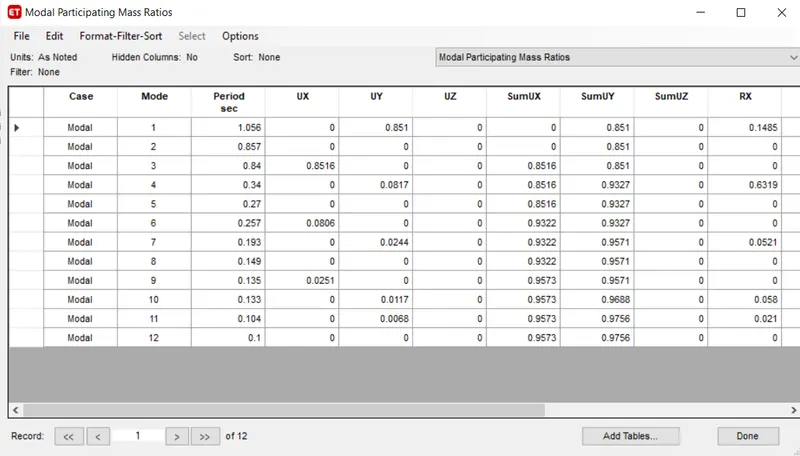
Building D:
- 5 -story building
- Beam : 300mm x 400 mm
- Column : 300mm X 550 mm
- Slab : 150mm
- Grade M30, Fe 415,
- Brick wall load = 10 Kn/m
- Live load 3 KN/m^2
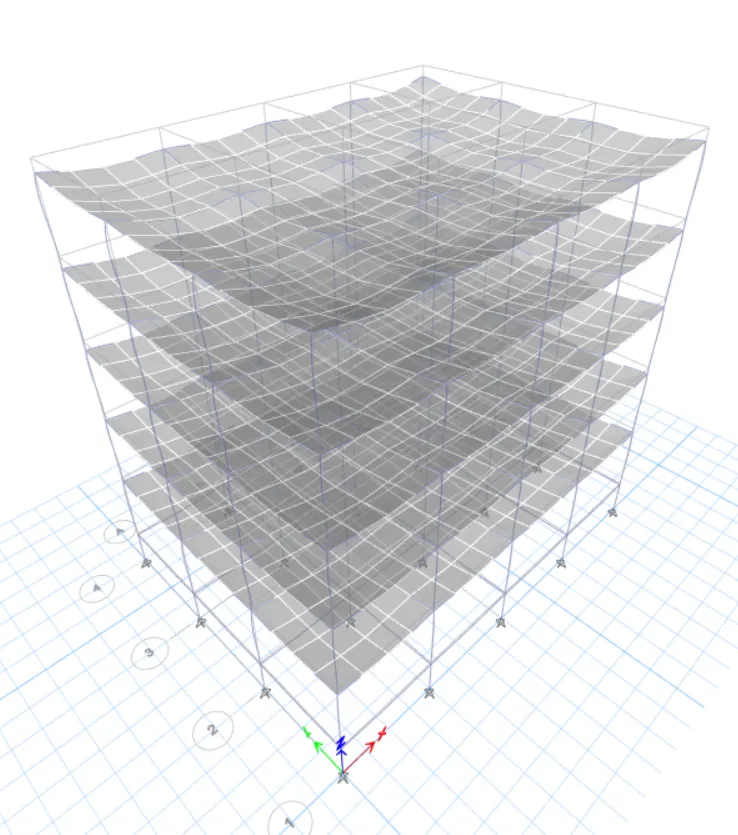
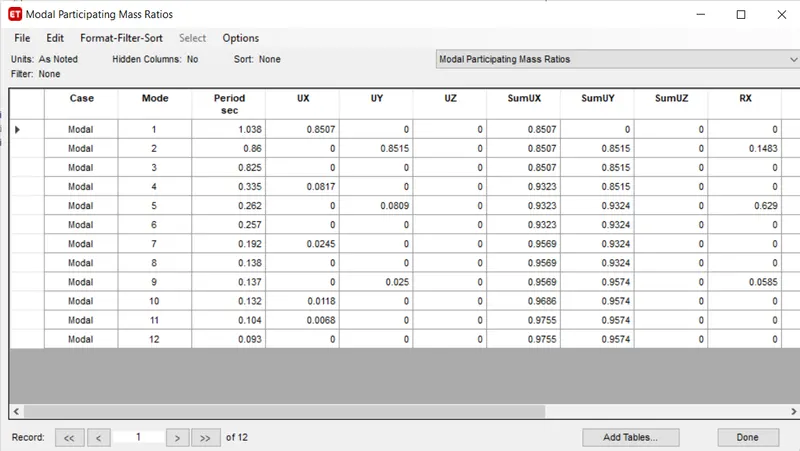
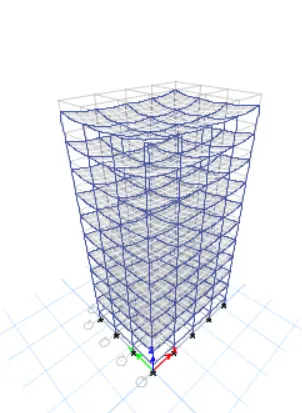
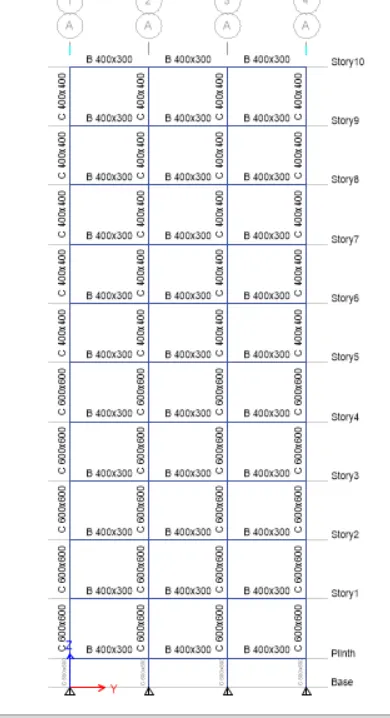
Building E:
- 10 -story building
- Beam : 300mm x 400 mm
- Column : Bottom 5 ( 600mm X 600 mm ) & Upper 5 ( 400 mm X 400 mm )
- Slab : 150mm
- Grade M30, Fe 415,
- Brick wall load = 10 Kn/m
- Live load 3 KN/m^2
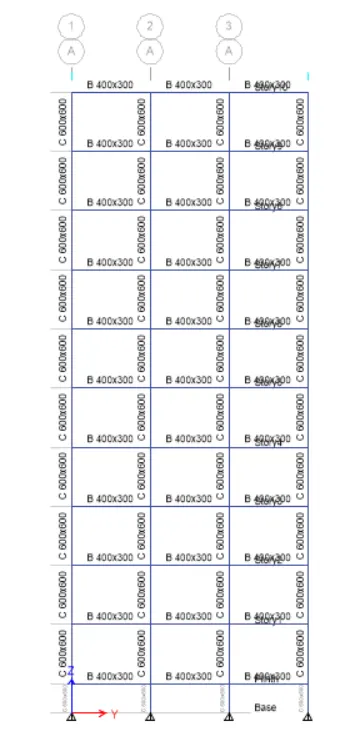
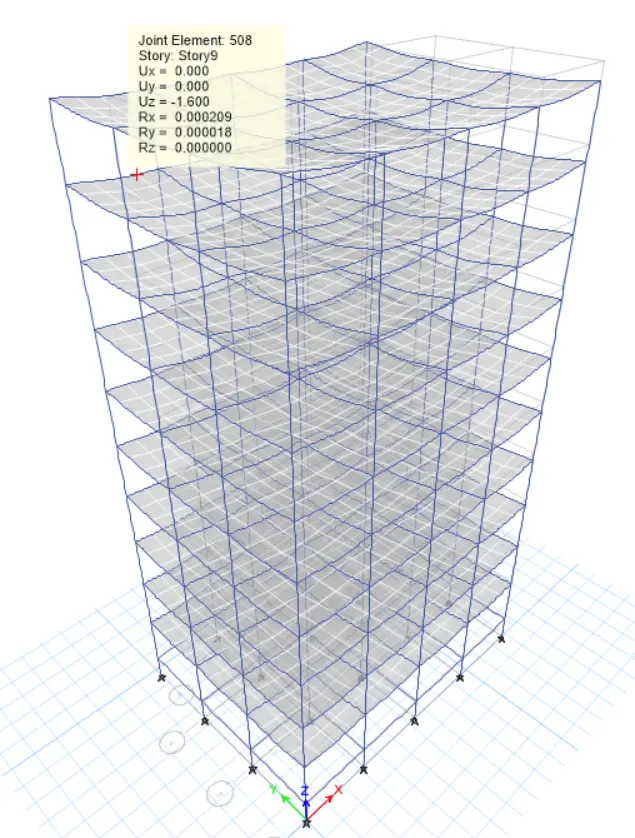
Building F:
- 10 -story building
- Beam : 300mm x 400 mm
- Column :600mm x 600 mm
- Slab : 150mm
- Grade M30, Fe 415,
- Brick wall load = 10 Kn/m
- Live load 3 KN/m^2
Building G
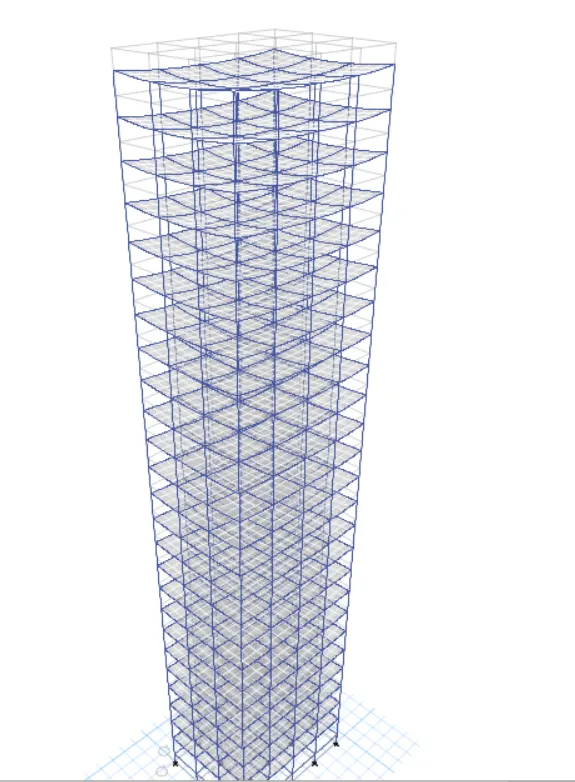
- 25 -story building
- Beam : 300mm x 400 mm
- Column : Bottom 10 ( 800mm X 800 mm )
: Upper 10 ( 600 mm X 600 mm )
: top upper 5 ( 400 mm x 400 mm) - Slab : 150mm
- Grade M30, Fe 415,
- Brick wall load = 10 Kn/m
- Live load 3 KN/m^2
Buiding H:
- 25 -story building
- Beam : 300mm x 400 mm
- Column :800 x 800 mm
- Slab : 150mm
- Grade M30, Fe 415,
- Brick wall load = 10 Kn/m
- Live load 3 KN/m^2
Building J :
- 25 -story building
- Beam : 300mm x 400 mm
- Column :800 x 800 mm
- Slab : 150mm
- Grade M30, Fe 415,
- Brick wall load = 10 Kn/m
- Live load 3 KN/m^2 ( 10 percent )
with imposed mass 10 percent larger than h, therefore the imposed mass is 0.35
Building K :
- 25 -story building
- Beam : 300mm x 400 mm
- Column :800 x 800 mm
- Slab : 150mm
- Grade M30, Fe 415,
- Brick wall load = 10 Kn/m
- Live load 3 KN/m^2 ( 60 percent )
with imposed mass 20 percent larger than h, therefore the imposed mass is 0.45
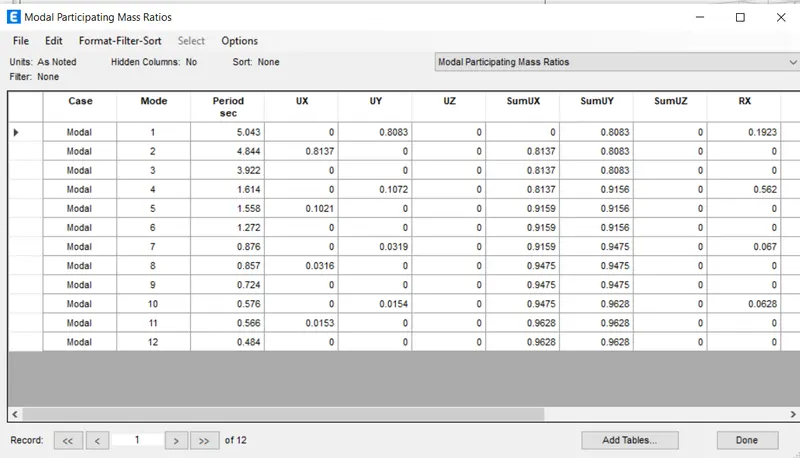
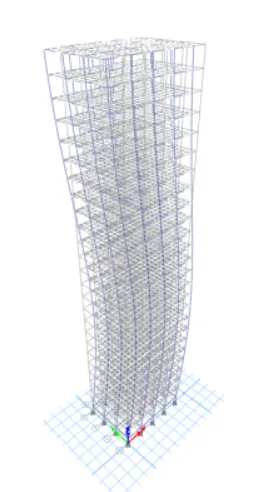
Results :
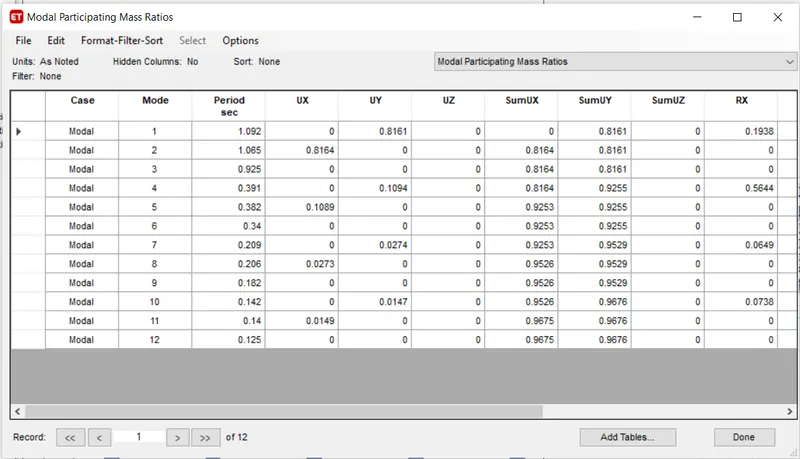
E and F is 10 storey building
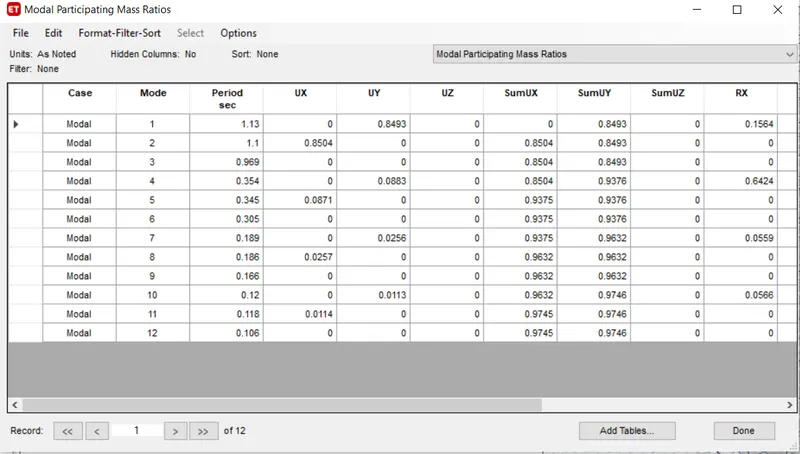
Building E = Natural period of vibration Tx = 1.092 , Ty = 1.065
Building F = Natural period of vibration Tx = 1.13 , Ty = 1.1
Increase in column size increases stiffness and mass of the building, reduces natural period, Thus F is stiffer than E.
G and H is 25 storey building
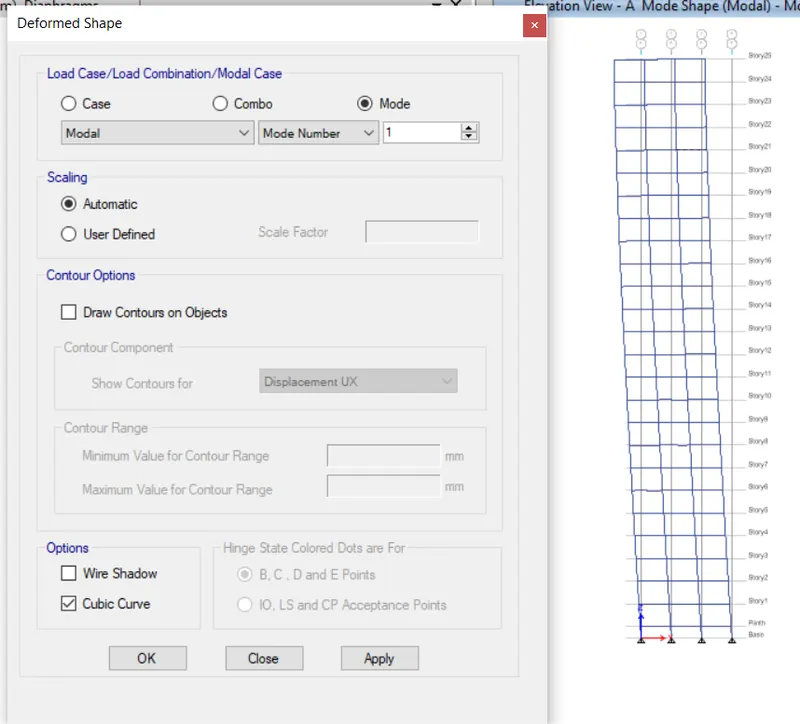
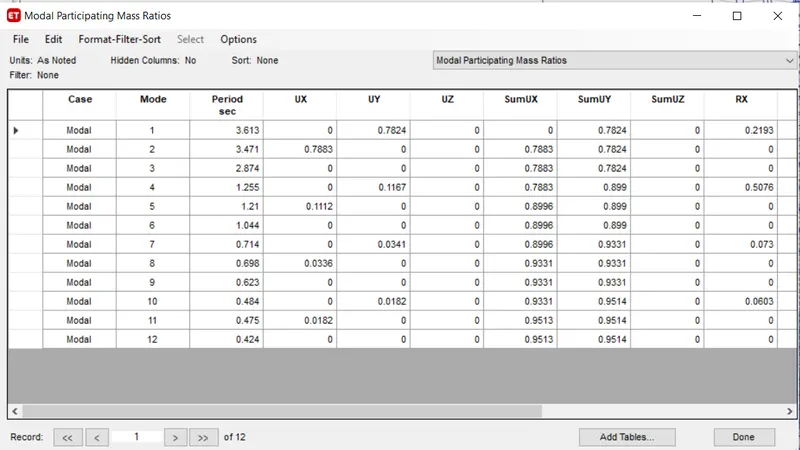
Building G = Natural period of vibration Tx = 3.613 , Ty = 3.471
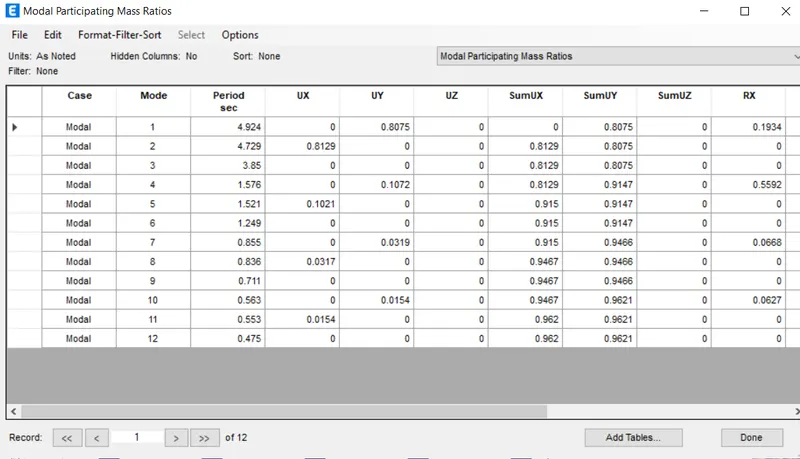
Building H = Natural period of vibration Tx = 4.924, Ty = 4.729
As lower storey column size changes, the natural period differ significantly. Between G and H, H is stiffer. While increasing stiffness, the mass is also increased. When stiffness and mass changed, timeperiod may also increase or decrease.
- Effect of mass on T : Fundamental Natural periods of building H, J, K
Building H = Natural period of vibration Tx = 4.924, Ty = 4.729
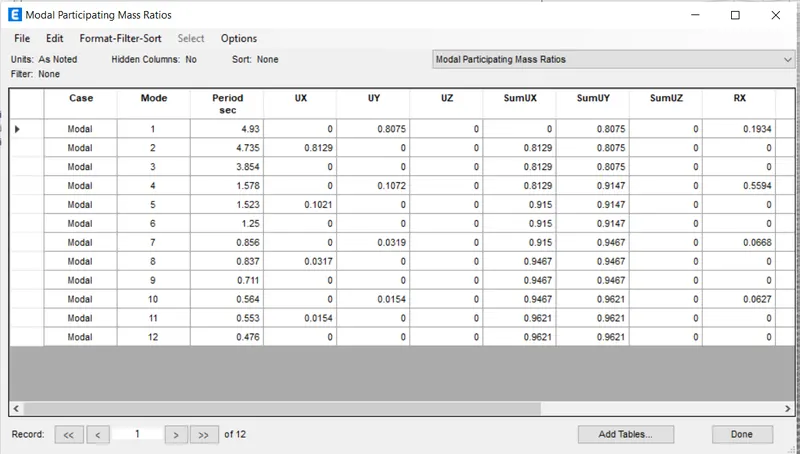
Building J = Natural period of vibration Tx = 4.93, Ty = 4.735 - Building K = Natural period of vibration Tx = 5.043, Ty = 4.844
Increase in the mass increases natural period, Imposed load in J, K increased with 10%, 20%, therefore its time period also increased - Effect of building height on T : Fundamental Natural periods of building A, B, F, H
As height increases fundamental natural period of vibration also increases
Building A = Height of the building = 7.5, Natural period of vibration Tx = 0.571, Ty =0.56
Building B = Height of the building = 16.5 Natural period of vibration Tx = 0.945 , Ty = 0.926
Building F = Height of the building = 31.5 Natural period of vibration Tx = 1.13 , Ty = 1.1
Building H = Height of the building = 76.5 Natural period of vibration Tx = 4.924, Ty = 4.729
It is observed that as height of building increases, fundamental natural period of vibration also increases because mass increases, flexibility increases that means building takes longer time to complete one oscillation. - Effect of column orientation of T : Fundamental Natural periods of building B,C,D
In building B = 400 x 400, Natural period of vibration Tx = 0.945 , Ty = 0.926
In building C = 550 X 300, Natural period of vibration Tx = 0.857 , Ty = 1.056
In building D = 300 X 550, Natural period of vibration Tx = 1.038 , Ty = 0.86
- Effect of flexural stiffness of structural elements on mode shapes
Comparison of mode shapes of building B when beams are too small and too large
Mode shape when beam size is less (beam size 400x300mm, column 400x400 mm)
Mode 1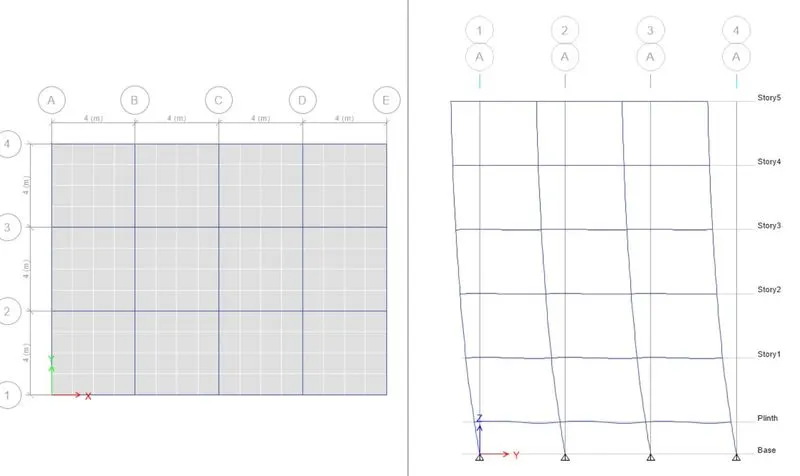
Mode 2 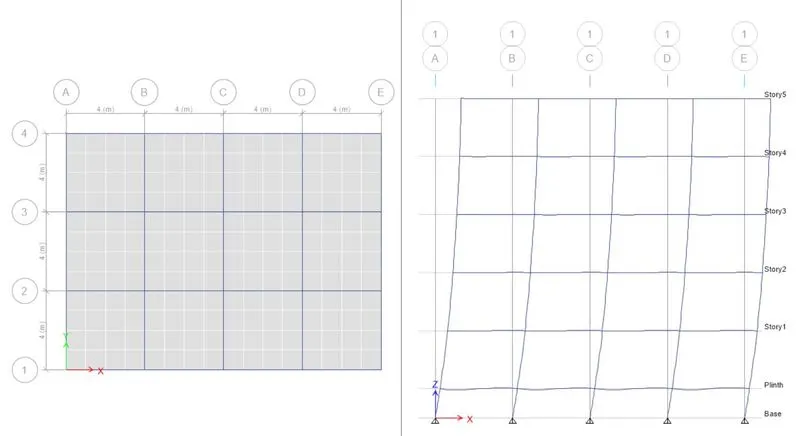
Mode shape when beam size is more (beam size 400x600mm, column 400x400mm)
Mode 1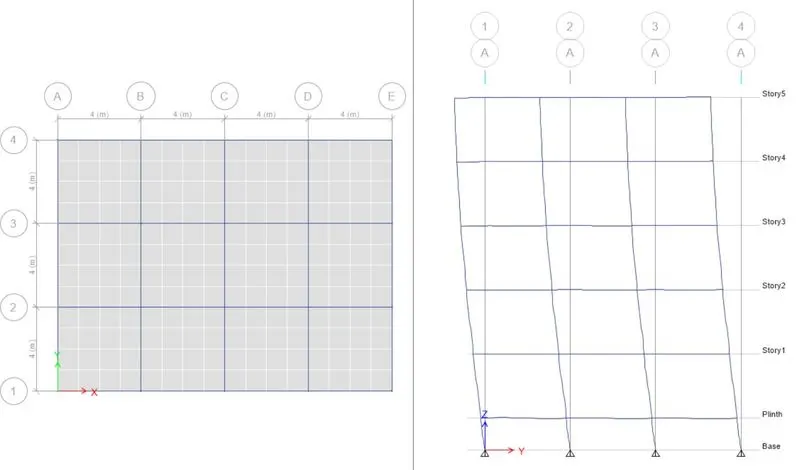
Mode 2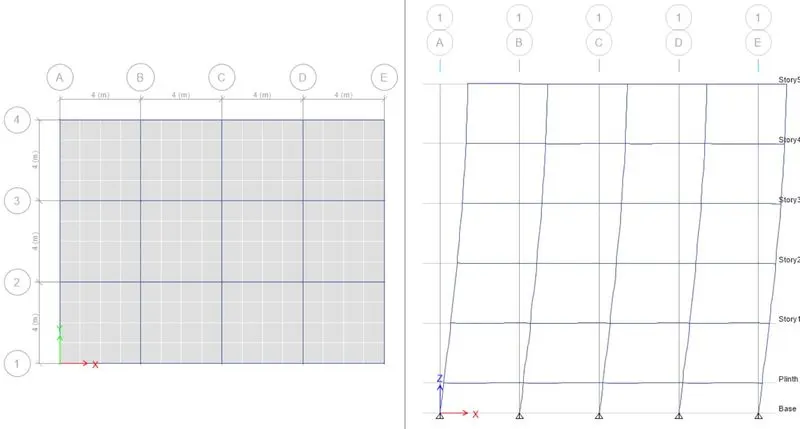
- Effect of axial stiffness of vertical members on mode shapes
Comparison of building H when its column size is small and large
Mode shape when column size is small ( column size 300x300mm, beam size 300x400mm)
Mode 1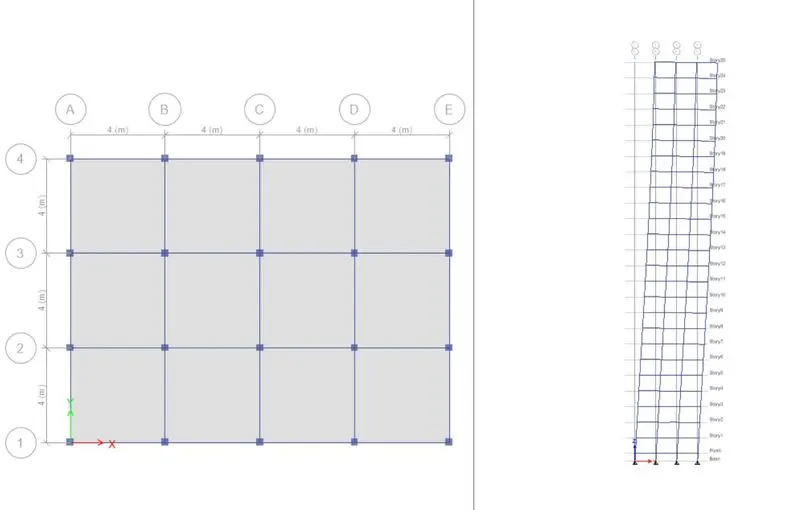
Mode 2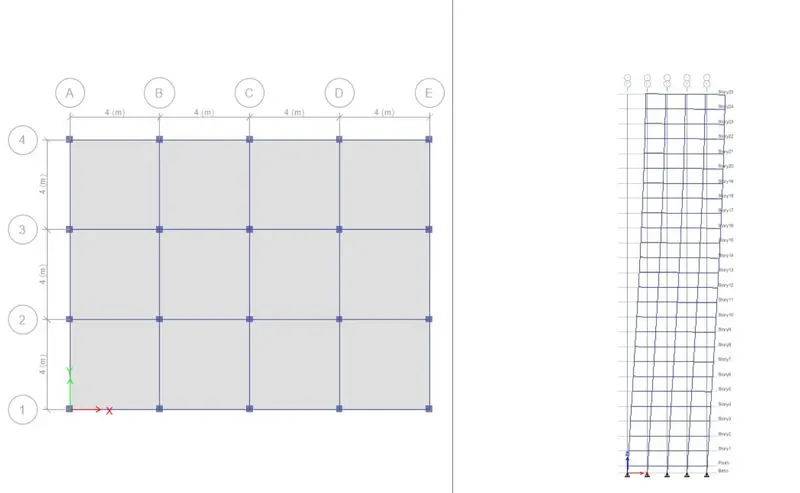
2. Mode shape when column size is large
Mode 2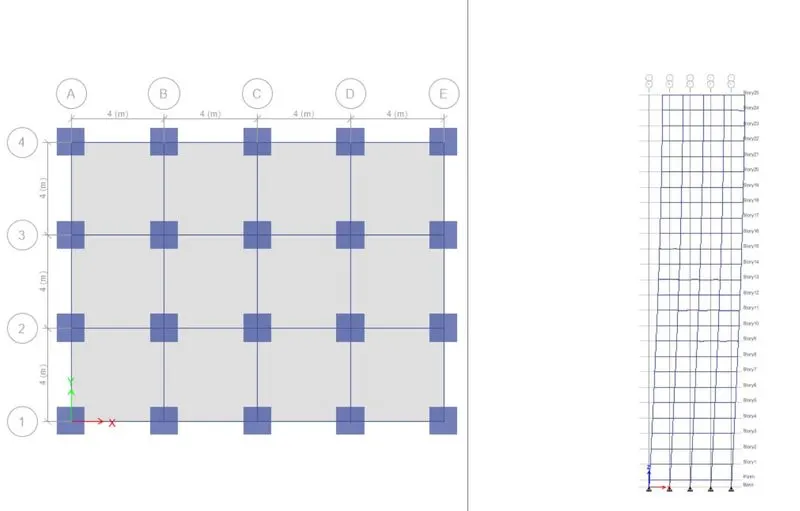
Mode shapes depend on axial stiffness of vertical members in a building. Columns with smaller size sways more than columns with larger size. - Effect of degree of fixity at column bases on mode shapes
Comparison of building B in pinned connection and fixed connection
In pinned condition lateral sway will be more at bottom storey than upper storey and in fixed condition lateral sway is restricted at bottom storey. This condition is observed in above cases.