Project 1_Comparative study of different storey buildings for Seismic forces
Aim
The aim of this project is to compare the different storey of building for seismic forces as per the specification given.
Introduction
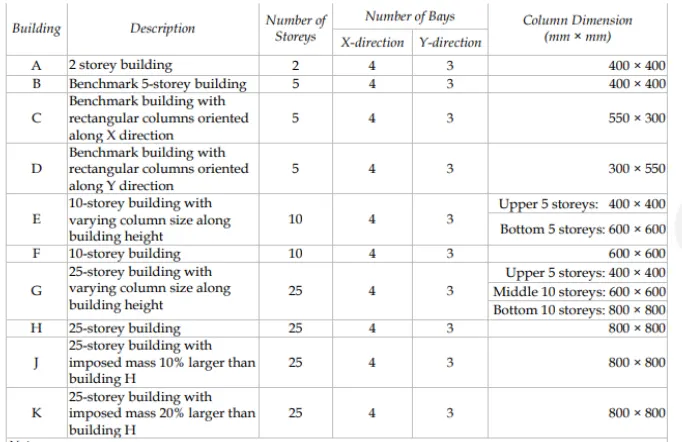
This project is modelled and analyzed using ETabs Software. The project focus on the comparative study of seismic forces acts on different storey of building configuration. Totally 10 numbers of buildings were choose A-K and their specification were shown on below table. Based on this model we need to analysis and compare the seismic parameters.
Procedure in Detail
As per the given specification the building has been modelled and analyze.
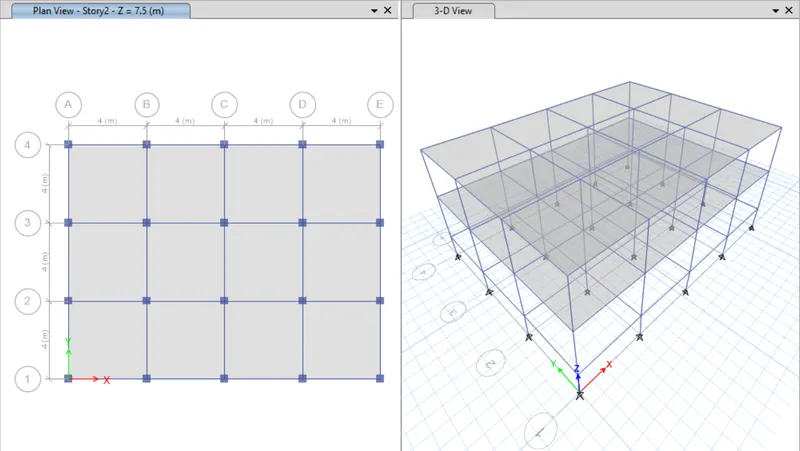
The building A having 2 storey with column size 400 x 400 throughout the structure
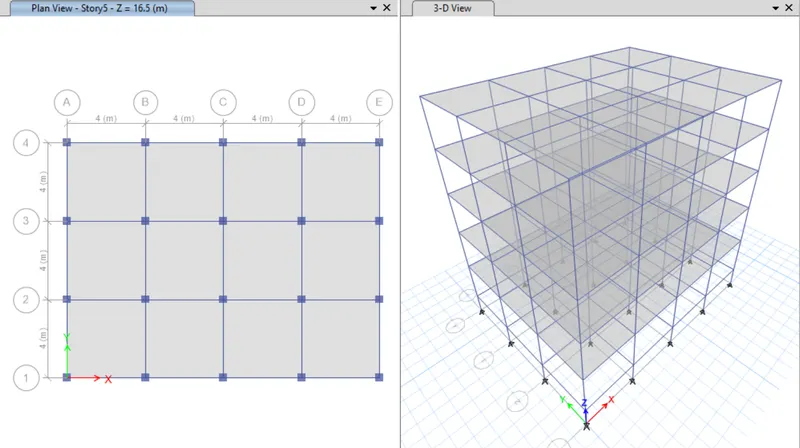
The building B having 5 storey with column size 400 x 400 mm through out the structure
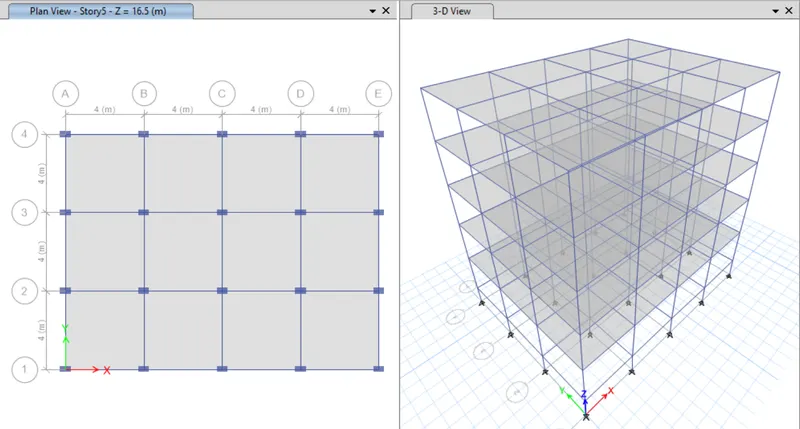
The building C having 5 storey with column size 550 x 300 mm with major axis of column oriented along x-direction
The building D having 5 storey with column size 300 x 550 mm with major axis of column oriented along y-direction
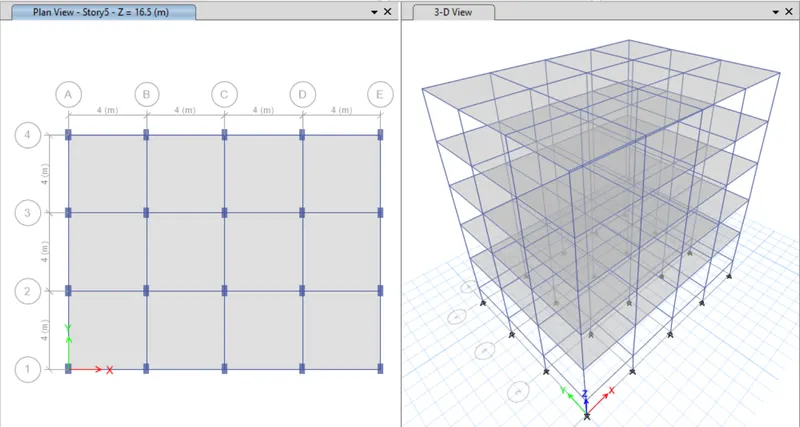
The building E is a 10 storey model with varying column size
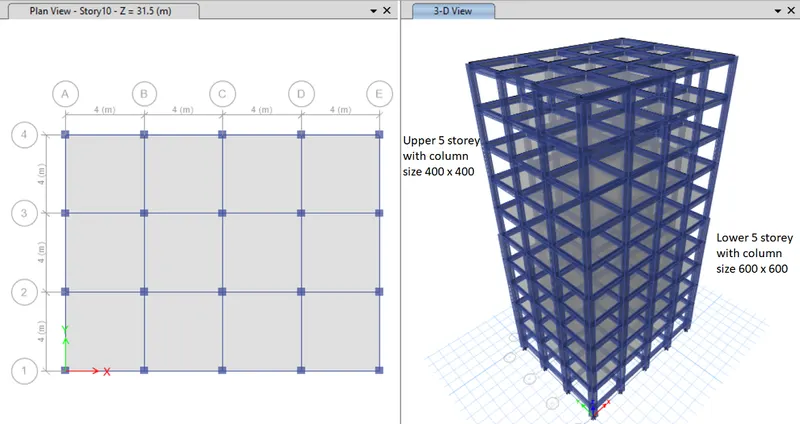
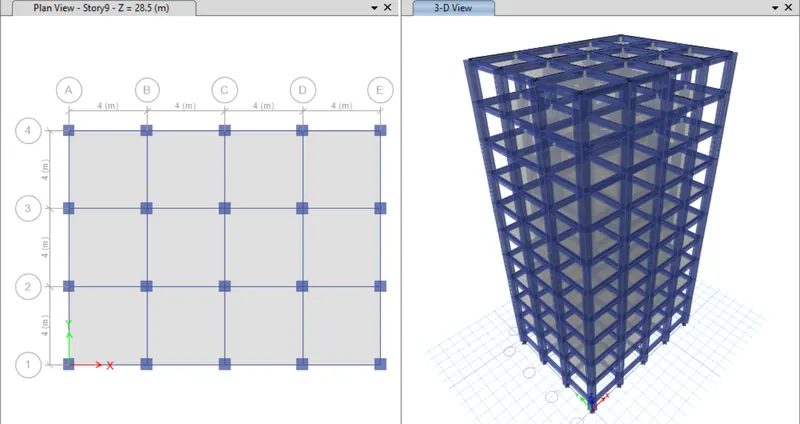
The building F is a 10 storey model with uniform column size 600x600
The building G is a 25 storey model with varying column size
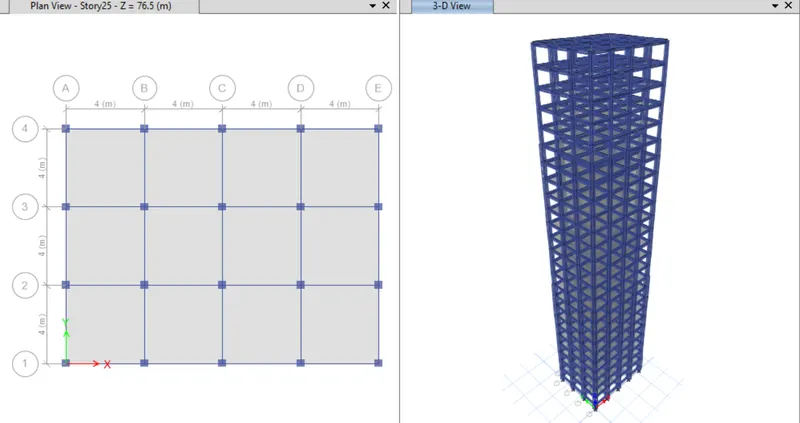
The building H is a 25 storey model with uniform column size C 800 x 800
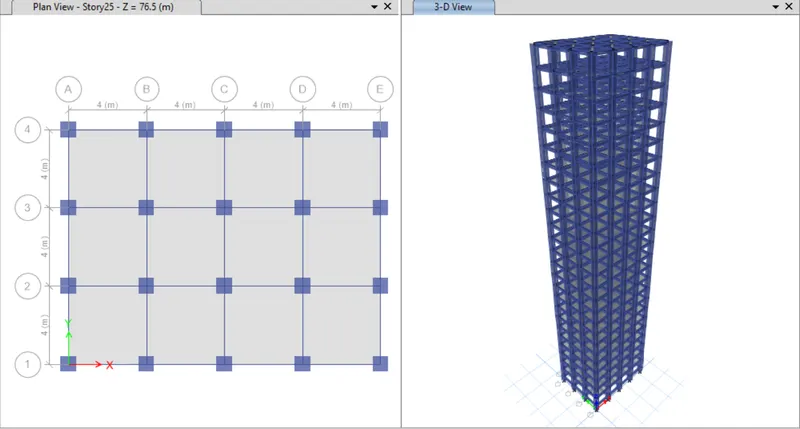
The building J is a 25 storey model with Imposed Mass 10% Larger than Building H
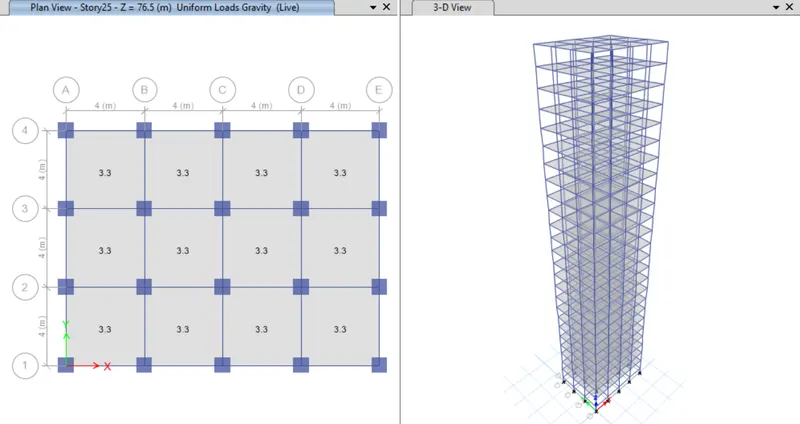
The Imposed load is increased with 10%, therefore the Live load in building J is assigned as 3 x 10%+3 = 3.3 kN per square metre.
The building K is a 25 storey model with Imposed Mass 20% Larger than Building H
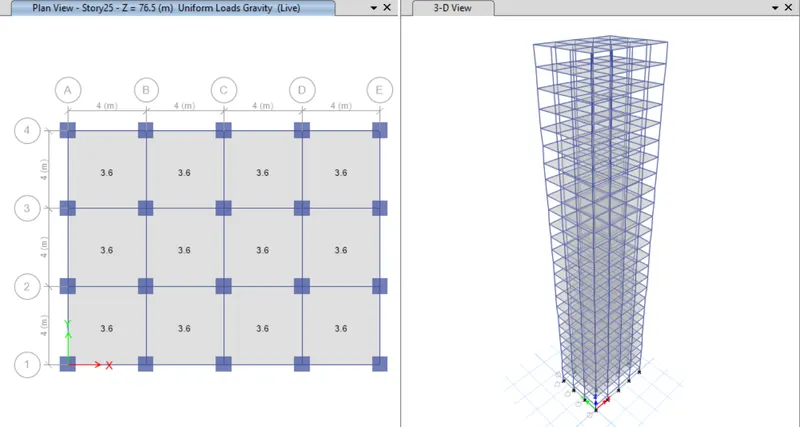
The Imposed load is increased with 20%, therefore the Live load in building J is assigned as 3 x 20%+3 = 3.6 kN per square metre.
Once all the inputs were given then check the model and analyse the structure. Therefore all the 10 models were analysed.
Comparsion
Effect of Stiffness on T: Compare fundamental natural periods of buildings E & F as well as G & H.
For Building E the fundamental Natural period of Vibration as
`T_(x_1)=1.731 sec`
`T_(y_1)=1.676 sec`
`R_1=1.46 sec`
For Building F the fundamental Natural period of Vibration as
`T_(x_1)=1.735 sec`
`T_(y_1)=1.678 sec`
`R_1=1.47 sec`
For Building G the fundamental Natural period of Vibration as
`T_(x_1)=4.17 sec`
`T_(y_1)=3.988 sec`
`R_1=3.19 sec`
For Building H the fundamental Natural period of Vibration as
`T_(x_1)=4.41 sec`
`T_(y_1)=4.22sec`
`R_1=3.31sec`
The Building E and F where the fundamental natural period of vibration is slightly increase in F than that of E
Similarily for the Building G and H where the fundamental natural period of vibration is slightly increase in H than that of G.
This may due to varying size of column and mass of the structure.
As we know the Time period is directly proportional to the mass of the structure,once mass increase time period also increase with respect to it.
Effect of mass on T: Compare fundamental natural periods of buildings H, J and K.
For Building H the fundamental Natural period of Vibration as
`T_(x_1)=4.41 sec`
`T_(y_1)=4.22sec`
`R_1=3.31sec`
For Building J the fundamental Natural period of Vibration as
`T_(x_1)=4.425 sec`
`T_(y_1)=4.231 sec`
`R_1=3.317 sec`
For Building K the fundamental Natural period of Vibration as
`T_(x_1)=4.435 sec`
`T_(y_1)=4.24 sec`
`R_1=3.323 sec`
From the Above values The Building H J K are similar in their structures and only variation was imposed load, The mass of the structure here is not shown much variation
Effect of Building Height on T: How does the fundamental natural periods of Buildings A, B, F and H
For Building A the fundamental Natural period of Vibration as
`T_(x_1)=0.5 sec`
`T_(y_1)=0.488 sec`
`R_1=0.444 sec`
For Building B the fundamental Natural period of Vibration as
`T_(x_1)=1.036 sec`
`T_(y_1)=1.01 sec`
`R_1=0.912 sec`
For Building F the fundamental Natural period of Vibration as
`T_(x_1)=1.735 sec`
`T_(y_1)=1.678 sec`
`R_1=1.468 sec`
For Building H the fundamental Natural period of Vibration as
`T_(x_1)=4.41 sec`
`T_(y_1)=4.22sec`
`R_1=3.31sec`
While compare the building A and B the time period is more in B , similarily for the building F and H the time period in H is much higher.
As the height of the building increase then the time period also increase due to less stiffness on the structure.
Effect of Column Orientation on T: How does the fundamental natural periods of Buildings B, C and D change with change in column orientation
For Building B the fundamental Natural period of Vibration as
`T_(x_1)=1.036 sec`
`T_(y_1)=1.01 sec`
`R_1=0.912 sec`
For Building C the fundamental Natural period of Vibration as
`T_(x_1)=1.145 sec`
`T_(y_1)=0.929 sec`
`R_1=0.926 sec`
For Building D the fundamental Natural period of Vibration as
`T_(x_1)=1.12 sec`
`T_(y_1)=0.953 sec`
`R_1=0.899 sec`
From the above value the higher the stiffness lesser time period occurs.
Effect of Flexural Stiffness of Structural Elements on mode shapes:
Consider Building B with zero stiffness and compare it with original building
For Building B the fundamental Natural period of Vibration as
`T_(x_1)=1.036 sec`
`T_(y_1)=1.01 sec`
`R_1=0.912 sec`
For Building B with stiffness zero then in etabs change the section modfier on moment of interia about axis 2 and 3 as 0.01 and torsional constant as 0.01
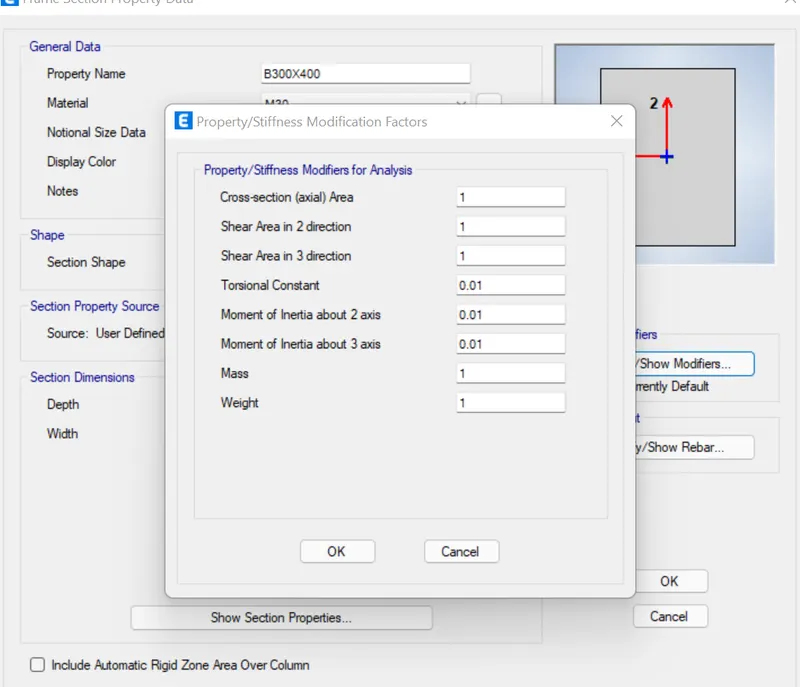
Then the natural time period becomes
`T_(x_1)=7.721 sec`
`T_(y_1)=7.483 sec`
`R_1=4.54 sec`
Due to lack of stiffness the structure become more flexible therefore time period is higher
Effect of Axial Stiffness of Vertical Members on mode shapes:
Consider Building H with zero axial area which is compared with original building
For Building H the fundamental Natural period of Vibration as
`T_(x_1)=4.41 sec`
`T_(y_1)=4.22sec`
`R_1=3.31sec`
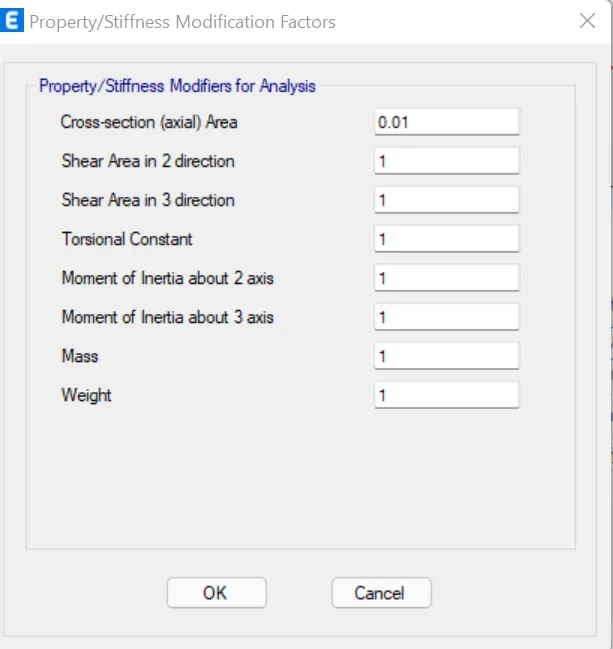
For Building H with zero axial area the fundamental Natural period of Vibration as
`T_(x_1)=13.291 sec`
`T_(y_1)=11.051 sec`
`R_1=3.361 sec`
Effect of Degree of Fixity at column bases on mode shape:
Consider the Building B with Fixed support at its base which compare with its orginial building
For Building B the fundamental Natural period of Vibration as
`T_(x_1)=1.036 sec`
`T_(y_1)=1.01 sec`
`R_1=0.912 sec`
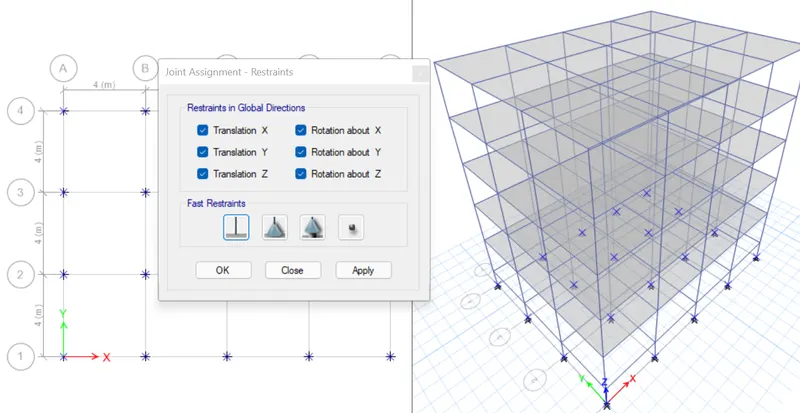
The natural time period with fixed base as
`T_(x_1)=0.941 sec`
`T_(y_1)=0.919 sec`
`R_1=0.828 sec`
The structure with full restraint become less period of time
Conclusion
Thus all the model were analysed and compared with the seismic parameters