Project 1 : CFD Meshing for Tesla Cyber Truck
OBJECTIVE:
For the given model of tesla's Cyber truck, check and solve all geometrical errors and Assign appropriate PIDs. Perform meshing with the suitable Target length and element Quality criteria and also create a wind tunnel and perform volumetric mesh.
PROCEDURE:
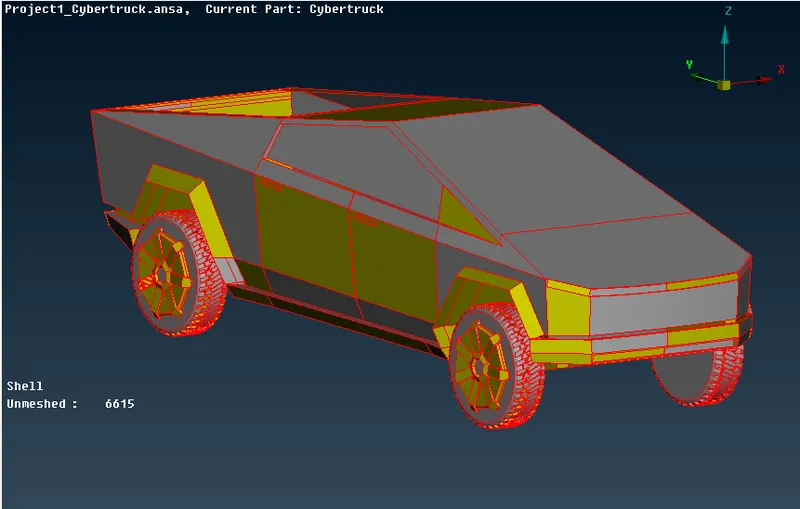
1. Topo/geometry clean-up:
a. Upload the ANSA file onto screen to perform topo/clean and meshing on the later stages.
b. Go to mesh and choose length and enter 1 mm under perimeters to smoothen the sharp curves of the car and give it a fine look.
c. Since the car is symmetric from the middle to any end, we can delete one-side of the car and perform the necessary operations on the car and use symmetry option to produce the complete car.
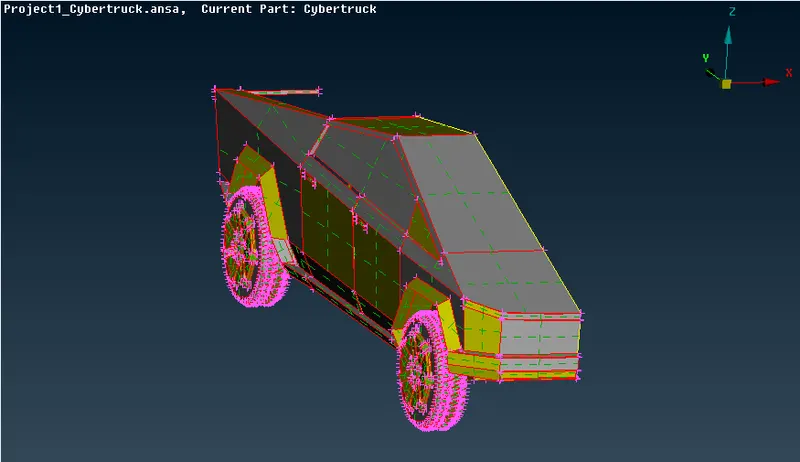
d. We can now start with the topo clean-up by removing the single and unnecessary triple cons. First click on topo and box select the entire to identify or joins any unjoined single cons or triple cons so that we can identify the required clean-up accordingly.
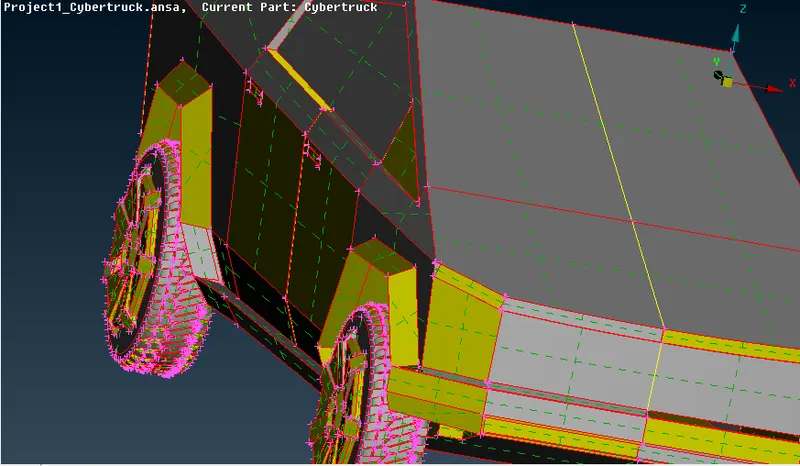
- After checking and performing topo-clean up for the entire half car model. We need to perform geometry checks to find small cracks are unchecked faces extra which is not good for the geometry, therefore we need to perform checks and clean the geometry accordingly.
- Once the geometry is checked and has no errors, we can now assign names to different components using PID.
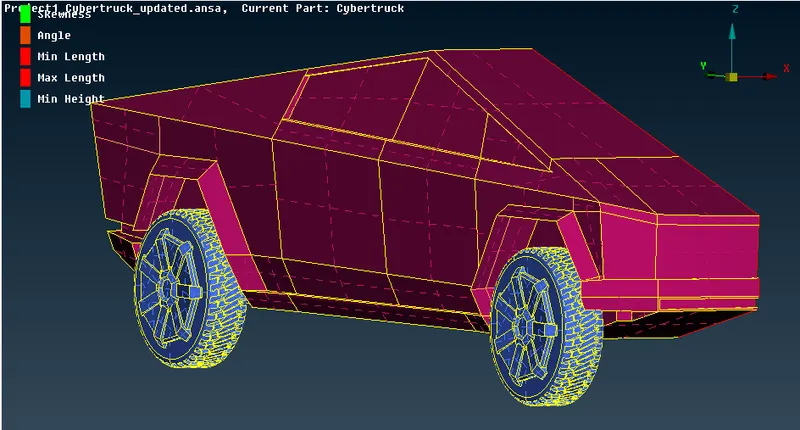
- After assigning the names, we now to choose the quality criteria method. Choose openFOAM solver next to volumetric mesh and choose the given quality criteria below.
- Using the measure tool we can calcualte the smallest distance between to cons or hot points and depending on that, we can assign our minimum and maximum length accordingly in the mesh parameters, if we do not do this we can get failed mesh.
2. Surface meshing:
We need to mesh the components individually since the given mesh targets are different for each PID regions.
Assign the mesh parameters and quality parameters for each PID accordingly, assigning the correct min and max length will reduce mesh failure and off elements.
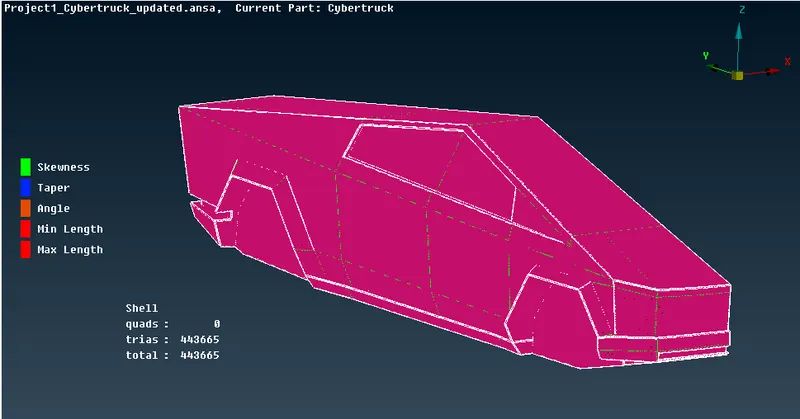
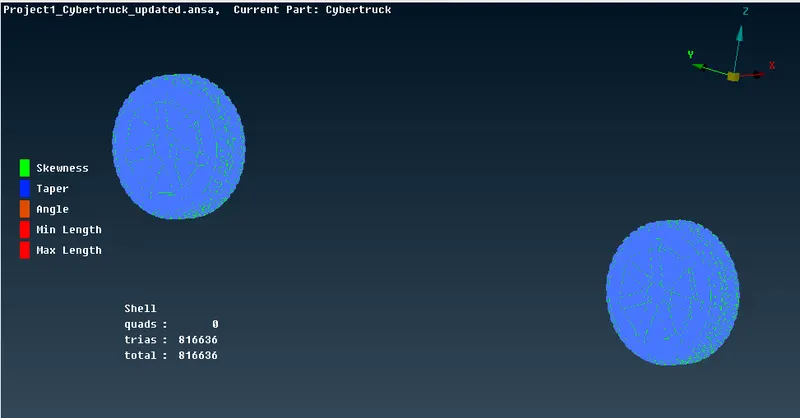
After meshing, we can choose re-construct under shell mesh to reduce the off elements. And later the remaining off elements can be edited manually.
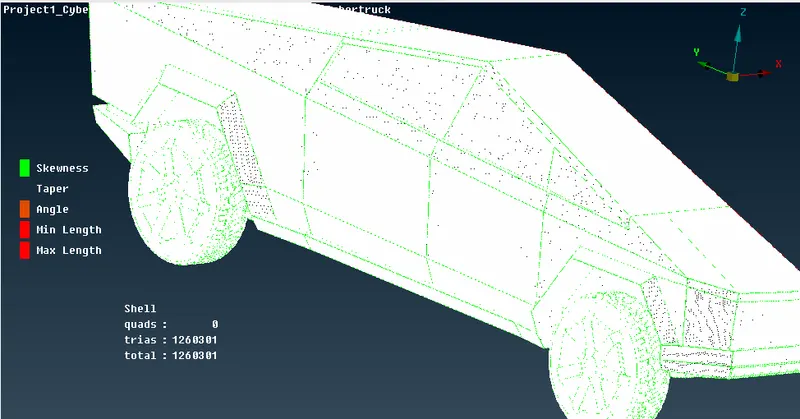
- Performing symmetry on the car model:
a. Perform symmetry under transform option to create a exact same opposite body of the car to create a full body car.
c. After choosing the model, middle click mouse, we get a window, choose symmetry and choose mirror 3 points plane and choose 3 points on the edge to be performed symmetry.
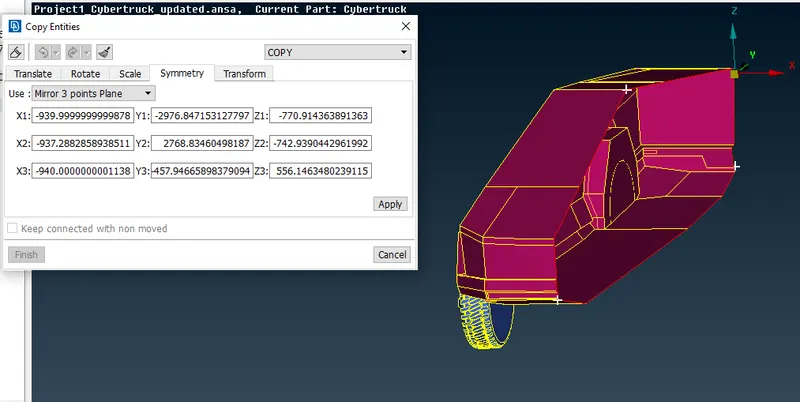
d. After choosing 3 points, middle click twice and the symmetry is performed, click middle click again to confirm the geometry and complete the process.
e. There will be few single cons present near the middle section, use paste or other tools to solve the probem.
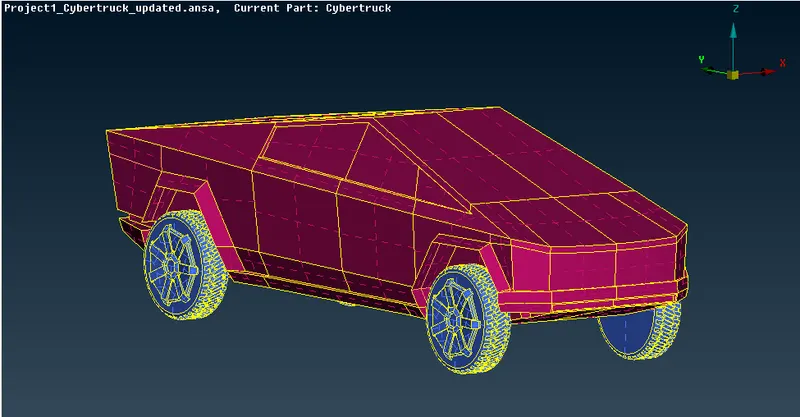
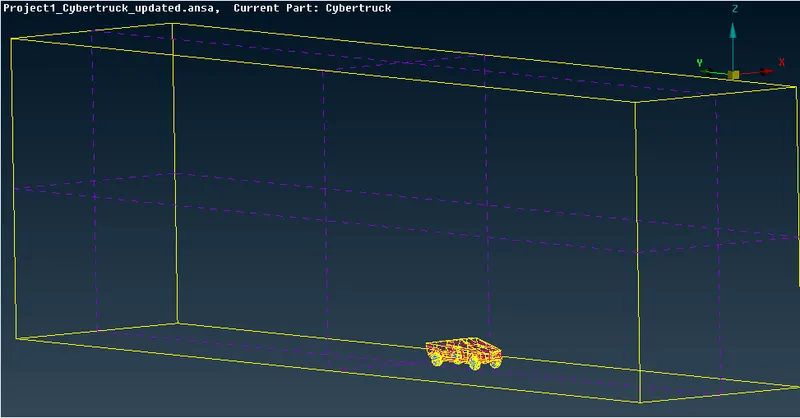
- Creating wind tunnel:
a. First, we need to create reference points to create wind tunnel surfaces.
b. Select relative under points in topo mode, create a point below the car taking one reference point and entering the correct values.
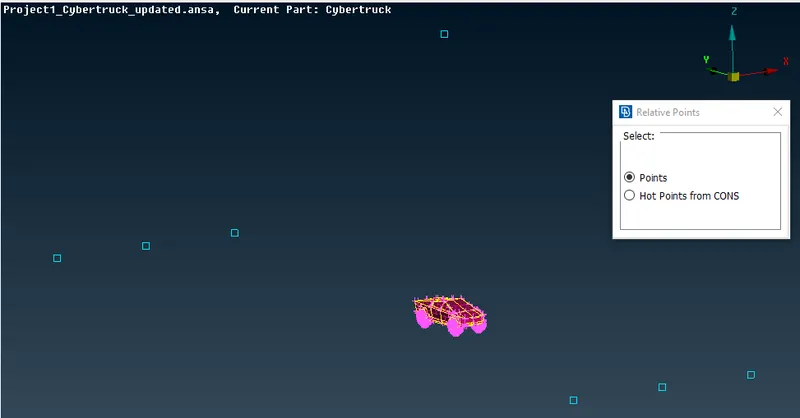
c. And calculating the wind tunnel dimensions appropriately, we can create the wind tunnel accurately.
d. The wind tunnel dimmensions are:
car model: 5906mm
Front surface distance(from reference point): 23624mm
Back surface distance(from reference point): 35436mm
Top surface distance(from reference point): 19749mm
e. After creating the bottom surface use the curves for having the reference of cons, we can delete all the hot points and curves.
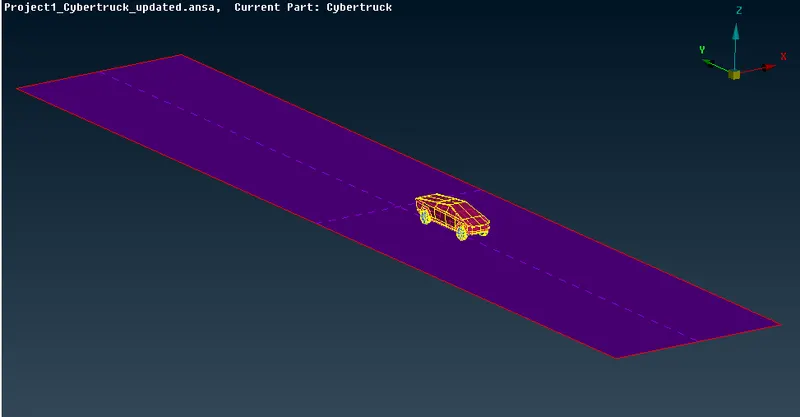
f. Create all the other wind tunnel surface using the new surface option.
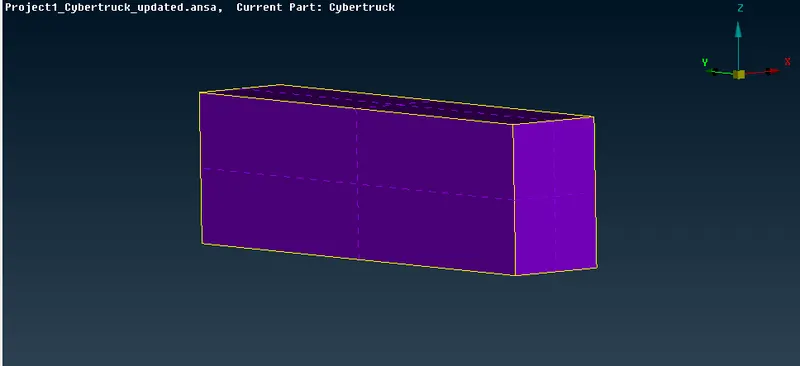
- Surafce meshing of wind tunnel:
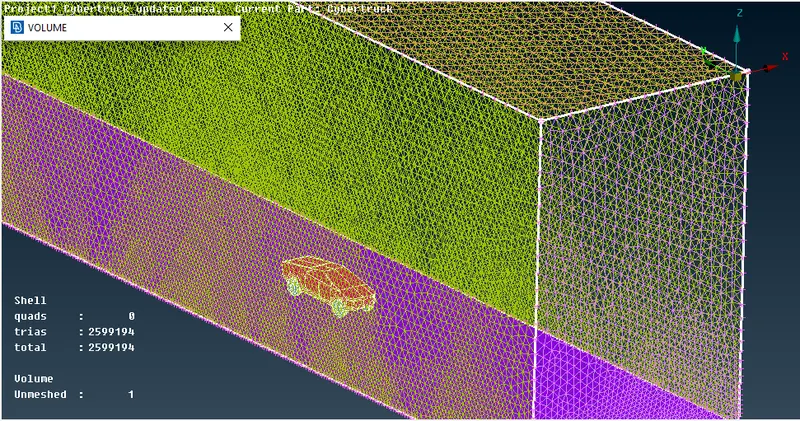
a. We need to apply surface meshing depending the mesh length near the car and regions far away from it.
b. Therefore we need to apply different mesh lengths at the bottom and top wind tunnel surfaces.
c. We need to use spacing option to have a mesh length varying from the small mesh length size to larger mesh length.
d. Surface meshing can be achieved by doing this accordingly.
- Volumetric mesh of wind tunnel-car volume:
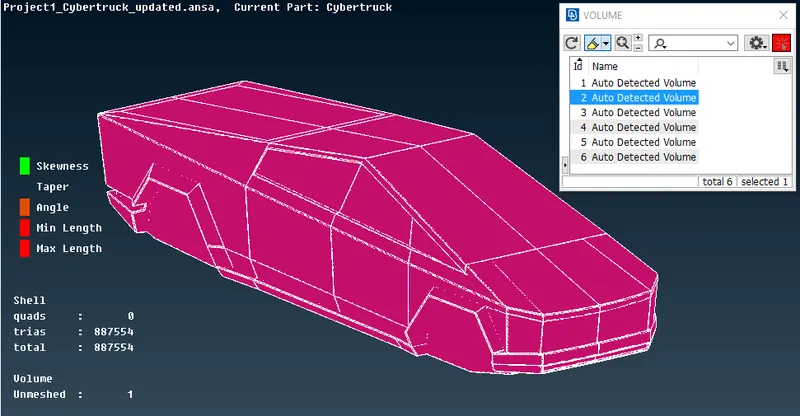
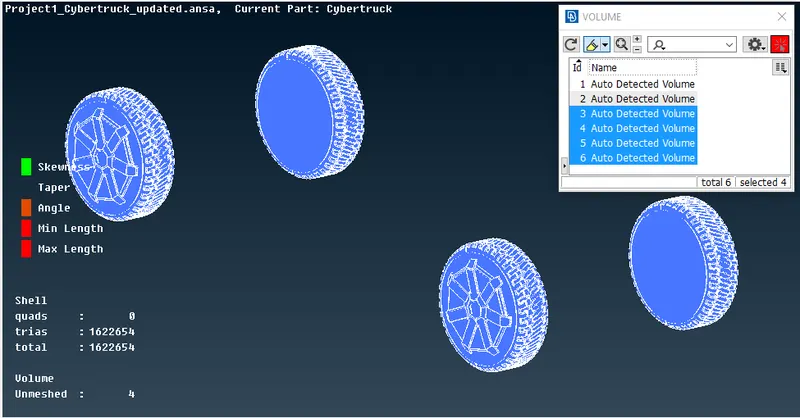
a. Since we are interested only the volume between the car model and wind tunnel, we can delete other volumes of the car model which is not necessary.
b. Since performing the volumetric mesh takes 2-3 days, volumetric mesh is not performed as given by the challenge question.
CONCLUSION:
1. Cybertruck car model is topo-cleaned and surface meshed appropriately.
2. Wind tunnel is created and surface meshed with reference to the car model size.
3. Different volumes of the car model is created since the tyres are not connected to the car body.
4. Single volume is created of the car body so that it can be avoided at one go when creating a volumetric mesh.
5. Required physics tests can be performed on the wind tunnel volume model after volumetric meshing successfully.
LEARNING OUTCOMES
a. Learnt the complete CFD meshing skill from skratch.
b. Performed various topo clean-ups using different tools.
c. Understood the need of double cons and removing unecessary triple and single cons.
d. The use of symmetry helps in reducing the work time and helps in having accurate results with less work.
e. Create surfaces using the reference hot points by using relative points.
f. Surface meshing for different components and their varying mesh lengths.
g. Using spacing option in surface meshing helps in having varying mesh lengths along the surfaces.
h. Using re-construct option to reduce off elements to a level where we can edited it manually.
i. Using the mesh modifying tools like move, split and smooth options.
MODEL https://drive.google.com/file/d/1BP28_Snn1CEO11xQWNSg0nBsQVoH9atx/view?usp=sharing