Project 1
Question 1:
Aim: To Design a battery pack for given specifications
Given that required power of the battery is 150KW
required voltage of the battery is 120V
given cell nominal voltage is 3.6V
given maximum capacity of the cell is 3500mAh
required current rating of the battery pack is given by
`I_("battery")=("Rated Power of the battery")/("Rated Voltage of the Battery" )`
`I_("battery")=(150KW)/(120V)=1250A`
the required current rating of the battery is 1250A
Battery configuration:
Let us calculate Number of Cells in series
`"No. of Cells in Series" = ("Required voltage of the battery")/("Nominal Voltage of the cell")`
`"No. of cells in series" = (120V)/(3.6V)=33.334~~34`
rounding of to higher digit additional voltage is useful
Number of cells in series is 34
Now let us calculate the Number of cells in parallel
`"No. of cells in parallel"=("Required capacity of the battery")/("Max. Capacity of the cell")`
`"No. of cells in parallel "=(1250Ah)/(3.5Ah)=357.14287~~358`
Rounding off to higher digit as extra current is also helpful
The required number of cells in parallel in 358
the battery configuration is 34S358P
may be we can split it to 2x17s and 2x179P
Battery Management System Topology:
The above battery Configaration has 34 cells in series
it is above 8 cells in series so circular&distributed topologies is not used
it is below 7000 cells and to reduce cost modular topology is not used
we are using master and slave topology
let us draw the Topology to understand more about the above battery configuration
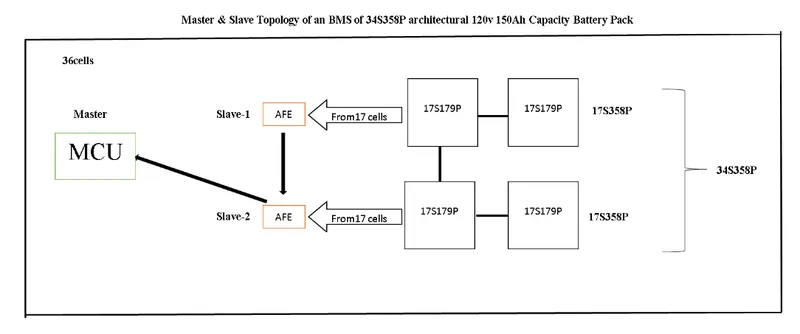
by observing the above topology
the slave 1 recieves the data from 17 cells connected to it and sends to slave 2
the slave 2 reads the data from 17 cells connected to it and from slave 1 and sends the data to master
The master reads the data from slave 2 which consists of the data of slave 2 and slave 1
thus the master manages the battery pack by collecting data
Question 2:
Aim: To build a simulink model of 3S2P battery configuration by using the generic battery block from special power systems in simscape blockset of MATLAB/SIMULINK
To build a simulink model first of all we have to know about the total number of cells that we are going to use
`"Total Number of cells"="Number of cells in series"xx"Number of cells in parallel"`
`"Total number of cells"= 3xx2=6`
let us see the system level configuration
System level configuration:
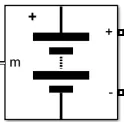
this is an generic battery from special powersystems segment of electrical in simscape library

this is an controlled current source from the same library

this is an voltage measurement block from the same library
scope and display from foundation library
Model Parameters:
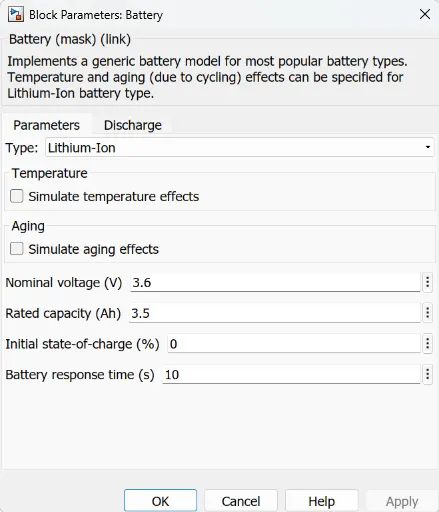
Battery:
Nominal Voltage = 3.6V
Max. Capacity = 3.5Ah
Total Voltage of the Battery = 3x3.6V=10.8V
Total Capacity of the Battery = 7Ah
Total simulation run time=3600s
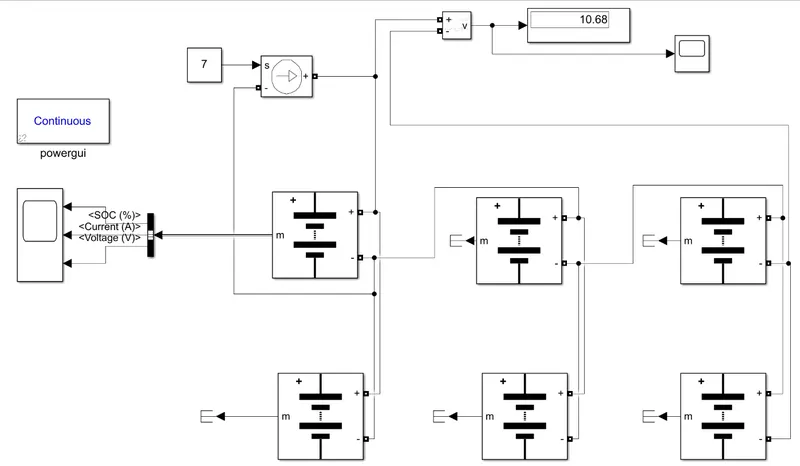
Simulation Diagram:
Procedure:
The given battery configuration 3S2P
I took the cell specifications of
Nominal Voltage 3.6V
capacity 3.5Ah
So the total vltage rating of the battery is 3x3.6V is 10.6V
capacity of the battery is 2x3.5Ah is 7Ah
the initial soc% is 0%
2 cells are connected in parallel in 3 pairs connected in series
the controlled source voltage is set to 7 to charge the battery
the simulink run time is set to 3600s
Now run the simulation model to see the simulation
Results:
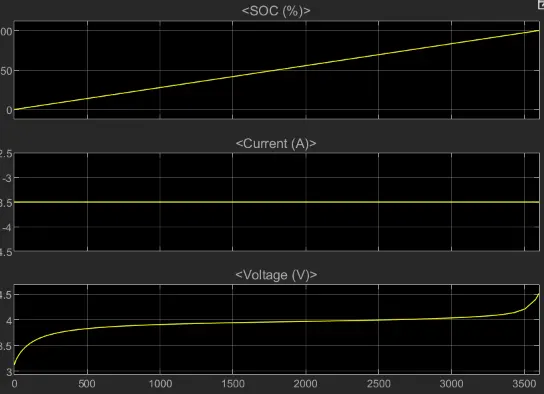
we can see individual cell SOC%, Current(A), and Voltage(V)
we can observe that the soc% increasing from 0 to 100%
as well as the voltage charging
let us see the overall battery pack nominal voltage
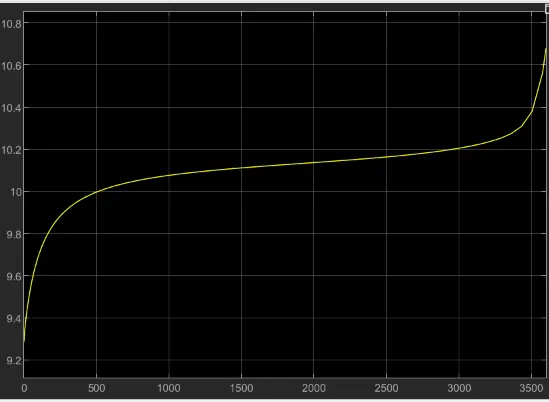
we can obesrve the voltage increasing gradually while charging
Conclusion: The Batery Configuration for given battery specifications is designed and the BMS Topology is drawn.The Simulink Model for 3S2P Battery configuration with cell specification 3.6V, 3500mAh is built and simulated.