Project 1
Design and Develop a PWM-controlled fan load with a DC motor
The below Model shows how to control the DC motor fan load with Controlled PWM voltage and H-bridge blocks and the Ideal Torque source using the square law.
Blocks Used in Simulink Model
- Pulse Generator
- Controlled voltage source
- H-Bridge
- DC Motor
- Ideal Torque Source
- Current and Voltage Sensors.
Design and Settings of various parameters of Block
Pulse Generator
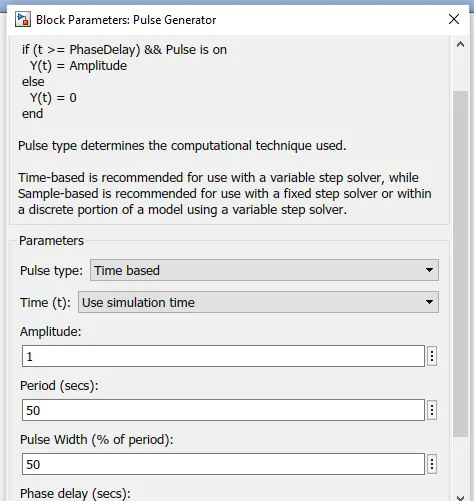
- The pulse generator generates Pulses with respect to parameters shown below
- Amplitude is 1 and pulse width is set to 50%
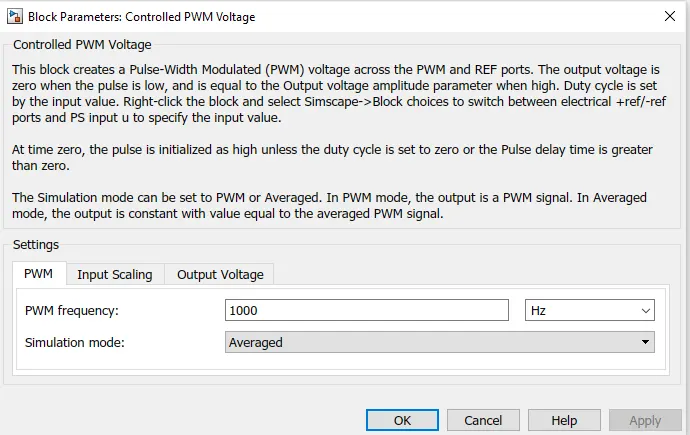
Controlled PWM voltage:
This block creates a Pulse-Width Modulated (PWM) voltage across the PWM and REF ports. The output voltage is zero when the pulse is low and is equal to the Output voltage amplitude parameter when high. The duty cycle is set by the input value.
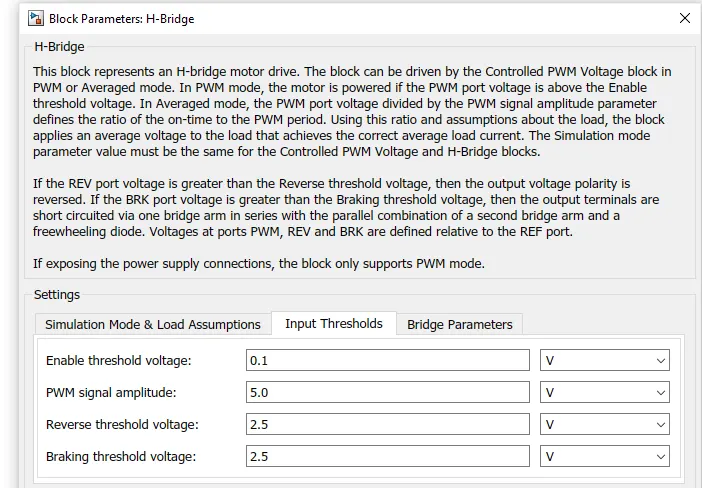
H-Bridge Block:
This block input is driven by the Controlled PWM Voltage block in PWM, The motor is powered if the PWM port voltage is above the Enable threshold voltage.
If the REV port voltage is greater than the Reverse threshold voltage, then the output voltage polarity is reversed. If the BRK port voltage is greater than the Braking threshold voltage, then the output terminals are short-circuited via one bridge arm in series with the parallel combination of a second bridge arm and a freewheeling diode
DC Motor
Here we use a Permanent Magnet DC motor which is rated load and speed.No load speed is 2500 rpm and rated speed is 1500 and DC supply voltage is 120.
Simulink Model
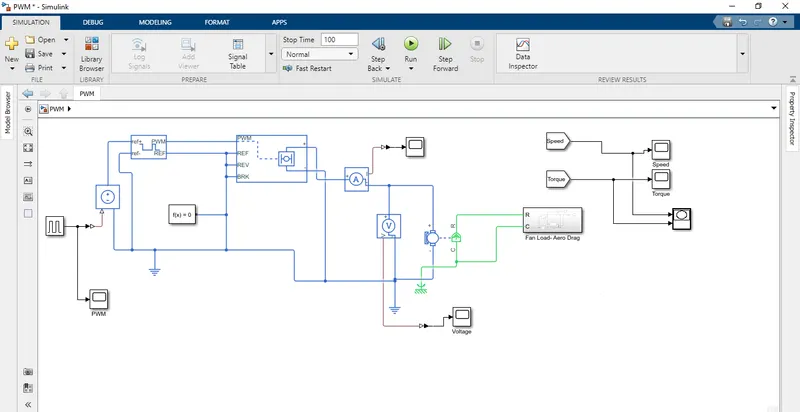
- The PWM signal is given to a controlled voltage source, it gives voltage according to the signal. The output is then going to controlled PWM voltage and to H-Bridge if the input value is greater than the threshold voltage output come. The output of the H-Bridge is connected to the DC motor and rotates based on the signal. Speed is measured by a motion sensor with square law, and Torque is calculated.
Aero-Drag Fan load Subsystem:
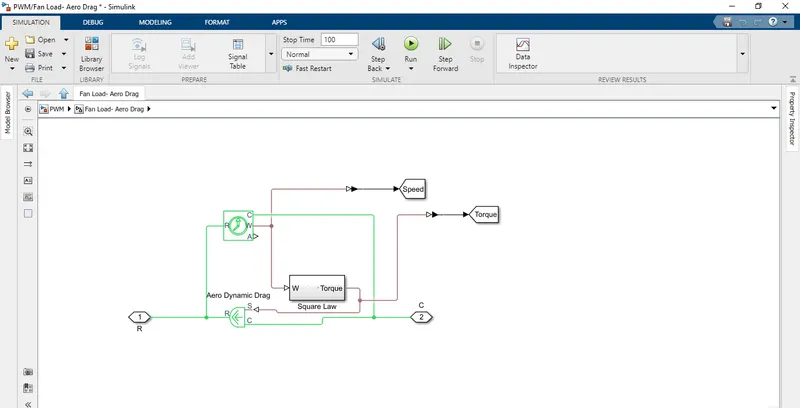
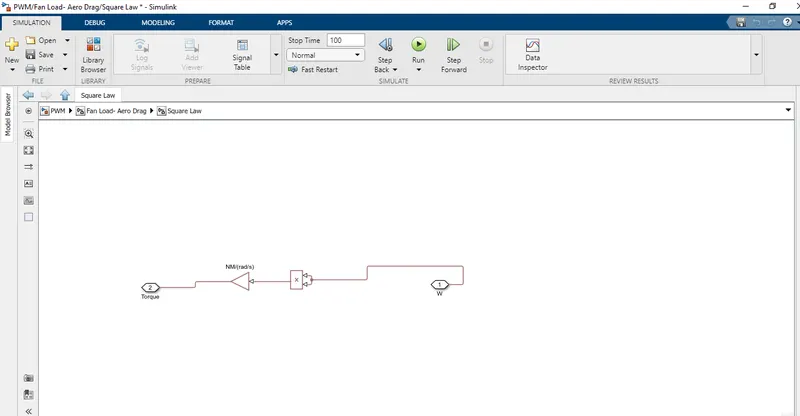
Square Law subsystem
Torque is Calculated from speed using T =C*w^2 and the gain value given is 8e-8 Nm/(rad^2/s^2).
Output:
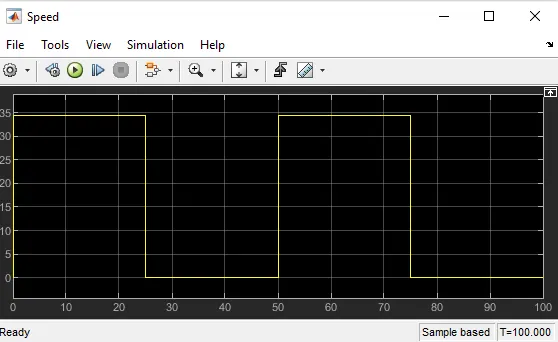
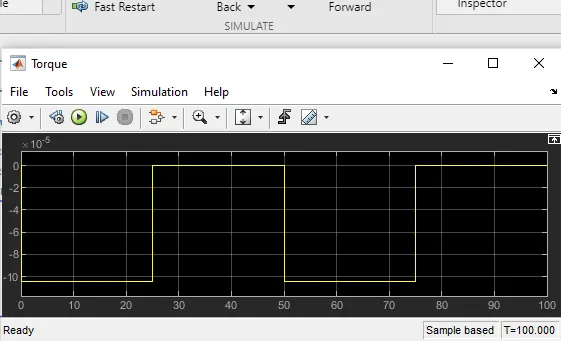
- Speed is inversely proportional to Torque.
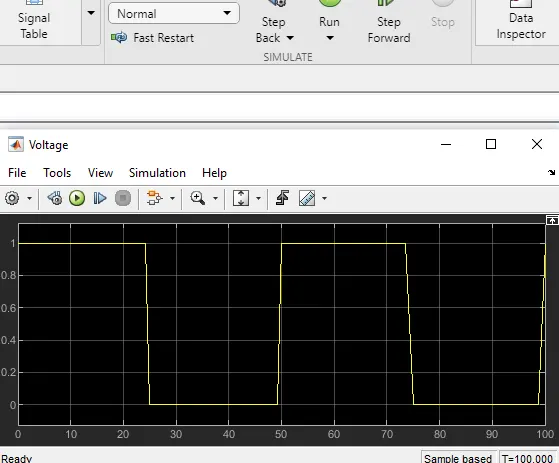
- Voltage is based on a Pulse generator signal.
The simulation of PWM-controlled DC motor fan load is simulated and the output is verified.