Project 1 - 2D meshing on the instrumental Panel
OBJECTIVE
For the given component, check for the geometrical errors and mesh with the given element Quality criteria. After meshing the component the thickness has to be assigned.
PROCEDUR
1. Import the geometry into ANSA by using the open option in the file menu.
2.Check the geometry by using Checks > Geometry in the tool menu.
- Execute the check on the component to find the geometry errors
- Initially try eliminating the found errors using the autocorrect option, if that does not eliminate all errors apply manual operations like delete, create, paste etc to eliminate the error
3. Taking the midsurface
- Measure the thickness of the geometry and the ribs.
- Offset one side of the surfaces by distance equal to half the thickness to obtain the midsurface.
- For ribs with varying thickness the middle option in the surface menu can be used
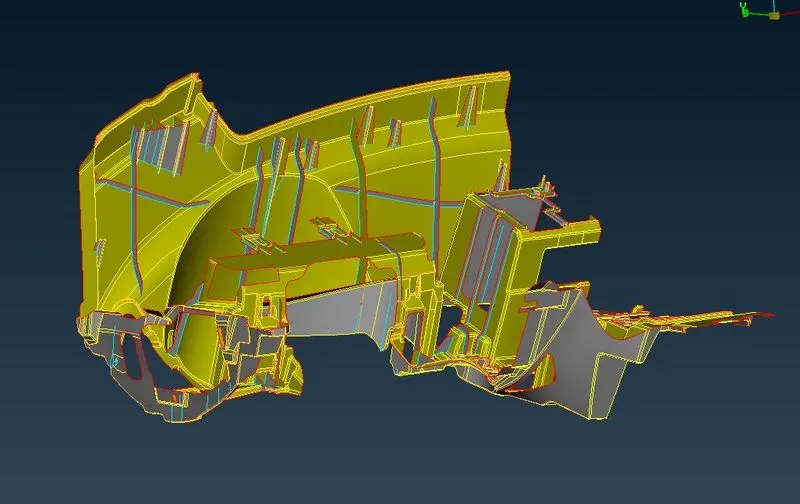
4. Set the PID for the surfaces generated based on their thickness as MIDS1, MIDS1.5 and so on
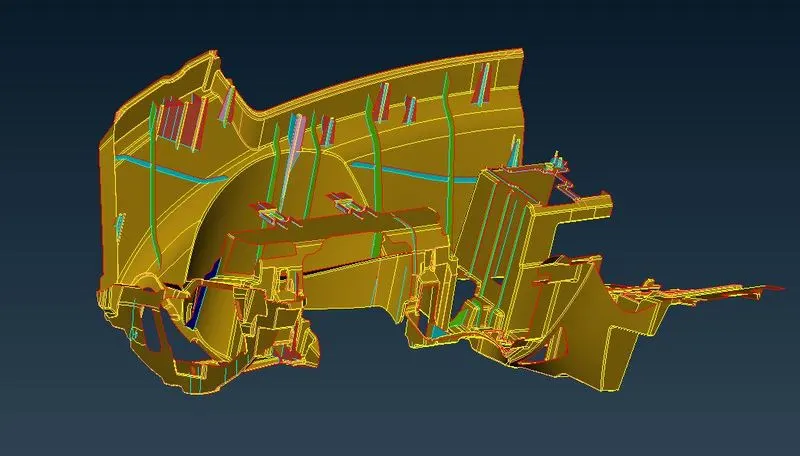
5. Cut the Midsurfaces into appropriate Macros using Cut and Proj. cut options in macros menu.
6. To mesh the surfaces assign appropriate number of hot points to each con such that the element length is within limits then use the best option in the Mesh generation menu to mesh the macros.
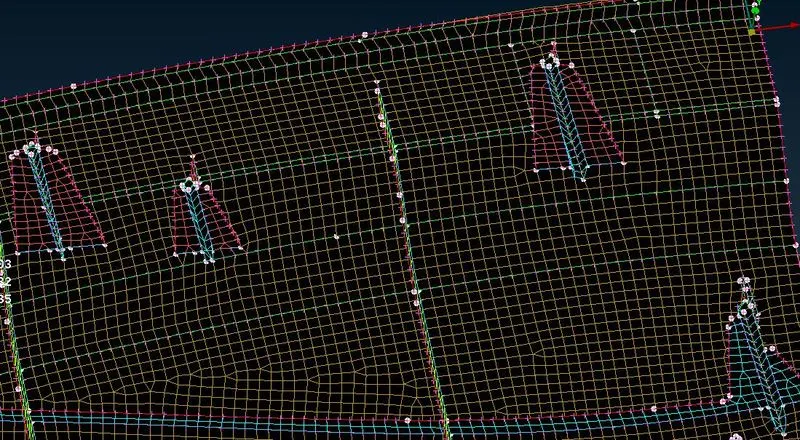
7. Input the given quality parameters in the quality criteria window and switch on the hidden mode to view the elements violating the quality Criterion.
8. Use appropriate tools in the element menu, grid menu and Shell menu to correct the failing elements(Note: Some elements near the ribs and triple cons are violating the quality criterion)
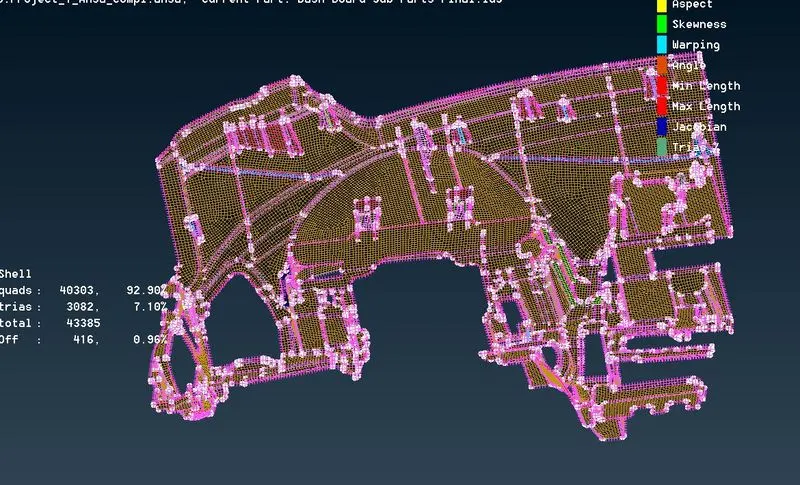
9. Activate Draw shell as Solid in presentation parameter in the Quality criteria window to visualise the elements with thickness.
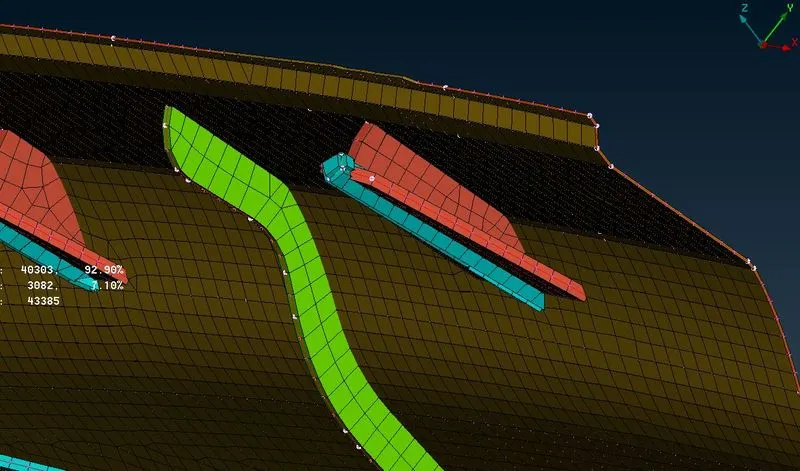
RESULT
The midsurface was obtained for the given geometry
The midsurface was meshed according to the quality criterion and the elements was assigned appropriate thickness
Learning Outcome
Obtaining midsurface of components with complex features such as ribs
Meshing a complex components with intersecting surfaces and assigning appropriate thickness to the elements