Project 1
Innovation in Mobility: Redefining the Forearm Crutch
The human forearm crutch stands as a symbol of support and independence for individuals facing mobility challenges. In this project, we embark on a journey to reimagine and innovate the traditional forearm crutch, aiming to enhance functionality, comfort, and durability.
With mobility being a fundamental aspect of daily life, it is imperative to continually evolve and refine mobility aids to meet the diverse needs of users. Understanding the importance of mobility aids, we delve into the intricate details of the forearm crutch, exploring its various types, components, and materials.
As we navigate through the project, we will uncover the main parts of the crutch, including the handle grip, forearm cuff, adjustable shaft, and ferrule. Each component plays a crucial role in providing stability, support, and maneuverability to the user.
Moreover, we examine the materials utilized in crafting these essential parts, emphasizing the importance of lightweight yet durable materials to ensure optimal performance and user comfort. Our exploration extends to the manufacturing processes involved in crafting each component, highlighting precision machining, injection molding, and testing methodologies.Through this comprehensive analysis, we aim to not only enhance the design and functionality of the forearm crutch but also pave the way for innovative advancements in mobility aids.
Main Parts of the crutch.
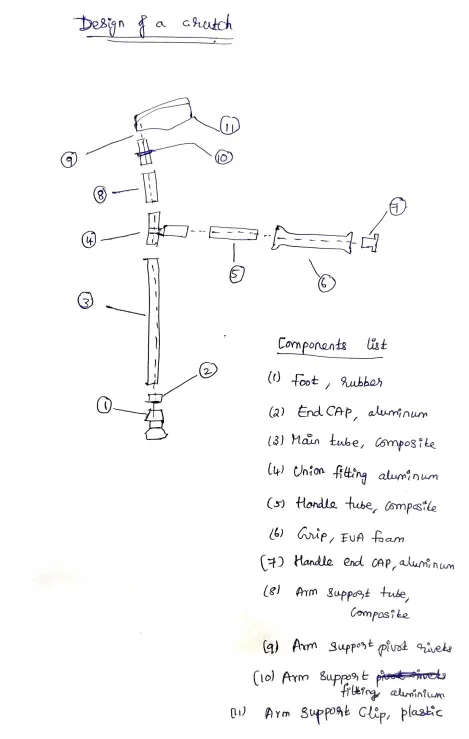
Handle Grip: Providing ergonomic support and comfort for the user's hand while gripping the crutch.
- Forearm Cuff: Offering stability and support to the user's forearm, ensuring proper weight distribution.
- Adjustable Shaft: Allowing customization of the crutch height to accommodate users of different heights and preferences.
Ferrule or Rubber Tip: Providing traction and stability on various surfaces, preventing slips and falls.
Materials Used for the Main Parts:
- Lightweight Aluminum Alloy for Shaft
- Ergonomic Foam for Handle Grip
- Durable Plastic for Forearm Cuff
- High-Quality Rubber for Ferrule
- A sketch of a crutch
Manufacturing Process:
- Shaft: Precision machining of aluminum alloy, followed by anodizing for enhanced durability.
- Handle Grip: Injection molding of ergonomic foam material for comfort and grip.
- Forearm Cuff: Injection molding of durable plastic with adjustable straps for custom fit.
- Ferrule: Molding of high-quality rubber for optimal traction and durability.
- Testing Methods for Materials:
- Tensile Strength Testing for Aluminum Alloy
- Compression Testing for Foam Handle Grip
- Impact Resistance Testing for Plastic Forearm Cuff
- Abrasion Testing for Rubber Ferrule
- Conclusions:
The innovation in the design of the forearm crutch not only enhances mobility but also prioritizes comfort and durability. With improved materials and manufacturing processes, the new design sets a new standard for mobility aids.
Suggestions for Improvement:
- Integration of Smart Technology for Monitoring and Feedback
- Enhanced Adjustability for Customized Fit
- Lightweight and Compact Design for Portability
Acquiring IP Rights for Innovative Design: To protect the innovative design, will proceed with patent applications for the unique features and functionalities of our forearm crutch. This will involve consulting with intellectual property experts to navigate the patenting process and ensure comprehensive protection of our innovation.