1D modelling of liquid cooling system
Aim :- 1D Modelling of Liquid Cooling System
A battery thermal management system controls the temperature of the batteries so that they work safely and well. High temperatures can make batteries age faster and pose safety risks, while low temperatures can reduce the battery's capacity and make it less efficient at charging & discharging.
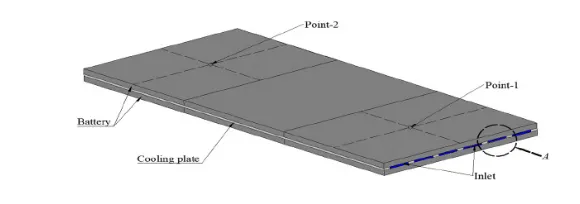
A thermal management system for a battery controls how hot or cold the battery can get by either letting heat out when it gets too hot or putting heat in when it gets too cold. Engineers can change the temperature of the battery in these systems by using active, passive, or hybrid methods of heat transfer. Most active solutions use a fan or pump to move a working fluid, like air, water, or another liquid, to lower or raise the temperature of the battery. In a passive solution, heat is moved away from the battery by heat sinks or pipes made of materials that conduct heat well. A hybrid solution takes the best parts of both active & passive solutions and puts them together.
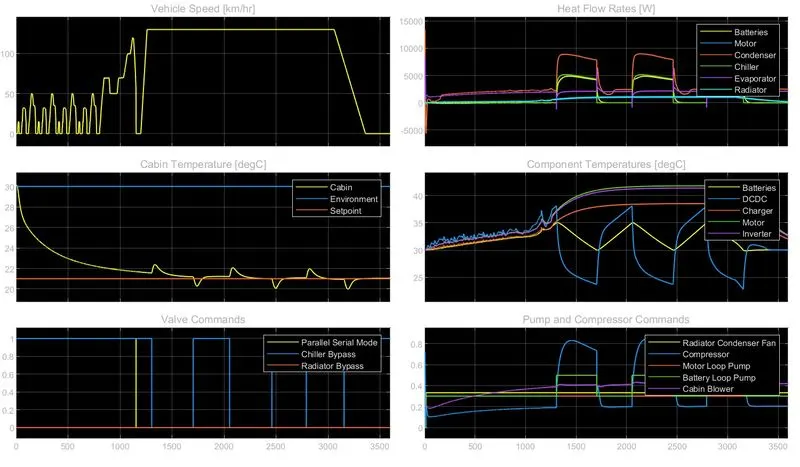
Engineers can analyse tradeoffs in design parameters, evaluate performance & implement control algorithms with the help of thermal software models that simulate how heat moves through a battery. Engineers can use MATLAB and Simulink to design thermal management systems for batteries. These systems make sure that a battery pack works well & safely in a wide range of operating conditions.
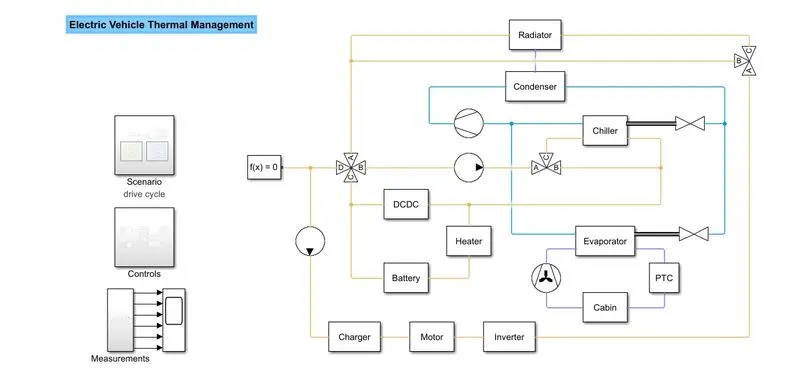
Make models for cooling & heating systems that use fluids that change phase, such as gases, liquids & refrigerants.
Modeling and simulation can be used to choose and size components.
Explore the design space with different parameters for each component and improve the performance of the battery thermal management system.
To plan for "what-if" situations, you can simulate extreme temperatures.
Design closed-loop control strategies and supervisory control logic for temperature modulation.
Do scenario studies to figure out how different design choices will affect the temperature.
Reduce costs by testing production battery hardware less often & for less money.
Automatically create embedded code for battery thermal management controls that is ready for production & check it against industry standards.
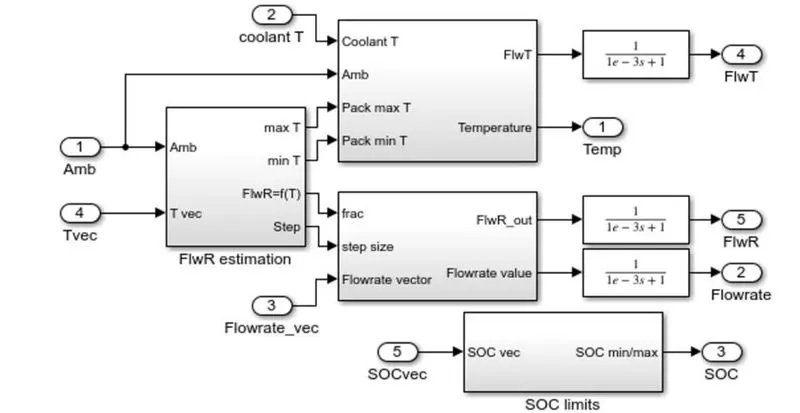
The thermal contact resistance between the battery & the cooling plate surfaces at the point where they touch directly is large & needs to be taken into account when modelling the temperature distribution.
Influence of different temperature control strategies on (a) maximum temperature; (b) temperature difference; & (c) temperature distribution
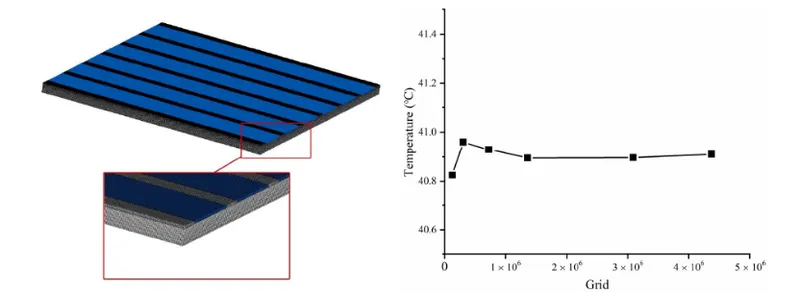
When lithium-ion batteries are being charged or drained, heat is made, which changes the temperature distribution in the battery modules and packs in a big way. In this work, experimental data are used to make a model of how heat is made by a lithium-ion battery. Fora BTMS, the heat transfer model is combined with the liquid cooling method to make it even better. For the cooling plate structure parameters and cooling strategies, the orthogonal design method is used to do the matrix analysis. The BTMS control strategies are evaluated based on how well they work, how safe they are in terms of heat, and how much electricity they need.
2) When it comes to the temperature distribution in the battery module, the inlet flow rate is the most important factor for the rectangular channels in the cooling plates. Also, increasing the channel height can effectively reduce the BTMS's parasitic energy use.