Project 1
Q. 1 Mention the need for a metro rail in a developing economy.
Ans:-
A metro rail system can play a crucial role in the development of an economy, particularly in a developing country. Here are several key reasons why a metro rail system is often needed in such an economy:
Efficient and Reliable Transportation: A metro rail system provides a fast, efficient, and reliable mode of transportation, especially in densely populated areas with high traffic congestion. It offers a dedicated right-of-way, separate from road traffic, allowing for faster travel times and reduced journey delays. This improves mobility and accessibility, making it easier for people to commute to work, school, and other essential destinations.
Capacity and Demand Management: As urban populations grow, there is an increased demand for transportation services. Metro rail systems have high passenger capacities, which help in accommodating a large number of commuters, reducing overcrowding, and minimizing the strain on existing transportation infrastructure. By providing an alternative mode of transport, metro rail systems help manage and balance the demand for transportation in rapidly developing cities.
Environmental Benefits: Developing economies often face environmental challenges due to increased pollution and carbon emissions from transportation. Metro rail systems are generally powered by electricity, which can be generated from cleaner and more sustainable sources. By promoting the use of public transportation, metro rail systems help reduce air pollution, carbon footprint, and dependence on fossil fuels, contributing to a greener and more sustainable urban environment.
Economic Growth and Development: A well-planned metro rail system can stimulate economic growth and development. It enhances connectivity within a city, linking residential areas to commercial centers, industrial zones, and educational institutions. This connectivity attracts investments, boosts business activities, and facilitates the movement of goods and services. Additionally, the construction and operation of metro rail systems create job opportunities and stimulate the local economy.
Improved Safety and Comfort: Metro rail systems are designed with safety features and strict operational protocols, making them one of the safest modes of transportation. They provide a controlled environment, separate from road traffic, reducing the risk of accidents and collisions. Moreover, metro trains are designed to offer comfortable and convenient travel, with features such as air conditioning, seating arrangements, and passenger amenities.
Enhanced Public Transport Network: Integrating a metro rail system into the public transport network complements other modes of transportation, such as buses and taxis. It offers passengers more options for travel, providing seamless connections and reducing the reliance on private vehicles. This integration promotes a more balanced and sustainable transportation system.
It's important to note that the need for a metro rail system should be carefully assessed based on the specific context, urbanization patterns, population density, transportation demand, and financial viability of the project. Detailed feasibility studies and comprehensive urban planning are essential to determine the most appropriate transportation solutions for a developing economy.
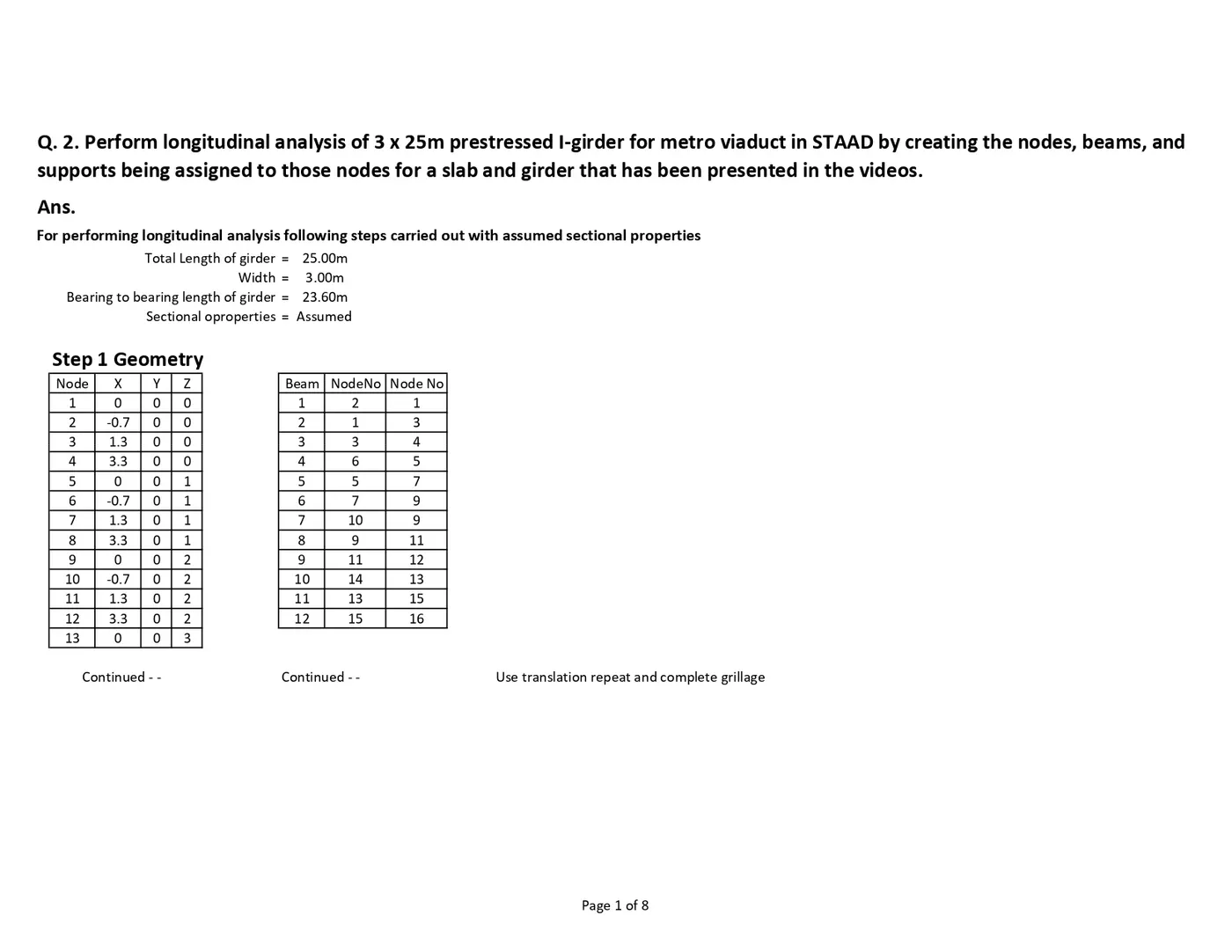
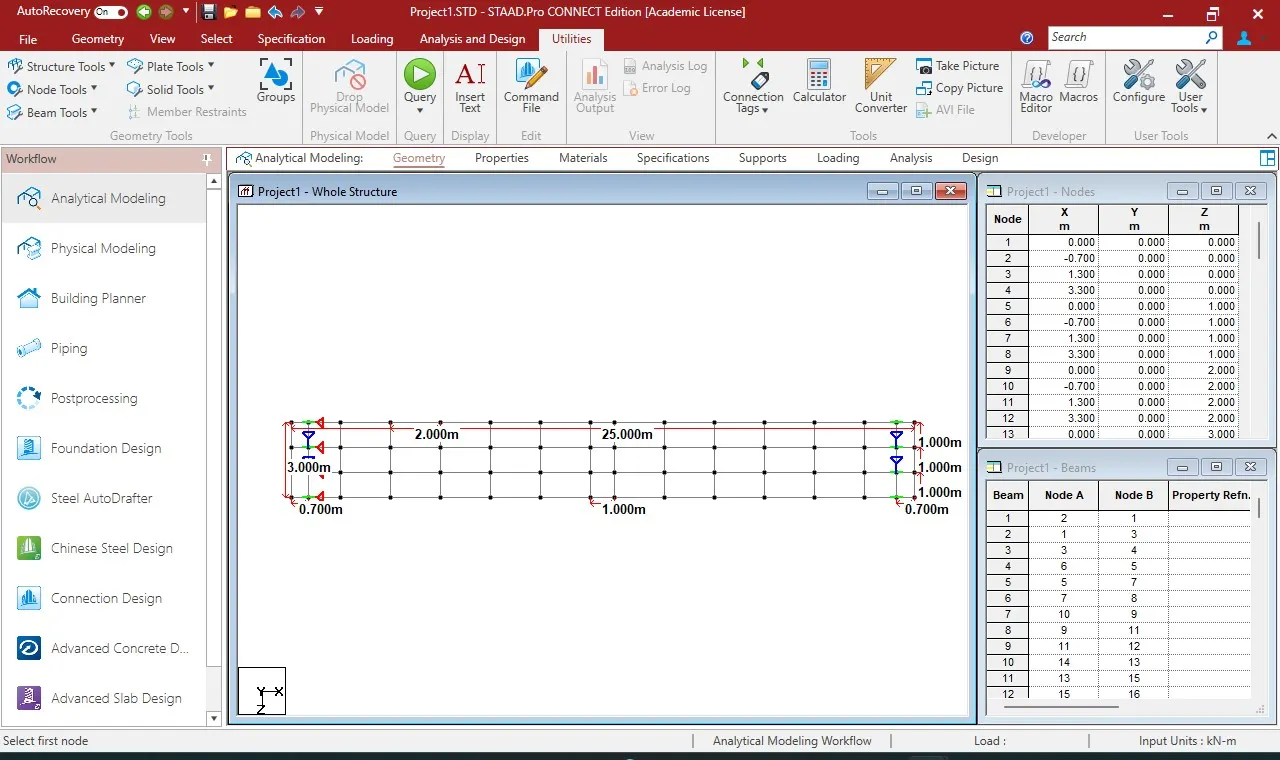
Geometry
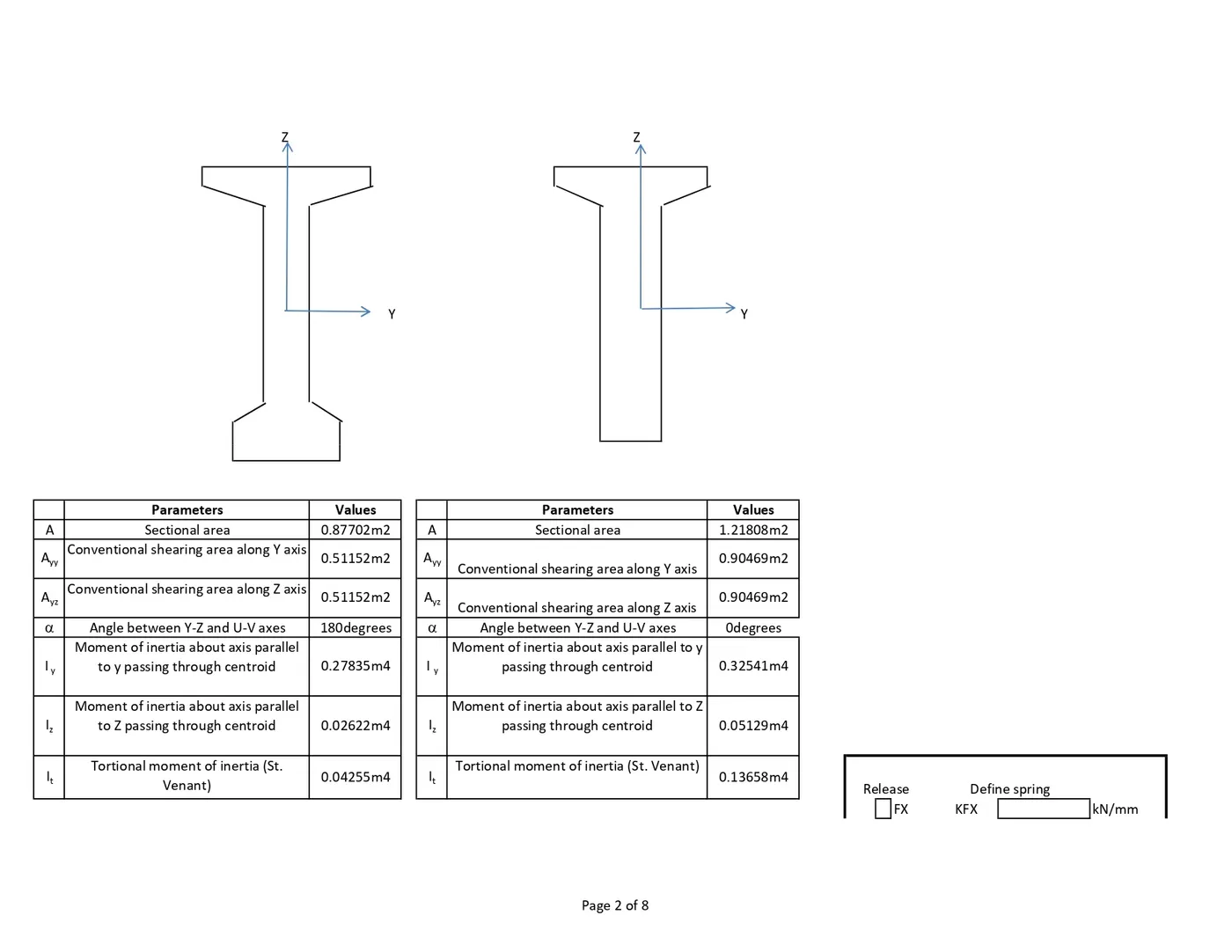
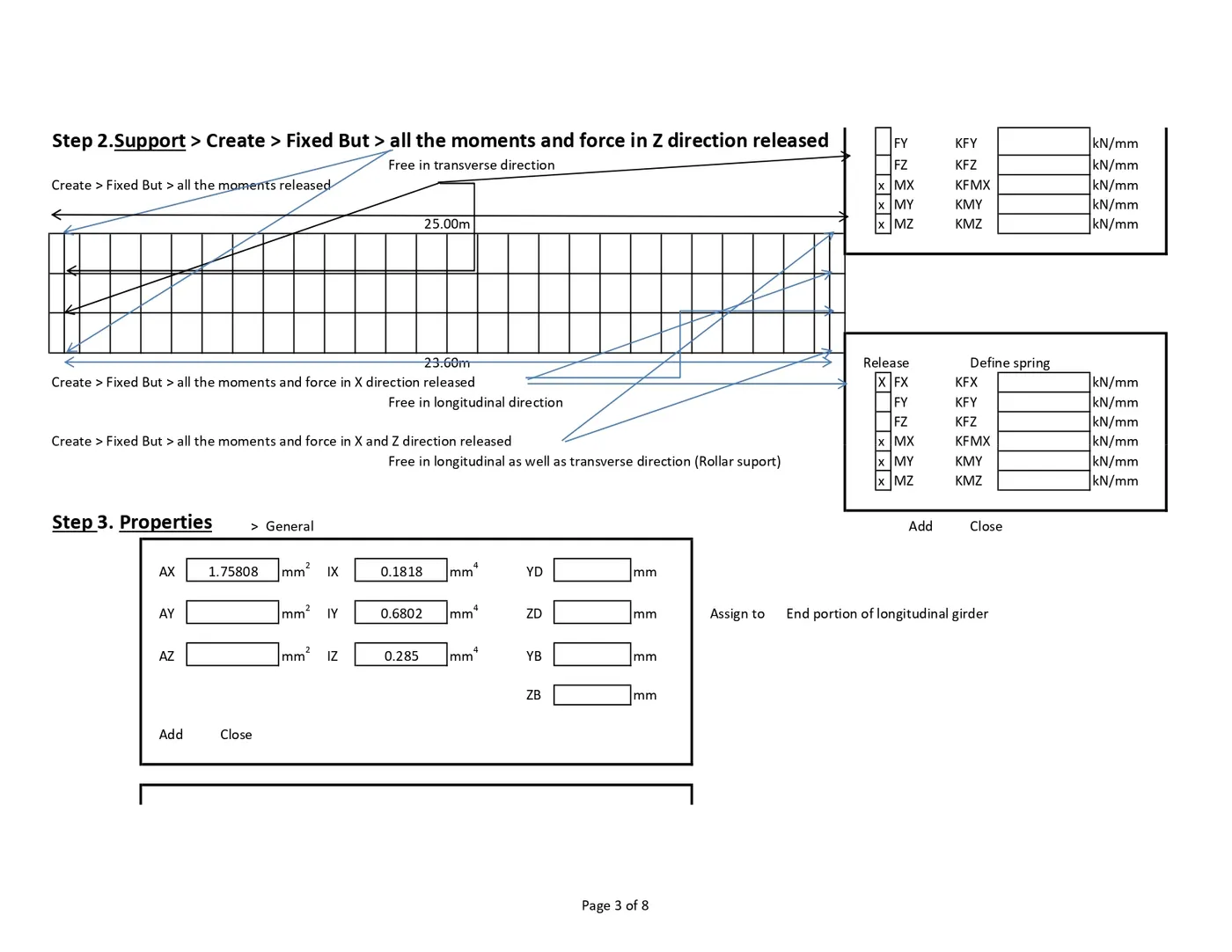
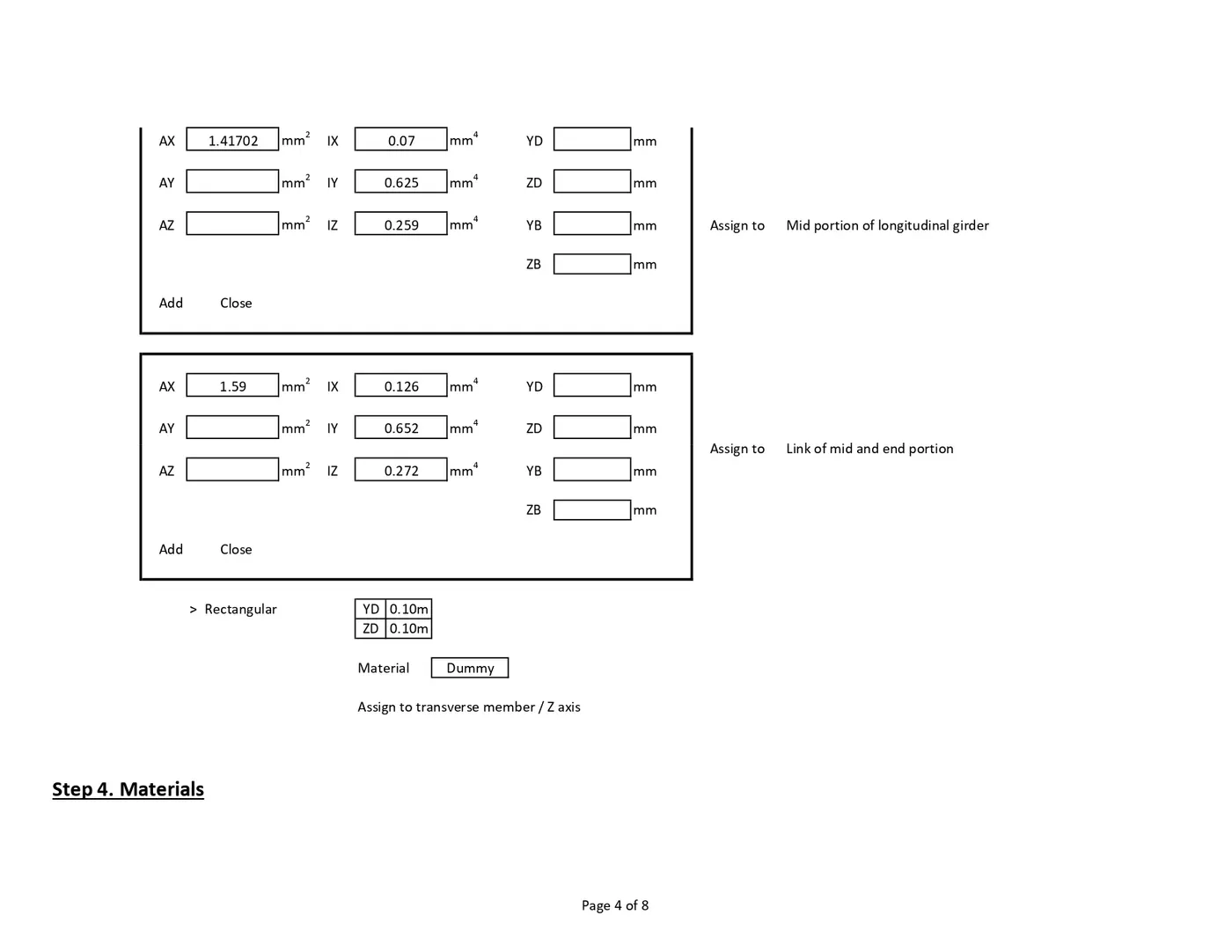
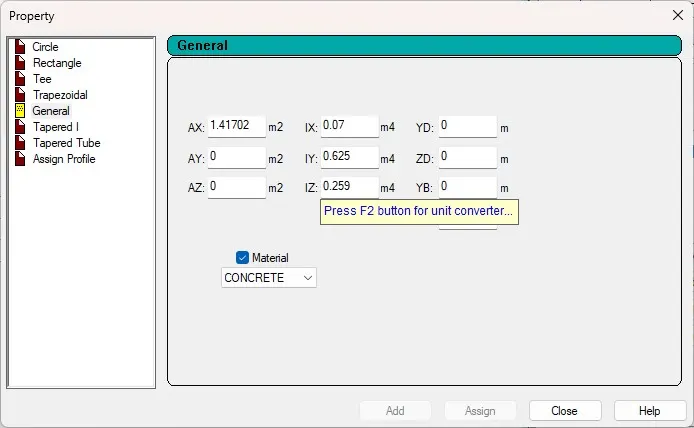
Properties for End portion of lngtdinal girder
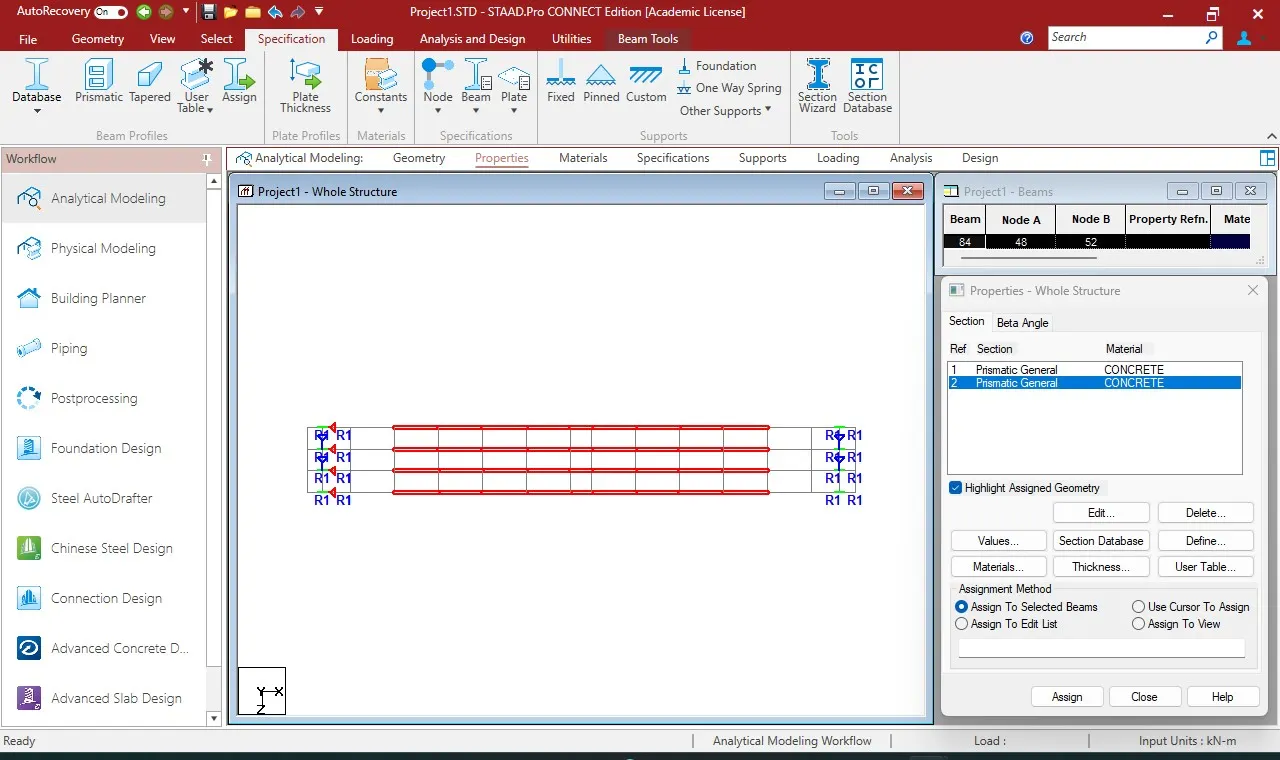
Properties assigned to mid portion of longitudinal girder
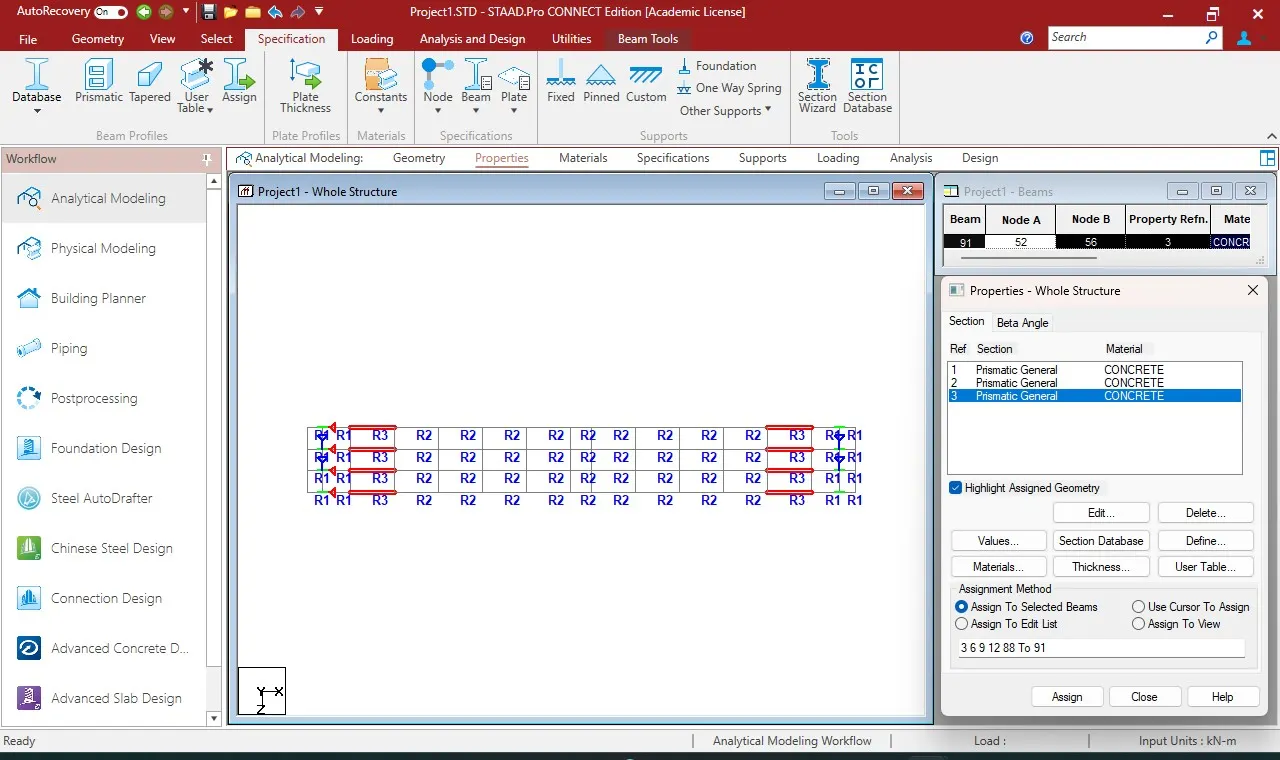
Property assigned to link portion of longitudinal girder
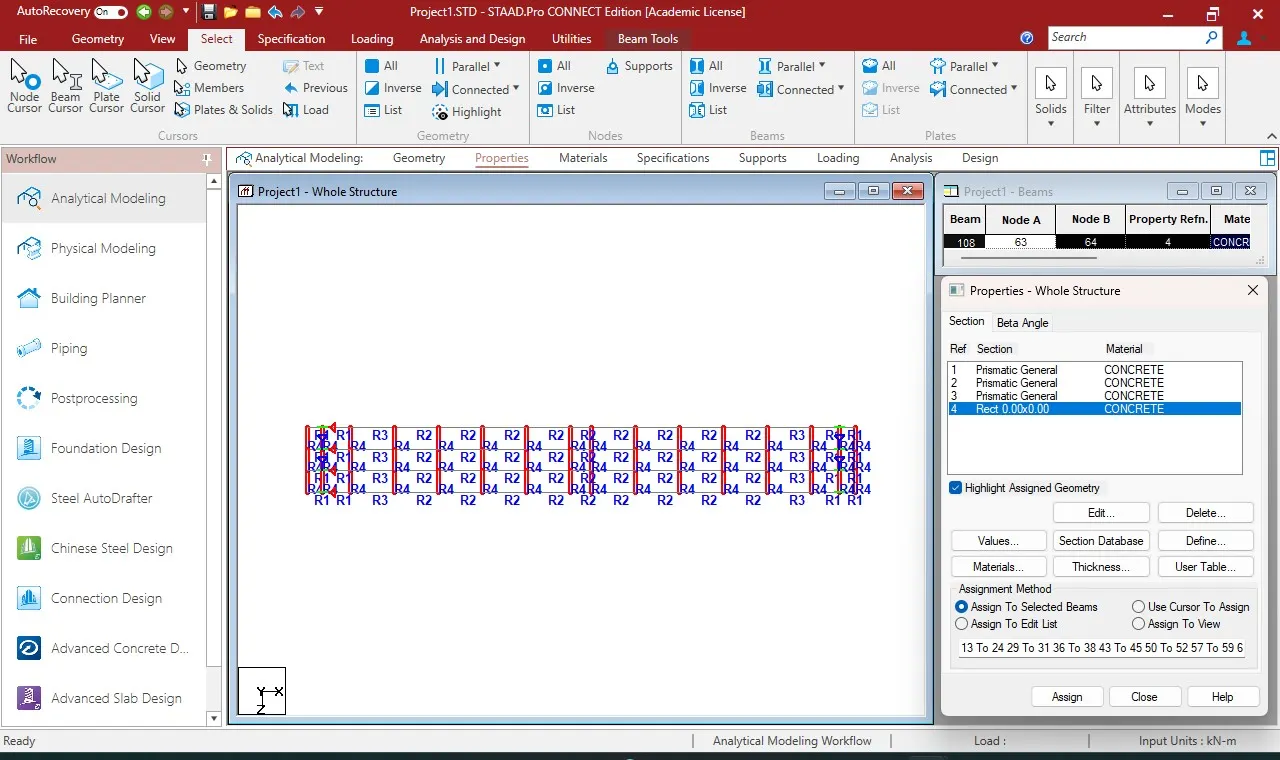
Property assigned to transverse member
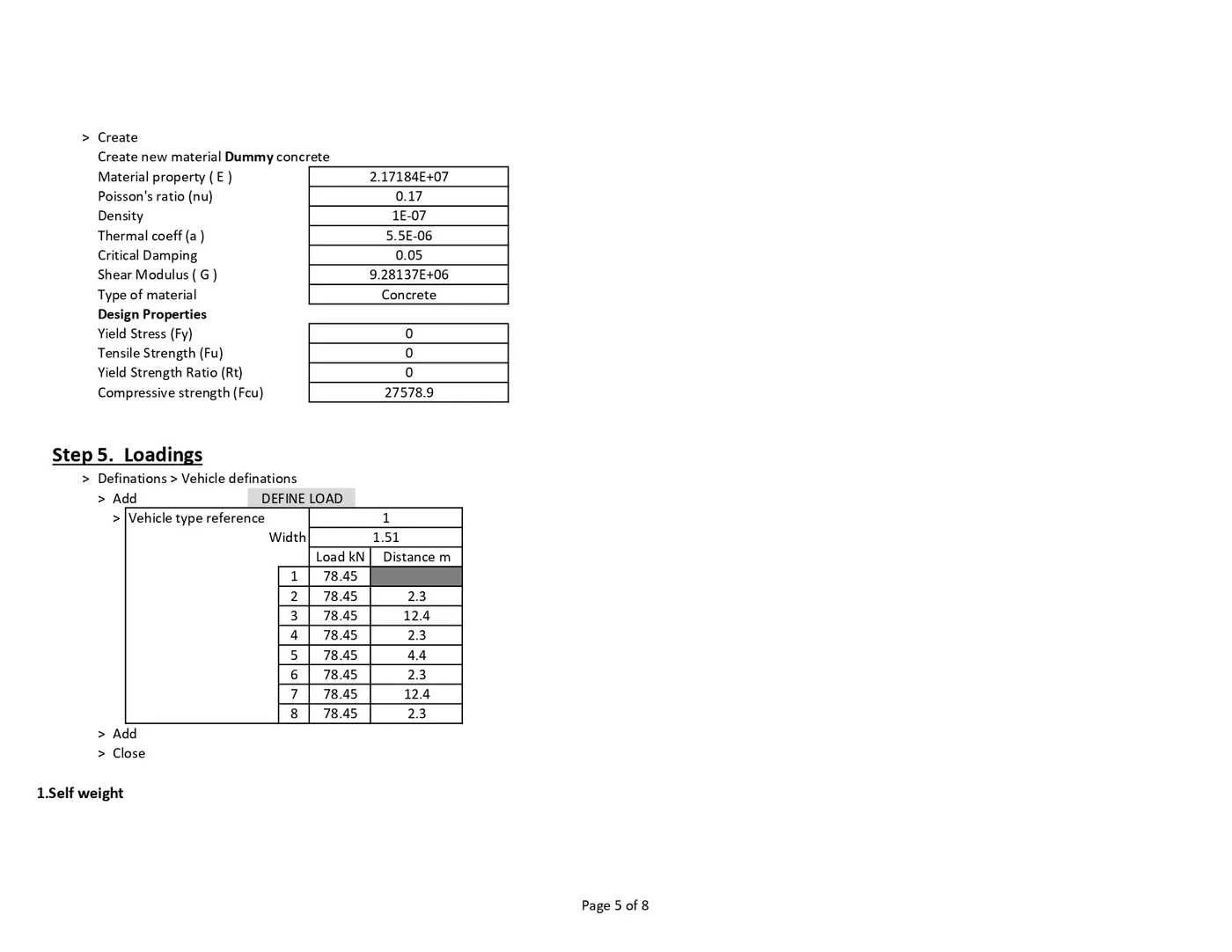
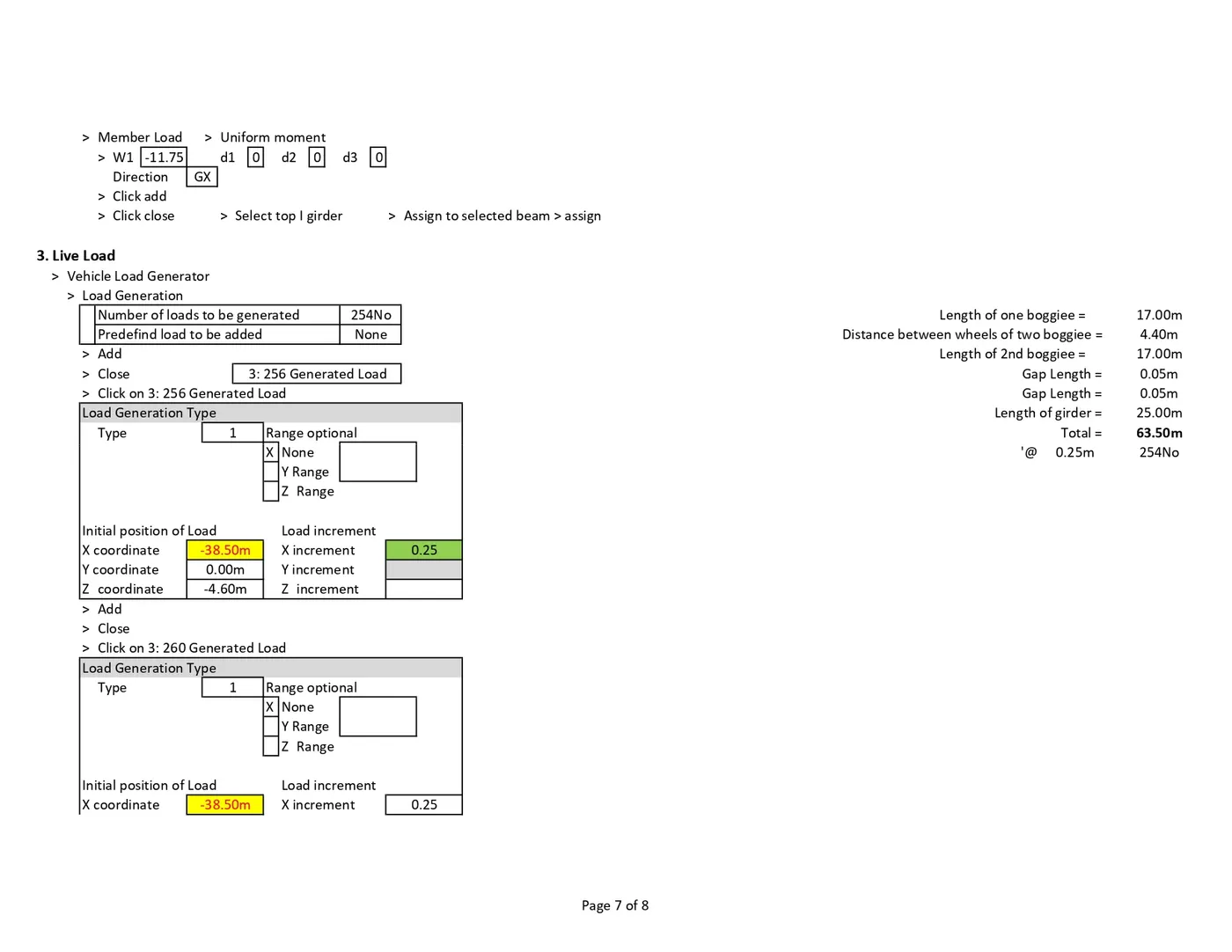
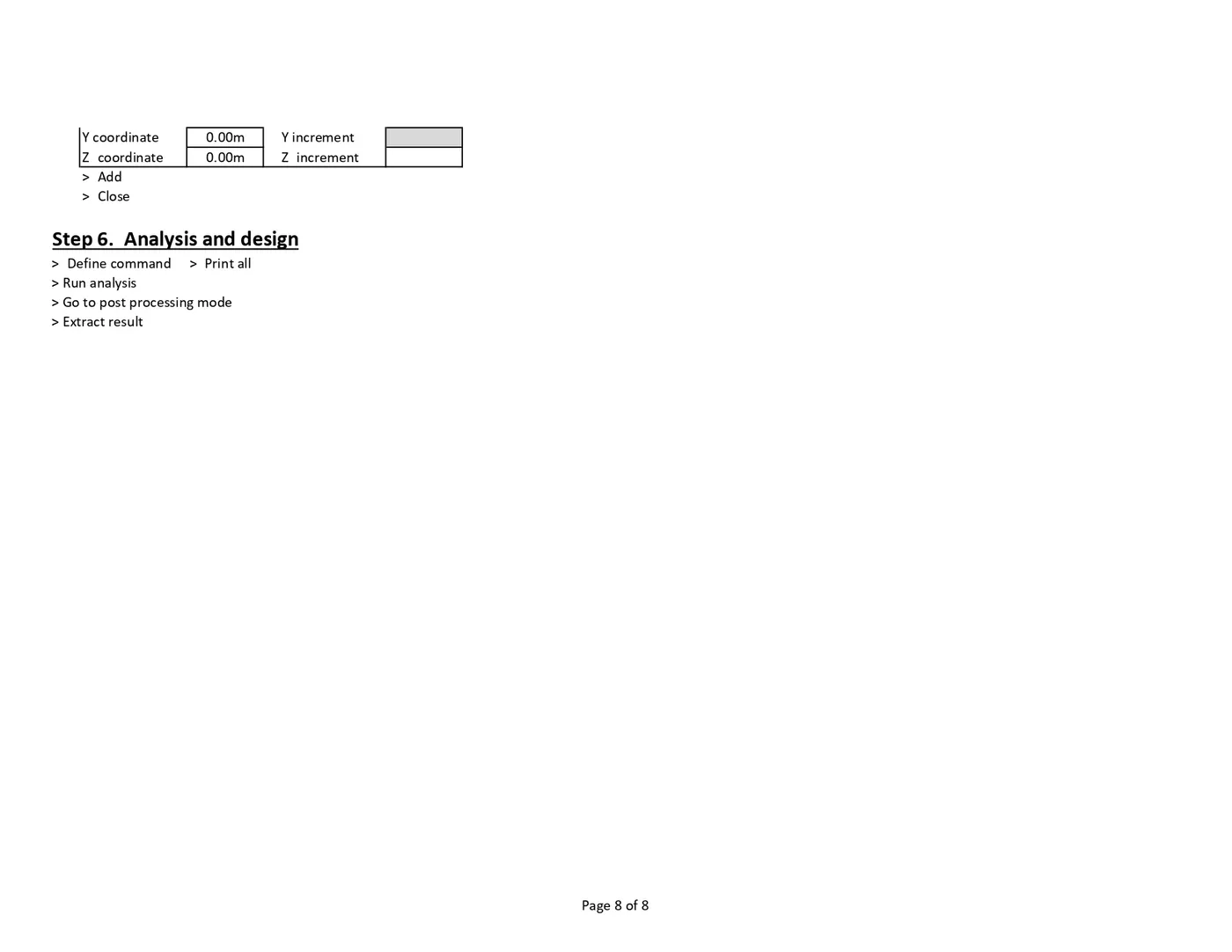
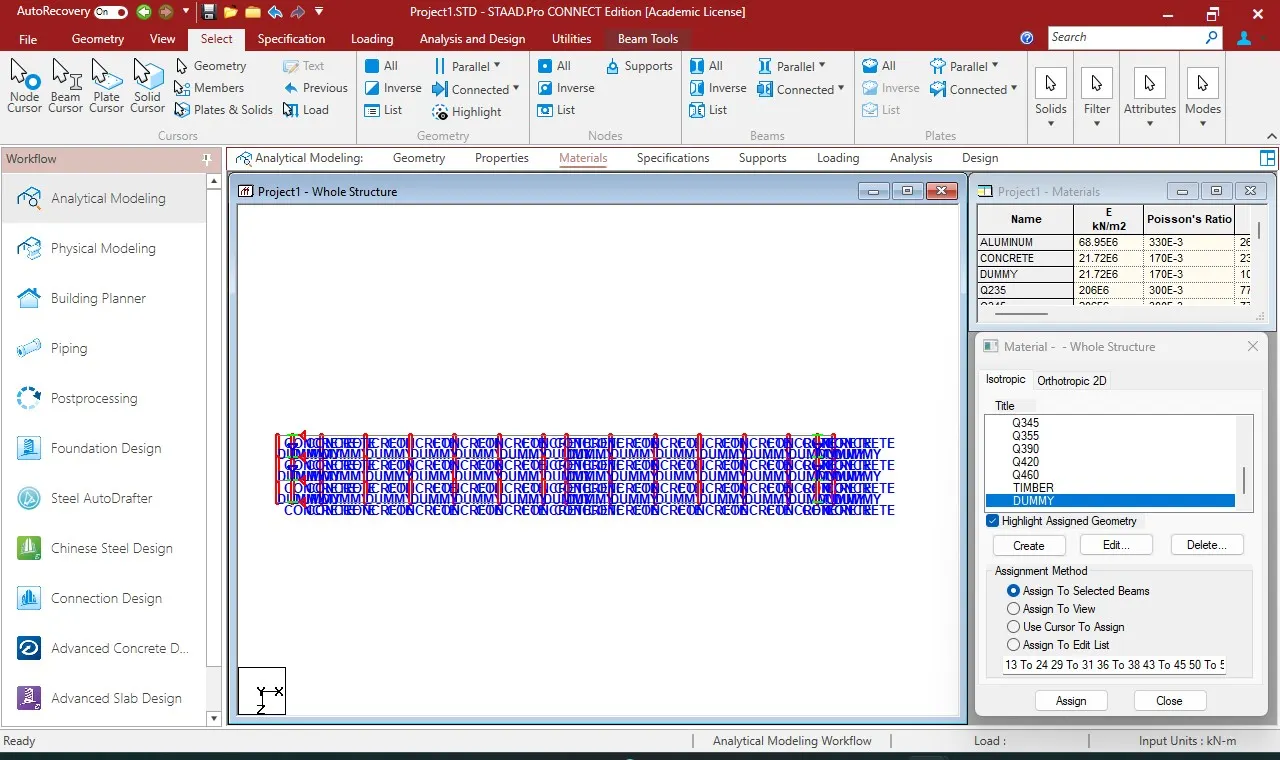
Dummy material assigned to transverse member
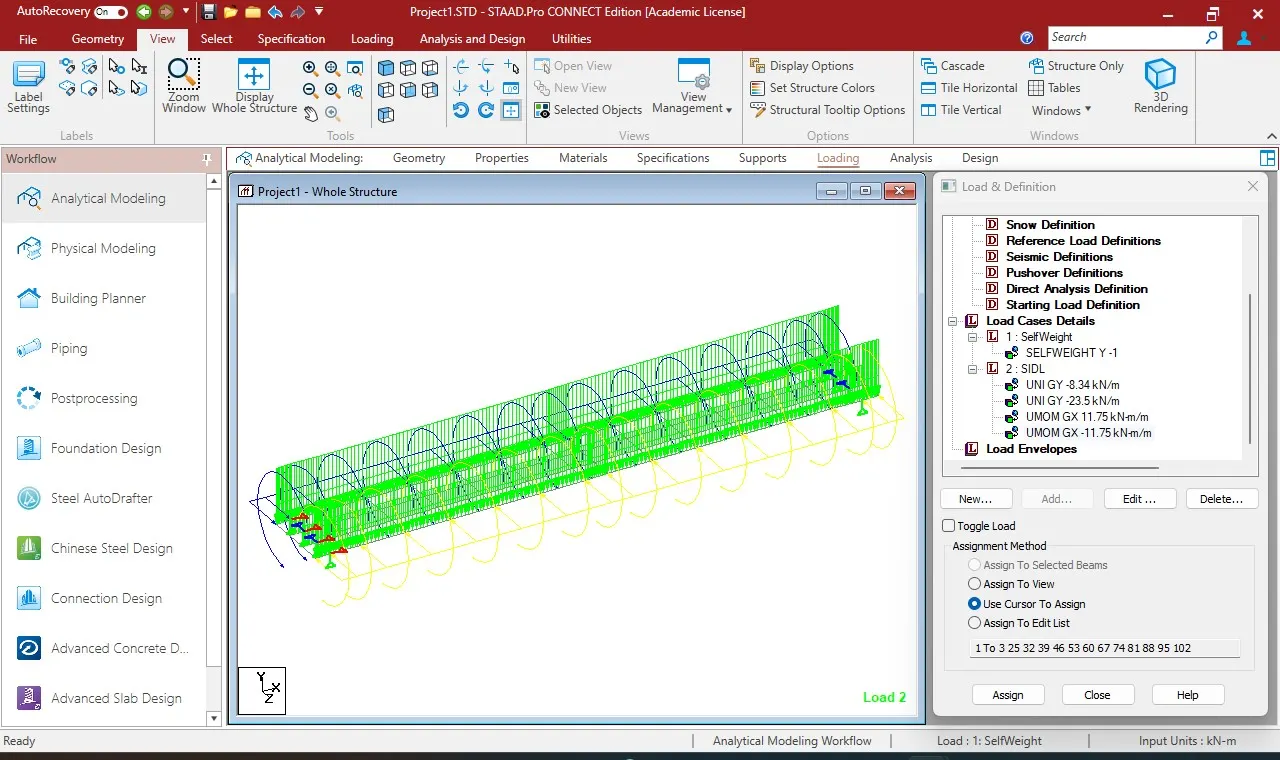
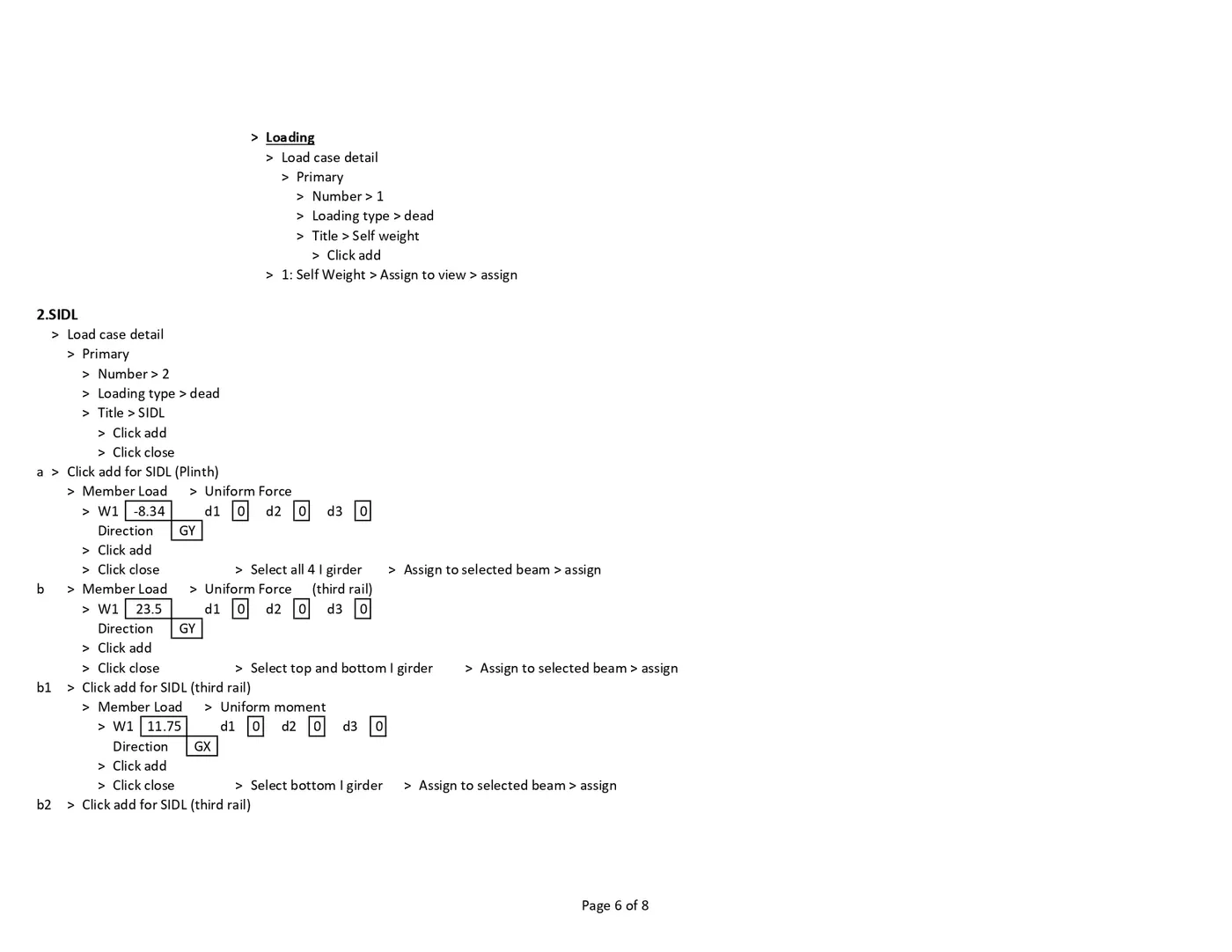
Vehicle defination, Self weight, SIDL Plinth, SIDL third rail with moment assigned
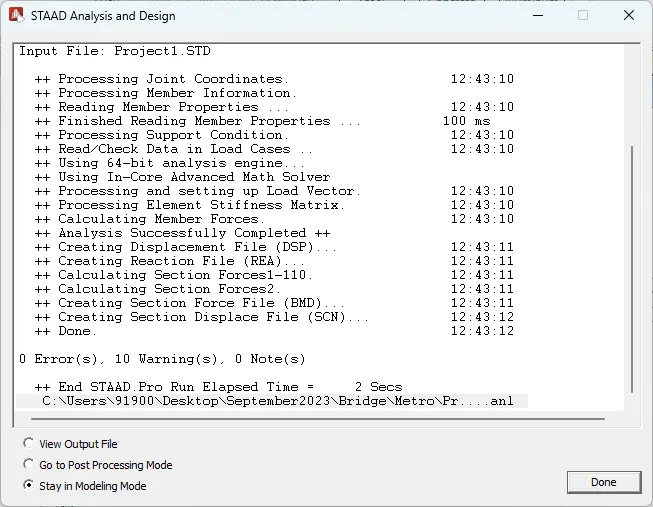
Analysis with Zero error
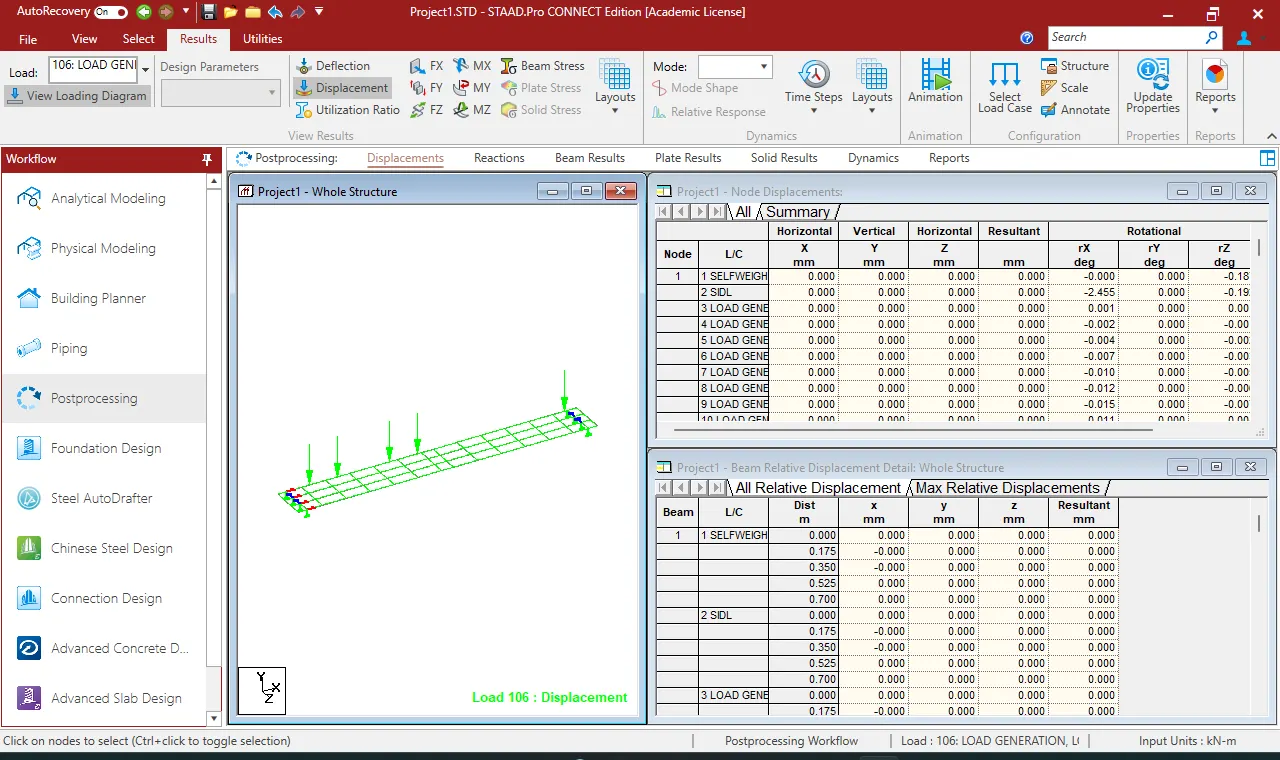
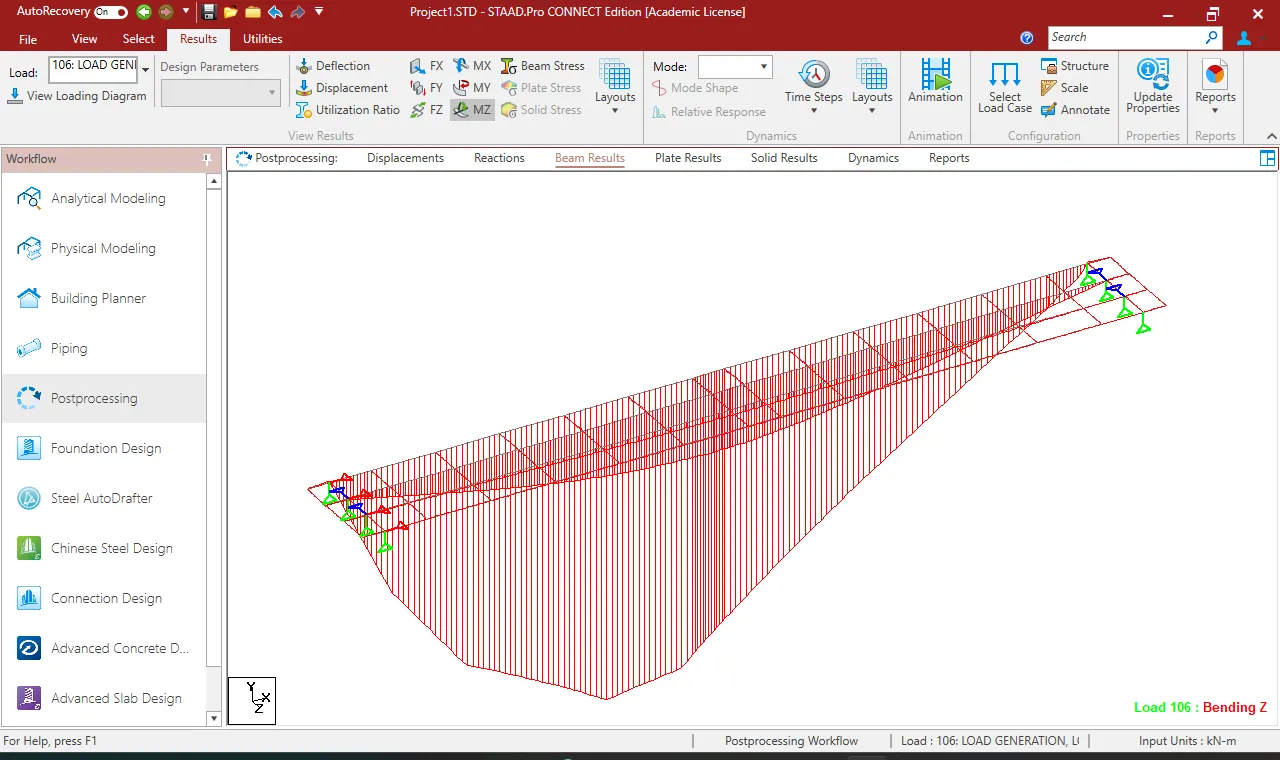
Results
3. Prepare a transverse STAAD model of U-girder with the following specifications:
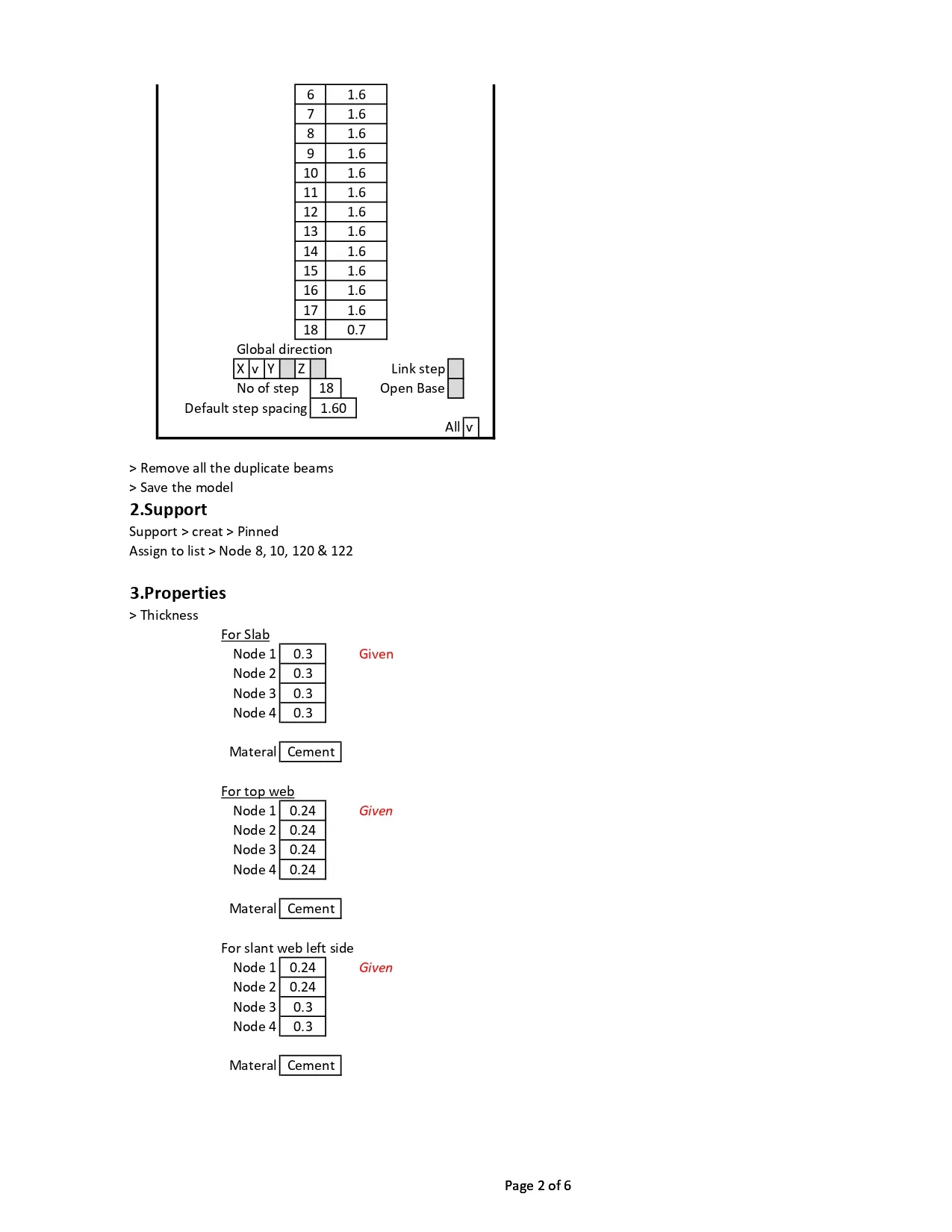
- Finite element model of U-girder with a span length of 30m.
- Having supports at 0.7m from both ends.
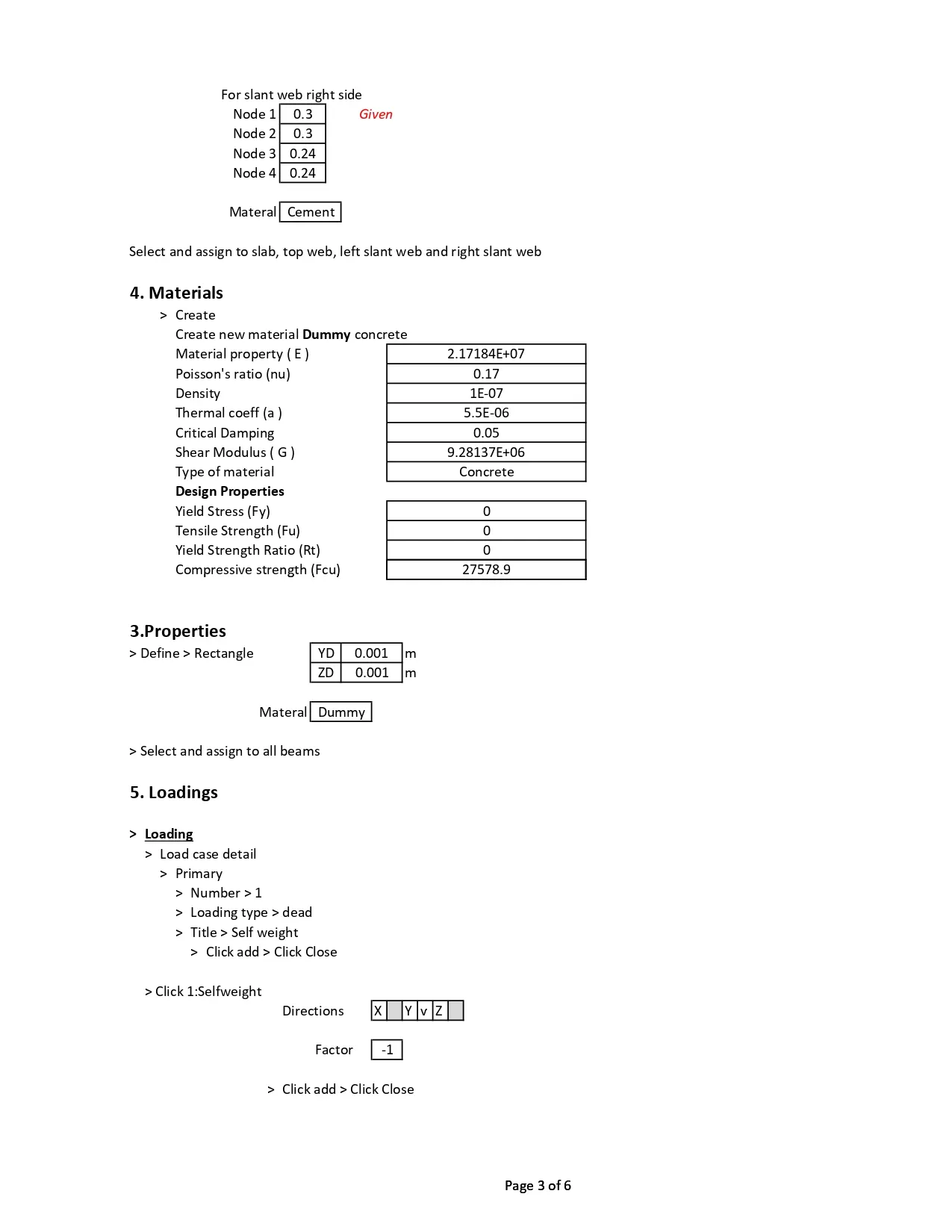
- Having the following geometrical properties: o Thickness of bottom slab – 300mm
- Thickness of top web (both sides) – 240mm
- Thickness of slant web - varying from 300mm to 240mm
- Concrete grade M55.
- Reference inputs can be taken from the relevant video sessions if needed.
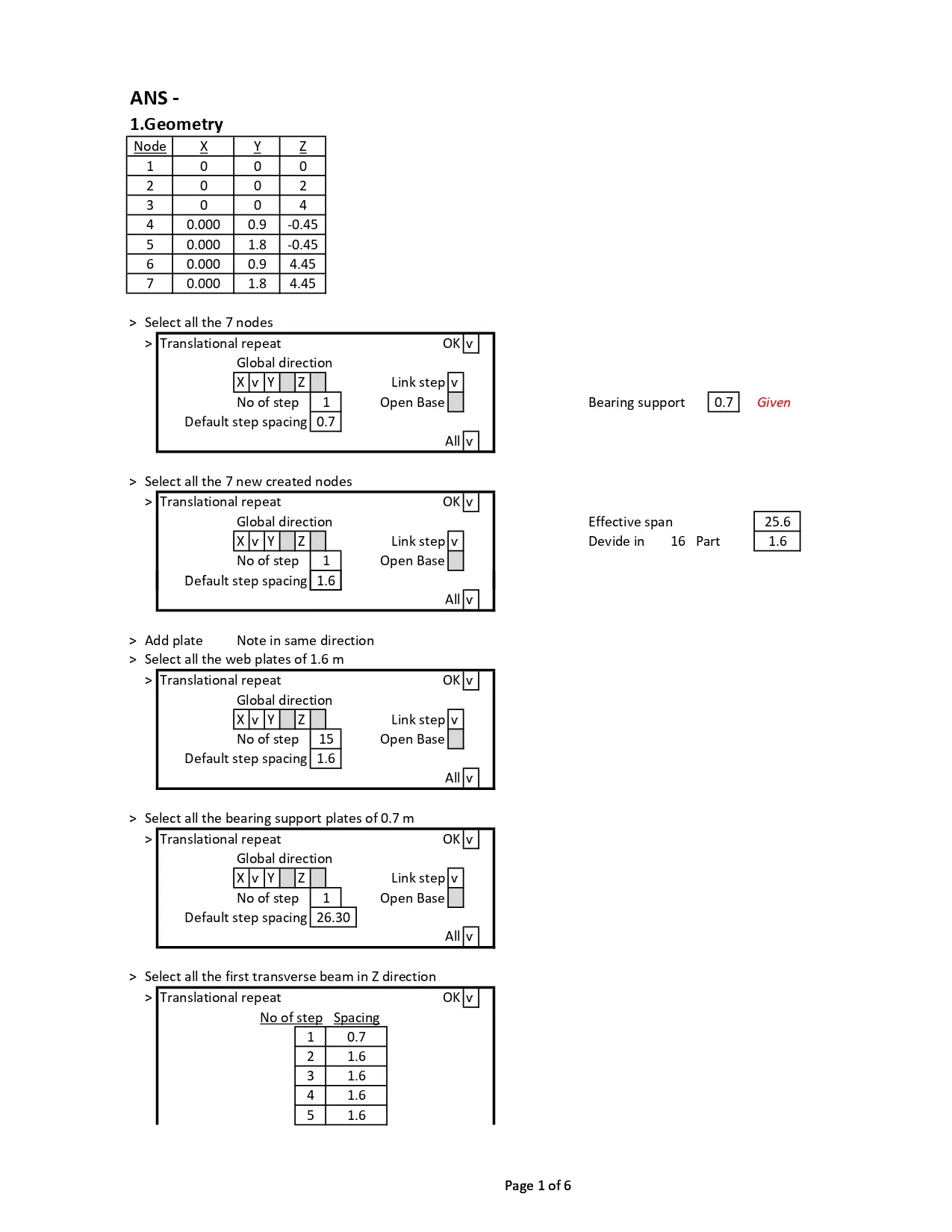
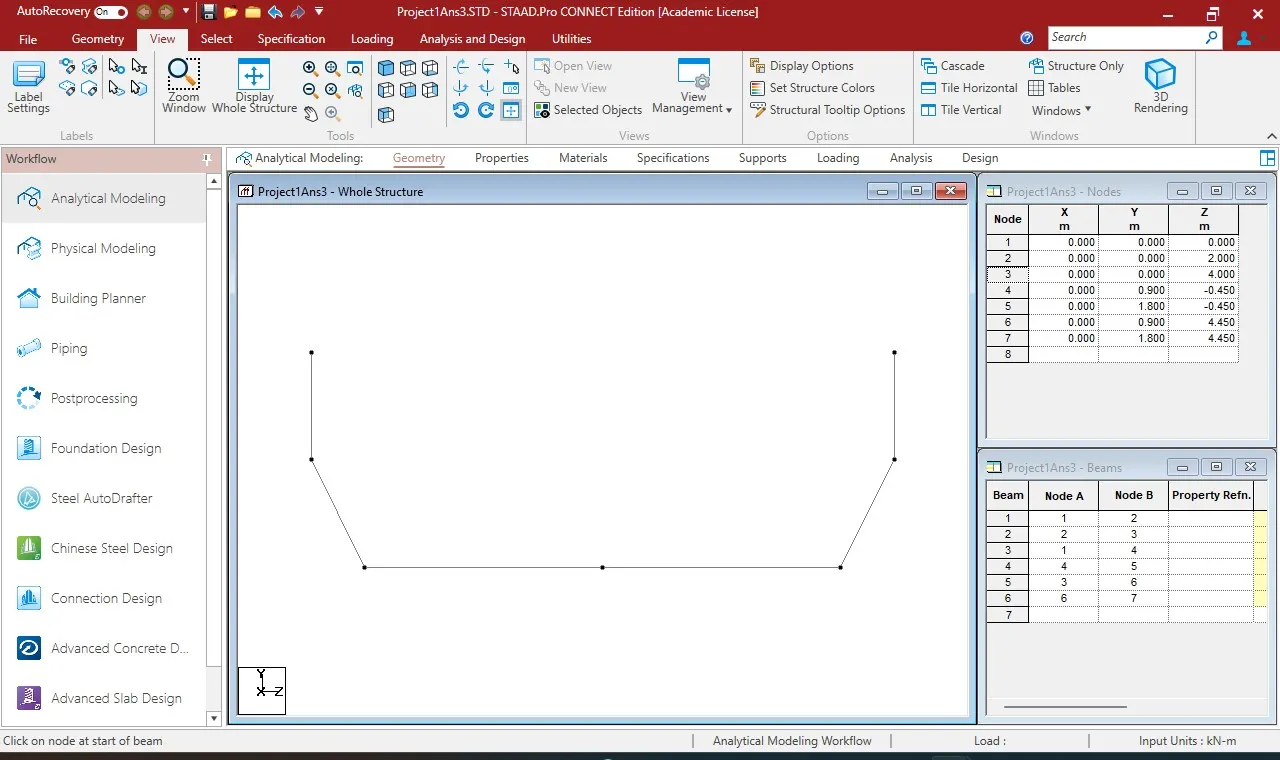 Geometry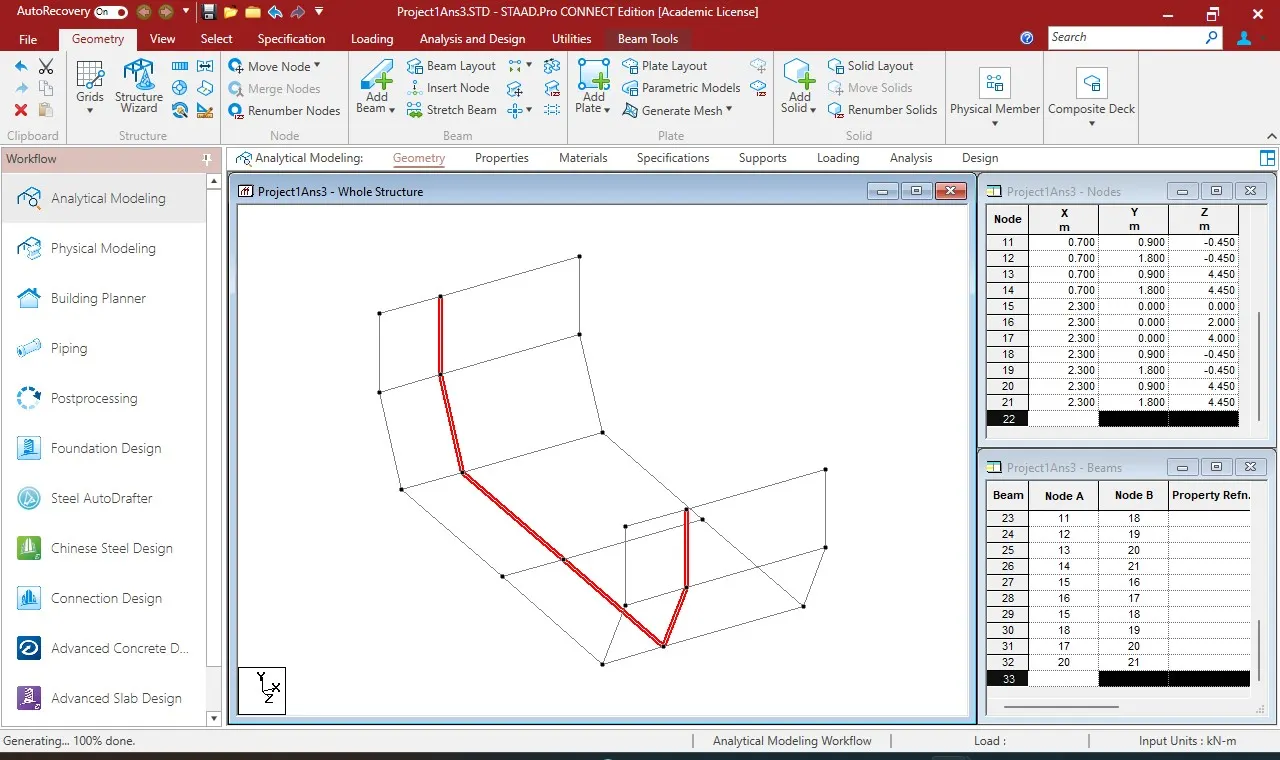
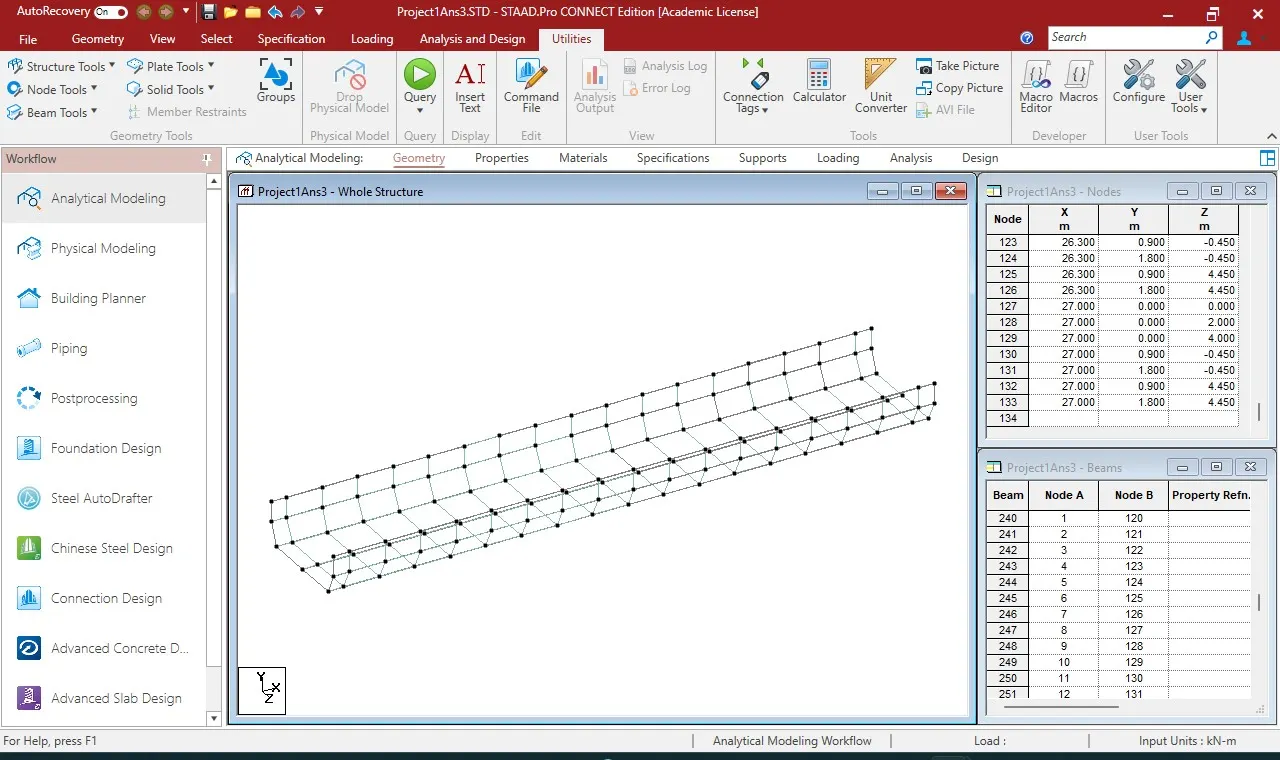 Geometry
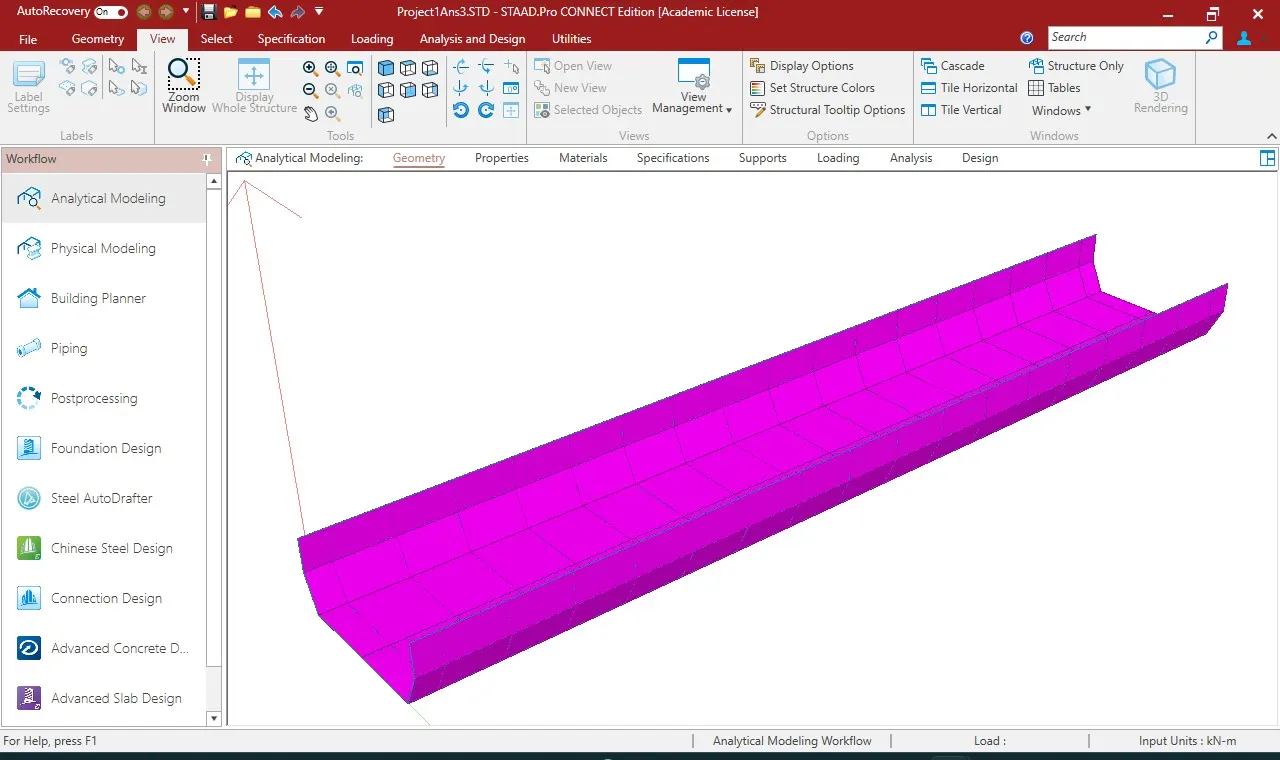 3D View
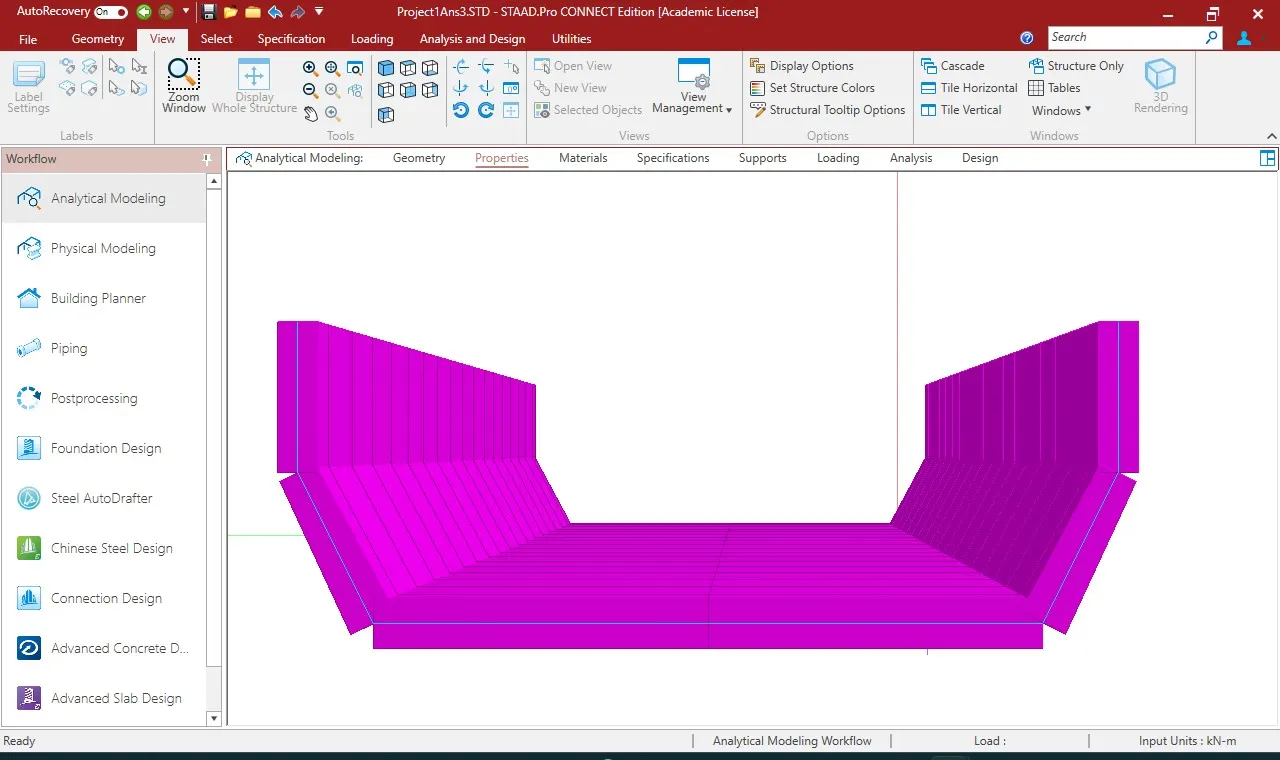 3D View
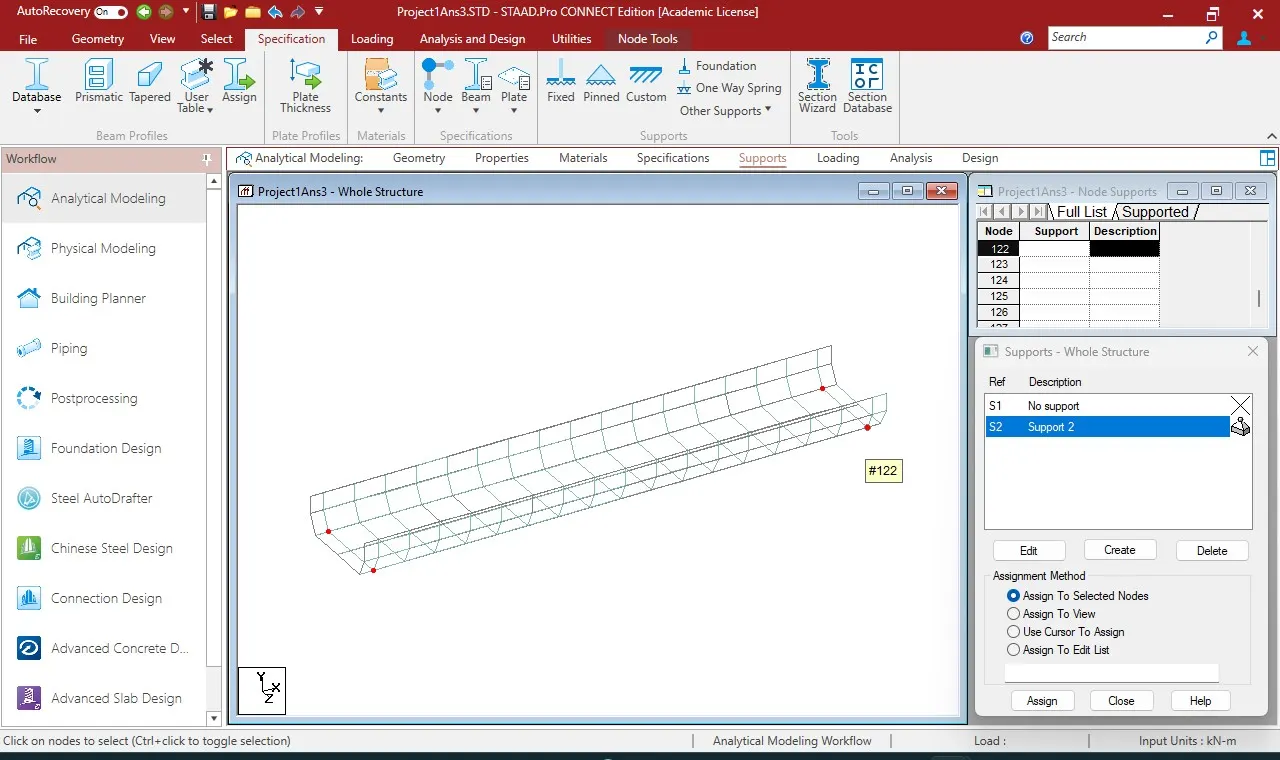 Support
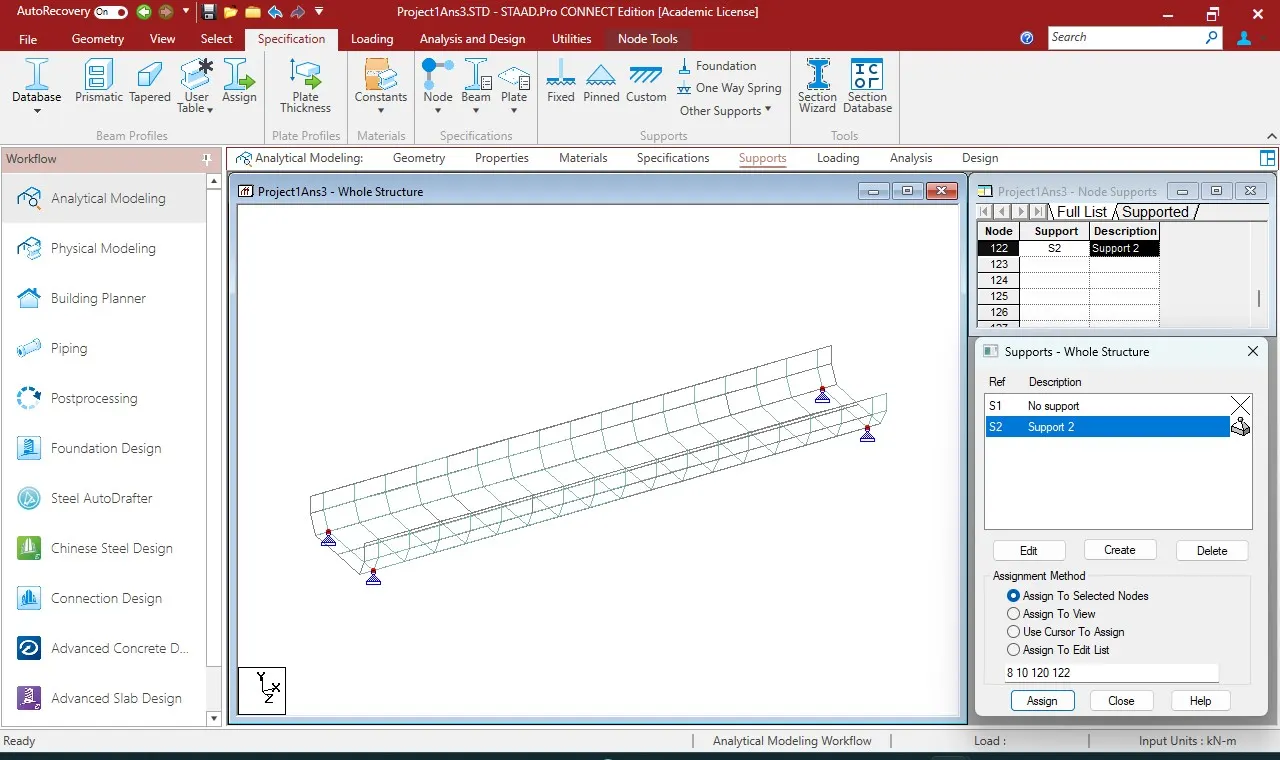 Support
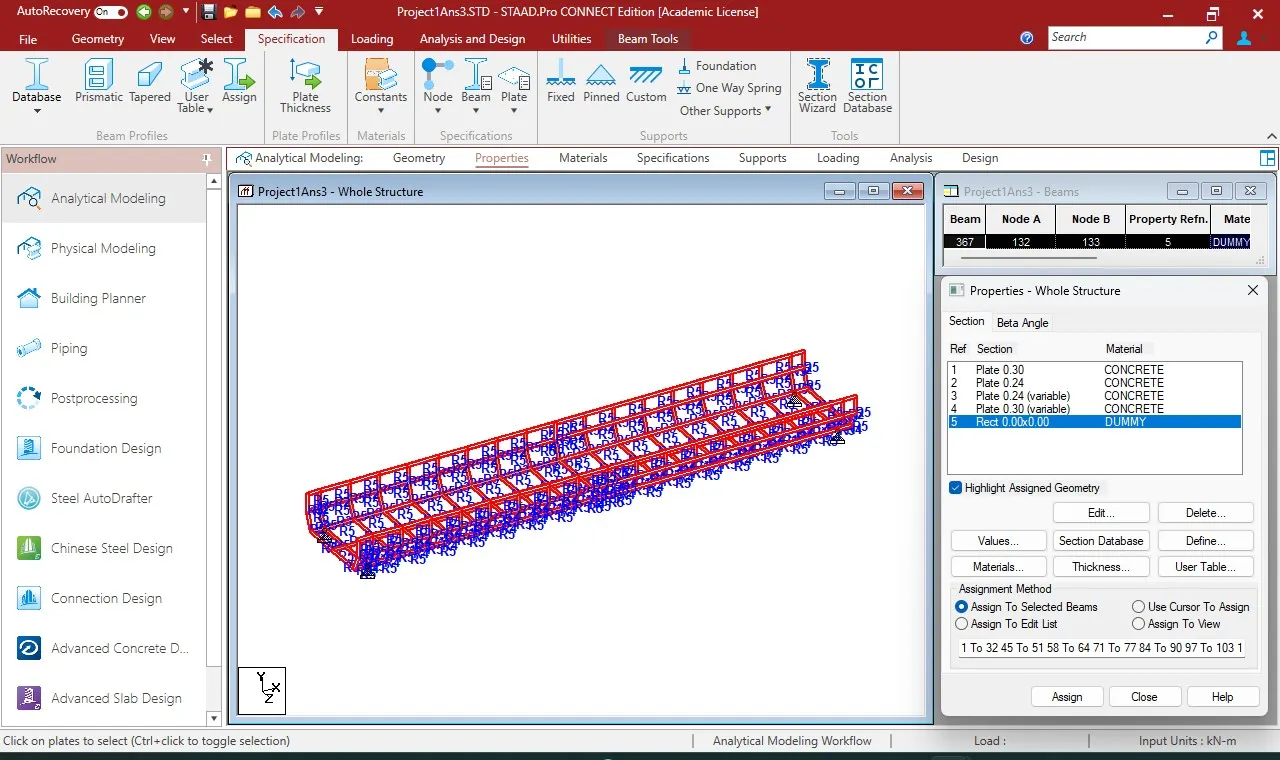 Properties
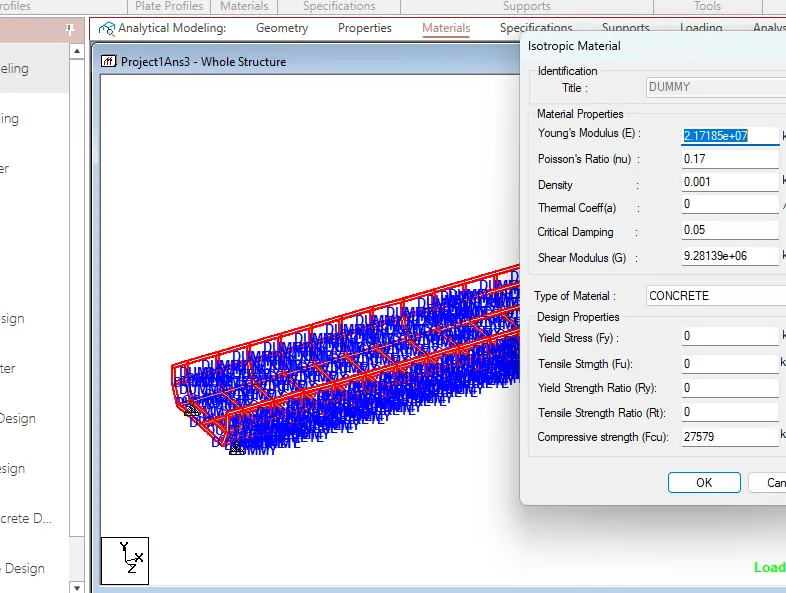 Dummy Materal
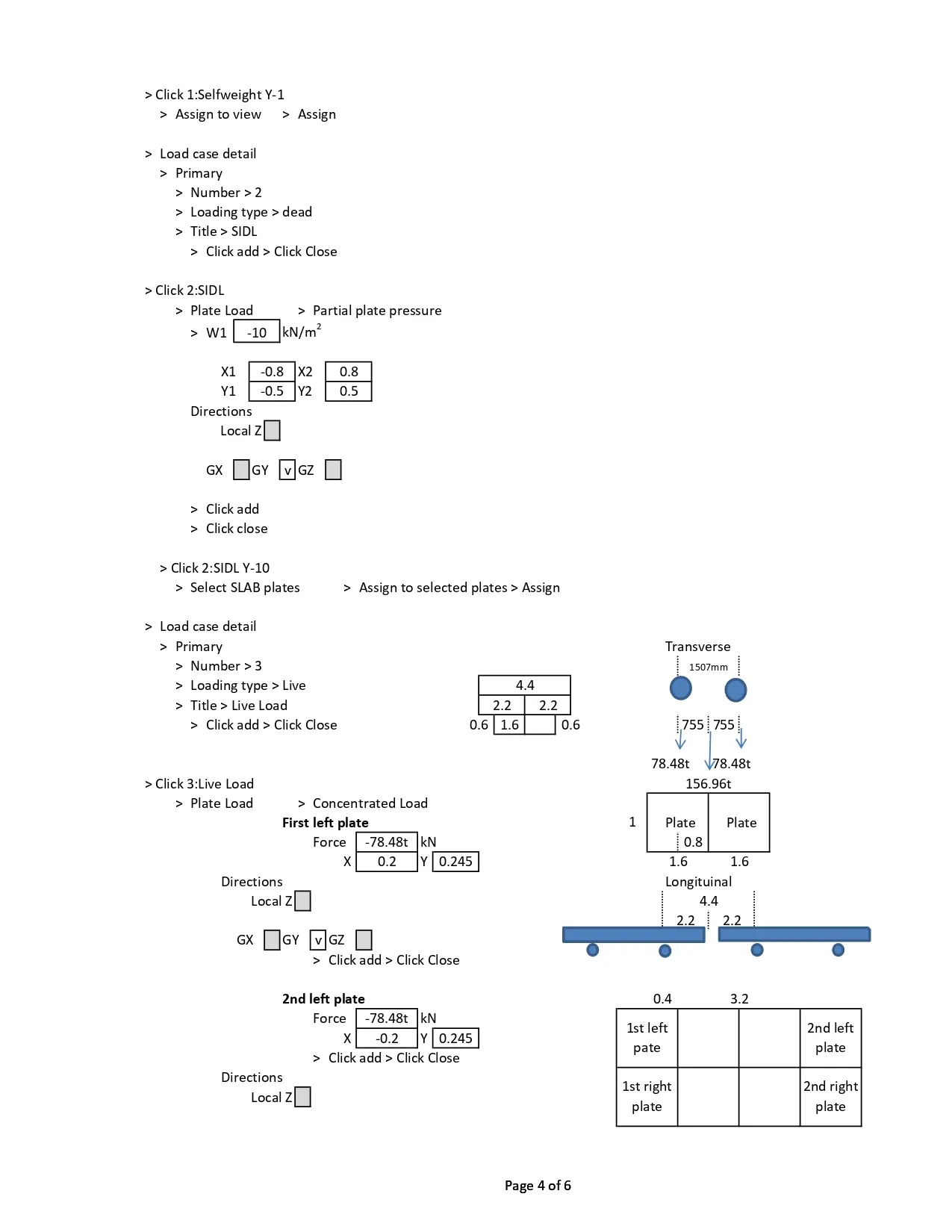
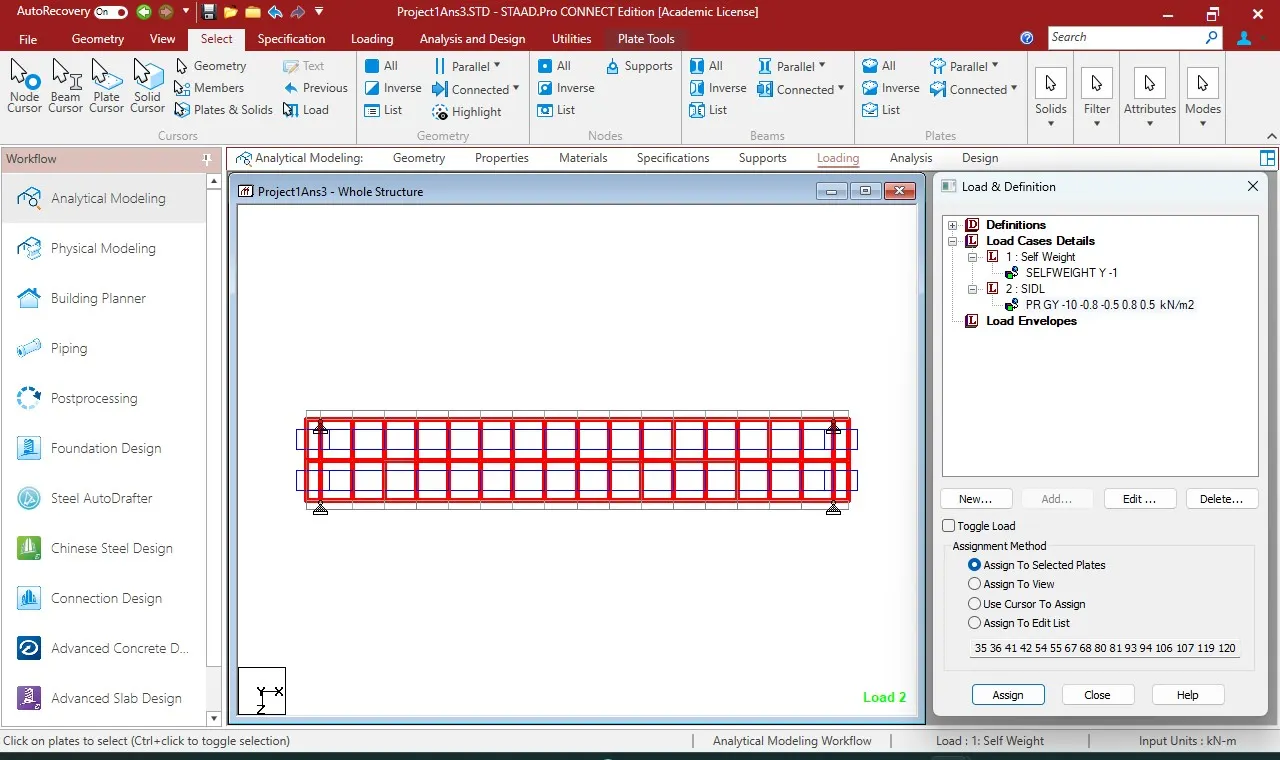 LOADING > SIDL
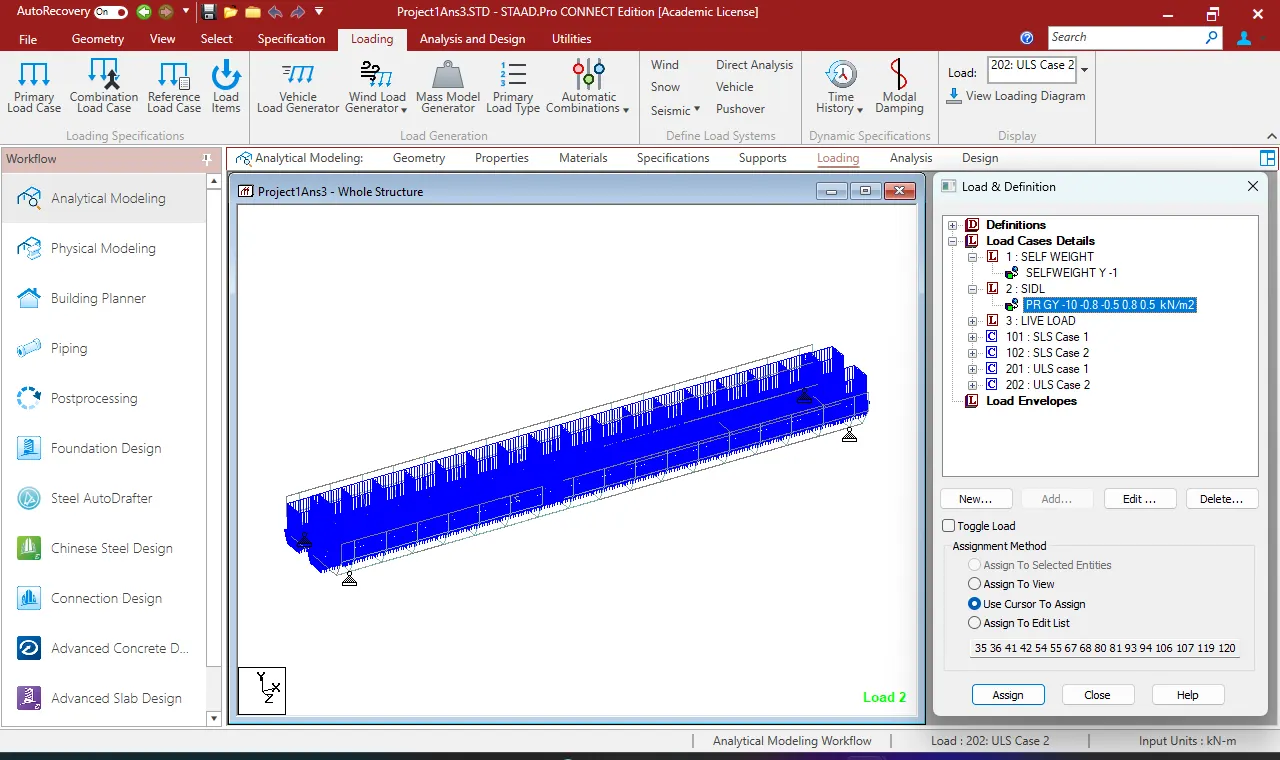 SIDL
SIDL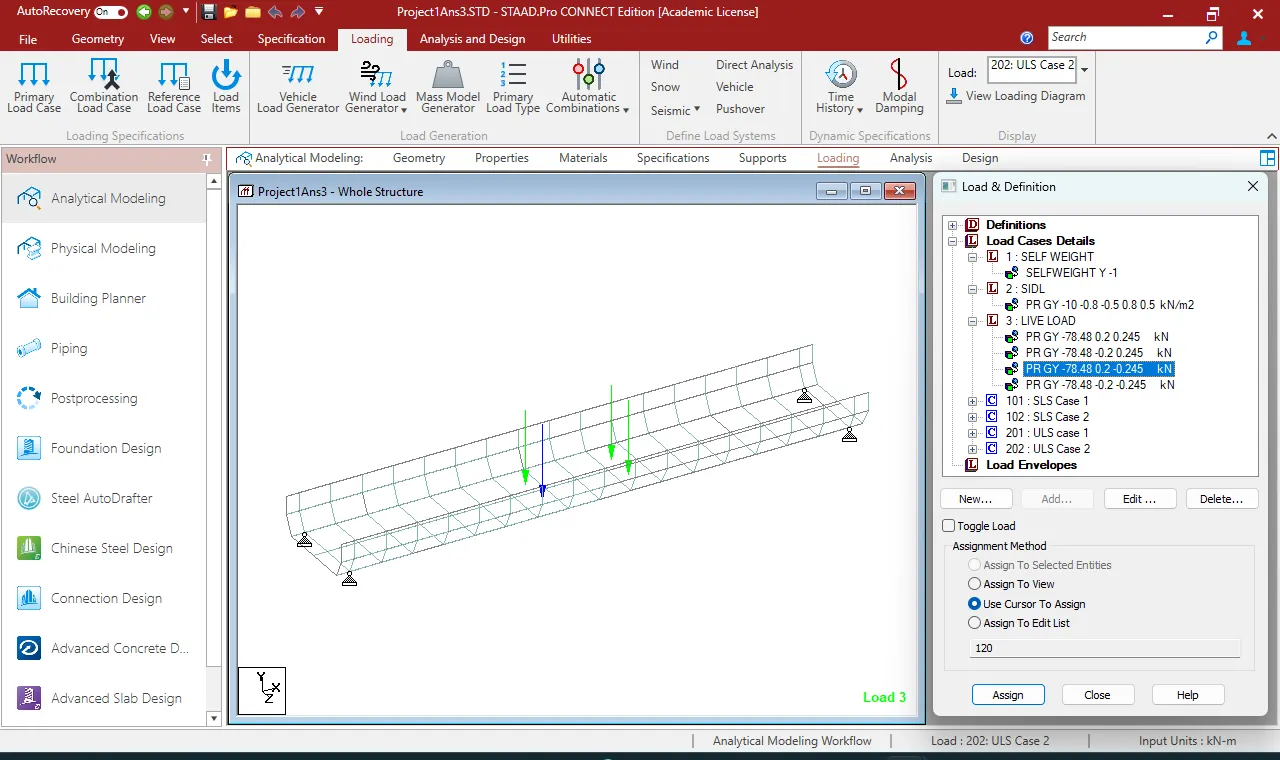 Live Load
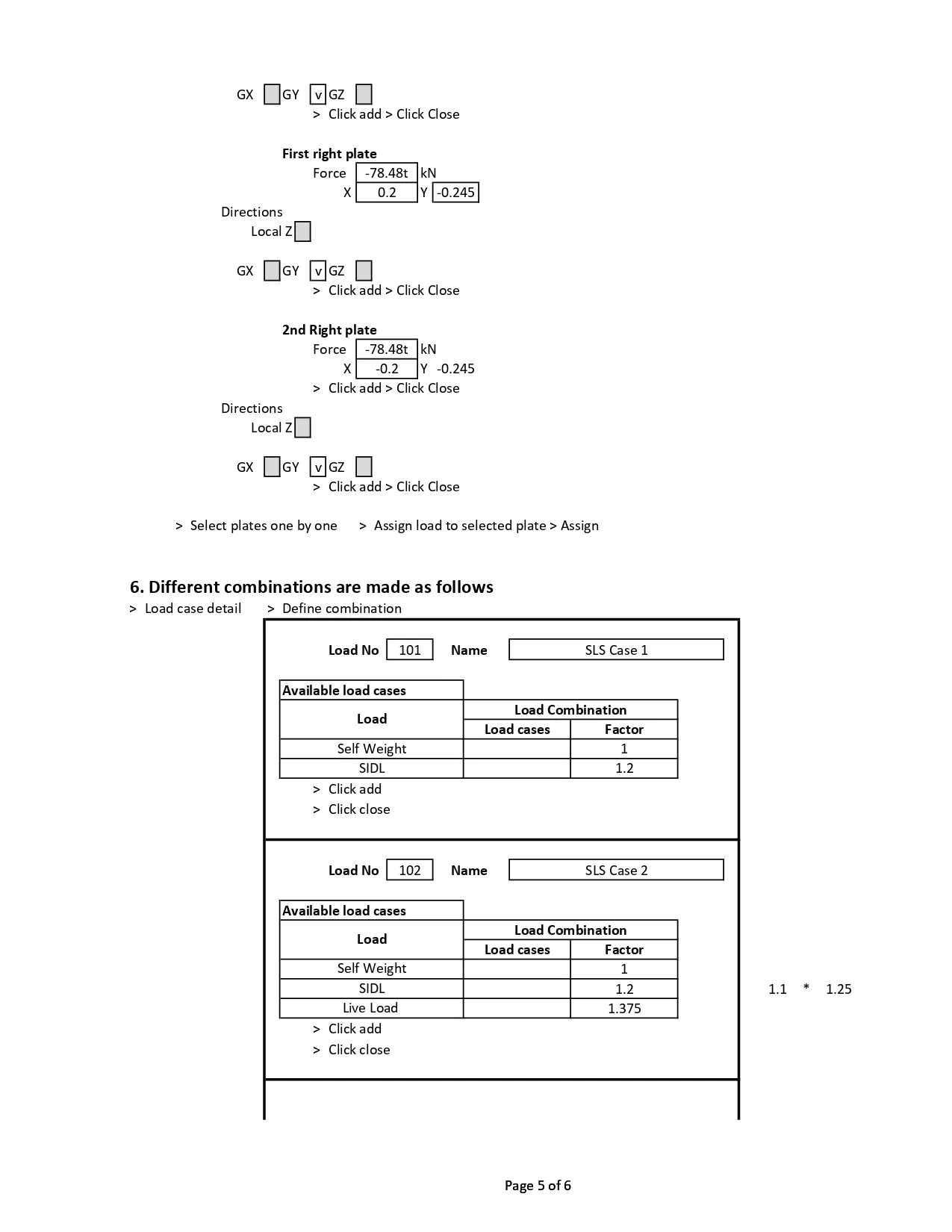
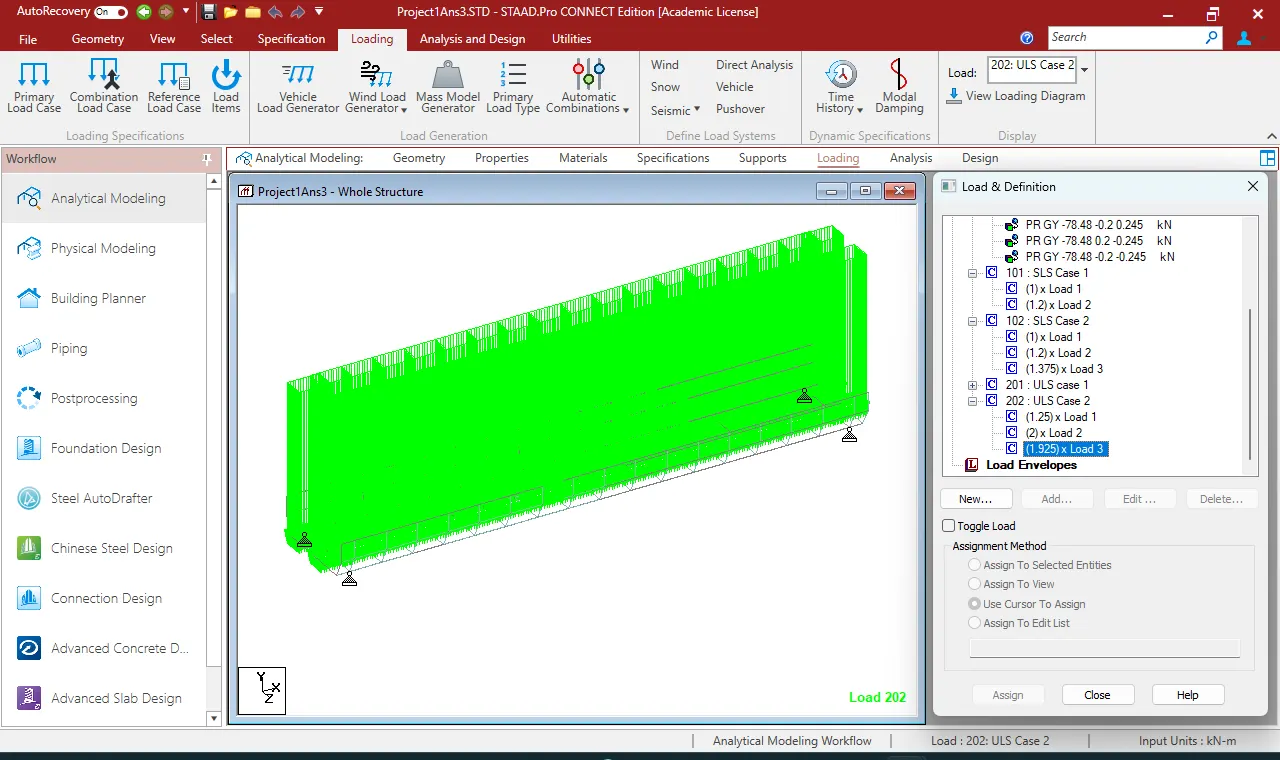 Load Combimnation
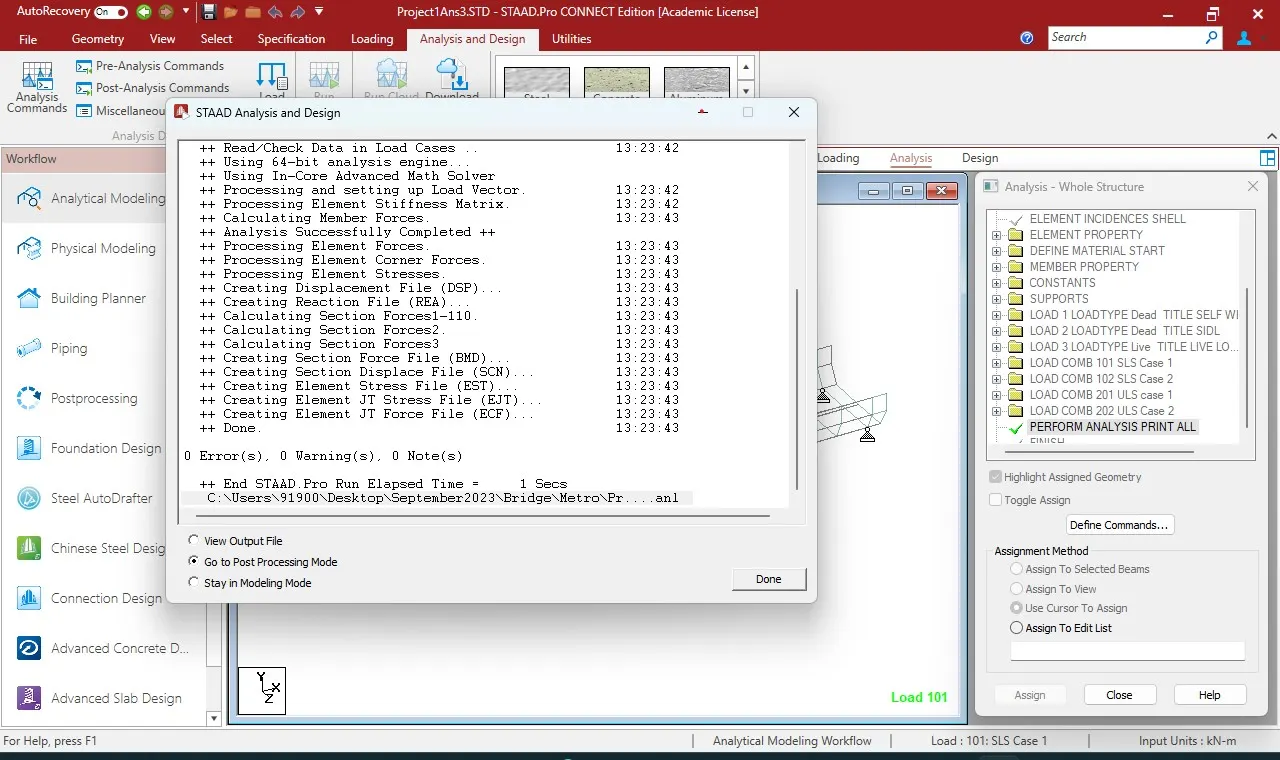 Analysis with Zero Error
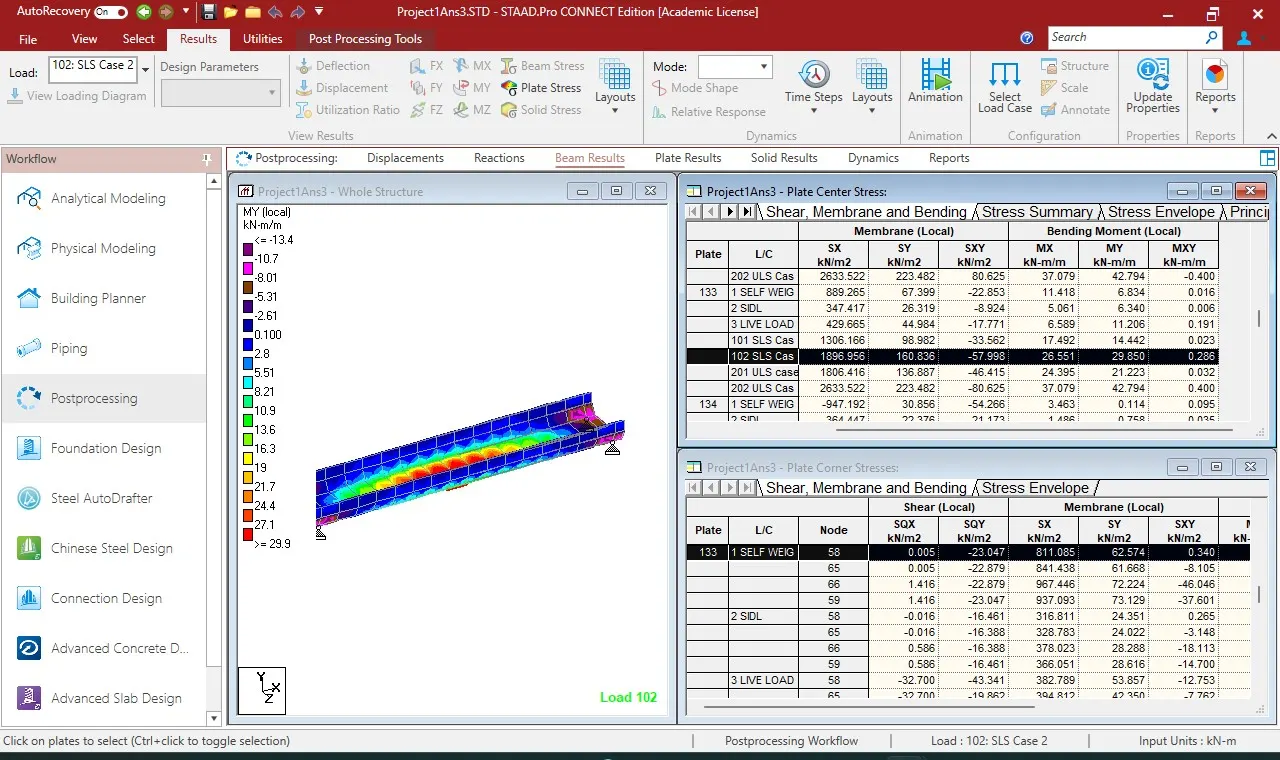 Maxium MY Plate No 133 102 SLS case
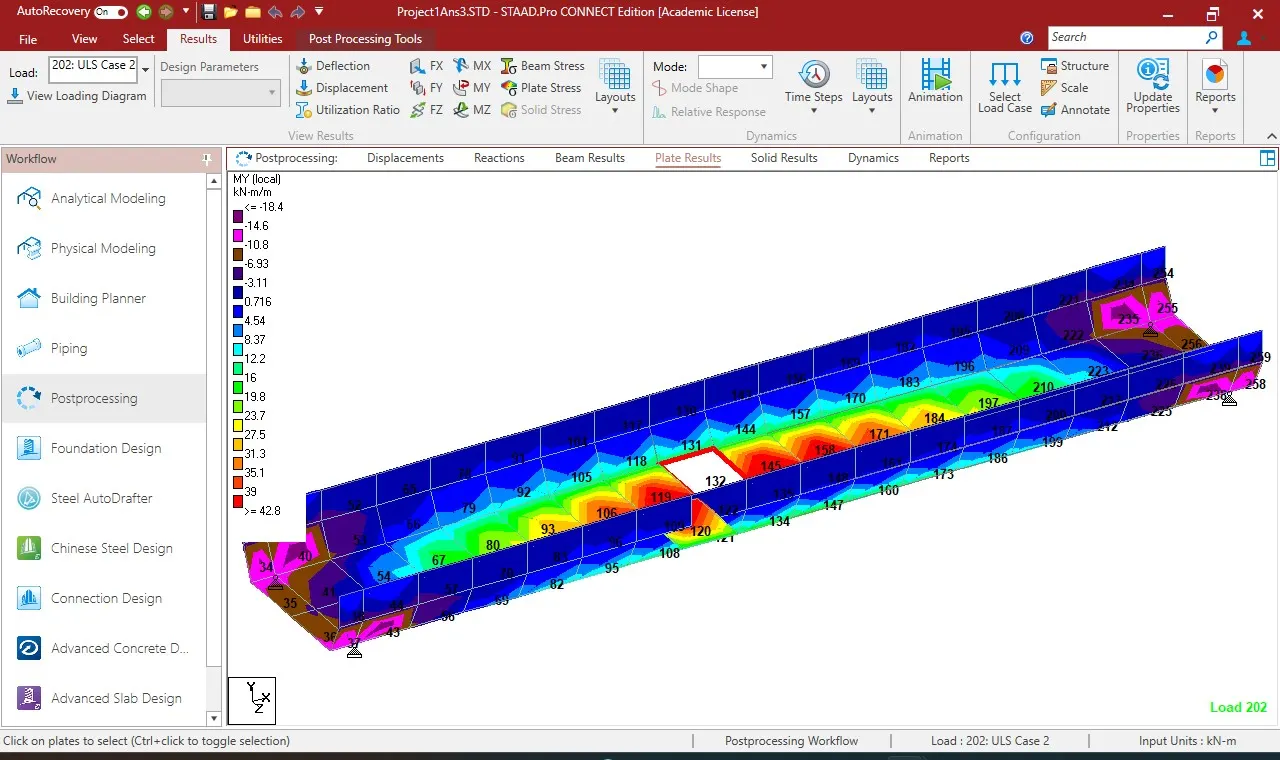 Maximm MY Plate No 132 202 ULS Case
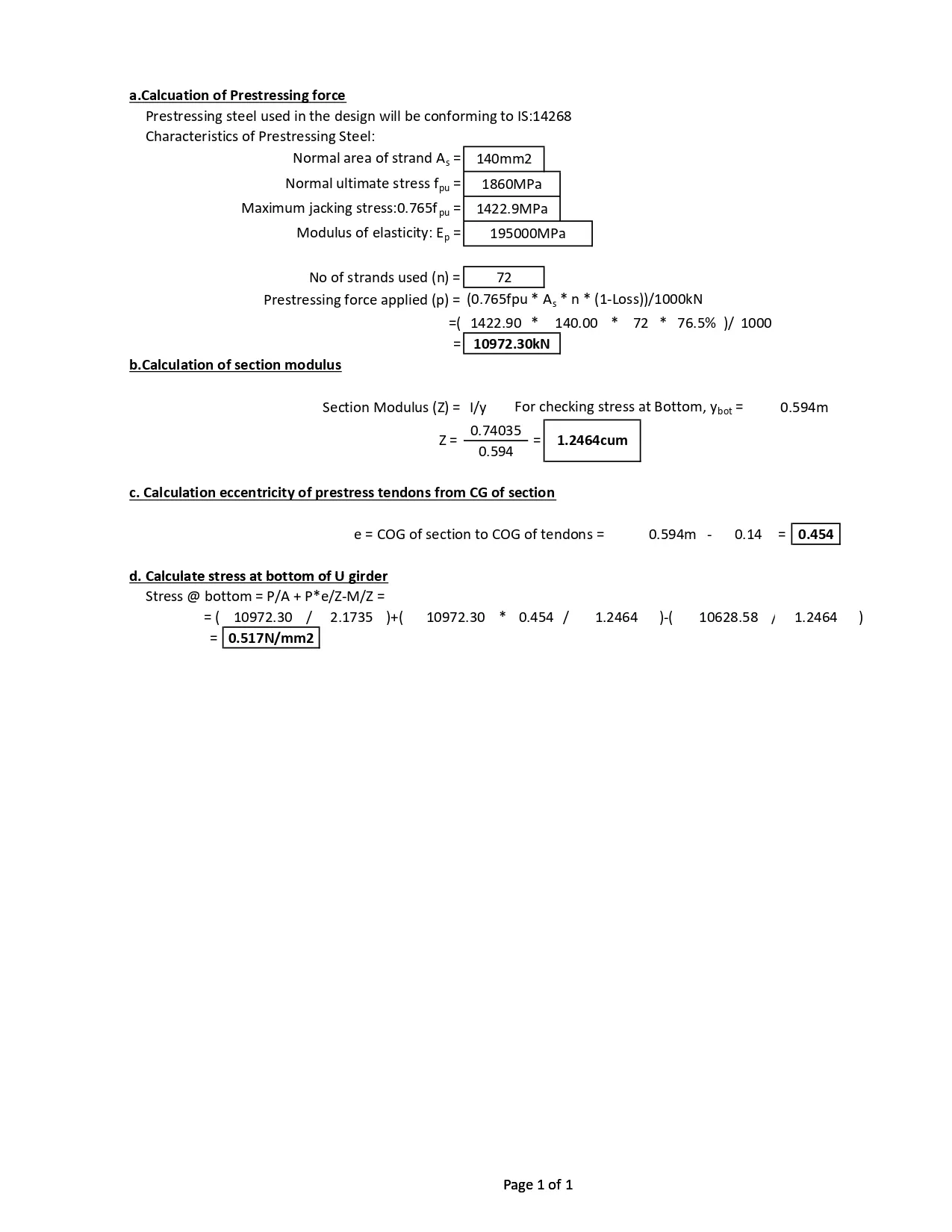
Q. 4. For a prestressed U girder, calculate the following with the given data,
- Area = 2.1735m2
- I = 0.74035m4
Calculate Prestressing force considering 76.5% jacking stress with 72 no. of strands.
Calculate Section Modulus of U-girder considering ybot = 0.594m
Calculate eccentricity of Prestress tendons from CG of section considering ybot = 0.594m and cg of PT cables = 0.140m from soffit level.
Calculate Stress at bottom of U-girder considering M=10628.58kN-m and details mentioned previously.
Ans -