Project 1
Input design:
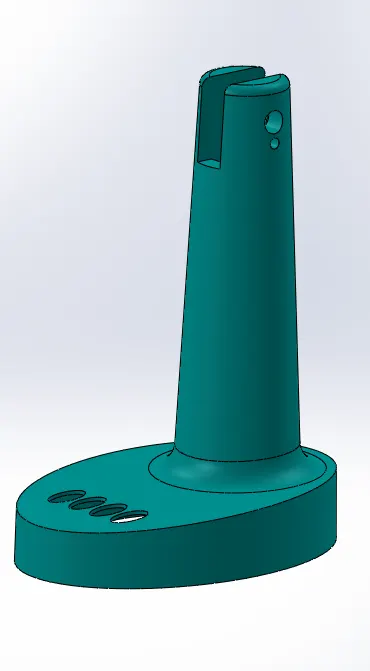
Introduction: This report details the process of mold design and creation of sliders for the Table Fan Base using SolidWorks
software. The aim of this project was to develop an efficient and effective mold design to produce high-quality Fan Base
with optimal functionality and aesthetics. The report outlines the step-by-step approach used in the assembly workbench to
achieve the desired results.
Mold Design Process: The mold design process commenced by creating individual parts of the Table Fan Base within the
assembly workbench. A systematic approach was adopted to ensure precise dimensions and features, minimizing the risk of
defects during production. The use of SolidWorks facilitated seamless collaboration between design and engineering teams,
streamlining the entire mold design process.
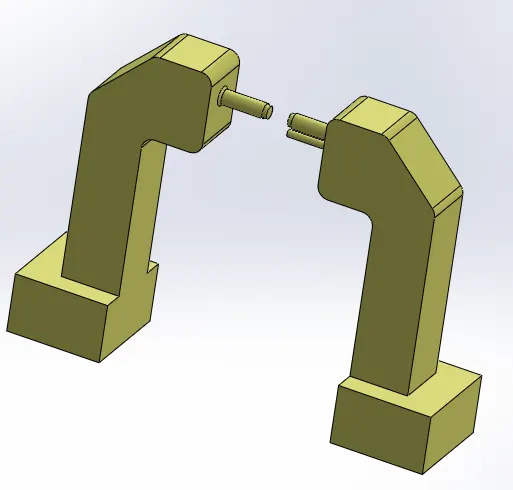
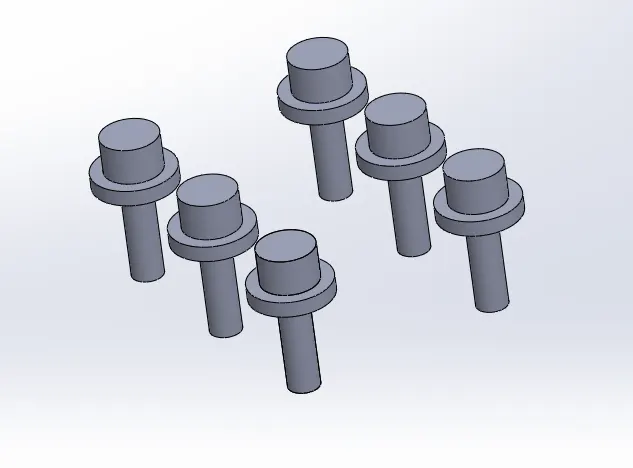
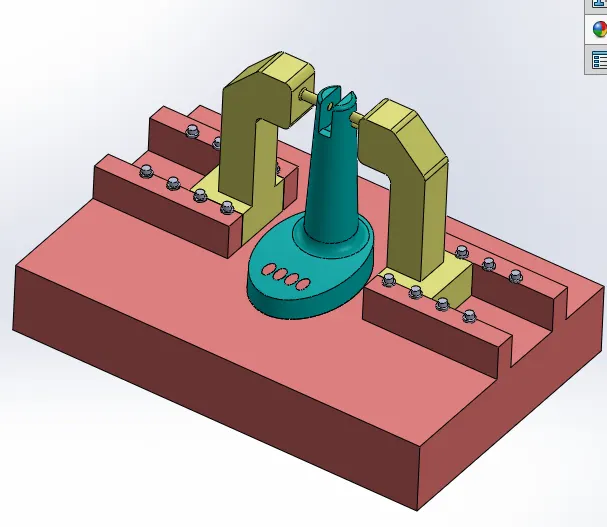
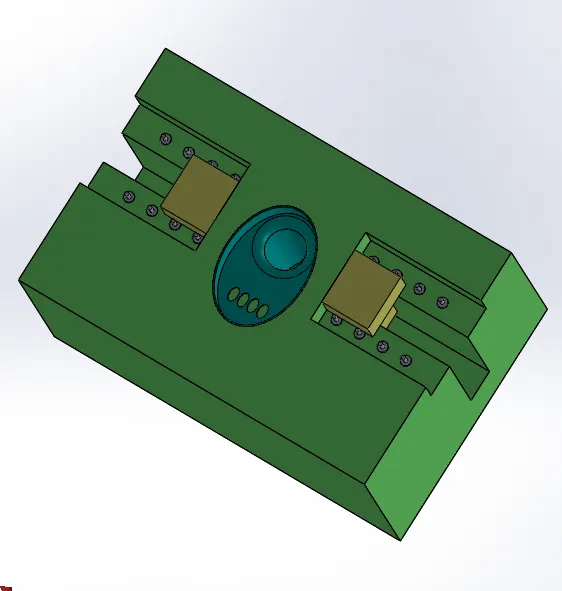
Slider Creation: The project required the incorporation of sliders into the Table Fan Base - design. Consequently, the creation of
washers and a locking mechanism for the sliders was essential. The design team meticulously engineered the sliders to enable
smooth movement and secure fitment within the mold, ensuring a seamless molding process.
Material Consideration: For the Table Fan Base Fan Base, ABS (Acrylonitrile Butadiene Styrene) was chosen as the material due
to its favorable properties for automotive components. Considering the material's shrinkage rate of 0.6%, the scale value was
determined as (0.6/100) + 1 = 1.006. The application of the appropriate scale value ensured accurate reproduction of the
Table Fan Base -'s final dimensions and geometries.
Mold Pull Direction: Determining the optimal mold pull direction is crucial in Table Fan Base - mold design to ensure efficient ejection
of the final product from the mold. Proper pull direction minimizes the risk of defects and facilitates smooth production cycles.
Draft Analysis: Conducting a comprehensive draft analysis is essential to assess the taper or draft angle required on the Table Fan Base's surfaces. Adequate draft angles ensure easy demolding and prevent issues like undercuts, enhancing the overall
moldability of the part.
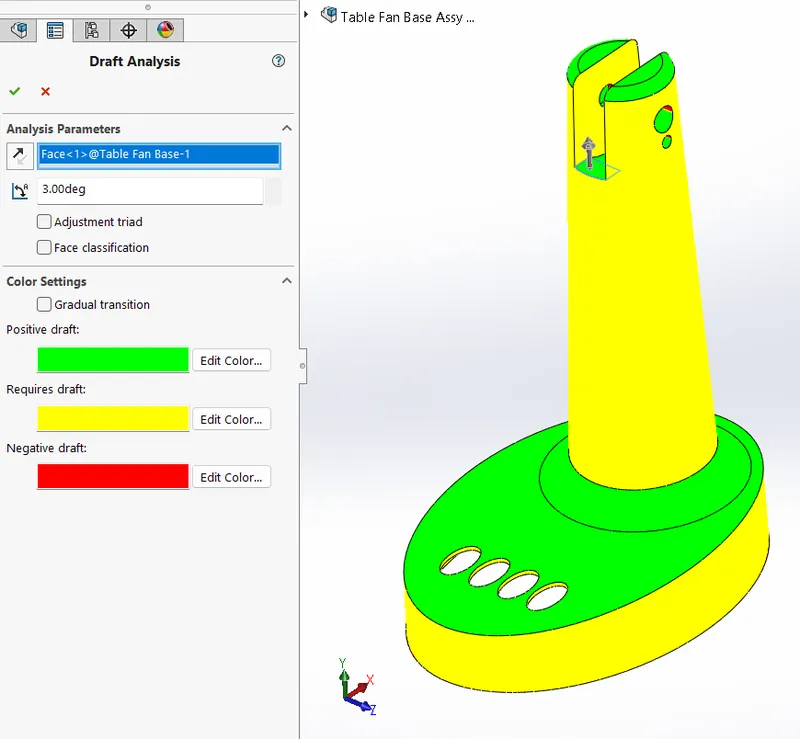
Draft Analysis for Slider: For complex Table Fan Base - designs with intricate features, sliders are often employed. Conducting a
draft analysis specifically for these slider components is vital to ascertain appropriate angles and geometry, allowing smooth
movement during the molding process.
Draft Creation: Based on the draft analysis results, the next step involves implementing the necessary draft angles into the
Table Fan Base - mold design. Skillfully incorporating draft into the part's features enhances manufacturability and optimizes
the production workflow.
Scale: Precise scaling of the Table Fan Base - mold design is essential to match the intended dimensions of the final product,
Accurate scaling ensures that the molded parts align with the desired specifications and meet quality standards.
Parting Line: Identifying the optimal parting line is a fundamental aspect of Table Fan Base - mold design. The parting line
determines how the mold will split, separating the core and cavity, and significantly influences mold complexity and
production efficiency.
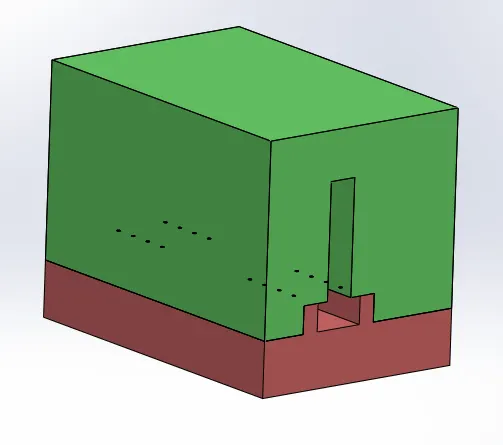
Shut-off Surfaces: Creating effective shut-off surfaces in the mold design ensures clean parting line separation and
prevents material leakage during injection. Skillful design of shut-off surfaces is crucial for producing high-quality Fan Base
with minimal flash or defects.
Parting Surface: The parting surface defines the boundary between the core and cavity halves of the mold. Precisely
defining this surface ensures accurate reproduction of the Table Fan Base -'s intricate features and maintains dimensional
integrity during molding.
Core & Cavity Blocks: Designing robust core and cavity blocks is vital for the Table Fan Base - mold's structural integrity
and longevity. Well-designed blocks contribute to efficient heat transfer and uniform cooling, resulting in consistent
part quality.
Core: The core of the mold shapes the interior of the Table Fan Base -. Designing a precise core is essential to replicate the desired
part features accurately and ensures smooth ejection during the molding process.
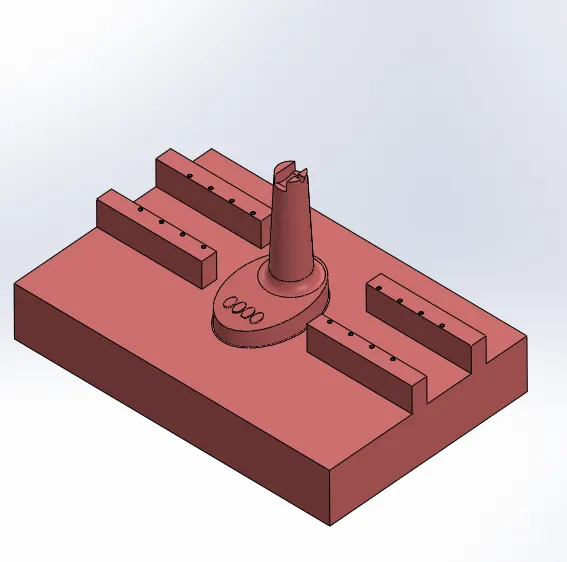
Cavity: The cavity defines the exterior of the Table Fan Base - and imparts its final shape. A meticulously designed cavity ensures
the desired aesthetics and dimensional accuracy of the molded Table Fan Base -.
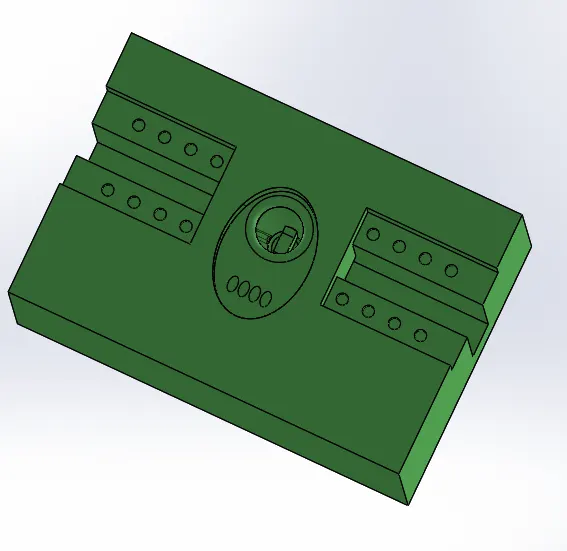
Loose Piece Slider Creation: When intricate features or undercuts are present in the Table Fan Base - design, incorporating loose
piece sliders can facilitate complex mold release. Skillfully creating these sliders adds versatility to the mold and enables the
production of intricate Table Fan Base - designs.
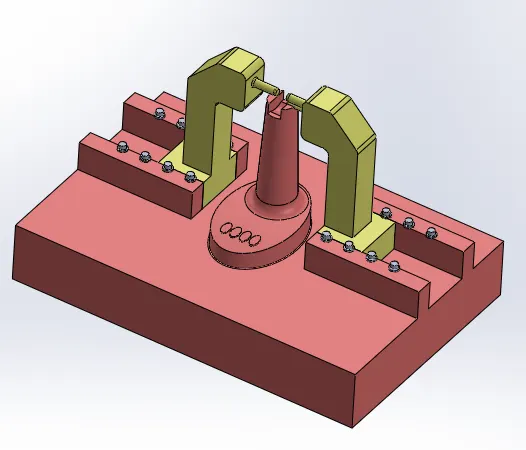
Conclusion: Through the utilization of SolidWorks and a systematic design approach, the mold design and slider creation for
the Table Fan Base were successfully accomplished. The comprehensive design process and material considerations enabled
the production of high-quality Fan Base, meeting industry standards and customer expectations. This report serves as a
valuable reference for future mold design projects and highlights the significance of leveraging advanced software tools to
optimize automotive component manufacturing.