Project 1
Introduction: A multi-parameter physiological monitoring system is an essential medical device used to acquire physiological signals of patients, which includes Electrocardiogram (ECG), Blood Pressure (BP), Respiration rate, Oxygen saturation (SpO2), and temperature. It can detect and display abnormal physiological signals of a patient, and alarm the medical staff in real-time.
Physiological Signals Selection Criteria and their Specifications: The selection of physiological signals is a critical aspect of the Multi-Parameter Patient Monitoring System. The chosen physiological signals should reflect the patient's condition and provide essential information to healthcare professionals. The following are the physiological signals selection criteria:
-
Heart Rate: Heart rate is an essential parameter that helps assess a patient's cardiovascular function. The heart rate measurement should be non-invasive, accurate, and reliable. The heart rate range should be 30-300 bpm with an accuracy of +/- 1 bpm.
-
Blood Pressure: Blood pressure is a vital sign that helps assess a patient's cardiovascular function. The blood pressure measurement should be non-invasive, accurate, and reliable. The blood pressure range should be 0-300 mmHg with an accuracy of +/- 1 mmHg.The BP sensor will measure the blood pressure and provide information on systolic and diastolic pressure. The systolic and diastolic pressure range refers to the pressures that the heart generates when it contracts (systolic) and when it relaxes (diastolic) during a heartbeat. The normal range for blood pressure is typically considered to be a systolic pressure of less than 120 mm Hg and a diastolic pressure of less than 80 mm Hg.
-
Oxygen Saturation: Oxygen saturation helps assess a patient's respiratory function. The oxygen saturation measurement should be non-invasive, accurate, and reliable. The oxygen saturation range should be 0-100% with an accuracy of +/- 2%.
-
Respiratory Rate: Respiratory rate is an essential parameter that helps assess a patient's respiratory function. The respiratory rate measurement should be non-invasive, accurate, and reliable. The respiratory rate range should be 0-150 bpm with an accuracy of +/- 1 bpm.
5. ECG: The ECG sensor will record the electrical activity of the heart to provide information about the heart rate, rhythm, and any abnormalities.
In an electrocardiogram (ECG), leads are the conductive wires that connect the patient's body to the ECG machine. They are used to measure the electrical activity of the heart from different angles.
There are three main types of leads in an ECG:
-
Limb leads: These leads are attached to the arms and legs of the patient. There are four limb leads: lead I, lead II, lead III, and the augmented limb leads (aVR, aVL, aVF).
-
Chest leads: These leads are attached to the chest wall and measure the electrical activity of the heart from different positions. There are six chest leads, also called precordial leads: V1, V2, V3, V4, V5, and V6.
-
Augmented leads: These are three additional limb leads that measure the electrical activity of the heart from different perspectives. They are aVR (right arm), aVL (left arm), and aVF (left foot).
Each lead provides a different view of the electrical activity of the heart. The limb leads provide a frontal view, while the chest leads provide a transverse view. The augmented leads provide a combination of both views.
The signals from the leads are recorded by the ECG machine and displayed as a graph of voltage versus time. The resulting ECG waveform can help diagnose various heart conditions such as arrhythmias, ischemia, and myocardial infarction
6. Temperature: The optimum temperature range for a patient is typically between 36.1°C to 37.2°C (97°F to 99°F). This range can vary slightly depending on factors such as age, gender, and overall health status. A multi-parameter patient monitoring system may include a temperature sensor to continuously monitor a patient's body temperature and provide real-time feedback to healthcare providers.
The system should have the following specifications:
- The system should be battery operated and work on mains.
- The system should be compact, portable and easy to use.
- The system should display the patient's physiological parameters on a color LED screen.
- The system should have a battery backup of at least 2 hours.
Sensors or Transducers: The following sensors or transducers can be used for the multi-parameter physiological monitoring system:
- ECG sensor: Electrodes are placed on the chest and connected to the ECG machine.
- BP sensor: Non-invasive blood pressure cuff.
- Respiration rate sensor: A piezoelectric sensor that will detect chest wall movements.
- SpO2 sensor: A pulse oximeter that will detect the oxygen saturation level in the blood.
- Temperature sensor: A temperature probe that will detect body temperature.
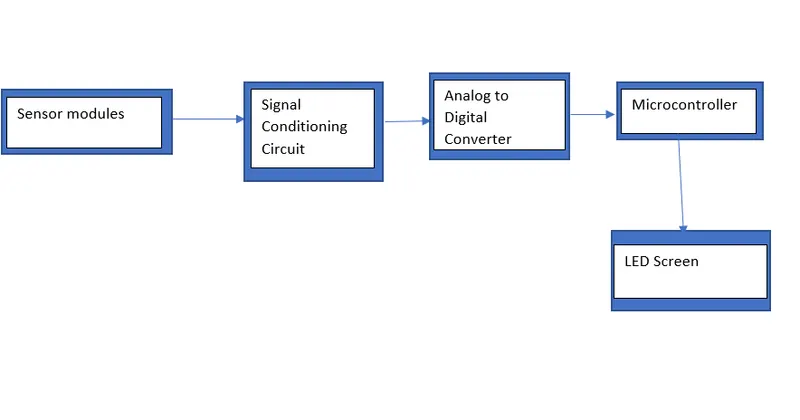
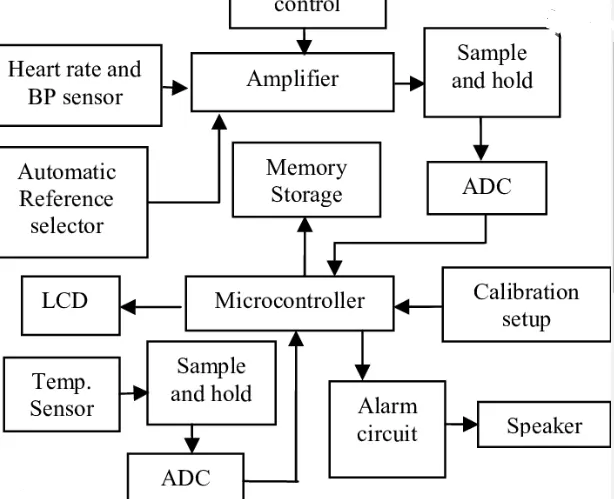
Block Schematic: The following is the detailed block schematic of the multi-parameter monitoring system:
Sensor modules → Signal Conditioning Circuit → Analog to Digital Converter (ADC) → Microcontroller → LED Screen
-
Sensors or Transducers: The sensors or transducers will detect the physiological signals.
-
Signal Conditioning: The signal conditioning stage will amplify and filter the signals.
-
Analog-to-Digital Conversion: The analog-to-digital converter will convert the analog signals into digital signals.
-
Microcontroller: The microcontroller will process the digital signals and display them on the LED screen.
Design Parameters and their Specifications: The following are the design parameters and their specifications of the Multi-Parameter Patient Monitoring System:
-
Power Requirements: The system should work on mains as well as battery. The battery should last for a minimum of 8 hours with a recharge time of 4 hours.
-
Display: The system should have a color LED screen with a resolution of 1024x768.
-
Sensors or Transducers: The system should use non-invasive sensors or transducers for all the physiological signals.
-
Processing Requirements: The system should have a microcontroller with a clock speed of at least 16 MHz. The system should also have an analog-to-digital converter with a resolution of at least 12 bits
Processing Requirements: The microcontroller will process the physiological signals acquired from the sensors and display them on the LED screen. It will also generate alarms when any of the physiological parameters are abnormal.
Safety Requirements: The system should have safety requirements, such as electrical safety, mechanical safety, and software safety. The system should be designed to minimize the risk of electrical shock to patients and medical staff.
Device Qualification and Calibration: The device qualification is done by testing the device against the performance specifications. The device calibration can be done by comparing the readings of the device with a calibrated reference device.
Qualification Procedure for the Medical Device: The Multi-Parameter Patient Monitoring System should be qualified before being used in a clinical setting. The qualification procedure should include the following:
-
Performance Testing: The system should be tested to ensure that it meets the design specifications.
-
Electrical Safety Testing: The system should be tested for electrical safety.
-
Electromagnetic Compatibility Testing: The system should be tested for electromagnetic compatibility.
-
Environmental Testing: The system should be tested for environmental factors like temperature, humidity, and vibration.
Screen Layout: The following is the screen layout for displaying the parameters on the LED screen:
ECG | BP | Respiration rate | SpO2 | Temperature (fig 1)
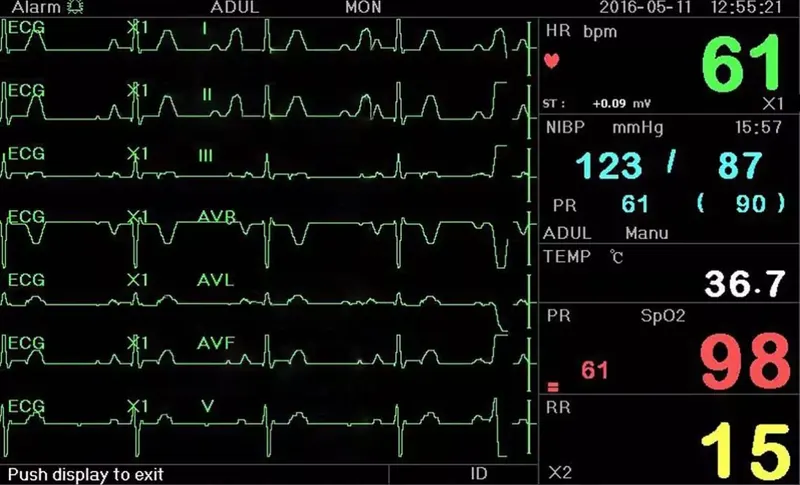
figure 1. Multi-Parameter Patient Monitoring System
AVB, AVL, and AVF are lead systems in ECG. They stand for:
- AVB: Atrioventricular block. It is a condition where the electrical signals that regulate the heartbeat are delayed or blocked as they move from the atria to the ventricles. It is identified by changes in the QRS complex and PR interval on the ECG.
- AVL: Augmented Vector Left. It is one of the standard bipolar limb leads that record electrical activity of the heart in a vertical plane. It is positioned on the left arm and provides information about the electrical activity of the heart's lateral wall.
- AVF: Augmented Vector Foot. It is another standard bipolar limb lead that is positioned on the left foot and provides information about the electrical activity of the heart's inferior wall.
Typically, a multi-parameter patient monitoring system includes components such as:
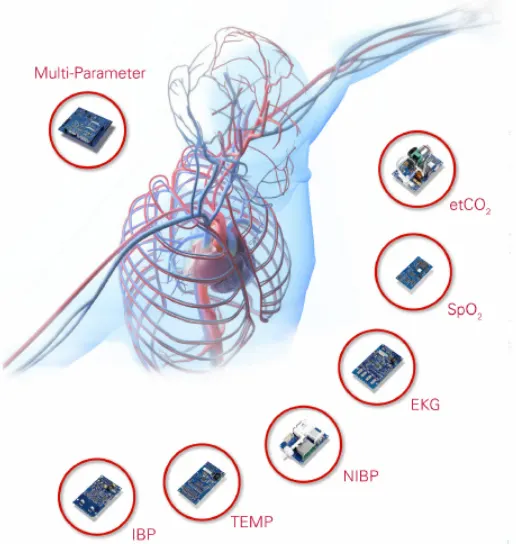
figure 2: The image shows various multi parameters in the monitoring system.
- Monitor Unit: This is the main unit that displays and records the patient's physiological data.
- Vital Signs Sensors: These sensors are used to measure various vital signs such as heart rate, blood pressure, oxygen saturation, and temperature.
- Electrocardiogram (ECG) Module: It measures the electrical activity of the heart.
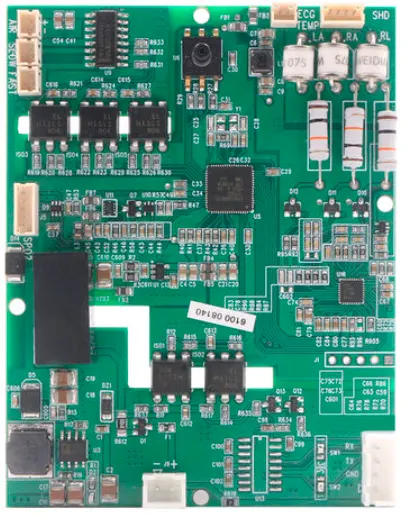
figure 3: ECG module for multi-parameter monitor PM4100
4. Pulse Oximeter: It measures oxygen saturation in the blood.
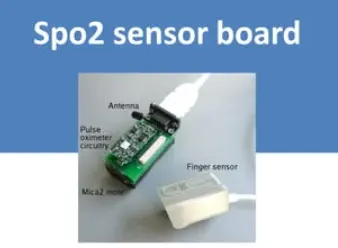
figure 4: spo2 sensor board
5. Non-Invasive Blood Pressure (NIBP) Monitor: It measures the patient's blood pressure without the need for invasive procedures.
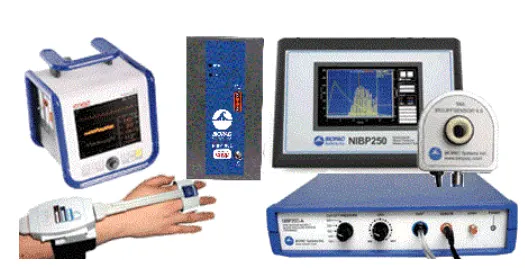
figure 5: NONINVASIVE BLOOD PRESSURE MEASUREMENT VIA FINGER CUFF SENSOR
6. Temperature Probe: It measures the patient's body temperature.
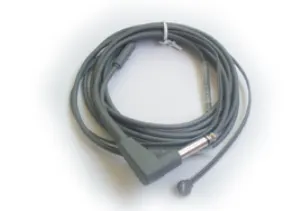
figure 6: Temperature Probe for Patient Monitor
7. Capnography Module: It measures the concentration of carbon dioxide in the patient's exhaled breath.
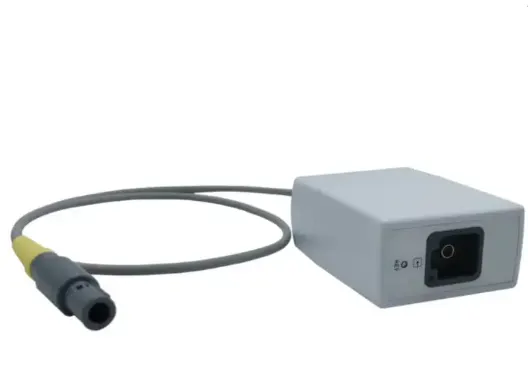
figure 7: Capnography module for the multi-parameter monitor
8. Central Monitoring Station: In a larger setup, there is a central station where all the patient monitors are connected, allowing healthcare providers to monitor multiple patients simultaneously.
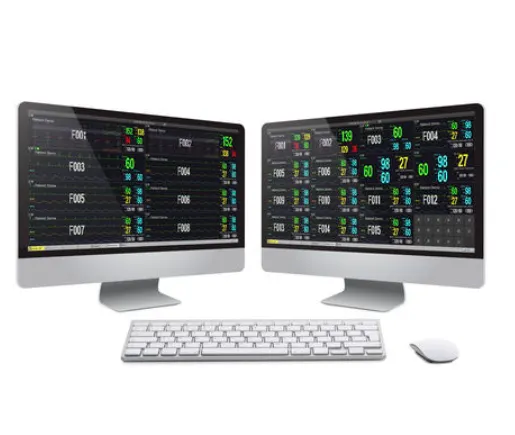
figure 8: Central patient monitoring station STAR8800
Data Acquisition and Storage: The data can be acquired by the microcontroller and stored in a database. The data can be stored in real-time, and it can be retrieved for analysis and further processing.
Central Nursing Station Design: The central nursing station can have a color LED screen that displays the physiological parameters of all the patients. The system can generate alarms when any of the parameters are abnormal, and the alarms can be displayed on the central nursing station.
For network connectivity, the multi-parameter patient monitoring system can be designed to support Ethernet or Wi-Fi connectivity, which would allow the system to be remotely monitored by healthcare professionals from another location. This would enable healthcare professionals to monitor the patients in real-time and make quick decisions based on the data displayed on the monitoring system.
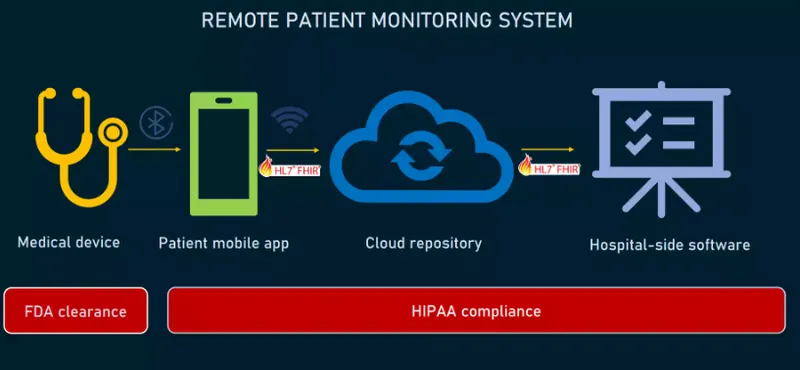
A remote patient monitoring system can be viewed as a type of an IoT system. In the most common case, it contains four key components:
- a personal medical device with a Bluetooth module,
- a patient mobile app,
- a cloud repository, and
- hospital-side software
Modern remote patient monitoring devices capture a lot of health data, from heart rate to blood pressure, without surveillance by a health care provider. They can be either sensors implanted under the skin or user-friendly wearables like an Apple Watch or a Fitbit.
- electronic thermometers,
- electrocardiographs (ECGs),
- electroencephalographs (EEGs)
- cardiac monitors,
- apnea monitors,
- spirometers,
- oximeters,
- audiometers,
- blood pressure monitors,
- breathing frequency monitors, and
- electronic stethoscopes.
All wearables must somehow transmit patient data to their healthcare providers — which in most cases involves a dedicated mobile app. While several technologies could be used to transport information from RPM devices to smartphones, Bluetooth Low-Energy (BLE) communication is the most popular option.
In addition to remote monitoring, the system can also be designed to interface with other hospital systems such as electronic health records (EHR) and picture archiving and communication systems (PACS) to provide a complete patient history and image data. This would enable healthcare professionals to make more informed decisions and provide better patient care.
Design of GUI Layout:
The graphical user interface (GUI) of the multi-parameter patient monitoring system is designed to display real-time patient data and provide alarms and alerts for critical parameters. The GUI should be easy to navigate and provide a clear representation of the patient's physiological parameters. The layout of the GUI should also be customizable to suit the specific needs of the healthcare facility.
The GUI should include a main dashboard that displays the patient's vital signs, such as heart rate, blood pressure, and respiratory rate, in real-time. The vital sign measurements should be color-coded to indicate normal, warning, or critical levels. The GUI should also include a trends section to display historical data and track changes in the patient's vital signs over time.
In addition to the vital signs, the GUI should also display additional parameters, such as oxygen saturation, electrocardiogram (ECG), and temperature. These parameters should also be color-coded to indicate normal, warning, or critical levels.
The GUI should have an alarm management system that generates alerts for critical patient parameters. The alarm system should be configurable to suit the specific needs of the healthcare facility. For example, the healthcare provider should be able to set upper and lower limits for each parameter and adjust the alarm thresholds based on the specific patient's needs.
The GUI should also provide the option to view and adjust the alarm settings, such as volume and duration of the alert, from the main dashboard.
Data Storage, Retrieval, and Transmission Methodology:
The multi-parameter patient monitoring system should have a secure and reliable method for data storage, retrieval, and transmission. The system should have an internal database that stores patient data, including vital sign measurements and alarm events. The database should be designed to be scalable and allow for easy expansion as the number of patients and monitoring devices increase.
The data retrieval system should allow for easy access to patient data, both in real-time and for historical analysis. The system should provide the option to export patient data in various formats, such as PDF or CSV, for use in electronic medical records or research studies.
The data transmission system should be designed to ensure the security and privacy of patient data. The system should encrypt all patient data during transmission and allow for remote access by authorized personnel. The system should also have the option to transmit data to a central monitoring station, allowing for remote monitoring and alert management.
Overall, the design of the multi-parameter patient monitoring system should prioritize patient safety, reliability, and ease of use. The system should be designed to be scalable and customizable to suit the specific needs of the healthcare facility. The system should also be designed to integrate with existing medical systems and provide an easy-to-use interface for healthcare providers.
Furthermore, the system can also be designed to support mobile connectivity, which would allow healthcare professionals to access patient data and monitor information from their mobile devices. This would enable healthcare professionals to be more mobile and respond to patient emergencies more quickly.
Overall, network connectivity is an essential component of a modern multi-parameter patient monitoring system, and it provides healthcare professionals with greater flexibility and mobility to provide better patient care.
Alarm System: In an ICU setting, it is crucial to have an alarm system that alerts healthcare providers of any critical changes in the patient's physiological parameters. The multi-parameter monitoring system should be equipped with customizable alarm settings that can be set based on the individual patient's needs. Some of the alarms that can be set include high or low heart rate, respiratory rate, blood pressure, oxygen saturation, and temperature. The alarm should be audible and visible on the display screen, and the device should have a dedicated alarm silence button to temporarily silence the alarm.
Data Transfer: To transfer the acquired data to an external storage device, the multi-parameter monitoring system should have a USB port or memory card slot for easy transfer of data to a pen drive or external storage device. The data can be stored in various formats such as CSV, Excel, or PDF. The device should also have the capability to transmit data wirelessly to a central nursing station or electronic health record system to enable healthcare providers to access the patient's vital signs from any location within the hospital.
With the above-given specification criteria, I have designed the multi-parameter monitoring system with the following Specifications and features:
Specifications:
- Standard configuration of ECG, HR, RESP, NIBP, SpO2, PR, TEMP
- Automatic gain control of ECG
- Heart rate range of 15-350bpm
- SpO2 display: SpO2 value, waveform pulse rate, and histogram
- Pulse rate measurement range of 30-240 bpm
- RESP measurement method thoracic impedance
- RESP measurement range of 0-100 bpm
- TEMP range of 21.0-50.0 °C
- NIBP measurement uses an intelligent oscillometric method
- NIBP device display range of 0-300 mmHg
- Inflation time of <10 s (typical adult cuff)
- Deflation time of <2s (typical adult cuff)
- Alarm setting, user-defined upper and lower limits, and automatic storage
- Rechargeable lithium-ion battery
Features
- 5 or 9 channel waveform display with trend coexistence, switchable to large font
- Monitoring standard parameters of ECG, SPO2, RESP, NIBP, TEMP & pulse
- Automatic analysis of 20 arrhythmia waveforms
- S-T segment with automatic & manual analysis
- Digital SpO2 technology with anti-motion & anti-low infusion
- Trend data analysis for 8/24/120 hours
- Storage & review
- Protection against interference from defibrillator & electrosurgical unit
- Feasible to be used with cardiac pacemaker together
- Optimized modes for adult, child & neonate
- Removable and rechargeable battery
Feature Specification
| Display, Resolution |
15″ high resolution color TFT screen, 800 x 600 pixels |
|
| Dimension, Weight | 238 (W) x 250 (H) x 163 (D) mm, approx. 3.1 kg | |
| Trace | 4 waveforms: 2*ECG, SpO2, respiration Swap speed: 6.25, 12.5, 25, 50 mm/sec. |
|
| Indicators | Categorized alarms (3 priority levels) Visual alarm QRS beep & SpO2 pulse beep Percent (%) SpO2 pitch tone Battery Status, external power LED Rotary Knob |
|
| Interfaces | Power supply: AC 100 - 240 V (50/60 Hz) DC input connector: 18 VDC, 2.8 A LAN digital output for transferring data Nurse call system connection: - 0.3 A at 125 VAC - 1 A at 24 VDC External HDMI output for large screen USB barcode reader USB memory data storage/Software upgrade |
|
| Battery | Rechargeable Li-ion battery Approx 2 hours of continuous operation |
|
| Thermal Printer (Option) | Speed: 25, 50 mm/sec. Paper Width: 58 mm |
|
| Data Storage | 500 groups of data & 24-hour ECG waveforms, 20 cases of 10 sec. alarm waveform |
Overall, the multi-parameter patient monitoring system should be designed to meet the needs of an ICU setting, with a focus on patient safety, accurate monitoring, and ease of use for healthcare providers.
Recent Manufacturers:
- Philips Healthcare
- GE Healthcare
- Siemens Healthineers
- Nihon Kohden Corporation
- Mindray Medical International Limited
- Medtronic
- Welch Allyn (Hill-Rom Services Inc.)
- Spacelabs Healthcare (OSI Systems, Inc.)
- Omron Healthcare
- Smiths Medical
Sources:
-
"Design and Implementation of Wireless Multi-Parameter Patient Monitoring System." IEEE Xplore, 2019, doi: 10.1109/tttc.2019.2967517.
-
"Design of a Multi-Parameter Physiological Monitoring System for IoT Enabled Healthcare Applications." ResearchGate, 2020, doi: 10.1007/978-981-15-0950-9_31.
-
"Design and Implementation of Multi-Parameter Patient Monitoring System using LabVIEW." ResearchGate, 2019, doi: 10.1109/NCATC.2019.8909325.
-
"Multi-Parameter Patient Monitoring System Market by Product Type (Portable and Standalone), Acuity Level (High, Low, and Medium), End User (Hospitals, Ambulatory Surgical Centers, and Home Care Settings), and Region - Global Forecast to 2023." MarketsandMarkets, 2018, www.marketsandmarkets.com/Market-Reports/multi-parameter-patient-monitoring-devices-market-4506185.html.
Image credits:
- https://sternmed.de/en/medical-device/patient-monitor-macs-30/
- https://www.medicalexpo.com/prod/shanghai-berry-electronic-tech/product-122578-866837.html
- https://www.moor.co.uk/products/monitoring/non-invasive-blood-pressure-nibp-monitor/
- https://www.made-in-china.com/showroom/hungsam/product-detailgqzmKbjrMdcO/China-Temperature-Probe-for-Patient-Monitor.html
- https://www.medicalexpo.com/prod/zug-medical-systems/product-299482-1090708.html
- https://www.medicalexpo.com/prod/spacelabs-healthcare/product-70868-1019335.html
- https://www.altexsoft.com/blog/remote-patient-monitoring-systems/