Project 1
1.Mention the need for a metro rail in a developing economy.
Ans
- A life-style marker: Metros provide a real alternative to unsustainable modes. For a similar level of service, urban rall attracts up to 20% additional passengers in comparison To other modes Metros contribute to high-quality place-making and stations are seen as an integral part of urban life.
- A strong enabler of economic development: Good and reliable metro services support efficient economies The 50 largest metropolitan areas by CDP in the world are all supported by urban rail systems-76% have metros. Metros support the concentration of people and ideas that spark innovation and urban economies and reduce traffic congestion. In addition to the accessibility and connectivity benefits, socio-economic research in the past decade has identified a series of so-called wider economic benefits such as the agglomeration effect that provides additional justification for high investment requirements.
- A space (re)creator: Space is a precious commodity in dense metropolitan areas. With very limited space requirements metros are the most space-efficient transport system in addition dense and high-rise development tretail, office, housing) above and around metro stations allows for additional space, value and convenience in dense areas, thereby contributing significantly to the high quality of urban environment and life.
- A confidence-building location factor and a land value booster: Metros are a permanent infrastructure that signals a strong commitment of decision makers to sustainable mobility and spatial accessibility for customers, visitors and employees They offer strong investment opportunities.
- A competitive edge to attract talents: Of the various measures available to employers to attract talents convenient accessibility and fast commutes are key.
Advantages of Metro Rail over other modes of Public Transport System
- The Metro Rail System has proven to be the most efficient in terms of energy consumption, space occupancy and numbers transported.
- High capacity carriers-very high volumes of peak hour peak direction trips.
- Eco-friendly causes no air pollution, much less sound pollution.
- Low energy consumption - 20% per passenger-km in comparison to road-based systems.
- Greater traffic capacity-carries as much traffic as 7 lanes of bus traffic or 24 lanes of car traffic (either way).
- Very low ground space occupation-2 meters width only for elevated rail.
- Faster-reduces journey time by 50% to 75%.
- Zero Emission - Unlike buses and other modes of public transportation, metro rails are eco-friendly, cause much less sound pollution, and have no air pollution.
- The number of road accidents has also reduced drastically after use of Metro Rail. Speeding usually happens when people are late for their work.
- Metro provides air-conditioned travelling with the best comfort at relatively cheap rate
2. Perform longitudinal analysis of 3 x 25m prestressed I-girder for metro viaduct in STAAD by creating the nodes, beams, and supports being assigned to those nodes for a slab and girder that has been presented in the videos.
Ans
Staad Model:-
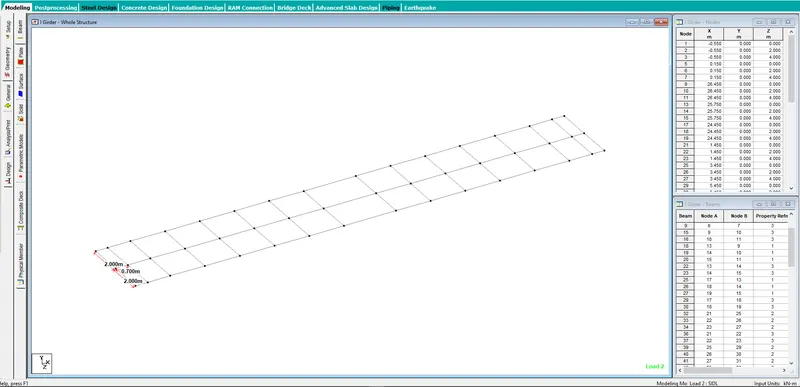
- A four girder system is to be created .
- First of all a node is created and then the width of the deck slab has been created with 2m spacing each.
-
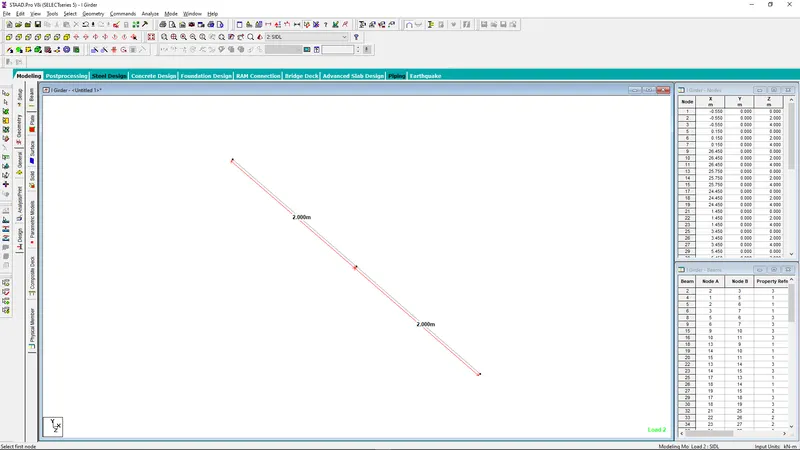
- Then the over hang portion of the bridge has been created at -ve X-direction at a distance of 0.7m as given.
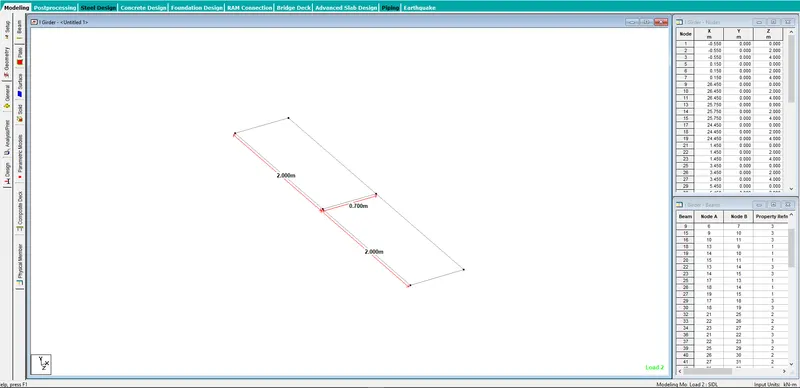
- Then accordingly the whole structure has been created in both the sides.
- Then diffrent type of Supports considering the functional behavoiur of bearings for the model need to be created.
- The support releasing the Mx, My & Mz has been created.
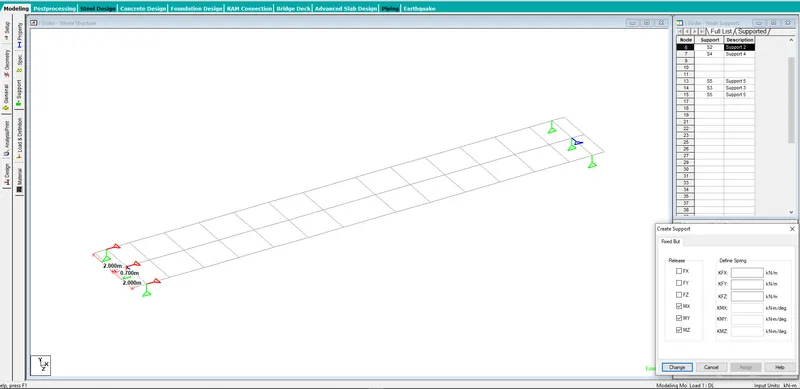
- The support releasing the Mx, My, Mz & Fx has been created.
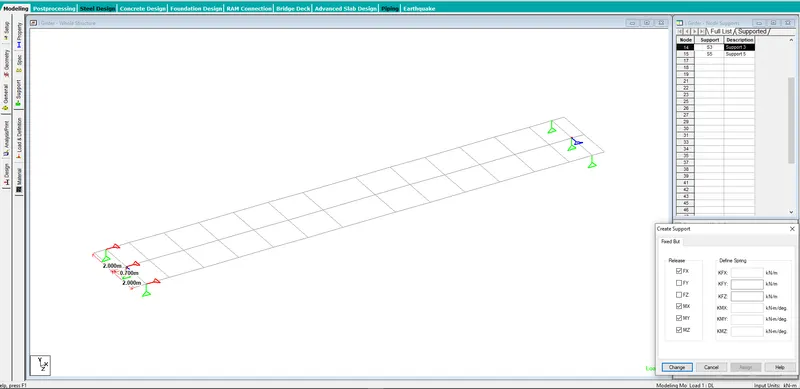
- The support releasing the Mx, My, Mz & Fz has been created.
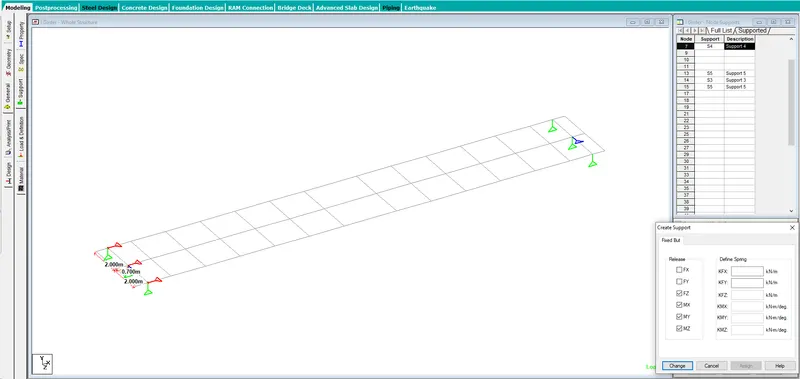
- The support releasing the Mx, My, Mz, Fx & Fz has been created.
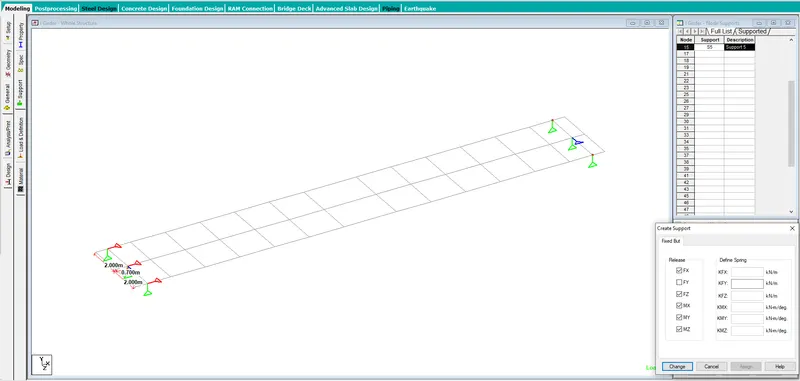
- The supports to the respective bearing positions has been assigned.
- Material Property
- The material property as given has been created.
- For End Section
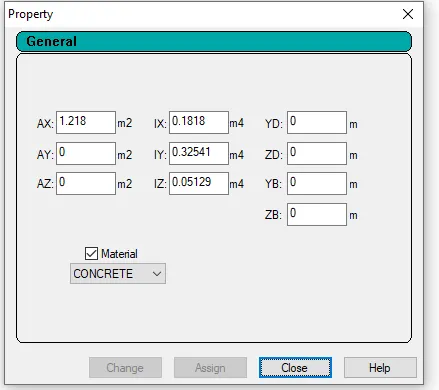
- For Mid section
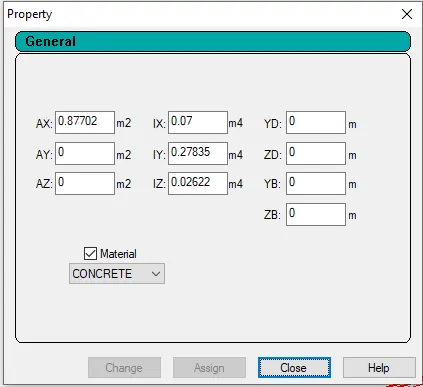
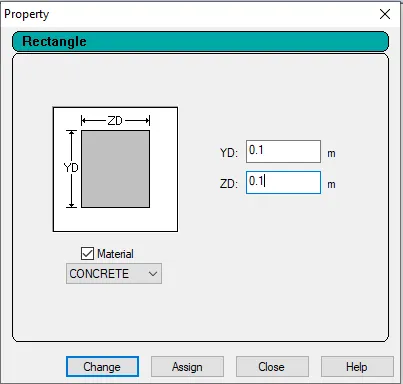
- Material property for cross girder has been created as dummy member.
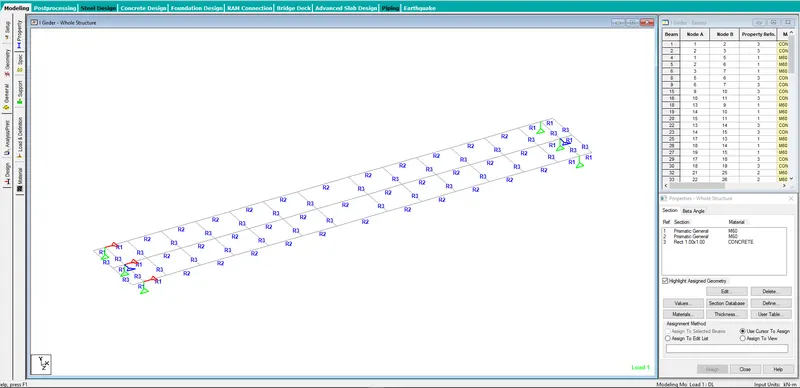
- The properties has been assigned to the structure as described.
- Loads & Definations
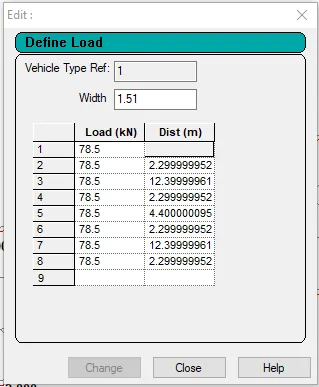
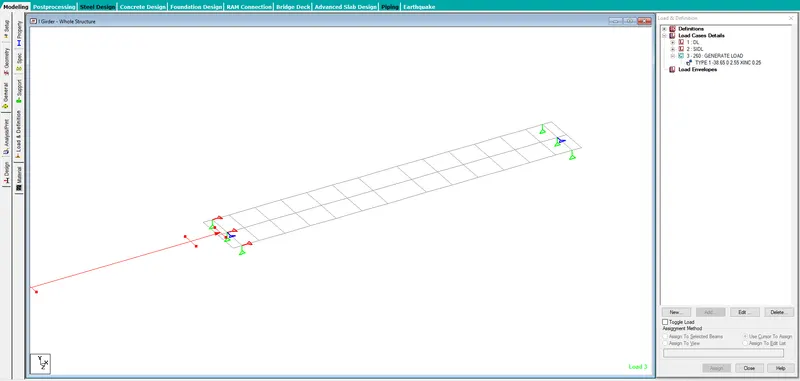
- Vehicle definations created.
- Self weight has been defined with a factor of -1 & applied to the whole structure.
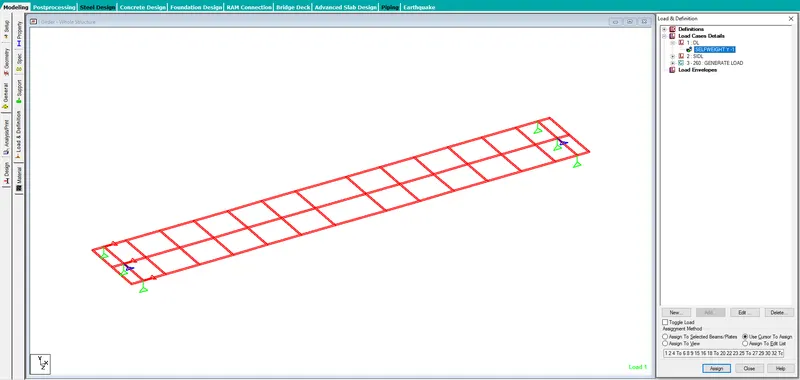
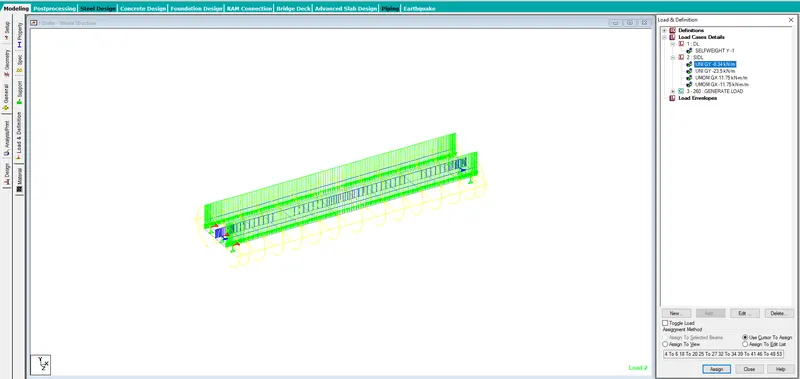
- Different loads as SIDL for wearing coat has been defined and assigned to the intermediate girders
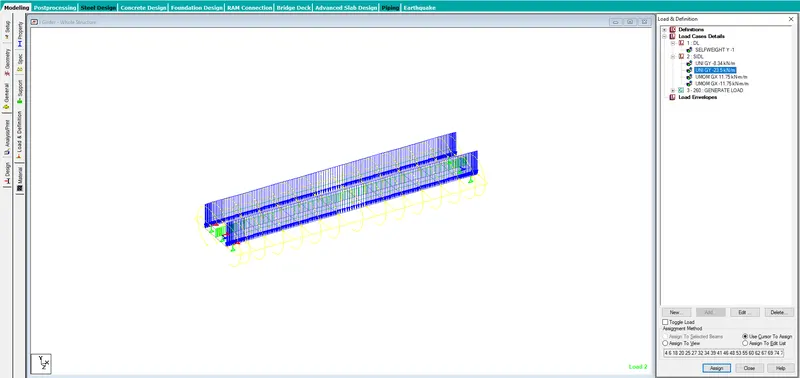
- SIDL for crash barrier loading has been created and assigned to the end girders.
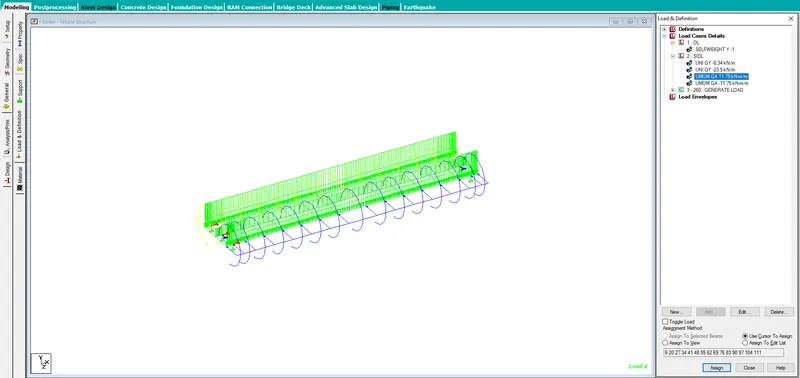
- Moment due to SIDL eccentric loading is to be applied. Moments at the intermediate girders has been applied in both the global x direction.
- vehicles Loads has been generated considering the length of the boggie and the length of the span. Also considering the intervals at 0.25.
- Single trains is being considered as per the with of the structure.
- Material Property
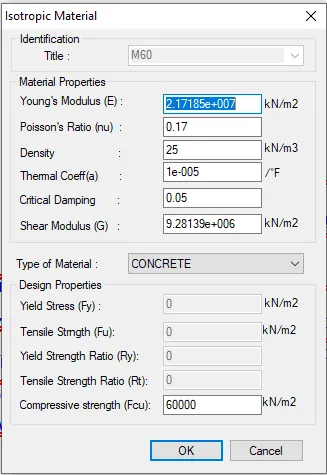
- New material for M60 and dummy member has been defind with the following inputs.
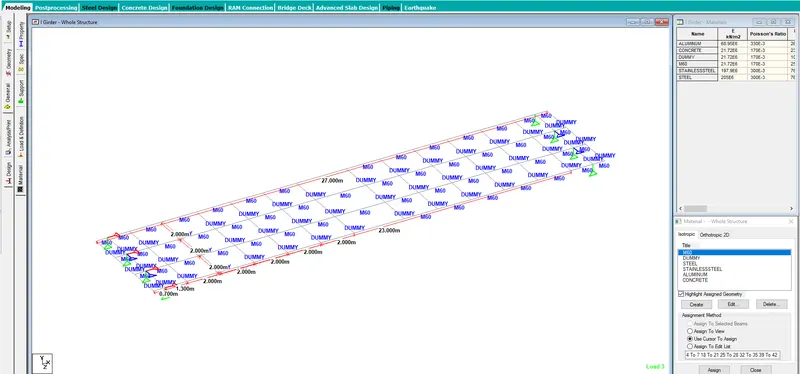
- Property M60 and dummy has been assigned to the model.
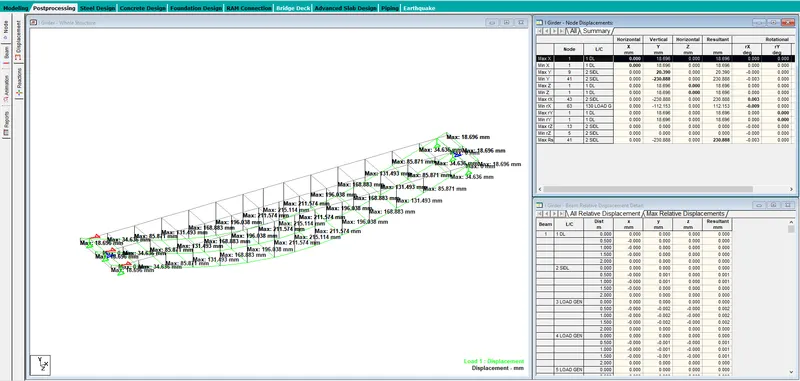
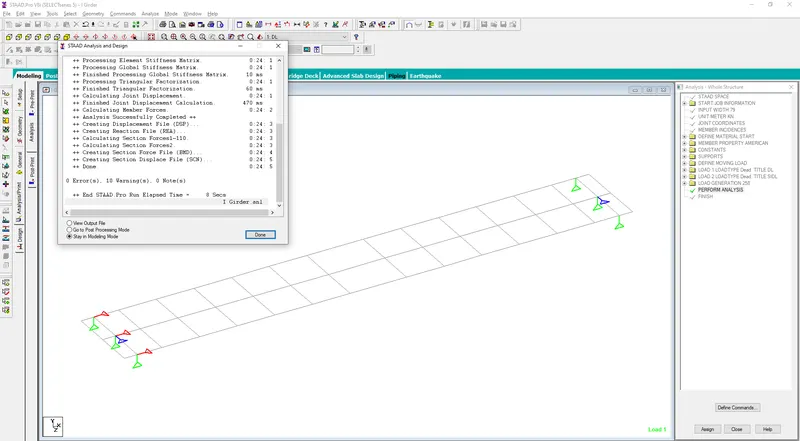
- The model has been analyzed and results with 0 error.
- Results
- Max deflection of the struture with summary sheet.
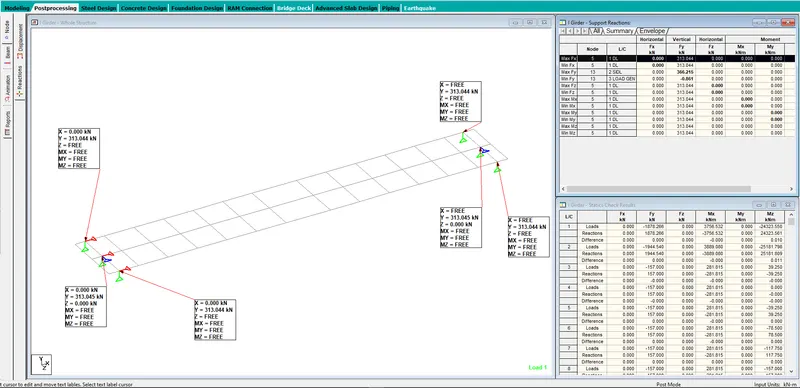
- Reactions with summary sheet.
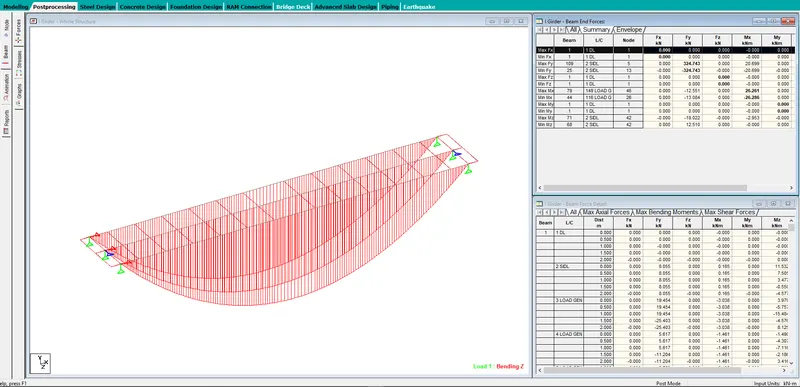
- Value of Mz with summary sheet.
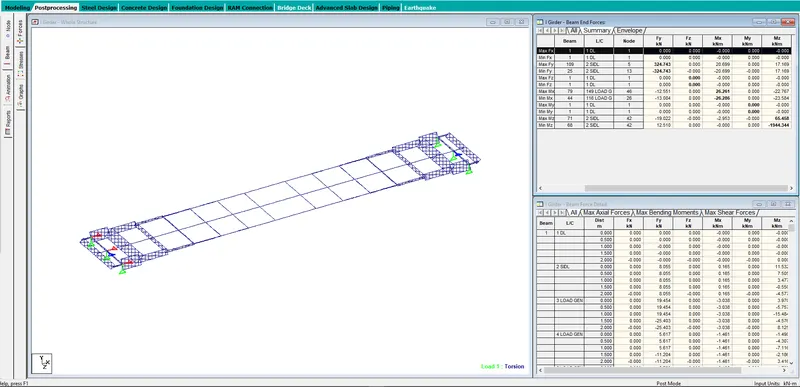
- Value of Mx with summary Sheet.
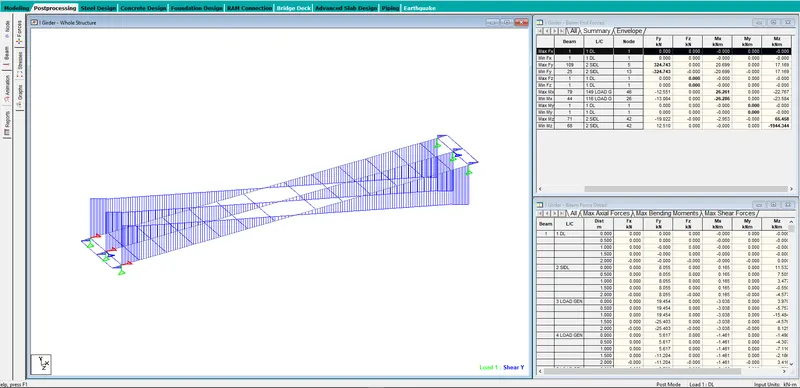
- Value of Fy with summary sheet.
3. Prepare a transverse STAAD model of U-girder with the following specifications:
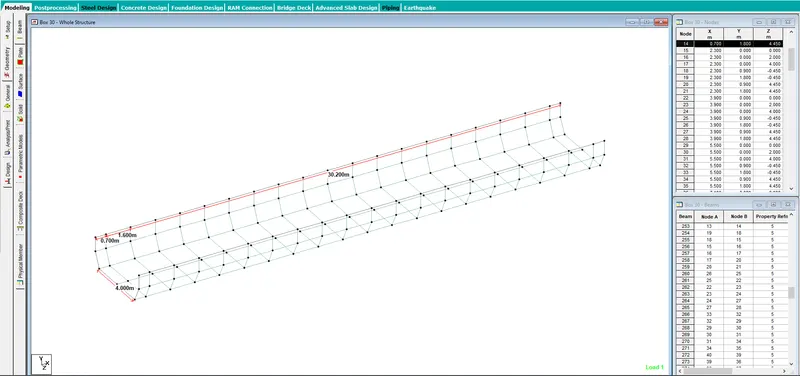
- Finite element model of U-girder with a span length of 30m.
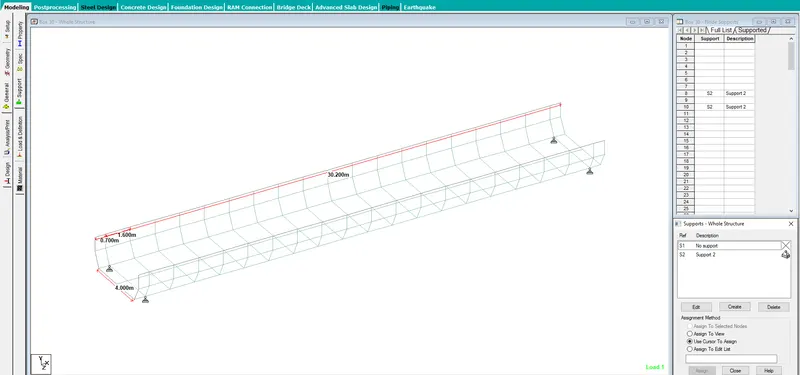
- Having supports at 0.7m from both ends.
- Having the following geometrical properties:
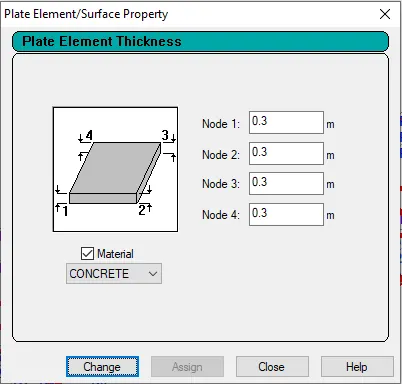
- Thickness of bottom slab – 300mm
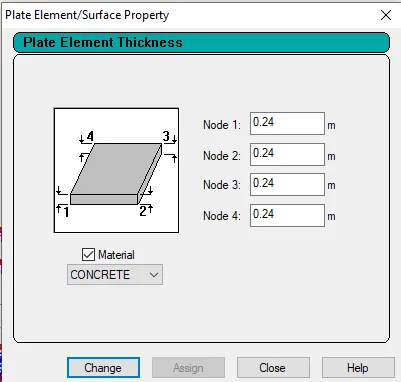
- Thickness of top web (both sides) – 240mm
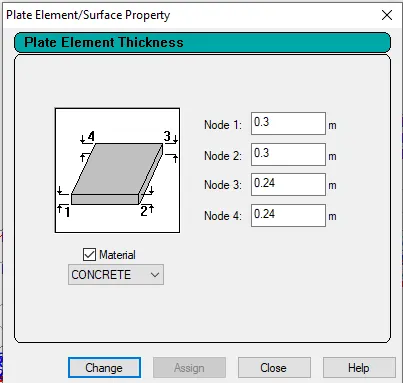
- Thickness of slant web - varying from 300mm to 240mm
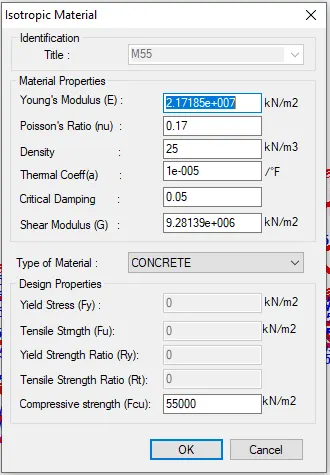
- Concrete grade M55.
- Reference inputs can be taken from the relevant video sessions if needed.
Ans
Staad Model:-
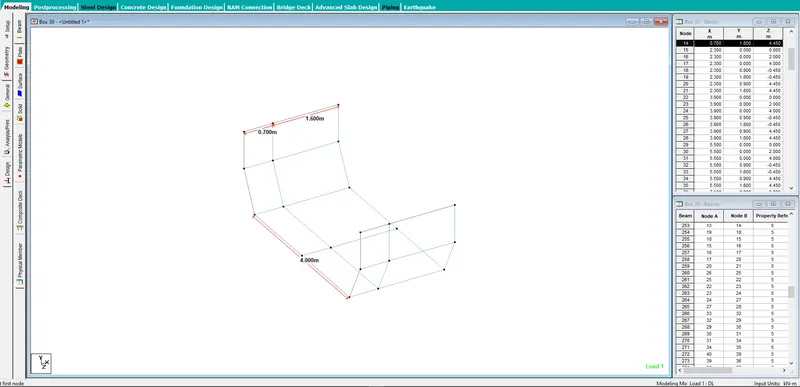
- The U girder system is to be created.
- Creating Grid Modeling in STAAD.Pro.Arranging the node in the shape of U Grider.
- The whole structure model of U girder has been created.
- Pinned support is being defined and assigned to the concerned nodes.
- Property As given in the question has been defined accordingly.
- Plate property for bottom slab.
- property for top web.
- property for slant portion.
- one dummy member for all the created beams.
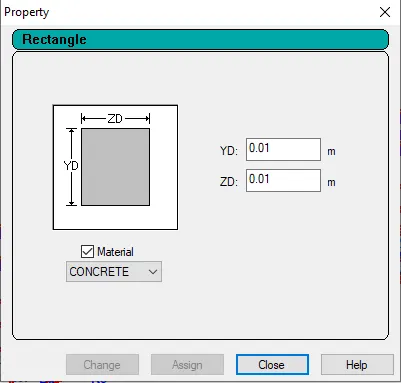
- Material property for M55 has been defined.
- Applied to all the structures.
- Loads & Definations
- Self weight has been defined with a factor of -1 & applied to the whole structure.
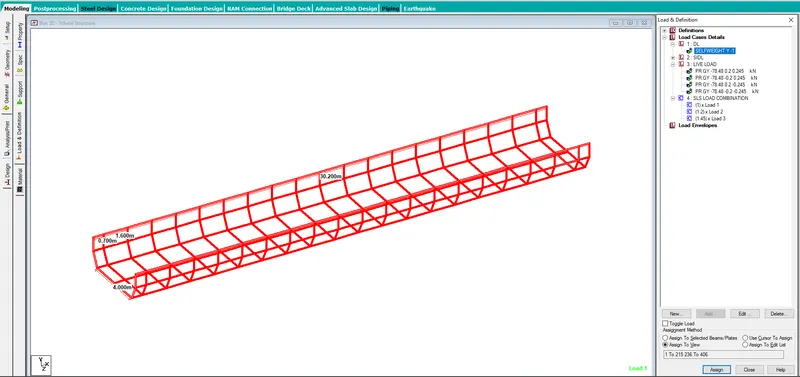
- SIDL as plate pressure has been assigned to the model.
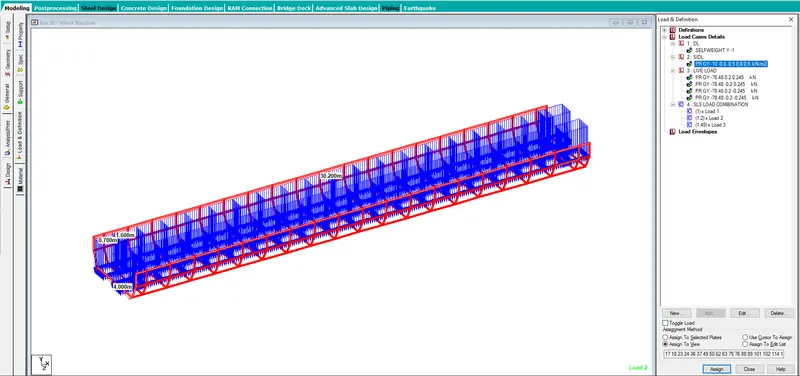
- Live load as different indivisual loads has been defined and assigned.
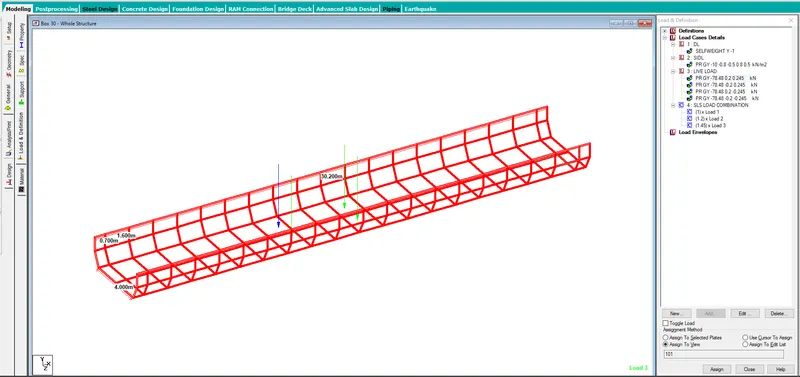
- Combination Of SLS & ULS has been defined according to the relevant manual of IRC CBC
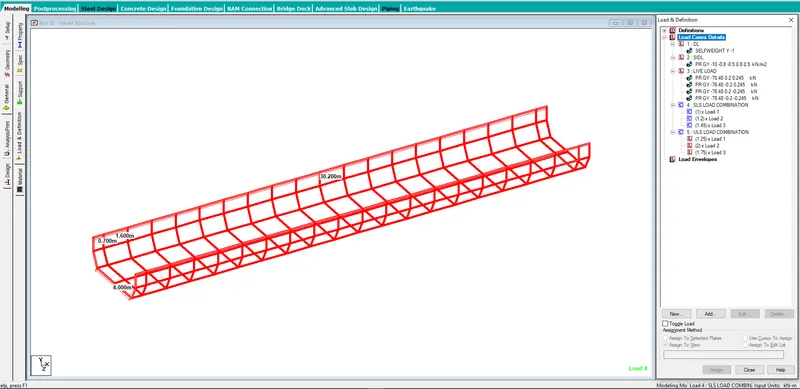
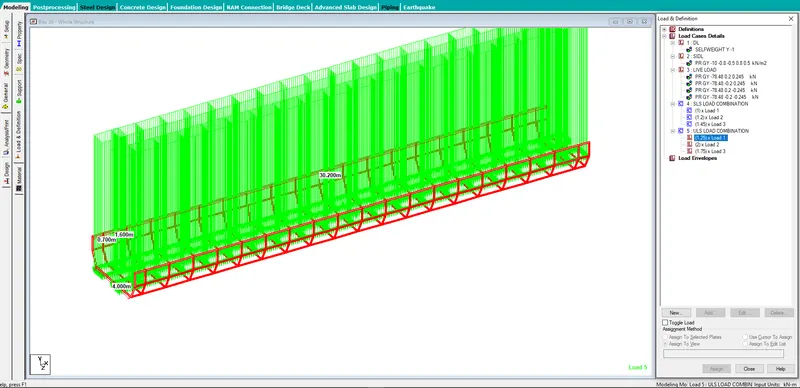
- Result and Analysis
- The model has been analyzed and results with 0 error.
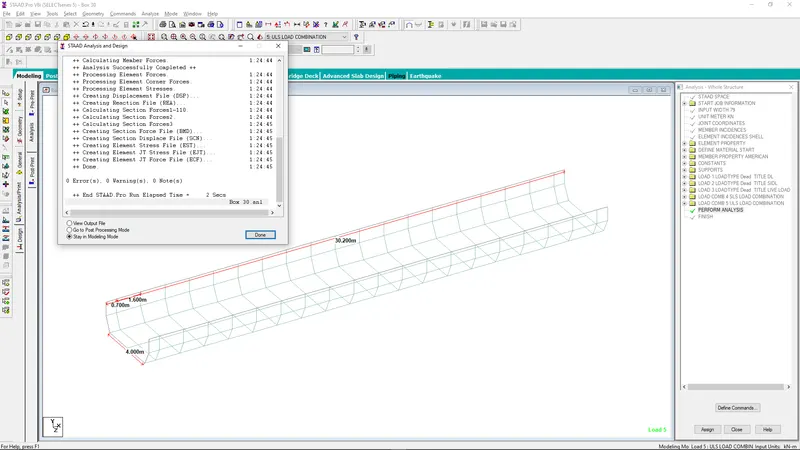
- Max deflection of the struture with summary sheet.
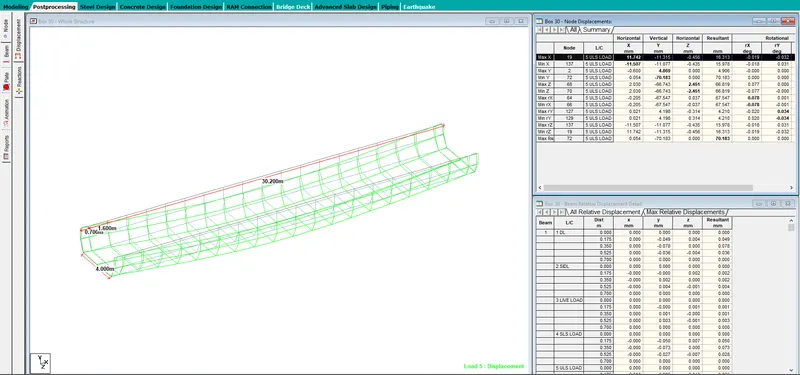
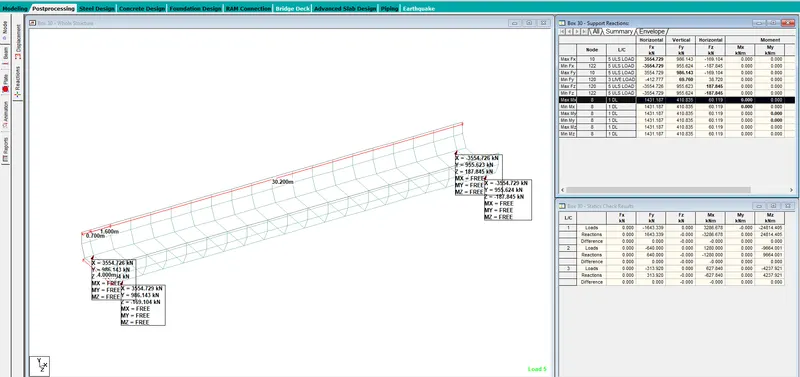
- Reactions at the node points of the model.
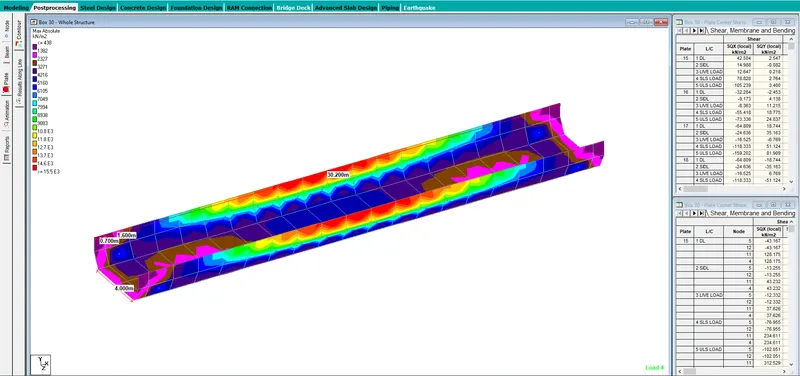
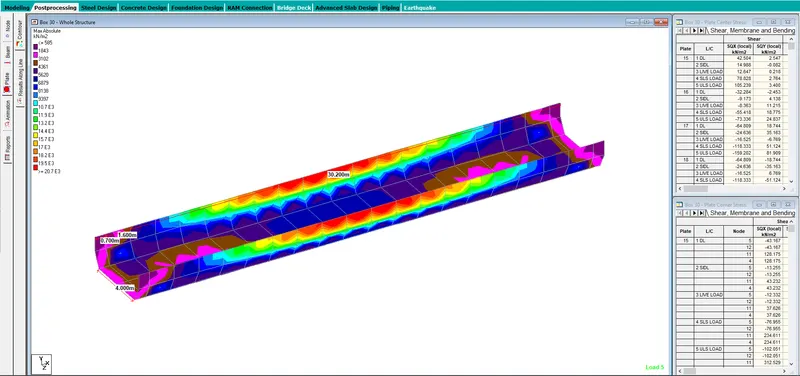
- Maximum Mz for ULS combination & SLS Combination.
- For SLS
- For ULS
4. For a prestressed U girder, calculate the following with the given data,
- Area = 2.1735m2
- I = 0.74035m4
- Calculate Prestressing force considering 76.5% jacking stress with 72 no. of strands.
- Calculate Section Modulus of U-girder considering ybot = 0.594m
- Calculate eccentricity of Prestress tendons from CG of section considering ybot = 0.594m and cg of PT cables = 0.140m from soffit level.
- Calculate Stress at bottom of U-girder considering M=10628.58kN-m and details mentioned previously.
Ans:
Data Given:
- No. of strand (n) = 72
- ybot = 0.594m
- cg of PT cables = 0.140m from soffit level
- M=10628.58kN-m
- Assume
- Nominal ultimate stress (fpu) = 1860 Mpa
- Maxm. jacking stress (0.765 fpu) = 1422.9 Mpa
- Nominal area of strand (As) = 140 mm2
- Modulus of elasticity (Ep)= 195000 Mpa
- Prestressing Force
- Prestressing force applied (P) = ( 0.765fpu x As x n X (1-Loss)) / 1000
- = (1422.9 x 140 x 72 x 76.5) / 1000
- = 10972.3 kN
- Section modulus
- Z = I/y(bot) = 0.74035/0.594 = 1.2464 m3
- Eccentricity
- CG of the section to CG of tendons (e) = 0.594 - 0.140 = 0.454 m
- Stress at bottom of the girder
- Stress at bottom = P/A + P x e/Z - M/Z = 10972.3/2.1735 + 10972.3 x 0.454 / 1.2464 - 10628.58/ 1.2464 = 0.517 N/mm2