Project 1
Initilization File.
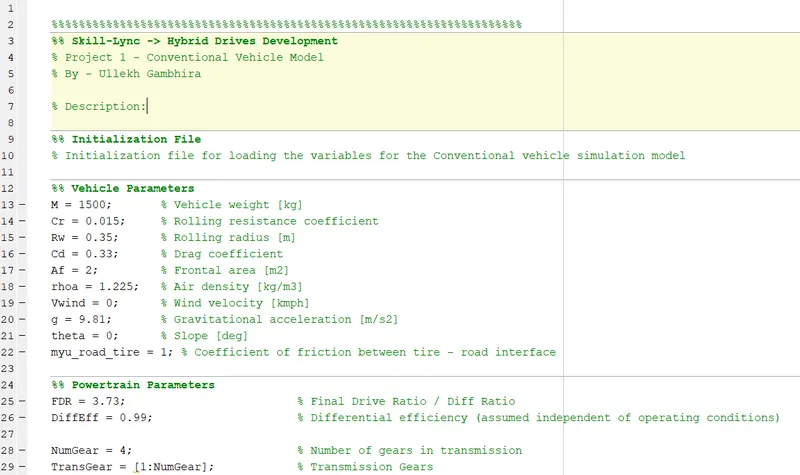
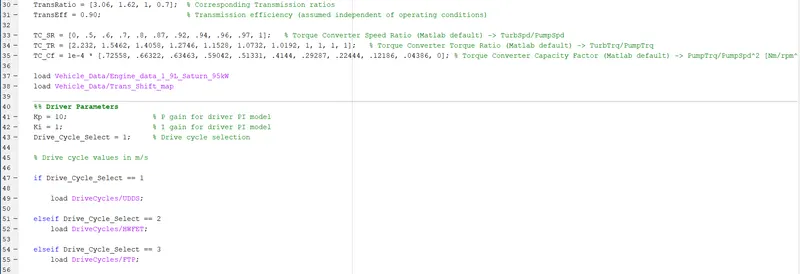
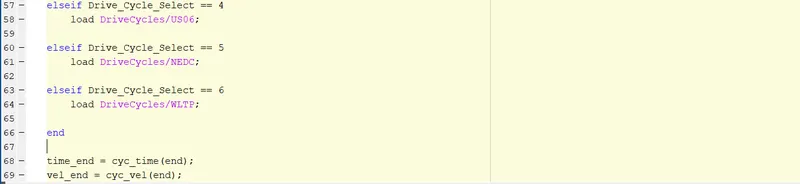
we can change the drive cycle by changing the drive cycle values:
The Drive Cycle can be selected from this MATLAB Script, By changing the variable Drive_Cycle_Select to
1 UDDS
2 HWFET
Complete the modelling part (Engine & vehicle dynamics)
ENGINE
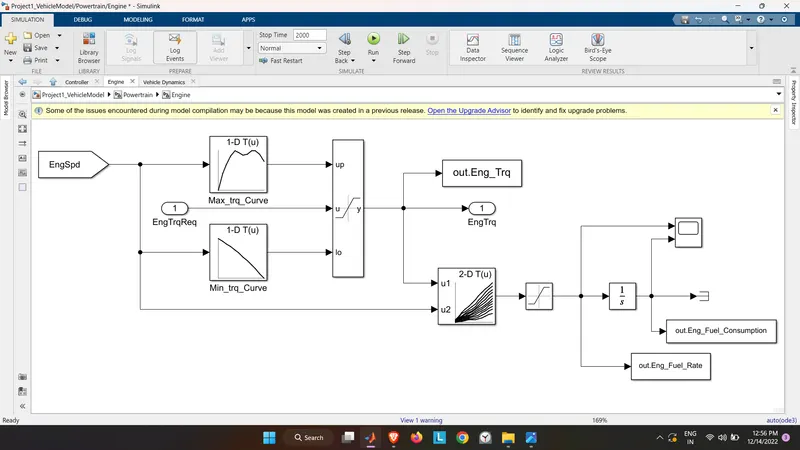
Depending on Engine speed The controller's necessary torque reaches saturation between the maximum and minimum torque curves and transfers engine torque to the transmission block.
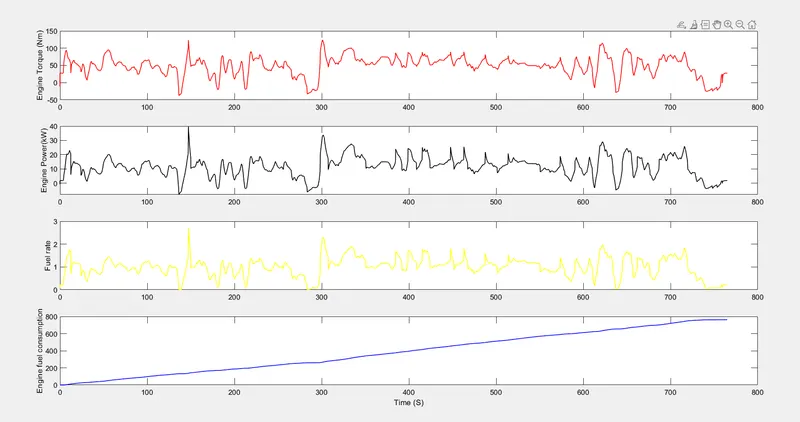
The 2D lookup table is used to calculate the fuel flow rate based on engine speed and engine torque. The fuel flow rate is then integrated to find the fuel consumption.
Estimated fuel flow rate, fuel consumption, engine torque and engine speed are passed to the MATLAB workspace using the to-workspace block.
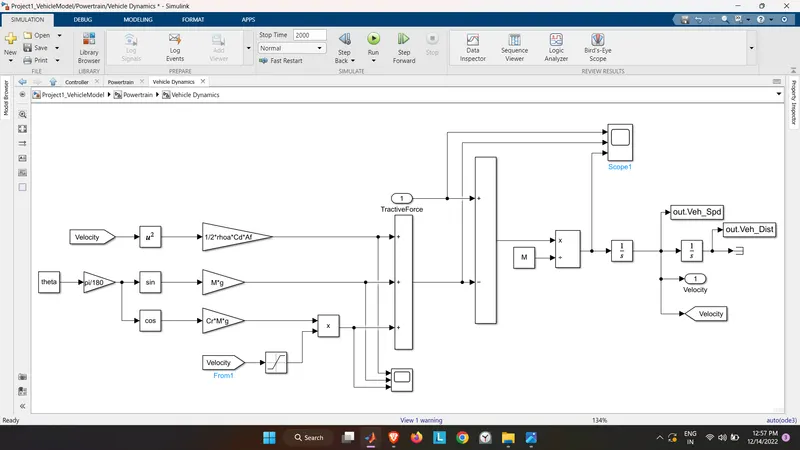
Vehicle Dynamics
VEHICLE DYNAMICS: Recieves tractive force from the wheel and calculate road load using the equation. It dictates vehicle speed based on tractive force and road load.
The road load equations are
Frr =Cr*M*g*cos(THETA) Rolling resistance force
Fad=0.5*Rhoa*Af*Cd*(V+Vwind).^2 Aerodynamic force
Fhc=M*g*sin(THETA) Grading force
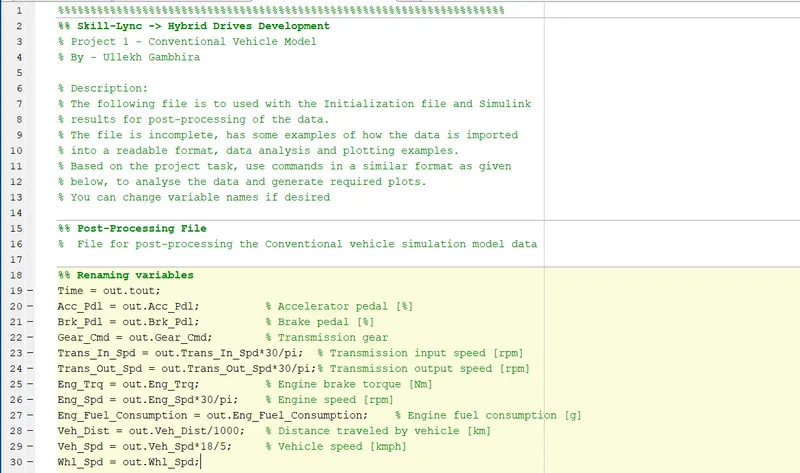
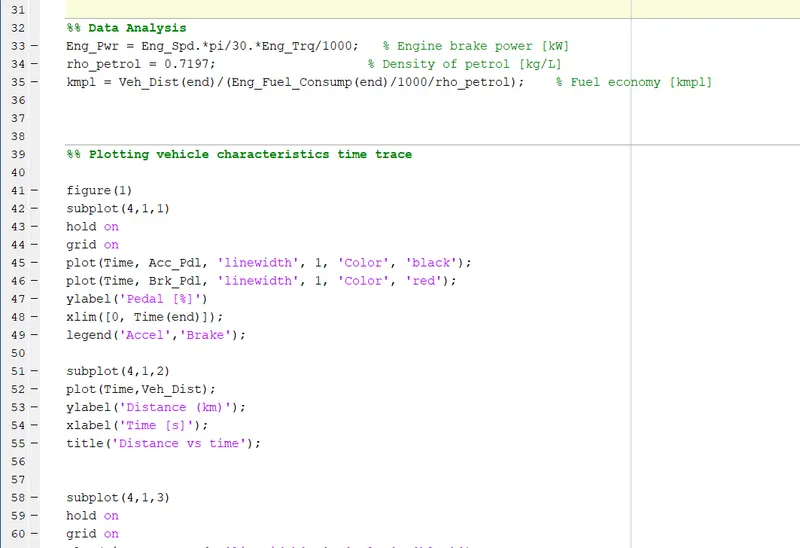
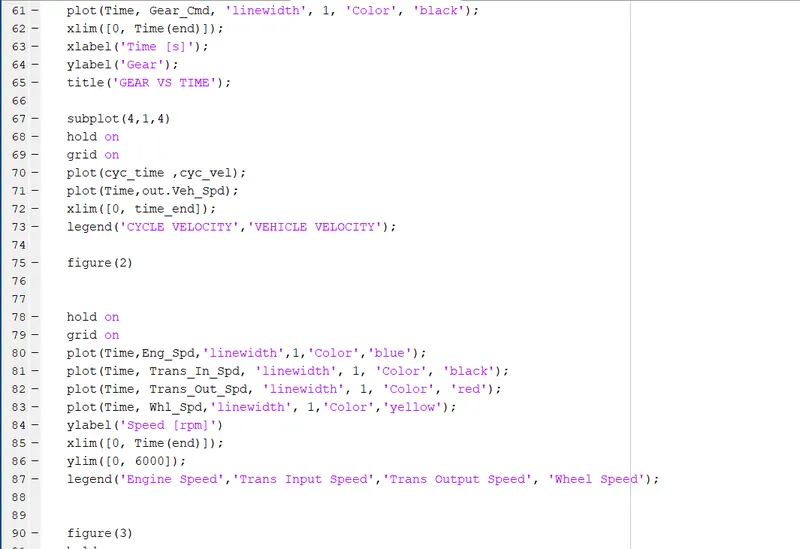
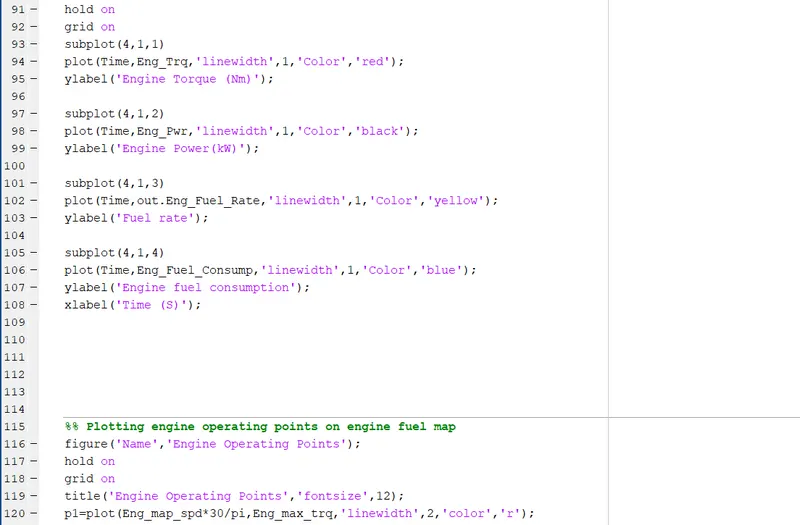
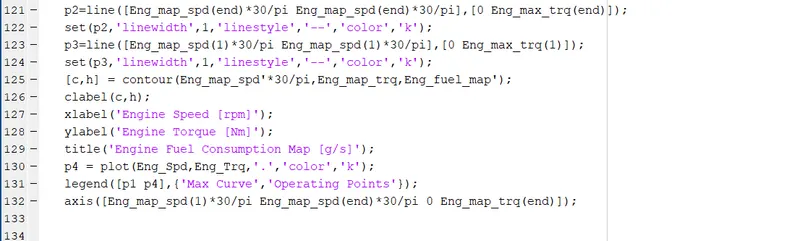
Post Processing File
b)
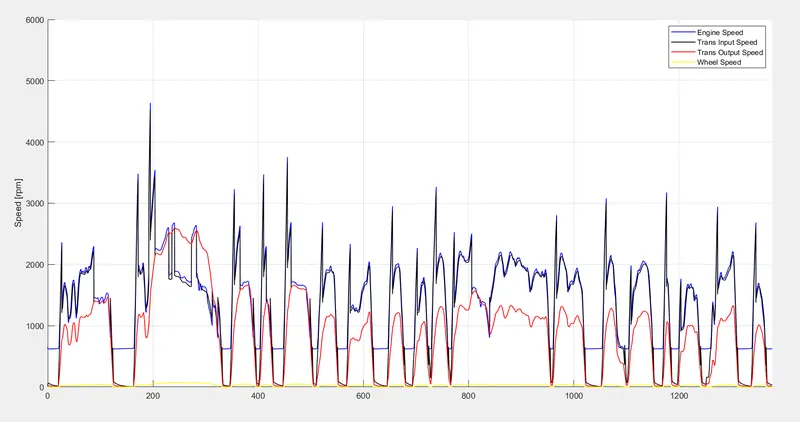
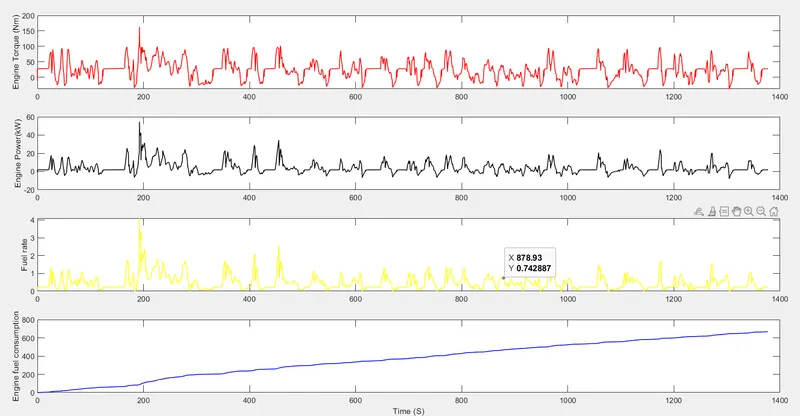
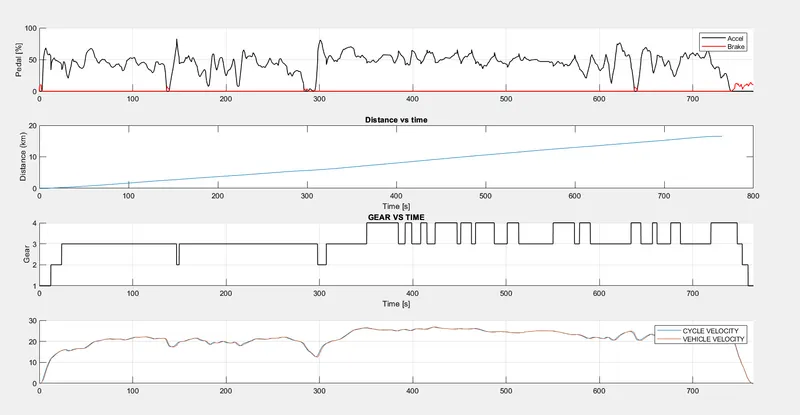
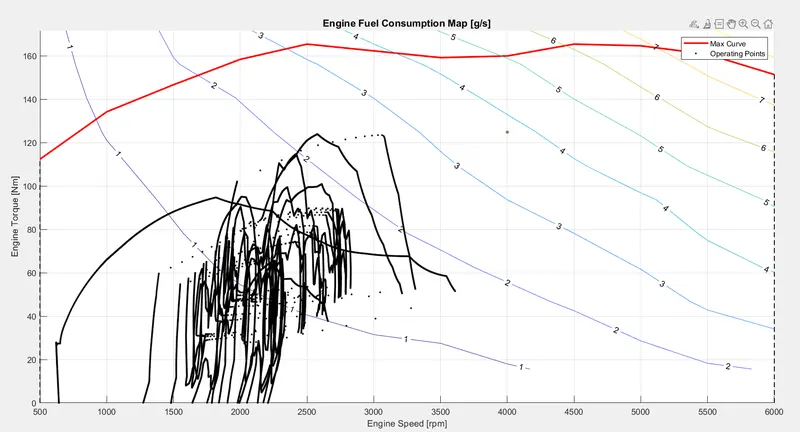
Graphical Response
Drive Cycle 1 UDDS
Drive Cycle 2 (HWFET)
a)
f)
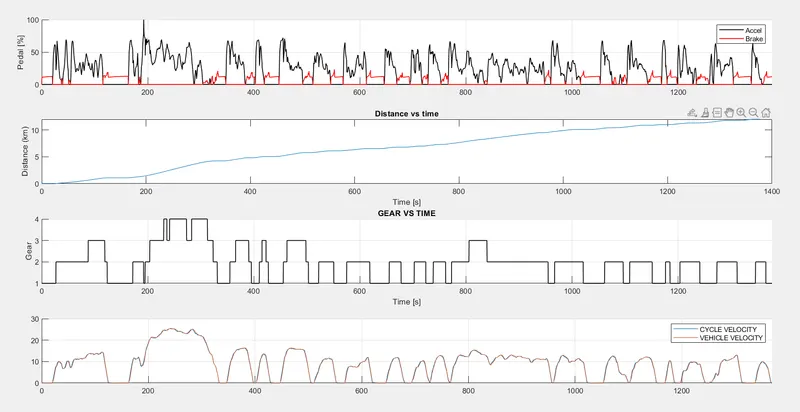
- For both drive cycles, Vehicle velocity is strictly following the drive cycle velocity
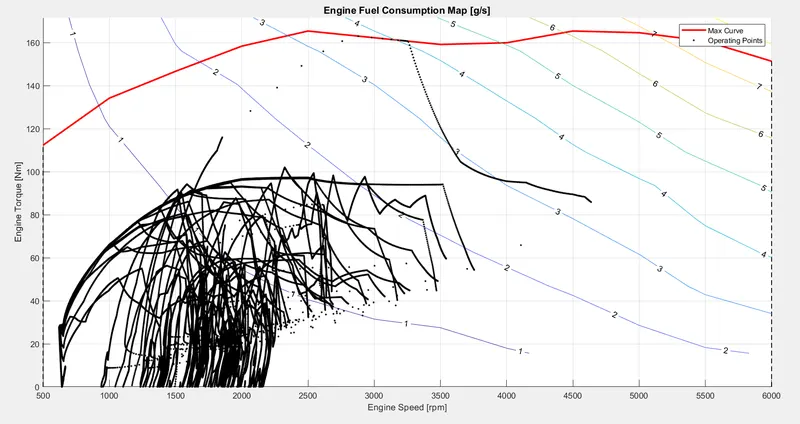
- In UDDS,The number of operating points on engine fuel consumption map is higher than in the HWFET cycle
- In HWFET cycle, most of the time the vehicle is running in the 3rd & 4th gear since it is travelling on highway, But for UDDS , most of the time the gear shift happends between 1st & 2nd gear
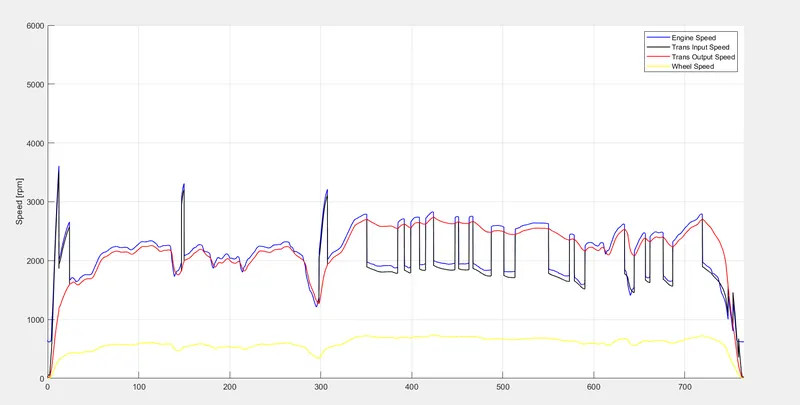
- In UDDS, the brake pedal percentage is higher than in the HWFET drive cycle, since on city frequent braking happendIn HWFET most of the time the transmission output speed is higher than the transmission input speed . But fot UDDS it is inverse of that
CONCLUSION
Forward energy based fuel consumption model of a conventional vehicle has been successfully Simulated using MATLAB and Simulink.
We have succesfully run the post processing matlab file and analysed and understood the vehicle operating
points in terms of engine speed, torque, transmission speeds, pedal positions, gear, distance traveled and plotted the graph
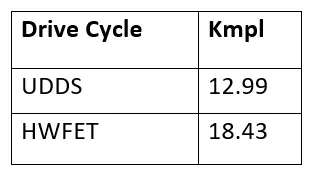
Successfully calculated vehicle fuel efficiency numbers (kmpl) for the given city cycle (UDDS) and highway cycle (HWFET)