Mixing efficiency
Aim: To determine the heat transfer in T- pipe and study the mixing efficiency in the tee joint at the outlet by varying the momentum ratio at (velocity at cold inlet / velocity at hot inlet) and length of the pipe
Step-up
|
Step 1 |
Cad model is imported into space claim |
|
Inside Tee-volume is extracted |
|
|
Step 2 |
Meshing is done element size take 1e-3 |
|
Name of the section is provided |
|
|
Step 3 |
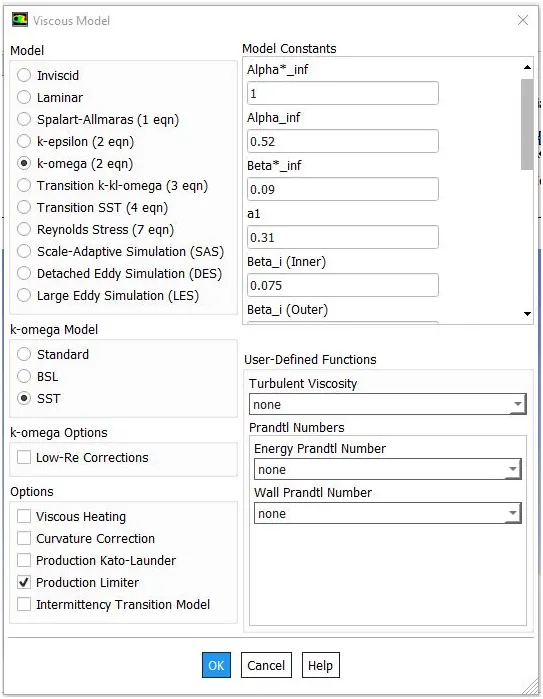
In setup: setting up physics-steady, pressure-based absolute is selected. setting up physics: energy and viscous (k-omega-SST/K-epsilon Realizable) |
|
setting up physics-zones- Boundary-Inlet_x ,Inlet_y velocity and temperature are provided |
|
|
Solving –Definitions-New-Surface reports-area-weighted-average and standard deviation is chosen |
|
|
Solving-Initialization-t zero is selected and run-calculation is done graphs are noted |
|
|
Step 4 |
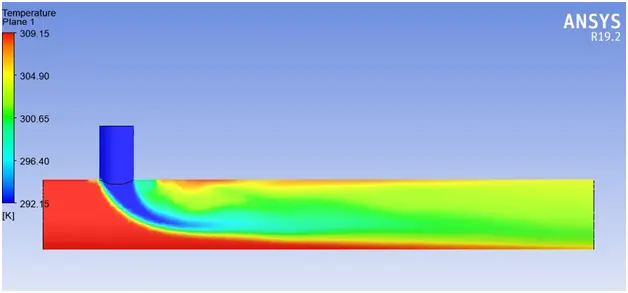
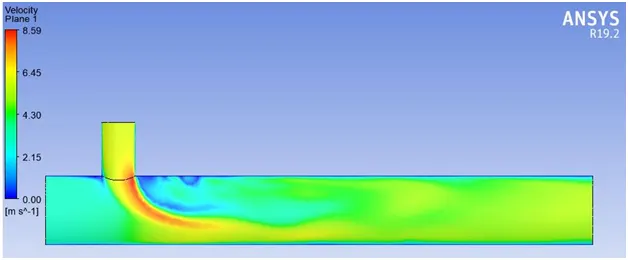
Result: contour plots of temperature and velocity is obtained |
Step1: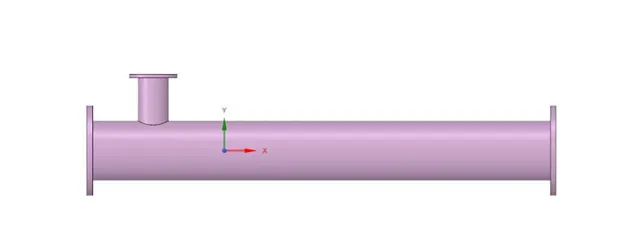
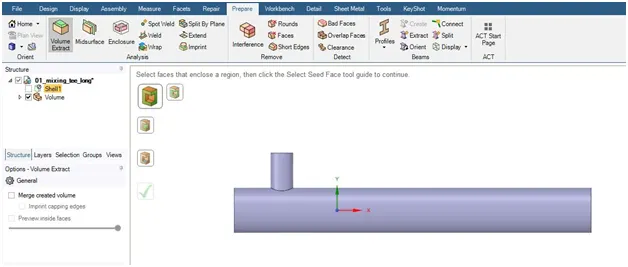
Step2:
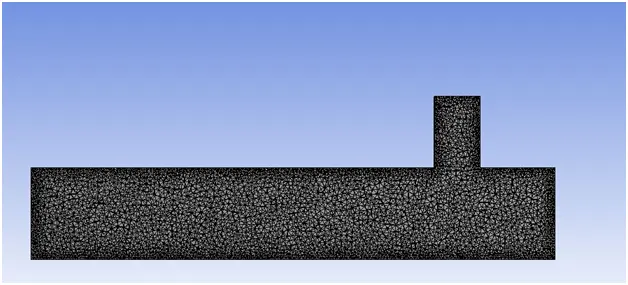
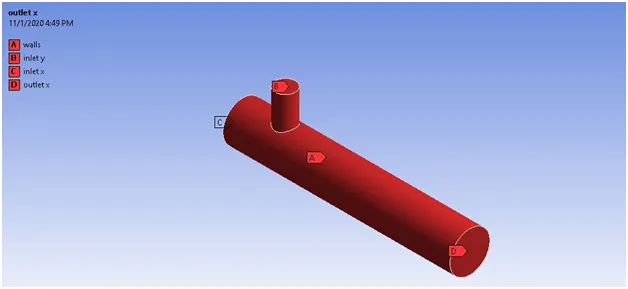
Step3:

Models-viscous
Zones-Boundaries
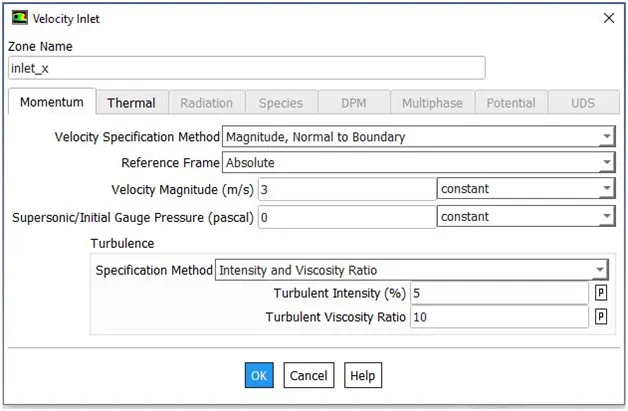
Case1: Short mixing tee with a hot inlet velocity of 3m/s and momentum ratio of 2
K-epsilon model:
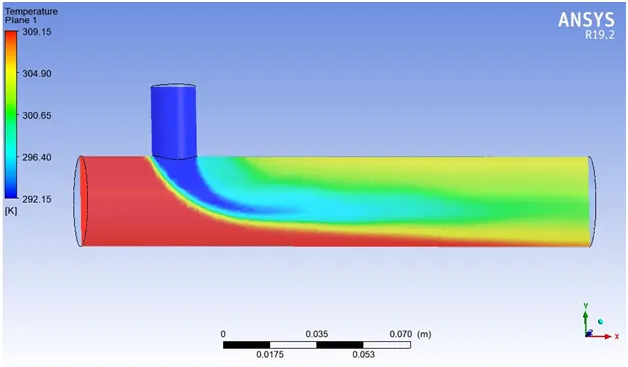
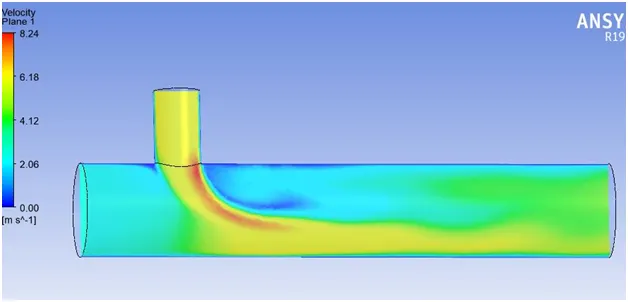
Temperature and velocity simulation (epsilon)
K-omega model:
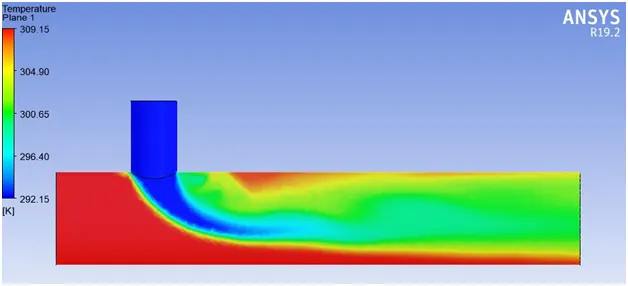
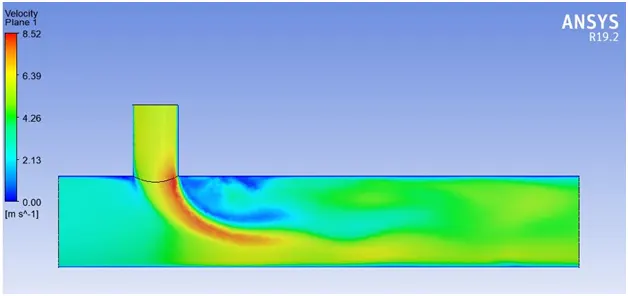
Temperature and velocity simulation (omega)
From this two models we can conclude that simulation of temperature and velocity are well captured in k-omega model at the walls but it takes larger cycle to converge
Case 1
- Short Tee inlet hot velocity 3m/s along x axis, momentum ratio 2
Plots
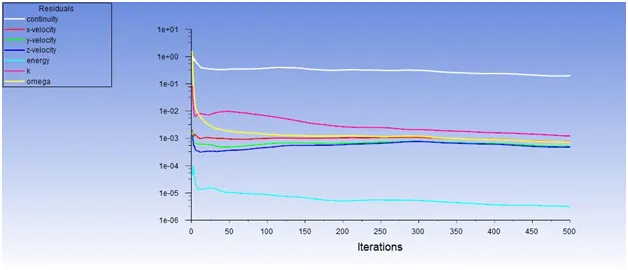
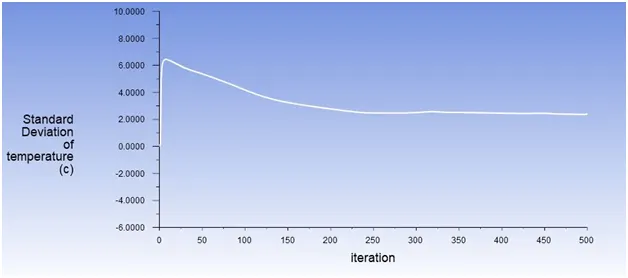
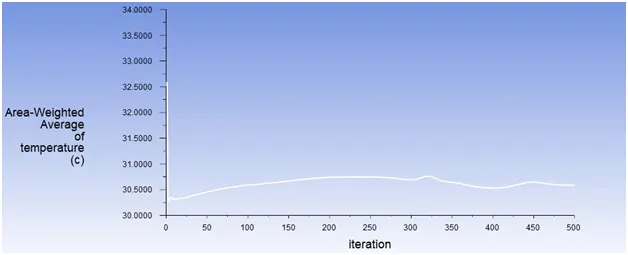
Summary:
|
Temperature |
30.5 Outlet temperature |
|
Convergence |
300-350cycles |
|
Std-dev of temp |
2-2.5 |
|
cells |
578312 |
Temperature and Velocity Simulation
2. Short Tee inlet hot velocity 3m/s along x axis, momentum ratio 4
Plots
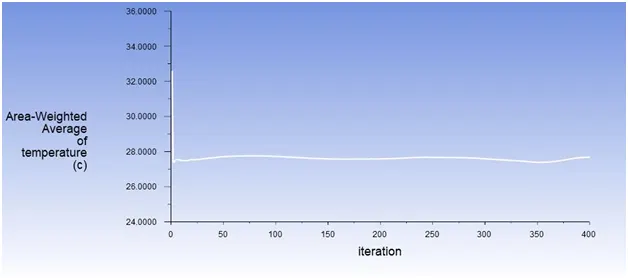
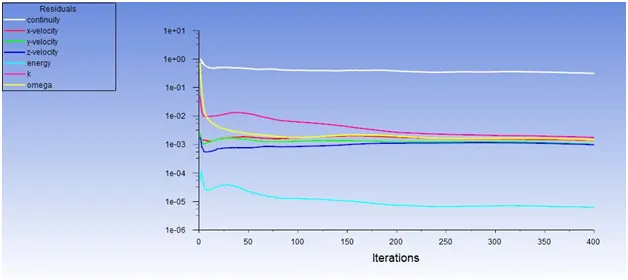
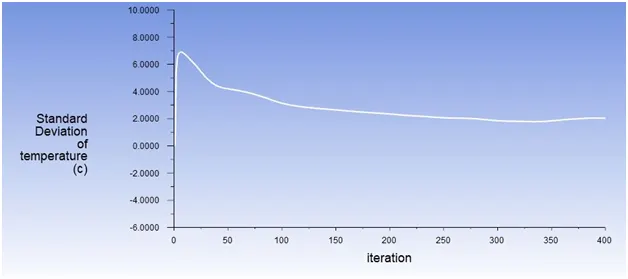
Summary:
|
Temperature |
27.5 Outlet temperature |
|
Convergence |
225-275 cycles |
|
Std-dev of temp |
2-2.5 |
|
cells |
578312 |
Temperature and Velocity Simulation
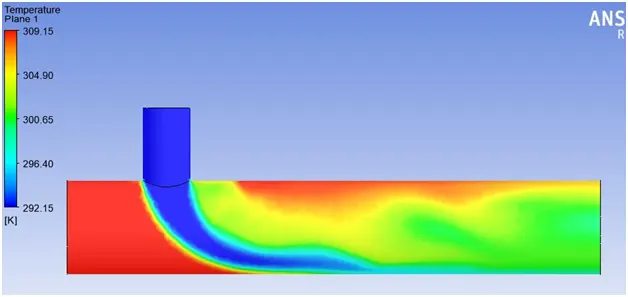
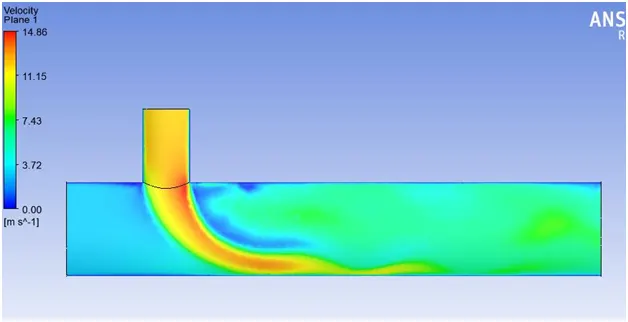
Case2
- Inlet velocity 3m/s hot along x axis and momentum ratio is 2m/s
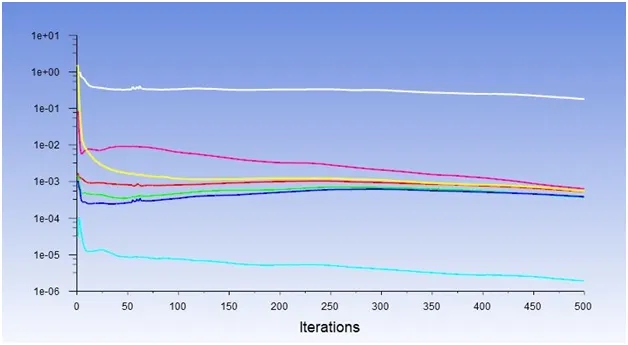
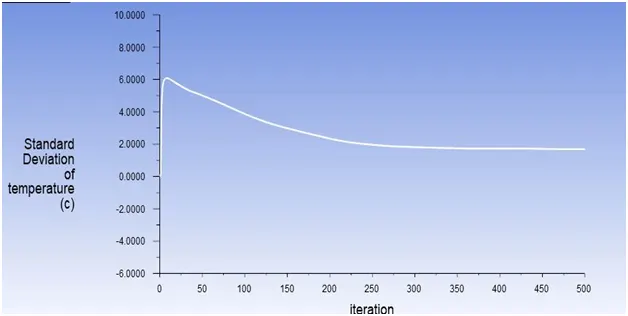
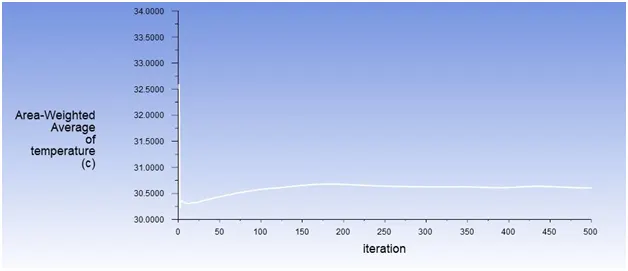
Summary:
|
Temperature |
30.5Outlet temperature |
|
Convergence |
300-350 |
|
Std-dev of temp |
1-2 |
|
cells |
768454 |
Temperature and velocity simulation
2.Inlet velocity 3m/s hot along x axis and momentum ratio is 4m/s
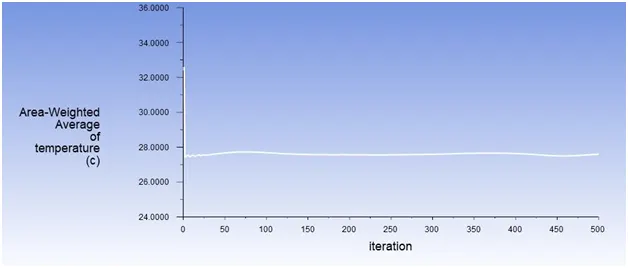
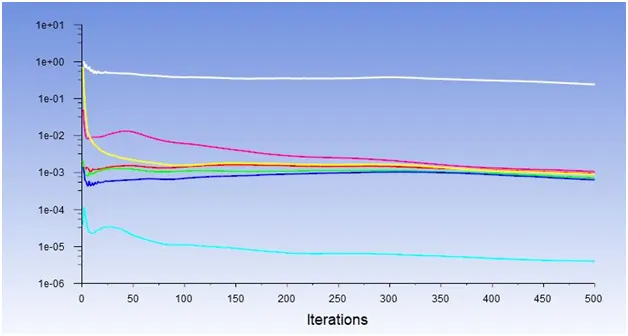
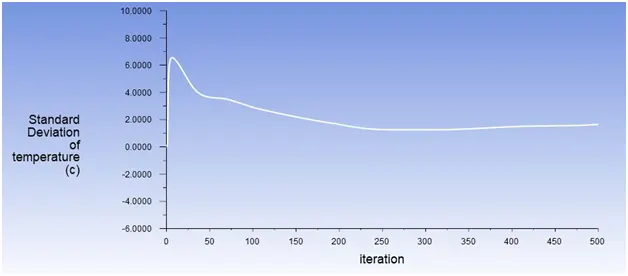
Summary:
|
Temperature |
27.5 Outlet temperature |
|
Convergence |
225-275 cycles |
|
Std-dev of temp |
1-2 |
|
cells |
768454 |
Temperature and Velocity Simulation
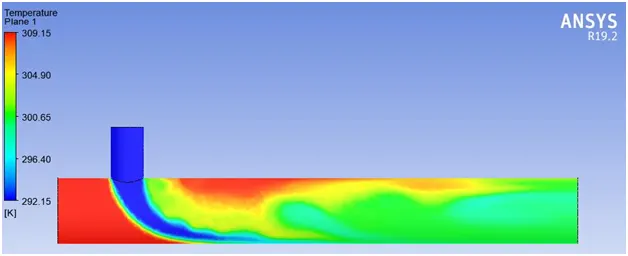
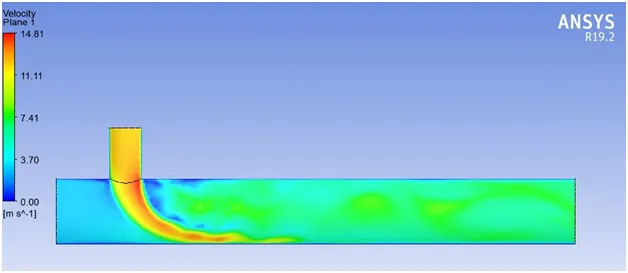
|
Case Type |
Cell Count |
Averageoutlet Temperature |
IterationFor convergence |
|
Short Tee Momentum ratio 2 |
578312 |
30.5C |
300-350cycle |
|
Short Tee Momentum ratio 4 |
578312 |
27.5C |
225-275 cycle |
|
Long Tee Momentum ratio 2 |
768454 |
30.5C |
300-350 cycle |
|
Long Tee Momentum ratio 4 |
768454 |
27.5C |
225-275cycle |
Conclusion:
- When we campare bertween shorter tee and longer tee w.r.t momentum ratio(2,4)we get identical results (length of the pipe doesn't affect) .Higher the momentum ratio higher will be the mixing efficiencyand it requires low number of cycles to converge
- Overall shorter tee can be used instead of longer tee ,so that material cost can be reduced and optimum efficiency of mixing can be obtained