Introduction to National Building Code and Steps in a Construction project
1) Why are building codes or standards essential for the modeling/efficiency of drawings in Revit ?
Building codes provide set of rules which specify standards for construction of a building. These codes are necessary to protect public health, safety and general welfare. It contains set of design laws related to how buildings should be designed, built so that final outcome of the project makes building safe and superior quality of building material. Buildings with longer service period without any failure and designing it in most economical, efficient and sustainable way is essential. Thus standard provisions or codes need to be followed. Designing a building has been changing from paper to 2D to BIM modeling. Latest technology helps to design building efficiently with at most funtionality in it. Software such as revit which follows BIM concept offers many benefits such as impoved accuracy, time saving, high design analysis and ability to predict environment changes. As building codes contain guidelines for overall building structures such as walls, size of rooms, floor plans, foundations, roof structures, staircase design, mechanical and electrical assemblies which are considered while designing a project in software such as revit. In india, National building code (NBC) is used as building code for structures and it has significant provisions includes safety of building, building services, building materials, structural design, alternative designs, disaster resistant, fire resistant, sustainable techniques, accessibility for senior citizens, differently-abled citizens and solid waste management. By considering all these provisions, software such as revit offers a better platform to design building efficiently. It maintains accuracy, helps to reduce errors while following codal provisions by all disciplines. Revit software helps designing building ensuring code compliance and allows to explore alternative designs during design process. It allows all project participants work together simultaneously and modify the design ensuring building codes are followed without any errors.
2) From the National Building Code list the groups that will be essential to you when you begin modeling in Autodesk Revit.
As per NBC 2016 consists five groups that are essential to begin modeling in autodesk revit are :
- Group 1 - For development/building planning and related aspects
- Group 2 - Structural design and related aspects
- Group 3 - Aspects related to construction and asset/facility management
- Group 4 - Aspects relating to building services
- Group 5 - Aspects relating to plumbing services and solid waste management
3) List the five major steps that occur in project cycle . The steps should include from conceptualization of project to maintenance and final stage.
Project inititation : Initiation of idea and concept of project by gathering a team of experts and decide whether the project is feasible or not. In this stage scope and cost of project is determined. A document is made defines the reasoning of starting the project and its financial benefits
Project planning : Once the project concept is approved, the project need to be outlined for finishing it within timeframe. The planning stage is the foundation of entire project. In this planning stage all construction activities, design of construction schedule and planning team structutre are identified. The construction plan lists the activities required and schedule for each part of construction process. If any obstacles are identified, remedies are discussed before the project starts. This stage is important for preparing and executing successfull project.
Project execution : Execution of project starts based on comprehensive plan developed. Construction activities should be properly planned and scheduled, as bad planning and scheduling of construction activities can lead to delays and budget over runs. Using plan as a project guide, specific tasks are assigned to team members and allocation of resources accordingly. Project managers, design and engineering teams worked on design and planning for the project to be successfull, execution stage mainly belongs to contactor and subcontractor. Project managers, designers, owner rely on updates given by field team to gauge the execution.
Project monitoring and control : Monitoring and control goes hand in hand with execution as they occur at same time. As team execute project, activities requires supervision and monitoring. Teams monitor performance indicators such as cost, time, quality and track their variations, this constant vigilance helps to keep the project move smoothly ahead.
Project closure : When is project is delivered to customer and communicating is completed to stake holders, teams close the project. This is the vital step in project cycle which allows team to evaluate and document the project and move on to next one.
4) Give examples of different disciplines involved in construction of a project
- Architect - Architect is responsible for visual appearance of buildings and structures, also involved in design and project planning. They also help in improve energy efficiency, maximum natural lighting and ventilation.
- Structural engineer - Structural engineer deals with designing, analysis and maintaining the building structure. Ensuring safety and capable of withstanding elements which they are exposed as well as improving structural integrity of existing building.
- Geotechnical engineer - Geotechnical engineer responsible for exploring and surveying construction site thoroughly and performs tests on soil, rock and ground water samples
- Electrical engineer - Electrical engineer responsibilities include designing, testing, installing and maintaining electrical system to generate power in construction of a project.
- Plumbing engineer - Plumbing engineer prepare detailed layout for all drainage and water supply systems for all types building. Monitor installation of pumps and perform tests on various water and sewer lines.
- Fire protection engineer - Fire protection engineer provide technical support to other engineers to strngth fire protection within blueprints. They create plans for fire detection tools such as extinguishers, alarm systems, sprinklers, fire pumps and more.
- HVAC engineer - HVAC design engineer calculates ventilation requirements, estimates costs for heating and cooling systems by colloborating with architects and engineers.
- Environmental specialist - Environment specialist assess the condition of project site and determine actions required to make it safe for use. Assessments include removal hazardous waste, mold etc. They find the solutions for enviromental danger problems and also plays major role in green building projects.
- Town planner - Town planner is responsible for design and development of urban areas, land management, find appropriate sites for residential and industrial zones. Ensures balance between demands on the land being developed and the needs of community.
- Urban designer - Urban designer responsible for surveying land and buildings, analyse their current use and mae recommendations for their future development. They work as part of team which includes architects and engineers. Applying new vision to the built spaces and improving the existing ones such as streets, parks, towns etc.
- Landscape architect - Landscape architects plan, design, regeneration and development of external land areas such as gardens, recreational areas in residential, industrial and commercial sites.
- Interior designer - The key responsibility of interior designer is visualizing, sketching designs the interior spaces of the building as per client goals and ensuring materials, cost of products are met with the design specifications.
- Quantity surveyor - Quantity surveyor is responsible for project finances and contractual relationships. They prepare tender and contract documents including bills of quantities with architect. The surveyor calculates the quantity of material and labor cost
- Project or construction manager - Project manager determine and define scope of work and deliverables. They predict resources need to complete project, obtain approvals from authorities, manage and schedule construction activities, ensure safety codes of building and coordinates with other discipline teams.
5) How are buildings classified ? Place the following buildings under each category
a. Four unit apartments
b. School with capacity of 1000 students
c. A single unit shop.
d. Multi story Shopping complex
e. Steel machine factory
Building are classified into following categories :
- Residential
- Educational
- Institutional
- Assembly
- Business
- Mercantile
- Industrial
- Storage
- Hazardous
a. Residential building - Four unit apartments
b. Educational building - School with capacity of 1000 students
c. Business - A single unit shop
d. Mercantile - Multi story Shopping complex
e. Industrial - Steel machine factory
6) Distinguish the roles of Design team and Management team
DESIGN TEAM
- Design team includes architect, structural engineer, geotechnical engineer, plumbing engineer, mechanical engineer, electrical engineer, landscape architect and interior designer. Therefore it involves multidisciplines at an appropriate stage as a deign team.
- Design is an evolutionary and participatory process where participation of the design team and owner constitutes a very important input in all stages. To ensure proper implementation of the design , the design team is associated at the execution stage of construction.
- In building project various aspects like form, space planning, aesthetics, fire and life safety, structural adequacy, plumbing services, lighting and natural ventilation, acoustics, sound insulation and noise control, installation of lifts and escalators, building automation, data and voice communication, other utility service installation, landscape planning, need to be considered while designing at concept stage.
- According to "National building code (2016)" the main functions of design team constituted for planning, designing and development are as under :
- Formalization of design brief in consultation with the owner.
- Site siurvey and soil investigation
- Preaparation of alternative designs which includes positive and negative aspects
- Selection of concept
- Sizing the system
- Development of design with the integration of architect, structural and services. Synthesis requirements of each discipline and interaction with each other in design team and with owner
- Preparation of preliminary designs and drawings and obtaining the owners approval
- Preaparation of cost estimation
- Preparation of workbreak down structure and programme for pre construction activities.
- Assisting client to obtain approvalsof authority/authourities
- Preparation of detailed specifications and construction working drawings with integration of engineering inputs of all concerned disciplines.
- Preparation of detailed design of each discipline of various services
- Peer review/ Proof checking of the drawings/ designs in case of major/ important projects, depending upon their complexity and sensitivity.
- Preparation of detailed cost estimate
- Obtaining final approval of the client
- Preparation of bill quantities, specifications and tender documents
MANAGEMENT TEAM
- The objective of project management is to achieve completion of project according to the design specifications with in estimated time and cost with a degree of assurance prior to commencement and satisfaction on completion and commissioning.
- For large project separate teams of experienced professinals are required formproject management and for small project teams are combined. The team shall responsible to achieve day to day execution, supervision, quality control and maintaining interdisciplinary coordination during construction stage.
- Following are the main functions constituted for project management team according to national building code (2016) :
- Specify criteria for selection of constructors
- Specify quality control, quality audit system and safety system
- Shortlist constructors
- Have pre-bid meetings with the intending constructors
- Receive and evaluate tenders
- Select constructors
- Execution and supervision
- Monitor for quality, time and cost control and for other project management functions
- Certify the completion of drawings
- Assist in getting statutory approvals at various stages
- Ensure availability of operation manuals for field use
- Adoption of scientific principles of construction project management including quality, cost, time and safety management.
- Engagement in executing and supervising agencies which meet the specified norms of skills, specialization, experience, resourcefulness etc for the work
- Maintaining interdisciplinary coordination during construction stage
- Contract management and techno-legal aspects
- Completion, commissioning and trial run of installations or equipmentand their operation and maintenance.
- Availability of shop and built drawings for building and services
- Arrange all maintenance and operation manual from concerned manufacturers.
7) Refer to NBC, Identify the modeling requirements for the project (from week 4).
a. Height Limitations
b. Area Limitations
c. Room sizing
d. Wall height
e. Thickness based on fire life and safety
f. Passageway requirements
a. Height Limitations
- According to NBC maximum of building shall not exceed 1.5 times the width of road abutting plus the front open space of maximum 16m
- Height of all human habitable room shall not be less than 2.75m measured from lowest point of ceiling. In pitched roof also room shall not be less than 2.75m and in case of air conditioned rooms, height shall not be less than 2.4m measured from surface of the floor to the lowest point of air conditioning duct or false ceiling.
- In height of kitchen shall not be less than 2.75m and height of bathroom shall not be less than 2.1m.
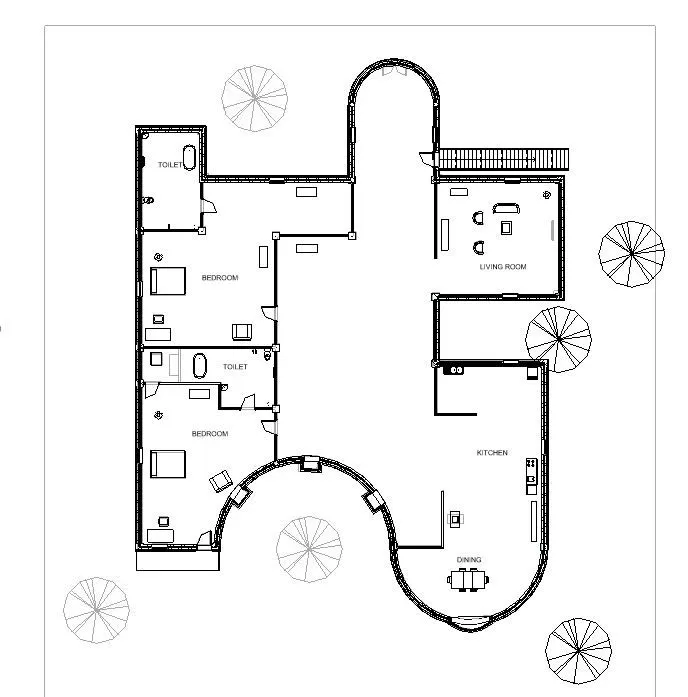
- In week 4 project model all rooms are above 2.75m that is 6m height rooms are created.
b. Area Limitations
- According to NBC, the size of the habitable room shall not be less than 9.5m2 with one room minimum width should be 2.4m. When there are two rooms, one shall be less not be less than 9.5m2 and other shall not be less than 7.5m2 with minimum with of 2.1m.
- In case of kitchen size of room shall not be less than 5m2 with a mininmum width of 1.8m. Where there is a separate store room, the area of kitchen is reduced to 4.5m2. A kitchen along with dining hall should be 7.5m2 with minimum with of 2.1m.
- In case of bathroom area shall not be less than 1.8m2 with minimum width of 1.2m. The floor area of water water closet shall be 1.1m2 with minimum width of 0.9m. If bath and water closet are combined, its floor area shall not be less than 2.8m2 with a minimum width of 1.2m
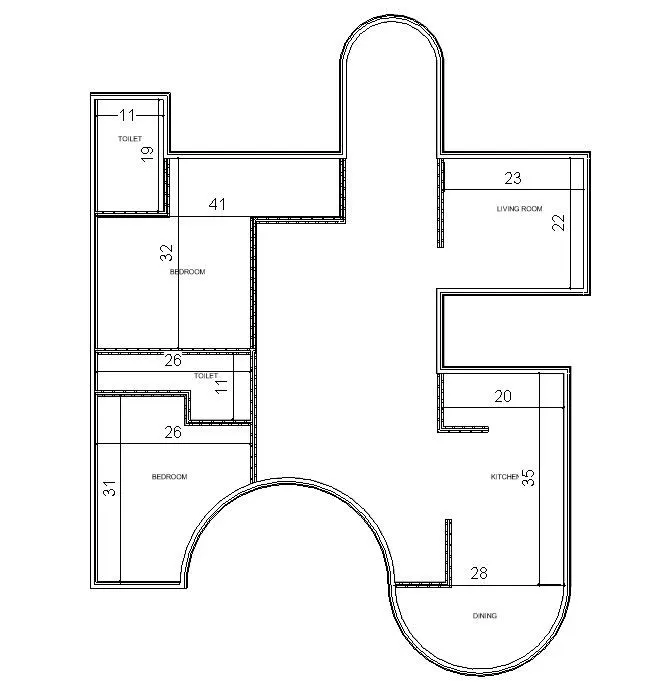
- In week 4 project model all the room have the area are more than 9.5m2.
c. Room sizing
Room sizes of week 4 project model in "ft". Area of the rooms are not less than 9.5m2 and height of these rooms (20ft) are not less than 2.75m
d. Wall height
Walls height taken same as room height in week 4 project model
e. Thickness based on fire life and safety
Based on fire resistance four types of construction are classified type1, type2, type3 and type 4. Non combustible material is used for construction of building such as concrete with minimum 120min rating. In week 4 project walls, floor, slab, roof, columns, windows all are non combustible materials used.
f. Passageway requirements
According to NBC (B-5), the width of accessible entrance door shall not be less than 900mm and width of the corridors or passage way leading to and from such access door shall not be less than 1200mm. In internal passages minimum width of corridor should be 1800mm.
In week 4 passage for 1st floor is not provided. Using staircase a passage is created
8) We have identified requirements for modeling from question 7, Use these numbers from code book and verify the numbers used in modeling the unit from week 2 to week 4. If the numbers are not reasonable, use the numbers obtained from the code book to create a revision of the mode. This model resembles the actual modeling requirements for Project 1 of course work
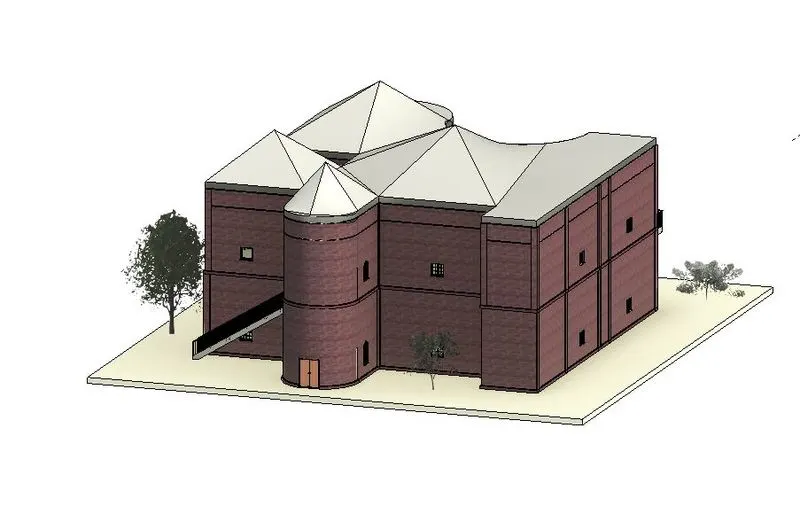
Since passage for first floor is not provided in previous week, Staircase and door is added to first floor
Ground floor
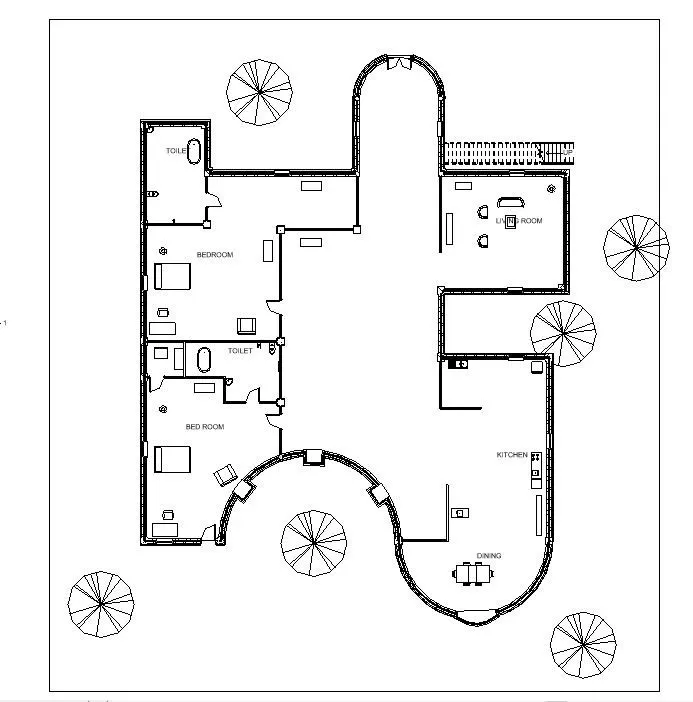
First floor