Independent Research Project
Major Project
Aim: To Calculate the area-weighted average temperature of water at the exit.
Software Used:
- Ansys fluent 2022 R1
Objective:
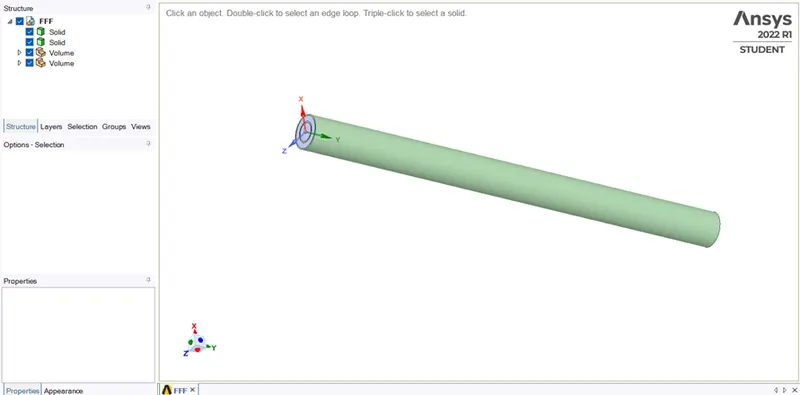
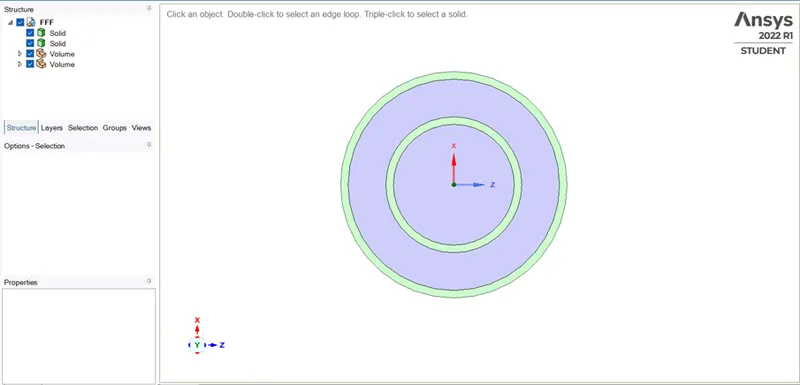
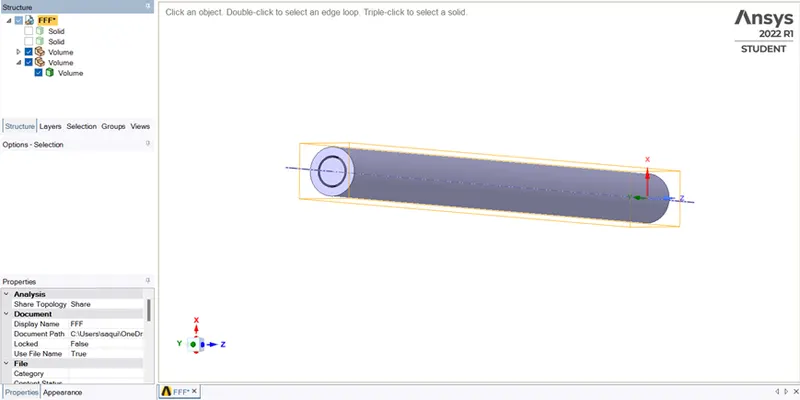
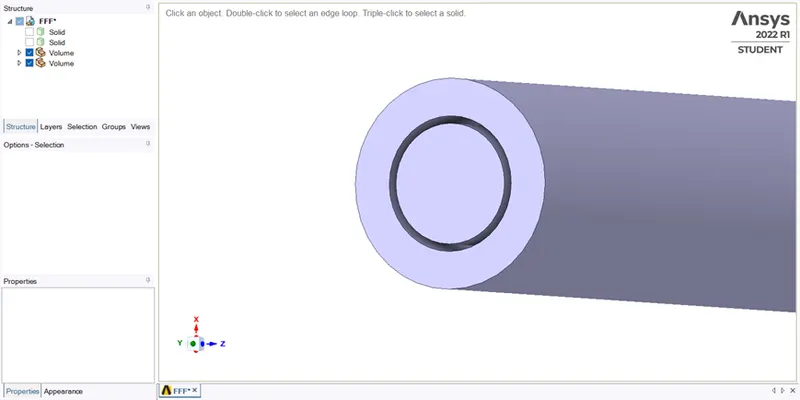
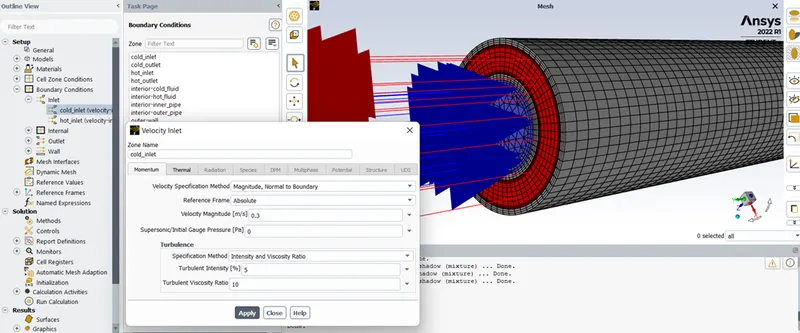
- Water having a temperature of 80deg Celsius enters the inner pipe with a velocity of 0.25m/s, and water having a temperature of 15deg Celsius enters the outer region with a velocity of 0.3m/s. Calculate the area-weighted average temperature of waters at the exits. (Pipe is made of aluminum).
Theory:
Heat exchangers are devices that provide the transfer of thermal energy between two or more fluids at different temperatures. They find applications in power production, chemical and food industries, environmental engineering, and waste heat recovery. Perhaps, the simplest of these heat exchangers is the double pipe heat exchanger. Advantages include ease of cleaning and maintenance and usage under severe fouling conditions. Fluids at high pressure can also be used. Limitations include difficulty in the cleaning of tubes due to fouling and a shell and tube heat exchanger of the same design is a better way for heat transfer. This present study will investigate the comparison of numerical results with experimental data of a double pipe heat exchanger. Many researchers have investigated the Thermo hydraulic performance of the double pipe heat exchanger which is presented in this section.
Geometry:
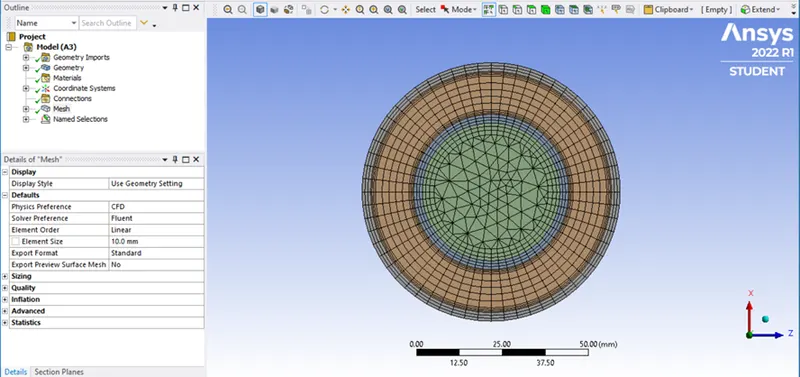
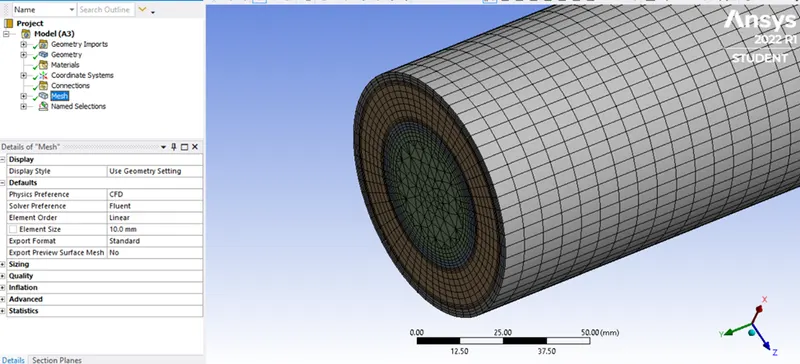
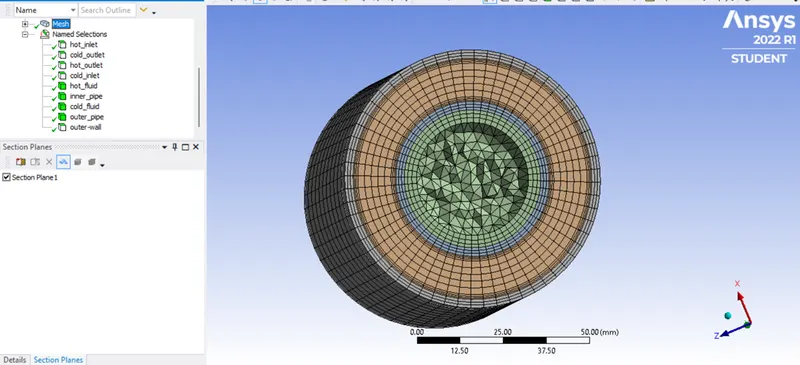
Meshing:
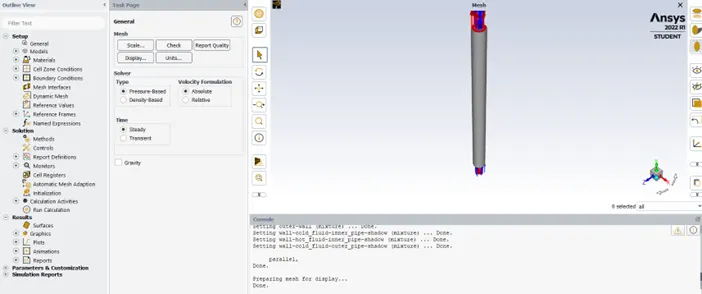
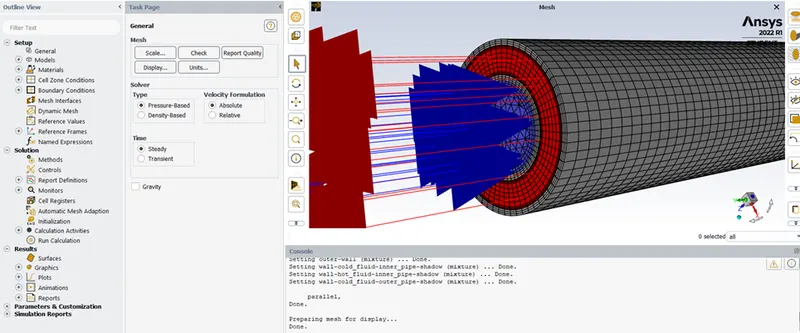
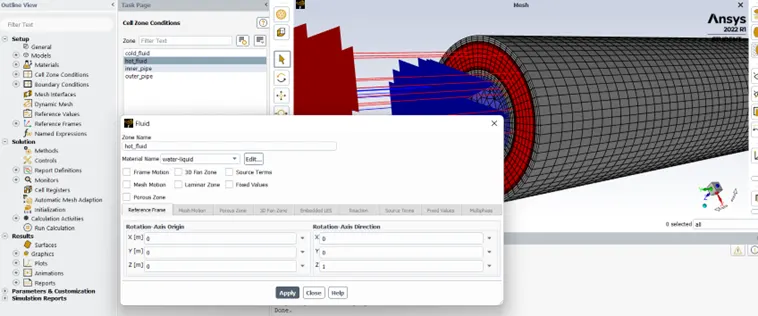
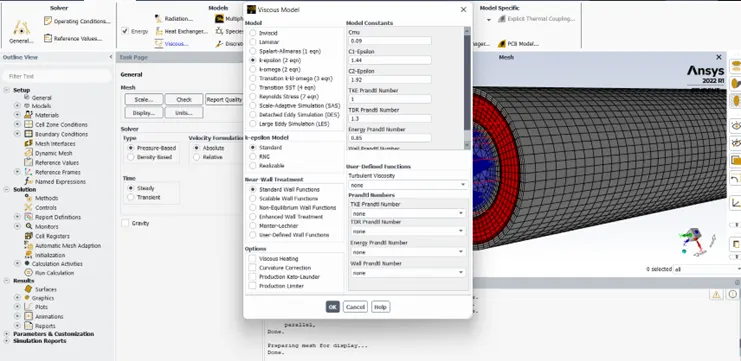
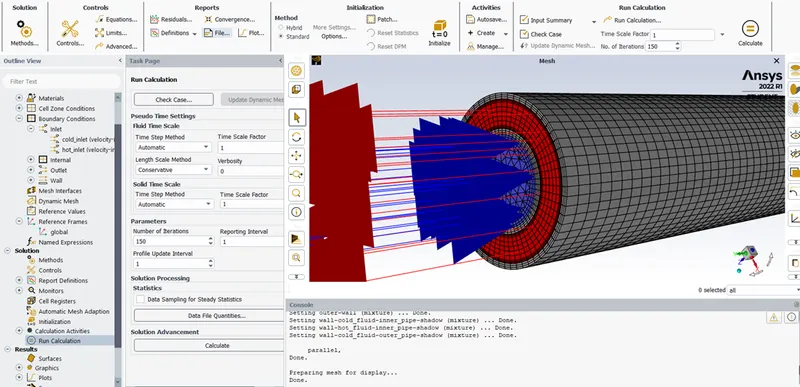
Pre-processing and model setup:
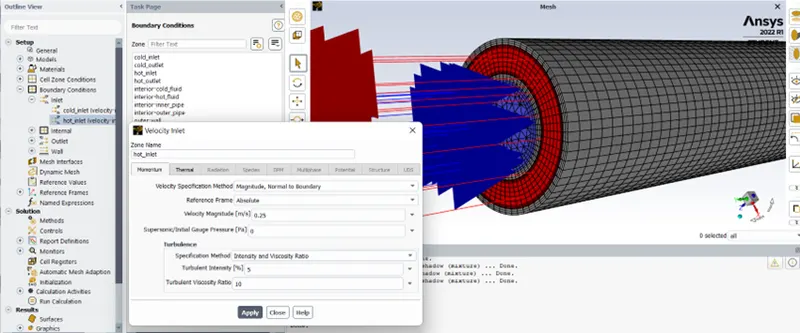
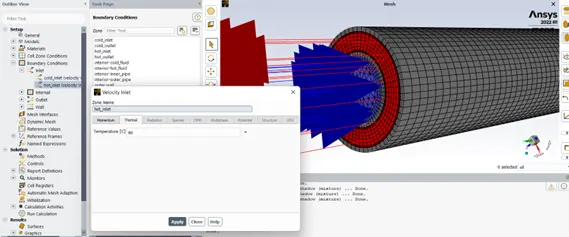
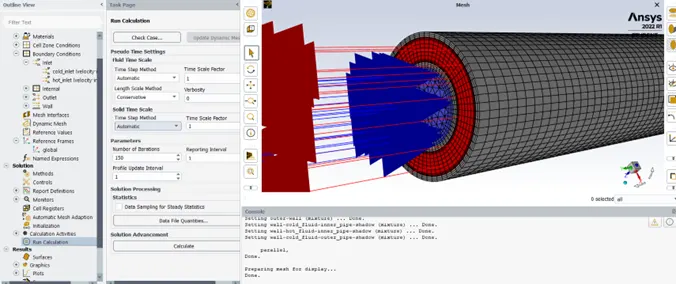
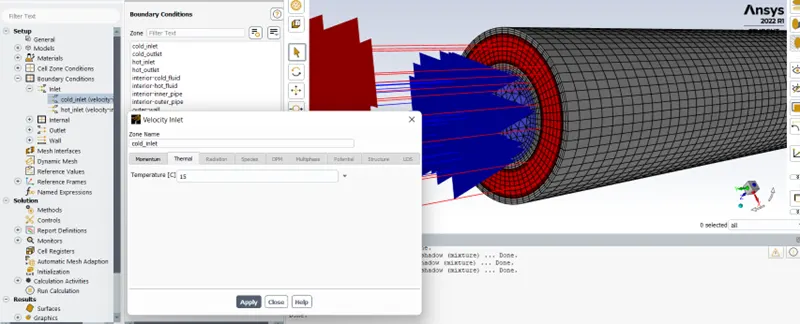
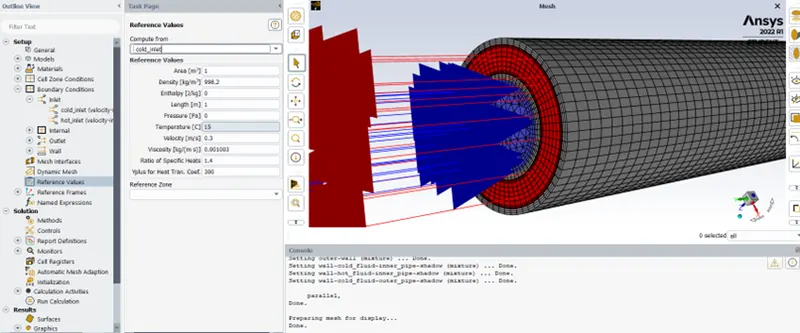
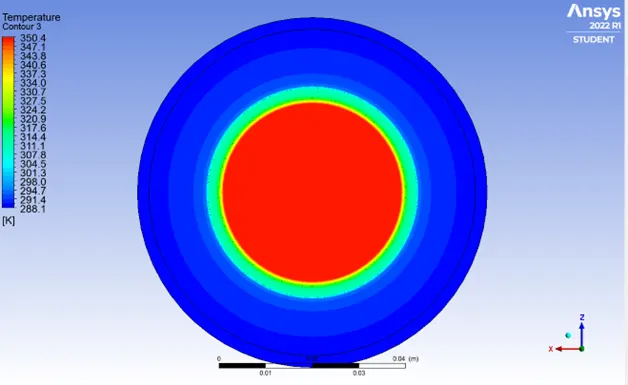
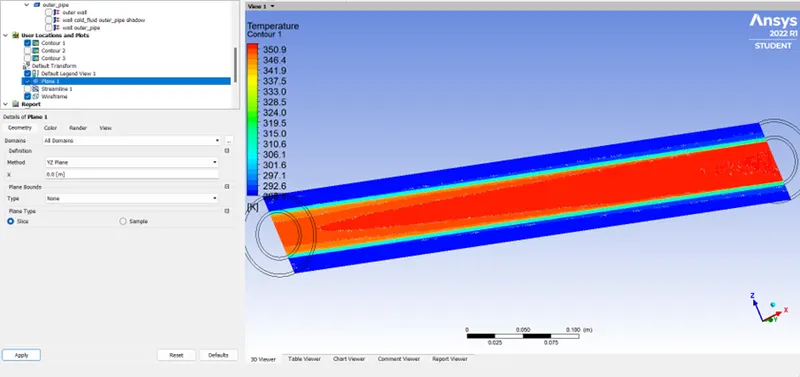
Results: preprocessing iteration result:
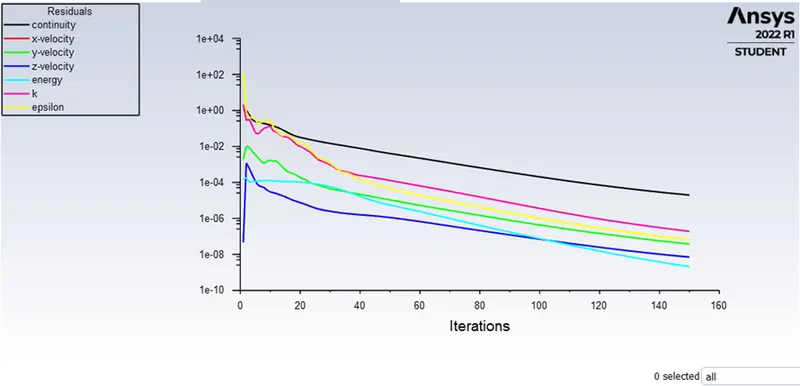
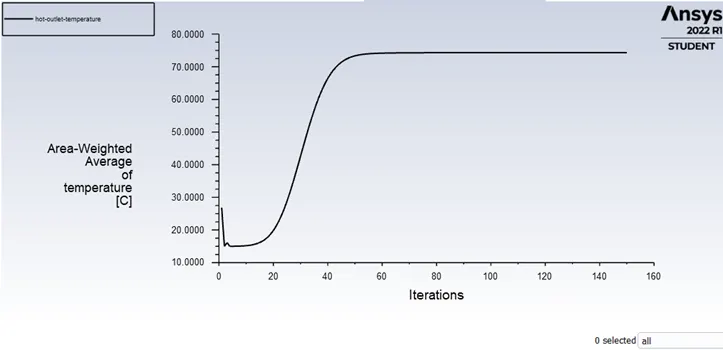
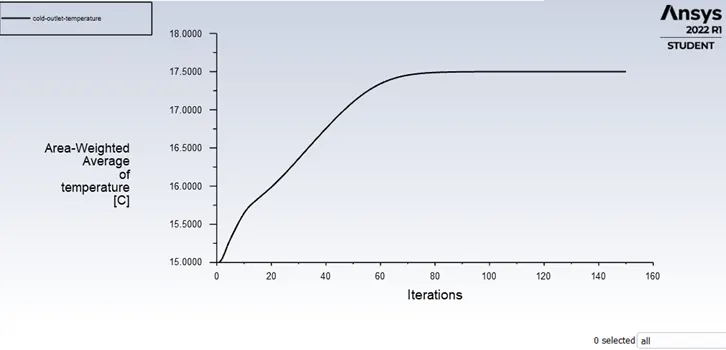
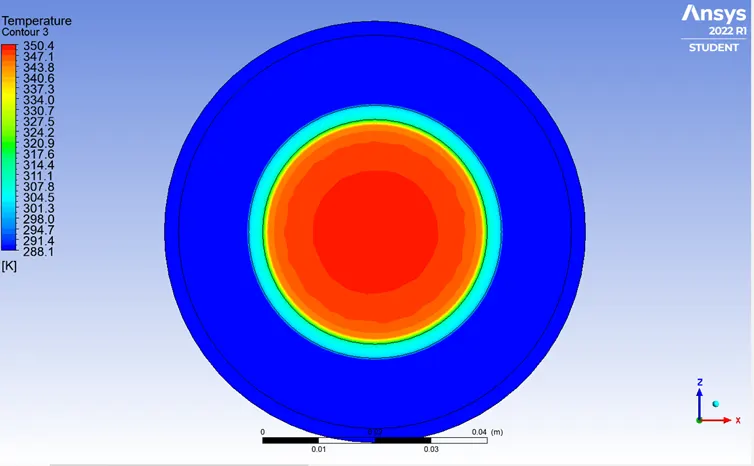
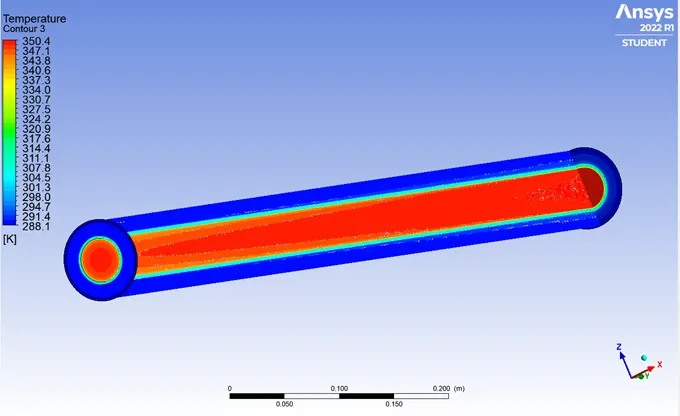
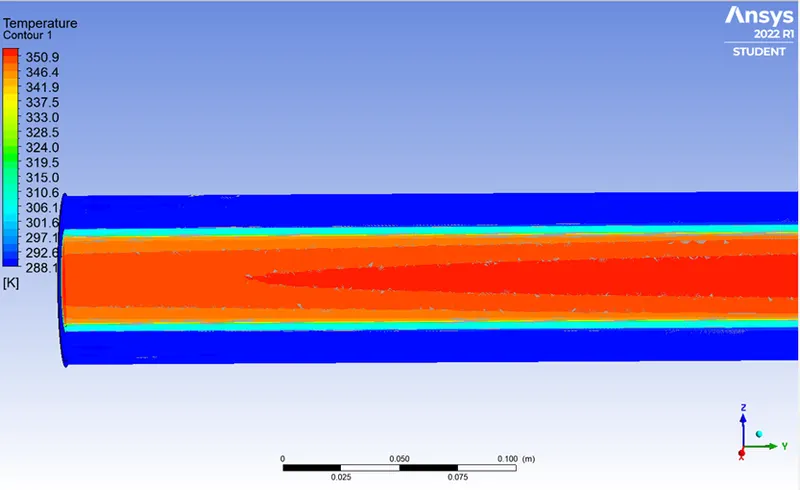
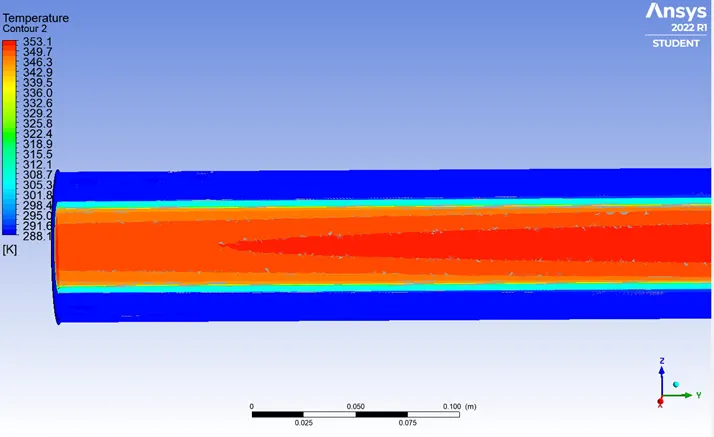
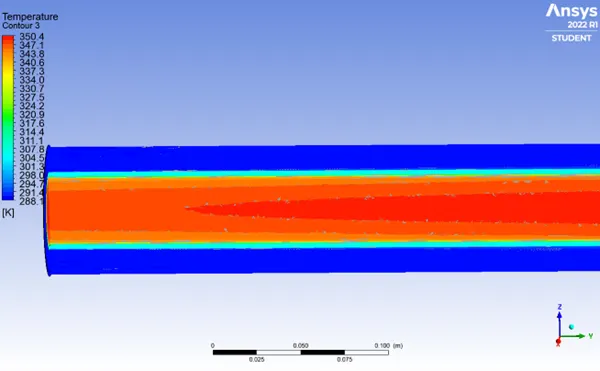
Results:
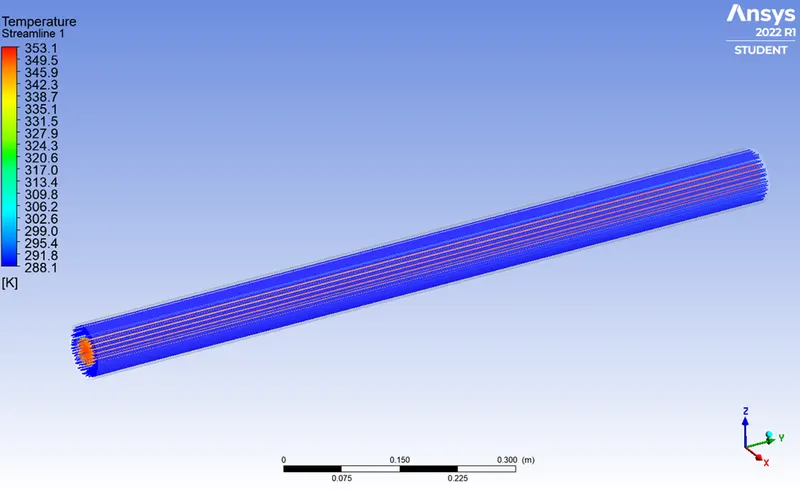
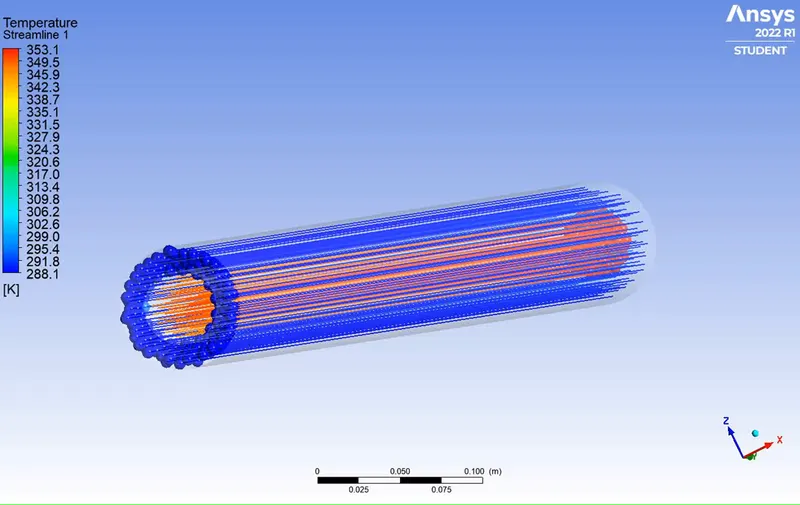
Streamline flow:
Conclusion:
- The effect of changing the inlet temperature of the hot fluid on the thermo-hydraulic characteristics of a double pipe heat exchanger under different working conditions is investigated in the present study. The testing conditions are run at Reynolds numbers ranging from 60 to 240. The experimental results as well as the numerical observations indicate that changing the inlet temperature of the hot fluid has a significant effect on the thermal characteristics like outlet temperature of the hot and cold fluid. It was observed that as the difference in temperatures increases, the rate of heat transfer also increases.
- As we increase the flow rate of cold fluid for a fixed hot fluid flow rate, the outlet temperature of the hot fluid decreases. This happens until a certain value of saturation is reached i.e., the temperature of hot fluid does not decrease even when the flow rate of cold fluid is increased. Hence further decrease in temperature is not possible. With a higher initial temperature difference, the heat transfer rate is higher but decreases and becomes almost constant as the flow rate is increased.
- Hence the hot fluid may be cooled only up to a certain temperature within specified limits. The CFD analysis for the shell and tube heat exchanger was done and the results were obtained as above. The comparison between the CFD and experimental values show the close relationship between simulated and practical phenomenon with a deviation of about 10%. The values for each case have been obtained after several iterations until stable results were seen. The boundary conditions and parametric equations were set according to the requirement to maintain the same conditions as the physical experiment.
- Hence we have generated the inlet and outlet flow temperature as shown above.