Identification of Cracks
Week 1 Challenge
Q1. What is the mode of failure or damage of the beams in the figure above? Are the damages repairable? Elaborate
Answer:
a. 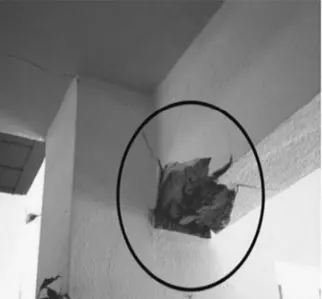
- Damage can be seen at the beam-column joint in the image above.
- It is obvious that the Beam's part of the damage is larger.
- The Damage is primarily the result of the reinforcement not covering the Beam sufficiently.
- It might also be brought on by insufficient concrete vibration, as this would prevent the reinforcement from vibrating properly.
- Giving the joint proper cover will allow for the repair.
b. 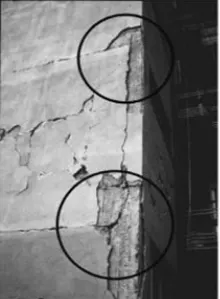
- It is evidently a Damage in this image.
- This damage was brought on by the use of improper shotcrete plaster.
- This damage can be fixed by removing the plaster that was all around the damaged material, then shotcreting it again with the right adhesive.
c. 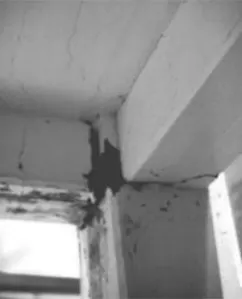
- Exactly where the Beam column joint is damaged is here.
- It is a plastic hinge failure
- The damage occured only in the joint zone first of all
- Cyclic lateral loading and stress revresal at the joints led to the damage.
- Even the slab participated to its best to handle the tension (slab is serverly cracked means it has undergone tension with its flange condition) but unable to control the damage.
- The joint can be strengthened
- This happens because joints are subjected to strong shear forces.
- Although the damage may be short-term repaired, it may eventually result in failure and cause harm.
Q2. What is the mode of failure or damage of the beams in the figure above? Are the damages repairable? Elaborate
Answer:
a. 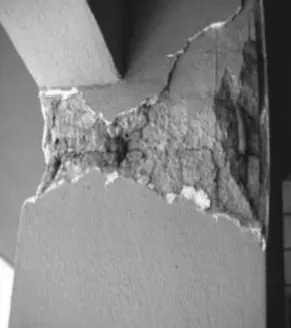
- This picture depicts a column that has buckled and failed.
- Even though beams are provided at intermediate levels, the column should have been longer. Because it was unable to withstand the buckling load, a failure occurred.
- In most cases, buckling happens at the center of the column, where the bend moment is greatest and the shear force is zero.
- To prevent these kinds of failures, reinforcement should be installed so that all of the reinforcing bars in a single column do not overlap at the same point.
- It is preferable if additional bars are offered for lapping joints.
b. 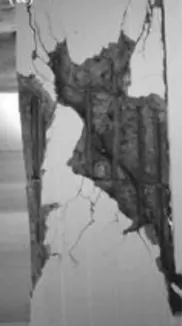
- The failure is due to shear
- Shorter columns typically attract higher shear forces.
- SHORT COLUMN EFFECT is the name of this unfavorable mode of deformation.
- This is one common failure that is frequently noted during earthquakes, which is typically at the open floor level.
- Inadequate shear reinforcenment compels concrete takes all the shear stresses.
c. 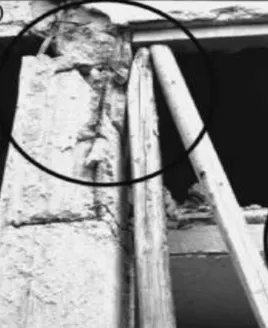
- Column failed completly
- Failure is at the top of the column
- Two slabs connected to the column, probably one at mid height of the column.
- The wodden piles might be a post failure support after column failed, providing temporary prop support to avoid collapse of the entire structure
- It is a short column failure
- An additional slab or a beam connected to a column in mid-height leads to this effect.
- The failure given in the picture is not at all repairable.
----------------------Thank You-----------------------------------