Identification of Cracks
Q.1(a)
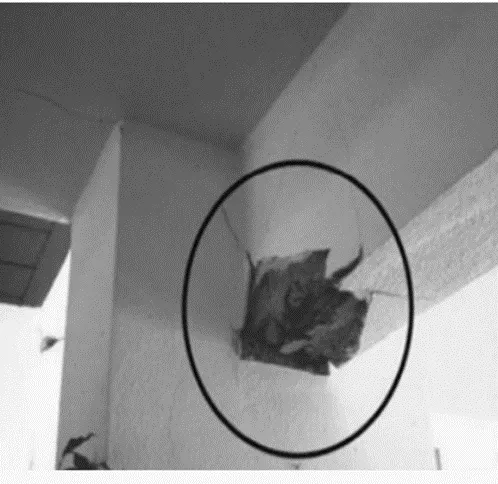
AIM- Mode of failure or Damage in given beam.
OBSERVATIONS-
- Concrete crushed bottom of beam.
- Reinforcement is clear visible in beam.
- Spalling of concrete only in tension zone not in compression zone.
CAUSE OF DAMAGE-
- I think beam section is Over reinforcement section (Xumax. < Xu ).
- I Over reinforcement case concrete is reached is ultimate load capacity before the steel.
- Steel is not properly used its strength like it is not yielded properly.
- So in tension zone concrete cracked due to load increase more than its capacity and steel is safe in this case.
- This is due to the reversal of stresses during the earthquake.
DAMAGE REPAIRABLE OR NOT –
- In this case reinforcement is safe and only concrete is crushed so it can be easily repaired.
Q.1(b)
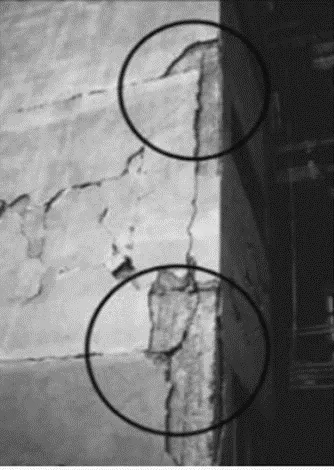
AIM- Mode of failure or Damage in given beam and column.
OBSERVATIONS-
- Cracks seem along the column and beam joint.
- It resembles like beam totally detached from column.
CAUSE OF DAMAGE-
- Due to Earthquake structure movement in horizontal direction.
- The Development length in beam is not proper due to beam is not properly attach to column.
- At the time of horizontal movement of structure column and beam joint fail.
DAMAGE REPAIRABLE OR NOT-
- In existing structure element like beam we are not able to set development length (Ld) so it is not repairable.
Q.1(c)
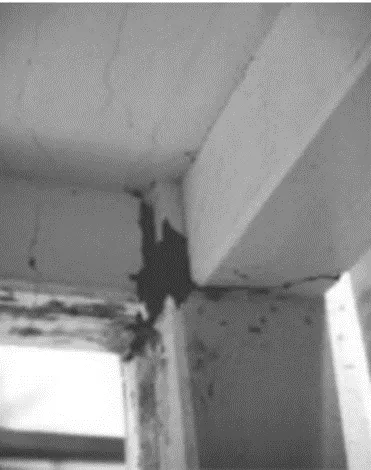
AIM- Mode of failure or Damage in given beam.
OBSERVATIONS-
- Cracks are developed in entire width of beam.
- Cracks also occurred in slab.
- It is exactly at the joint of beam and column.
CAUSE OF DAMAGE-
- It is plastic hinge failure.
- The plastic hinge failure occurred due the Reversal of stresses at the joint of column and beam.
- Slab attached to the top of the beam, due the reversal of stresses slab also undergo in tension and crack developed in slab.
DAMAGE REPAIRABLE OR NOT-
- Joint looks not critical so it can be strengthen.
Q.2(a)
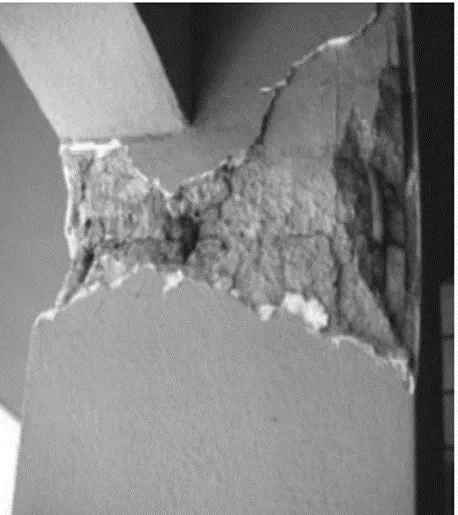
AIM- Mode of failure or Damage in given column.
OBSERVATIONS-
- Concrete spalling at face of the column only.
- There is no walls so we can assume that it can be parking space or other opening.
CAUSE OF DAMAGE-
- It is soft storey failure, We can say that it is plastic hinge failure.
- Due to the absence of infill walls at the ground floor, The plastic hinge forms at the top of the column of ground floor due to lateral movement.
DAMAGE REPAIRABLE OR NOT-
- Based on the development of cracks like wider cracks or small cracks it can be repairable or not.
Q.2(b)
AIM- Mode of failure or Damage in given column.
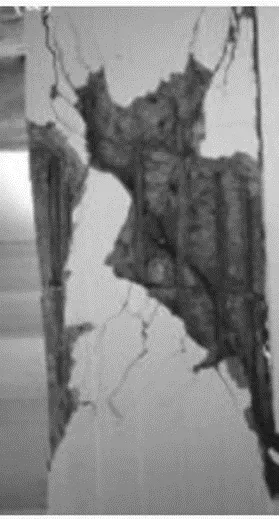
OBSERVATIONS-
- It is very severe damage of concrete column.
- In this damage longitudinal reinforcement and shear reinforcement totally exposed.
CAUSE OF DAMAGE-
- Concrete is diagonally cracked and spalling totally at the column face due to the excessive shear.
- This is due to the improper spacing between shear stirrups.
- Here stirrups spacing is more due to this entire load transfer through the concrete only and it spalled.
DAMAGE REPAIRABLE OR NOT-
- This shear failure is not repairable.
Q.2(c)
AIM- Mode of failure or Damage in given column.
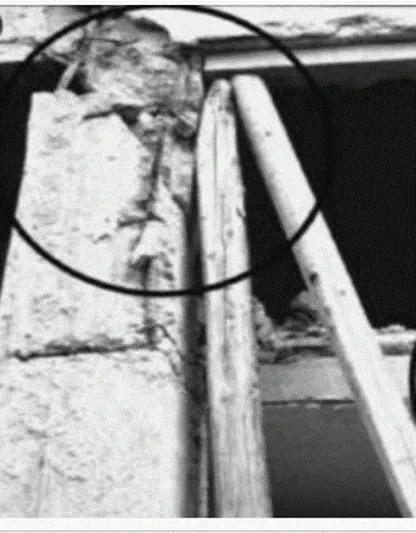
OBSERVATIONS-
- It is also severe damage in which lower column completely detached from lower column.
- We can also see that intermediate slab also attached to the column.
- To avoid the failure of beam wooden support must be attached lower side of the beam this temporary prop must have stable the beam.
CAUSE OF DAMAGE-
- It is a short column failure.
- Due to additional slab which is attached at the mid height of column this effect occurs.
- This type of failure is occurred when if the connection is not accounted in case of design.
DAMAGE REPAIRABLE OR NOT-
- This failure is not recoverable.