Identification of Cracks
1Q)
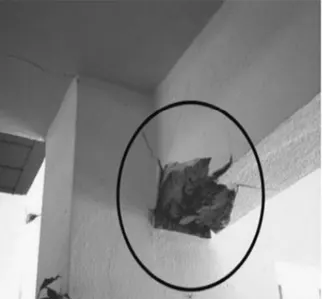
FLEXURAL FAILURE OF BEAM:-
- Flexural failure occurs when the imposed loads exceeds the flexural capacity of the structural member.
- Flexural strength is defined as stress in material just before the yielding statrts in flexural test;it represents the highest stress value experienced at moment of rapture.
REMEDY/SOLUTION TO AVOID FAILURE:
- Choosing appropriate dimensions for beam ,as per IS 456:2000 specification.
1B)
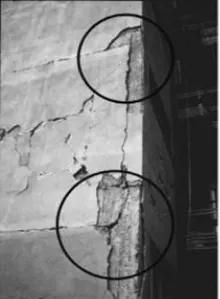
FAILURE DUE TO ERRORS IN CONSTRUCTION:-
- Mistakely reduse the bar diameter
- Construct an incorrect column in the location
- Changes in the grade of concrete
- Lack of strength in the concrete due to the failure of the concrete supplier
- Improperly treated honeycomb in a column could lead to a failure when the loads are applied
- cavities inside the column that were not filled properly with construction ground reduce the compressive area of the column.As a result it axial capacity will be reduced.
1C)

BEAM COLUMN CONNECTION FAILURE:
- Short column and weak beam philosophy explain the type of failure in the column
- The weak beam strong column philosophy ensures tha a hinge is formed in the beam rather than column and column reamain elastic as far as possible. This is acheived by making columns stronger such that its strength becomes equal or greater than that of the beam.
- Strong beam on light columns is not appropriate in earthquake prone region and thus weak beam strong column arrangement should be the choice as it postpones collapse of the structure.
- In order to facilitate the philosophy mild steel may be used as longitudinal reinforcement for beams and high strength steel for column
2A)
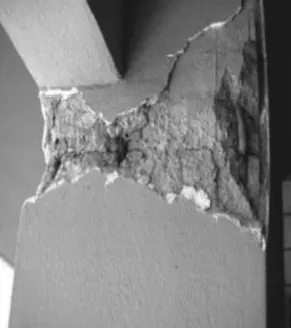
COMPRSSION FAILURE:
- When a column is subjected to high compressive load,the concrete and steel experiences high stresses,as a result the column fails without undergoing any lateral deformation. The concrete is crrushed and steel yields ,hence ,column fails due to mateial failure.
- It is a common failure case for pedestals,as pedestals ,as pedestals have slendeness ratio value less than 3,due to which they do not undergo any lateral deformation(bending) due to concentric loads.
REMEDY /SOLUTION TO AVOID FAILURE:
- To keep the generated stresses under permissible limits,the concrete column must be designed with sufficient cross-section area.
2B)
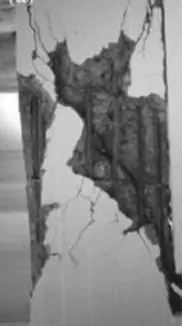
SHEAR FAILURE:-
- Shear failure occurs when the acting shear force exceeds the shear capacity of the corresponding section of the structural member.
- A shear force acts along a plane parallel to the direction of force and hence,producing a sliding failure on beam.
- Shear failure is considered as brittle failure as it does not provide any warning before complete failure.
TYPES OF SHEAR FAILURE:
- Diagonal tension failure
- shear compression failure
- Splitting shear failure
REMEDY/SOLUTION TO AVOID FAILURE:
- Shear reinforecement must be provided as per codal provisions provided by IS 456:2000.
- Provide adequate shear links
- High grade concrete ,deformed bars must be used for proper anchorage.
2C)
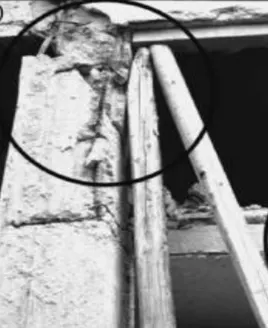
SHORT COLUMN FAILURE:-
- Short columns are commonly subjected to axial loads,lateral loads and moments.short columns under the action of lateral loads and moments undergo lateral deflection and bending.
- Under such circumstances when the stresses in steel and concrete reach their yield stress,material failure happens and RCC column fails.This type of failure is also called as combined compression and bending failure.
- Short column effect generally occurs in the building resting on the slopping ground.
- The performance of short column during an earthquake is poor this is because a tail column and short column of some cross section move horizontallly by an amount .However a short column is stiffe than tall column hence it attracts larger earthquake forces.
REMEDY:-
- Columns must be constructed keeping centre line straight ; any abnormality might cause excessive lateral deflection ,under influence of lateral or axial loads.
- The column which are likely to sustain short colummn effect should be detailed as per IS 13920:1993 over a full height of column sustaining this effect.
- The special confining reinforcement must extend beyond the short column into the columns vertically above and below some distance.