Identification of Cracks
Q1.a)
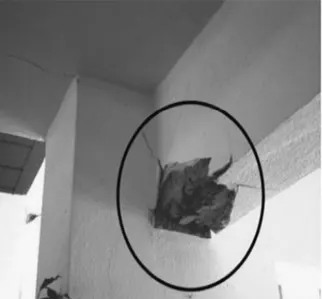
Observation:
- Concrete crush and exposed reinforcement at the lower part of the beam-column joint.
- No defect was noticed at the upper part of the beam-column joint.
- Cracks developed from bottom to top.
Comments:
- Flexural failure due to reversal stresses of an earthquake.
- During stress reversal, the top compression is managed by the slab flange, however, the bottom tension was not accommodated by the bottom reinforcement of the beam.
- Yielding occurs in the bottom rebar of the beam.
Repairing Availability:
- This defect is not repairable due to the yielding that occurred in the bottom reinforcement of the beam.
Q1.b)
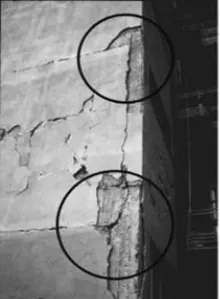
Observation:
- Horizontal & vertical cracks were noticed along with beam-column edges.
- The beam is almost separated from the column at the joint.
- No severe crushes.
Comments:
- Pull-out failure due to insufficient development lengths of steel rebar at the beam-column Joint.
- The horizontal movement during an earthquake detached the beam from the column in the lack of development lengths.
Repairing Availability:
- This defect is not repairable due to the difficulty of inserting the development lengths.
Q1.c)
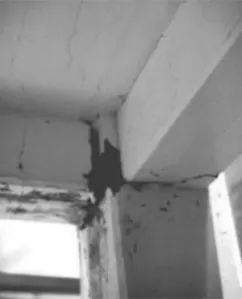
Observation:
- Cracks are noticed at the beam-column Joint.
- Beam Cracks developed through the full width.
- Longitudinal cracks are also noticed at the slab's soffit along with the beam direction.
Comments:
- Plastic hinge failure due to reversal stresses of an earthquake.
- The stress reversal cycles of tension & compression produced damage to the joint.
- The slab also couldn't accommodate the severe tension & compression that occurred by the reversal stresses.
Repairing Availability:
- This defect is repairable by strengthening the joint (e.g. by carbon fibers).
Q2.a)
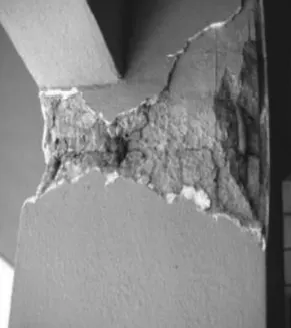
Observation:
- Concrete damages were noticed at the upper part of a column.
- The column is an exterior column with no walls attached to its side face.
- No damages were noticed at the beam.
Comments:
- Plastic hinge failure at the upper part of the column due to an earthquake.
- Due to the absence of infill walls, the mass of the story became relatively lesser than other stories.
- A formation of a soft story has occurred & has led to a plastic henge at the top of the column.
Repairing Availability:
- This defect is repairable as there are no severe damages or spalls in the concrete.
Q2.b)
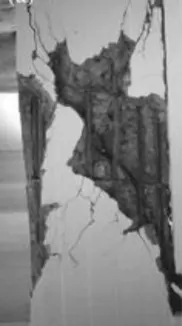
Observation:
- The concrete is completely broken diagonally.
- A lack of shear reinforcement is seen in terms of large spacing between column ties.
Comments:
- Concrete shear failure.
- Lack of shear reinforcement resulted in an overdue of shear stresses on concrete.
Repairing Availability:
- This defect is not repairable due to the severity of the damages.
Q2.c)
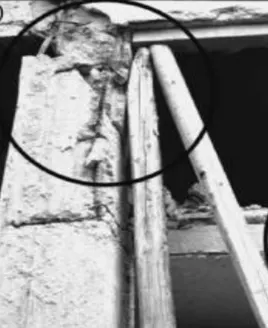
Observation:
- The column is completely damaged in its upper part.
- A mezzanine slab was noticed at the mid-height of the column that splits the height of the column into two parts.
- All wooden props made by locals are to be neglected.
Comments:
- Short Column failure at the top of the column.
- The mezzanine slab at the mid-height of the columns led to a short column formation.
- The short column attracted more shear force during the earthquake causing a shear overstrength at the upper part of the column.
Repairing Availability:
- This defect is not repairable due to the severity of the damages.
====================================================================================