Identification of Cracks
1. What is the mode of failure or damage of the beams in the figure above? Are the damages repairable? Elaborate.
A.) (a). 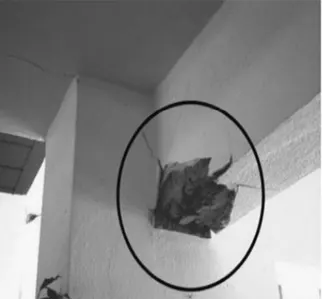
OBSERVATIONS:
From the picture, we can see that the concrete is crushed and the reinforcement is exposed.
RESULT:
- It is a type of flexural failure due to reversal of stress during an earthquake. So during stress reversal, the support at top experiences compression and bottom experiences tension.
- At the bottom and top of the beam, main steel is provided to prevent this kind of failure.
- The damages cannot be repaired as the reinforcement has got yielded.
(b). 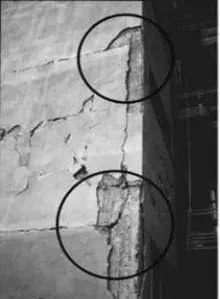
OBSERVATIONS:
- From the above picture we can see the cracks are along the beam-column edge.
- The concrete is not crushed badly.
RESULT:
- It is a beam pull out failure.
- This was caused due to insufficient development length of reinforcement in joints.
- It is not repairable as providing anchorage length between 2 existing concrete would be tough.
(c). 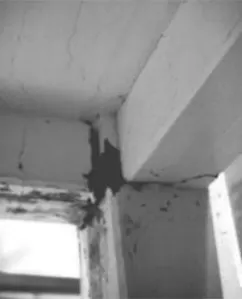
OBSERVATIONS:
- We can see from the above picture that the cracks are at the joints of column-beam.
RESULT:
- From the observation we can understand that it is a plastic hinge failure.
- In the strong column-weak beam design, beams are anticipated to develop flexural overstrength beyond the design strength and create plastic hinges at their ends.
- The damage has occured only in the joints.
- The joints can be strengthened.
2. What is the mode of failure or damage of the beams in the figure above? Are the damages repairable? Elaborate.
A.) (a). 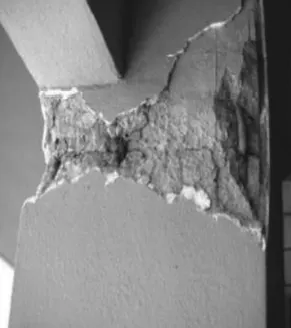
OBSEVATION:
- We can see the concrete has been damaged at the top of the column.
- Beams look safe.
RESULT:
- Hence it is a soft story failure.
- There is a plastic hinge formation.
- Its ability to be repaired or not depends on how the concrete crushes over time.
(b). 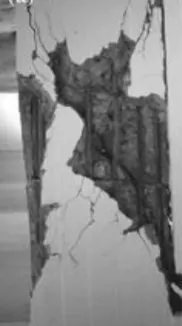
OBSERVATIONS:
- The shear reinforcement spacing looks wider.
- It looks like the concerete has developed complete breakage diagonally.
RESULT:
- It looks like a pure shear failure.
- Concrete absorbs all shear loads since there is insufficient shear reinforcement.
(c). 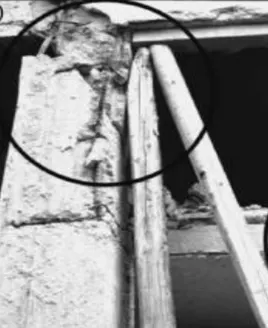
OBSERVATIONS:
- From the above picture, we can conclude that the column has failed completely. The failure is present at the top of the column.
RESULT:
- It is a short column failure.
- In short columns, failure takes place due to yielding, where the phenomenon is known as crushing.
- This failure in the above picture can not be repaired.