Identification of Cracks
1 ans:
a)
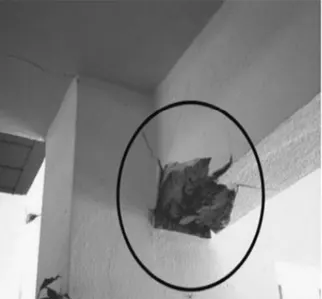
Generally, there are two types of failures caused in beams
- shear failure
- flexural failure
In the above figure, the damage occurs near the beam and column junction on the beam. Here the failure is called shear failure
- The beam-column joints are very restricted areas in which the internal forces, generated by boundary elements, act on the concrete core and reinforcing bars with a very high gradient.
- They are the link between horizontal and vertical structural elements, and therefore, they are directly involved in the transfer of seismic forces.
- Thus, they are crucial to study the seismic behavior of reinforced concrete (RC) structures.
- To fully understand the seismic performances and failure modes of beam-column joints in RC buildings, a simplified analytical model of joint behavior is proposed and theoretical simulations are performed.
b)
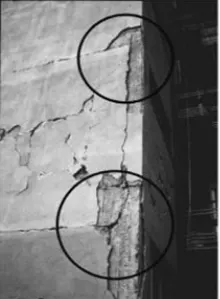
- This kind of problem will occur due to construction errors. Columns could fail due to construction defects.
- This failure is due to improper strength and inadequate curing.
- For example, an improperly treated honeycomb in a column could lead to a failure when the loads are applied.
- These types of column failure can be avoided if attended with much care.
- Cavities inside the column that was not filled properly with construction ground reduce the compressive area of the column.
- As a result, its axial capacity will be reduced.
c)
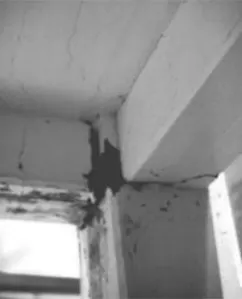
- Beam-column joint of reinforced concrete is an area of critical which must be carefully designed to absorb the seismic energy.
- Inability to absorb seismic energy will cause serious damage to structural failure.
- It willlead to shear failure, i.e. brittle and endanger users of the building if the BCJ area is not designed properly.
- Inorder to get a building structure is safe and resistant to disasters,mainly due to the earthquake, the structure must be designed in accordance to the rules of standard construction (eligible detailing).In general. the anchorages (detailing) reinforcement
- Beams to the column are pointing downwards, however,what if the steel anchoring beams are pointing upwards.
- Different anchoring will result in the behavior of different structures, such as fracturing pattern.
2 ans:
a)
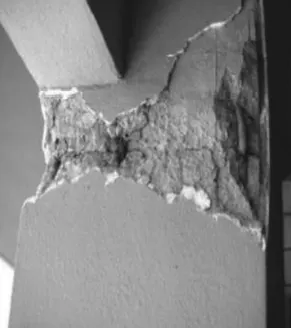
- Shear failure of column
- this is due to the mechanism of the weak column and strong beam
- Longitudinal steel has buckled due to large compression forces
b)
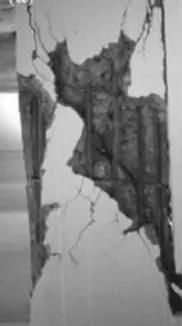
- This is caused due to inappropriate detailing of plastic hinge location.
- Under ductile response to earthquakes, high compression strains should be accepted from the combined effect of axial force in bending moment.
- Adequate closed space well detailed transferred reinforcement needs to be done to avoid spoiling of concrete followed by the instability of compression reinforcement.
- It should also be done to check the resistance longitudinal reinforcement against buckling
c)
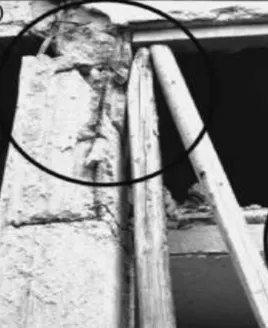
- Short column effect
- This is caused due to influence of partial height infill increasing column shear force which causes an undesirable mode of deformation
- It happens due to ignoring the stiffening effects of non-structural partial height masonry infill built hard up against the column
- The shorter column attracts higher shear force which often leads to deformation or collapse