Hood design-Week 2
Title of the Project : Hood aka Bonnet of a Car.
Objective : To develop the Hood component with the help of Skin data & Master section proveded in challenge section to satisfy the Engineering, Manufacturing and Functional requirements.
About Hood : A car hood, also referred to as a bonnet in some other countries, it is the hinged cover that rests over the engine of a front-engine vehicle. Its purpose is to provide access to the engine for repair and maintenance. A concealed latch is typically used to hold down the hood.
Hoods are typically made out of the same Material as the rest of the bodywork. This may include Steel, Aluminum, Fiberglass, or Carbon fiber. However, some aftermarket companies produce replacements for steel hoods in Fiberglass or Carbon fiber to make the vehicle lighter.
Hood Assembly of a vehicle consists of Hood outer panel (Styling Surface) and Hood inner panel (underneath). Also includes a hood latch-striker reinforcement plate operably coupled to the underside of the hood and having a retaining recess. Further included is at least a portion of a centering tool removably disposed within the retaining recess and extending downwardly away from the underside of the hood. Yet further included is a centering bracket operably coupled to a top support member of a positioning and reinforcement structure and having an aperture configured to receive the centering tool therein for locating the positioning and reinforcement structure to the hood.
Basic components of Hood :
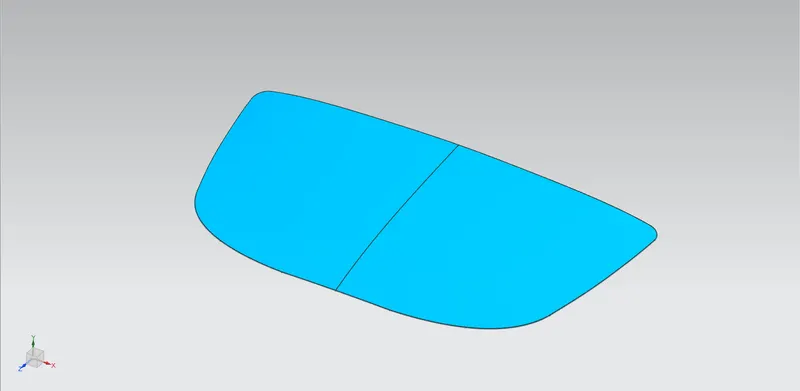
Hood Outer Panel : The outer panel is the part that is at the uppermost layer. The hood must be designed in such a way that it ensures the safety of pedestrians along with the person inside the cabin.
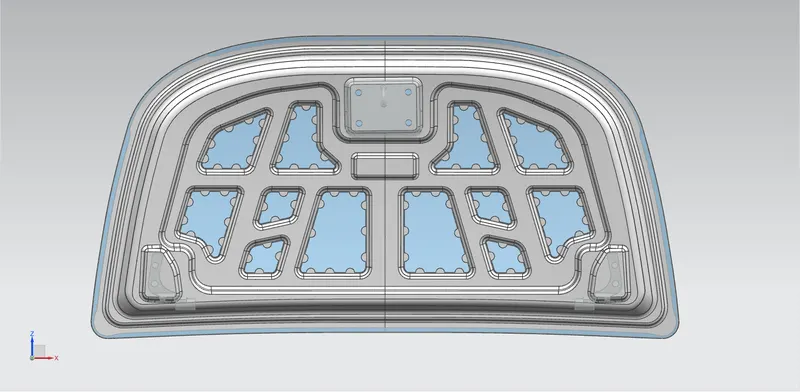
Hood Inner panel : The inner panel gives rigidity and strength to the outer panel. We provide spaces for mastic sealants as other joining techniques might spoil the look of the panel. We provide respective embosses for the striker and the hinge assembly.
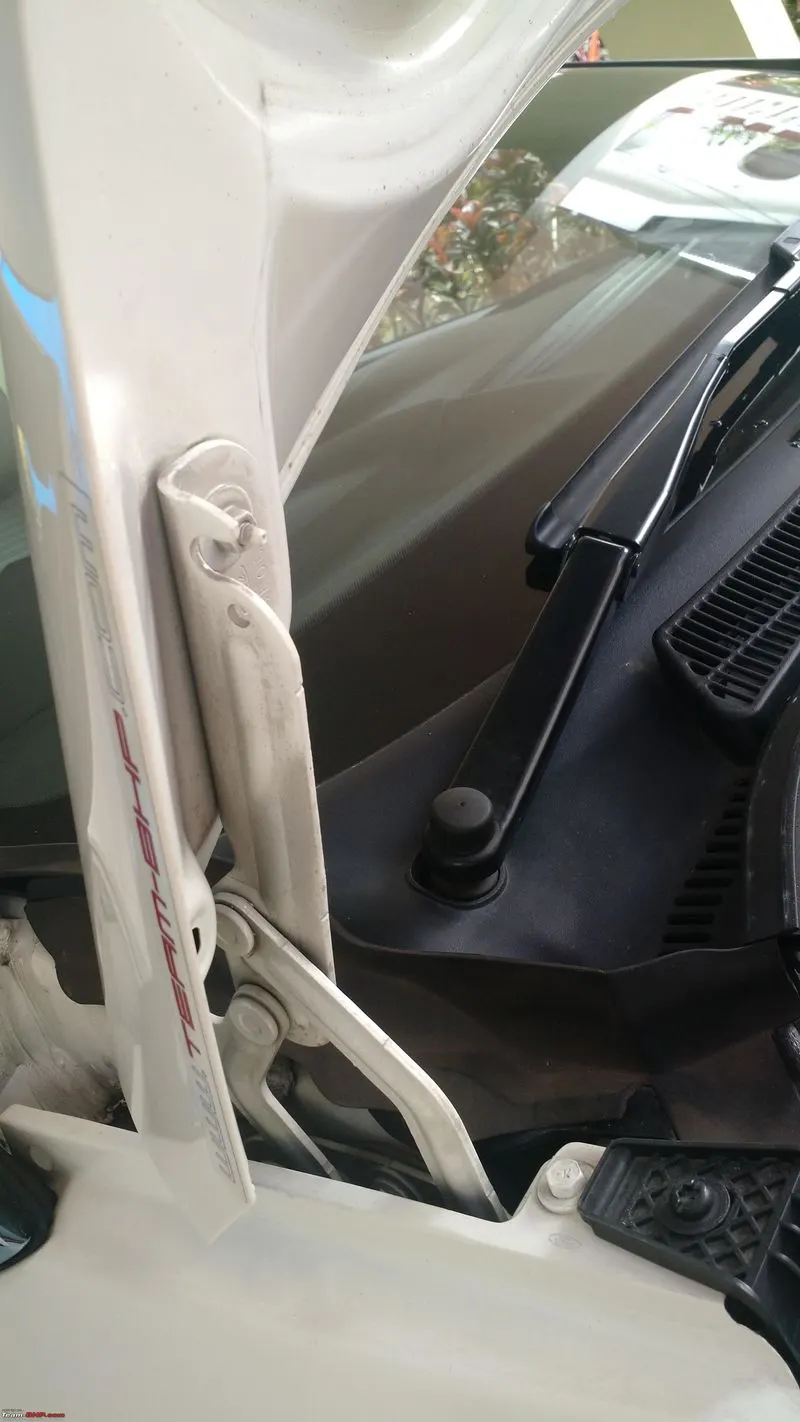
Hinges : Hinges are the standard parts used in the hood assembly; the main purpose of hinges is to give opening and closing to the hood. The one side of the hinge is mounted on the engine compartment and the other side is mounted on the hood. The axis of two hinges must be the same; this is the important criteria we need to consider while mounting the hinges. Based on the hinge position we need to do embosses to the inner panel of the hood.
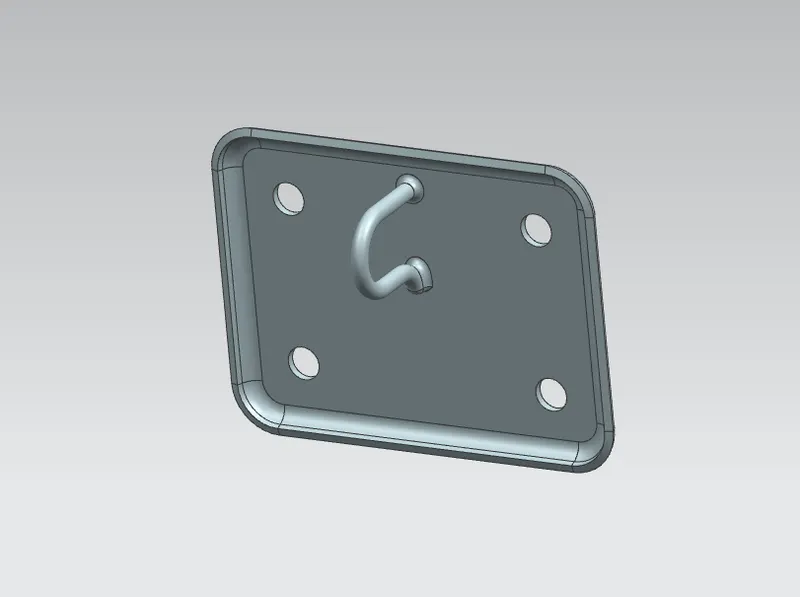
Striker (Locking Mechanism) : In simple language striker is one of the part for locking mechanism which helps to lock the hood to the engine bay. A striker is also the standard part which mounts on the inner panel of the hood and the other part of the locking mechanism is mounted on the engine bay. Like hinges we need to give certain height and angle to the striker by providing embosses to the inner panel. The main criteria to mount the striker on the inner panel is that the axis of the striker must be tangent to the rotational curvature of the inner panel.
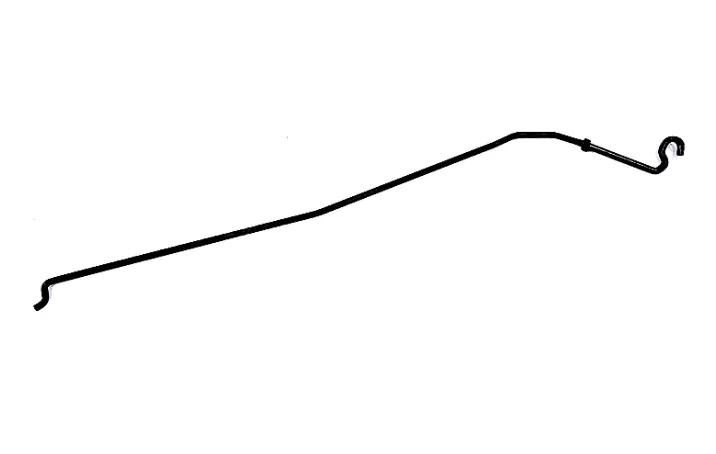
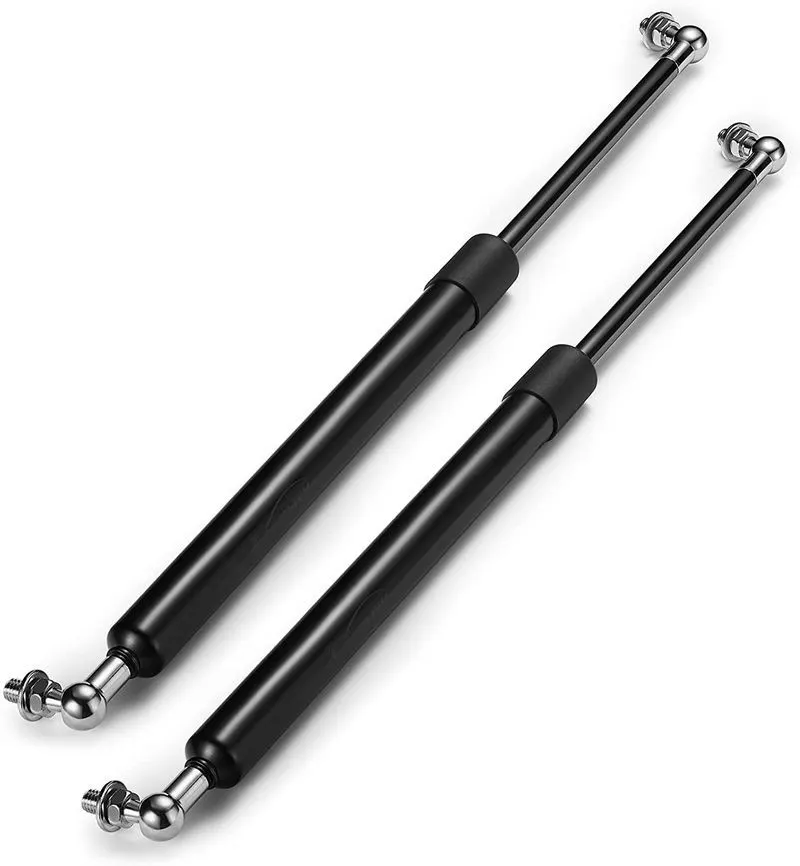
Support Rod or Gas Stay : The basic application of a support rod or gas stay is to hold the hood in open condition. Support rod is the rod with a slightly bended in shape to get good strength and can provide support to the hood when it is in an open condition. The bend should not be more than 35 mm. Similar to the support rod, gas stay is used. The main advantage of using gas stay is that you don't need to apply effort to open the hood. Gas stay is generally used where the weight of the hood is more to reduce efforts we use gas stay instead of support rod. While positioning the support rod we need to make sure it is quite opposite to the battery of the car so it is easy to mount and remove the battery without any obstacle.
Support Rod :
Gas Stay :
Mastic Seal : Mastic is a form of sealant or adhesive used to fill the joints or as a bond for different materials and gaps. It is an elastic and flexible material used to create a durable bond between two different surfaces or to protect a particular surface.
Mastic sealant is an all-purpose sealant used on a wide range of materials like aluminum, glass, marble, wood, plastics, ceramic, steel, etc., although it can be used on nearly all Materials.
Emboss : Embossing is a forming process in which a high pressure is applied to a workpiece to change its surface. Depending on the shape, a distinction is made between hollow embossing and solid embossing.
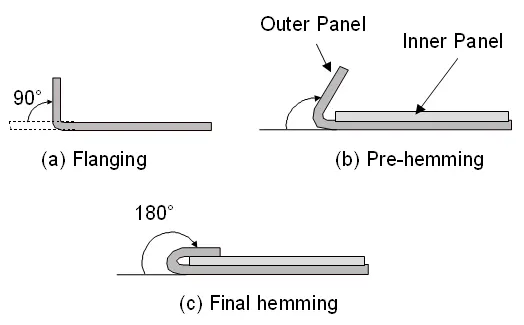
Hemming : Hemming is a sheet metal forming process in which sheets are joined by bending it to 180°. Automotive body panels and automotive parts such as deck-lids, trunk-lids, doors, hoods and tailgates are formed by hemming process. In this process, usually a sheet is bent with the help of inner sheet in three different stages.
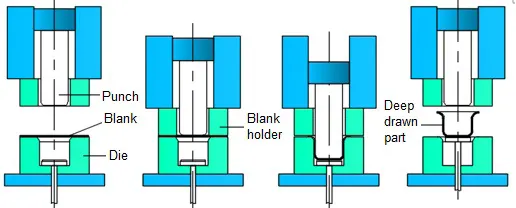
Deep Drawing : Deep drawing is a sheet metal forming process in which a sheet metal blank is radially drawn into a forming die by the mechanical action of a punch. It is thus a shape transformation process with material retention. The process is considered "deep" drawing when the depth of the drawn part exceeds its diameter.
Front and Rear reliefs for Hemming :
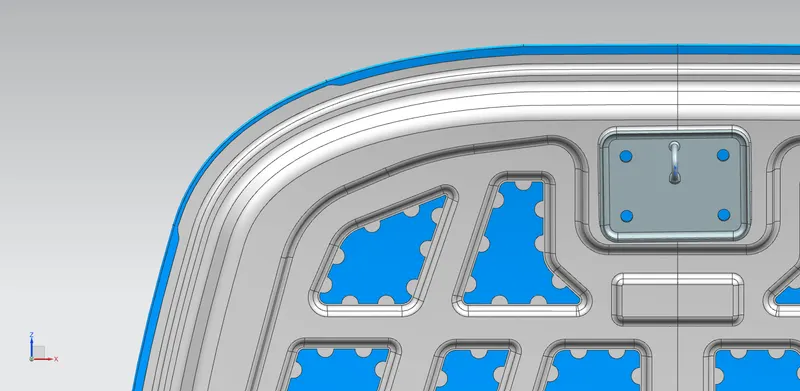
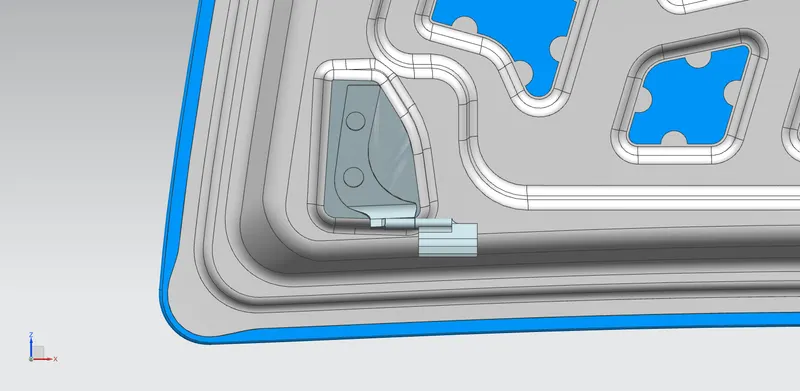
Latch Trajectory : A latch or catch (called sneck in Northern England and Scotland) is a type of mechanical fastener that joins two (or more) objects or surfaces while allowing for their regular separation. A latch typically engages another piece of hardware on the other mounting surface. The Latch-Striker Trajectory represents the path or curve travelled by the hood to lock the engine compartment.
Striker & Hinge Reinforcement :
Top View :
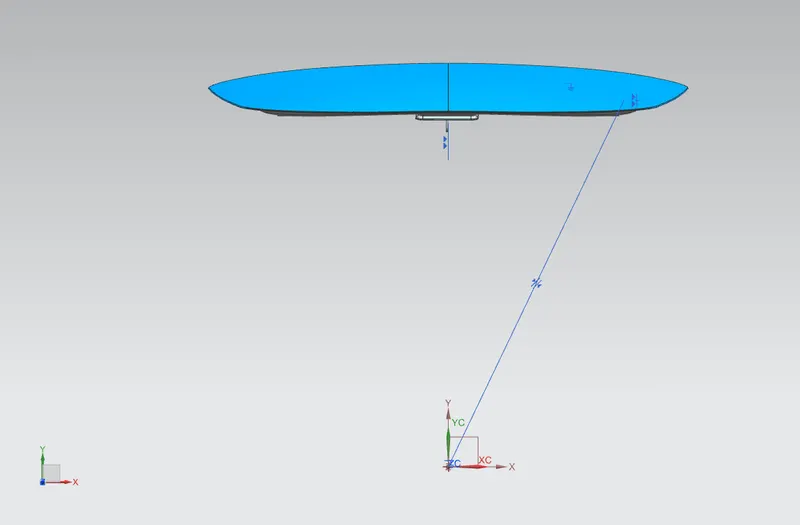
Bottom View :
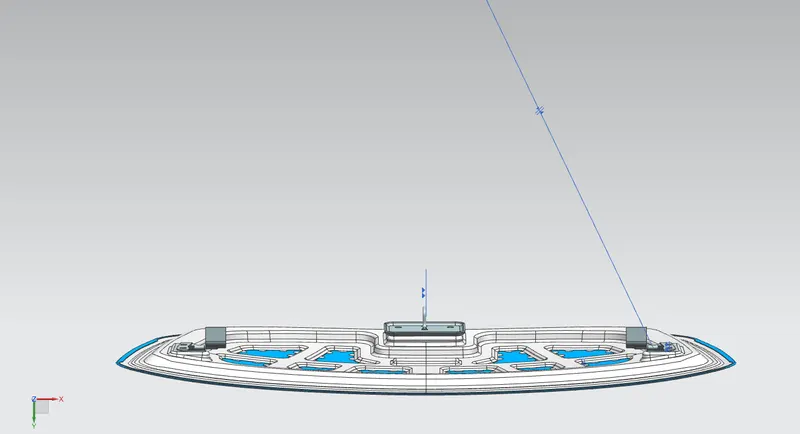
Back View :
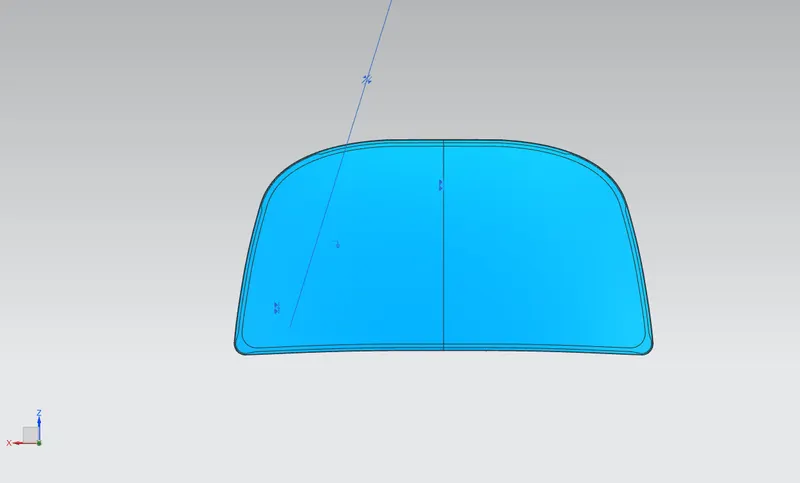
Front View :
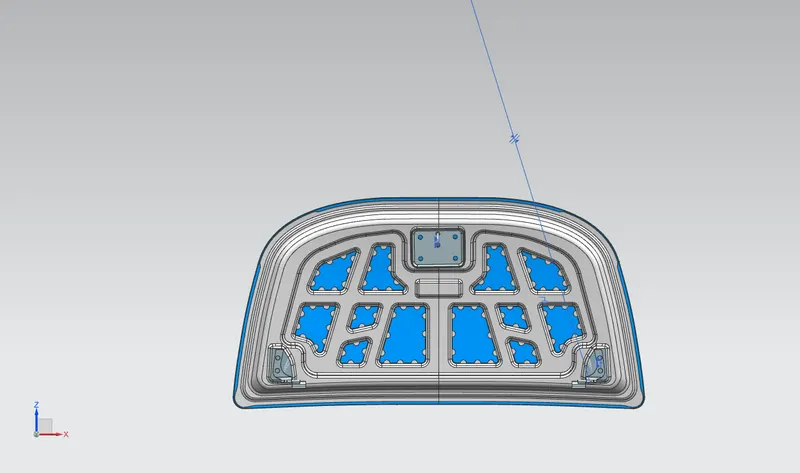
Below, I've attached the whole part files of Hood Assembly designs.