DESIGN OF CAR ENGINE HOOD
DESIGN OF HOOD INNER PANNEL
OBJECTIVE:
Design of Hood outer panel, inner panel, and the necessary reinforcements by following the given Master section and with the design parameters.
CONTENTS:
1. Introduction
2. Design Parameters
3. CAD Approach
4. Conclusion
1. INTRODUCTION:
HOOD:
The hood or bonnet is the hinged cover over the engine of motor vehicles. Hoods can open to allow access to the engine compartment, or trunk(boot) on rear-engine and some mid-engine vehicles) for maintenance and repair.
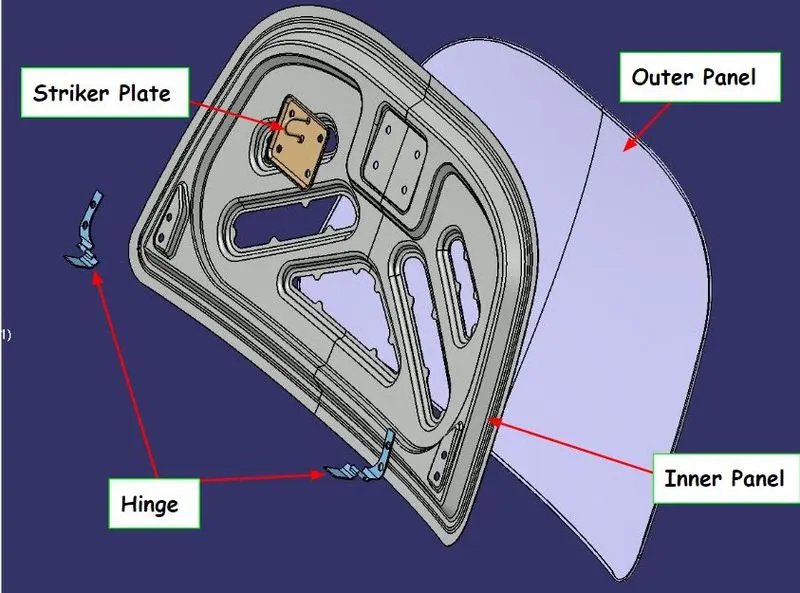
Mainly four parts in the hood assembly, like outer panel, inner panel, latch system, and Hinge system in hood assembly design. The outer panel skin surface from the style department with proper aesthetic look, gap, and flushness. The outer hood panel follows the aerodynamic criteria. Hood inner is the main functional part of the hood design. It’s the most complicated and weight-consuming part of the hood assembly. In the vehicle development, the hood inner was designed to meet the standard load cases. The hood latch system is vital to all cars, trucks, or other vehicles. This system is the attachment of hood assembly and vehicle body. The hinges also guide and hold the hood when open & close. Their kinematics analysis had done to ensure that the hood does not contact other components.
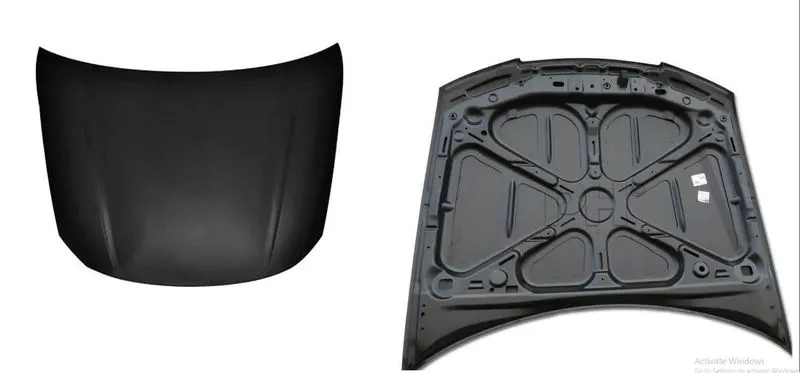
HOOD INNER PANEL & OUTER PANEL
Major Parts of Hood:
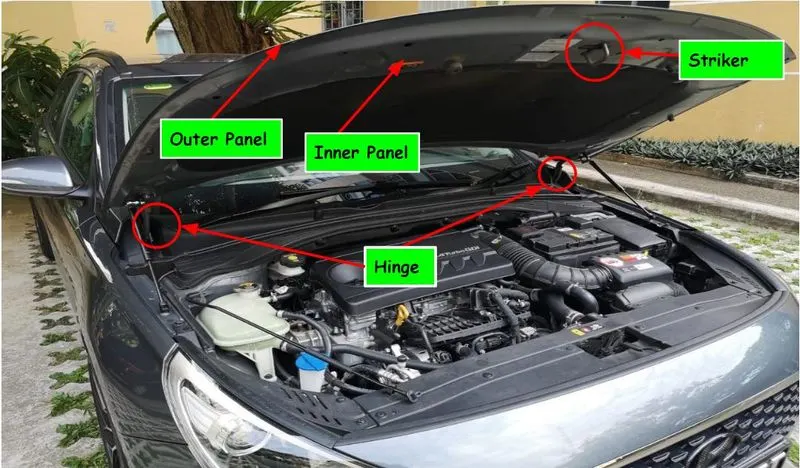
fig.2 Hood Major Parts
Inner Panel
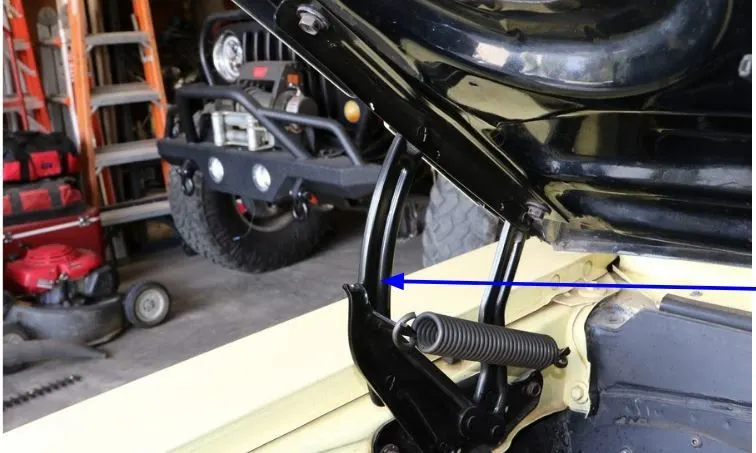
A hood hinge mechanism includes upper and lowers brackets interconnected by pivoted links. The upper hinge bracket and auxiliary hinge member are releasably secured to each other and normally move together as the hood moves between closed and partially open positions.
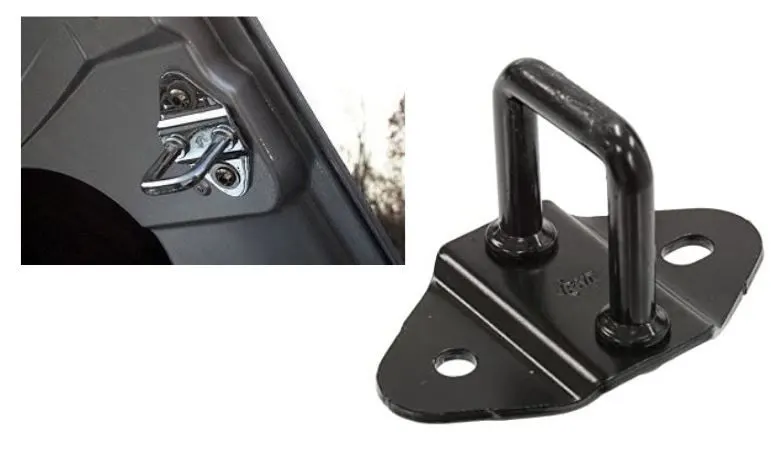
Hood Striker:
It bolts to the underside of the hood at the front. It engages the hood latch when closed.
2. DESIGN CONSIDERATIONS:
Head Clearance:
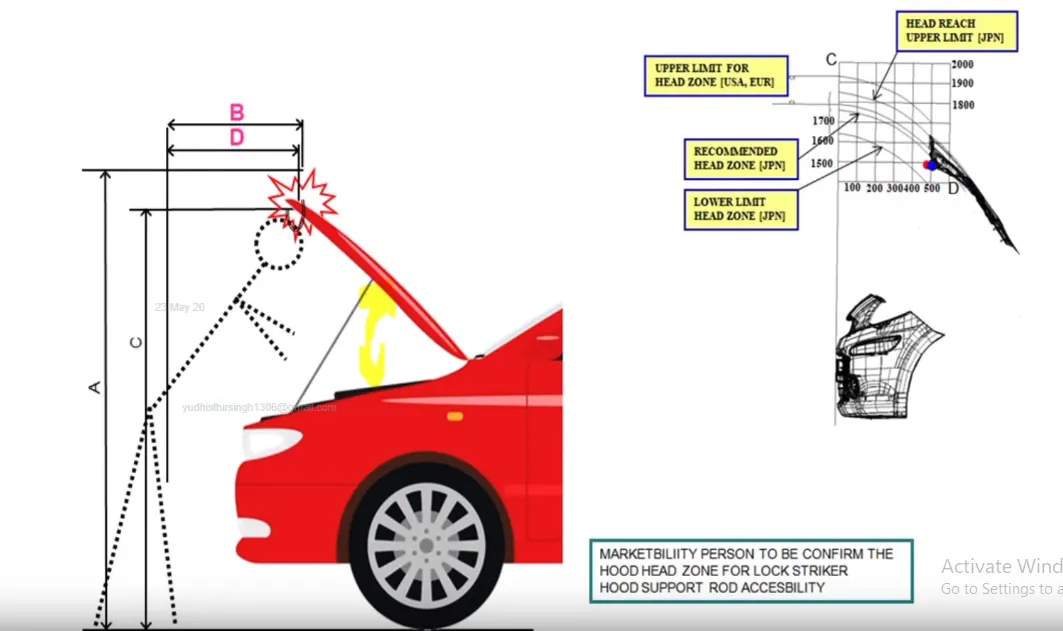
Head clearance is decided upon the zone or country. So same car if it is made for a different country will have different opening angles depending on the country or region.
The distance C and D shown in the image is represented as a graph in the upper right corner of the image. Choosing the right head zone position will decide upon the angle of the hood opening.
Product engineers will also get input from the marketing team for deciding the head zone.
Hood Stay:
A hood stay is an apparatus for an engine room of a car, which can safely keep an engine hood in an open state even if an external force is abruptly generated due to vibration, wind, and can felicitate an opening/closing operation of the engine hood.
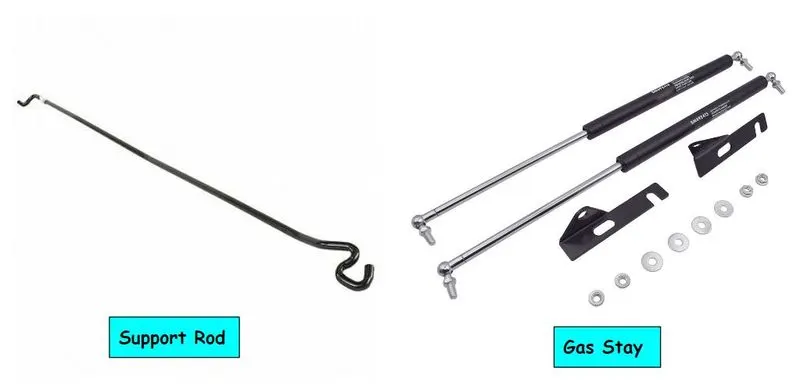
Support Rod:
- Support Rod can be mounted with grommet side on the engine compartment of Body and rod locking hole on the hood or vice versa.
- The grommet and the clip of the rod are standard parts.
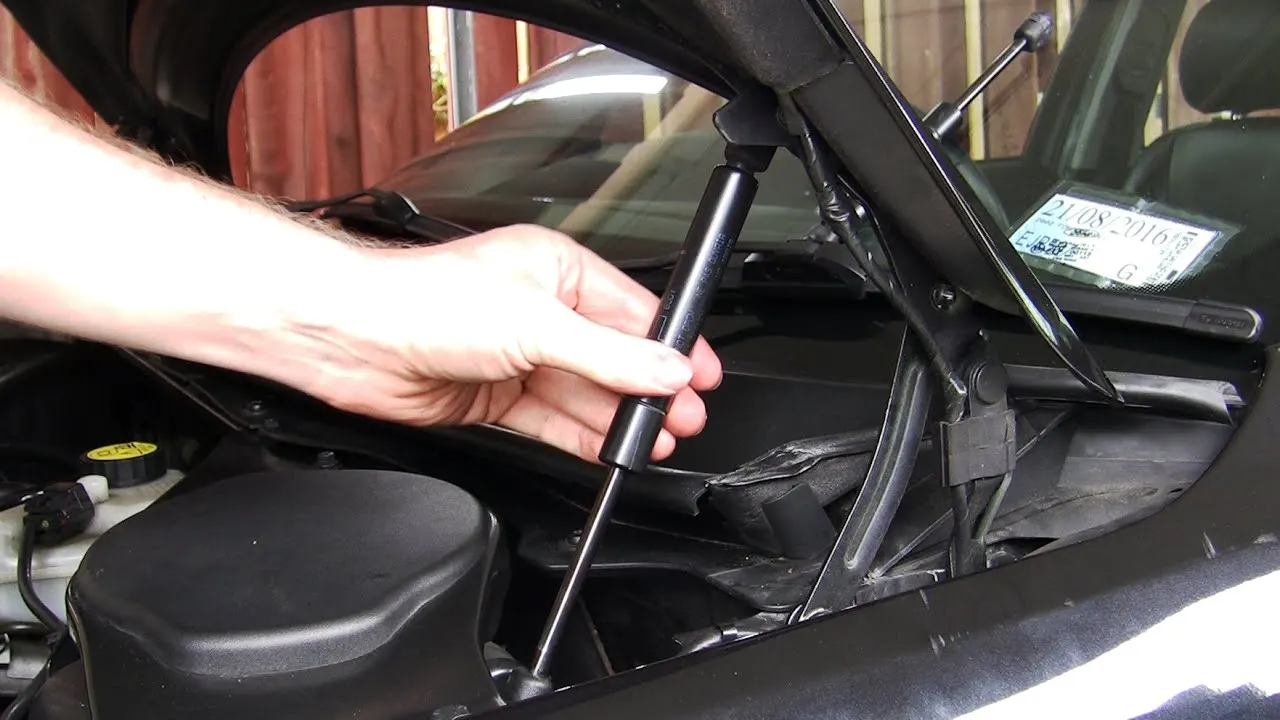
Gas Stay:
The gas stay will assist in opening and holding the hood in position.
Basically, used for high-performance cars where the length of the engine compartment will be more.
In such cases, bonnet length and its weight will be more.
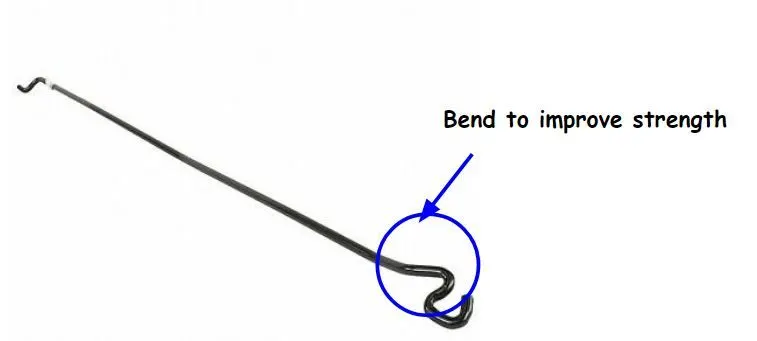
Bend is provided to improve strength. The bend should be within 35mm. Above 35 mm won’t serve the purpose as the rod start to bend more due to hood weight.
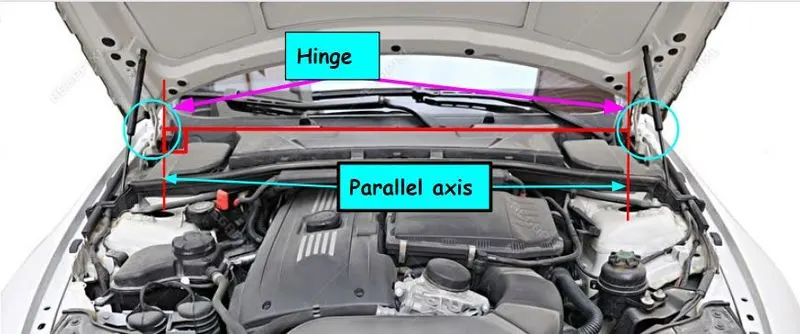
Hood Hinge:
The hood hinge is a pivot and bracket mechanism that makes it possible for you to open and close your hood. Each car typically has a pair of hood hinges installed in the front of the vehicle.
Manufacturing Aspects:
Feature Placement Restrictions:
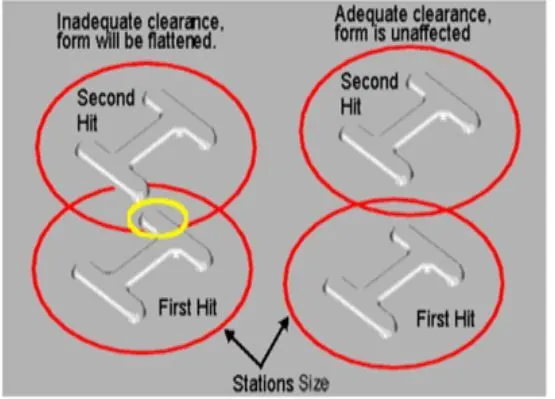
When placing formed features next to one another, care should be taken to allow clearance between features. If the tool/die does not clear a form already placed in the part, the form could be flattened out. An example of good vs. bad placement is illustrated below. Relieving the stripper can overcome this problem in some cases. The stripper is the metal plate that contacts the sheet metal to strip it from the punch in a die.
3. INNER PANEL DESIGN:
Data to be used:
Input Parameters:
- Hood Outer Panel
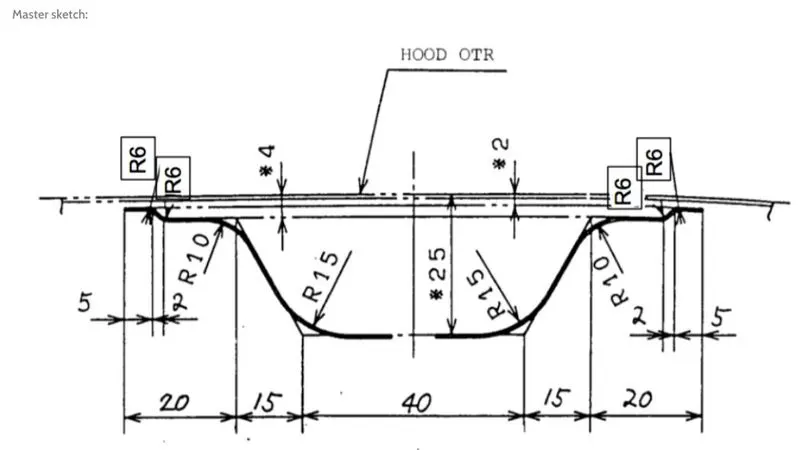
- Master Section Sketch
Hood Thickness Information
- Outer Panel Thickness = 0.75mm
- Inner Panel Thickness = 0.75mm
- Reinforcement Thickness = 1.5mm
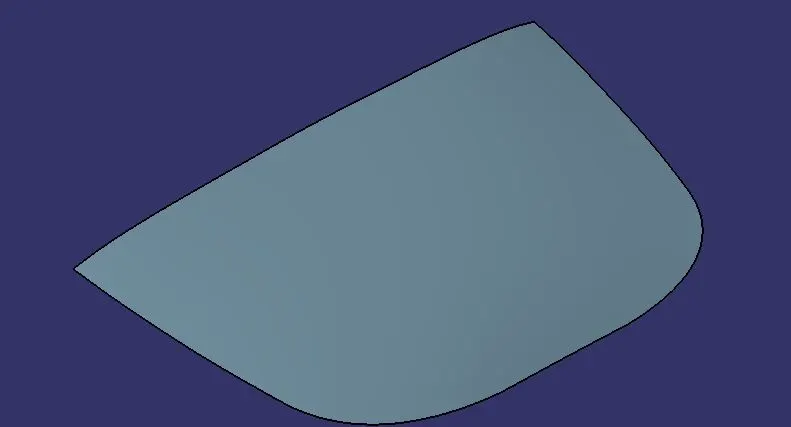
Outer Panel Styling Surface:
Designed Inner Panel:
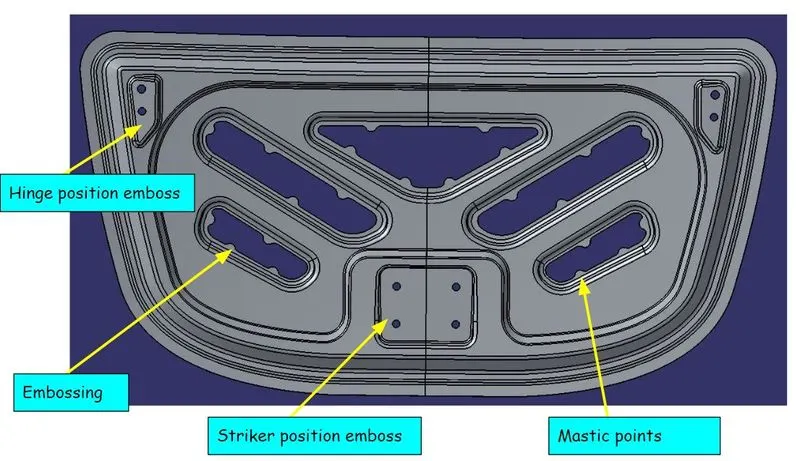
Striker Position:
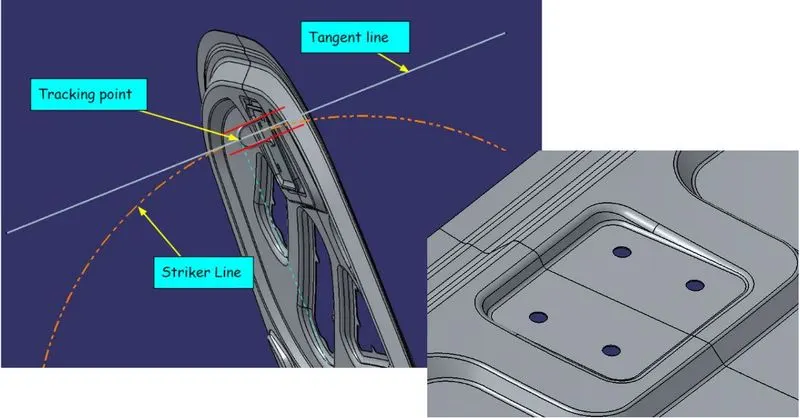
- The mating point of the striker and the latch should be perpendicular to the hinge axis line, in order to find the position of the latch the corcle from the hinge axis is created, and the target line at the position of the striker. The tracking point is found to create a flat surface for the striker position.
- A flat surface is required to assemble the striker plate and reinforcements.
Hinge Position Emboss:
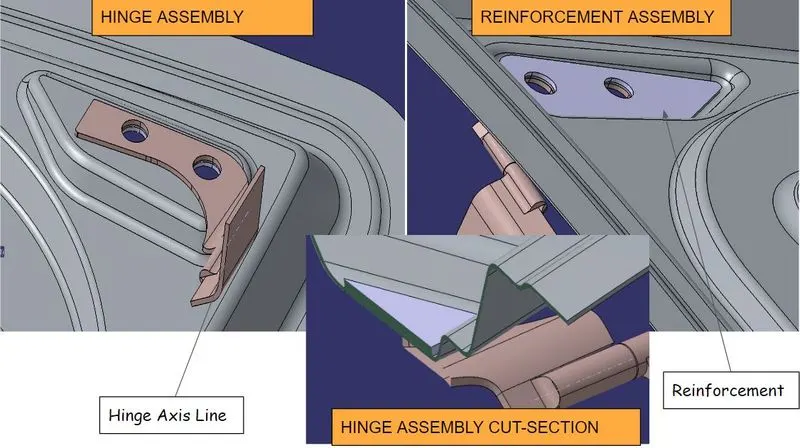
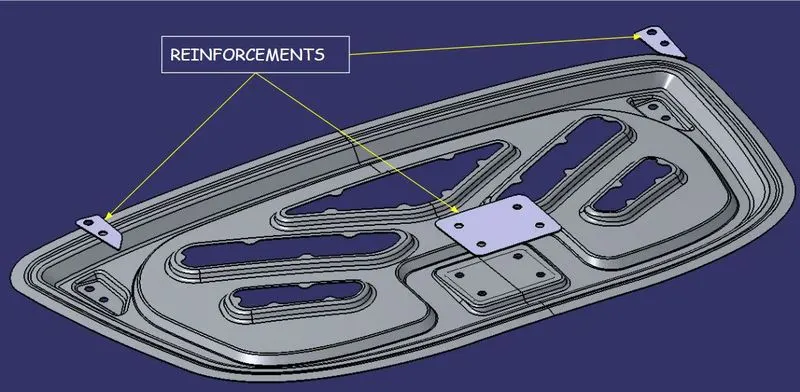
- The Hinge is assembled to a flat surface emboss, emboss is created to assemble the Reinforcement and Hinge.
- Reinforcement is added to improve the strength of the Surface
- The Cut-Section of the hinge assembly is provided below.
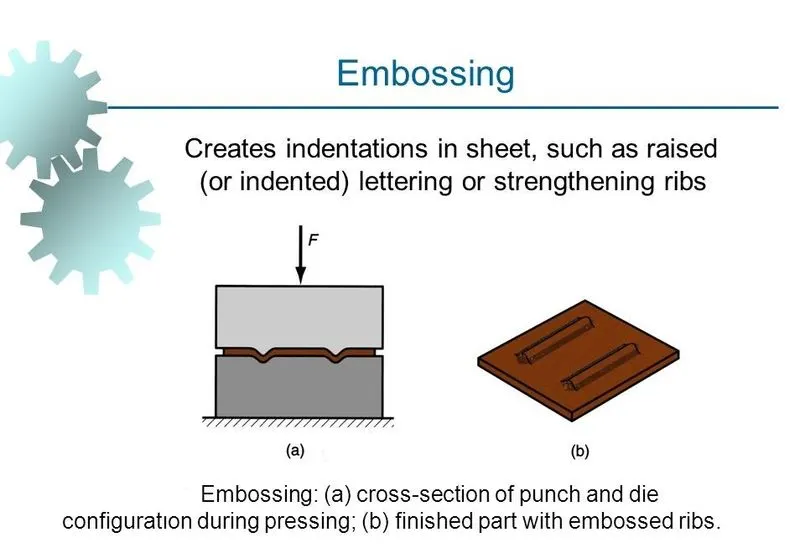
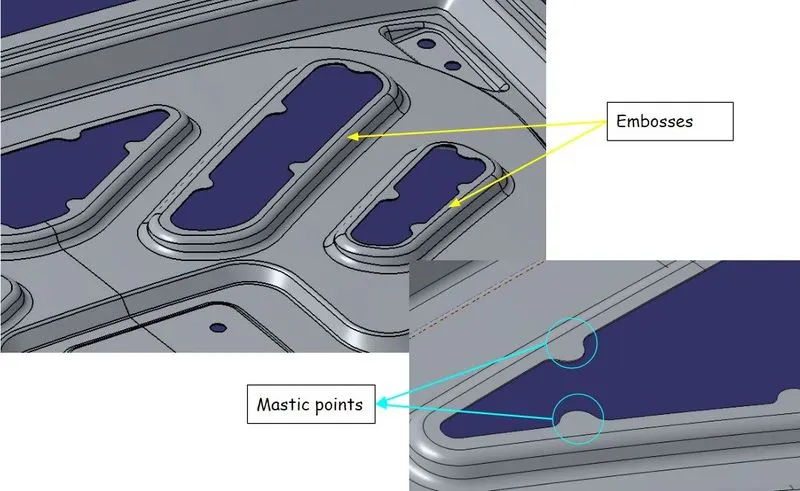
EMBOSSING & MASTIC POINTS:
MASTIC JOINT:
Mastic is an adhesive that, along with thin-set mortar, is used to stick a sheet metal. While mastic does have strong points, such as great adhesive properties and adaptability to many substrates, high performance in wet areas is not one of its high points.
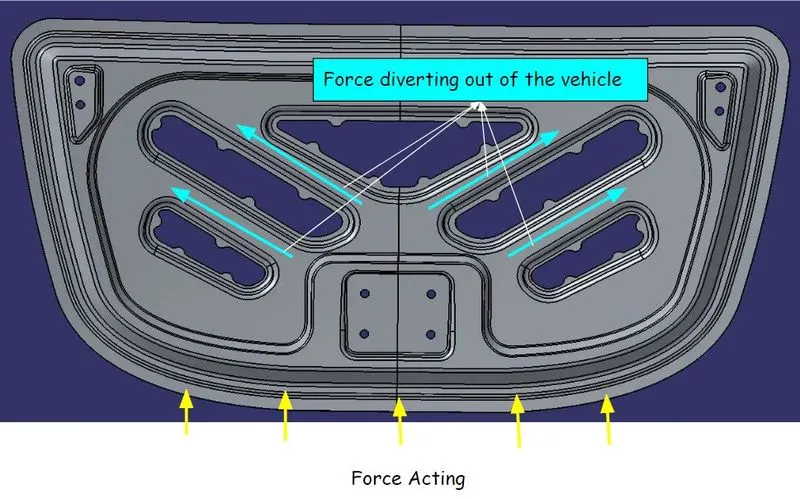
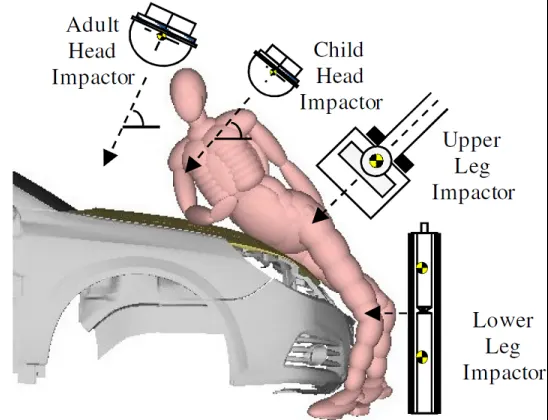
- The force acting on the hood can impact the passengers when the vehicle hits an obstacle.
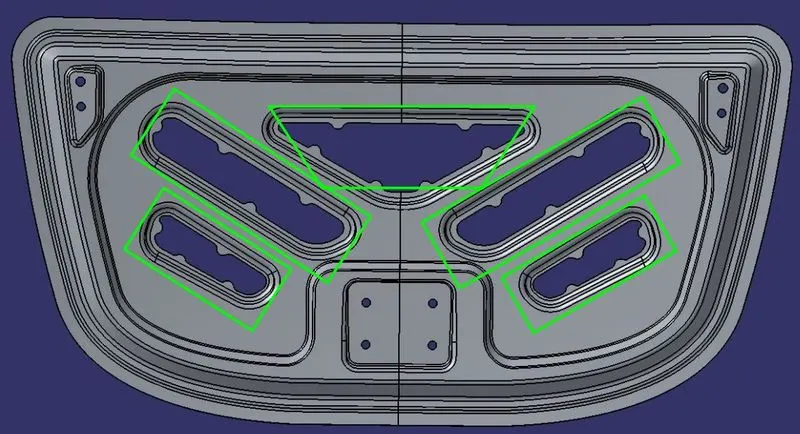
- This force can be reduced with embosses design, By giving some inclination angle to the embosses flanges, the force acting normal to the Hood can be diverted outwards of the hood.
Hood For Better Pedistain Rating:
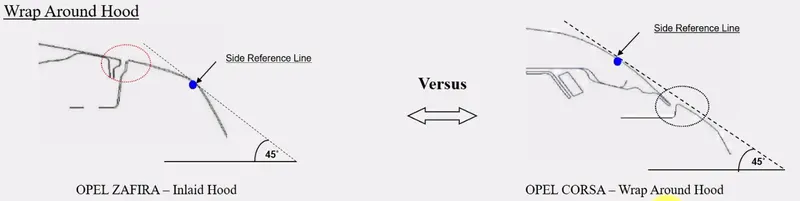
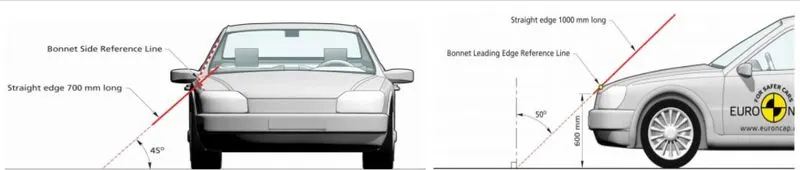
- Inlaid Hood: The line which is drawn 45 deg. from the ground to the Side Reference of the car and which is a meeting point on the fender is called Inlaid Hood.
- Wrap Around Hood: The line which is drawn 45 deg. from the ground to the front surface of the Hood and which is the meeting point on the outer panel is called Inlaid Hood.
- Depending on the Inlaid Hood & Wrap Around Hood, we can design a hood for head impact in the fig shown position of the head impactor.
OUTER PANEL:
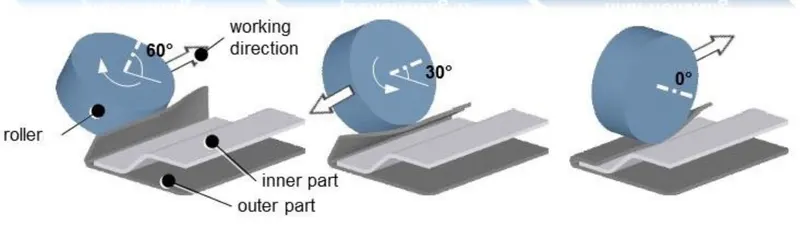
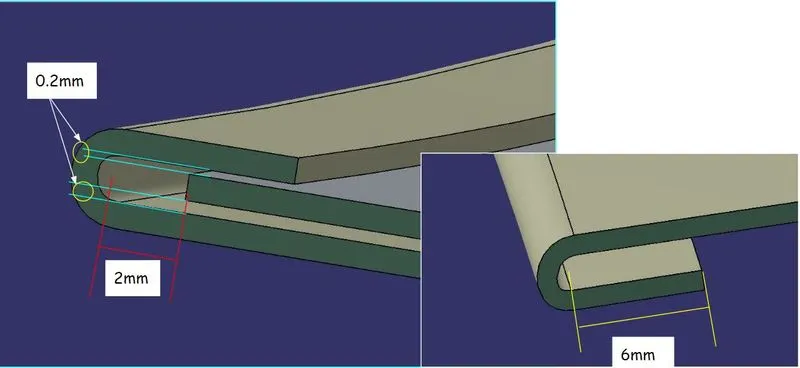
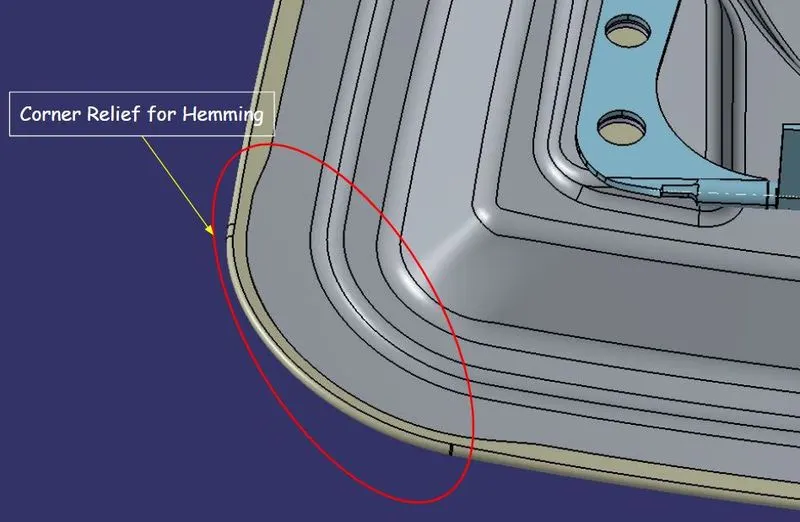
Hemming:
Hemming is a forming operation in which the edges of the sheet are folded or folded over another part in order to achieve a tight fit. Normally hemming operations are used to connect parts together, to improve the appearance of a part, and to reinforce part edges.
ASSEMBLY:
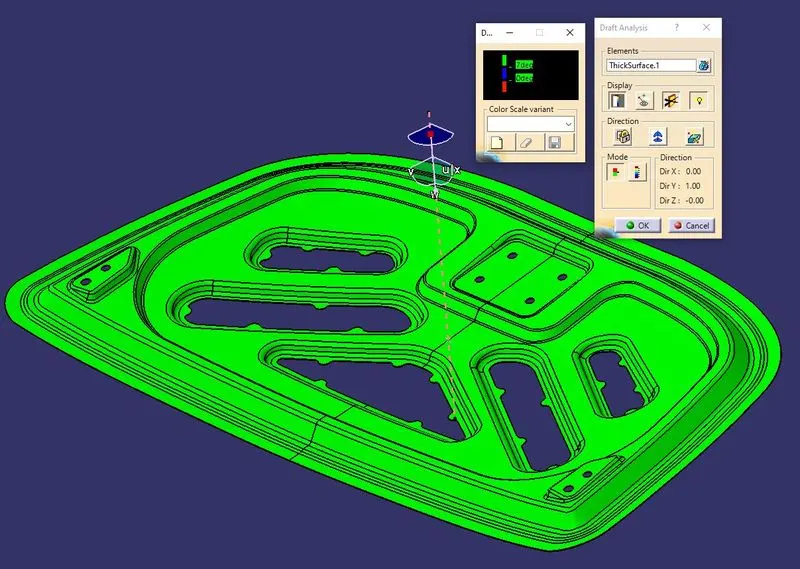
DRAFT ANALYSIS:
- The draft angle for the inner panel is more than 7 degrees as shown in the following popup.
- Deep drawing is possible for this draft angle
CONCLUSION:
- The design parameters of the inner panel including master sections are followed.
- The inner panel is designed with a thickness of 0.75mm.
- The outer panel is developed with a hemming flange.
- The reinforcements parts of the required places are created.
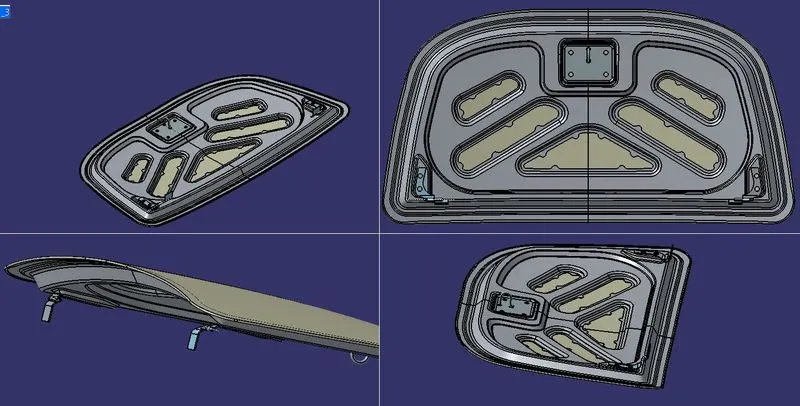
- The hood is assembled with hinges and a striker.