Hood design-Week 2
AIM
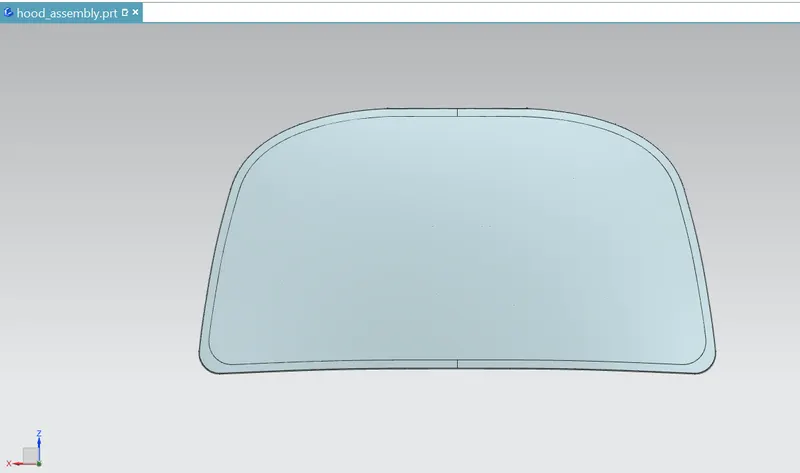
To design the hood of a car with the given input Outer panel and its dimensions.
Introduction
The Hood or the Bonnet of a car is considered as the frontal BIW enclosure component. Bonnets are designed to reduce air resistance as the air flows around the car. The design of the bonnet is vital since it affects the aerodynamic flow around the car. Apart from this, bonnets are also designed to meet several other requirements. They serve a great deal of purpose in protecting the passengers inside the car and the pedestrians in the event of an accident. It also acts as the engine cover.
Theory
The hood or the Bonnet consists of the following parts.
Hood outer panel
Hood inner panel
Latch and Striker re-enforcement
Hinge re-enforcement
The hood or the bonnet is commonly manufactured using Stainless steel of various grades. For vehicles that weigh less, the bonnet is made up of aluminium. The Stainless steel bonnet uses a technique called deep drawing to manufacture the component. The Aluminum bonnet employs a procedure called as casting.
In this project, we are going to design a hood that is manufactured using stainless steel material.
Manufacturing Requirements
While designing the inner panel hood that will be manufactured using the deep drawing process, there are some minimum requirements that we need to fulfil:
Minimum fillet radius = 3mm+Thickness
No sharp corners inside the component
No curvatures lesser than 5mm
Small embosses should not exceed the maximum depth of 6mm (staying on the safe side)
Mounting areas and welding areas need to be flat
Provide appropriate corner relief on the area of curvature.
Hood design consideration:-
The hood of a car is considered as the frontal BIW enclosure component. Bonnets are designed to reduce air resistance as the air flows around the car. Apart from this, bonnets are also designed to meet several other requirements. They serve a great deal of purpose in protecting the passengers inside the car & the pedestrians in the event of an accident. It also acts as the cover for the engine.
Functional and Safety Requirements:
The 1st and most important safety requirement to be considered while designing the Bonnet is the frontal collision requirements.
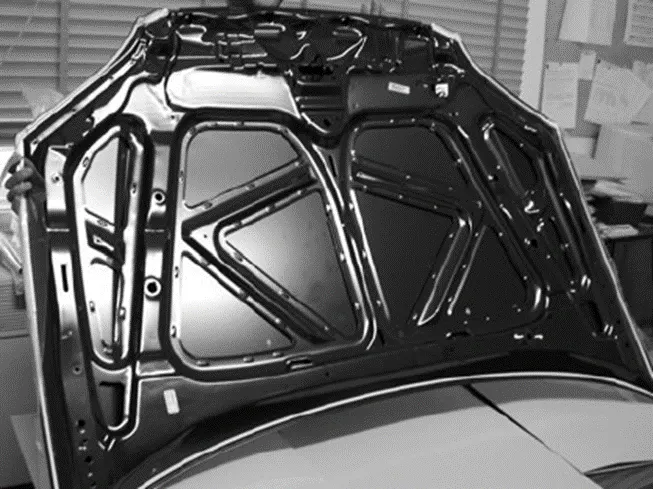
In this image, you can see the deformation on a hood that underwent a frontal collision:
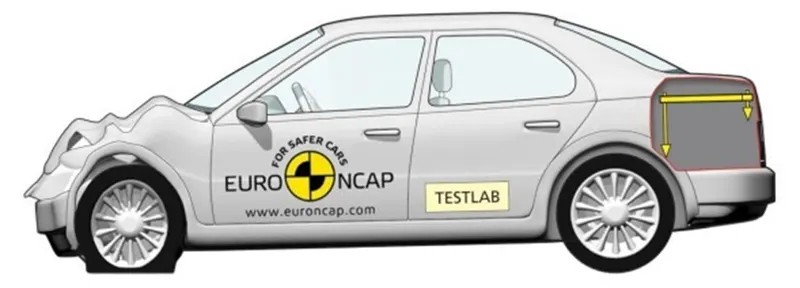
It is clear that the design intention of the hood according to the frontal collision requirement is that the hood crushes and dissipates forces in the upward direction and to the hard points on the hood thereby deflecting the force on to the body and not the passengers
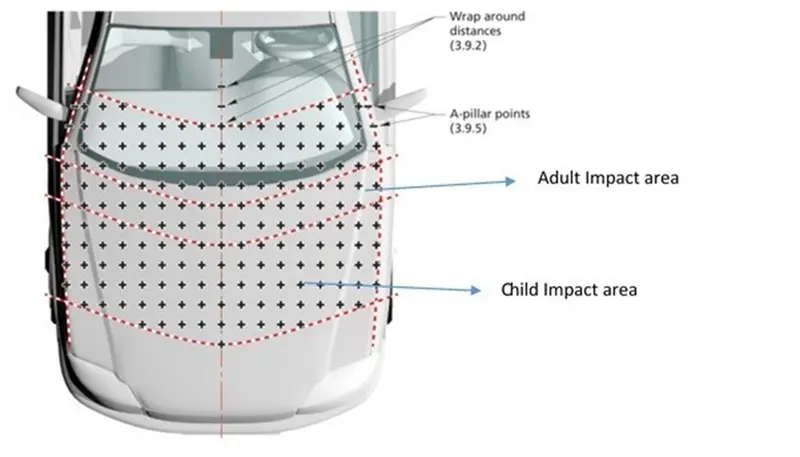
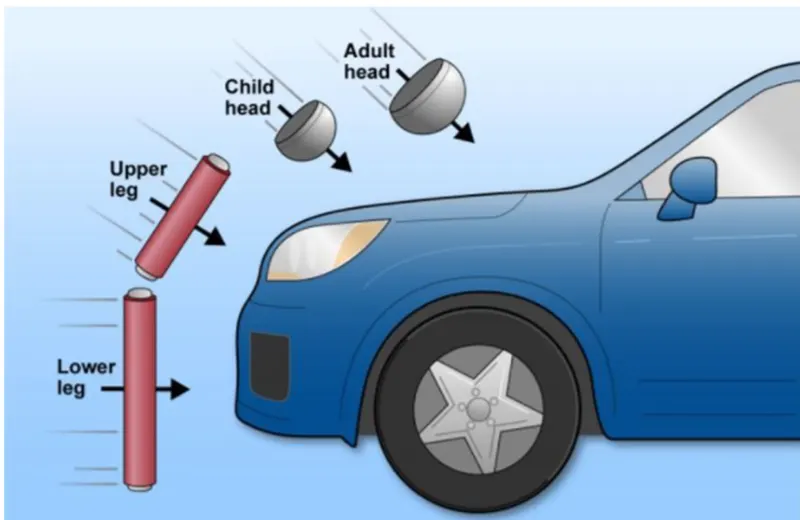
Regarding the safety of the pedestrians, the above image from Euro NCAP shows the area of impact for a child and an adult. It is of utmost importance that we make sure not to place re-enforcement on the areas prone to high head impact. Also, the child impact area is designed with lesser thickness than the adult impact area so that in the event of a frontal collision where a child is involved, the bonnet will absorb the impact of the crash and crumble to protect the child’s head from absorbing the force.
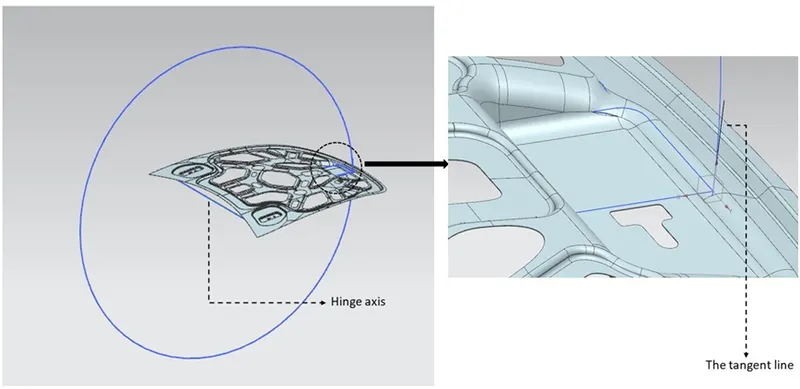
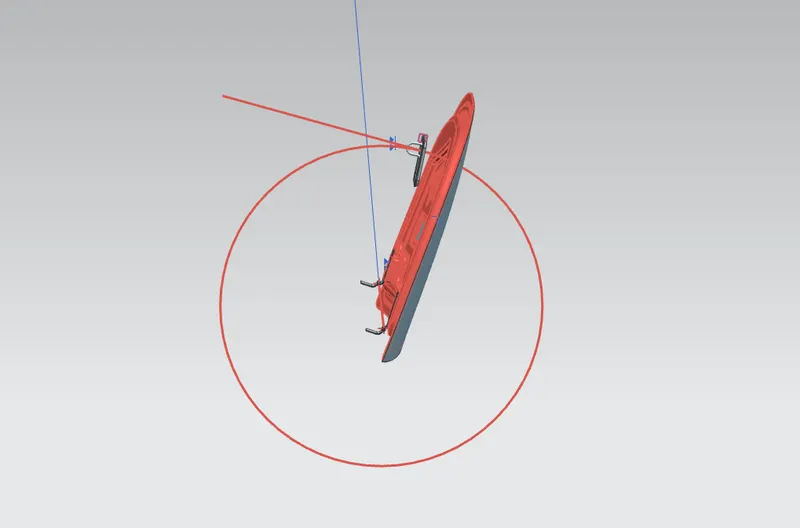
The other major functional of the hood is the opening and closing of the hood. This is done with the help of the latch and striker. To position the latch and striker effectively, we position the hinge and draw the hinge axis. Now, using the hinge axis as the center we draw a big circle to the position where we need the latch to be placed. Then, we draw a tangent line to the circle at that point and place the latch in that region.
Master section creation:
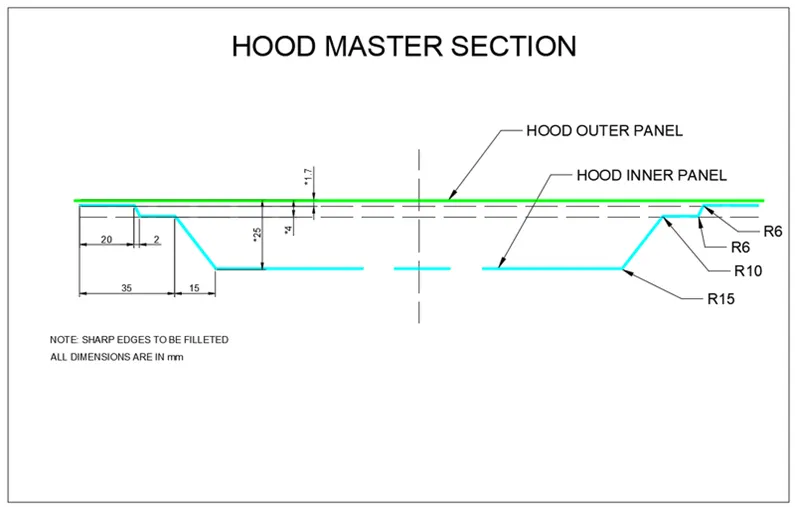
The master section is created based on the requirements received from the marketability team and the manufacturing requirements that we saw before. Below are the images of the master section used for the design.
Geometry and emboss creation:
The geometry is created based on the master section that was designed above. After performing the initial stages of design, we will provide local embosses to strengthen the component. The component will be strengthened based on the master section. When a force impacts the hood from the front, it travels in an upward direction. The component is designed to divert the force away from the passengers into the hinges, as shown in the image below:
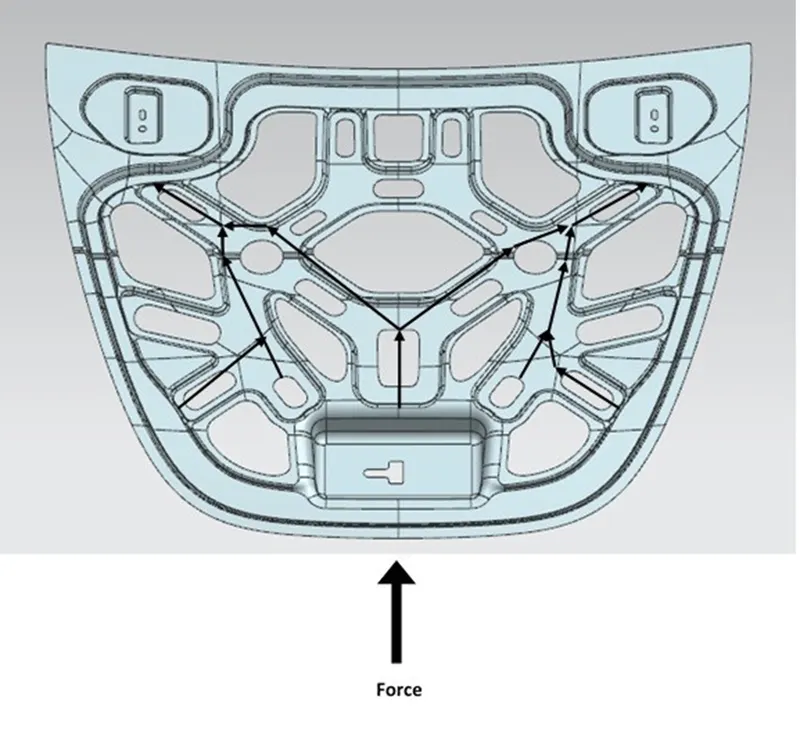
In this image, you can see the force as it branches out on the hood, avoiding the passengers
The embosses in the inner panel are made according to the diversion of the load path. The emboss depth is kept at a maximum of 5mm to be on the safer side so that the part is manufacturable.
Fine-tuning the emboss:
To make the component easy to manufacture, all the sharp corners from the embosses are removed. The curvature intersections from different nearby embosses are blended out to produce a smooth transition.
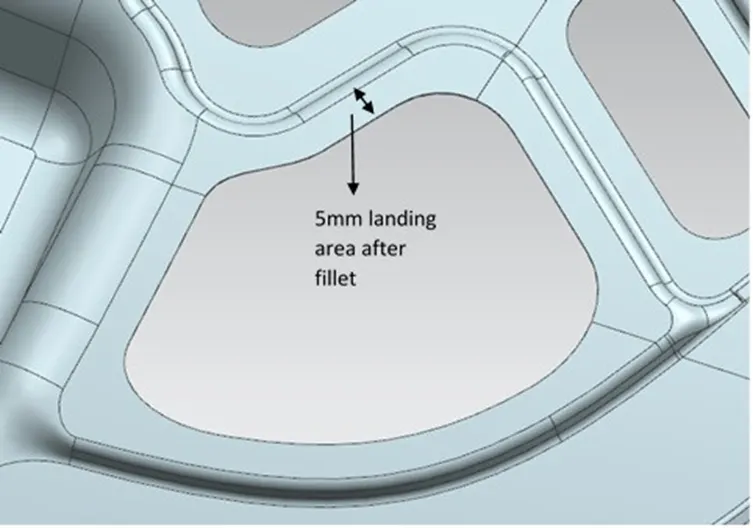
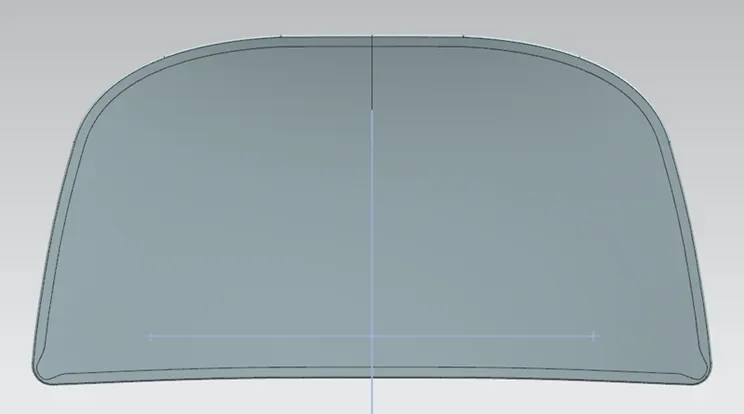
Inner Panel-
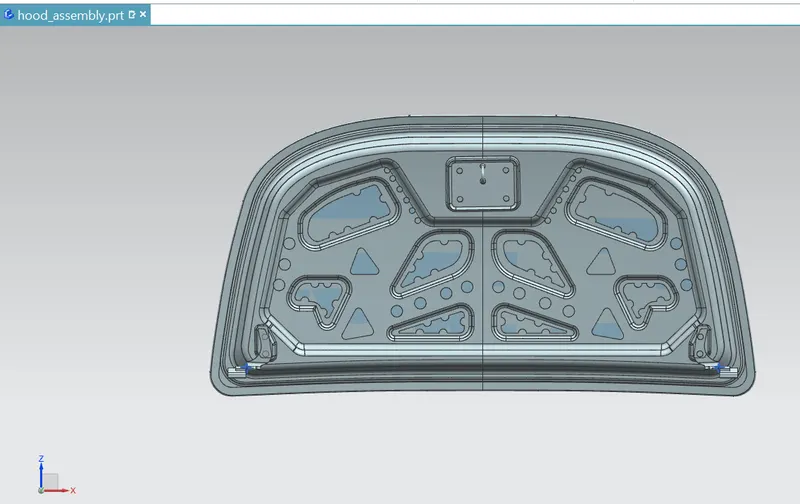
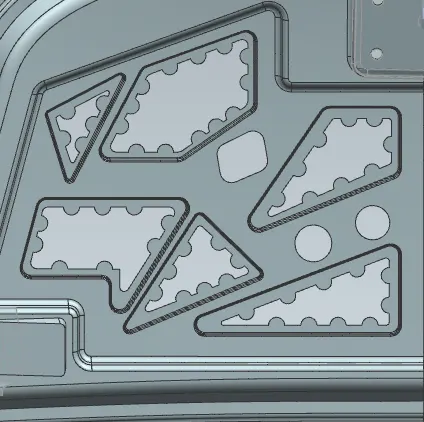
In the inner panel only we can research & implement the safety of pedestrians & as well as the driver. In this panel only we can attach the reinforcement, embossed, mastic points etc.
It is an object of the present invention to provide a hood inner panel capable of reduction of a reaction force of the hood inner panel even if a level of deformation of a hood of a vehicle increases, & ensuring a sufficient energy absorption capacity.
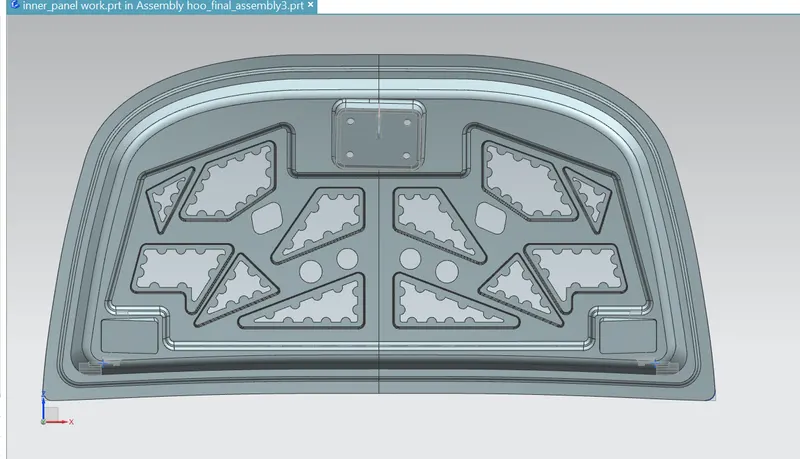
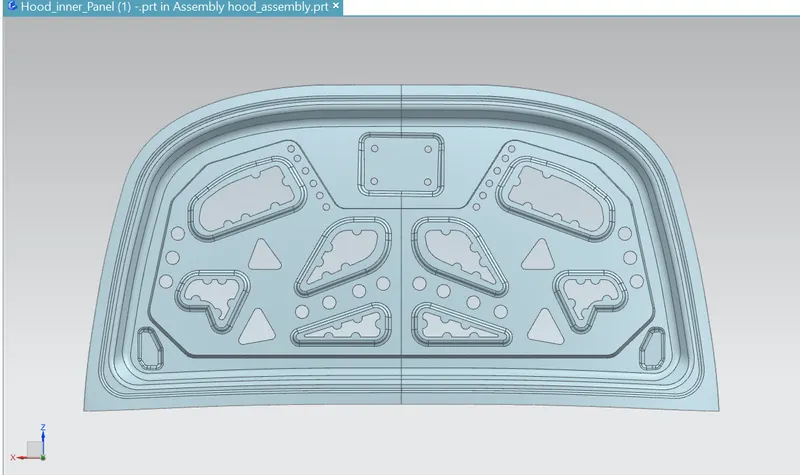
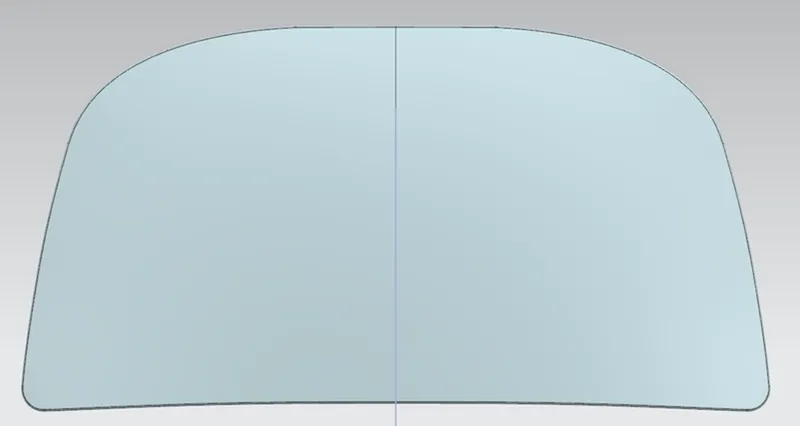
Outer Panel-
We can also call it as cover of inner panel. It is the part, which gives luxurious look to the hood or bonnet. Outer & inner panel can not join by any welding process like spot welding or rivet, which spoil the outer look of a car. The outer panel is generally extracted model from the prototype design.
Hinge Assembly-
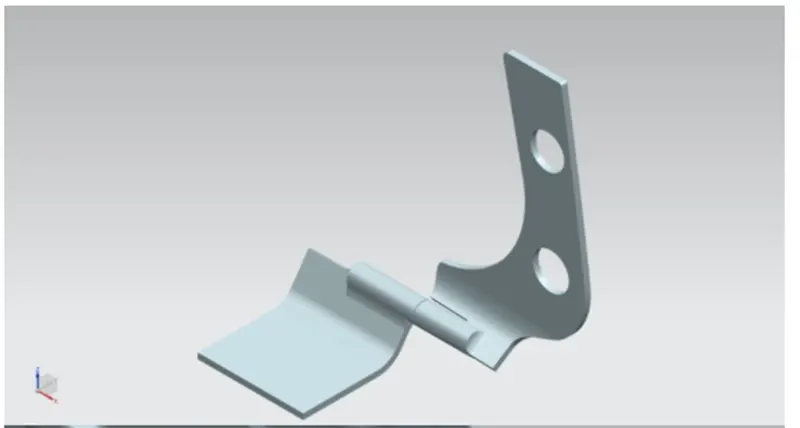
Hinge is a component that fixes the hood to the fenders of the car. The latch must be fixed perpendicular to the hinge axis so that the hood opens or closes properly.
Striker Assembly-
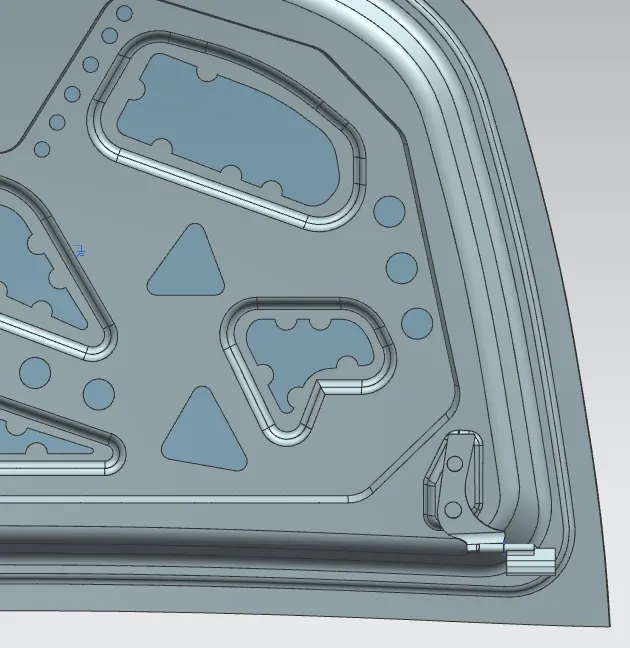
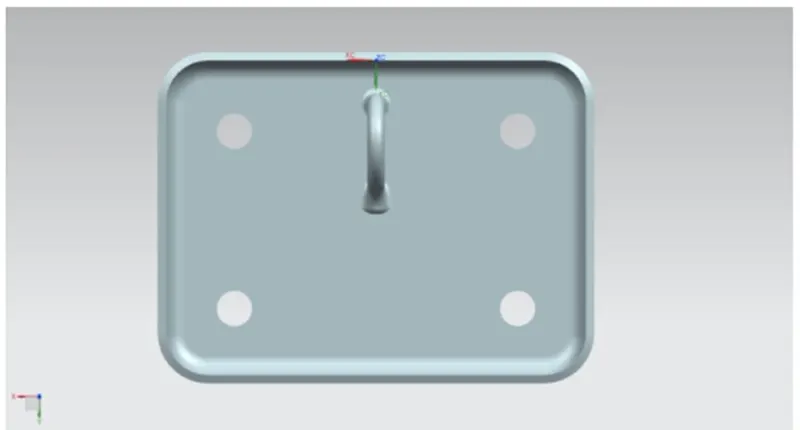
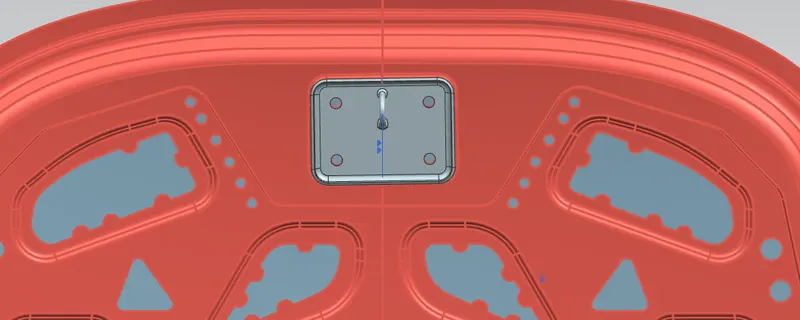
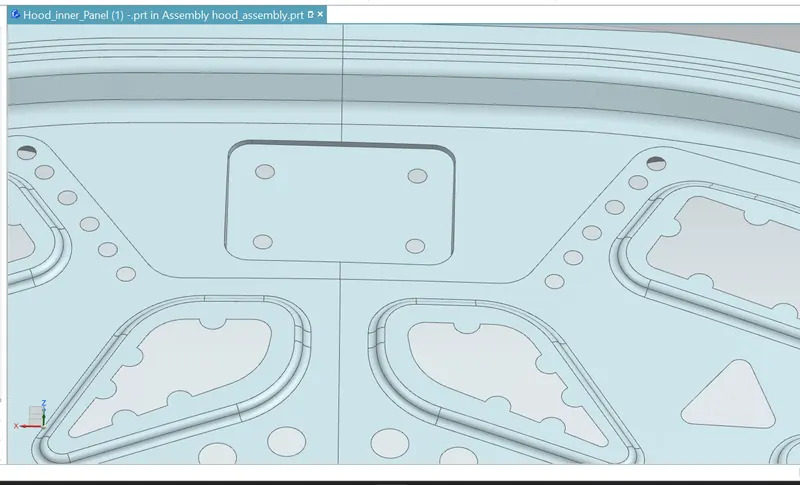
Latch & striker is used for locking the hood with the car. It is usually placed on the space provided on the inner panel.
Mastic Sealant:
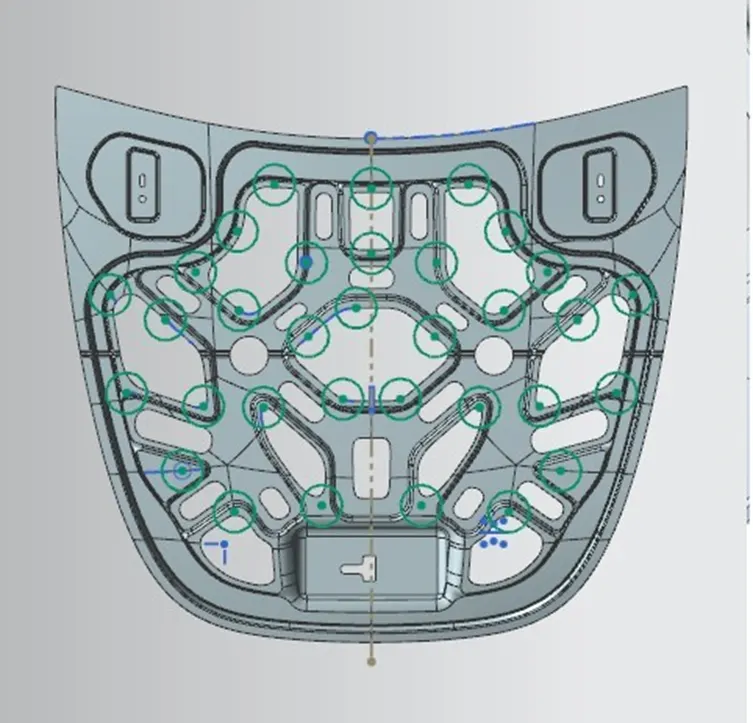
The Mastic sealant or the Mastic point is an elastic compound that behaves like a rubber. The mastic points are defined on the hood inner panel where the hood can easily deform. They help the hood outer panel to come back to its original shape after it gets deformed. The mastic has an influence area of 80mm.
The process involved in designing hood as a sheet metal operations is
Blanking
Hemming
Punch cutting or piercing
Deep drawing
Embossing
Hemming-
Hemming is a sheet metal forming process in which sheets are joined by bending it usually to 180 degree. Automotive body panels & parts such as deck-lids, trunk-lids, doors, hoods & tailgates are formed by hemming processes.
Roll hemming is carried out incrementally with a hemming roller. An industrial robot guides the hemming roller & forms the flange. Roll hemming operation can also be divided into several pre-hemming & final hemming process steps.
Coventional die hemming is suitable for mass production. In die hemming, the flange is folded over the entire length with a hemming tool. Normally the actual hemming is a result of a forming operation in which the flange is formed with a hemming tool after the drawing & trimming operations have been completed.
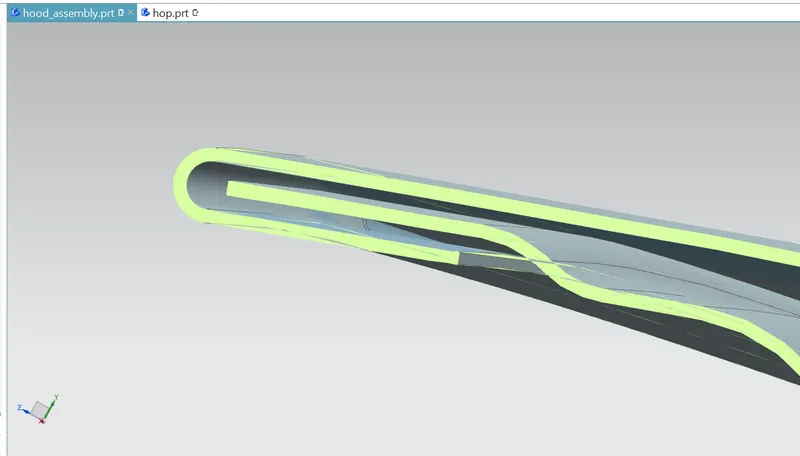
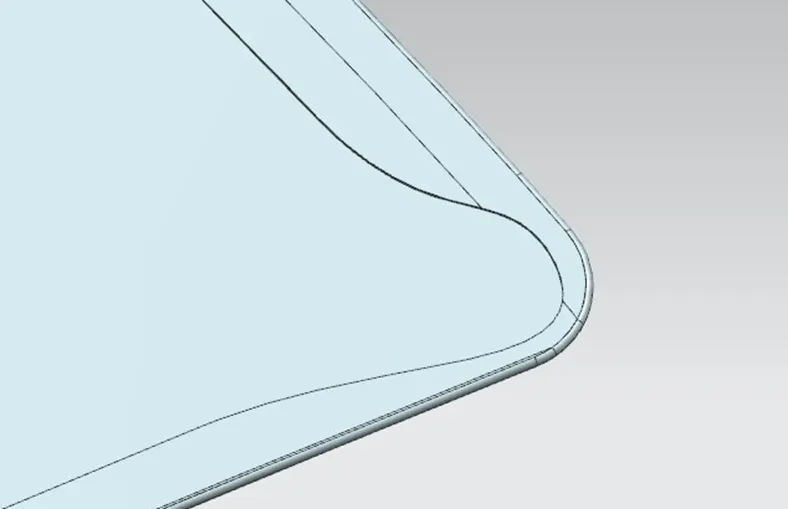
While doing the hemming process a relief angle is formed as a product of hemming when attaining at the corner of the sheet.
Deep Drawing-
Deep drawing is a manufacturing process that is used extensively in the forming of sheet metal into a cup or box-like structures. Pots & pans for cooking, containers, sinks, automobile parts, such as panel & gas tanks, are among a few of the items manufactured by sheet metal deep drawing.
A deep drawing of sheet metal is performed with a punch and die. The punch is the desired shape of the base of the part, once drawn. The die cavity matches the punch and is a little wider to allow for its passage, as well as clearance. For many calculations, the sheet metal thickness is assumed to remain constant. There are changes in thickness in certain areas, due to force involved.
Latch trajectory-
While opening or closing the hood, the latch must be perfectly aligned to the fixing or striker point. For that, the latches trajectory must be perpendicular to the hinge axis.
Hood Assembly- Output